
Zanzibar Travel
Where to Stay in Zanzibar: Choosing the Perfect Area
An honest, area-by-area guide to the island's coasts — the tides, the trade-offs and the right match for the way you actually travel.

Introduction
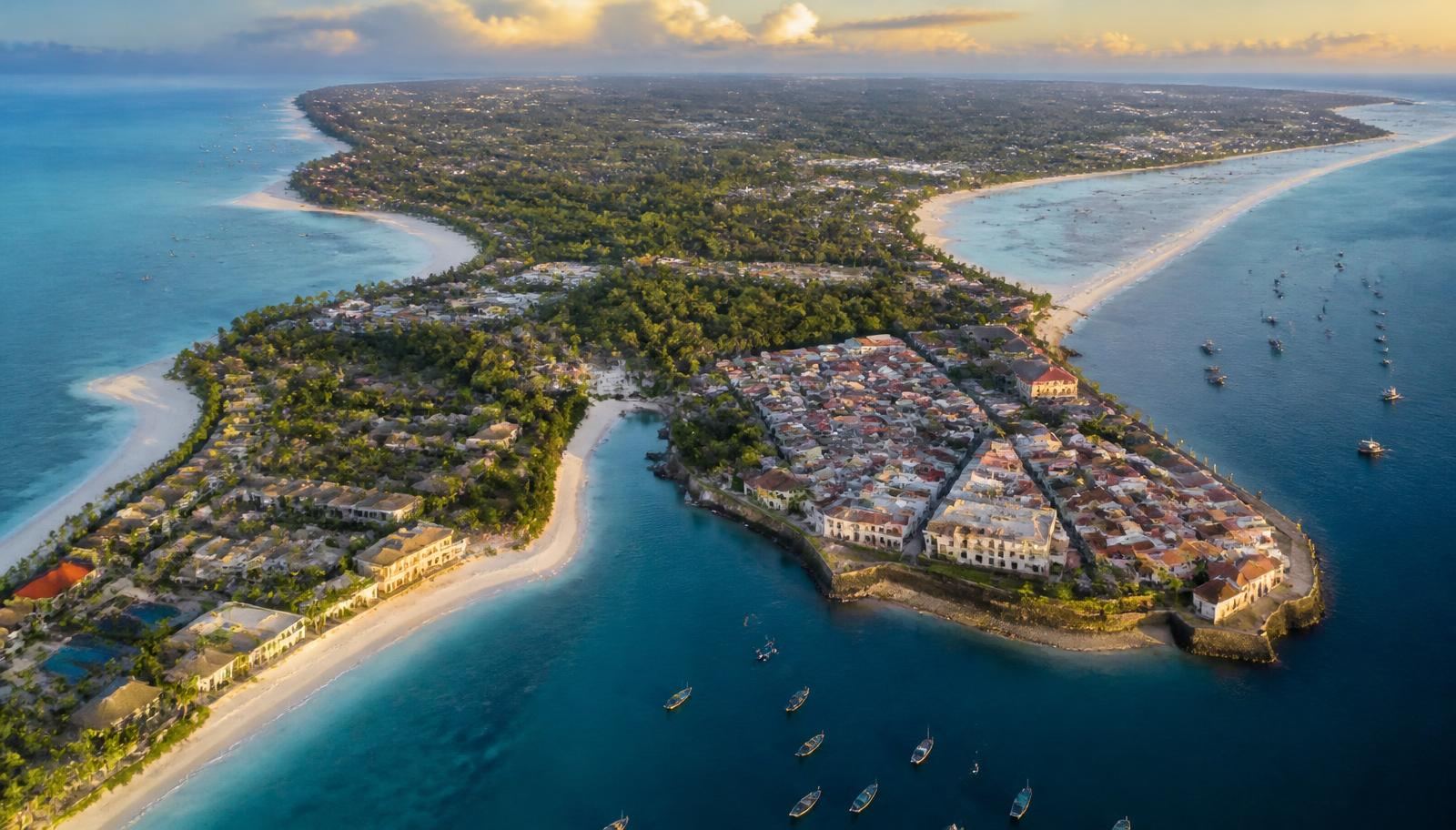
Zanzibar is roughly 55 miles long and 25 miles across at its widest, which sounds small enough that location shouldn't matter much. It matters enormously. I've spent years arranging trips here, and I can tell you that the single biggest predictor of whether someone comes home raving about Zanzibar or quietly disappointed isn't the hotel they picked, the money they spent or even the weather. It's whether they landed in the right part of the island for the holiday they had in their head.
The reason comes down to something most brochures never mention: the tide. On the east coast, the Indian Ocean pulls back so far twice a day that you can walk out nearly a kilometer on wet sand and never get past your ankles. It is genuinely spectacular — sheets of mirrored water, women in bright kangas harvesting seaweed, light that photographers travel for. It is also, if you flew eighteen hours to swim, a rough surprise at two in the afternoon. On the north coast the water stays deep all day. Same island, completely different holiday.
Then there's density. Nungwi has hundreds of hotels, dozens of restaurants and a nightlife scene. Michamvi has maybe fifteen properties and a road that ends. Both are wonderful. Neither is a substitute for the other, and swapping one for the other by accident is the most common booking mistake I see.
So this guide is deliberately not a hotel list. It's a decision framework — an honest account of what each area is actually like, what it's genuinely good at, and where it falls short. I've included the things sales pages leave out: the seaweed farms, the boat transfer times, the beach vendors, the stretches where you'll be eating at your hotel every single night whether you planned to or not.
If you're still at the earlier stages of planning, our complete Zanzibar travel guide covers the practical groundwork — visas, flights, getting around — and the best time to visit Zanzibar is worth reading alongside this one, because season and location interact more than people expect.
How to Choose the Right Area
Before you look at a single hotel, work through five questions. They take ten minutes and they'll eliminate most of the island for you, which is exactly what you want.
1. Do you need to swim whenever you feel like it?
This is the big one. If the answer is yes — because you have kids, because you're a swimmer, because lying beside water you can't get into would drive you mad — you should be looking at the north coast. Nungwi and Kendwa have deep water at every hour of the day, every day of the month. Everywhere else on the island, the ocean comes and goes, and on the east coast it goes a long way.
If you're relaxed about it — happy to swim in the hotel pool at low tide, curious about walking out on the flats, drawn to the emptier beaches — the whole island opens up, and some of the best places on it are on the east side.
2. What do you want your evenings to look like?
Zanzibar has three evening modes. There's Nungwi and Kendwa, where you walk to dinner, choose between fifteen restaurants and there's a bar open afterward. There's Paje, where the crowd is young, the bars are barefoot and the music is reggae rather than club. And there's everywhere else, where dinner is at your hotel, the stars are extraordinary and it's quiet by nine.
None of those is better. But people who booked a remote boutique lodge imagining a lively strip nearby are consistently unhappy, and so are people who booked Kendwa in search of silence.
3. How long is your trip?
Three or four nights means one base, and it should be somewhere with a short transfer and enough on the doorstep — Nungwi, Kendwa or Stone Town. Seven nights lets you split: two in Stone Town, five on a beach, or two beaches. Ten or more gives you room for something remote at the end.
4. Are you combining Zanzibar with a safari?
Most of our guests are, and it changes the calculation. After eight days of dawn game drives, dust and long transfers, you don't want a further ninety minutes in a car on arrival, and you don't want a beach that demands activity. The north coast is the default answer for a reason, but Matemwe is my personal recommendation for a post-safari week: an hour from the airport, quiet, excellent food, and enough going on in the water that you can be active if the mood strikes.
5. What's your honest budget?
Location and price are linked in ways that aren't obvious. The east coast has the deepest budget offering — real guesthouses at $25 to $60 in Jambiani and Paje. The north has the widest range, from backpacker rooms to $600 suites. Matemwe and Michamvi skew boutique and expensive, with very little below $80. Kiwengwa is where the big all-inclusive packages live, which can be excellent value if you'd otherwise be paying separately for every meal and drink. Our Zanzibar travel cost guide breaks the real numbers down properly.
Nungwi: The All-Rounder
Nungwi sits at the island's northern tip, and it's the busiest, most developed and most consistently recommended part of Zanzibar. That last part annoys some travelers who want to feel like they've found somewhere undiscovered. Nungwi isn't that, and it hasn't been for twenty years. What it is instead is the place where the largest number of people get the holiday they were picturing.
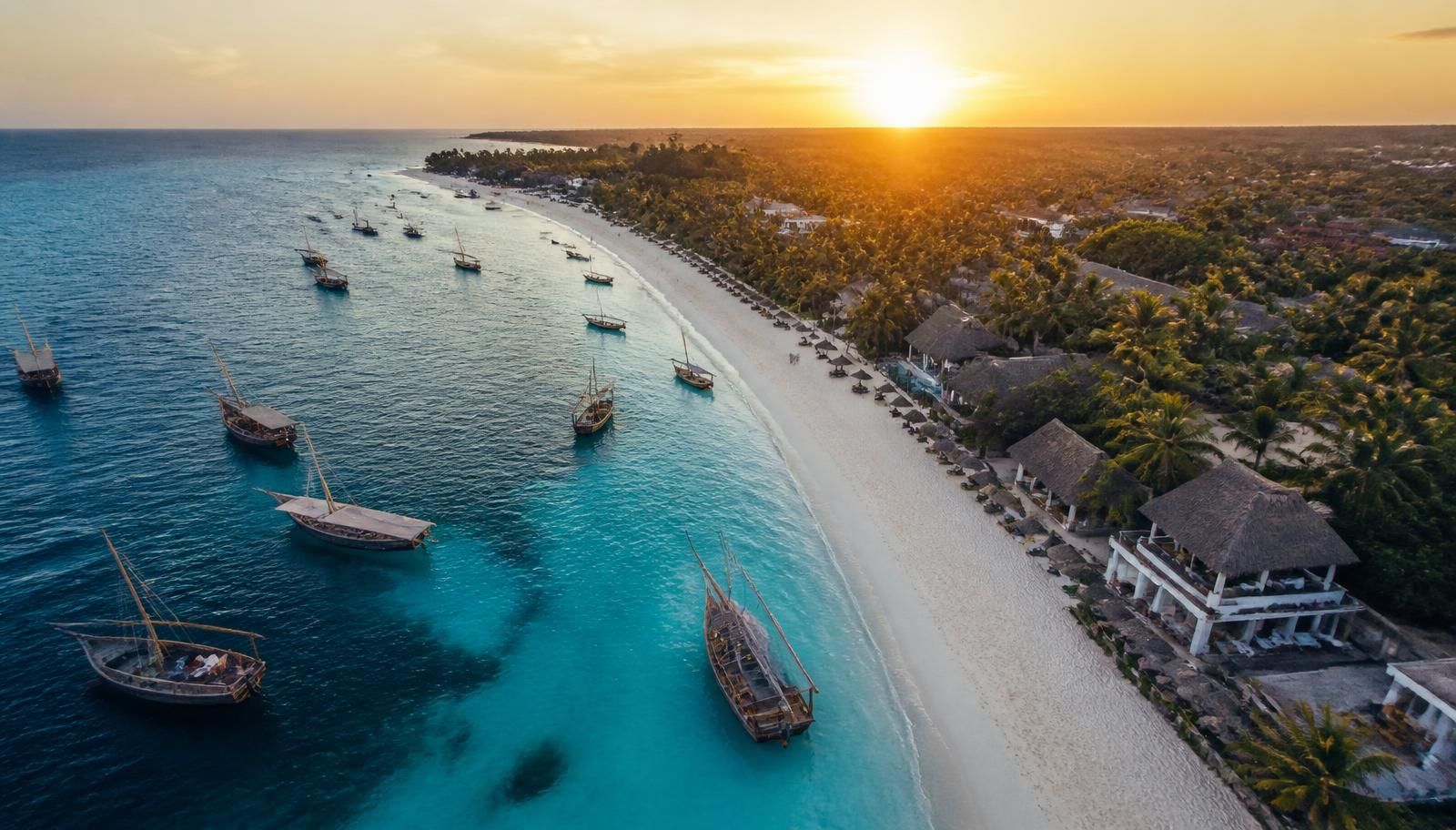
The beach curves around the headland in a long white arc with genuinely turquoise water that stays deep all day. Boats come and go from the old dhow-building yard at the eastern end, where craftsmen still shape hulls by hand using techniques that predate the engine. Behind the beach there's a proper village with a market, mosques, football on the sand at dusk and a working fishing fleet — which is worth remembering when people describe Nungwi as "touristy." It's both.
What Nungwi does well
- Swimming at any hour. No tide planning, no waiting. For families and swimmers this is close to decisive.
- Real dining choice. Forty-plus restaurants within walking distance, from $4 plates of grilled fish at local places to serious seafood at the beachfront hotels. You never have to eat the same thing twice.
- Every price point. Backpacker rooms at $30, solid mid-range hotels at $110–180, and a handful of very good luxury properties above $400.
- Activity infrastructure. Dive centers, snorkeling boats, sunset dhow cruises, deep-sea fishing, quad tours — all bookable the day before, at competitive prices because there's actual competition.
- Sunsets over the water. The northwest orientation means the sun drops straight into the sea, and Nungwi's sunsets are the best on the island. Not a small thing.
Where Nungwi falls short
It's crowded. In August and over Christmas the central stretch of beach is busy in a way that surprises people who expected an island idyll, and the sunbeds get close together. Beach vendors work the sand persistently — sunglasses, boat trips, massages — and while a polite firm "no, asante" works, you'll say it a dozen times a day.
Development has also been uneven. A few large hotels have gone up right on the sand with little regard for the look of the place, and there are half-finished concrete shells in the village. If you're sensitive to that kind of thing, the northern and western fringes of Nungwi are noticeably calmer than the center.
Finally, the transfer. Seventy-five to ninety minutes from the airport on roads with speed bumps every few hundred meters through the villages. Fine on a ten-day trip, irritating on a three-night one.
Kendwa: Swimming, Sunsets and the Island's Party Beach
Kendwa is two miles down the coast from Nungwi and shares its best feature — deep swimmable water regardless of tide — while feeling substantially calmer during the day. The beach here is wider and softer than Nungwi's, backed by a shallow slope of palms, and the water shelves gradually enough that small children can wade a long way out safely. It's arguably the single best swimming beach in Zanzibar.
Then the sun goes down and Kendwa becomes something else. Kendwa Rocks has been running its full-moon party for years and it draws people from across the island — fire dancers, DJs, a few hundred bodies on the sand until three in the morning. Even on ordinary nights in high season there's music at several bars along the beach well past midnight.
Who Kendwa suits
It's an unusual combination: families and party-goers, often at the same hotels. The reason it works is geography. Kendwa's beach is long, and the noise stays at the southern end. A family staying at the quiet northern stretch genuinely doesn't hear much, while a group who came for the nightlife is a five-minute walk from all of it.
I recommend Kendwa most often to three groups: families with young children who need reliable swimming, couples in their twenties and thirties who want beach days and proper nights out, and anyone who cares deeply about sunsets — Kendwa's are, if anything, better than Nungwi's, because the beach faces almost due west with an unobstructed horizon.
The honest downsides
- It's the longest transfer on the island — 80 to 95 minutes from Zanzibar airport.
- Fewer independent restaurants than Nungwi. You'll eat at hotels more than you might like, and prices reflect that.
- Nothing to do beyond the beach. No village to explore, no market, no character beyond sand and water. Some people love that; others get restless by day four.
- If you booked expecting silence and land near the party end in season, you will not sleep well. Check the property's exact position on the beach before booking.
Paje: Wind, Water and a Young International Crowd
Paje, on the southeast coast, is where Zanzibar's kitesurfing world lives. It has a huge shallow turquoise lagoon protected by a distant reef, steady cross-shore winds from roughly June to September and again December to February, and enough schools, rental shops and instructors to make it one of the best learning spots in the world.
But you don't have to kite to enjoy Paje, and plenty of our guests don't. What they come for is the atmosphere: barefoot beach bars, an international crowd in their twenties and thirties, a stretch of good, informal restaurants, and the extraordinary visual quality of that lagoon at different points in the tide. When the water pulls back, the whole bay becomes a mirror. I've seen photographers spend an entire week here and never leave the beach.
The tide reality
You need to understand this before you book. At low tide the ocean at Paje retreats several hundred meters, leaving warm shallow pools and wet sand. Swimming in the sense of diving into deep water is impossible for several hours a day. At high tide the lagoon fills and it's beautiful — flat, warm, waist to chest deep, safe for anyone.
The tide shifts by about fifty minutes daily, so across a week you'll get high water at different times each day. Most hotels post the day's tide times at reception, and a decent pool makes the difference between charmed and frustrated.
Strengths and weaknesses
| Strengths | Weaknesses |
|---|---|
| World-class kitesurfing and lessons from about $70/hour | Low tide removes deep-water swimming for hours a day |
| Best budget-to-mid accommodation range on the island | Poor snorkeling — the lagoon is sandy and largely bare |
| Excellent for solo travelers; easy to meet people | Kite lines and traffic can crowd the water in season |
| 50–60 minutes from the airport, the shortest beach transfer | Sunrise coast — no sunsets over the water |
| Good independent restaurants and a genuine social scene | Not a fit for travelers wanting quiet, polished luxury |
Paje is also the best-placed base for the southeast's attractions: Jozani Forest and its red colobus monkeys are twenty minutes away, The Rock Restaurant is a ten-minute drive, and Kizimkazi's dolphins are about forty minutes south. Our guide to the best things to do in Zanzibar covers those in detail.
Jambiani: The Slow Coast
Jambiani runs south from Paje for about four miles, and the change in character over that short distance is remarkable. Where Paje is a scene, Jambiani is a village — a long, thin ribbon of coral-rag houses, small shops and family-run guesthouses strung along one of the prettiest beaches in East Africa. The pace drops noticeably. Children walk to school along the sand. Fishermen push out in outriggers at first light. Women tend seaweed lines in the shallows at low tide, which is both a livelihood and one of the more photographed sights on the island.
I send people to Jambiani when they tell me they want to feel like they're somewhere rather than at a resort. It's the area where guests most often end up on first-name terms with the family running their hotel, where prices in the local shops are the same as they are for residents, and where a week goes by without anyone trying to sell you a boat trip.
What to know before booking Jambiani
- The tides are the same as Paje's — dramatic. Low tide exposes wide flats. If you need deep water, this isn't your coast.
- Seaweed farming is concentrated in parts of the southern stretch, particularly December through March. It's a working shoreline, not a manicured one.
- Accommodation skews small and simple. There are lovely boutique places and one or two genuinely upscale properties, but no large resorts and limited air conditioning at the cheaper end.
- Restaurants are scattered along four miles of village. Some walks to dinner are fifteen minutes on sand in the dark — bring a headlamp, and it's charming rather than a hardship.
- It's the best-value area on the island. Clean, comfortable, sea-view rooms with breakfast run $35–70 in low season.
Matemwe: The Boutique and Diving Coast
Matemwe stretches along the northeast coast and it's the area I recommend most often to couples, divers and anyone who wants quiet without isolation. Its defining feature sits three miles offshore: Mnemba Atoll, a small private island ringed by the best coral and the clearest water in Zanzibar. From Matemwe you're twenty minutes away by boat. From Nungwi it's closer to fifty, which means you arrive after everyone else.
The beach itself is long, pale and backed by palms and low bush rather than development. At low tide a shelf of coral rock and shallow pools is exposed — you can walk out and find urchins, starfish and small fish trapped in the pools, which is lovely, though it does mean swimming from the shore is tide-dependent. Most hotels here compensate with good pools and jetties.
Why Matemwe works for couples
There's an unusual concentration of small, owner-operated boutique hotels along this coast — twelve to twenty rooms, thatched bandas, private plunge pools, food that's actually cooked rather than assembled. Because the properties are spread over several miles, the beach never feels busy. And because the diving and snorkeling are right there, it doesn't have the trapped feeling that some quiet beach areas develop by day four.
It's also the most reliable area for a post-safari week. The transfer from the airport is around an hour, the hotels understand that guests arriving from the Serengeti want to be left alone for twenty-four hours, and the standard of food and service at the better properties is the highest on the island outside a couple of Michamvi lodges. We cover the romantic side of it in more depth in our Zanzibar honeymoon guide.
The trade-offs
- Almost no independent restaurants. You will eat at your hotel most nights, and if the food isn't good you're stuck — research this specifically before booking.
- Very little budget accommodation. Below $80 the choice thins out quickly.
- No nightlife whatsoever. A drink at the bar and the sound of the reef is the evening.
- Rocky, tide-dependent beach entry at several properties. Ask specifically whether the hotel has direct sand access or a jetty.
Kiwengwa: All-Inclusive Territory
Kiwengwa, south of Matemwe on the east coast, is where Zanzibar's large resort industry concentrated. Italian tour operators arrived here first, and their influence is still obvious — a run of big all-inclusive properties, Italian menus, and a seasonal charter crowd that changes the atmosphere noticeably in the European holidays.
I'm not dismissive of this. For a certain kind of trip, all-inclusive at Kiwengwa is genuinely good value and low-stress: the beach is wide and beautiful, the resorts have pools, kids' clubs, water sports and evening entertainment, and you know your total cost before you leave home. Given that food and drink at Zanzibar's independent hotels can run $80–120 per person per day, a well-chosen all-inclusive is often cheaper than the alternative.
Who should and shouldn't book Kiwengwa
Book it if you want a straightforward resort holiday with everything handled, if you're traveling with children who need structured activity, or if you want maximum predictability on budget. Skip it if you're the kind of traveler who wants to eat in villages, if you value small properties, or if the words "evening entertainment program" make you want to lie down.
Practical notes: the tide here is moderate — less extreme than Paje, more noticeable than Nungwi. Beach access varies significantly between properties, with some sitting above a low cliff and reaching the sand by steps. The transfer is around an hour. And because the resorts are self-contained, walking to anywhere is not really a feature of staying here.
Michamvi: Seclusion and Sunsets on the East Side
Michamvi occupies the tip of the eastern peninsula north of Bwejuu, and it's the answer to a specific question: where on the east coast can I watch the sun set over the water? Because the peninsula curls west into Chwaka Bay, the Michamvi Kae side faces the sunset while the Pingwe side faces the sunrise. It's the only place on the east of the island where you get that.
It's also the most secluded of the mainstream areas. The road ends here. There's no through traffic, no village strip, no beach vendors to speak of — just a scattering of hotels, a few restaurants including The Rock perched on its outcrop, and long empty beaches. The bay side has calmer, more sheltered water with gentler tidal movement than the exposed east coast, which makes it a better swimming proposition than Paje or Jambiani.
Who Michamvi is for
Honeymooners who want to be genuinely alone. Couples on a second or third visit who already did Nungwi and want something different. Anyone spending ten-plus nights who wants a quiet finish after a busier first week. Photographers, because the sunsets across Chwaka Bay with dhows silhouetted are the best on the east side of the island.
Who it's not for: anyone who wants to walk to dinner, families with restless kids, first-time visitors on a short trip, and travelers on a tight budget — Michamvi's accommodation starts around $90 and climbs quickly.
Stone Town: The Heart of the Island
Stone Town isn't a beach base and shouldn't be treated as one. What it is, is the reason Zanzibar is Zanzibar rather than a generic tropical island — a labyrinth of coral-stone alleys built by Omani sultans and Indian merchants, with carved doors, crumbling balconies, a former slave market, spice traders and a food scene that reflects five hundred years of Swahili, Arab, Persian and Indian exchange.
My consistent advice is to spend one or two nights here rather than doing it as a day trip. The town is at its best at two times of day: early morning when the market is loading and the light comes low through the alleys, and early evening when Forodhani Gardens fills with food stalls and the rooftops open. A day tour from Nungwi delivers you at midday, when it's hot and the alleys are at their most touristy, and takes you away before any of that happens.
Practicalities of staying in Stone Town
- Twenty minutes from the airport — by far the shortest transfer, which makes it ideal for arrival or departure nights.
- Accommodation runs from $30 guesthouses to genuinely beautiful $250–350 heritage hotels in converted merchant houses. Value here is excellent.
- Cars can't reach most hotels. You'll walk the last few hundred meters with your luggage through the alleys — pack accordingly, and ask your hotel to send someone.
- It's noisy. Calls to prayer at 5am, cats, scooters, music. Ask for an inward-facing room if you're a light sleeper.
- No swimming beach. There's sand at the northern edge near the ferry port but it's not somewhere you'd sunbathe.
Our Stone Town travel guide covers the walking routes, the museums, the restaurants and the etiquette in far more detail than I can here.
Best Area for a Honeymoon
Matemwe is my first recommendation, and Michamvi the close second. Both give you small properties, real privacy and the sense that you've got a stretch of coast mostly to yourselves. Matemwe wins on water — the reef and Mnemba trips give you something to do together beyond lying down — while Michamvi wins on isolation and sunsets.
A third option that deserves more attention is Pongwe, a small crescent bay on the east coast with a handful of hotels, a protective reef close to shore and virtually no development. It's the quietest of the three and the water is more forgiving at low tide than the wider east coast.
What I'd steer honeymooners away from: Nungwi in high season, unless you specifically want energy around you; the big all-inclusives at Kiwengwa, where the atmosphere is family-oriented; and Paje, which is fun but not romantic in the way most couples mean it.
The structure I recommend most often for a honeymoon is two nights in a heritage hotel in Stone Town followed by five to seven on the northeast coast. You get the story, the food and the photographs, then you get the silence. Our Zanzibar honeymoon guide lays out sample itineraries and the experiences worth paying for.
Best Area for Families
Kendwa for young children, Nungwi for mixed-age families, and Paje for teenagers. The logic is water and walking distance.
With small kids, the tide question stops being a preference and becomes the whole trip. A child who wants to swim at 3pm on the east coast is going to be told no, and you will hear about it. Kendwa's gently shelving, always-full beach solves that completely, and the resorts there are set up for families with pools, shallow entries and rooms that sleep four.
Nungwi adds the thing Kendwa lacks: options. Forty restaurants means picky eaters get fed, a village means there's somewhere to walk in the late afternoon, and the boat trips, dolphin excursions and the turtle sanctuary at Mnarani give you a plan for the days when nobody wants another beach morning.
Teenagers, in my experience, get bored on the north coast and come alive in Paje. Learning to kitesurf is a genuinely absorbing project, the lagoon is a safe playground at any water level, and the social scene gives them people their own age. It's the one case where I'll happily send a family to the tidal coast.
Best Area for Nightlife
Kendwa first, Nungwi second, Paje third — and after those three, essentially nothing.
Kendwa's reputation rests on the full-moon party, which is a real event rather than a marketing exercise: hundreds of people, fire shows, DJs, and it runs until dawn. But even outside full moons, the beach bars here operate later than anywhere else on the island in high season.
Nungwi's nightlife is more diffuse and, for many travelers, more usable. There are sunset bars on the cliffs, sports bars showing football, restaurants with live taarab or bongo flava, and places where you can have two drinks and be in bed by eleven. If you want an evening out rather than a night out, Nungwi is better.
Paje is different again — younger, more sober in the literal sense, built around the kite community. Reggae bars, bonfires, people who were on the water all day. Less late and less loud, but very social.
Everywhere else, plan on dinner and stars. Zanzibar is around 98% Muslim, alcohol is served mainly in tourist establishments, and outside those three areas the island is quiet after dark. That's not a limitation — for most people it's part of the appeal — but you should know it before you book.
Best Area for Diving and Snorkeling
Matemwe is the answer for most divers, because Mnemba Atoll is the island's standout site and Matemwe is closest to it. Mnemba's reef walls hold green turtles, reef sharks, dolphins, huge schools of fusiliers and, seasonally, whale sharks in the deeper water outside. Visibility regularly runs 20 to 30 meters in the dry months.
Nungwi is the second choice and in some ways the better one for serious divers. It has more dive centers and therefore more competition on price and course availability, and it gives access to the northern sites — Leven Bank, Hunga Reef, Mwana wa Mwana — which are more demanding, deeper and more rewarding than Mnemba for experienced divers. The catch is the boat time to Mnemba.
| Base | Main sites | Best for |
|---|---|---|
| Matemwe | Mnemba Atoll (20 min by boat), Kichwani, Wattabomi | Snorkelers, beginners, turtle and reef life |
| Nungwi / Kendwa | Leven Bank, Hunga Reef, Mwana wa Mwana, Mnemba (50 min) | Experienced divers, drift and deep dives, courses |
| Pongwe | Close-in house reef, Mnemba by boat | Casual snorkeling straight off the beach |
| Kizimkazi | Southern reefs, dolphin grounds, Menai Bay | Quiet diving, dolphins, fewer boats |
| Stone Town (west) | Chumbe Island, Bawe, Pange, Great Northern wreck | Protected coral park, wreck diving, day trips |
| Paje / Jambiani | Little in the lagoon; boats run to southern reefs | Not recommended as a diving base |
Worth knowing: Mnemba is a protected conservation area and there's a park fee, usually around $25 to $35 per person on top of the trip cost. Snorkeling tours from Matemwe typically run $40–60 including the fee; from Nungwi expect $50–70 because of the boat distance. Our roundup of the best beaches in Zanzibar flags which beaches have usable reef within swimming distance.
Best Area for Budget Travelers
Jambiani and Paje, comfortably. The east coast has Zanzibar's real budget infrastructure: family-run guesthouses, hostels, local restaurants where a full meal is $4, and dala-dala routes that connect you to Stone Town for under two dollars.
Concrete numbers, because vague advice about "affordable options" helps nobody. In Jambiani, a clean double room with a fan, a private bathroom and breakfast runs $25 to $45 in low season and $40 to $70 in high. Add air conditioning and a sea view and you're at $60 to $100. Paje is similar but ten to twenty percent higher because of the kite crowd, and it has the better hostel scene — dorm beds at $12 to $20.
Stone Town is the other genuinely affordable base. Guesthouses in the old town start around $30, street food at Forodhani is a few dollars, and you don't need transport because everything is within walking distance. For a traveler on $50 a day, three nights in Stone Town and four in Jambiani is a strong week.
Where budget travelers struggle
- Matemwe and Michamvi. Almost nothing under $80, and no independent restaurants means no cheap eating either.
- Kiwengwa. Built around all-inclusive packages; the independent budget option barely exists.
- Nungwi in high season. Cheap rooms exist but they get booked months ahead, and the food is 30–40% more than the east coast.
Area Comparison Table
| Area | Atmosphere | Tide & swimming | From airport | Nightly range | Best for |
|---|---|---|---|---|---|
| Nungwi | Lively, developed, plenty of restaurants and bars | Swimmable at all tides | 75–90 min | $40–600+ | First-timers, families, groups, activity seekers |
| Kendwa | Relaxed by day, the island's party beach by night | Swimmable at all tides | 80–95 min | $50–500 | Nightlife, sunsets, younger couples, families |
| Paje | Kitesurfing hub, young, international, informal | Strong tides; lagoon empties at low tide | 50–60 min | $25–350 | Kitesurfers, budget travelers, solo travelers |
| Jambiani | Long village beach, slow, authentic, low-key | Strong tides; extensive low-tide flats | 60–75 min | $25–300 | Slow travel, budget, culture, long stays |
| Matemwe | Quiet boutique coast facing Mnemba Atoll | Moderate tides; reef pools at low tide | 55–70 min | $80–1,500 | Honeymoons, snorkeling, diving, boutique stays |
| Kiwengwa | Large all-inclusive resorts, wide white beach | Moderate to strong tides | 55–70 min | $70–450 | All-inclusive holidays, families, packages |
| Michamvi | Remote peninsula, secluded, sunset over water | Sheltered bay; gentler tides on the west side | 70–85 min | $90–900 | Honeymoons, privacy, second-base stays |
| Stone Town | Historic UNESCO town, culture, food, no real beach | Not a swimming base | 20–25 min | $30–350 | Culture, history, first or last nights, short trips |
Price ranges are per room per night for two people including breakfast, spanning low to high season. Peak periods — mid-December to early January, and August — sit at the top of each range or above it.
Traveler Recommendation Matrix
| Traveler type | First choice | Second choice | Why |
|---|---|---|---|
| First-time visitor | Nungwi | Kendwa | Reliable swimming, real dining choice, everything bookable on the doorstep |
| Honeymooners | Matemwe | Michamvi | Small boutique hotels, privacy, reef access and genuinely quiet beaches |
| Family with young kids | Kendwa | Nungwi | Calm, deep water at every tide, short walks to food, pools and family rooms |
| Family with teenagers | Paje | Nungwi | Kitesurfing, paddleboarding and a social scene teenagers actually enjoy |
| Nightlife seekers | Kendwa | Nungwi | Beach bars, full-moon parties and somewhere to go after dinner |
| Divers and snorkelers | Matemwe | Nungwi | Closest access to Mnemba Atoll and the northern wall dives |
| Budget travelers | Jambiani | Paje | Guesthouses from $25, local restaurants and easy public transport |
| Solo travelers | Paje | Nungwi | Hostels, group activities and the easiest place to meet people |
| Culture and history | Stone Town | Jambiani | UNESCO old town, markets, food scene and working village life |
| Total escape | Michamvi | Pongwe or Kizimkazi | Few hotels, no passing traffic, nothing to do and that's the point |
| Post-safari beach week | Matemwe | Kendwa | Short transfer from the airport, low friction, good food without effort |
| Short trip (3 nights) | Nungwi | Stone Town | Minimum transfer time lost, maximum variety in a small window |
Two- and three-base itineraries that work
For seven nights, the combination I recommend most is two nights in Stone Town, five in Matemwe or Nungwi. You arrive twenty minutes from the airport rather than ninety, which matters after a long flight, you see the town properly, and you finish on the beach with a short transfer to your departure.
For ten nights, add a third base: Stone Town, then Nungwi or Kendwa for the swimming and the food, then Michamvi or Pongwe for a genuinely quiet finish. That shape covers culture, activity and rest in the right order, and no single transfer takes more than ninety minutes.
For a post-safari beach week, keep it simple. One base, northeast coast, seven nights, and resist the urge to plan. You'll have been up at 5:30am for a week and you'll want exactly nothing on your schedule.
Areas we haven't covered — and when they're right
A few smaller areas are worth knowing about because they occasionally suit a trip better than the big names:
- Pongwe. A tiny protected cove on the east coast with a close-in reef and around half a dozen hotels. Quiet, gentle tides by east-coast standards, excellent for couples who want calm without Michamvi's remoteness.
- Bwejuu. Between Paje and Michamvi. Wide, empty, considerably quieter than Paje with the same tidal behavior. Good for travelers who want the east coast without the kite crowd.
- Kizimkazi. The far south, a working fishing village with a few very good small lodges, dolphin trips and Menai Bay diving. Remote in a way that requires commitment, and rewarding for it.
- Fumba and the southwest. Twenty-five minutes from the airport, sunset-facing, close to the Menai Bay conservation area. Underrated for short stays and for anyone who wants Stone Town access plus water.
- Nungwi's west coast fringe. Technically Nungwi but around the headland, with a handful of quieter properties that get the sunsets and avoid the central crowds.
Frequently Asked Questions
Common Questions
Frequently Asked Questions
Nungwi, in most cases. It's the only part of the island where you get consistently swimmable water regardless of the tide, a genuine choice of restaurants and bars within walking distance, easy access to boat trips and diving, and hotels at every price point from $40 guesthouses to $600 beachfront suites. First-timers usually want variety and low friction rather than isolation, and Nungwi delivers both. The trade-off is that it's the busiest and most developed corner of Zanzibar, so if the words 'lively' and 'built up' make you flinch, look at Matemwe instead — quieter, still north-facing, better reef access, but you'll be eating at your hotel most nights. For a first trip I'd also strongly suggest adding one or two nights in Stone Town rather than treating it as a day trip.
Matemwe and Michamvi are the two areas I recommend most often to couples, for different reasons. Matemwe faces Mnemba Atoll, has an unusually high concentration of small owner-run boutique hotels, and stays quiet without feeling empty — it's the classic Zanzibar honeymoon coast. Michamvi, on the eastern peninsula, is the one place on the east side that catches the sunset over the water, and it's the most secluded of the main areas, which suits couples who want to disappear for a week. Kendwa works if you want romance with some nightlife within reach, and Kizimkazi in the far south suits couples who genuinely want nobody around. Our Zanzibar honeymoon guide goes deeper into the specific properties and experiences.
Nungwi and Kendwa for families with young children, and Paje for families with teenagers. Nungwi and Kendwa have deep water at all tides, so kids can actually swim whenever they want rather than waiting for the ocean to come back — which sounds trivial until you've spent a morning explaining tide cycles to a six-year-old. Both also have shallow calm entries, plenty of restaurants that don't require a car, and larger resorts with pools, kids' clubs and family rooms. Paje suits older kids because the lagoon is a natural playground for kitesurfing lessons, paddleboarding and swimming in warm knee-deep water at low tide. Avoid the far south and the most remote boutique properties with families — the drives get long and dining options shrink to one.
Kendwa, without much competition. Kendwa Rocks' full-moon party is the island's best-known night out, and there's a run of beach bars along the same stretch that keep going well past midnight most nights of the week in high season. Nungwi is the strong second — more spread out, more variety, everything from sports bars to sunset lounges, and easier to dip in and out of if you want one drink rather than a whole night. Paje is the third option and has a distinct flavor: a young, international kitesurfing crowd, reggae bars, and a scene that's social rather than club-like. Stone Town has an interesting low-key evening life around Forodhani and a handful of rooftop bars, but Zanzibar is a majority-Muslim island and outside those pockets things are quiet by 10pm.
Michamvi, Pongwe, Kizimkazi and the northern end of Matemwe are the quietest of the practical options. Michamvi Kae and Michamvi Pingwe sit at the tip of the eastern peninsula where the road runs out, so there's no passing traffic — you get a handful of hotels, a few restaurants and very little else. Pongwe is a small, protected cove on the east coast with a reef close in, almost no beach vendors and maybe six hotels total. Kizimkazi in the far south is a working fishing village with a scattering of very good small lodges and virtually no tourist infrastructure. All three come with the same trade-off: you will eat at your hotel most nights and you'll want a driver or a rental for anything else.
Stone Town itself, obviously, but of the beach areas the closest practical bases are the west-coast beaches — Mangapwani, Bububu and Fumba — which are 20 to 45 minutes away, and Kizimkazi is around an hour. Of the main tourist beaches, Matemwe and Kiwengwa are roughly 55 to 70 minutes, Paje and Jambiani 50 to 70 minutes, and Nungwi and Kendwa 75 to 90 minutes. In practice, though, I'd stop optimizing for proximity to Stone Town and simply spend a night or two there. The town is at its best in the early evening and early morning, both of which you miss entirely on a day trip, and the round-trip drive from the north coast eats four hours of beach time.
Matemwe, because it sits directly opposite Mnemba Atoll — the best snorkeling and diving in Zanzibar and a twenty-minute boat ride from the shore. Hotels there run morning trips as a matter of routine and you're on the reef before the boats from Nungwi arrive, which makes a real difference to the experience. Nungwi is the next best for snorkeling access: more operators, more competitive prices, but a 45-minute-plus boat transfer to Mnemba. Pongwe and Kizimkazi both have decent house reefs you can reach without a boat at the right tide, and Chumbe Island off the west coast is a protected marine park with outstanding coral, though it's a day trip rather than a base. Paje and Jambiani are poor for snorkeling — the lagoon is shallow, sandy and largely lifeless.
For a trip of five nights or fewer, stay in one place. Moving costs you a half-day each time, and Zanzibar's roads make transfers between distant areas genuinely tiring. For six to nine nights, two bases is the sweet spot: one or two nights in Stone Town plus the rest on a beach, or two beaches with different characters — for example Nungwi for activity and Matemwe or Michamvi for quiet. For ten nights or more, three bases works well and lets you add somewhere remote like Kizimkazi or Pongwe. Whatever you do, put the beach at the end rather than the start. Arriving jetlagged into a busy town and finishing on a quiet beach is the right order, and it makes the flight home considerably easier.
Conclusion
Zanzibar is a small island that behaves like several different destinations at once, and choosing between them is genuinely the most consequential decision you'll make about your trip. Nungwi and Kendwa give you swimming, food and life; Matemwe and Michamvi give you space and reef; Paje and Jambiani give you wind, lagoon light and character; Kiwengwa gives you resort convenience; Stone Town gives you the history and the soul of the place. None of them is objectively best, and anyone who tells you otherwise is selling something. What matters is matching the area to the way you actually want to spend a week — not the way a photograph suggests you should.
If you take one thing from this guide, make it this: decide the area before you fall in love with a hotel. Photographs of Zanzibar properties look broadly identical — white sand, palm shade, a thatched roof, turquoise water at high tide. They tell you nothing about whether you can swim at three in the afternoon, whether there's a restaurant you can walk to, or whether you'll hear a DJ at midnight. The area answers all of that, and the hotel is the easy part once you've settled it.
Plan Your Zanzibar Trip With Olympus Adventure
Olympus Adventure is a Tanzanian-owned company based in Arusha. We've placed guests in every area described here, we've inspected the hotels ourselves rather than relying on their own photographs, and we know which properties actually deliver at each price point — as well as which ones look better online than they do in person.
Tell us who's traveling, how many nights you have, roughly what you'd like to spend and what a good day looks like to you. We'll come back with a recommended area or combination of areas, two or three specific properties that fit, and a day-by-day itinerary with transfers, excursions and costs laid out plainly. If we think you'd be happier somewhere other than the place you had in mind, we'll say so and explain why.
And if you're pairing the coast with the mainland — the Serengeti, Ngorongoro, the Great Migration — we build the whole trip as one, including the internal flight and the logistics of moving safari luggage to a beach hotel. One operator, one quotation, nothing falling between the cracks. Send us your dates and we'll take it from there.
Keep Reading
More Zanzibar Guides
Zanzibar
Zanzibar Travel Guide: Everything You Need Before Visiting the Island
Plan Your Journey
Not sure which part of Zanzibar suits you?
Send us your dates, your budget and who's traveling, and we'll recommend the right area — then build a tailor-made Zanzibar holiday or a full safari and beach combination around it.
- TALA Licensed Operator
- 4.9 ★ Guest Rating
- No Booking Fees