
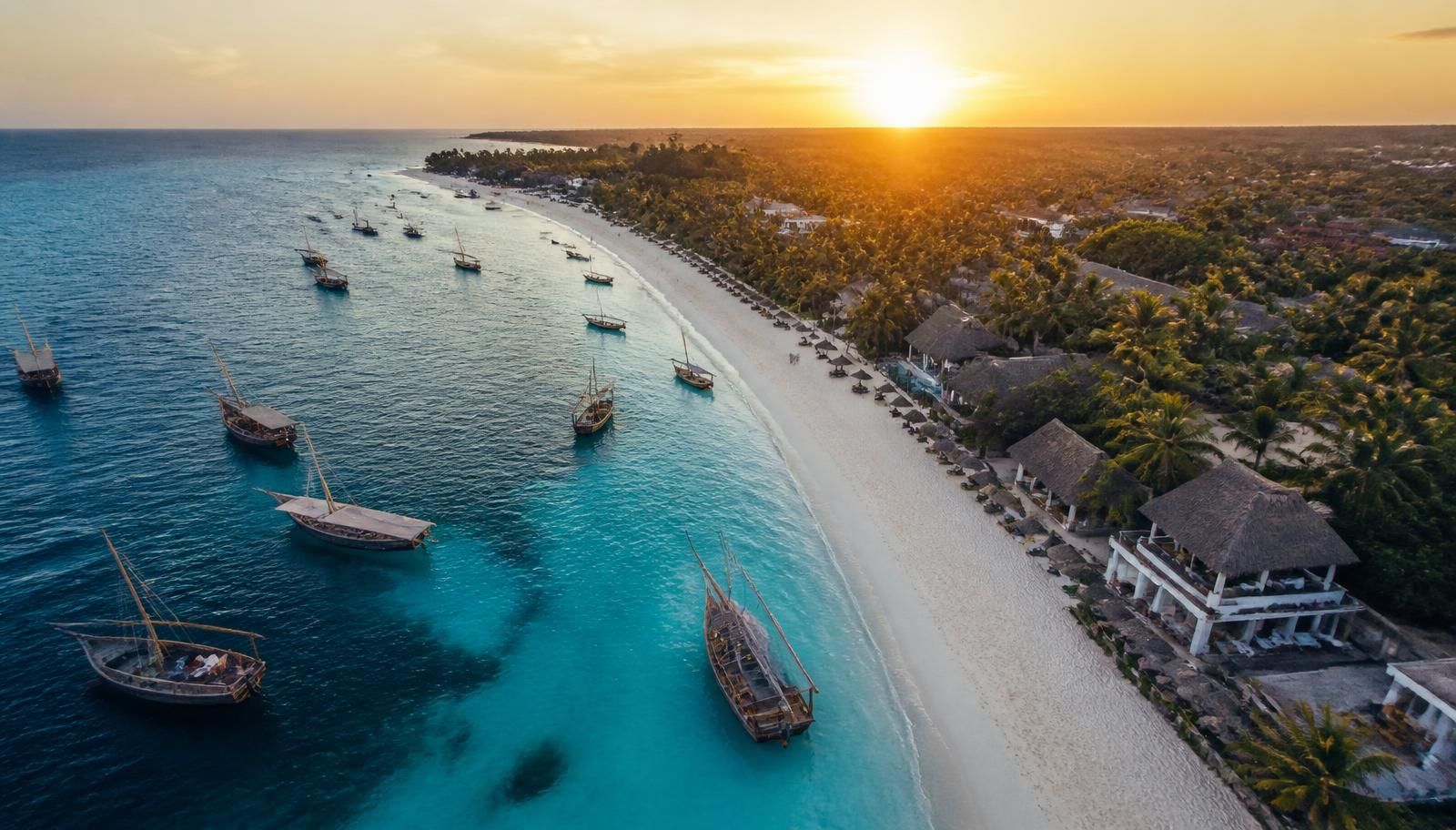
Zanzibar Travel
Zanzibar Travel Guide: Everything You Need Before Visiting the Island
Coasts, tides, costs, Stone Town, food, safety and safari pairings — written by a Tanzanian team that sends travelers to this island every week of the year.

Introduction
The first thing I tell clients about Zanzibar is that it is not one destination. It is at least four. The north swims all day and stays up late. The southeast has tides that pull the ocean out to the horizon and bring it back in the afternoon like clockwork. The northeast is quiet water and reef. And Stone Town, on the west coast, is a working city with a thousand years of trade history packed into alleys barely wide enough for two people to pass. People who come home disappointed almost always booked the wrong one of those four for the holiday they had in their head.
I have been sending travelers here since long before Zanzibar showed up on every travel list, and the questions have barely changed. Where should I stay? Is it safe? How much cash do I need? Will there actually be water in front of my hotel? Do I need a visa, and do I need a separate one from the mainland? Is it worth adding to a safari, or should I just do one or the other? This guide answers all of it plainly, in the order you will actually need the information, with the practical details that tend to get left out of glossy write-ups.
A short note on what Zanzibar is and is not. It is a semi-autonomous archipelago within the United Republic of Tanzania, overwhelmingly Muslim, culturally Swahili, and shaped by centuries of Omani, Persian, Indian and European contact. It is not a sanitized resort bubble. Outside the hotel gates you are in real villages where people fish, farm seaweed, go to mosque and go about their day. Travelers who recognize that and behave accordingly have a noticeably better time here — and they tend to get invited into conversations, kitchens and boats that other visitors never see.
Why Visit Zanzibar?
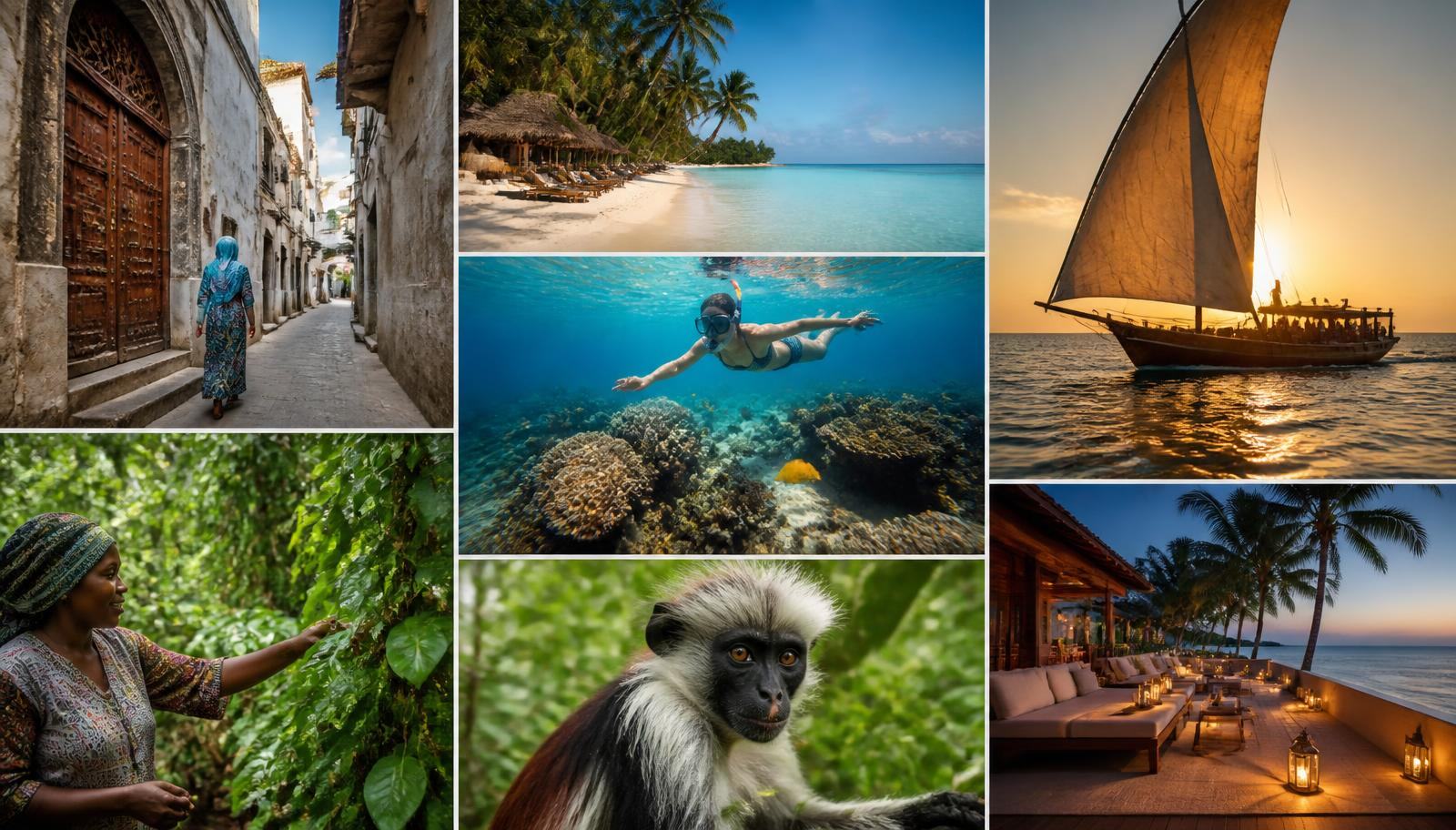
Plenty of places have white sand. What Zanzibar has that most of them do not is layers. You can spend the morning walking through a spice farm where a teenager scrambles up a tree to bring down a nutmeg pod so you can smell the mace wrapped around it, then eat octopus curry for lunch in a Stone Town courtyard, then be on a dhow at five in the afternoon watching the sun drop behind the water while the crew hoists a sail by hand. The beach is the excuse. The island is the reason.
The water genuinely is exceptional. Because Zanzibar sits inside the warm East African Coastal Current, sea temperatures rarely drop below 25°C, and the fringing reef systems keep the near-shore water calm and startlingly clear. Mnemba Atoll off the northeast coast is one of the best snorkel and dive sites in East Africa, and even casual snorkelers see turtles, reef sharks, moray eels and clouds of butterfly fish within a few meters of the boat.
Then there is the history, which is heavier than the brochures let on. Stone Town was the commercial capital of the Omani Sultanate and one of the largest slave markets in East Africa. The Anglican cathedral is built on the site of the old market, and the underground holding chambers are still there. It is a sobering hour and a necessary one. Understanding that history changes how you read every carved door, every merchant's house and every spice plantation you visit afterward.
Finally, the practical reason: Zanzibar is one of the easiest luxury-value beach destinations to combine with a serious wildlife trip. There is nowhere else on earth where you can watch a leopard drag a kill into an acacia in the morning and be swimming in the Indian Ocean by dinner two days later. That combination is why the overwhelming majority of our clients book both, and it is covered properly in our Zanzibar and safari Tanzania guide.
Where Is Zanzibar?
Zanzibar sits in the Indian Ocean roughly 25 to 50 kilometers off the coast of mainland Tanzania, just south of the equator. The archipelago has two main inhabited islands: Unguja, which everyone actually means when they say "Zanzibar," and Pemba to the north, which is greener, hillier, far less visited and a favorite of serious divers. There are dozens of smaller islets, sandbanks and atolls scattered around them.
Unguja is about 85 kilometers long and 30 kilometers wide — small enough to cross by road in under two hours, big enough that the drive from Stone Town to Nungwi takes longer than newcomers expect. The main airport, Abeid Amani Karume International (ZNZ), is about ten minutes from Stone Town on the west coast, which is why most itineraries start there.
Politically, Zanzibar is part of the United Republic of Tanzania but retains its own president, parliament and immigration desk. In practice that means you clear a separate immigration counter when flying in from Dar es Salaam or Arusha, even though it is a domestic flight. Your Tanzanian visa still covers you. You do not need a second one. If any part of the visa process is unclear, our Tanzania visa guide walks through it step by step.
Quick Facts
Best Time to Visit Zanzibar
Zanzibar has two dry seasons and two rainy ones, and the difference between them is stark enough to reshape a holiday. The long dry season runs from June through October. Days sit around 28 to 30°C, humidity drops, the sea flattens out, and the odds of a washed-out afternoon are very low. This is also when the mainland safari season peaks, which is why our busiest bush-and-beach bookings all land in this window.
The short dry season from late December through February is hotter and stickier — this is high summer in the southern hemisphere — with the occasional sharp afternoon shower that clears within the hour. Water clarity is at its best, which makes it the favorite season for divers, and whale sharks show up off Mafia Island to the south between roughly October and February.
The long rains, mid-March through May, are the real thing. Not a passing shower — a genuine tropical downpour that can settle in for hours. Some smaller hotels close for maintenance, boat excursions get cancelled, and roads on the east coast turn to soup. Prices fall by half or more, and if you are relaxed, flexible and mostly want a book and a hammock, it can be great value. It is a poor choice for a honeymoon or a once-in-a-lifetime trip.
The short rains in November are much gentler. Showers tend to arrive late in the day and clear overnight, and plenty of November visitors barely notice them. If you want a wider picture of how island weather lines up with the mainland's seasons, read our best time to visit Tanzania guide.
| Month | Weather | Sea temp | Verdict |
|---|---|---|---|
| January | Hot, humid, brief showers | 28–29°C | High season. Great diving visibility. |
| February | Hottest month, mostly dry | 29°C | Excellent, but bring heat tolerance. |
| March | Humid, rains build late month | 29°C | Good value early, risky after the 15th. |
| April | Long rains, heaviest of the year | 28°C | Cheapest. Some hotels close. |
| May | Long rains easing | 28°C | Improving late month. Big discounts. |
| June | Dry, breezy, pleasant | 26–27°C | Start of the best window. |
| July | Dry, sunny, low humidity | 25–26°C | Peak. Book months ahead. |
| August | Dry, sunny, windy afternoons | 25–26°C | Peak. Ideal bush-and-beach timing. |
| September | Dry, warming up | 26°C | Arguably the best all-round month. |
| October | Warm, mostly dry | 27°C | Excellent, slightly quieter than August. |
| November | Short rains, patchy | 28°C | Often fine. Good value. |
| December | Warm, humid, festive | 28°C | Peak from mid-month. Highest prices. |
How to Get to Zanzibar
International flights
Zanzibar has direct international service from Doha, Dubai, Istanbul, Addis Ababa, Nairobi and several European cities, with seasonal charters from Italy, Poland and Germany. Qatar Airways, Turkish Airlines, Ethiopian Airlines and Emirates are the carriers most of our clients use because the connections are clean and the baggage policies are generous. Most travelers from North America connect through Doha, Istanbul or Amsterdam.
Domestic flights from the safari circuit
This is the route that matters if you are combining bush and beach. Coastal Aviation, Auric Air, Precision Air and Air Tanzania run daily flights connecting Zanzibar with Arusha, Kilimanjaro International, Dar es Salaam and the Serengeti's bush airstrips. The Serengeti to Zanzibar hop takes roughly 75 to 90 minutes on a light aircraft, often with one or two brief stops to pick up other passengers — treat those stops as part of the experience rather than a delay.
Baggage on light aircraft is limited, typically 15 kg per person in soft-sided bags. Hard shell suitcases will not fit in the hold of a Cessna Caravan. Every reputable operator, ours included, arranges free storage of excess luggage in Arusha so you fly light and collect it on the way home.
The ferry from Dar es Salaam
Azam Marine's fast ferries run several times daily between Dar es Salaam and Stone Town, taking about two hours. Tickets for foreign passport holders run roughly $35 to $50 one way depending on class, and must be bought in USD at the official ticket office — never from someone offering to help you outside it. The crossing can be rough between June and August when the wind picks up; if you are prone to seasickness take something before you board.
Entry Requirements
Most visitors need a visa to enter Tanzania, and Zanzibar falls under the same national visa system. The ordinary tourist visa is single entry, valid for stays up to 90 days, and costs $50 for most nationalities. US passport holders are the notable exception and must buy the multiple-entry visa at $100 — this is not a scam or an upcharge, it is reciprocal policy.
Apply online through Tanzania's official immigration e-visa portal at least three weeks before travel. Approval usually arrives within a week or two, and you should print the approval letter rather than relying on your phone. Visa on arrival is still available at Zanzibar airport for many nationalities, but the queue after a long-haul flight can be brutal and the payment terminals are unreliable. Apply in advance.
Entry checklist for Zanzibar
- Passport valid at least six months beyond your arrival date, with two blank pages
- Approved Tanzania e-visa printout (single entry $50; US citizens $100 multiple entry)
- Mandatory travel insurance — Zanzibar requires proof of cover for foreign visitors
- Yellow fever certificate if arriving from or transiting more than 12 hours through an endemic country
- Return or onward ticket, occasionally requested at immigration
- First night's accommodation address written down for the arrival form
- The $50 tourist infrastructure levy, payable per person on arrival in Zanzibar
Two Zanzibar-specific rules catch people out. First, Zanzibar requires all foreign visitors to hold travel insurance, and since late 2024 authorities have pushed a mandatory local insurance product purchased through the official Zanzibar portal for stays up to 92 days. Buy it online before you fly. Second, the $50 infrastructure levy is charged per person on arrival — card payment is accepted but the machines go down often, so carry cash as a fallback.
Is Zanzibar Safe?
Yes, broadly. In two decades of sending clients here, the incidents I have dealt with have been petty theft and one badly handled excursion booking, not anything worse. Violent crime against tourists is rare and Zanzibaris are, as a rule, hospitable people who have every incentive to keep visitors comfortable. That said, "generally safe" is not the same as "no precautions needed."
The realistic risks
- Opportunistic theft. Phones and bags left on a beach towel while you swim, or carried loosely through a crowded Stone Town street at night. Use the hotel safe and carry only what you need.
- Beach touts and fake excursions. The pitch is friendly and the price is good and the boat never quite materializes, or turns out to have no life jackets. Book everything through your hotel or operator.
- Taxi overcharging. Not dangerous, just irritating. Agree the fare before you get in, every single time.
- Sea conditions. Currents around the reef passes and at low-tide channels are stronger than they look. Swim where others swim and ask the hotel about the day's tide before you go out.
- Malaria. Present year-round. Use repellent at dusk, sleep under the net, and speak to a travel-medicine doctor about prophylaxis well before departure.
- Road safety. The most statistically significant risk on any Tanzanian trip. Use hotel-arranged drivers rather than unregulated motorbikes, and skip the rental scooter unless you are a confident rider.
Solo and female travelers
Solo travel in Zanzibar works well, and the east coast in particular has a friendly, easy backpacker-to-mid-range scene where meeting people is effortless. Women traveling alone report generally positive experiences. Dressing modestly outside beach areas — shoulders and knees covered — makes a noticeable difference to the attention you receive. Avoid walking empty beaches after dark, which is the one situation where nearly all reported incidents occur.
Best Areas to Stay
This is the single most important decision you will make about your Zanzibar trip, and it is the one people research least. The coasts are genuinely different. Below is the comparison I give clients before we pick a hotel, followed by a closer look at each area.
| Area | Coast | Atmosphere | Tides | Best for | Watch out for |
|---|---|---|---|---|---|
| Nungwi | Far north | Lively, social, restaurants and dive shops | Minimal — swim all day | First-timers, groups, nightlife, diving | Busiest stretch on the island in high season |
| Kendwa | Northwest | Resort-calm with the best sunsets | Minimal — swim all day | Couples, honeymooners, easy swimming | Full-moon parties can be loud once a month |
| Paje | Southeast | Kitesurfing, young, barefoot beach bars | Dramatic — ocean retreats far at low tide | Kiters, solo travelers, budget-to-mid stays | Seaweed farming and seagrass in the lagoon |
| Jambiani | Southeast | Quiet fishing village, slow days | Dramatic — long walk-out at low tide | Writers, long stays, cultural travelers | Few restaurants outside hotels after dark |
| Matemwe | Northeast | Peaceful, low-rise, snorkel-focused | Moderate — reef-protected lagoon | Divers, Mnemba Atoll, honeymoons | Limited nightlife or walkable dining |
| Stone Town | West coast | Historic, dense, atmospheric, urban | Not a swimming beach | History, food, culture, first or last nights | Hot and busy midday; noise carries in the alleys |
| Michamvi / Pingwe | Southeast tip | Secluded, upscale, sunset-facing coves | Mixed by cove | Privacy, boutique hotels, couples | You will need transport for everything |
Nungwi
Nungwi occupies the northern tip of the island and it is the busiest, most developed stretch of coast in Zanzibar. That is not a criticism. It is busy for a reason: the tidal range here is small, so the water stays deep enough to swim in at any hour of any day, which is not true of most of the island. If your mental image of the trip involves walking off your sun lounger straight into the sea at three in the afternoon, Nungwi delivers that reliably.
It is also the most sociable place to base yourself. Beachfront restaurants run shoulder to shoulder along the sand, dive centers are well established, and there are enough bars that you can have a proper night out without organizing transport. The village behind the beach is a working dhow-building center — walk five minutes inland and you will find men shaping hulls by hand using techniques that have not changed much in centuries.
The trade-off is density. In August, sections of Nungwi beach feel closer to a Mediterranean resort than a Swahili fishing village, and there are more touts here than anywhere else on the island. If you want quiet, this is not the coast for you. If you want convenience, swimming and options for dinner, it is the easiest place in Zanzibar to be a first-time visitor.
Kendwa
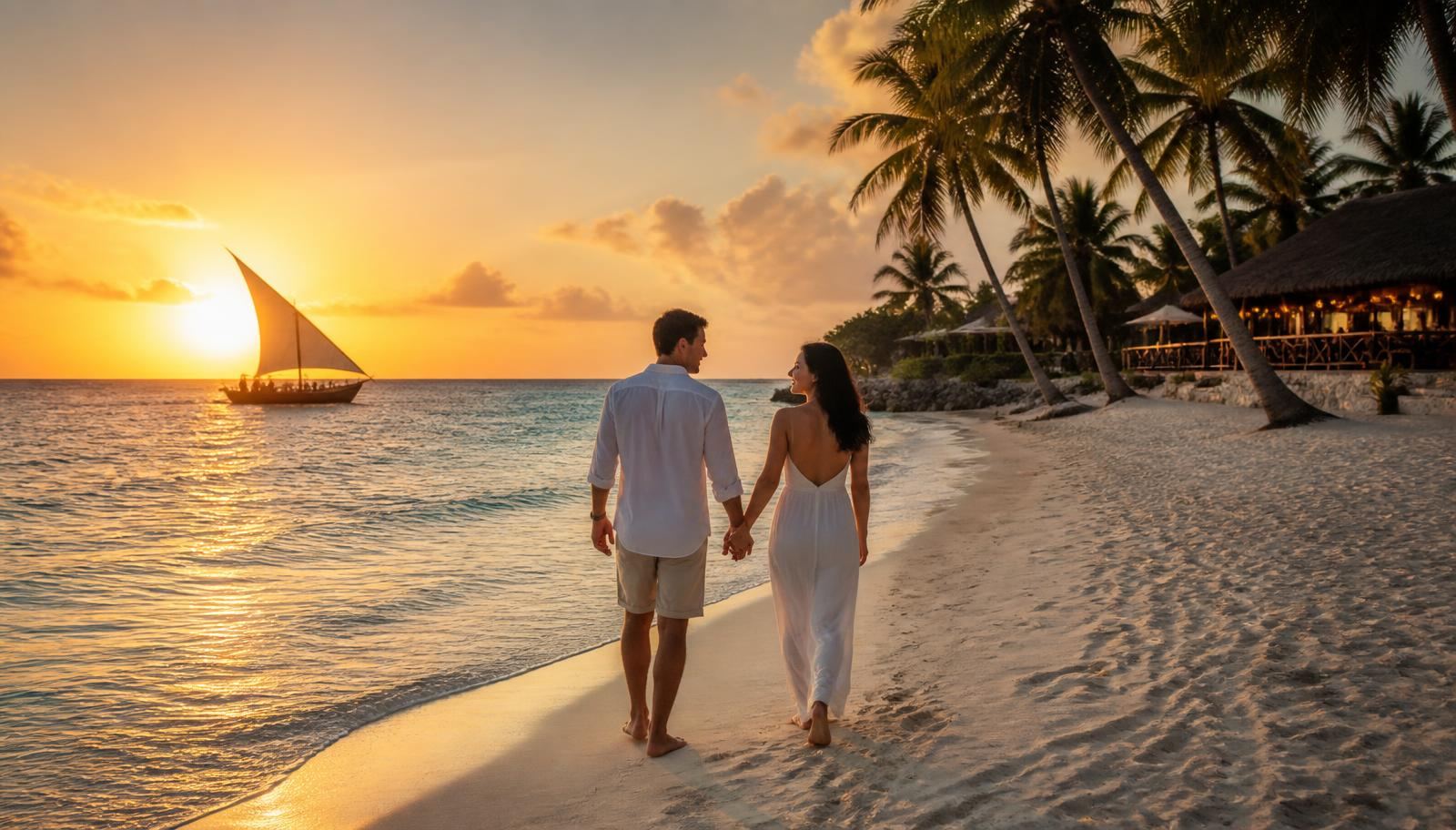
Kendwa is a twenty-minute walk down the coast from Nungwi and feels like its calmer sibling. Same excellent tide situation, same swimmable water, but the beach is wider, the hotels are set further back, and the mood is unmistakably more relaxed. It also faces west, which gives Kendwa the best sunsets on the island — the kind that turn the whole bay copper for fifteen minutes and then vanish.
This is where I send honeymooners and couples who want beach days without the buzz of Nungwi but who still want a few restaurants within walking distance. The hotel standard is generally high, with a good spread from comfortable mid-range up to genuinely luxurious. The one thing to know: Kendwa hosts a well-known monthly full-moon party. If you want a quiet night, check the lunar calendar before booking, or pick a hotel at the far end of the bay.
Paje
Paje, on the southeast coast, is the kitesurfing capital of East Africa and it has an energy that no other part of the island matches. The lagoon here is shallow, wide and protected by a distant reef, and the trade winds from June to September and December to February are as consistent as anywhere in the Indian Ocean. On a good afternoon there are eighty kites in the air at once. It is a spectacular thing to watch even if you never touch a board.
The tides here are the thing to understand. At low tide the ocean pulls back several hundred meters, sometimes close to a kilometer, exposing a vast flat of sand, seagrass and seaweed farms where village women work in the shallows. It is beautiful and photogenic and completely unswimmable. Six hours later the water is back at the beach. Kiters love this rhythm. People who booked expecting to swim on demand sometimes do not.
Paje's accommodation skews young, casual and good value, with barefoot beach bars and a strong backpacker-to-mid-range scene. It is the friendliest coast for solo travelers by a distance.
Jambiani
Jambiani runs south from Paje along the same coast and it is what Paje was fifteen years ago. A long, thin fishing and seaweed-farming village strung along the sand, with small guesthouses and a handful of good hotels, almost no nightlife, and days that pass at the speed of the tide. The pace here is genuinely slow, and if that is what you are after it is the best value on the island.
I recommend Jambiani to travelers who want cultural contact rather than resort service — people who will happily eat where the fishermen eat, walk the village in the evening and learn a few dozen words of Kiswahili. It is also excellent for longer stays; a week here costs a fraction of a week in the north. Just be clear-eyed about the tides, which are as dramatic as Paje's, and about the fact that dining options outside your hotel are limited after dark.
Matemwe
Matemwe sits on the northeast coast directly opposite Mnemba Atoll, and that proximity is its entire reason for existing on a traveler's shortlist. Mnemba is the premier snorkeling and diving site in Zanzibar — a protected marine area with reef walls, resident turtles, dolphins and visibility that regularly runs past twenty meters. From Matemwe you are twenty to thirty minutes offshore by boat rather than an hour or more from the north.
The village itself is quiet and low-rise, with hotels tending toward the small, tasteful and expensive rather than the large and loud. The lagoon is reef-protected, so the tidal swing is less extreme than on the southeast coast although still noticeable. There is essentially nothing to do at night beyond dinner and stars, which for a certain kind of traveler is precisely the point.
Stone Town
Do not skip Stone Town. I say this every week and people still treat it as a place to pass through on the way to the beach. It is a UNESCO World Heritage Site and the only functioning ancient Swahili trading town left in East Africa, and two nights there will give your trip a depth that no amount of beach time can.
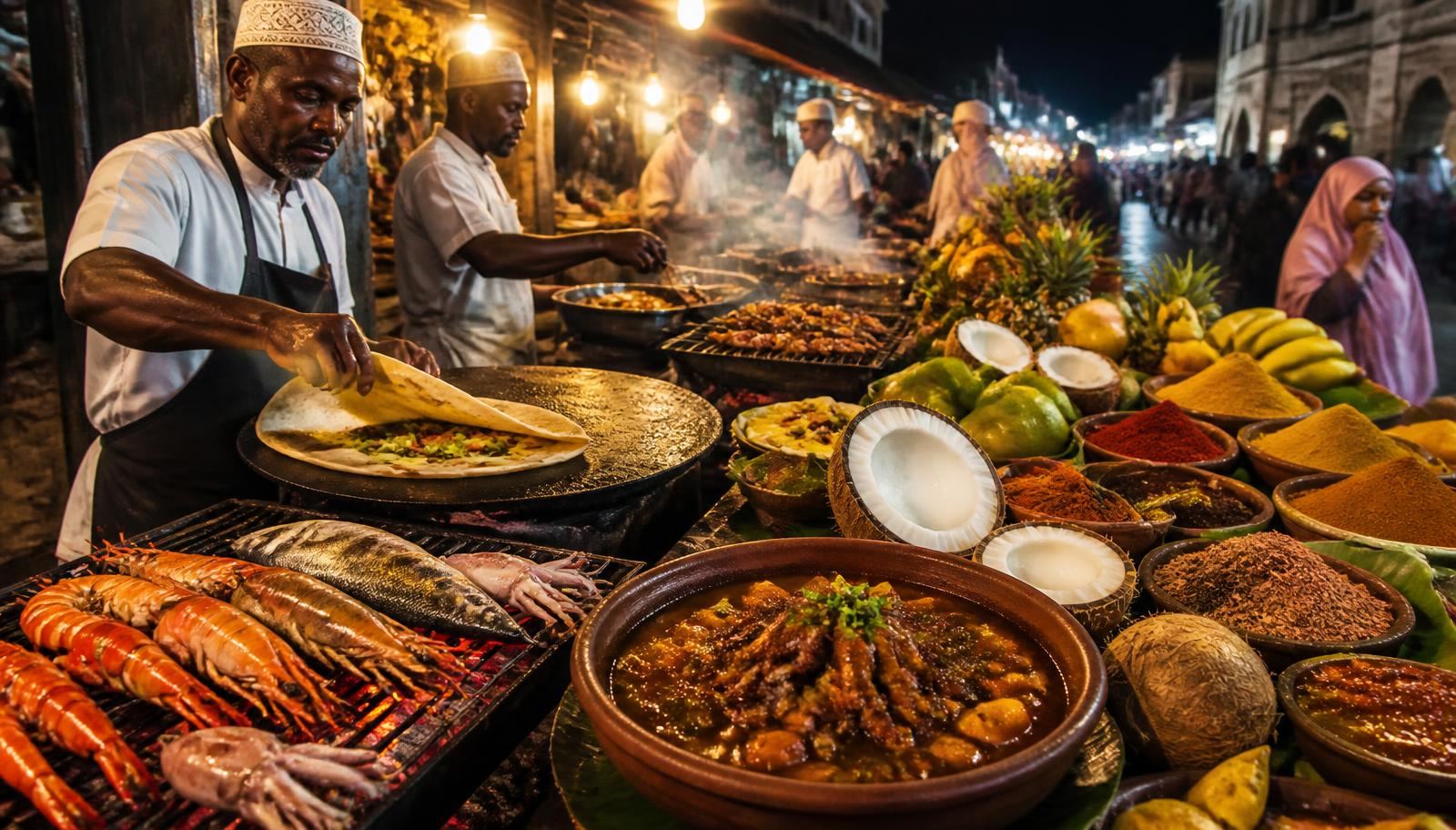
The old town is a maze of coral-rag buildings, carved doors and alleys that were built before cars and have not been widened since. You will get lost. Everyone gets lost. It is under a square kilometer and you can never be more than ten minutes from the waterfront, so let it happen. The essentials are the House of Wonders and the Old Fort on the seafront, the Anglican cathedral built over the old slave market with its underground chambers, the Darajani market, the Freddie Mercury house, and the Forodhani Gardens night food market where the whole city seems to eat.
Stay inside the old town rather than in the newer part of Zanzibar City. Several former merchant houses have been restored into small hotels with rooftop terraces, and having a terrace to retreat to when the midday heat peaks makes a real difference. It is also the natural place for your first or last night given how close the airport is.
Best Beaches
Beyond the main bases, a handful of beaches are worth a day trip or a night or two of their own.
- Kendwa Beach — the best all-round swimming beach on the island, wide, deep and sunset-facing.
- Nakupenda Sandbank — a pure white sand spit that appears at low tide off Stone Town. Half-day boat trips include grilled seafood on the sand. Touristy and still wonderful.
- Mnemba Atoll — you cannot land on the private island, but the surrounding water is the best snorkeling in Zanzibar.
- Michamvi Kae — on the western side of the southeast peninsula, one of the few east-coast spots that faces the sunset. Home to The Rock restaurant.
- Pongwe — a small crescent bay on the east coast, reef-sheltered and unusually calm. A good compromise if you want the east coast without the extreme tides.
- Kizimkazi — the far south, base for dolphin trips. Choose an operator that keeps a respectful distance rather than one that chases pods.
- Prison Island — a short boat ride from Stone Town, home to a colony of Aldabra giant tortoises, some over a century old.
Top Things To Do
Spice farm tour
The classic Zanzibar excursion and genuinely good when you get a knowledgeable guide. You walk a working farm tasting and smelling cloves, cardamom, cinnamon bark, vanilla, lemongrass, nutmeg and turmeric straight from the plant. Most tours include a Swahili lunch. Go in the morning before the heat, and buy your spices at the farm rather than the airport.
Stone Town walking tour
Three hours with a good local guide will teach you more than a day of wandering. Ask for someone who covers the slave trade history properly rather than skating past it.
Jozani Chwaka Bay National Park
The last significant stand of indigenous forest on the island and the only place on earth to see the Zanzibar red colobus monkey, an endemic species with maybe a few thousand individuals left. There is also a boardwalk through mangroves. Two hours, easily combined with a southeast-coast transfer.
Sunset dhow cruise
Do this once, from Stone Town or from Kendwa. A traditional hand-rigged wooden dhow, the sail going up, the light dropping — it is the image people carry home. Book through your hotel; the difference between a well-run dhow and a leaky one with no life jackets is entirely about who you book with.
Snorkeling and diving at Mnemba
Half-day snorkel trips from Matemwe or Nungwi run around $40 to $70 per person plus the marine park fee. Certified divers should budget $80 to $120 for a two-tank dive. Turtles are almost guaranteed.
Kitesurfing in Paje
Beginner courses run three to five days and cost roughly $400 to $600 with equipment. The schools in Paje are professional and the lagoon is about as forgiving a learning environment as exists.
The Rock restaurant
A small restaurant perched on a coral outcrop in the sea off Michamvi. You walk out at low tide and take a boat back at high. The food is decent, the setting is the point, and you must reserve well in advance.
Swimming with dolphins at Kizimkazi
Included here with a caveat: this excursion is often run badly, with boats chasing pods. If it matters to you, insist on an operator with a no-chase policy, or skip it.
Local Food
Swahili coastal cooking is one of the great underrated cuisines — a blend of Indian, Arab, Persian and African influence built on coconut, tamarind, cardamom, chili and whatever came off the boat that morning. Eat outside your hotel at least a few times. The food is better and it costs a quarter as much.
- Zanzibar pizza — not a pizza. A thin dough parcel stuffed with minced meat, egg, onion and cheese, folded and fried on a griddle at Forodhani market. Get the Nutella-and-banana version afterward.
- Urojo (Zanzibar mix) — a tangy turmeric soup with bhajia, potato, crisps and chutney. Sounds chaotic, tastes brilliant.
- Octopus curry — slow-cooked in coconut milk with cardamom and lime. The dish I order most often on the island.
- Pweza wa nazi and wali wa nazi — coconut octopus with coconut rice, the classic pairing.
- Mishkaki — marinated grilled skewers, sold from street grills everywhere after dark.
- Grilled kingfish or red snapper — whole, with lime and chili, at a beach shack for a fraction of the hotel price.
- Spiced Zanzibar coffee and tangawizi — thick black coffee from a street urn, and ginger tea that will clear your head.
A practical note on Forodhani market: it is a genuine local institution and also the most common source of upset stomachs among visitors. Eat where the queue is longest and the food is cooked in front of you, skip anything sitting out lukewarm, and avoid pre-cut fruit and unsealed juice.
Getting Around Zanzibar
The island is small but the roads are mixed, and journeys take longer than the map suggests. Stone Town to Nungwi is about 60 kilometers and takes an hour and a half. Stone Town to Paje is roughly an hour. Nungwi to Paje, crossing the island, is close to two hours.
- Private transfers — the standard for most visitors. Expect $50 to $90 per vehicle each way depending on distance. Arrange through your hotel or operator and the driver will be waiting with your name.
- Shared shuttles — $15 to $25 per person on fixed routes. Slower, with multiple hotel stops, but perfectly comfortable.
- Taxis — plentiful, unmetered. Agree the fare before you get in. Short Stone Town hops run 5,000 to 15,000 TZS.
- Daladala — the local minibuses. Cheap, slow, crowded and a genuine cultural experience. Fine for short hops if you have time and patience.
- Scooters and motorbikes — widely rented and the source of most tourist injuries here. You need a Zanzibar permit on top of an international license. I do not recommend it.
- Bicycles — excellent within a village like Jambiani or Paje, useless for crossing the island.
Money & Payments
The Tanzanian shilling is the local currency and the US dollar is the parallel tourist currency. You will use both. Hotels, dive centers, park fees and tours are usually priced in dollars; restaurants, taxis, markets and shops run in shillings.
Bring US notes printed in 2013 or later, in good condition — no tears, no heavy creasing, no writing. Older series notes are commonly refused outright. Large denominations ($50 and $100) get a noticeably better exchange rate than small ones, so bring a mix: big notes for changing, small notes for tips and entry fees.
ATMs are reliable in Stone Town, at the airport and in Nungwi, and dispense shillings with per-transaction limits typically around 400,000 TZS. Cards are accepted at most hotels and established restaurants with a 3 to 5 percent surcharge, but there is no card acceptance at village restaurants, boat operators, market stalls or with taxi drivers. Tell your bank you are traveling; Tanzanian transactions trigger fraud blocks routinely.
| Tier | Accommodation | Food | Transport | Daily total |
|---|---|---|---|---|
| Budget | $30–$70 guesthouse or beach bungalow | $15–$25 a day at local restaurants | Shared shuttle $15–$25 per leg | $60–$100 per person |
| Mid-range | $120–$280 beach hotel with breakfast | $40–$70 a day, hotel dinners included | Private car $50–$90 per transfer | $150–$300 per person |
| Luxury | $400–$1,200+ boutique or private island | Mostly full board or all-inclusive | Private transfer or short flight | $400–$1,200+ per person |
On tipping: it is expected but modest. Around 10 percent at restaurants where service is not included, $5 to $10 per day for a private driver, $10 to $20 for a dive instructor after a good day, and a few dollars for hotel housekeeping left at the end of your stay. If you are budgeting the whole Tanzania trip rather than just the island, our Tanzania safari cost breakdown covers the mainland side in detail.
Internet & SIM Cards
Connectivity is better than most visitors expect. Buy a local SIM at the airport counter on arrival — Vodacom and Airtel have the strongest coverage, Halotel is cheaper but patchier on the east coast. You will need your passport to register the line, which takes about five minutes. Roughly 10,000 to 25,000 TZS (about $4 to $10) buys a generous data bundle that will comfortably last a week.
An eSIM works well if your phone supports it and you would rather arrive connected — several international providers cover Tanzania and activation takes minutes. It costs more than a local SIM but saves you the airport counter.
Hotel wifi is normal in Stone Town and in the northern resorts, and variable on the east coast where several properties run on satellite or limited fiber. Assume it is fine for messaging and email, unreliable for video calls, and treat any promise of streaming-grade wifi at a remote beach hotel with mild skepticism. Power cuts are routine; most decent hotels have generators, but pack a power bank.
What To Pack
Zanzibar packing is mostly about heat, sun and cultural context. You need less than you think, but a few specific items make a real difference.
Zanzibar packing essentials
- Lightweight, loose cotton or linen clothing in light colors
- A kanga or light scarf for covering shoulders in villages and Stone Town
- Long shorts or trousers and a top with sleeves for anywhere off the beach
- Reef-safe sunscreen SPF 50 — expensive and hard to find locally
- Wide-brim hat and polarized sunglasses
- Reef shoes or old sneakers for walking the tidal flats and rocky shore
- Insect repellent with DEET or picaridin for dusk and dawn
- A refillable water bottle plus a filter bottle if you want to skip plastic
- Basic medical kit: rehydration salts, antihistamine, plasters, stomach remedy
- Any prescription medication in original packaging with the prescription
- Universal adapter for Type G (UK three-pin) sockets
- Power bank for outages and long transfer days
- Dry bag for boat excursions — spray gets everywhere on a dhow
- Snorkel mask if you are fussy about fit; rentals are fine but generic
- Printed copies of your visa approval, insurance policy and hotel bookings
- Small US dollar bills for entry fees, tips and levies
If you are combining Zanzibar with safari, pack for both in one soft-sided bag under the light-aircraft weight limit, and keep the safari neutrals separate from the beach gear. Our Tanzania safari packing list covers the bush half.
Local Culture & Etiquette
Zanzibar is roughly 98 percent Muslim, and while the tourism industry is used to foreigners, the villages you drive through are not resort infrastructure — they are people's homes. A small amount of cultural awareness will change how you are treated here, and it costs you nothing.
- Dress modestly away from the beach. Swimwear belongs on the sand and at the pool only. In Stone Town and villages, cover shoulders and knees. This applies to men too — no shirtless walking.
- Ask before photographing people. Especially women and children. A smile and a gesture at your camera is enough. Many will say yes; respect the ones who do not.
- Greet before you ask. "Jambo" works, but "Habari?" or "Mambo?" is better, and "Asante sana" for thank you goes a long way. Skipping the greeting to get straight to a question reads as rude.
- Use your right hand for eating, greeting and passing money.
- Keep public affection minimal. Holding hands is fine; anything beyond that is uncomfortable for people around you.
- Respect Ramadan. If your dates fall during it, avoid eating, drinking or smoking in public during daylight in town, and expect reduced local restaurant hours.
- Homosexuality is criminalized in Tanzania. LGBTQ+ travelers visit without incident regularly, but discretion in public is genuinely necessary and it is only fair that you know before you book.
- Bargain gently. Haggling is normal in markets and expected, but do it with humor and stop when you are arguing over the equivalent of a dollar.
Planning Zanzibar as Part of a Tanzania Trip
Most people who come to Zanzibar from far away are also coming to Tanzania, and it would be a shame to fly this distance and see only the island. The structure that works best, almost without exception, is safari first and beach second. Safari mornings start before sunrise, the roads are dusty and the days are long — that is far more enjoyable on fresh legs at the start of a holiday. Finishing on a beach gives the trip a natural downshift.
A typical two-week shape looks like this: arrive Kilimanjaro, one night in Arusha, then six or seven days across Tarangire, the Ngorongoro Crater and the Serengeti, a direct flight from a Serengeti airstrip to Zanzibar, two nights in Stone Town, four nights on the coast, and home. Ten days works too if you trim the safari to four or five nights and the island to four. If it is your first time in East Africa, our first-time safari guide and the broader ultimate Tanzania travel guide will fill in the mainland detail. When you are ready to actually book, our guide to booking a Tanzania safari explains how deposits, permits and operator vetting work.
Common Questions
Frequently Asked Questions
Yes, and it is worth more than the postcard version suggests. The beaches genuinely are among the best in the Indian Ocean — powdery white sand, water that runs through five shades of blue in a single afternoon, and reefs close enough to swim to. But what makes Zanzibar unusual is that it is not only a beach destination. Stone Town is a UNESCO World Heritage Site with a thousand years of Swahili, Omani, Persian, Indian and European history layered into its alleys, and you can spend two days there without repeating a street. Add spice farms, Jozani's red colobus monkeys, dolphin swims off Kizimkazi, sandbank picnics and some of the best seafood on the East African coast, and you have a destination with real texture. Travelers who leave disappointed are usually the ones who booked the wrong coast for the experience they wanted, which is exactly what this guide is written to prevent.
Five to seven nights is the sweet spot. Two nights in Stone Town covers the historic core, the spice farms and a sunset dhow without rushing, and then four to five nights on a beach gives you enough time to actually relax rather than spend your holiday in transit. Three nights is doable if Zanzibar is a short add-on to a safari, but you will spend a meaningful slice of it on transfers. Ten nights or more suits divers, honeymooners who want to split two coasts, and anyone who wants to include Pemba or Mnemba. If you are combining the island with a mainland safari, most of our clients land on six or seven days of safari followed by five nights in Zanzibar, which works out to a two-week trip that never feels hurried.
It is more affordable than the Maldives or Seychelles and more expensive than most people expect from East Africa. As a rough guide for 2026, budget travelers manage on $60–$100 per person per day using guesthouses, local restaurants and shared transfers. Mid-range travelers spend roughly $150–$300 per person per day for a good beach hotel, breakfast and dinner, a couple of excursions and private transfers. Luxury runs from $400 to well over $1,200 per person per day at the boutique and private-island end. The costs that surprise people are the $50 tourist infrastructure levy, transfers across the island ($50–$90 each way by car), and the fact that many beach hotels are remote enough that you will eat most meals on site at resort prices. Food and drink in Stone Town, by contrast, are genuinely cheap.
There is no single best beach — there is a best beach for you. Nungwi in the far north has the least tidal variation on the island, so you can swim at any hour, and it has the most restaurants, bars and dive shops. Kendwa, just around the corner, has the same tide advantage with a calmer, more resort-like feel and the island's best sunsets. Paje on the southeast coast is the kitesurfing capital, young and social, with dramatic tides and a shallow turquoise lagoon. Jambiani, just south of Paje, is the quiet fishing-village version of the same coast. Matemwe on the northeast is the choice for divers and snorkelers because Mnemba Atoll sits offshore, and it is peaceful and low-rise. If you want one recommendation for a first visit with mixed interests, Kendwa or Matemwe rarely disappoints.
Yes — it is the most popular way to see Tanzania and the reason the phrase 'bush and beach' exists. Zanzibar is a short flight from the safari circuit: about 75 to 90 minutes direct from the Serengeti's airstrips, or roughly an hour from Arusha and Kilimanjaro International. Domestic carriers fly these routes daily, and the transfer is genuinely easy. The standard structure is safari first, beach second — six to eight days across Tarangire, the Ngorongoro Crater and the Serengeti, then a direct flight to Zanzibar for four to six nights. Baggage limits on the small safari aircraft are typically 15 kg in soft bags, so plan luggage accordingly. Our dedicated Zanzibar and safari guide walks through the routing, the flight logistics and sample itineraries in more detail.
Zanzibar is generally safe, and violent crime against visitors is rare. The realistic risks are opportunistic: bag snatching on quiet beaches at night, phone theft in crowded parts of Stone Town, overcharging by unofficial taxis, and beach touts selling excursions that do not exist. Sensible precautions cover almost all of it — use hotel safes, do not walk isolated beaches after dark, agree taxi fares before you get in, and book tours through your hotel or operator. Solo female travelers report generally positive experiences, though dressing modestly outside beach areas reduces unwanted attention considerably. Health-wise, malaria prophylaxis is recommended, drink bottled or filtered water, and travel insurance with medical evacuation cover is essential because the island's serious-care options are limited and mainland transfer may be required.
The Tanzanian shilling (TZS) is the official currency, and it is what you will use in local restaurants, shops, markets and daladala buses. US dollars are widely accepted for hotels, tours, park entry and diving, and many mid-range and upscale properties quote in dollars. Bring clean, undamaged US notes printed in 2013 or later; older notes are frequently refused by banks and hotels. ATMs are reliable in Stone Town, Nungwi and at the airport, and dispense shillings with typical withdrawal limits around 400,000 TZS per transaction. Card payment works at most hotels and established restaurants, usually with a 3–5% surcharge, but you should never rely on cards alone — plenty of good local places, boat captains and market stalls are cash only. Mobile money is common locally but is awkward for short-stay visitors.
June through October is the most reliable window: dry, sunny, warm days around 28–30°C, low humidity and calm seas. This overlaps perfectly with the peak safari season on the mainland, which is why bush-and-beach trips cluster here. December to February is the second peak — hotter and more humid, with brief afternoon showers, but excellent water clarity for diving and the best chance of whale sharks off Mafia. The long rains from mid-March through May bring genuine downpours, some hotels close, and while prices drop sharply, it is not the time for a once-in-a-lifetime honeymoon. November's short rains are patchy and often perfectly pleasant. If you want the honest answer: July, August, September and early October are as close to guaranteed good weather as Zanzibar gets.
Conclusion
Zanzibar rewards travelers who plan the details and then let the island set the pace. Get the coast right for the kind of days you want, respect the tides, spend at least two nights in Stone Town rather than treating it as an airport stopover, dress with a little cultural awareness, and carry enough cash for the places that matter. Do that and you will come home with the version of Zanzibar people talk about for years — the dhow sail at golden hour, the smell of cloves on a farm path, grilled kingfish eaten with your fingers, and a stretch of water so clear you keep checking whether the boat is actually floating.
My last piece of advice is the least measurable one. Zanzibar operates at its own speed and it will not be hurried. Boats leave when they are ready, the tide arrives when it arrives, and the kitchen starts your fish after you order it, not before. The travelers who fight that spend their week frustrated. The ones who let the island set the tempo leave already planning the return trip. Go with a plan for the parts that need planning — the coast, the timing, the visa, the cash — and no plan at all for the rest.
Plan Your Zanzibar and Safari Trip With Olympus Adventure
Olympus Adventure is a Tanzanian-owned company based in Arusha. We build custom itineraries that pair the northern safari circuit with Zanzibar, handle the domestic flights and transfers between them, and match you to the coast and the hotel that actually suits how you like to travel rather than whatever has the biggest commission attached.
Tell us your dates, your budget range, how many nights you have, and what you want from the beach half — swimming, diving, kitesurfing, honeymoon quiet or something your kids will love. We will come back with an honest recommendation, a realistic day-by-day plan and a transparent quote. If we think your dates are wrong for what you want to do, we will tell you before you book rather than after you arrive.
Keep Reading
More Zanzibar Guides
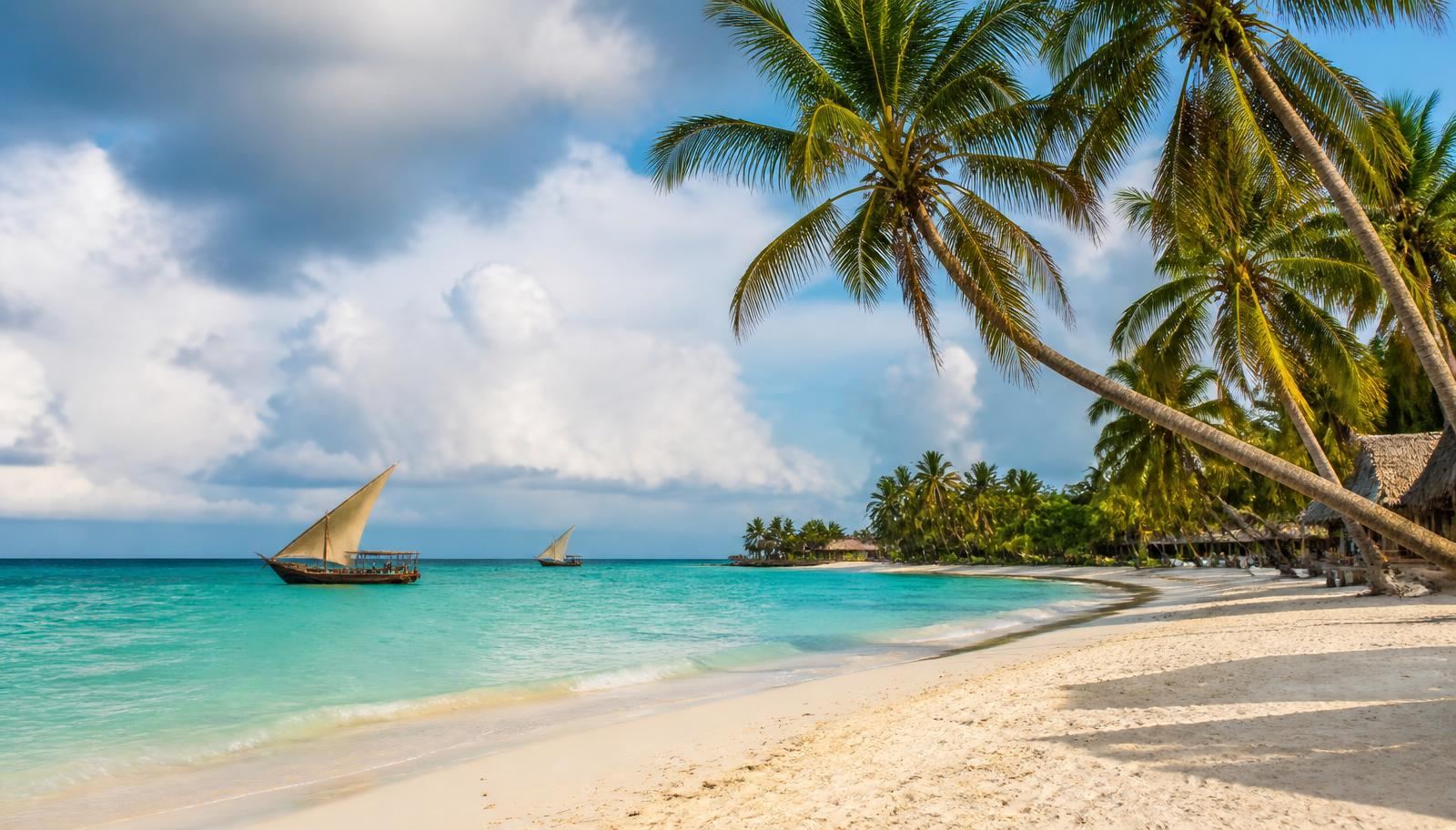
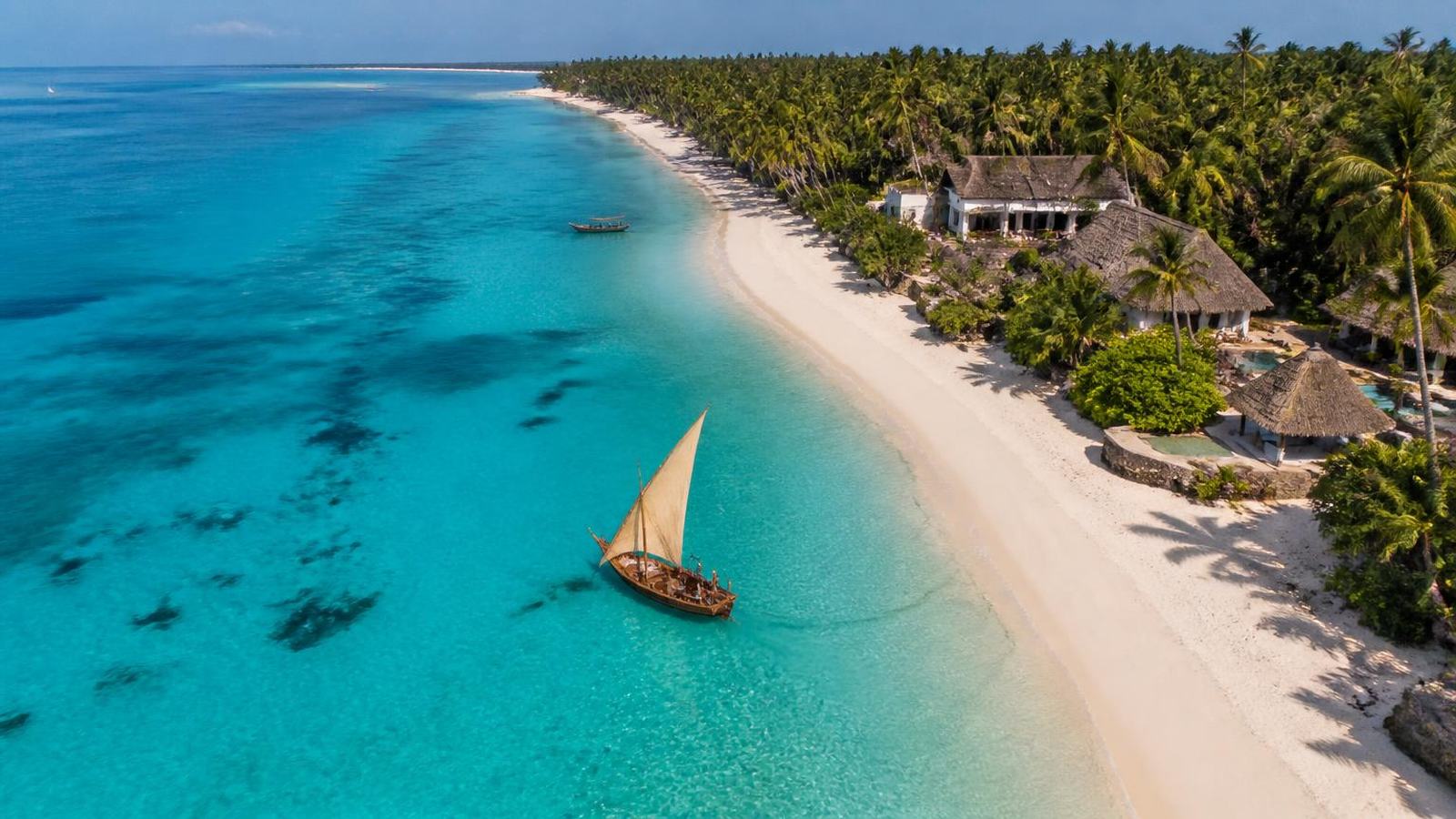
Zanzibar
Best Beaches in Zanzibar: Complete Guide to Choosing the Perfect Beach
Plan Your Journey
Ready to explore Tanzania?
Let our Arusha-based safari specialists craft a private, tailor-made itinerary around you — no middlemen, no templates, just your perfect journey.
- TALA Licensed Operator
- 4.9 ★ Guest Rating
- No Booking Fees