
Zanzibar Travel
Zanzibar Travel Cost Guide: How Much Should You Budget?
Real prices from the ground up — flights, hotels, food, taxis, excursions and the fees nobody mentions until you're paying them.

Introduction
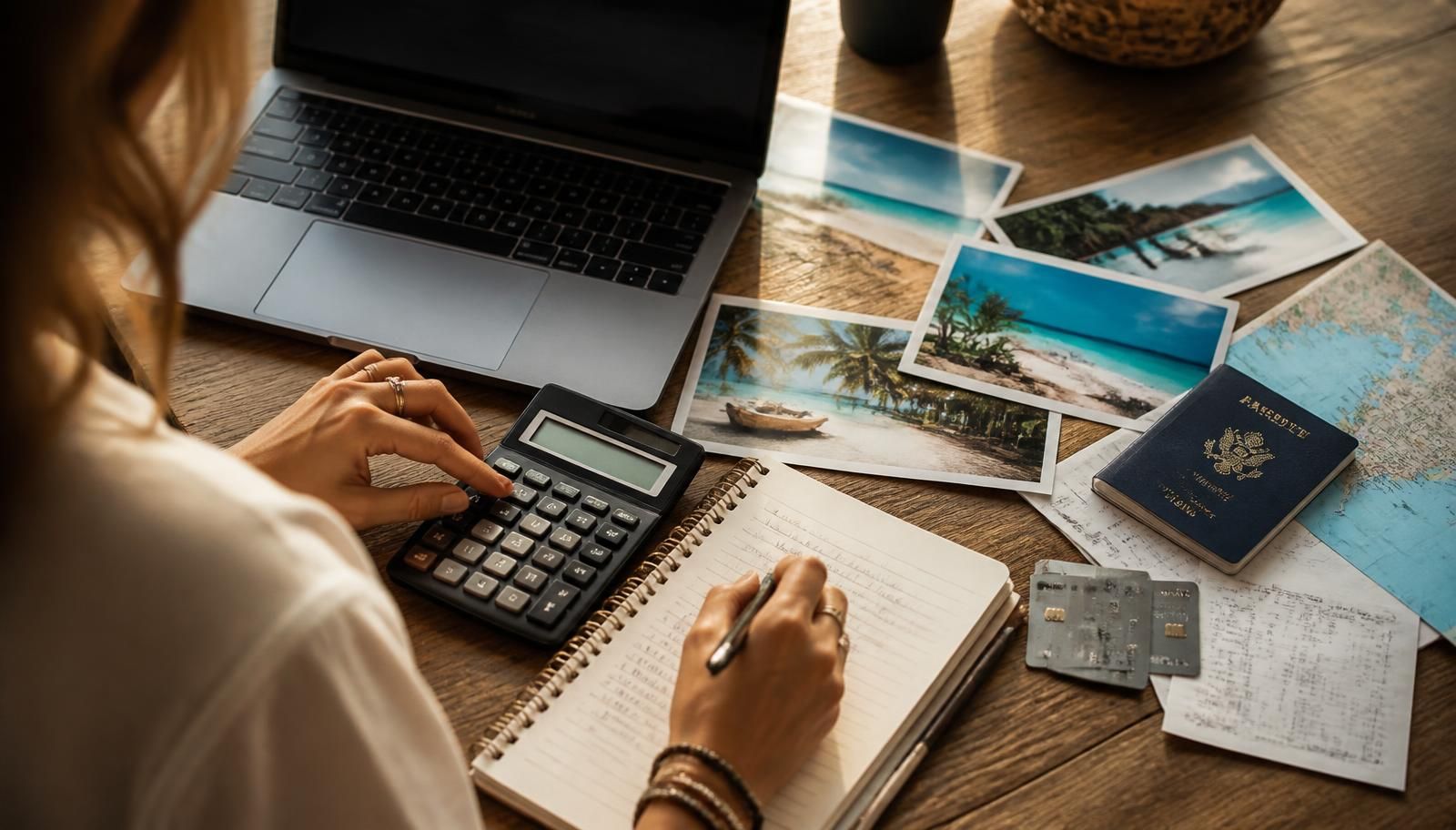
The question I get more than any other is some version of "what does a week in Zanzibar actually cost?" And the honest answer — anywhere from $600 to $15,000 — is useless without context. So this guide gives you the context: what each individual piece costs, why the price is what it is, and how the pieces add up differently depending on the kind of traveler you are.
Zanzibar has an unusual cost structure, and understanding it is most of the battle. Anything produced locally is genuinely cheap. A plate of grilled kingfish with coconut rice at a village restaurant is four dollars. A dala-dala across the island costs less than a bottle of water at your hotel. But anything imported — wine, cheese, sunscreen, sparkling water, air conditioning, a bottle of gin — carries duty, shipping and a resort markup that can triple a European price. The travelers who blow their budgets here aren't the ones who splurged on a nice hotel. They're the ones who never left the hotel.
Every number in this guide reflects what our guests and our team are actually paying in 2026, quoted in US dollars because that's how tourism prices are set on the island. Tanzanian shillings are used locally, and at the time of writing the rate hovers around TZS 2,600 to the dollar. Rates move; the structure of costs doesn't.
If you're still shaping the trip itself rather than the budget, our complete Zanzibar travel guide covers the practicalities, and the best time to visit Zanzibar matters here more than most people expect — season alone can swing your accommodation cost by 60%.
Is Zanzibar Expensive?
Compared to what? That's not a dodge — it's the only way the question has an answer. Set against Southeast Asia, Zanzibar is expensive. A beachfront room in Thailand that costs $60 costs $140 here, and there's no equivalent to the two-dollar Thai street meal at scale. Set against the Maldives, the Seychelles or Mauritius, Zanzibar is a bargain, sometimes by half. Set against a week in Italy or the Caribbean in high season, it's roughly comparable at the mid-range and clearly cheaper at the top end.
The structural reason is that Zanzibar has a two-track economy. There's a local economy where a family eats well on a few dollars, and a tourism economy priced in dollars for international visitors. Most destinations have some version of this split, but here the gap is unusually wide, and unusually easy to cross. You can walk out of a $400-a-night resort, turn left, and buy dinner for three dollars. Almost nowhere else in this price bracket lets you do that.
What that means practically is that your budget is far more elastic than the brochures suggest. Two travelers on the same island in the same week can spend $60 and $900 a day respectively, and both can have an excellent time. The distinguishing factor isn't luck, it's where they sleep and how much of their day happens inside a resort perimeter.
Where Zanzibar is genuinely cheap
- Local food. Urojo soup, pilau, chips mayai, grilled octopus, mishkaki — all under $5, all excellent. Our Zanzibar food guide covers what to order and where.
- Public transport. A dala-dala across the island costs under two dollars.
- Fresh produce and seafood. Darajani market prices are a fraction of Western equivalents.
- Guesthouses and small hotels. Clean, friendly, family-run rooms at $30–60 exist all over the east coast.
- Guiding and labor. A knowledgeable private guide for a full day costs less than a single restaurant dinner at a resort.
Where Zanzibar is expensive
- Imported anything. Wine, spirits, cheese, chocolate, branded toiletries and sunscreen carry heavy duty. A bottle of wine that's $12 at home is $45–70 on a resort list.
- Taxis. There are no meters, and tourist fares bear no relation to local costs.
- Resort food and drinks. Captive pricing, particularly on the remote stretches of the east coast.
- Flights. Zanzibar is far from everywhere, and the last leg into ZNZ is rarely cheap.
- Peak-season accommodation. Christmas, New Year and August rates are inflated well beyond the value delivered.
Flights
For most international travelers this is the largest single line item, and it's the one with the widest swing. Zanzibar's Abeid Amani Karume International Airport (ZNZ) has grown a lot in the past few years — the new terminal handles the traffic far better than the old one did — but there are still no direct long-haul flights from North America. Everyone connects, usually through Doha, Dubai, Istanbul, Addis Ababa or Nairobi.
Two things move the price more than anything else: the month you fly and how far in advance you book. Fares into Zanzibar in the last week of December can be double the same seat in May. Booking four to six months out for high season, and two to three months out for shoulder season, is the sweet spot in my experience. Last-minute deals to Zanzibar mostly don't exist, because the flights fill.
| From | Low season | Peak season | Notes |
|---|---|---|---|
| US East Coast | $850–1,200 | $1,400–2,100 | One stop via Doha, Istanbul, Addis Ababa or Amsterdam; 18–24 hours total |
| US West Coast | $1,050–1,450 | $1,600–2,400 | Usually two stops; consider an overnight in Doha or Istanbul on the way out |
| London / UK | $620–900 | $1,000–1,500 | Qatar, Turkish and Ethiopian are the reliable routings |
| Western Europe | $580–850 | $950–1,400 | KLM, Turkish and Qatar; seasonal charters from Italy and Poland can be far cheaper |
| Middle East hubs | $320–520 | $550–800 | Direct flights from Doha, Dubai and Muscat |
| Nairobi / Kenya | $180–320 | $300–450 | Short hop; often the cheapest way in from anywhere in East Africa |
| Dar es Salaam | $60–110 | $90–150 | 20-minute flight; ferry alternative at $35–50 each way |
| Serengeti / Arusha (internal) | $250–380 | $320–450 | Bush flight with a 33 lb (15 kg) soft-bag limit |
Accommodation Costs
This is where your budget is actually decided. Zanzibar has one of the widest accommodation ranges of any beach destination I know, running from twelve-dollar dorm beds in Paje to Mnemba Island at well over two thousand a night, with genuinely good options at almost every point in between.
Rates below are for two people sharing, in shoulder season. Expect to pay 30–50% more in July–August and 50–80% more between December 20 and January 5. Conversely, April and May — the long rains — see rates fall by up to half, and a fair number of properties simply close.
| Tier | Per night | What you get | Where |
|---|---|---|---|
| Hostel dorm | $12–25 | Fan or basic AC, shared bathroom, often a kitchen | Paje, Jambiani, Stone Town backpacker scene |
| Local guesthouse | $25–50 | Private room, fan, cold or solar-heated water, breakfast sometimes included | Village stays in Jambiani, Bwejuu, Kizimkazi |
| Budget beach hotel | $50–90 | AC, private bathroom, pool, breakfast, near the sand | Nungwi, Paje, Kendwa second-row properties |
| Mid-range boutique | $120–250 | Beachfront, real AC, pool, decent restaurant, half board available | Matemwe, Michamvi, Pongwe, boutique riads in Stone Town |
| Upper mid / 4-star | $250–450 | Larger resort, multiple restaurants, spa, watersports desk, often all-inclusive | Kiwengwa, Pwani Mchangani, Nungwi resort strip |
| Luxury 5-star | $500–900 | Private-villa feel, plunge pools, butler-level service, superb food | Matemwe, Michamvi Peninsula, Kizimkazi |
| Ultra-luxury / private island | $1,200–2,500 | All-inclusive, private guides, house reef, near-total seclusion | Mnemba Island and the very top Matemwe villas |
Board basis changes the math
Zanzibar hotels quote in four ways, and the differences are large enough to flip which hotel is actually cheaper. Bed and breakfast (BB) is the baseline. Half board (HB) adds dinner, typically for $25–45 per person per night. Full board (FB) adds lunch too. All-inclusive (AI) covers meals plus local drinks, and at the resort properties in Kiwengwa and Nungwi it can be extremely good value if you drink.
My rule of thumb: on the isolated east-coast stretches, take half board — you'd be paying resort prices for dinner anyway and the HB supplement is usually lower than the à la carte cost. In Nungwi, Kendwa, Paje, Jambiani and Stone Town, stay on bed and breakfast and eat out. You'll spend less and eat better.
Food & Drinks
Food is the most controllable part of your budget and the place where the local price and the tourist price diverge most sharply. The same grilled snapper — often from the same boat that morning — is $6 at a village restaurant in Jambiani and $48 at a beachfront hotel four hundred yards away.
None of that means resort dining is a rip-off. You're paying for imported ingredients, a trained kitchen, refrigeration through power cuts and a beachfront setting, and the best hotel restaurants on the island are genuinely excellent. But knowing the spread lets you choose deliberately instead of discovering it on the bill.
| Item | Local | Tourist restaurant | Resort |
|---|---|---|---|
| Breakfast | $2–4 | $7–12 | Usually included |
| Lunch | $3–6 | $10–18 | $20–35 |
| Dinner | $4–8 | $12–25 | $30–60 |
| Grilled seafood platter | $8–12 | $18–30 | $40–70 |
| Zanzibar pizza (Forodhani) | $2–3 | $3–5 | n/a |
| Local beer (Kilimanjaro / Safari) | $1.50–3 | $3–5 | $6–9 |
| Cocktail | $4–6 | $7–10 | $12–18 |
| Bottle of imported wine | n/a | $28–45 | $45–90 |
| Fresh juice / coconut | $0.60–1.50 | $2–4 | $5–8 |
| Bottled water (1.5 L) | $0.50–0.80 | $1–2 | $3–5 |
| Coffee (kahawa vs espresso) | $0.20–0.50 | $2–4 | $4–6 |
Two specific warnings. First, alcohol. Zanzibar is a Muslim island and alcohol is both taxed and imported, so it's disproportionately expensive relative to everything else. A couple who drink a bottle of wine each evening will add $300–500 to a week at a resort. If that's part of your holiday, price an all-inclusive property properly — it often wins. Second, bottled water. You shouldn't drink the tap water, and buying 1.5-liter bottles from a local shop at 60 cents instead of the minibar at four dollars saves a surprising amount over a week.
Transportation
Zanzibar is small — about 55 miles long — but the roads mean journeys take longer than the map suggests. Airport to Nungwi is 35 miles and 90 minutes on a good day. That distance is why transfer costs matter and why choosing a base near the things you want to do saves both money and hours.
| Mode | Typical cost | Notes |
|---|---|---|
| Airport → Stone Town taxi | $15–20 | 15 minutes; agree the price before getting in |
| Airport → Nungwi / Kendwa | $50–70 | About 90 minutes; pre-booked transfers sit at the low end |
| Airport → Paje / Jambiani | $40–55 | About 60–75 minutes across the island |
| Airport → Matemwe / Kiwengwa | $45–65 | 70–90 minutes depending on the road works of the month |
| Dala-dala (local minibus) | $0.50–2 | Cheap, slow, crowded, and an experience in itself |
| Private car + driver, full day | $70–100 | Best value for groups of three or more |
| Scooter rental | $15–25/day | Plus a $10 mandatory Zanzibar permit; roads are rougher than they look |
| Bicycle rental | $5–10/day | Practical on the flat east coast villages |
| Ferry Dar es Salaam → Zanzibar | $35–50 each way | Two hours; economy and VIP classes, book the fast ferry |
| Boat transfer to a private island | $60–150 return | Property-dependent, usually built into the rate |
A few things worth knowing. There is no Uber on the island, though local ride-hailing apps have started to appear and are inconsistent outside Stone Town. Taxi fares are negotiated, always, and the first price quoted to a visitor is typically 30–50% above what a resident would pay. Politely naming a lower figure and being willing to walk away works; being aggressive about it doesn't.
Renting a scooter looks like a bargain at $20 a day until you add the mandatory Zanzibar driving permit ($10, obtained through the rental agency), factor in the condition of the roads and the number of unlit speed bumps, and check whether your travel insurance actually covers you. Plenty of travelers do it happily. I'd only recommend it if you've ridden extensively before.
Activities & Excursions
Excursions are where a mid-range budget can quietly become a luxury one. Individually they look modest — thirty here, sixty there — but a couple doing five activities in a week easily adds $500–700 to the trip. Plan them into the budget from the start rather than treating them as extras.
Prices vary by where you book. Booking through your hotel is convenient and typically 20–40% more expensive than booking with a local operator directly. Booking through an international online platform before you travel is usually the most expensive option of all. Booking as part of a full package with an operator sits in between, with the advantage that everything is vetted and someone is accountable if the boat doesn't show up.
| Activity | Price / person | Duration | Notes |
|---|---|---|---|
| Stone Town walking tour | $20–35 | 3 hours | Private guide; worth it for the history you'd otherwise walk past |
| Spice farm tour | $20–35 | Half day | Usually includes lunch; tip the guide $5 |
| Prison Island + turtles | $30–45 | Half day | Boat plus a $5 sanctuary entry fee |
| Jozani Forest (red colobus) | $25–40 | Half day | $10 park fee included in most packages |
| Safari Blue full-day dhow | $60–90 | Full day | Seafood lunch, snorkeling, sandbank; the island's signature day out |
| Mnemba Atoll snorkeling | $50–80 | Half day | Plus a $10 marine park fee; go early for calm water |
| Two-tank scuba dive | $110–160 | Half day | PADI Open Water certification runs $450–600 |
| Sunset dhow cruise | $25–45 | 2 hours | Private charters from $120 for the boat |
| Kitesurfing lesson (Paje) | $60–90/hour | Varies | Full IKO course $450–650 |
| Dolphin tour, Kizimkazi | $30–50 | Half day | Choose an ethical operator that doesn't chase pods |
| The Rock Restaurant lunch | $45–80 pp | 2 hours | Book ahead; the tide decides whether you walk or wade |
| Sunset at Kendwa + beach party | $0–20 | Evening | Full-moon parties carry a cover charge |
If you're choosing between them on a limited budget, my ranking would be: the Stone Town walking tour first, because it changes how you see everything else on the island; then a full-day dhow trip; then Jozani Forest. The spice tour is enjoyable but similar in shape wherever you book it. Mnemba snorkeling is superb but weather and tide dependent, so keep it flexible in your schedule. Our full guide to things to do in Zanzibar goes deeper on which ones are worth the money.
Beach Resorts
Where you stay on the island affects far more than the view. Each coast has its own price level, its own tidal behavior and its own answer to the question of whether you'll spend money outside your hotel.
North coast — Nungwi and Kendwa
The busiest and most developed part of the island, with the widest spread of prices. Minimal tidal variation means you can swim all day, which is why families and first timers gravitate here. Rooms run $60–400, there are dozens of independent restaurants and bars, and it's the one part of Zanzibar where you can genuinely eat cheaply while staying beachfront. It's also the loudest.
East coast — Paje, Jambiani, Bwejuu
Kitesurfing country, big tides, long white beaches and a young, relaxed crowd. Value is excellent: $50–150 buys a lot here. Paje and Jambiani both have real villages with cheap restaurants, so daily spending stays low. The trade-off is that swimming is tide dependent and you'll need water shoes for the reef flat.
Northeast — Matemwe, Kiwengwa, Pongwe
This is where most of the four- and five-star resorts sit. Beautiful, quiet, and mostly self-contained, which means your total spend converges on your hotel's price list. Rooms run $200–900, and Matemwe is the launching point for Mnemba Atoll.
Southeast — Michamvi and Kizimkazi
The quietest coast and increasingly the most exclusive. Michamvi has sunset views from an east-coast beach, which is geographically unusual and much loved by honeymooners — our Zanzibar honeymoon guide covers this stretch in detail. Expect $250–1,200 and very few dining options outside your property.
Stone Town
Not a beach base, but a genuinely worthwhile one or two nights. Boutique riads at $80–250, restaurants at every price point, and the lowest daily spend of anywhere on the island if you eat where locals eat. Our Stone Town travel guide maps out what's worth your time.
Luxury vs Mid-range vs Budget
Here's the same trip built three ways. What's striking when you lay it out like this is how little the non-accommodation categories move in absolute terms compared to the room rate.
| Category | Budget | Mid-range | Luxury |
|---|---|---|---|
| Accommodation / night | $20–60 | $120–250 | $500–1,500 |
| Meals / person / day | $12–20 | $40–70 | $120–250 |
| Local transport / day | $3–10 | $20–40 | Private car included |
| Activities / day | $0–25 | $35–70 | $100–250 (private) |
| Drinks / day | $5–10 | $15–35 | Often all-inclusive |
| Typical daily total | $45–75 | $150–250 | $600–1,500 |
| 7 nights, per person | $400–620 | $1,200–1,900 | $4,500–10,000 |
| Booking style | Independent, walk-in | Mix of pre-booked and local | Fully arranged, private guide |
The most useful tier for most travelers is the top of budget or the bottom of mid-range — roughly $90–140 a night for two. At that level you get a clean, air-conditioned beachfront room with a pool and a decent breakfast, and you keep enough flexibility to eat out and take excursions. Below it, comfort drops faster than price. Above it, you're mostly buying service and finish rather than a fundamentally different experience of the island.
Sample Budgets
Four realistic seven-night budgets, based on trips we've actually costed. All figures exclude international flights, which vary too widely by origin to average meaningfully — add your own number from the flights table above.
Backpacker
1 person · 7 nights · independent
- Hostel dorms and guesthouses
- $140
- Food (mostly local)
- $110
- Dala-dalas and shared taxis
- $45
- Two excursions
- $95
- Drinks and incidentals
- $70
- Visa
- $50–100
- Mandatory insurance
- $44
$555–605 on the ground (excluding international flights)
Mid-range Couple
2 people · 7 nights · boutique beachfront
- Boutique hotel, half board
- $1,400
- Lunches and drinks out
- $420
- Airport transfers, return
- $110
- Four excursions for two
- $520
- Tips and incidentals
- $180
- Visas (2)
- $100–200
- Mandatory insurance (2)
- $88
$2,818–2,918 for the couple (excluding international flights)
Luxury Couple
2 people · 7 nights · 5-star beachfront
- Luxury villa, all-inclusive
- $5,600
- Private guide and car, 3 days
- $450
- Private dhow and Mnemba charter
- $700
- Spa treatments
- $400
- Premium wine and extras
- $550
- Private transfers
- $180
- Visas and insurance
- $188–288
$8,068–8,168 for the couple (excluding international flights)
Family of Four
2 adults + 2 children · 7 nights · family resort
- Two-bedroom family suite, half board
- $2,450
- Lunches, snacks and soft drinks
- $560
- Private car transfers, return
- $140
- Three family excursions
- $680
- Kids' club, watersports, extras
- $300
- Visas (children often reduced)
- $200–300
- Mandatory insurance (4)
- $176
$4,506–4,606 for the family (excluding international flights)
Reading these numbers properly
The backpacker budget assumes dorms, local food and dala-dalas, and it's achievable — I've watched plenty of travelers do it. But note that the visa and the mandatory insurance together account for nearly a fifth of the total. Fixed costs hit low budgets hardest, which is why very short budget trips to Zanzibar are poor value. Stay ten days rather than four.
The mid-range couple budget is the one that matches most of our guests. Roughly $2,900 on the ground for a week, plus flights, works out to about $200 per person per day for a genuinely comfortable holiday with real beachfront and four proper excursions. Shifting the same trip from August to June would knock about $500 off it.
The luxury budget is not the ceiling. Mnemba Island and the top Michamvi villas can take a week past $20,000 for two. What the $8,000 figure represents is the level at which everything is excellent and nothing is compromised, which for most people is a better target than the absolute top.
The family budget assumes children sharing a two-bedroom suite, which is far cheaper than two rooms and available at most resorts. Ask specifically about family suites and child rates; many properties offer free stays for under-sixes and 50% for under-twelves, and those discounts are frequently not shown online.
Money Saving Tips
These are ordered by how much they actually save, not by how often they appear in listicles.
- Shift your dates by two weeks. Moving from late July to mid-June, or from mid-December to late November, typically cuts accommodation 30–50% for near-identical weather. This saves more than every other tip combined.
- Choose a base with a village attached. Paje, Jambiani, Nungwi and Stone Town all let you eat outside your hotel. On an isolated resort stretch, your daily spend is set by someone else.
- Eat one local meal a day. Swapping a $35 resort lunch for a $5 village lunch saves roughly $210 per person over a week.
- Book excursions locally, in person. Same boats, same guides, typically 20–40% less than hotel desk prices. Ask other guests for a recommendation before you commit.
- Stay longer in fewer places. Hotels discount stays of five nights or more, and you avoid $50–90 of inter-coast transfer every time you move.
- Do the math on all-inclusive. If you drink and you're on a remote coast, AI frequently beats BB plus à la carte by $40–80 per person per day. If you don't drink, it almost never does.
- Buy water and snacks at local shops. A week of minibar water costs more than a good dinner.
- Withdraw cash in large amounts. Fewer ATM transactions at $4–7 each; better still, bring dollars and exchange at a bureau in Stone Town rather than at the airport.
- Travel as a group of four. Private cars, boat charters and family suites all price per unit, not per head. Four people pay barely more than two for a lot of things.
- Book the safari and the beach together. One operator, one internal flight arrangement, no duplicated transfers, and usually a better rate than two separate bookings.
Hidden Costs
None of these are secret exactly, but they're the ones that surprise people, and together they can add several hundred dollars to a family trip.
| Cost | Amount | Detail |
|---|---|---|
| Zanzibar mandatory inbound insurance | ~$44 per person | Required of all foreign visitors, bought from the designated provider before arrival — it does not replace your own travel insurance |
| Tanzania visa | $50 (most nationalities), $100 for US passports | US citizens receive the multiple-entry visa; apply online in advance |
| Infrastructure tax | $1 per person per night | Collected at check-out by every hotel, cash only at many properties |
| Card surcharges | 3–5% | Applied by most hotels and restaurants that accept cards |
| ATM fees | $4–7 per withdrawal | Plus your home bank's foreign transaction fee and a low per-withdrawal cap |
| Peak-season gala dinners | $80–150 per person | Compulsory at most beach hotels on December 24, December 31 and sometimes Easter |
| Marine and park fees | $5–15 per site | Mnemba, Chumbe, Jozani and Prison Island charge separately from the tour price |
| Tipping | 5–10% of your ground costs | $5–10 a day for a guide, $2–3 for housekeeping, 10% in restaurants without a service charge |
| Laundry | $1–3 per item at hotels | Village laundry services charge a fraction of that |
| Excess baggage on bush flights | $5–10 per kg over 15 kg | Applies to Serengeti–Zanzibar connections |
The visa deserves a note of its own. Most nationalities pay $50 for a single-entry tourist visa; US passport holders pay $100 and receive a multiple-entry visa valid for twelve months. Apply online in advance rather than on arrival — the queue at ZNZ after a long-haul flight is not how you want to start. Our Tanzania visa guide walks through the application step by step.
Tipping is the other item people under-budget. It's not obligatory in the way it is in the US, but it's expected in tourism and it matters a great deal to the people receiving it. Plan on $5–10 per day for a private guide, $10–15 per day for a driver, $2–3 per night for housekeeping, and 10% at restaurants that don't add a service charge. Across a week for two people, that's typically $120–200.
Adding a safari to the budget
Most of our guests don't come to Tanzania for Zanzibar alone, and the combined budget works differently than two separate trips. A mid-range northern-circuit safari runs roughly $350–550 per person per day, and the luxury tier $800–1,500. Add the internal flight at $250–450 and you can see the shape of a combined trip quickly. We break the numbers down properly in our Tanzania safari cost guide and go line by line in the Tanzania safari cost breakdown.
Frequently Asked Questions
Common Questions
Frequently Asked Questions
It depends entirely on how you travel, and the range is wider here than in most beach destinations. Backpackers genuinely live on $45–70 a day using guesthouses, local restaurants and dala-dalas. Mid-range travelers staying in good boutique hotels with half board, taking a couple of excursions and eating well spend $150–250 per person per day. Luxury travelers at the top properties on Mnemba, Matemwe or Kizimkazi easily spend $600–1,500 per person per day. What surprises people is that the ground costs are cheap while the imported layer — wine, international-brand toiletries, resort spa treatments, air-conditioning-heavy hotels — is priced like Europe. Zanzibar is not a cheap destination in the way Southeast Asia is, but it is far cheaper than the Maldives or the Seychelles at equivalent quality.
As a working number: $50–75 per person per day for budget travel, $150–250 for comfortable mid-range, and $400+ for luxury. Those figures include accommodation, food, local transport and a share of excursions, but not international flights or the visa. A useful sanity check is that accommodation typically accounts for 50–60% of the daily figure, food 15–25%, and activities the rest. If you're on a fixed budget, the single most effective lever is the hotel — moving one tier down on accommodation saves more than cutting every meal and taxi combined.
Local food is cheap and resort food is not. A plate of pilau, ugali and fish or chips mayai at a local place runs TZS 5,000–12,000, roughly $2–5. A meal at a mid-range tourist restaurant in Stone Town or Paje is $10–20 per person. Dinner at a beach resort restaurant is $25–50 per person, and top-end hotels charge $70–120 for a set menu. Drinks are where budgets quietly leak: a local Kilimanjaro beer is about $2–3 in a local bar but $6–8 at a resort, and a bottle of imported wine that costs $12 at home lands on a resort list at $45–70 because of import duty. Eating one meal a day outside your hotel is the easiest saving available to most travelers.
Taxis are the single most overpriced thing on the island relative to local costs, mostly because there are no meters and fares are negotiated. Expect $8–15 for short hops within Stone Town or between nearby beaches, $50–70 from the airport to Nungwi or Kendwa, $40–55 to Paje or Jambiani, and around $15–20 airport to Stone Town. Always agree the fare before you get in, in dollars or shillings explicitly, and confirm whether it's per car or per person. Dala-dalas — the local minibuses — cost under $2 for the same journeys but take two to three times as long and are genuinely uncomfortable with luggage. For a group of four, a private car with a driver for a full day at $70–90 usually beats individual taxi runs.
Sometimes, and less often than you'd like. Established hotels, upscale restaurants, dive centers and larger tour operators take Visa and Mastercard, but many add a 3–5% surcharge to cover their processing costs and some will tell you the machine is down when the network drops, which happens regularly. American Express is rarely accepted anywhere. Local restaurants, markets, taxis, spice farms, small guesthouses and almost every excursion vendor are cash only. Plan to pay your hotel by card and everything else in cash, and carry two cards on different networks in case one gets blocked.
Yes, and specifically US dollars in crisp bills printed 2009 or later. Older, torn or heavily marked notes are refused by the visa desk, exchange bureaus and many vendors. Most travelers do well bringing $300–600 per person in cash for a week, more if you plan several excursions. Bring a mix of denominations: large bills ($50s and $100s) get noticeably better exchange rates, while small bills are useful for tips, taxis and the visa fee. ATMs exist in Stone Town, Nungwi and at the airport, and they dispense Tanzanian shillings, but withdrawal fees of $4–7 per transaction plus low per-transaction caps make them an expensive way to fund a whole trip.
Considerably, at nearly every level. A comparable overwater-standard luxury experience in the Maldives typically starts around $900–1,200 per night, whereas Zanzibar's top beachfront properties run $500–900 and its excellent boutique hotels sit at $200–400. The bigger structural difference is that Zanzibar has an actual island economy you can step into — local restaurants, public transport, markets, independent excursions — while most Maldives resorts are private islands where every meal, drink and transfer is captive and priced accordingly. Zanzibar also has a $12–18 seaplane-free advantage: you arrive by road, not by a $400 return transfer. Where the Maldives wins is house-reef quality and guaranteed privacy; where Zanzibar wins is culture, food, flexibility and cost.
It's the most popular way to do Tanzania, and it's efficient. The usual shape is five to eight days on the northern safari circuit — Tarangire, Ngorongoro and the Serengeti — followed by four to seven nights on the coast, connected by a one-and-a-half to two-hour flight from the Serengeti or Arusha to Zanzibar. Budget roughly $250–450 per person for that internal flight. A combined ten-to-twelve-day trip typically lands at $4,500–7,500 per person for a good mid-range experience, and $9,000–15,000+ at the luxury end. Booking both halves with one operator matters more than people realize: it avoids a duplicated transfer, protects the connection if a bush flight shifts, and usually costs less than two separate bookings.
Conclusion
Zanzibar rewards travelers who plan with real numbers instead of averages. The island can absorb almost any budget — a $60 day and a $900 day both buy a genuinely good time here, they just look different — but the trips that go wrong financially are almost always the ones where nobody accounted for transfers, excursions, drinks and the peak-season surcharge until they were already on the island. Decide your accommodation tier first, add a realistic daily figure on top, set aside a few hundred dollars in cash for the things that don't take cards, and you'll have a budget that holds.
If you want the short version: pick your accommodation tier honestly, add $60–100 per person per day for everything else at the mid-range, budget $95–145 per person for the visa and mandatory insurance, and set aside a few hundred dollars in clean cash. Do that and Zanzibar will feel like remarkably good value — which, for what the island actually delivers, it is.
Plan Your Zanzibar Trip With Olympus Adventure
Olympus Adventure is a Tanzanian-owned company based in Arusha. We build private, tailor-made trips across the northern safari circuit and the Zanzibar coast, and we've spent years learning which properties deliver at each price point, which excursions justify their cost, and where the value quietly disappears.
Tell us your dates, how many nights you have and roughly what you'd like to spend, and we'll come back with a day-by-day itinerary and a fully transparent quotation — every transfer, park fee, excursion and tax listed, with nothing buried. If your budget and your wish list don't currently line up, we'll tell you plainly and show you the two or three changes that close the gap.
And if you want the full Tanzania experience — a week tracking lions and wildebeest across the Serengeti followed by a week doing very little on a white-sand beach — we handle the whole thing as one trip, including the internal flight and the luggage logistics that trip people up. Request a customized quotation and we'll take it from there.
Keep Reading
More Zanzibar Guides
Zanzibar
Zanzibar Travel Guide: Everything You Need Before Visiting the Island
Plan Your Journey
Want a real Zanzibar quotation, not a guess?
Send us your dates and budget and we'll design a tailor-made Zanzibar holiday — or a full Zanzibar and Tanzania safari combination — with every cost laid out clearly.
- TALA Licensed Operator
- 4.9 ★ Guest Rating
- No Booking Fees