
Zanzibar Travel
Stone Town Zanzibar Travel Guide: History, Attractions & Local Tips
A working guide to Zanzibar's historic heart — what to see, how to walk it, what to eat, what it costs and how to behave, from a Tanzanian team that sends travelers through these alleys every week.

Introduction
The first time most people walk into Stone Town they do it wrong. They arrive from the airport at two in the afternoon, drag a suitcase over uneven coral stone in thirty-two degree heat, get quoted three different prices for the same bottle of water, and decide within an hour that the beach was the right call after all. Then they come back down at six, when the heat has broken and the light has gone gold on the balconies, and something shifts. By the second morning they are the ones telling other travelers to stay another night.
Stone Town is not a difficult place. It is just a place with a rhythm, and the rhythm is not obvious to a visitor who has never been here. Everything worth doing happens early or late. The middle of the day belongs to shade, a fan and a cold Stoney Tangawizi. Once you understand that, the town stops feeling like an obstacle course and starts feeling like what it actually is: one of the last intact Swahili trading towns on the Indian Ocean, still lived in, still working, and still surprising after hundreds of visits.
This guide is written for the traveler who wants more than a two-hour taxi stop on the way to Nungwi. It covers the history that explains what you are looking at, the attractions worth your money and the ones that are not, walking routes that actually work, where the food is good, how to dress, what is safe and what is not, and how to fit Stone Town into a wider Zanzibar and Tanzania trip. Where useful, it links out to our complete Zanzibar travel guide and our guide to the best beaches in Zanzibar, which handle the island beyond the old town.
What Makes Stone Town Special?
Plenty of historic towns survive along the East African coast. Lamu, Kilwa, Mombasa's old town, Bagamoyo — each has fragments of the same Swahili world. What sets Stone Town apart is density and continuity. Roughly two square kilometers hold more than a thousand buildings, most of them built between the 1830s and the 1920s, and almost all of them still in use. Somebody lives above the shop. The mosque three doors down has been calling the same neighborhood to prayer for a century and a half. The town never stopped functioning long enough to become a monument.
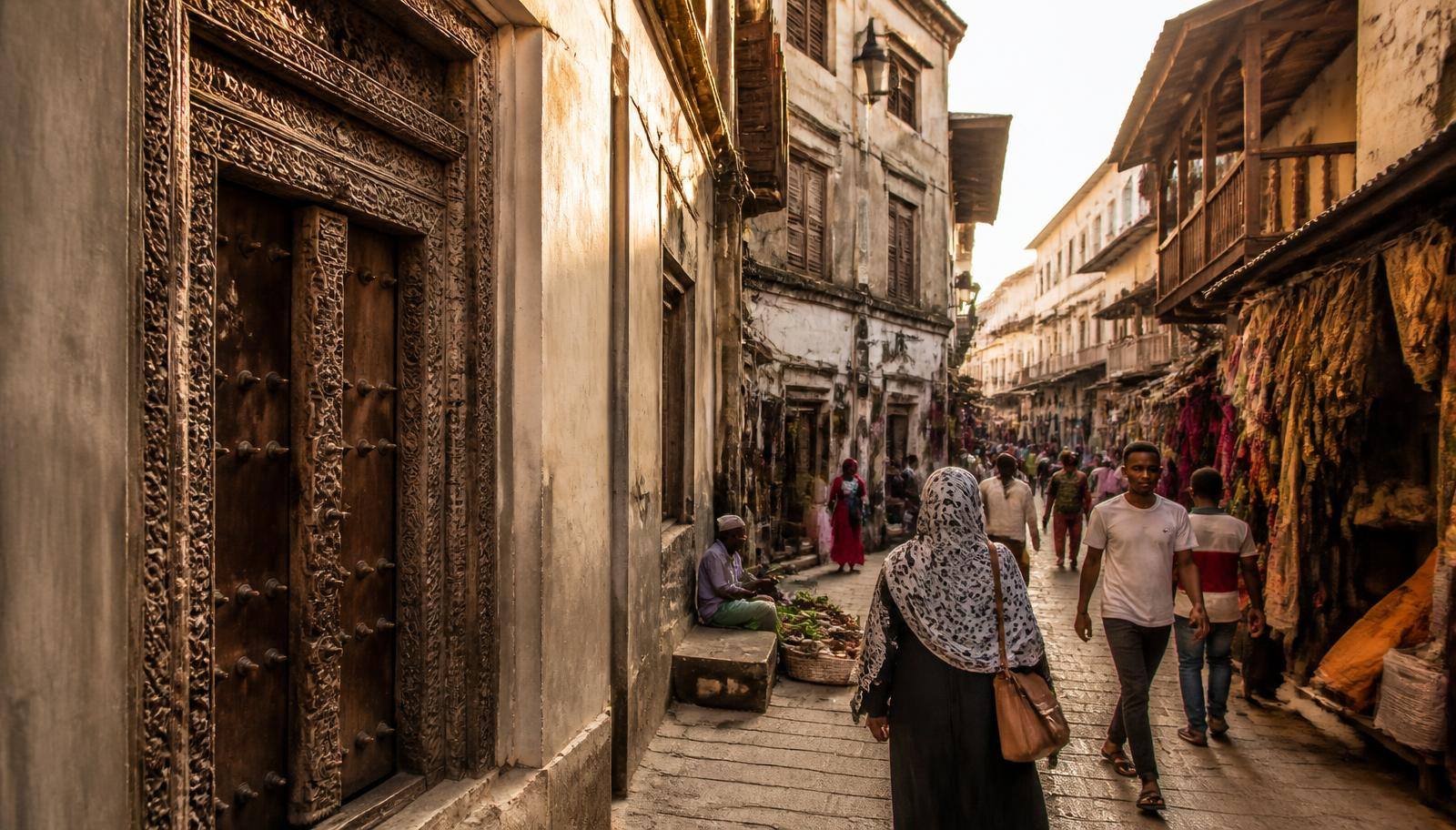
The architecture is the visible record of who passed through. Omani Arab merchants built the tall coral-rag houses with internal courtyards and heavy brass-studded doors. Indian traders added the deep wooden balconies and the fretwork verandas along the commercial streets, because in Gujarat you build to catch the breeze and in Zanzibar you need to catch it even more. The British left the clocktower, the cathedral and a handful of civic buildings. The Persians left bathhouses. Every one of those groups was here for the same reason: the harbor sat at the pivot point of the monsoon trade, where a dhow could sail down from Muscat or Gujarat on one wind and sail home on the other.
Then there is the sensory part, which is harder to write about without sounding like a brochure. Stone Town smells like cloves, drains, frying dough, salt and diesel, often within twenty meters. You hear children reciting in a madrassa, a carpenter's chisel, three competing calls to prayer, a football commentary from a shop radio, and the crack of a bao board. Cats everywhere. Bicycles that appear from nowhere in an alley too narrow to step aside in. It is chaotic, and it is the most alive place in Zanzibar by a wide margin.
History of Stone Town
Zanzibar's history did not start with the stone buildings. Swahili coastal settlement here goes back well over a thousand years, and the ruins at Unguja Ukuu on the south of the island show a trading community connected to the Persian Gulf and beyond by the eighth century. What we now call Stone Town grew on a triangular peninsula beside a deep, protected harbor, originally a fishing village on the site of an older settlement.
Portuguese contact and Omani rule
The Portuguese arrived at the end of the fifteenth century and controlled parts of the coast for roughly two hundred years, though their mark on Zanzibar is thin — a chapel that the Omanis later built the Old Fort on top of, and a scattering of loan words. Omani forces pushed them out at the end of the seventeenth century, and from that point Zanzibar's fortunes were tied to Muscat.
The turning point came in the 1830s and 1840s when Sultan Seyyid Said moved his court from Oman to Zanzibar. That decision was commercial. Zanzibar sat at the mouth of the caravan routes into the interior, its harbor worked with the monsoon, and the soil suited cloves. Said planted clove plantations across Unguja and Pemba on a scale that eventually made the islands the world's leading producer. Merchants followed the money. The coral-stone town you walk through today is essentially what that boom built.
The slave trade
None of that wealth can be separated from the East African slave trade, and any honest guide has to say so plainly. Zanzibar was the largest slave-trading entrepot on the East African coast in the nineteenth century. Caravans came from as far as Lake Tanganyika and the eastern Congo, carrying ivory and enslaved people, and the market at the center of town sold tens of thousands of people a year at its peak. Estimates vary widely and the records are incomplete, but the scale ran into the hundreds of thousands of people across the century.
British pressure — treaties in 1822, 1845 and finally the 1873 agreement that closed the public market — ended the legal trade in stages, and slavery itself was abolished on Zanzibar in 1897. The Universities' Mission to Central Africa bought the market site and built Christ Church Cathedral on it, deliberately positioning the altar where the whipping post is said to have stood. Underground chambers used to hold people before sale survive beneath the neighboring buildings, and you can go into them. It is a low, airless, deeply uncomfortable space and it should be.
Empire, revolution and after
Zanzibar became a British protectorate in 1890 — the year of the Anglo-Zanzibar treaty arrangements that also produced, six years later, the shortest war in recorded history, a bombardment of the palace that lasted under an hour. Independence came in December 1963. Barely a month later, the Zanzibar Revolution of January 1964 overthrew the Sultanate in a violent uprising, and in April Zanzibar united with Tanganyika to form the United Republic of Tanzania.
The decades after the revolution were hard on the buildings. Many of the merchant families left, properties were nationalized or subdivided, maintenance stopped, and coral rag does not forgive neglect in a humid tropical climate. Dozens of buildings collapsed. Serious conservation only began in the 1980s and 1990s, and the pace picked up after UNESCO listing in 2000. You will still see buildings held up by timber props and others being carefully rebuilt, sometimes on the same street.
UNESCO World Heritage Status
UNESCO inscribed the Stone Town of Zanzibar on the World Heritage List in 2000. The stated reason is worth understanding because it tells you what to look for. The listing recognizes Stone Town as an outstanding example of a Swahili coastal trading town, where African, Arab, Indian and European elements fused over a millennium into a single distinct culture — and as a site of exceptional importance in the suppression of the slave trade.
In practice, the designation means building regulations, restoration standards and a conservation authority. It also means visible tension. Around sixteen thousand people live inside the protected zone, many in buildings that are expensive to maintain correctly and cheap to patch badly. Tourism money funds some of the restoration and also drives up property values, which pushes long-term residents out toward Ng'ambo, the newer town across the creek. UNESCO has repeatedly flagged deterioration and unregulated development as concerns.
The most public casualty was the House of Wonders. The 1883 palace — the first building in East Africa with electric light and an electric elevator — partially collapsed in December 2020 during restoration work, killing two workers. Stabilization and reconstruction have been running since. You can still stand in front of it and understand exactly why it dominated the waterfront, but do not plan an interior visit; check the current status with your hotel on arrival.
Top Attractions in Stone Town
Stone Town's attractions are close together — you can reach almost all of them on foot within fifteen minutes of each other. What follows is an honest assessment of each, including the ones that are more atmosphere than exhibit. Entry prices are 2026 estimates and are usually payable in shillings or dollars; carry both.
| Attraction | What it is | Time | Cost | Verdict |
|---|---|---|---|---|
| House of Wonders (Beit-al-Ajaib) | Sultan's palace, 1883 — the first building in East Africa with electricity and an elevator | 20–30 min (exterior) | Free from the square | Partially collapsed in 2020 and under restoration. Still the town's defining facade. |
| Old Fort (Ngome Kongwe) | Omani fortress built in the 1690s over a Portuguese chapel | 30–45 min | Free entry, small fee for events | Craft stalls, an open amphitheatre and shade. Best in late afternoon. |
| Freddie Mercury Museum | Two-floor exhibit in the building where Farrokh Bulsara spent his early childhood | 30–40 min | ~$12 | Small and unashamedly niche. Worth it for Queen fans, skippable otherwise. |
| Forodhani Gardens | Seafront park that becomes a street-food night market after sunset | 1–2 hrs in the evening | Free; food $2–$10 | Go for the atmosphere and the grilled skewers, not the seafood platters. |
| Darajani Market | The town's working produce, fish, spice and fabric market | 45–60 min | Free | Go before 9 am. Intense, loud, completely real. Bring small shillings. |
| Anglican Cathedral & Slave Chambers | Christ Church, built on the site of the old slave market, with holding cells beneath | 1 hr | ~$10 including guide | The most important hour you will spend in Zanzibar. Difficult and necessary. |
| Palace Museum (Beit el-Sahel) | Former Sultan's residence with royal furnishings and the Princess Salme rooms | 45 min | ~$6 | Faded and quiet, which is part of the charm. Great sea-facing balconies. |
House of Wonders (Beit-al-Ajaib)
Built in 1883 as a ceremonial palace for Sultan Barghash, the House of Wonders earned its name honestly: it was the first building in East Africa with electricity, the first with a working elevator, and for decades the tallest structure on the seafront. The tiered balconies, the enormous carved doors and the clocktower are pure nineteenth-century statement architecture, designed to be seen from a ship.
Since the 2020 collapse it has been a construction site rather than a museum. Do not let that put you off walking past it — the facade from Forodhani Gardens is still one of the great views on the Swahili coast, especially in the last hour of light. Ask at your hotel whether any part has reopened; the restoration timeline has moved more than once.
The Old Fort (Ngome Kongwe)
The oldest standing building in Stone Town, thrown up by the Omanis in the 1690s on the footprint of a Portuguese chapel after they expelled the Portuguese from the island. Over the centuries it has been a garrison, a prison, a railway depot and a women's tennis club, which tells you something about how Zanzibar reuses things.
Today the interior is a courtyard with craft stalls, a small café and an open-air amphitheatre that hosts the Sauti za Busara music festival in February and the Zanzibar International Film Festival in July. Entry to the courtyard is free. Give it half an hour, buy a coffee, sit in the shade — it is the easiest place in town to escape the sun without going back to your room.
Freddie Mercury Museum
Farrokh Bulsara was born in Zanzibar in 1946 to a Parsi family from Gujarat and spent his early childhood here before the family left around the time of the revolution. The museum occupies part of a building on Kenyatta Road associated with the family and covers his Zanzibar years, the Parsi community, and the Queen career that followed.
Be realistic about scale. It is two floors, mostly photographs and text panels, and you will be done in half an hour. For a Queen fan it is a small pilgrimage and well worth the roughly twelve dollars. For everyone else, that money and that hour go further at the Palace Museum. Note that Freddie Mercury's legacy is treated ambivalently by parts of local society, so read the room before making it a conversation topic.
Forodhani Gardens
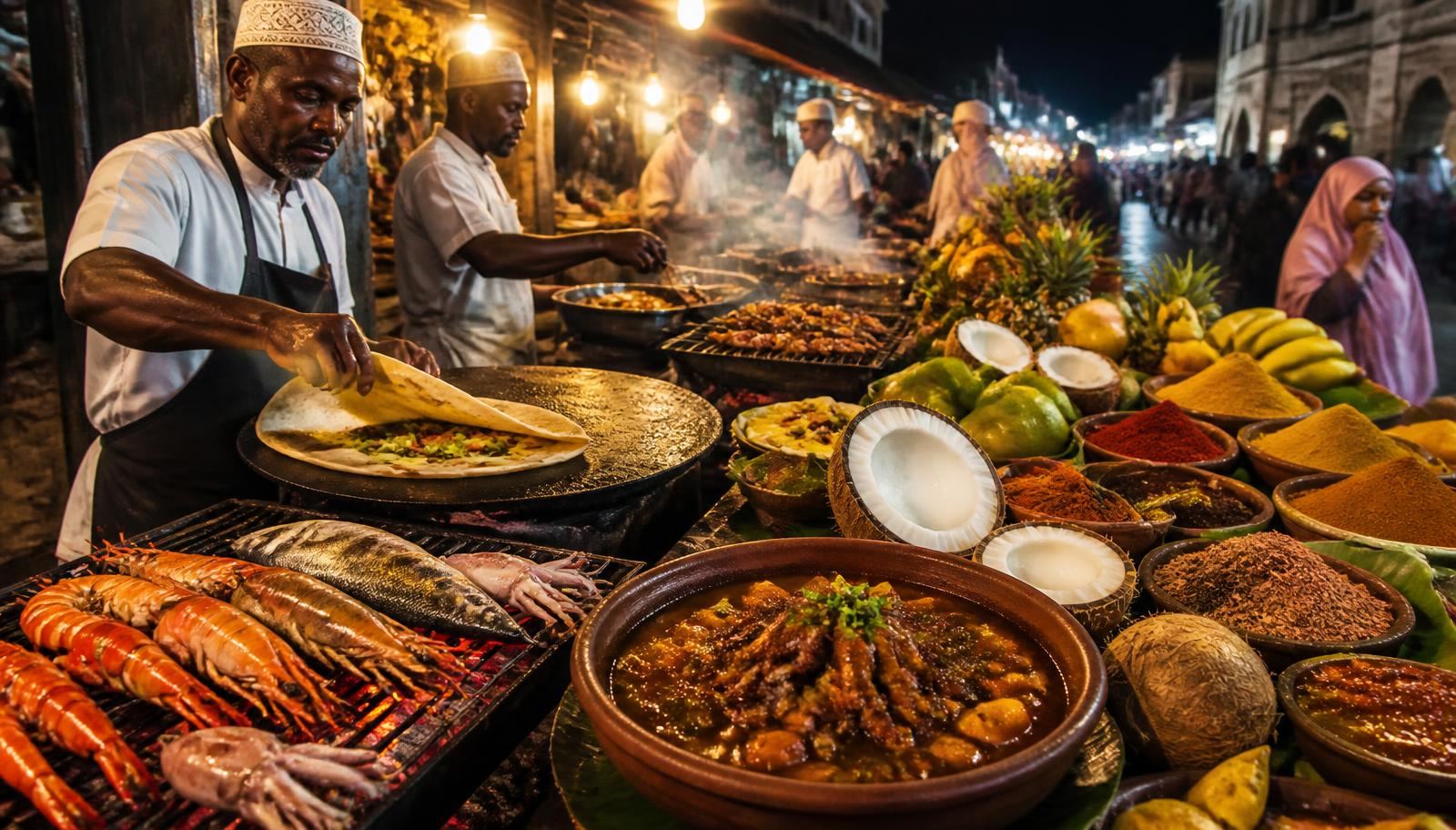
By day, an ordinary seafront park with a good view of the harbor. From around six in the evening it transforms into a street-food market: rows of stalls under lights, charcoal grills, Zanzibar pizza being folded and pressed on hot plates, mishkaki skewers, cassava, samosas, urojo soup, and sugarcane juice crushed through a hand mill with lime and ginger.
Two rules make Forodhani excellent instead of risky. First, eat what is cooked in front of you to order — not the elaborate seafood platters that have been sitting under a lamp since sunset. Second, agree the price before the vendor starts cooking. Both of those take five seconds and remove almost all of the problems visitors report. The atmosphere is genuinely great; local families come here too, and the boys diving off the sea wall are not doing it for your camera.
Darajani Market
Stone Town's real market, on the inland edge of the old town. Fish hall first — loud, wet, and full of things you cannot name — then produce, then the spice traders, then the fabric section with stacks of kanga and kitenge. It is not a tourist attraction in any curated sense, and that is exactly the appeal.
Go before nine in the morning. By eleven the fish is gone, the heat is up, and the floor is unpleasant. Carry small shillings, keep your bag in front of you, and expect to be offered a "guide" at the entrance — a polite no thank you, repeated, works fine. This is also the cheapest place on the island to buy cloves, cardamom, cinnamon, black pepper and vanilla, at maybe a third of gift-shop prices.
Anglican Cathedral and the slave chambers
Christ Church Cathedral on Mkunazini Street was built by the Universities' Mission to Central Africa in the 1870s on the site of the closed slave market. The altar stands where the whipping post is traditionally said to have been. In the grounds, Clara Sornas's memorial sculpture places five figures in a pit, wearing an original chain from the market.
Beneath a neighboring building are two surviving holding chambers, low-ceilinged rooms where people were confined before sale. You go down a few steps and stand in a space where adults could not stand upright. There is very little ventilation. Guides here are direct and unsentimental, which is the right approach. Entry is around ten dollars including the guided explanation and the small museum, and it is the single most important thing to do in Stone Town.
Palace Museum (Beit el-Sahel)
The Sultan's family residence, next door to the House of Wonders on the seafront. The collection is modest and faded — royal furniture, photographs, clothing, and a set of rooms devoted to Princess Salme, the Sultan's daughter who eloped with a German merchant in 1866 and later wrote the first known autobiography by an Arab woman.
Do not come for museum polish; come for the sense of a household frozen mid-century and the sea-facing balconies on the upper floors, which catch a breeze the streets never get. Forty-five minutes and about six dollars.
Worth adding if you have time
- Hamamni Persian Baths — 1880s bathhouse built for Sultan Barghash, empty now but architecturally fascinating. Ten minutes and a couple of dollars.
- Old Dispensary (Ithnashiri Dispensary) — the most beautifully restored building on the seafront, with carved balconies and stained glass. Free to enter the atrium.
- Prison Island (Changuu) — a twenty-minute boat ride offshore, with a colony of Aldabra giant tortoises, some over a hundred years old, and decent snorkeling. Half a day.
- A spice farm tour — inland from town, three hours, and far better than it sounds. Tasting fresh nutmeg, turmeric root and lemongrass changes how you cook at home.
- Sunset dhow cruise — the classic Stone Town evening. Book through your hotel, not from someone on the seafront.
Best Walking Routes
Nobody navigates Stone Town by map, including people who live here. The alleys curve, branch, dead-end into courtyards and change name informally. Phone GPS is unreliable between tall coral walls. What works instead is orientation by edge: the sea is west and north, the ring road and Darajani are east, and if you keep walking in one direction you will hit one of them within ten minutes. That is your safety net. Use it and stop worrying about being lost.
Route 1 — The seafront loop (45 minutes, easy)
Start at Forodhani Gardens, with the House of Wonders behind you. Walk north past the Old Fort and the Old Dispensary along the water, continue toward the port area, then cut back inland through Malindi and return via Kiponda. Flat, open, breezy, well signposted by landmarks. This is the route for your first evening or for anyone traveling with children or older parents.
Route 2 — The doors and balconies walk (90 minutes, moderate)
From the Old Fort, head inland into Hurumzi, then work south through Kiponda and Mkunazini, then west into Shangani and back out to the sea at Kelele Square. This is the densest concentration of carved doors, fretwork balconies and restored merchant houses in the town. Go between seven and ten in the morning, when the alleys are cool and shopkeepers are opening up rather than selling hard.
Route 3 — The history walk (3 hours, with a guide)
Old Fort, House of Wonders, Palace Museum, Old Dispensary, then inland to the Anglican Cathedral and slave chambers, finishing at Darajani Market. This is the route worth paying a licensed guide for, because the sequence tells a story: the wealth on the waterfront, then the source of it inland. Roughly $20–$35 per person for a half-day guided walk booked through a hotel or operator.
Route 4 — The deliberately-lost wander (as long as you like)
Pick any alley off Gizenga Street and turn left every time you have a choice. You will pass tailors, bread ovens, madrassas, bao games, football on a scrap of concrete and at least one wedding preparation. Keep your camera down for the first ten minutes and just look. When you want out, walk downhill toward the sound of traffic.
A One-Day Walking Itinerary
If you only have one full day, this is the shape that works. It front-loads the demanding parts into the cool hours, builds in a genuine afternoon break, and finishes on the seafront. Everything on it is within walking distance.
| Time | Stop | Why / local note |
|---|---|---|
| 7:00 am | Seafront walk, Forodhani to Shangani | Coolest hour of the day. Fishermen landing catch, empty streets, best photography light. |
| 8:00 am | Darajani Market | The market peaks early. Fish hall first, then spices, then the cloth section. |
| 9:30 am | Anglican Cathedral & slave chambers | Take the guided version. Allow a quiet twenty minutes afterward. |
| 11:00 am | Alley wandering: Hurumzi, Gizenga, Kiponda | Doors, balconies, workshops, shopping. Deliberately get lost here. |
| 12:30 pm | Lunch in a courtyard restaurant | Lukmaan for local prices, Emerson on Hurumzi for a rooftop and a breeze. |
| 2:00 pm | Rest at the hotel | Non-negotiable. Midday heat in the stone lanes is genuinely draining. |
| 4:00 pm | Palace Museum and Old Fort | Cooler, quieter, and the fort courtyard catches the afternoon breeze. |
| 5:30 pm | Sunset dhow or a rooftop bar | Book the dhow through your hotel. Otherwise Africa House or Emerson Spice terrace. |
| 7:00 pm | Forodhani night market | Zanzibar pizza, mishkaki, sugarcane juice. Eat what is cooked in front of you. |
Local Markets & Shopping
Stone Town is the best place in Tanzania to buy things you will actually keep, but the good stuff and the mass-produced stuff sit within a few doors of each other. Gizenga Street behind the Old Fort, Kenyatta Road in Shangani and the Hurumzi lanes are the main shopping runs.
What is genuinely worth buying
- Spices — cloves, cardamom, cinnamon bark, nutmeg with the mace still on, vanilla pods, black pepper. Buy at Darajani or on a spice farm. A gift-shop box costs three times as much for older stock.
- Kanga and kitenge — printed cotton cloth, sold in pairs, usually with a Swahili proverb along the border. Ask a shopkeeper what yours says before you buy it for your mother-in-law.
- Tinga Tinga paintings — the bold Tanzanian enamel-paint style. Prices scale with size and whether the artist signed it. Small canvases roll into a suitcase easily.
- Carved wood and Zanzibar chests — beautiful, heavy, and shippable. Reputable shops arrange freight; get the quote in writing before you commit.
- Coconut and baobab oils, soaps, spice teas — light, cheap, genuinely local, and the easiest gifts to distribute at home.
- Woven baskets and mats — made from palm leaf, sold in the market rather than the boutiques, and a fraction of the price you would pay abroad.
How bargaining actually works here
Outside the fixed-price boutiques, prices are conversational. The opening number is not an insult and neither is your counter, as long as both are delivered pleasantly. A reasonable approach: ask the price, respond with roughly half to sixty percent, expect to settle somewhere in the middle, and be prepared to walk away without drama if the gap does not close. Two things make a difference. Smile and use a little Kiswahili — bei gani? (how much?) and punguza kidogo (reduce a little) will earn you a better price than any hard bargaining tactic. And never start negotiating for something you have already decided not to buy; it wastes a trader's morning.
Best Restaurants & Cafés
Zanzibari food is Swahili coastal cooking: coconut milk, tamarind, lime, cardamom, cumin and chili, applied mostly to fish. The dishes to look for are octopus curry (pweza wa nazi), grilled kingfish, prawns in coconut, pilau rice cooked with whole spices, biryani on Fridays, chapati, urojo soup with crisp bhajia in it, and mandazi for breakfast.
Where to eat, by mood
- Local and cheap: Lukmaan Restaurant near Mkunazini is a Stone Town institution — cafeteria-style trays of curries, pilau, spinach, beans and fish for a few dollars, eaten alongside office workers. Go at noon when the trays are full.
- Rooftop with a breeze: the terrace restaurants at Emerson on Hurumzi and Emerson Spice are the classic Stone Town evening — set menus, live taarab music some nights, and the best view over the rooftops. Book a day ahead.
- Seafront sundowner: Africa House Hotel's terrace has been the sunset spot for a century. Drinks and a view rather than a serious dinner; arrive by five for a seat at the rail.
- Coffee and a fan: Zanzibar Coffee House on Mkunazini roasts its own beans and has a quiet upstairs terrace — the best midday hiding place in the old town.
- Street food: Forodhani Gardens after six. Zanzibar pizza (a folded, filled, fried dough pancake — get the Nutella-banana one for dessert), mishkaki skewers, cassava chips and fresh sugarcane juice.
- Something special: The Rock, out on the east coast, is the famous restaurant on a tidal outcrop. It is a forty-five minute drive and a tourist experience rather than a culinary one, but the photographs are undeniable. Reserve well ahead.
Practical food notes
Drink bottled or properly filtered water, and skip ice in the smallest local places. Alcohol is served in hotels, tourist restaurants and some bars but not in most local establishments, and public drinking is not appropriate. During Ramadan many restaurants close during daylight hours; hotels still serve guests, and the evening atmosphere after the fast breaks is one of the best times to be here. Vegetarians eat extremely well — bean stews, spinach in coconut, chickpea curries and vegetable pilau are staples, not afterthoughts. Budget roughly $3–$8 per person for local meals, $15–$30 for tourist restaurants, and $40–$70 for the rooftop set menus.
Cultural Etiquette
Zanzibar is around 98 percent Muslim, and Stone Town is a residential neighborhood where people are living their normal lives with visitors walking through their front yard. Getting the etiquette right is not about being told off — it is about the difference between being tolerated and being welcomed, and that difference is enormous here.
- Dress: cover shoulders and knees away from the seafront hotels. Loose linen, long skirts or trousers, and a light scarf. No swimwear or vest tops in the alleys. Men: t-shirts fine, shorts to the knee.
- Greet first: conversations here start with a greeting, not a question. Jambo or the more respectful shikamoo to an older person, then your question. Walking up and asking for directions cold reads as rude.
- Right hand: eat, pay and hand things over with your right hand.
- Public affection: keep it minimal. Hand-holding is fine; anything more draws attention you do not want.
- Mosques: most are not open to non-Muslim visitors. Do not walk in, and do not photograph through doorways during prayer.
- Ramadan: if you visit during the fast, avoid eating, drinking or smoking in the street during daylight. It costs you very little and is noticed and appreciated.
- Photography: ask before photographing people, especially women, and accept a no gracefully.
- Homosexuality is illegal in Tanzania and same-sex couples should be discreet in public. This is a legal reality we would rather state plainly than let a traveler discover uncomfortably.
A word on Kiswahili. Almost everyone in tourism speaks English, so you will never be stuck. But five words change everything: jambo (hello), asante (thank you), karibu (welcome), samahani (excuse me) and hapana asante (no thank you — the polite way to decline a tout). Use them and watch how differently the same street treats you.
Safety Tips
Stone Town is safe by most global standards and violent crime against visitors is rare. What exists is opportunistic and avoidable. Here is the honest list, in rough order of how often we hear about it.
- Phone and bag snatching in crowded lanes near Darajani and along the seafront at night, sometimes from a passing scooter. Keep your phone in a pocket while walking and carry a cross-body bag on the wall side.
- Beach and street touts selling tours, boat trips and "official guides." Some are legitimate, many are not. Book everything through your hotel or operator.
- Taxi overcharging. There are no meters. Agree the fare before you get in. Airport to Stone Town is roughly $10–$15, and short hops within town should be a few dollars.
- Unlit alleys after dark. Street lighting inside the old town is patchy and the layout is disorienting. After about 9 pm, stick to main routes, or take a taxi to the ring road nearest your hotel.
- Drug offers on the seafront. Penalties in Tanzania are severe and entrapment does happen. Decline and keep walking.
- Health basics: malaria prophylaxis is recommended, use repellent at dusk, drink bottled or filtered water, and take travel insurance with medical evacuation cover — serious care usually means a flight to the mainland or Nairobi.
- Heat and hydration. The most common thing that ruins a Stone Town day is not crime, it is dehydration. Two liters minimum, more if you are walking all morning.
Solo female travelers generally report positive experiences here. Attention exists — mostly comments rather than anything more — and dressing modestly reduces it noticeably. Walking with purpose, declining firmly and using hotel taxis at night handles the rest. Our solo travel in Tanzania guide goes into this in more depth.
Where to Stay in Stone Town
Location inside the old town matters less than you would think, because everything is within a fifteen-minute walk. What matters more is the building. Stone Town hotels are mostly converted merchant houses, which means thick walls, internal courtyards, steep narrow staircases and rooms that vary enormously within the same property. Ask for a room on an upper floor with a window, and confirm air conditioning.
| Type | Typical price | What it looks like | Best for |
|---|---|---|---|
| Boutique heritage hotel | $150–$400 per night | Restored merchant houses in Hurumzi and Shangani | Couples, first-timers, anyone who wants the town's character |
| Mid-range hotel | $70–$150 per night | Small hotels around Kiponda, Malindi and Shangani | Most travelers — air conditioning, breakfast, walkable location |
| Guesthouse / budget | $25–$60 per night | Family-run rooms in the residential lanes | Backpackers, solo travelers, longer stays |
| Seafront resort (outside the core) | $180–$500 per night | Properties along Shangani and toward Mbweni | Travelers wanting a pool and sea views over alley atmosphere |
Which neighborhood?
- Shangani — the western tip, closest to the sea, slightly more open and breezy. Good for first-timers and for anyone nervous about the alleys.
- Hurumzi — the heart of the old town. Atmospheric, dense, home to the best rooftop restaurants. Expect a short walk with your luggage.
- Kiponda and Mkunazini — quieter, residential, better value, close to the cathedral and market.
- Malindi — near the port. Convenient for the ferry, noisier, generally cheaper.
How Much Time Do You Need?
The short answer is two nights. Here is what each option realistically buys you.
- A few hours (airport layover): Old Fort, a walk through Hurumzi, Forodhani. Enough to see why people like it, not enough to understand it.
- One night: workable if you arrive by early afternoon. Evening at Forodhani, then a full morning for the cathedral, market and alleys before your transfer to the coast. Rushed but worthwhile.
- Two nights (recommended): one full day for the historic core, one for a spice farm in the morning and a sunset dhow in the evening. This is the version people are glad they booked.
- Three nights: adds Prison Island, Jozani Forest for the red colobus monkeys, or a Nakupenda sandbank trip — plus time to photograph the town in different light. Ideal for history and photography travelers.
- Four or more: only if you are using Stone Town as a base for day trips or you genuinely love urban wandering. Most people want a beach by day four.
Where it sits in your trip matters too. We usually put Stone Town at the start of the Zanzibar leg — you land at ZNZ, which is ten minutes away, spend two nights, then transfer to the coast and finish on a beach. Doing it in reverse works logistically but ends the holiday on your feet in the heat instead of in the water. For how the island fits with the mainland, see our Zanzibar and safari Tanzania guide.
Best Time to Visit Stone Town
Stone Town's weather matters more than the beach's does, because you are walking all day between stone walls that store heat and block the sea breeze. Humidity is the variable that decides whether your day is a pleasure or an endurance test.
| Months | Weather | Verdict for walking the old town |
|---|---|---|
| Jan–Feb | Hot, humid, occasional afternoon showers | Good. Bright light, busy town, festival season in February. |
| Mar | Very humid, rains build late month | Fine early, unreliable after mid-month. |
| Apr–May | Long rains, heaviest of the year | Avoid unless price is your priority. Alleys flood. |
| Jun–Aug | Dry, breezy, lower humidity | Best walking weather of the year. Peak prices. |
| Sep–Oct | Dry and warm | Excellent — arguably the best all-round window. |
| Nov | Short rains, patchy and brief | Often very pleasant with fewer visitors. |
| Dec | Warm, humid, festive | Busy and expensive from mid-month. |
Two calendar events are worth planning around. Sauti za Busara, usually in February, fills the Old Fort with East African music for four days and is one of the best festivals on the continent. The Zanzibar International Film Festival in July does something similar with screenings in the fort's amphitheatre. Both push hotel prices up and both are worth it if you like your travel with a soundtrack.
Ramadan moves roughly eleven days earlier each year. Visiting during it is not a problem — in some ways the town is at its most interesting after sunset — but expect daytime restaurant closures, shorter shop hours and a slower pace. Check the dates before you commit. For the wider picture across the mainland and the island, our best time to visit Tanzania guide lays out the full seasonal calendar.
Getting there and getting around
Most travelers fly into Abeid Amani Karume International Airport (ZNZ), ten to fifteen minutes from the old town, on a short hop from Dar es Salaam, Arusha or directly from a Serengeti airstrip. Note that even domestic flights clear a separate Zanzibar immigration desk — your Tanzanian visa still covers you and you do not need a second one, which our Tanzania visa guide explains in full. The ferry from Dar es Salaam takes about two hours and docks at Malindi, right beside the old town.
Inside Stone Town you walk. Taxis and bajaji (three-wheelers) circle the ring road and can drop you at the nearest access point to your hotel, but they cannot enter the alleys. For trips out to the beaches, a private car costs roughly $50–$90 depending on the coast, shared shuttles $15–$25 per person, and daladala minibuses a couple of dollars if you are adventurous and unhurried. A local SIM from the airport (Vodacom or Airtel, around $10 with data) makes all of this considerably easier.
Frequently Asked Questions
Common Questions
Frequently Asked Questions
Yes, and it is the part of Zanzibar that travelers most often underrate. Stone Town is a UNESCO World Heritage Site and one of the last intact Swahili coastal trading towns in the world, with about two square kilometers of coral-stone houses, Omani balconies, Indian shopfronts, mosques, Hindu temples and a cathedral built on the site of the old slave market. It is not a museum piece — around sixteen thousand people live and work inside it, so you get bread ovens, school runs, football in the squares and boatyards along with the history. Two days here gives your Zanzibar trip context that a week on a beach never will. Travelers who skip it and go straight to Nungwi usually tell us afterward that it was the one thing they wish they had changed.
Two nights is the honest sweet spot. That gives you one full day for the historic core — the Old Fort, the House of Wonders exterior, the Palace Museum, the Anglican Cathedral and slave chambers, Darajani Market and a slow wander through the alleys — plus a second day for a spice farm in the morning and a sunset dhow in the evening. One night works if Stone Town is a stopover between your flight and the beach, but you will be rushed and you will miss the town's best hour, which is early morning. Three nights suits photographers, history-focused travelers and anyone using Stone Town as a base for Jozani Forest, Prison Island and Nakupenda sandbank day trips.
Stone Town is generally safe and violent crime against visitors is rare. The realistic risks are opportunistic — phone and bag snatching in crowded lanes near Darajani and Forodhani, overcharging by taxis that have no meter, and persistent touts selling tours, boat trips and 'guided walks' that may not exist. Practical precautions cover nearly all of it: carry a cross-body bag on the wall side, keep your phone out of your hand while walking, agree fares and prices in advance, and use hotel-arranged taxis after dark. The alleys are poorly lit at night and largely unmarked, so walking back to your hotel after 10 pm is much easier with a rough route in mind or a staff member's phone number. Solo female travelers report positive experiences here, particularly when dressed modestly.
Absolutely, and you should spend at least half a day doing exactly that — getting lost in Stone Town is the experience. But there is a strong case for hiring a licensed guide for your first two or three hours. The buildings do not explain themselves, and without context the carved doors, the different balcony styles, the Persian baths and the layout of the old market are just pretty details. A good guide costs roughly $20 to $35 for a half-day walking tour arranged through your hotel or operator, and turns a pleasant wander into a genuine understanding of how the town worked. Book through a hotel or a registered operator rather than accepting an offer on the street, where quality and licensing vary widely.
Zanzibar is overwhelmingly Muslim and Stone Town is a residential working town, not a beach resort. Cover shoulders and knees: for women, loose trousers, a long skirt or a dress with a light scarf over the shoulders; for men, t-shirts and shorts to the knee are fine, though long trousers attract a little more respect in the older lanes. Swimwear, vest tops and very short shorts are out of place away from the seafront hotels. Bring closed or sturdy sandals — the stone lanes are uneven, occasionally wet, and there are scooters. A scarf is useful for mosque doorways and for the sun. Everything you wear will be hot, so choose linen and cotton over synthetics.
The main shopping streets are Gizenga Street, Kenyatta Road and Hurumzi, and they run from genuinely good to tourist tat within a few doors of each other. For spices, buy at Darajani Market or from a spice farm rather than a pre-packaged gift shop — you will pay a third of the price for fresher cloves, cardamom, vanilla and nutmeg. For fabric, look for kanga and kitenge in the cloth section of Darajani. Reputable options for art and crafts include the Zanzibar Gallery near the Tembo House Hotel, Memories of Zanzibar on Kenyatta Road, and the small workshop shops selling carved chests, Tinga Tinga paintings and woven baskets. Bargaining is expected outside the fixed-price boutiques — start around 50 to 60 percent of the asking price and settle somewhere in the middle, politely.
Completely — and walking is really the only way. The historic core is about two square kilometers and most of the alleys are far too narrow for cars, so you can cross from Forodhani Gardens on the seafront to Darajani Market on the inland edge in about fifteen minutes if you do not get lost, which you will. Distances are short but the surfaces are uneven coral stone, and there are steps, puddles and scooters, so it is not ideal for wheelchairs or travelers with serious mobility limits. Taxis and bajaji can only reach the ring road around the old town, meaning the last stretch to most hotels is on foot. Pack light, or expect a porter to carry your bag the final two hundred meters.
June through October is the most reliable window — dry, breezy, and noticeably less humid, which matters enormously in a town where you are walking all day between stone walls that hold heat. December to February is the second good stretch: hotter and stickier but sunny, with brief afternoon showers and excellent light for photography. Avoid mid-March through May if you can, when the long rains turn the alleys into a run of puddles and some businesses reduce hours. Two other timing notes: Ramadan changes the town completely, with many restaurants closed during daylight and a wonderful atmosphere after sunset, and the Sauti za Busara music festival in February and the Zanzibar International Film Festival in July are both worth planning around if you like your travel with a soundtrack.
Conclusion
Stone Town rewards patience rather than efficiency. Give it two nights instead of one, start your days early, hire a guide for the first morning and then throw the map away for the second, eat where the queue is local, and dress like a guest rather than a tourist. Do that and the town opens up — a workshop where a man has been carving doors for forty years, a rooftop with the call to prayer coming from three directions at once, a plate of grilled kingfish at a plastic table by the water. The beaches will still be there in the morning.
What stays with people is rarely the attraction list. It is the smell of cardamom outside a spice shop at seven in the morning, a carpenter who stops work to explain why the studs on a door are arranged that way, a boy diving off the Forodhani sea wall into water the color of tea, or the quiet after you climb back up the steps from the slave chambers. Those things do not appear on an itinerary. They happen to travelers who slow down enough to let them.
Give Stone Town two nights, walk it early, ask questions, and treat it as somebody's home rather than a backdrop. It will pay you back generously.
Plan Your Stone Town, Beach and Safari Trip With Olympus Adventure
Olympus Adventure is a Tanzanian-owned company based in Arusha. We build trips that combine the three things this country does better than anywhere else: the northern safari circuit, Zanzibar's beaches and the old Swahili coast. A typical version looks like six or seven days across Tarangire, the Ngorongoro Crater and the Serengeti, then a short flight to Zanzibar for two nights in a restored Stone Town house, followed by four or five nights on whichever coast fits how you like to travel.
We handle the flights and transfers between them, book the licensed Stone Town guides we actually trust, and match you to a hotel based on your travel style rather than whatever pays the biggest commission. If you want to know how the booking process works before you commit to anything, our guides on how to book a Tanzania safari and the ultimate Tanzania travel guide cover deposits, permits, timing and operator vetting in detail.
Send us your dates, rough budget and how many nights you have. We will come back with an honest day-by-day plan, a transparent quote, and a straight answer if we think your timing or your coast is wrong for what you want.
Keep Reading
More Zanzibar Guides
Zanzibar
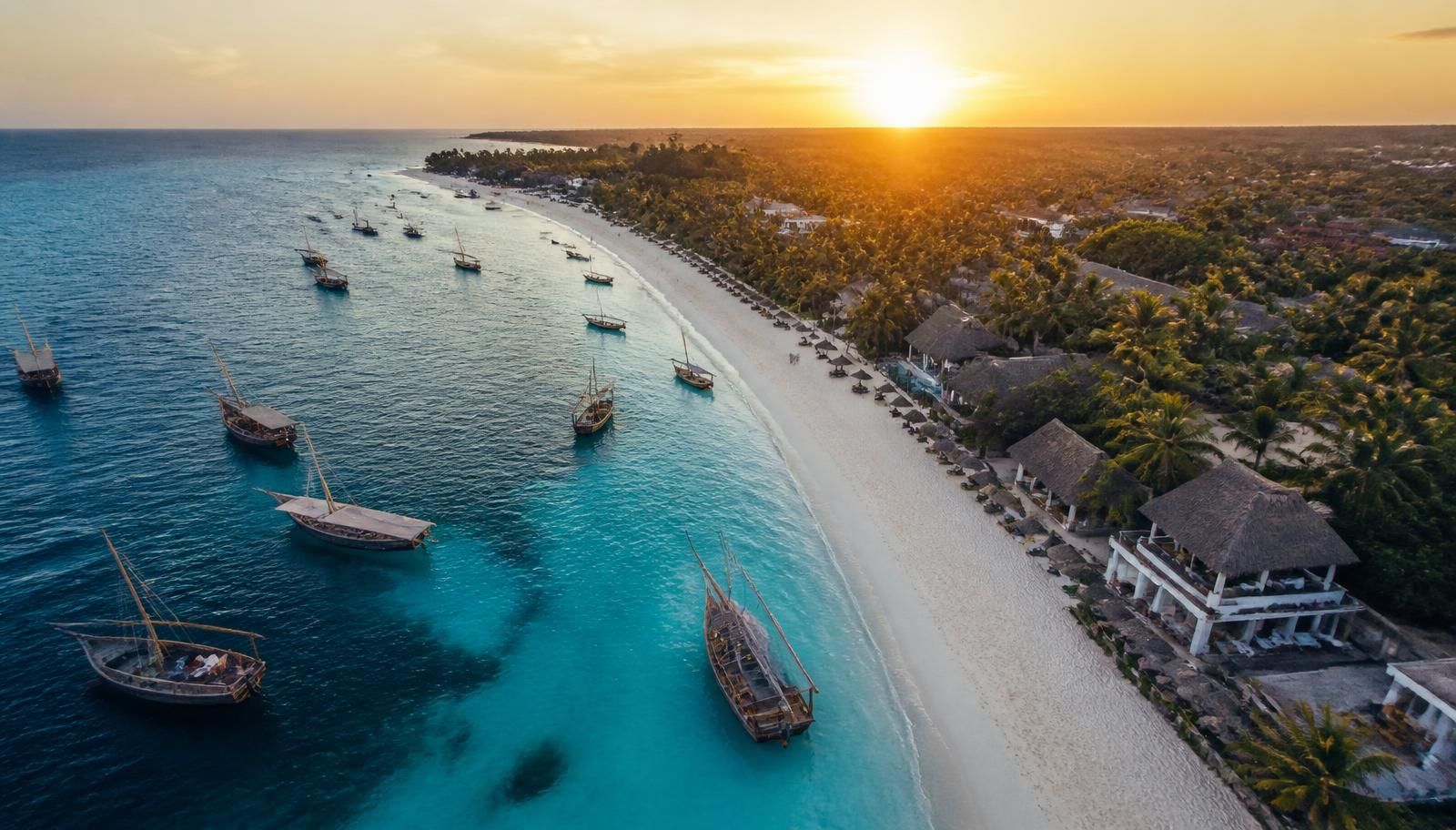
Zanzibar Travel Guide: Everything You Need Before Visiting the Island

Zanzibar
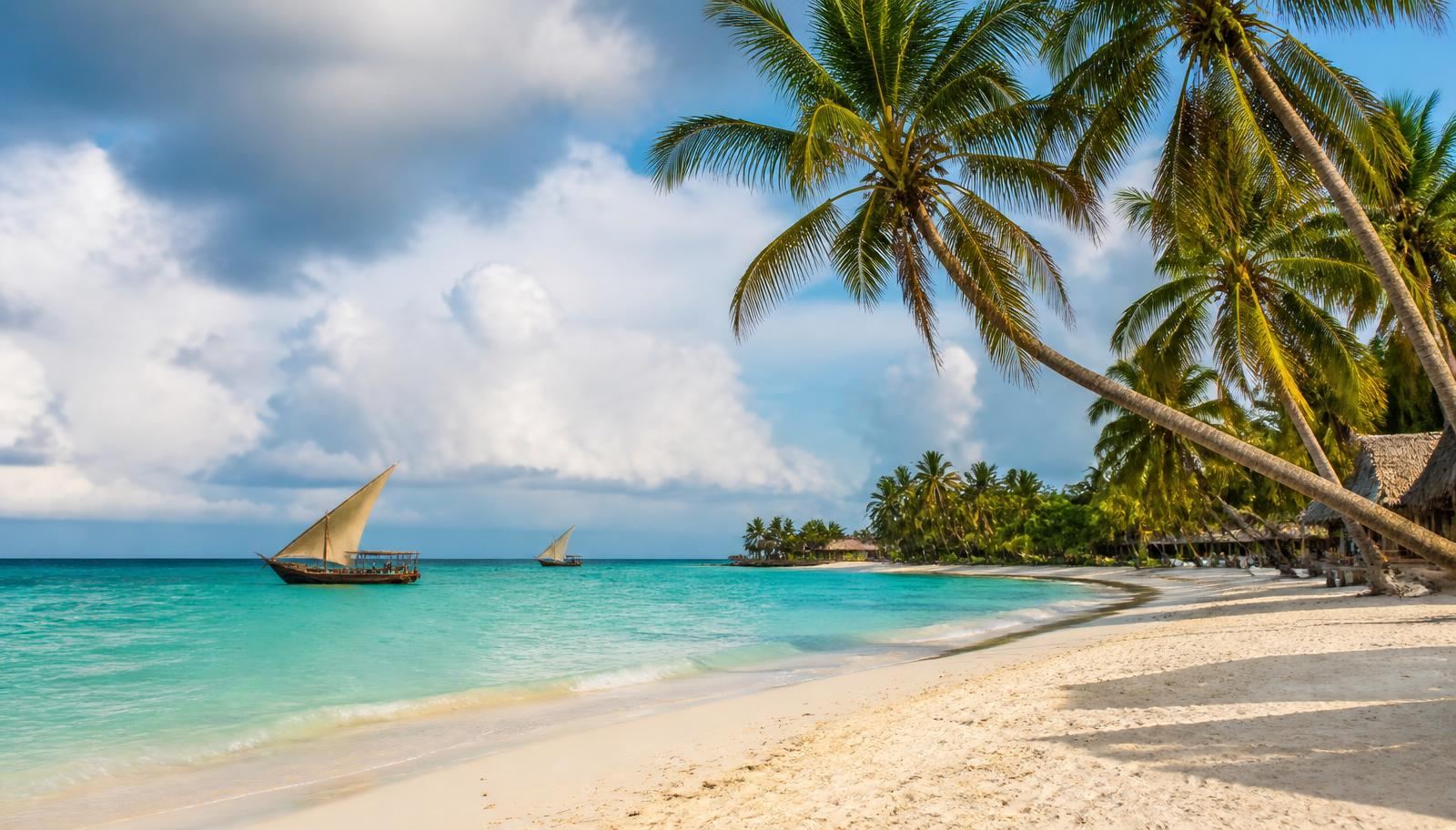
Best Beaches in Zanzibar: Complete Guide to Choosing the Perfect Beach
Plan Your Journey
Ready to explore Tanzania?
Let our Arusha-based safari specialists craft a private, tailor-made itinerary around you — no middlemen, no templates, just your perfect journey.
- TALA Licensed Operator
- 4.9 ★ Guest Rating
- No Booking Fees