
Zanzibar Travel
Zanzibar Packing List: Everything You Need to Bring
What actually earns space in your bag for a tropical island that's also a conservative Muslim society — tested, seasonal, and free of filler.

Introduction
Almost every packing mistake I see in Zanzibar comes from the same assumption: that this is a beach holiday and beach holidays are simple. Then guests land, walk out of the terminal into 88°F with 80% humidity, and realize that the jeans they wore on the plane are now a punishment. A day later they discover the reef flat outside their hotel is made of broken coral, that the bikini they wore into the village earned some cold looks, and that the sunscreen they meant to buy at the airport costs $28 a bottle here.
None of that is dramatic. All of it is avoidable. Zanzibar has a specific combination of conditions — equatorial sun, extreme humidity, a big tidal range with sharp reef, a conservative Muslim culture, an unreliable power grid and a mostly cash economy — and once you pack for that combination rather than for a generic tropical island, the trip gets noticeably easier.
I've packed for this island in every season and helped a great many guests do the same, including the ones arriving straight from a week on the Serengeti with a 15-kilo bush-flight allowance. What follows is the version I'd give a friend: what to bring, why it matters, what changes between the rainy and dry seasons, and the short list of things people bring and regret.
For the wider trip planning — visas, transfers, safety, budgets — start with our complete Zanzibar travel guide, and if you're timing your trip around weather, the best time to visit Zanzibar guide breaks down every month.
Understanding Zanzibar's Climate
You can't pack sensibly for Zanzibar without understanding two numbers: the island sits roughly six degrees south of the equator, and the humidity rarely drops below 70%. Temperature alone doesn't tell the story. Eighty-five degrees in Arizona and eighty-five degrees in Zanzibar are completely different experiences, and the difference is entirely about how fast sweat evaporates.
Practically, that means three things. Synthetic fabrics turn clammy within minutes. Anything cotton that gets wet takes six to twelve hours to dry, sometimes longer in April. And you will sweat through more clothing per day than you would at home, which is why frequent, cheap laundry beats packing a big wardrobe.
The seasons break into four blocks. December through February is hot and mostly dry, with February the hottest month of the year. March through May brings the long rains — April is the wettest month and many small hotels close. June through October is the cool dry season, which is peak travel time and the most comfortable weather on the island. November brings the short rains, usually brief afternoon downpours rather than all-day gray.
| Month | Conditions | Rain | Packing note |
|---|---|---|---|
| January | Hot & mostly dry | Low | Peak sun protection, lightest fabrics |
| February | Hottest month | Low | Extra swimwear, electrolytes, sun hat |
| March | Building humidity | Rising | Add a light rain shell late in the month |
| April | Long rains | Heaviest | Rain jacket, quick-dry everything, dry bag |
| May | Long rains easing | High | Waterproof phone pouch, extra footwear |
| June | Cool, dry, breezy | Very low | Light layer for breezy evenings |
| July | Dry, pleasant | Very low | Standard dry-season kit |
| August | Dry, busy | Very low | Book-ahead season; standard kit |
| September | Warm and dry | Very low | Best all-round month; snorkel gear |
| October | Warming up | Low | More sun protection as UV climbs |
| November | Short rains | Moderate | Compact umbrella or shell, quick-dry |
| December | Hot, festive | Low–moderate | Smart-casual outfit for New Year dinners |
Essential Travel Documents
Get this section right and the rest is just shopping. Zanzibar has a few requirements that surprise people at the airport, and two of them will genuinely stop you at immigration.
- Passport — valid at least six months beyond your arrival date with a minimum of two blank pages. Airlines check this at check-in, not just immigration.
- Visa or e-visa — most nationalities need one. Apply online in advance and bring a printout of the approval; don't rely on airport wifi to retrieve it. Our Tanzania visa guide walks through the process, fees and the extra rules for US passport holders.
- Mandatory Zanzibar travel insurance — since late 2024, every foreign visitor must hold an inbound insurance policy from Zanzibar's designated provider, currently around $44 for stays up to 92 days. It's separate from your own travel insurance and it is checked. Buy it online before you fly and print the certificate.
- Yellow fever certificate — required if you're arriving from or transiting more than twelve hours through a yellow fever risk country. Direct arrivals from Europe or North America don't need it, but a connection through Nairobi or Addis Ababa can change that.
- Booking confirmations — flights and first night's accommodation. Immigration occasionally asks.
- Copies of everything — a photocopy of your passport for daily carry, plus photos of all documents saved offline on your phone and emailed to yourself.
Clothing Checklist
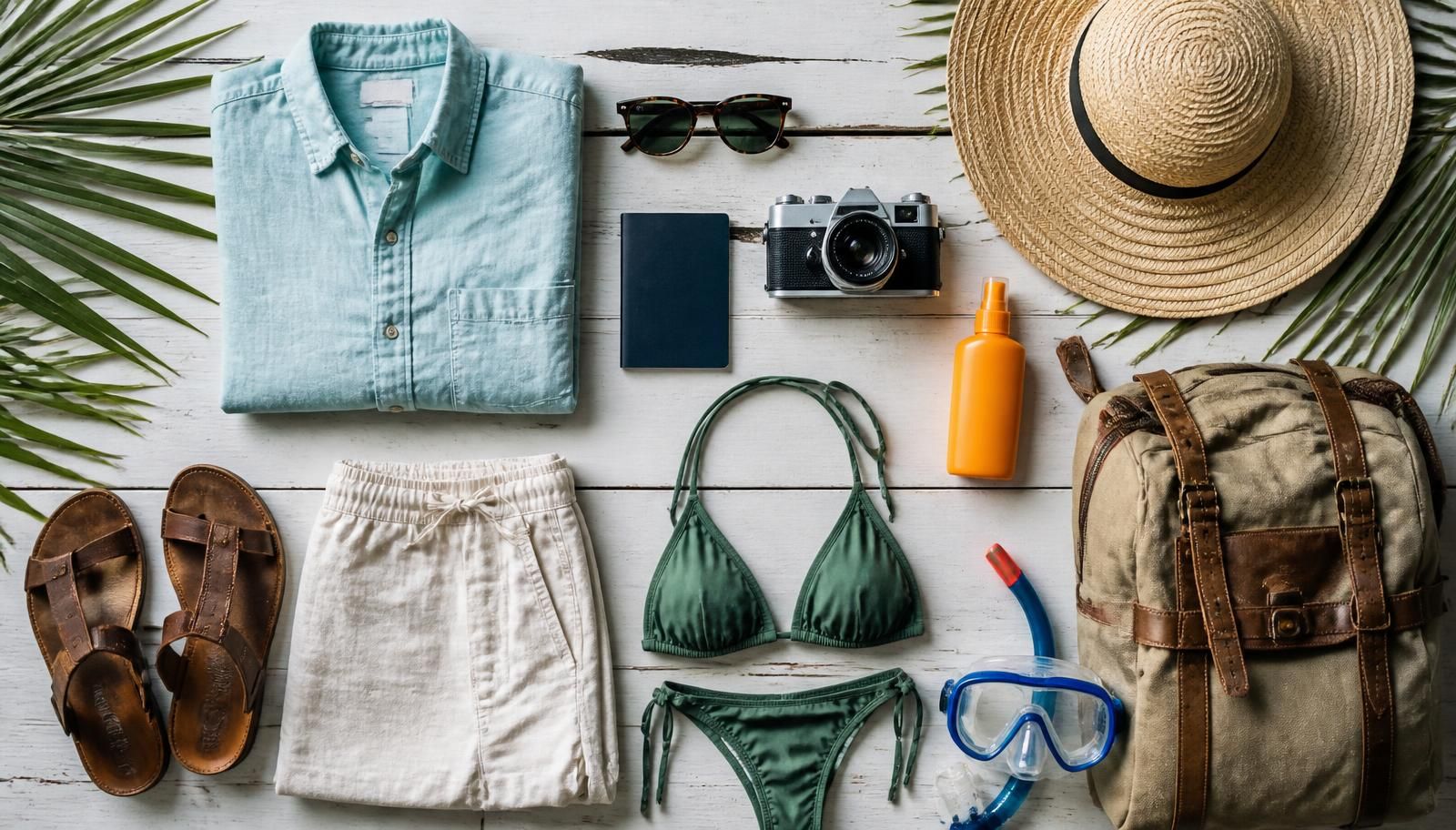
Here's the core principle: pack for two contexts, not one. Half your clothing needs to work on a beach in extreme heat, and half needs to be modest enough for Stone Town, a village walk or a spice farm. Most of it can do both if you choose it well.
Fabrics that work — and don't
Linen, lightweight cotton, bamboo and technical quick-dry blends are your friends. Light colors reflect heat and, more usefully, don't show sweat the way navy and black do. Avoid polyester that isn't specifically designed for moisture-wicking, avoid denim entirely, and avoid anything that needs pressing — Zanzibar humidity will win that fight before you've walked to breakfast.
What to bring for a week
- 3–4 light tops. T-shirts, short-sleeve linen shirts, or breathable blouses. You'll wear two a day when it's hot.
- 2 pairs of shorts. Fine on the beach and at resorts. Knee-length or longer if you plan to wear them in town.
- 1–2 pairs of light long pants, or a maxi skirt/dress. This is the single most useful thing you'll bring. It handles Stone Town, village visits, mosquito hour and air-conditioned restaurants.
- 1 loose long-sleeve shirt. Sun protection when you've had too much, plus evening mosquito cover. A white linen shirt does both.
- 2–3 swimsuits. Not a luxury. In this humidity a wet suit takes most of a day to dry, and putting on a damp one at eight in the morning is a bad start.
- Sarong, kanga or cover-up. Buy a kanga locally for a few dollars — they're beautiful, printed with Swahili proverbs, and work as a beach towel, a shoulder cover, a skirt and a souvenir.
- One smart-casual outfit. A linen shirt and chinos, or a nice dress. Emerson Spice's rooftop, The Rock and the better resort restaurants aren't formal, but they aren't board shorts either.
- A wide-brim hat. A cap leaves your ears and neck exposed, and those are the spots people burn.
- Light sleepwear. Many smaller hotels have fans rather than air conditioning.
Beach Essentials
This is the section where buying locally is most expensive and most disappointing, so bring what you need.
- Reef-safe sunscreen, SPF 50, generous quantity. Zanzibar's UV index routinely hits 11 or above. Add reflection off white sand and water and you can burn in twenty minutes. Mineral formulas without oxybenzone and octinoxate protect the reefs you came to snorkel. Budget one bottle per person per week and buy it at home.
- SPF lip balm. Sunburned lips are miserable and nobody packs this.
- After-sun aloe. Small bottle, big payoff on day two.
- Polarized sunglasses with a strap. Polarized lenses cut glare off the water and help you actually see fish while snorkeling. The strap is because boat trips eat sunglasses.
- Quick-dry microfiber towel. Hotels supply towels but they don't want them on boats, and a cotton beach towel stays wet for a day.
- Dry bag, 5–10 liters. Between dhow cruises, sandbank picnics and Mnemba trips, your phone, camera and cash will be on an open boat with spray coming over the side.
- Rash guard. Long snorkeling sessions over the reef put your back in direct sun for an hour. A rash guard is more reliable than reapplying sunscreen you can't reach.
- Snorkel mask (optional). Rentals are available everywhere for a few dollars, but a mask that actually fits your face is worth carrying if you snorkel often. Fins are bulky — rent those.
Which beach you're headed to changes the emphasis. Our guide to the best beaches in Zanzibar explains which coasts have tidal reef flats and which have deep swimmable water at any hour — that distinction drives half the decisions in the next section.
Footwear
Three pairs covers almost everyone, and one of them is non-negotiable depending on your coast.
- Flip-flops or sliders. Beach, pool, walking to breakfast. Cheap and replaceable.
- Comfortable walking sandals. Stone Town's alleys are uneven coral stone with the occasional puddle and the occasional scooter. Something with a proper sole and a back strap beats flip-flops for a full day on your feet.
- Water shoes or reef shoes. Essential on Paje, Jambiani, Bwejuu and Michamvi, where the tide exposes coral rubble, broken shell and sea urchins. Optional at Nungwi and Kendwa, where the sand is deep and soft and the water doesn't retreat far. If you're unsure which coast you're on, bring them — they weigh nothing.
- Sneakers (situational). Worth having for Jozani Forest, a spice farm in the wet, or if you're pairing the island with a safari.
Electronics
Zanzibar runs on 230V with UK-style Type G three-pin sockets — the same as Britain, Kenya and Tanzania's mainland. US and European travelers need an adapter, and most modern chargers handle the voltage fine, but check anything with a motor or a heating element.
- Type G plug adapter — bring two, or a multi-socket adapter. Rooms often have one usable outlet.
- Power bank, 10,000 mAh or larger. Power cuts are routine, especially on the east coast, and smaller hotels run generators only part of the day. This is the item guests thank us for most.
- Unlocked phone. A Vodacom or Airtel SIM costs a couple of dollars at the airport with generous data for around $10 — dramatically cheaper and more reliable than roaming or hotel wifi.
- Spare charging cables. Salt air and sand kill connectors.
- Headlamp or small flashlight. For power cuts and for walking back along an unlit beach path after dinner.
- E-reader. Paperbacks warp in this humidity within days. An e-reader also weighs less than the three books you'd otherwise bring.
- Waterproof phone pouch. Cheap insurance for boat days and sudden rain.
Health & Personal Care Items
Pharmacies in Stone Town are surprisingly well stocked, but most beach hotels are an hour's drive away and nothing is open at 2 am. Build the kit at home.
- Prescription medication in original labeled packaging, with a doctor's letter for anything unusual, plus a few days' extra in case of flight delays. Keep it in your carry-on.
- Malaria prophylaxis if your doctor recommends it. Zanzibar's transmission rates have fallen sharply, but the risk isn't zero and the mainland safari portion of most trips carries higher risk.
- Insect repellent with 20–30% DEET or 20% picaridin. Apply at dusk, which is exactly dinner time.
- Oral rehydration salts and electrolyte tablets. Dehydration causes more ruined days here than anything else.
- Loperamide, ibuprofen or acetaminophen, antihistamines. The standard three.
- Motion sickness tablets. Dhow trips and the Dar es Salaam ferry both get choppy, and the ferry in particular defeats a lot of people.
- Antiseptic cream and waterproof bandages. Coral cuts get infected fast in warm salt water — clean them properly and cover them.
- Hand sanitizer. Useful before street food; many stalls have no washing facilities.
- Toiletries and feminine hygiene products. Local availability is limited outside Stone Town and brands are unfamiliar. Contact lens solution is particularly hard to find.
- Anti-chafe balm and talc. Unglamorous but genuinely useful in this humidity.
Our Tanzania safari health guide covers vaccinations, malaria medication options and clinic locations in more depth if you're combining the island with the mainland.
Money & Travel Essentials
Zanzibar is more cash-dependent than most beach destinations at this price point. Card acceptance is decent at hotels and larger restaurants and nonexistent at everything else.
- US dollars, clean and post-2009. For the visa, larger payments and emergencies. $300–600 for a week is a reasonable buffer for most travelers.
- Tanzanian shillings for daily spending. Change some at the airport or a Stone Town bureau. You'll get better prices at markets, taxis and street food paying in shillings — sometimes dramatically better.
- Two cards on different networks. Visa and Mastercard. Notify your bank of travel dates. Amex is barely accepted.
- Small notes. Vendors and taxi drivers rarely have change for a TZS 10,000 note, and "no change" always resolves in their favor.
- A money belt or hotel safe habit. Zanzibar is safe by most standards, but petty theft happens on busy beaches and in crowded market alleys. Leave your passport in the safe and carry a copy.
- Reusable filtered water bottle. Tap water isn't drinkable, and most hotels now have refill stations. Saves money and a remarkable amount of plastic.
- Packing cubes and a wet-clothes bag. A dedicated bag for damp swimwear and sandy things keeps the rest of your luggage usable.
Photography Gear
Zanzibar photographs beautifully and destroys equipment if you're careless. Salt spray, fine sand and heat are all working against you.
- One versatile zoom rather than a bag of primes. A 24–70mm equivalent handles Stone Town streets, beach landscapes and food. Changing lenses on a windy beach is how sensors get dusty.
- Spare batteries. Heat drains them faster than you expect, and power cuts mean you can't always recharge on schedule.
- Extra memory cards. Cheap at home, expensive and unreliable here.
- Lens cloth and a blower. You'll use them daily.
- GoPro or action camera with a float strap. Perfect for Mnemba snorkeling and dhow trips. The float strap has saved more cameras than I can count.
- Small travel tripod. Stone Town at dusk, dhow silhouettes at sunset and the stars from the east coast all reward one.
- Padded dry bag. Every boat day.
Packing for Rainy Season
The long rains run roughly late March through May, with April the wettest month. The short rains fall in November. Neither means constant rain — Zanzibar's downpours tend to be heavy and short, often in the afternoon — but the humidity in the wet season is relentless and that's what changes your packing.
- A light, packable rain shell. Not a heavy waterproof — you'll cook in it. Something breathable that folds into its own pocket.
- Quick-dry everything. This is the season where cotton genuinely doesn't dry. Technical fabrics earn their place.
- Two pairs of footwear minimum so one can dry overnight. Sandals that handle wet stone without turning into a skating rink are worth the thought.
- Compact umbrella. Surprisingly useful in Stone Town's narrow alleys where there's nowhere to shelter.
- Extra insect repellent. Standing water means more mosquitoes, particularly in the weeks right after the rains.
- Ziplock bags and silica gel packets. For documents, electronics and anything leather, which will grow mold if you let it.
- Sunscreen anyway. Cloud cover cuts heat, not UV. People burn worse in the wet season precisely because it doesn't feel hot.
Packing for Dry Season
June through October is the island at its most comfortable: lower humidity, steady southeast breeze, clear water and very little rain. December to February is the other dry window — hotter, stickier, and busier over the holidays.
- Maximum sun protection. Clear skies mean extreme UV. Wide-brim hat, high-SPF sunscreen, rash guard, sunglasses.
- One light layer for evenings. June through August the evening breeze on the east coast genuinely feels cool after a hot day. A light sweater or long-sleeve shirt is enough.
- Snorkel or dive gear. Visibility peaks between June and October, so this is the season to bring your own mask if you have one.
- Windproof hair tie or cap for kitesurfing season. Paje's kite season runs June–September and December–February, and the wind is constant.
- A smart outfit for December–January. Holiday-season dinners and New Year parties on the north coast are dressier than the rest of the year.
- Book-ahead mindset. Not a packing item, but July, August and the Christmas period sell out months in advance.
Seasonal packing comparison
| Item | Dry season (Jun–Oct, Dec–Feb) | Rainy season (Mar–May, Nov) |
|---|---|---|
| Rain jacket / shell | Leave at home | Essential — light, packable, breathable |
| Quick-dry clothing | Nice to have | Critical — cotton never dries in April humidity |
| Extra footwear | One pair sandals is enough | Two pairs so one can dry overnight |
| Dry bag / waterproof pouch | For boat trips only | Daily use — sudden downpours |
| Sun protection | Maximum — UV 11+ most days | Still needed; cloud does not block UV |
| Insect repellent | Standard 20% DEET | Higher priority — mosquito numbers spike |
| Light layer for evenings | Yes in June–August (breezy) | Rarely needed — nights stay warm |
| Anti-humidity hair products | Optional | Bring them; humidity runs 80%+ |
| Snorkel / dive gear | Best visibility Jun–Oct | Visibility drops; rent locally instead |
| Compact umbrella | Unnecessary | Genuinely useful in Stone Town's alleys |
Cultural Dress Code
Roughly 98% of Zanzibar's population is Muslim, and while the island is used to tourists and people are unfailingly polite about it, dress genuinely matters here. Getting it right costs you nothing and changes how you're treated.
The simple rule
Beach and resort grounds: wear whatever you'd wear at any beach. Everywhere else: shoulders and knees covered. That's it. The moment you leave the sand to walk into a village, catch a taxi, shop in Stone Town or eat at a local restaurant, put something on.
Specifics worth knowing
- Women — loose long pants, maxi skirts or dresses, and tops that cover the shoulders. A scarf in your bag handles anything unexpected. Headscarves aren't required for visitors except when entering a mosque.
- Men — shirts on, always, away from the beach. Walking through Stone Town shirtless reads as extremely rude. Knee-length shorts are fine; very short shorts are not.
- Mosques — women cover hair, arms and legs; men wear long pants. Shoes off. Some mosques don't admit non-Muslims at all, so ask.
- Ramadan — dress more conservatively than usual and avoid eating, drinking or smoking in public during daylight hours.
- Topless and nude sunbathing are illegal. Not frowned upon — illegal. This applies on public beaches, including the stretch in front of your hotel.
The Stone Town travel guide goes further into etiquette for the old town, and things to do in Zanzibar flags which excursions have their own dress expectations.
What NOT to Pack
Space and weight are finite, especially if a light-aircraft transfer is involved. Here's what consistently goes home unused — or causes problems.
- Plastic bags. Not just unnecessary — illegal. Tanzania banned single-use plastic bags in 2019 and bags are confiscated at the airport. Ziplocks for toiletries are tolerated; shopping bags are not.
- Jeans and heavy fabrics. You will wear them once, on the plane, and resent them.
- A hard-shell suitcase, if you're flying to a safari. Bush flights require soft duffels and cap luggage around 33 lb (15 kg) including carry-on. Our Tanzania safari packing list covers the mainland side of a combined trip in detail.
- Camouflage clothing. Military-pattern clothing is restricted for civilians in Tanzania and can cause real problems at checkpoints. This includes children's clothes.
- Hair dryers and straighteners. Most hotels supply a dryer, the voltage differences cause failures, and the humidity will undo your work in ten minutes anyway.
- Expensive jewelry and watches. Nothing to wear them to, and they make you a target in crowded markets.
- Full-size toiletries. Decant. Hotels provide basics and Stone Town pharmacies cover the rest.
- Too many shoes. Three pairs. That's the answer for almost everyone.
- Drones, unless pre-cleared. Tanzania requires permits for drone use and enforcement at the airport is inconsistent but real. Arrange it in advance or leave it home.
- Paper books, plural. They warp. Bring one and an e-reader.
Printable Packing Checklist
Here's the whole thing in one place. Print this page or screenshot the sections you need — it's grouped the way most people pack.
Documents & money
- Passport (6+ months validity, 2 blank pages)
- Visa or e-visa printout
- Zanzibar mandatory travel insurance confirmation
- Yellow fever certificate (if transiting a risk country)
- Flight and hotel confirmations (printed + phone)
- Passport photocopy or phone photo
- US dollars, clean bills dated 2009 or later
- Two payment cards from different networks
- Driver's license / IDP if renting a scooter
Clothing
- 3–4 light T-shirts or short-sleeve shirts
- 2 pairs of shorts
- 1–2 pairs light long pants or maxi skirt
- 1 loose long-sleeve shirt (sun + mosquitoes)
- 2–3 swimsuits
- Sarong / kanga / cover-up
- Light scarf or shawl for Stone Town
- 1 smart-casual outfit for dinner
- Underwear and light sleepwear
- Wide-brim hat or cap
Footwear
- Flip-flops or sliders for the beach
- Comfortable walking sandals for Stone Town
- Water shoes / reef shoes (east coast essential)
- Optional: sneakers for Jozani Forest or safari days
Beach & water
- Reef-safe sunscreen SPF 50 (enough for the trip)
- SPF lip balm
- After-sun aloe gel
- Polarized sunglasses with a strap
- Quick-dry microfiber towel
- Dry bag (5–10 L)
- Snorkel mask (optional — rentals available)
- Rash guard for long snorkeling sessions
- Waterproof phone pouch
Electronics
- UK-style Type G plug adapter (Zanzibar uses Type G, 230V)
- Power bank (10,000 mAh+) for power cuts
- Phone, charger, spare cable
- Universal or multi-USB charger
- Headphones
- E-reader (better than paperbacks in humidity)
- Unlocked phone for a local Vodacom or Airtel SIM
Health & personal care
- Prescription medication in original packaging + doctor's note
- Malaria prophylaxis if advised
- Insect repellent (20–30% DEET or 20% picaridin)
- Oral rehydration salts and electrolyte tablets
- Loperamide and general painkillers
- Antihistamines
- Motion sickness tablets for boat trips
- Antiseptic cream and waterproof bandages
- Hand sanitizer
- Toiletries in reusable travel bottles
- Feminine hygiene products (limited local choice)
- Contact lenses / spare glasses
Photography
- Camera body and one versatile zoom
- Spare batteries (heat drains them faster)
- Extra memory cards
- Lens cloth and blower for sand and salt spray
- GoPro or action camera with float strap
- Small tripod for sunsets and Stone Town at night
- Dry bag or padded case for boat days
Extras worth having
- Reusable water bottle with a filter
- Packing cubes
- Laundry bag for wet and sandy clothes
- Small padlock for luggage
- Compact daypack
- Travel-size laundry soap
- Ziplock bags
- Headlamp or small flashlight for power cuts
Frequently Asked Questions
Common Questions
Frequently Asked Questions
Think light, loose and natural. Linen and cotton in light colors handle the heat and humidity far better than synthetics, which stick to you within minutes. For a week, most travelers do well with three or four T-shirts or short-sleeve shirts, two pairs of shorts, one pair of light long pants or a maxi skirt, one loose long-sleeve shirt for sun and mosquitoes, two or three swimsuits, a cover-up or sarong, a wide-brim hat, and one slightly smarter outfit for a nice dinner. Women should pack at least one outfit that covers shoulders and knees for Stone Town and village visits. Skip jeans, skip anything heavy, and skip clothes that need ironing — the humidity will defeat you.
On the east and southeast coasts, yes — bring them. Paje, Jambiani, Bwejuu and Michamvi have wide reef flats that emerge at low tide, and those flats are made of sharp coral rubble, broken shell and sea urchins. Walking out to the water barefoot at low tide is how people end up with cuts and urchin spines. On the north coast at Nungwi and Kendwa, where the beach is deep soft sand and the water doesn't retreat far, you can happily go barefoot. Cheap neoprene reef shoes are fine; they cost about $15 at home and roughly double that on the island if you can find them at all.
Yes, significantly. Everything is imported, and a standard bottle of SPF 50 that costs $10–12 in the US typically runs $20–30 in a Stone Town pharmacy or hotel shop, with resort boutiques charging more. Reef-safe mineral sunscreen — the kind without oxybenzone and octinoxate — is even harder to find and pricier still. Bring enough for the whole trip plus a bit of margin. You will use more than you expect: Zanzibar sits about six degrees south of the equator, the UV index regularly hits 11 or higher, and the reflection off white sand and water doubles your exposure.
Bring a mix, weighted toward cash. Card acceptance has improved at hotels and larger restaurants, but most village restaurants, markets, taxis, boat operators, tips and street stalls are cash only, and card machines fail regularly when the network drops. Bring US dollars in clean bills dated 2009 or newer for the visa and larger payments, then change some into Tanzanian shillings for daily spending — you'll get better prices in shillings almost everywhere. ATMs in Stone Town, Nungwi and at the airport dispense shillings and work reasonably well, but they run out of cash on weekends and holidays, so don't rely on one as your only plan.
No, and this is the single most common cultural misstep visitors make. Swimwear is completely fine on the beach and inside resort grounds. It is not acceptable in villages, in Stone Town, in shops, in local restaurants, on public transport or walking along a village road to reach the beach. Zanzibar is a conservative Muslim society, and bikinis or bare chests away from the beach genuinely offend people even if nobody says anything to your face. Topless and nude sunbathing are illegal. Carry a sarong, kanga or cover-up and put it on the moment you leave the sand — that's all it takes.
Build a small kit and bring it with you rather than shopping locally. The essentials: any prescription medication in its original labeled packaging with a doctor's note, malaria prophylaxis if your doctor recommends it, oral rehydration salts, loperamide for traveler's diarrhea, ibuprofen or acetaminophen, antihistamines for insect bites and heat rash, motion sickness tablets for dhow and boat trips, antiseptic cream and waterproof bandages for coral scrapes, after-sun aloe, and hand sanitizer. Add electrolyte tablets — dehydration in this heat causes more ruined days than anything infectious. Pharmacies in Stone Town are well stocked, but they are far from most beach hotels and not open at 2 am.
Yes. Zanzibar has dramatically reduced malaria transmission compared with the mainland, but risk is not zero and dengue outbreaks occur, so bites are worth avoiding. Bring repellent with 20–30% DEET or 20% picaridin. Mosquitoes here are most active at dusk and after dark, which is exactly when you'll be sitting outside for dinner, so cover up with a loose long-sleeve shirt and light pants in the evening and treat exposed skin. Most hotels provide mosquito nets over the beds; check yours for holes on the first night. Local repellent is sold on the island but the concentrations are inconsistent, so bring your own supply.
A passport valid at least six months beyond your entry date with at least two blank pages, your visa or e-visa confirmation printout, proof of yellow fever vaccination if you're arriving from or transiting through a yellow fever risk country, your mandatory Zanzibar travel insurance confirmation, flight itineraries, and hotel booking confirmations. Since 2024 Zanzibar requires all foreign visitors to hold an inbound travel insurance policy purchased through its designated provider, roughly $44 for up to 92 days, and it is checked at the airport. Carry a photocopy or phone photo of your passport for day-to-day identification and leave the original in the hotel safe.
Conclusion
Packing for Zanzibar is less about volume and more about judgment. The heat and humidity mean you'll wear a fraction of what you bring, the culture means a scarf and a pair of long pants matter more than another outfit, the reef means water shoes and reef-safe sunscreen belong at the top of the list, and the cash economy means clean dollar bills are as important as anything in your suitcase. Get those four right and everything else is a detail you can buy, borrow or live without.
If you want the two-minute version: linen and cotton, three pairs of shoes with one of them water shoes, reef-safe sunscreen from home, a kanga for modesty, a Type G adapter and a power bank, clean dollar bills, and a soft bag. Then leave room, because you'll be carrying spices, kanga cloth and a carved box home.
Plan Your Zanzibar Trip With Olympus Adventure
Olympus Adventure is a Tanzanian-owned company based in Arusha. We design private, tailor-made trips that combine the northern safari circuit with Zanzibar's coast, and the practical details are where we earn our keep: which coast suits your dates and your swimming habits, how to route your luggage around a bush-flight weight limit, which hotels actually run generators through a power cut, and what genuinely needs to be in your bag.
Send us your travel dates, how many nights you have and roughly what you'd like to spend. We'll come back with a day-by-day plan, a transparent quote with nothing hidden, and a personalized packing brief for your exact itinerary and season — including the things we'd tell you to leave at home.
Whether that's ten days of pure island time or two weeks that start with lions in the Serengeti and end with a sandbank to yourselves, we'll take care of the logistics so you only have to think about what to wear.
Keep Reading
More Zanzibar Guides

Zanzibar
Zanzibar Travel Guide: Everything You Need Before Visiting the Island


Plan Your Journey
Ready to plan a stress-free Zanzibar holiday?
Tell us your dates and we'll design a tailor-made trip that combines Zanzibar's beaches with an unforgettable Tanzania safari — logistics, transfers and packing advice included.
- TALA Licensed Operator
- 4.9 ★ Guest Rating
- No Booking Fees