
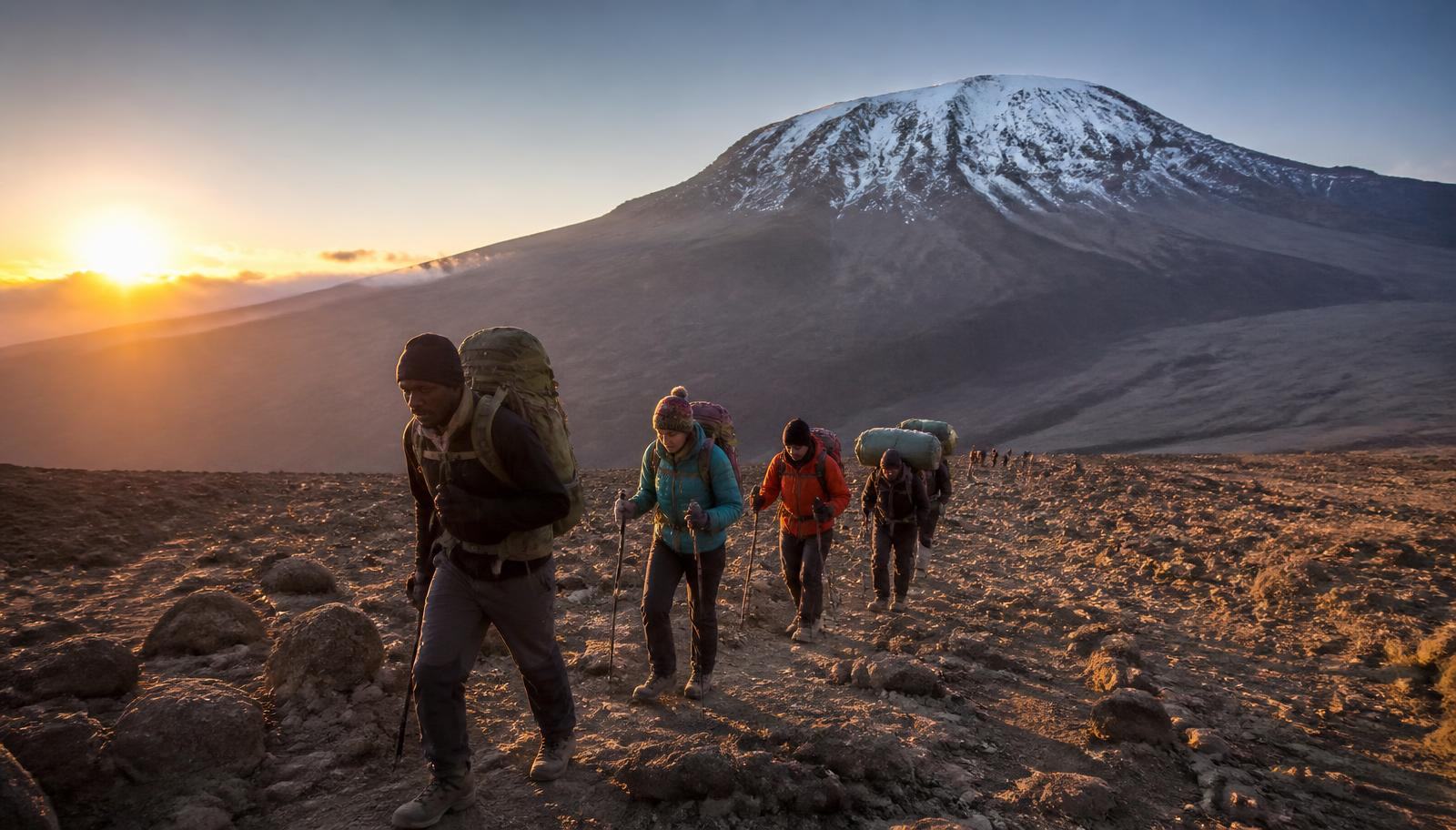
Kilimanjaro Climbing
Kilimanjaro Altitude Sickness Guide: Everything Every Climber Should Know
Symptoms, prevention, acclimatization and the warning signs that mean descend now — written by Tanzanian guides who run oxygen checks on this mountain every week.

Introduction
Every Kilimanjaro climb I have led in twenty years has had the same quiet turning point. It is usually somewhere around 3,900 metres, late afternoon, the tents are up, and someone sits down on a rock and says, almost apologetically, "I think I've got a bit of a headache." What happens in the next ten minutes — whether that person is honest, whether the guide takes it seriously, whether the itinerary has room to slow down — decides more about their climb than any amount of training did.
Altitude is the great equalizer on this mountain. It does not care about your marathon time, your age, your gym membership or how much you paid for your boots. At Uhuru Peak you are breathing air with roughly half the oxygen molecules per breath that you get at sea level, and how your particular body responds to that is largely written into your genes. What is not written into your genes is how many days you spend adapting, how fast you walk, how much you drink, whether you eat, and whether the team around you is measuring what is happening inside you or simply pushing a schedule.
This guide is the version of the altitude briefing I give clients in the hotel in Moshi the night before we drive to the gate — expanded, and with the parts people usually forget written down. It covers what altitude sickness actually is, why Kilimanjaro is unusually good at causing it, how to tell mild acute mountain sickness from the two conditions that genuinely kill people, and the practical, boring, unglamorous habits that keep climbers safe and get them to the summit.
One note before we start. I am a mountain guide, not a doctor. Everything here follows internationally accepted high-altitude guidance and two decades of field experience, but it is general education, not personal medical advice. Book a travel-medicine consultation before you fly, especially if you take regular medication or have any heart, lung or blood-pressure condition. It pairs well with our Tanzania safari health guide, which covers vaccinations, malaria and the lowland side of travel health.
What Is Altitude Sickness?
Altitude sickness is what happens when you go up faster than your body can adapt to the falling oxygen pressure around you. The important thing to understand — and almost nobody arrives in Tanzania knowing this — is that the percentage of oxygen in the air does not change with altitude. At the summit of Kilimanjaro the atmosphere is still about 21 percent oxygen, exactly as it is on the beach in Zanzibar. What changes is barometric pressure. There is less air pressing down on you, so each breath contains far fewer molecules of everything, oxygen included.
At 5,895 metres the pressure is roughly half of sea level. Your lungs still fill, your chest still rises, but the amount of oxygen crossing into your blood per breath is about half what your body is used to. Physiologists call this hypobaric hypoxia. Your body's response is immediate and impressive: you breathe faster and deeper, your heart rate climbs, your kidneys start flushing bicarbonate to rebalance your blood chemistry, and over days your bone marrow begins producing extra red blood cells. That whole cascade is acclimatization.
Altitude sickness is simply the gap between how fast you ascend and how fast that cascade can keep up. Go slowly enough and the adaptation stays ahead of the exposure. Go too fast and fluid begins to shift out of blood vessels into tissue — mildly, in the brain, producing the classic headache of acute mountain sickness; severely, into the lungs or the brain itself, producing the two emergencies we will cover below.
Why Altitude Affects Climbers on Kilimanjaro
Kilimanjaro has a reputation as the "easy" big mountain, and in terms of terrain that is fair. In terms of altitude physiology, it is one of the more aggressive things you can do to a human body on a holiday itinerary. Four features of the mountain combine to make it unusually good at producing altitude sickness.
1. The ascent is extremely fast by world standards
You drive from Moshi at around 900 metres and, six or seven days later, stand at 5,895 metres. On a Himalayan trek to Everest Base Camp — a lower target at 5,364 metres — that same gain is spread across twelve to fourteen days with two built-in rest days. Kilimanjaro compresses it because the commercial market wants a week-long trip. The consequence is that almost every Kilimanjaro climber summits only partially acclimatized. That is normal, it is by design, and it is precisely why the safety margin comes from the details rather than from full adaptation.
2. There are no intermediate villages to break the climb
In Nepal, you sleep in Namche for two nights because Namche is there. On Kilimanjaro the mountain is a national park with fixed camps and no permanent settlement, so the only acclimatization you get is the acclimatization you buy in the form of extra days on your itinerary. Booking a five-day Marangu climb because it is cheaper is, in physiological terms, buying a worse ascent profile.
3. The final push is enormous and happens at night
Summit night takes you from roughly 4,650 metres to 5,895 metres in six or seven hours, starting around midnight, after two or three hours of thin sleep, in temperatures that routinely reach minus 15 to minus 25 °C with wind chill. Cold constricts blood vessels, sleep deprivation impairs judgement, and darkness hides the visual cues guides use to spot a climber who is deteriorating. It is the highest-risk window of the entire climb.
4. Susceptibility is unpredictable and unrelated to fitness
This is the one that upsets people. There is no fitness test, no training protocol and no blood marker that reliably predicts your response to 5,000 metres. I have watched triathletes vomiting at Shira Camp while their sixty-eight-year-old mother-in-law ate a second bowl of soup. If anything, very fit climbers are at slightly higher risk because they can physically push a pace their acclimatization cannot support. Fitness makes the walking easier. It does nothing for your oxygen saturation.
Oxygen availability as you climb
The numbers below are the practical picture of what your body faces at each stage of a typical western-approach itinerary. "Effective oxygen" is the sea-level equivalent percentage of oxygen available to you at that pressure.
| Location | Altitude | Effective oxygen | What climbers notice |
|---|---|---|---|
| Moshi / Arusha | 800 – 1,400 m | ~88 – 90% | Where most climbs begin. No altitude effect for almost anyone. |
| Machame Gate | 1,800 m | ~81% | Rainforest. Humid and warm; altitude is not yet a factor. |
| Shira Plateau | 3,850 m | ~63% | First night most climbers notice broken sleep and mild headache. |
| Lava Tower | 4,600 m | ~57% | Classic climb-high-sleep-low point. Symptoms peak here for many. |
| Barafu Camp | 4,673 m | ~56% | Summit base camp. Appetite and sleep quality are usually poor. |
| Stella Point | 5,756 m | ~50% | Crater rim, reached at dawn on summit night. |
| Uhuru Peak | 5,895 m | ~49% | The roof of Africa. Half the oxygen you breathe at home. |
Types of Altitude Illness
High-altitude medicine recognizes three related conditions. They sit on a spectrum: acute mountain sickness is the mild, common end; high altitude cerebral edema is the severe end of the same brain-swelling process; high altitude pulmonary edema is a separate lung problem that can occur with or without AMS. Knowing which one you are looking at determines whether you rest or evacuate.
Acute Mountain Sickness (AMS)
AMS is by far the most common. It usually appears six to twelve hours after arriving at a new altitude, typically above 2,500 to 3,000 metres, and on Kilimanjaro it most often shows up on the second or third night. The defining symptom is headache, plus at least one of: nausea or loss of appetite, fatigue or weakness, dizziness, or difficulty sleeping. Guides score it formally using the Lake Louise system, which puts a number on each symptom so we can track whether someone is improving or deteriorating rather than relying on how brave they feel that morning.
Mild AMS is not dangerous in itself and it is not a reason to end a climb. Roughly half to three quarters of Kilimanjaro climbers experience some of it. The management is simple and works: stop ascending, rest, hydrate, eat, take simple painkillers, and give it twelve to twenty-four hours. If symptoms settle, you continue. The danger is not AMS — it is climbing higher while you have it. Every case of HACE I have encountered began as untreated, ignored, or actively hidden AMS.
High Altitude Pulmonary Edema (HAPE)
HAPE is fluid accumulating in the lungs, and it is the most common cause of death at high altitude worldwide. It typically develops after two or more nights above 3,000 metres and can appear in someone who has had no AMS symptoms at all, which is exactly what makes it dangerous. The mechanism is uneven constriction of the pulmonary blood vessels under low oxygen, which drives pressure up in parts of the lung and pushes fluid into the air spaces.
The signs are respiratory and they get worse rather than better with rest. Breathlessness that persists when you are sitting still, a cough that starts dry and may progress to producing frothy or pink-tinged sputum, gurgling or crackling sounds in the chest, chest tightness, a resting heart rate that stays very high, blue-tinged lips or fingernails, and exhaustion that is completely out of proportion to the day's effort. Oxygen saturation drops sharply — a reading ten points or more below the rest of the group at the same camp is a red flag we act on immediately.
HAPE is a descend-now condition. Supplementary oxygen and, where available, a portable hyperbaric chamber can buy time, and nifedipine appears in international treatment guidance, but the definitive treatment is losing altitude. On Kilimanjaro that is one of the few genuine advantages of the mountain: descent routes are walkable, rescue stretchers are stationed at the camps, and a climber can usually be brought down 1,000 metres or more within a few hours.
High Altitude Cerebral Edema (HACE)
HACE is swelling of the brain and represents the severe end of the AMS spectrum. It is rarer than HAPE but even less forgiving, because its symptoms attack the very faculty the climber needs in order to recognize the problem — judgement. Climbers with HACE frequently insist they are fine while being unable to stand up straight.
The signs are neurological: a severe headache that does not respond to painkillers, relentless vomiting, confusion, disorientation, unusual or irrational behaviour, extreme lethargy, hallucinations, and above all ataxia — loss of coordination. The field test we use is deliberately simple. We ask the climber to walk a straight line heel to toe, ten paces, with arms out. Anyone who cannot do that, or who staggers off the line, is descending immediately regardless of what they say about how they feel.
Common Symptoms and What They Mean
Here is the reference table I want every client to read before they fly. The left-hand column is what you feel; the right-hand column is what happens next. Print it, or screenshot it to your phone — reception disappears above Shira but your camera roll does not.
| Symptom | Severity | What it means | Action |
|---|---|---|---|
| Headache | Mild to moderate | The hallmark AMS symptom. Usually frontal, worse in the morning or at night. | Hydrate, rest, paracetamol/ibuprofen, tell your guide. Do not ascend if it worsens. |
| Nausea or loss of appetite | Mild to moderate | Very common above 3,500 m. The gut slows down as oxygen drops. | Eat small, carbohydrate-rich portions. Keep sipping fluids. Monitor. |
| Fatigue and weakness | Mild to moderate | Expected. Becomes a concern when it is out of proportion to the day's walk. | Slow the pace, eat, rest. Reassess at the evening health check. |
| Dizziness or light-headedness | Moderate | Often dehydration combined with hypoxia. | Stop, sit, drink with electrolytes. Report immediately if it persists. |
| Poor sleep / periodic breathing | Mild | Cheyne-Stokes breathing at altitude — normal, disconcerting, not dangerous alone. | Accept it. Avoid sleeping pills, which suppress the drive to breathe. |
| Persistent dry cough | Moderate — watch closely | The 'Khumbu cough' is common in cold dry air, but can also be early HAPE. | Guide assessment. If breathless at rest or gurgling breath, descend now. |
| Breathlessness at rest | Severe — emergency | Suggests HAPE. Breathlessness on exertion is normal; at rest it is not. | Immediate descent, oxygen, evacuation. |
| Confusion, staggering, behaviour change | Severe — emergency | Suggests HACE. Ataxia is the single most reliable danger sign on the mountain. | Immediate descent, oxygen, evacuation. Never leave the climber alone. |
Two practical notes on reading that table. First, dehydration mimics AMS almost perfectly — headache, fatigue, nausea, dizziness. Before assuming the worst, we check how much someone has actually drunk that day, and a surprising number of "altitude headaches" resolve after a litre of water and a salty soup. Second, symptoms that improve overnight at the same altitude are a good sign; symptoms that are worse the next morning than they were the previous evening are the pattern that concerns us, regardless of how mild they seem.
Warning Signs That Require Immediate Descent
These are the non-negotiables. Our guides carry them on a laminated card, and every one of them means the climb stops and the altitude comes down. There is no discussion, no vote, and no allowance for how much the trip cost.
Descend immediately if any of these are present
- Inability to walk a straight heel-to-toe line (ataxia) — the single most important sign.
- Confusion, disorientation, irrational behaviour or personality change.
- Severe headache that does not respond to painkillers, hydration and rest.
- Vomiting that will not stop, or inability to keep fluids down.
- Breathlessness while sitting or lying still, not just while walking.
- Gurgling, bubbling or crackling sounds when breathing.
- Cough producing frothy, watery or pink-tinged sputum.
- Blue or grey tinge to the lips, tongue or fingernail beds (cyanosis).
- Oxygen saturation falling sharply across consecutive checks, or far below the group average.
- Extreme lethargy — a climber who cannot be roused properly or wants only to sleep.
- Any AMS symptom that is clearly worse today than it was yesterday at the same camp.
- Chest pain, fainting, or an unexplained resting heart rate that keeps climbing.
The rule beneath all of those is simpler still: never ascend with symptoms, and never leave a symptomatic climber alone, even to walk to the toilet tent. Descent works faster than any drug. A drop of 500 to 1,000 metres typically produces obvious improvement within a few hours, and on Kilimanjaro there is almost always a lower camp within reach the same day.
How to Prevent Altitude Sickness
You cannot eliminate the risk, but you can shrink it dramatically. In my experience the factors below account for the overwhelming majority of the difference between climbers who sail up and climbers who get evacuated. They are listed roughly in order of impact.
1. Buy more days than you think you need
This is the whole ballgame. Nothing else you do — not medication, not fitness, not gear — comes close to the protective effect of extra nights on the mountain. Five-day itineraries have summit rates near 50 percent; eight- and nine-day itineraries reach 90 to 95 percent, and the difference is almost entirely altitude illness. Two extra days typically cost a few hundred dollars. A failed summit costs the entire trip.
2. Walk absurdly slowly
Pole pole — slowly, slowly — is not a tourist slogan. It is the single behaviour that most reliably separates comfortable climbers from sick ones. The pace we set on day one looks ridiculous to fit clients; some of them privately think their guide is lazy. The physiology is straightforward: walking below your aerobic threshold keeps oxygen demand low enough that your partially acclimatized body can meet it. If you cannot hold a full conversation while walking, you are going too fast.
3. Follow climb-high, sleep-low religiously
Your body adapts to the altitude you sleep at, not the highest point you touch. That is why good itineraries include days that climb to Lava Tower at 4,600 metres and then descend to sleep at Barranco at 3,950 metres. Those days feel pointless when you are tired. They are the most valuable hours of the entire climb, and clients who skip the optional afternoon acclimatization walk are noticeably more likely to struggle later.
4. Hydrate and eat on a schedule, not on appetite
Above 4,000 metres appetite disappears long before the need for fuel does, and thirst is an unreliable signal in cold dry air. Both have to become scheduled tasks. Detail below in the hydration section.
5. Skip alcohol, sedatives and sleeping pills
Alcohol dehydrates and suppresses the respiratory drive; classic sleeping pills do the same, which is a genuinely dangerous combination at altitude where periodic breathing already causes oxygen dips overnight. Poor sleep on the mountain is unpleasant but normal. Do not chemically fix it.
6. Climb with a team that measures, not guesses
Pulse oximetry twice a day, formal Lake Louise scoring, bottled emergency oxygen on every climb, a stretcher plan, and guides with current wilderness first aid training. Ask any operator to confirm all five in writing. The ones who cannot are the ones whose incident stories you eventually hear about.
Acclimatization Strategies That Actually Work
Acclimatization is a physiological process with a clock, and the clock cannot be rushed. What you can do is give it the conditions it needs. Here is what is happening inside you across a well-designed eight-day climb, and what your job is on each day.
| Day | Altitude | What your body is doing | Your job |
|---|---|---|---|
| Day 1 | 1,800 → 3,000 m | Breathing rate rises slightly. Most climbers feel nothing beyond a warm, sweaty walk. | Set a deliberately slow pace and drink 3 L. Habits start here. |
| Day 2 | 3,000 → 3,850 m | Kidneys begin excreting bicarbonate; urination increases. Mild headache is common at camp. | Hydrate hard, eat a full dinner, sleep early. Report any headache. |
| Day 3 | 3,850 → 4,600 → 3,950 m | Peak symptom day for many. Climb-high-sleep-low triggers real adaptation. | Walk the acclimatization hike even if you feel tired — it is the point of the day. |
| Day 4 | 3,950 → 4,000 m | Red blood cell production ramps up. Sleep quality often improves slightly. | Low net gain day. Eat well; appetite is starting to fade. |
| Day 5 | 4,000 → 4,200 m | Breathing efficiency improves. Resting heart rate stays elevated. | Second acclimatization hike on longer itineraries. Keep saturation logged. |
| Day 6 | 4,200 → 4,673 m | Highest sleeping altitude before the summit. Sleep will be poor and short. | Rest in the afternoon, force down dinner, pack for summit night early. |
| Day 7 | 4,673 → 5,895 → 3,100 m | Summit night, then a descent of nearly 2,800 m. Symptoms resolve fast on the way down. | Slow, steady, layered, hydrated. Descend as soon as photos are done. |
The rules behind the timeline
- Above 3,000 metres, aim to increase your sleeping altitude by no more than 300 to 500 metres per night, averaged across the climb.
- Build in a day where you gain little or no sleeping altitude for roughly every 1,000 metres of ascent.
- Touch a higher altitude during the day than you sleep at whenever the route allows it. Lava Tower, the Barranco approach and the Karanga ridge all exist for this.
- Never sleep higher on a day when you developed new symptoms. Hold, treat, reassess in the morning.
- Sleep matters more than most climbers think. Warm sleeping bag, earplugs, empty bladder, and get horizontal by 8pm on the high camps.
Does pre-acclimatizing at home help?
Modestly, and only if it is genuine. Sleeping at real altitude for a week or two before the climb — in Colorado, the Alps, the Andes, or on a Mount Meru trek here in Arusha — produces measurable benefit. Altitude tents and hypoxic training masks have far weaker evidence behind them and, in my experience with clients, do not translate reliably to performance on Kibo. If you have the option, a four-day Mount Meru trek to 4,562 metres immediately before Kilimanjaro is the best pre-acclimatization available in Tanzania and one of the best value additions to any climb.
Choosing the Right Route for Better Acclimatization
Route choice is really altitude-profile choice. Two routes can cover similar distance and yet present your body with completely different challenges depending on how fast your sleeping altitude rises and whether the profile includes high-touch days. Here is how the main options compare specifically on acclimatization, not on scenery or price.
| Route | Days | Acclimatization profile | Typical success |
|---|---|---|---|
| Northern Circuit | 9 | Best on the mountain — longest time above 3,500 m, textbook climb-high-sleep-low | ~95% |
| Lemosho | 8 | Excellent — western approach, gradual gain, Lava Tower acclimatization day | ~90% |
| Machame | 7 | Very good — Lava Tower and Barranco give a strong sawtooth profile | ~85% |
| Rongai | 7 | Good — gentlest gradient, driest side, less dramatic sawtooth | ~80% |
| Machame | 6 | Compressed — removes the key acclimatization day | ~65% |
| Marangu | 5 | Poor — fastest ascent profile on the mountain, huts but no adaptation time | ~50% |
Read that table and notice what actually drives the success column. It is not the name of the route — Machame appears twice with a twenty-point spread — it is the number of days. The same trail, walked one day slower, is a substantially safer mountain. If your budget forces a choice between a "premium" operator on six days and a solid operator on eight, take the eight days every single time.
Season matters too, though less than duration. Climbing in the long rains of late March through May means wet gear, colder nights and worse sleep, all of which make altitude symptoms feel worse than they otherwise would. Our best time to climb Kilimanjaro guide covers the monthly detail, and the routes comparison goes deeper on the trade-offs between each trail.
Hydration and Nutrition at Altitude
These are the two things fully within your control every single hour of the climb, and they are the two things climbers most consistently get wrong. At altitude you lose fluid faster and want food less, at exactly the moment your body needs more of both.
Why you dehydrate so fast on Kilimanjaro
Three forces stack. Respiratory water loss — you are breathing far more air per minute and it is bone dry, so every exhalation strips moisture. Altitude diuresis — a normal part of acclimatization in which your kidneys excrete bicarbonate and take water with it. And ordinary sweat, which you generate on the rainforest days and then fail to replace in the cold zones where you do not feel thirsty. Losing two to three litres a day without noticing is entirely normal.
| When | Intake | Why it matters |
|---|---|---|
| On waking (6:00) | 500 ml warm water or tea | You lose 1 – 2 L overnight through breathing alone in dry alpine air. |
| Breakfast | 400 – 500 ml + porridge | Carbohydrates are the most oxygen-efficient fuel at altitude. |
| While walking | 1.5 – 2 L, sipped constantly | Steady intake beats gulping at breaks; use a bladder plus one insulated bottle. |
| Arrival at camp | 500 ml with electrolytes | Replaces salts lost to sweat and altitude diuresis. |
| Dinner and evening | 500 – 700 ml soup, tea, water | Warm fluids are easier to take when appetite is gone. |
Eating when you have no appetite
Appetite suppression above 4,000 metres is close to universal, and it is one of the quiet reasons people fail on summit night — they arrive at Barafu having eaten a third of what they burned for three days running. Carbohydrates are the priority because they require less oxygen to metabolize than fat or protein, which is exactly the efficiency you want when oxygen is the limiting resource.
Altitude nutrition checklist
- Treat every meal as a task, not a pleasure. Eat the porridge even if it is the last thing you want.
- Prioritize carbohydrates: rice, pasta, potatoes, porridge, bread, soup, bananas.
- Carry snacks you genuinely enjoy from home — nuts, dried mango, energy bars, salty crisps.
- Add electrolytes or rehydration salts to at least one litre of water per day.
- Take soup at every dinner; it delivers fluid, salt and calories when solid food is unappealing.
- Avoid alcohol entirely from the day you arrive in Tanzania until you are off the mountain.
- Limit heavy, fatty meals at the high camps — they sit badly and worsen nausea.
- Keep a snack and 500 ml of water inside your sleeping bag on summit-night eve so neither freezes.
- Eat something small every ninety minutes on summit night, even a few squares of chocolate.
Medications Commonly Discussed for Altitude
I want to be careful here, because this is the section where guides most often overstep into territory that belongs to doctors. What follows describes the medications that appear in internationally accepted high-altitude guidance and that climbers ask us about constantly. It is education, not a prescription, and none of it replaces a consultation with your own healthcare professional — ideally a travel-medicine clinic, six to eight weeks before departure.
Acetazolamide (Diamox)
Acetazolamide is the drug most commonly used to assist acclimatization. It works by mildly acidifying the blood, which stimulates breathing and effectively speeds up part of the natural adaptation process. It is widely prescribed for Kilimanjaro and many of our clients take it. Commonly reported side effects include increased urination, tingling in the fingers, toes and lips, altered taste — carbonated drinks famously taste odd — and occasionally nausea. It contains a sulfonamide component, which matters if you have a sulfa allergy. Dosing, suitability and timing are for your doctor to decide, and if you are prescribed it, trial a dose or two at home first so that the tingling does not alarm you at 4,000 metres.
Dexamethasone
A steroid that appears in international guidance primarily as a treatment for HACE and severe AMS rather than as a routine preventive. It suppresses symptoms powerfully, which is exactly why it is dangerous in untrained hands — it can make a deteriorating climber feel well enough to keep ascending. Where it is carried on expeditions, it is carried as an emergency drug to support a descent, not as something a climber self-administers to push through a bad night.
Nifedipine
Used in high-altitude medicine in the context of HAPE, by lowering pulmonary artery pressure. It is a prescription cardiovascular drug with meaningful effects on blood pressure and is not something to carry casually. Its role, again, is to support descent and oxygen — never to substitute for them.
Simple analgesics and anti-nausea medication
Paracetamol and ibuprofen are the standard approach to altitude headache and are what most climbers actually reach for. Anti-nausea medication can be worth discussing with your doctor if you know you are prone to motion sickness or vomiting. Both are symptom management: helpful, legitimate, and never a reason to keep climbing when the underlying trend is downward.
If you are on regular medication for blood pressure, diabetes, asthma, a heart condition or anything else, discuss the interaction with altitude specifically. Our Tanzania safari health guide covers the broader travel-health picture, and your travel policy should be checked carefully too — most standard policies exclude trekking above 4,000 metres unless you buy the extension, as we explain in our Tanzania travel insurance guide.
Summit Night and Altitude Challenges
Everything the mountain has been building toward arrives between midnight and sunrise on summit night, and it is the window in which altitude illness is most likely to declare itself. Understanding what is coming makes it far easier to manage.
You are woken at Barafu or Kosovo camp around 11pm after two or three hours of poor sleep at 4,650 metres. You drink tea, eat biscuits you do not want, and set off into the dark at about midnight. For the next six to seven hours you switchback up loose volcanic scree in minus 15 to minus 25 °C wind chill, gaining more than 1,100 metres, in a line of head torches, at a pace so slow it feels surreal. Then you reach Stella Point at 5,756 metres near dawn, walk another forty-five minutes along the crater rim to Uhuru Peak, and descend nearly 2,800 metres the same day.
Why altitude bites hardest here
- It is the fastest ascent of the entire climb — over 1,100 metres of gain in a single push, with no sleeping-altitude adaptation behind it.
- You start sleep-deprived and under-fuelled, which impairs both performance and judgement.
- Extreme cold constricts peripheral blood vessels and makes drinking and eating unappealing, accelerating dehydration.
- Darkness hides skin colour, gait and facial expression — the cues guides normally read to spot early deterioration.
- Summit fever is real. Climbers hide symptoms within sight of the top more than anywhere else on the mountain.
Summit night safety checklist
- Sleep bottle and snacks inside your sleeping bag; hydration hoses will freeze.
- Layer before you leave the tent, not once you are cold — three upper layers plus an insulated jacket.
- Set your own rhythm and let the guide dictate pace; do not chase the group ahead.
- Say the words 'I have a headache' the moment you have one. Early is easy; late is an evacuation.
- Eat something every ninety minutes even if you feel sick.
- Keep spare batteries warm in an inside pocket — cold kills head-torch batteries fast.
- Do a heel-to-toe check with your guide at Stella Point before continuing to Uhuru.
- Spend no more than 15 – 20 minutes at the summit; the top is not a place to linger.
- Descend deliberately, not at a run — most twisted ankles and knee injuries happen going down.
- Tell your guide immediately if your cough changes character or you feel breathless at rest.
For a fuller picture of what the physical demands look like across the whole climb, our guide on how difficult Mount Kilimanjaro really is breaks down daily distances, terrain and the training that actually helps.
How Olympus Adventure Supports Climber Safety
Every operator on this mountain says safety is their priority. Here is specifically what that means on our climbs, so you have a checklist to hold any company against — including us.
Twice-daily health monitoring
Every climber has their oxygen saturation and resting pulse measured with a pulse oximeter each morning and each evening, and the readings are written into a log so we can see trends rather than snapshots. Alongside that, we run a short Lake Louise symptom score. A single low reading means very little; a saturation that has dropped across three consecutive checks means we change the plan.
Bottled emergency oxygen on every climb
Not the tiny canisters sold to tourists in Moshi — full emergency cylinders with masks and regulators, carried by the guide team on every itinerary, for use in supporting a descent. Oxygen is a bridge to lower altitude, not a way to keep someone climbing.
Trained guides with real authority
Our lead guides hold current wilderness first aid certification and have collectively guided thousands of summit attempts. Crucially, they have the authority to turn a client around without asking anyone in the office. No guide of ours has ever been penalized for a descent decision, and that policy is the reason those decisions get made early.
Itineraries designed around acclimatization
We steer almost every client toward seven days or more and will decline to sell a five-day summit attempt to a first-time climber. We would rather lose the booking than take money for an itinerary we know is likely to end in a turnaround at 5,300 metres.
Documented evacuation planning
Every climb has a written descent and evacuation plan tied to the specific route: nearest lower camps, stretcher points, park rescue contacts, vehicle access at each gate, and the hospital in Moshi. We also require every climber to carry insurance that explicitly covers trekking to 6,000 metres, including helicopter evacuation.
Properly treated mountain crews
This is a safety issue, not just an ethics one. Guides, cooks and porters we employ directly, pay above the KPAP recommended rates, and equip with proper cold-weather kit are crews who stay alert, stay healthy and notice when a client is deteriorating. Tired, cold, underfed porters do not make good safety observers.
If you are still comparing operators, our guide to choosing a Tanzania safari and trekking company lists the questions worth asking, and the Mount Kilimanjaro climbing guide covers permits, costs, tipping and the full planning process.
Common Questions
Frequently Asked Questions
Some degree of acute mountain sickness is very common — internationally published high-altitude research and our own experience on the mountain both suggest that around half to three quarters of Kilimanjaro climbers experience at least mild symptoms such as headache, poor sleep, breathlessness or reduced appetite at some point above 3,000 metres. That is normal and, handled properly, is not dangerous. What matters is the small minority of cases that progress. Severe altitude illness — HAPE or HACE — is far rarer, affecting a low single-digit percentage of climbers, but it is life-threatening and it is what our guides are trained to catch early. The key distinction is between symptoms that stay mild and stable while you rest and hydrate, and symptoms that keep getting worse at the same altitude. The first is a normal part of adapting. The second means you descend.
Yes — the majority of people who stand on Uhuru Peak have never climbed a mountain before. Kilimanjaro is a walking route with no technical climbing, and altitude tolerance is largely unrelated to athletic ability, which is why a patient beginner often does better than a competitive runner in a hurry. What beginners need is time on the mountain, a slow pace, good hydration and a team that monitors them. Choose seven to nine days rather than five or six, train for three to four months so the walking itself is comfortable, and treat every acclimatization hike as part of the plan rather than an optional extra. Our guide on how difficult Kilimanjaro really is breaks down exactly what fitness level is realistic for a first-timer.
The Northern Circuit over nine days has the best acclimatization profile on the mountain: it is the longest route, spends the most nights above 3,500 metres, and follows an almost textbook climb-high-sleep-low pattern before summit night. Lemosho over eight days is a close second and is our most-recommended itinerary overall, balancing acclimatization, scenery and cost. Machame over seven days works well because of the Lava Tower and Barranco profile, and Rongai over seven days is the gentlest gradient and driest option. Marangu and any five-day itinerary sit at the bottom of the list — not because the trail is harder, but because you gain altitude far faster than your body can adapt. Route choice matters, but duration matters more; see our routes comparison for a side-by-side breakdown.
That is a decision for you and your own doctor, not for a guiding company. Acetazolamide (Diamox) is the medication most commonly discussed for high-altitude trekking and is widely used by Kilimanjaro climbers as a preventive; international high-altitude guidance also describes dexamethasone and nifedipine in treatment contexts, but those are prescription drugs with real side effects and are not something to self-manage. What we tell every client is this: medication is an adjunct to a sensible ascent profile, never a substitute for one. It can blunt symptoms, which is useful, but it can also mask a deteriorating situation if you use it to push through warning signs. Book a travel-medicine appointment six to eight weeks before departure, disclose all your existing medications and conditions, and if you are prescribed something, trial it at home first so you know how it affects you.
Aim for three to four litres a day, and more on summit night and hot rainforest days. At altitude you lose a surprising amount of fluid simply through breathing — the air is cold and extremely dry, and every breath you exhale carries moisture away, at a much higher breathing rate than normal. Add exertion, sun exposure and the mild diuretic effect of altitude (and of acetazolamide if you take it) and dehydration becomes very easy. Practical tips: use a hydration bladder so you sip constantly rather than gulping at breaks, carry one insulated bottle as backup because bladder hoses freeze above 4,500 metres, add electrolytes to at least one litre a day, and check your urine colour — pale straw is the target. Over-drinking is also possible, so do not force ten litres; consistent, steady intake is the goal.
The signs that separate mild AMS from an emergency are neurological and respiratory. For HACE, watch for confusion, unusual behaviour or personality change, severe headache that does not respond to painkillers, vomiting that will not stop, and above all ataxia — the inability to walk a straight heel-to-toe line. For HAPE, watch for breathlessness at rest, a persistent dry or wet cough, gurgling or crackling breathing, chest tightness, blue-tinged lips or fingertips, and extreme fatigue that is out of proportion to the day's effort. Any one of those is an immediate descent, not a wait-and-see. Our guides check oxygen saturation and pulse twice a day precisely so we can see the trend before the climber feels the worst of it.
Descend immediately if you show any sign of HACE or HAPE, if mild AMS symptoms are getting worse rather than better at the same altitude, if symptoms do not improve after a rest day, or if you cannot walk a straight line heel-to-toe. Descend also if your oxygen saturation is falling sharply across consecutive checks even while you feel reasonably fine — the numbers often move before the symptoms do. The rule we teach every guide is simple: never ascend with symptoms, and never leave a symptomatic climber alone. A descent of 500 to 1,000 metres usually produces dramatic improvement within hours, and on Kilimanjaro descent is fast because the trails are walkable and evacuation routes are well established. Turning around is not failure; almost every experienced high-altitude climber has done it.
No, and anyone who tells you otherwise is selling something. There is no way to guarantee that you will not develop symptoms, because individual susceptibility is largely genetic and can vary between trips for the same person. Fitness does not protect you, age does not predict it, and previous success at altitude is only a loose indicator. What you can do is dramatically reduce both the likelihood and the severity: choose an itinerary of seven days or more, walk slowly from day one, follow climb-high-sleep-low days, hydrate to three or four litres, keep eating, sleep as much as you can, avoid alcohol and sleeping pills, and travel with a team that measures your saturation and takes symptoms seriously. Those choices turn altitude illness from a threat into a manageable, monitored part of the climb.
Conclusion
Altitude is the one part of Kilimanjaro nobody can train away, but it is also the part that responds most predictably to good decisions. Almost every serious incident we have seen on this mountain traces back to the same three things: too few days, too fast a pace, and a climber who did not say something when they first felt unwell. Reverse those and the picture changes completely. Give your body enough nights to adapt, walk slowly enough to hold a conversation, drink and eat when you do not feel like it, and speak up early — and altitude becomes something you manage rather than something that decides your climb for you.
The climbers who stand on Uhuru Peak at sunrise are rarely the strongest people in the group. They are the ones who walked slower than everyone else on day one, drank their four litres when they did not want to, ate the porridge, told their guide about the headache, and booked the eight-day itinerary instead of the six. Altitude rewards humility and patience more than any other quality, and both of those are entirely within your control.
Climb Kilimanjaro With Guides Who Take Altitude Seriously
Olympus Adventure is a Tanzanian-owned company based in Arusha, running Kilimanjaro expeditions on every major route with our own guides, cooks and porters. Every climb includes twice-daily oxygen saturation and pulse checks, Lake Louise symptom scoring, bottled emergency oxygen, a documented evacuation plan and guides who are empowered to make the safe call without a phone call to the office.
Tell us your travel dates, your age, your hiking background and any medical conditions you would like us to plan around, and we will come back with an honest route recommendation, a realistic acclimatization profile, a training outline and a transparent quote. If we think your itinerary is too short to be safe, we will say so before you book rather than after you turn around.
Keep Reading
More Kilimanjaro Guides
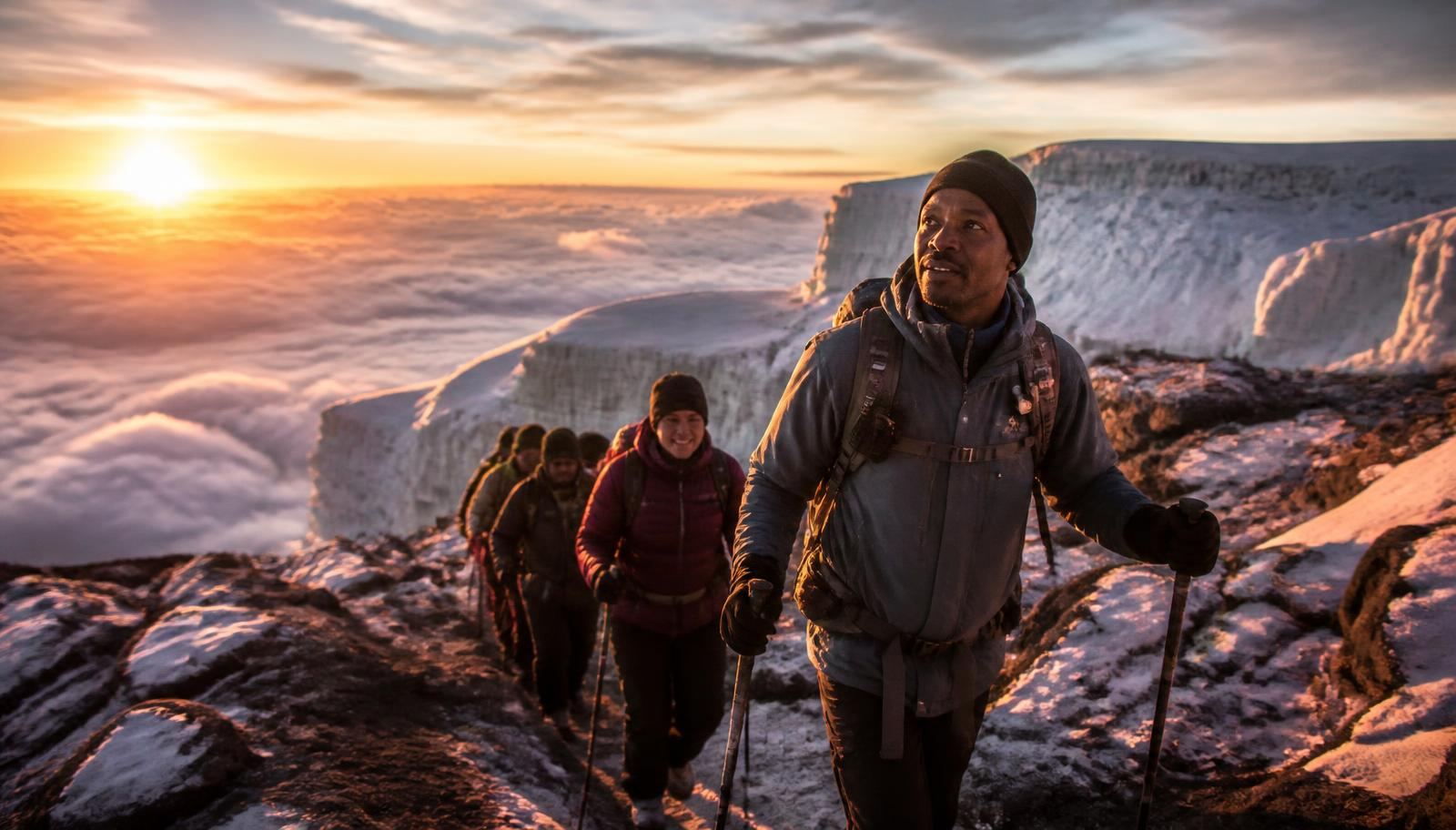
Kilimanjaro
Mount Kilimanjaro Climbing Guide: Everything You Need Before Your Adventure
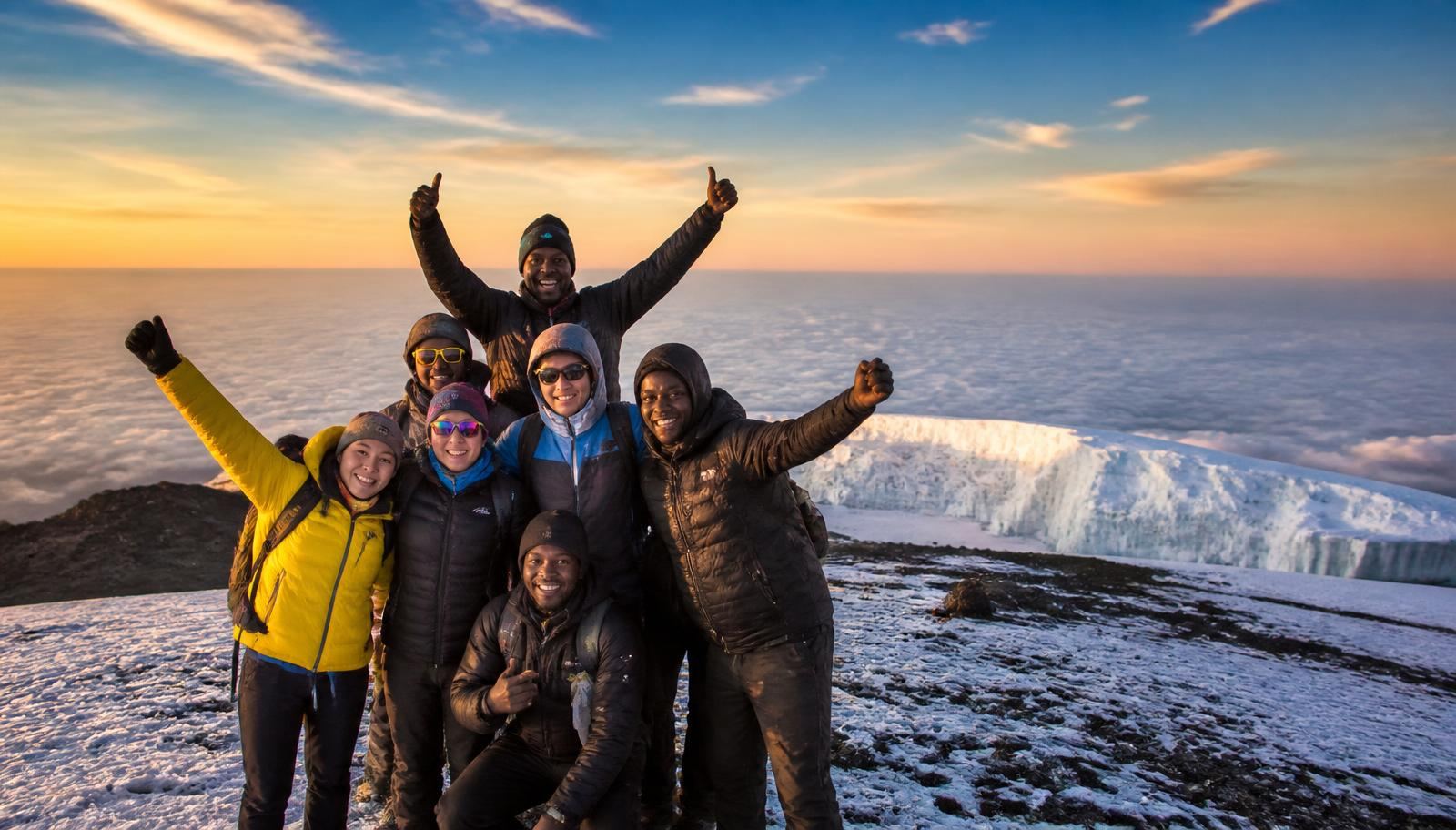
Kilimanjaro
Kilimanjaro Success Rate by Route: Choosing the Route That Maximizes Your Chances
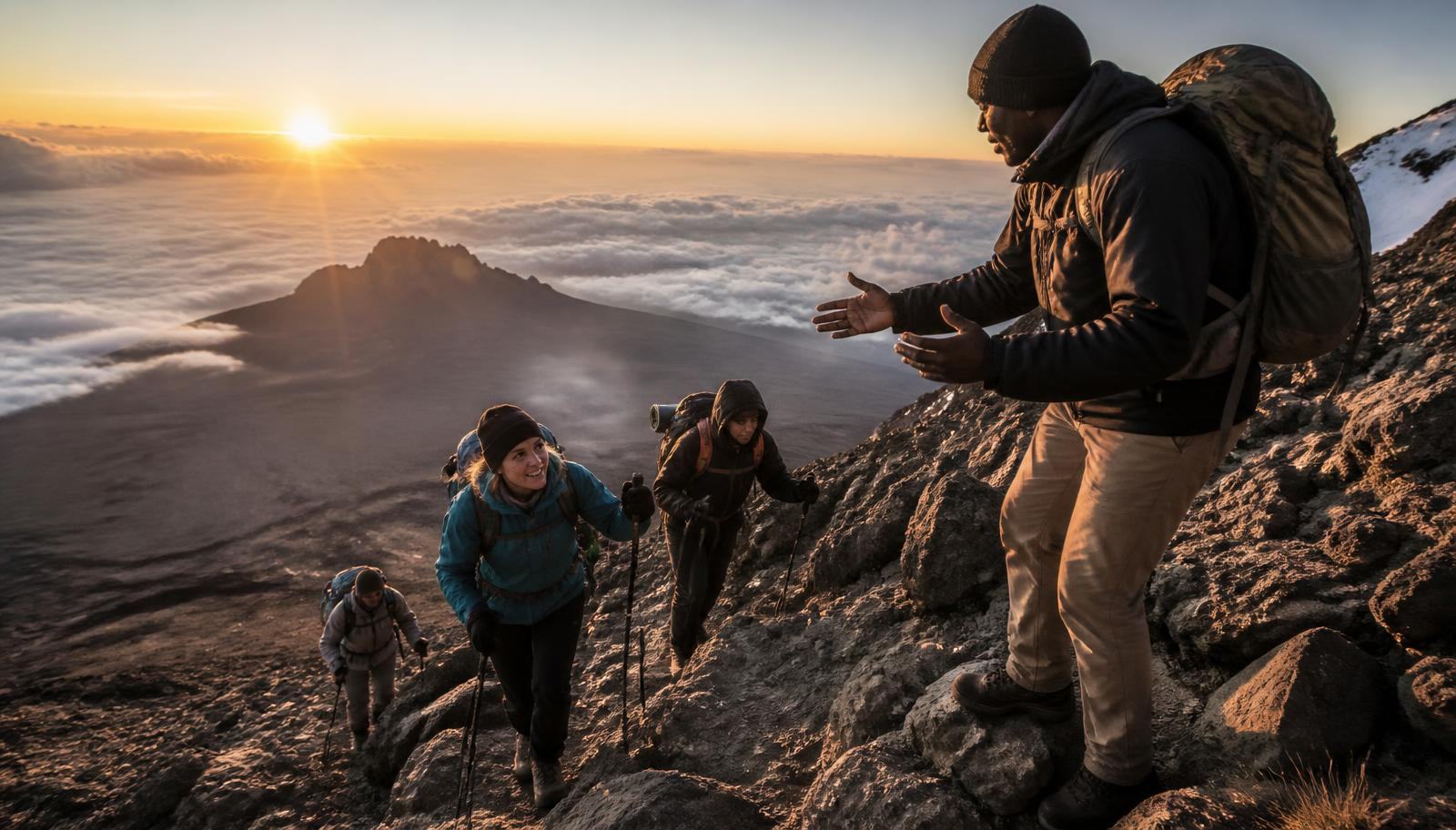
Kilimanjaro
How Difficult Is Mount Kilimanjaro? A Realistic Guide for First-Time Climbers
Kilimanjaro
Best Time to Climb Mount Kilimanjaro: Complete Month-by-Month Guide
Plan Your Journey
Ready to explore Tanzania?
Let our Arusha-based safari specialists craft a private, tailor-made itinerary around you — no middlemen, no templates, just your perfect journey.
- TALA Licensed Operator
- 4.9 ★ Guest Rating
- No Booking Fees