
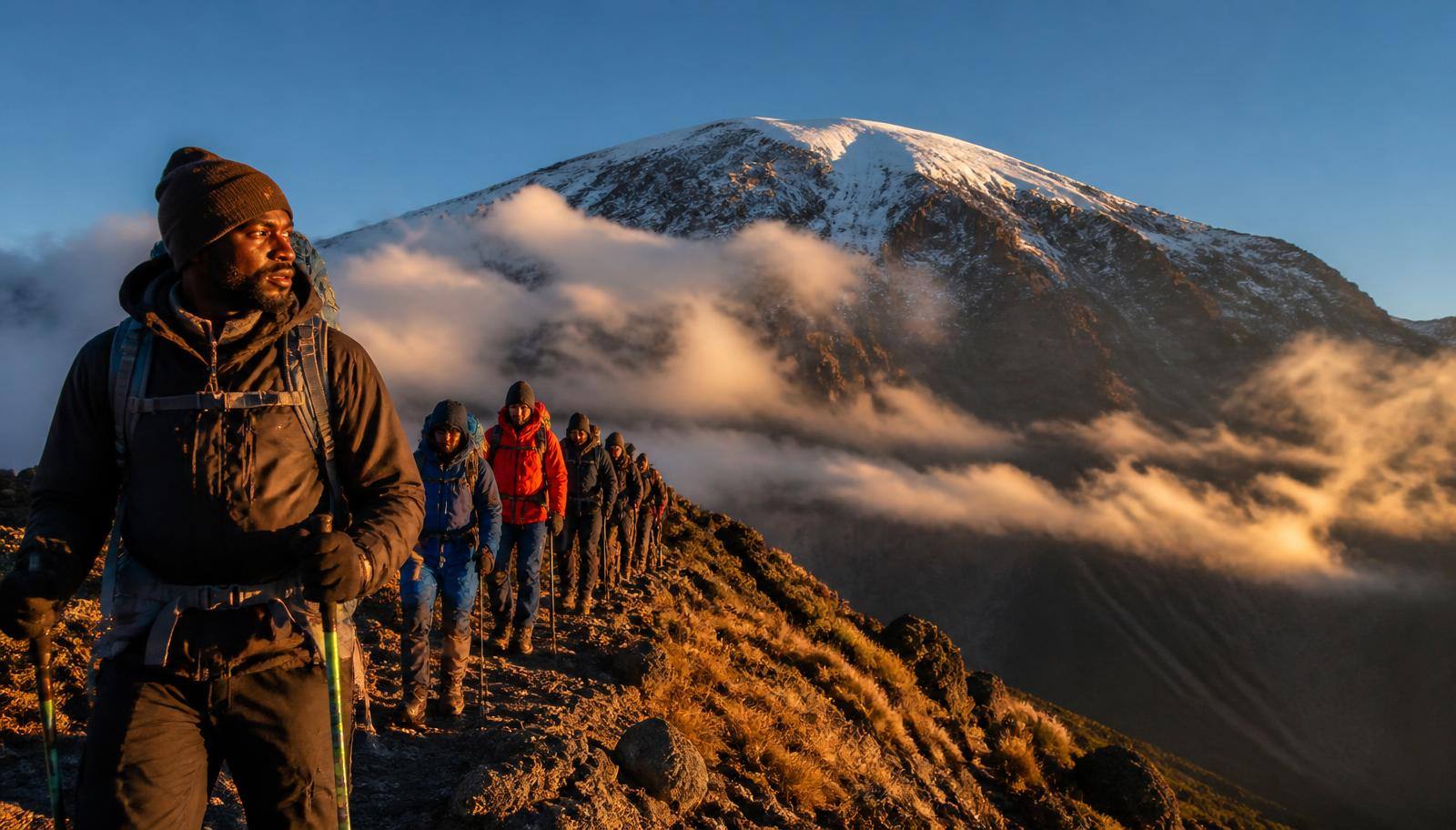
Kilimanjaro Climbing
Best Time to Climb Mount Kilimanjaro: Complete Month-by-Month Guide
Weather, crowds, temperatures and summit success rates for all twelve months — written in Arusha by guides who climb this mountain in every season, including the ones nobody recommends.

Introduction
People call our Arusha office asking one of two questions. The first is "which route should I take?" The second, almost always in the same breath, is "when should I go?" I can answer the route question in about ten minutes. The timing question takes longer, because the honest answer is that Kilimanjaro doesn't have one best month — it has four distinct seasons, twelve very different personalities, and a set of trade-offs between weather, crowds, price and light that only you can weigh.
What I can tell you, after years of watching climbers come off that mountain in every week of the calendar, is that the popular advice is too simple. "Go in July or August" is fine advice if you don't mind sharing the Barranco Wall with two hundred other people and paying peak rates for the privilege. It is terrible advice if you're a photographer, if you hate crowds, or if your only free window is February — a month that quietly outperforms July on almost every metric except reputation.
This guide breaks the year down properly. You'll get the climate mechanics that drive Kilimanjaro's weather, an honest comparison of the dry and wet seasons, a full month-by-month rundown with temperatures, rainfall patterns, crowd levels and route recommendations, and then four practical shortlists: the best months for beginners, for photography, for summit success and for avoiding people. Everything here comes from our own climb logs and from guides who have walked these trails in driving April rain and in cloudless September sunshine.
One thing before we start, because it shapes everything else. The single biggest predictor of whether you reach Uhuru Peak is not the month you pick — it is the number of days you spend on the mountain. A seven-day climb in a mediocre month beats a five-day climb in a perfect one, every time. Choose your season for comfort and enjoyment; choose your itinerary length for the summit. Our full Mount Kilimanjaro climbing guide covers route selection in depth.
Understanding Kilimanjaro's Climate
Kilimanjaro sits three degrees south of the equator, which means it has no summer and no winter in the way most visitors think about seasons. Day length barely changes across the year — sunrise around 6:30am, sunset around 6:30pm, give or take twenty minutes. What drives the mountain's weather instead is the Intertropical Convergence Zone, a belt of low pressure that sweeps north and south across East Africa twice a year, dragging rain bands with it. Its passage creates the two wet seasons: the long rains from late March through May, and the short rains through November into early December.
The second factor is the mountain itself. Kilimanjaro is so large — a free-standing massif rising nearly 5,000 metres off the plains — that it manufactures its own weather. Warm, moist air from the Indian Ocean pushes inland, hits the southern slopes, is forced upward and dumps its moisture as it cools. That's why the southern approaches (Machame, Lemosho, Umbwe, Marangu) get the wettest rainforest on the mountain, and why the northern side, sitting in the rain shadow, is markedly drier. It's the single most useful piece of climate knowledge for choosing a route in a marginal month.
The third factor is altitude, and it dwarfs the calendar. Temperature falls roughly 6.5°C for every 1,000 metres you climb. You start your first morning in humid farmland at 25 to 30°C and finish your summit night in an arctic zone at -15°C. That's a 40-degree swing inside five or six days, on the same mountain, in the same week. It's also why "the best time to climb Kilimanjaro" is a question about the lower and middle slopes: the summit cone is cold and windy in every month of the year, and no season makes it comfortable.
| Zone | Altitude | Typical daytime conditions |
|---|---|---|
| Cultivation | 800 – 1,800 m | 25 – 30°C, humid, farmland and coffee shambas |
| Montane rainforest | 1,800 – 2,800 m | 15 – 25°C, wettest zone on the mountain, mud after rain |
| Heath & moorland | 2,800 – 4,000 m | 10 – 18°C by day, near freezing at night |
| Alpine desert | 4,000 – 5,000 m | 5 – 15°C by day, -5 to -10°C overnight, fierce UV |
| Arctic summit zone | 5,000 – 5,895 m | -10 to -20°C, wind chill lower, glaciers and scree |
Dry Season vs Rainy Season
Most planning decisions come down to which of Kilimanjaro's four seasons you land in. Here is how they compare on the things that actually affect your climb.
| Season | Months | Weather | Summit success | Crowds | Price | Best for |
|---|---|---|---|---|---|---|
| Long dry season | June – October | Stable, cold, dry, firm trails, minimal cloud below 4,000m | Highest — 90%+ on 7-day-plus itineraries | Peak in July–August, easing by late September | Highest outside Christmas | First-timers, families, anyone who wants predictability |
| Short dry season | Late December – mid-March | Warm days, clear mornings, fresh summit snow, some afternoon cloud | Very high — close behind the long dry season | Spike over Christmas/New Year, quiet from mid-January | Peak for two weeks, then good value | Photographers, crowd-averse climbers, warmer-weather hikers |
| Short rains | November – mid-December | Afternoon showers, green lower slopes, cloudy summits | Moderate — weather delays and wet gear cost summits | Lowest of the year | Lowest of the year | Experienced hikers on Rongai looking for solitude and value |
| Long rains | Late March – May | Persistent rain in the rainforest, deep mud, heavy summit snow | Lowest of the year | Almost empty | Lowest, with big operator discounts | Seasoned, well-equipped trekkers only |
What the dry season actually gives you
Dry-season climbing is easier in a dozen small ways that add up. Trails are firm rather than greasy, which saves your legs on the steep sections and your patience on the descent. Tents stay dry, so your sleeping bag keeps its loft and you sleep better — and sleep is the quiet variable in acclimatization that nobody talks about. Views open up, which matters more than you'd expect for morale: watching Kibo grow closer every day pulls people forward. And summit night is more predictable, with less chance of a storm forcing your guide to turn the group around at Stella Point.
The costs are traffic and money. In peak weeks, camps like Shira 2 and Barafu host hundreds of climbers, the Barranco Wall backs up in the morning, and you'll hear other groups' alarm clocks at 11pm on summit night. Prices from reputable operators run 10 to 20 percent above shoulder-season rates, and the best guides are booked out months in advance.
What the rainy season actually costs you
Wet-season climbing isn't dangerous — it's just harder work and less certain. The rainforest becomes genuinely muddy, and on the Machame and Lemosho approaches you can spend two days walking in and out of cloud with limited views. Above about 4,500m the precipitation falls as snow, which can be beautiful and can also make the summit scree slower and colder. Gear management becomes a discipline: everything goes in dry bags, everything wet gets dried in your sleeping bag overnight, and you'll want a genuine hard shell rather than a soft shell.
In exchange, you get a mountain that feels like yours. I've had clients arrive at Barranco Camp in May and find four tents pitched where there'd be eighty in August. The light between showers is extraordinary. Prices drop. And the guides — the good ones, at least — are more relaxed because they're not managing a queue.
Month-by-Month Weather on Kilimanjaro
The table below is the quick reference. The month-by-month sections that follow give you the detail — including which route we'd steer you toward and what to expect underfoot.
| Month | Rainfall | Mid-mountain conditions | Summit night | Crowds | Verdict |
|---|---|---|---|---|---|
| January | Low | Warm — 15 to 20°C at mid-camps | -7 to -18°C, often fresh snow | Busy week one, quiet after | Excellent |
| February | Lowest of the wet-season half | Warmest month on the mountain | -7 to -18°C, snow likely | Moderate | Excellent |
| March | Dry to mid-month, then rising | Warm, humid afternoons | -8 to -18°C | Low | Good early, poor late |
| April | Highest of the year | Mild but wet, mud in the forest | -8 to -20°C, heavy snow possible | Very low | Difficult |
| May | High, easing late | Cool and damp | -8 to -20°C | Very low | Difficult, improving late |
| June | Low — dry season begins | Cool, crisp, clear mornings | -10 to -20°C | Low early, rising late | Very good |
| July | Very low | Cold nights, stable days | -12 to -22°C, windy | Peak | Excellent weather, heavy traffic |
| August | Very low | Cold, dry, reliable | -12 to -22°C | Peak | Excellent weather, heavy traffic |
| September | Lowest of the year | Stable, clear, firm trails | -10 to -20°C | Busy but easing | Best overall |
| October | Low, showers possible late | Warming, dusty trails | -8 to -18°C | Low after mid-month | Very good |
| November | Short rains — afternoon showers | Warm, humid, green | -8 to -18°C, wet snow | Lowest of the year | Workable on Rongai |
| December | Wet to mid-month, dry after | Warm at the lower camps | -8 to -18°C, snow likely | Very high from the 20th | Excellent late, pricey |
January
January is the month I recommend most often to people who've already ruled out the summer rush. The first week still carries New Year traffic and holiday pricing, but by around the 10th the mountain empties and settles into one of the most pleasant stretches of the year. The short dry season is in full effect: mornings are clear, the rainforest is dry underfoot, and the summit cone usually carries fresh snow from December that makes the glaciers photograph spectacularly.
Temperatures at the mid-mountain camps run in the mid-teens Celsius by day and hover just above freezing at night — noticeably warmer than July. That comfort at camp is underrated. Warmer nights mean better sleep, better sleep means better acclimatization, and better acclimatization means more summits. The one thing January does not give you is a warmer summit night. Expect -7 to -18°C on the crater rim, and pack the full down jacket.
Route-wise, everything is in play. Lemosho over eight days is our usual January recommendation because the western approach is dry and quiet in this window. Machame works well too, with far less congestion on the Barranco Wall than you'd meet in August.
February
If I could send every first-time client in a single month and price were no object, it might well be February. It is statistically the warmest month on Kilimanjaro, it is dry, it is clear, and it carries a fraction of the traffic of July or August. The rainforest is comfortable rather than steamy, the moorland is dry, and the summit cone frequently holds snow left from the December–January period, which means the classic postcard view of a white-capped Kibo.
February also produces some of the best summit-morning visibility of the year. On a good February sunrise you can see Mount Meru clearly to the west and, on the clearest mornings, the curve of the horizon over the Kenyan plains. Our own summit success rates in February sit within a couple of points of September.
The catch, and it's a small one, is variability at the tail of the month. Late February can occasionally see the first hints of the long rains arriving early. If you're booking a February climb, favour the first three weeks. Any of the main routes work; Lemosho and the Northern Circuit are especially good because the quiet trails let you actually enjoy the western wilderness section.
March
March is a month of two halves and the split is sharp. Until roughly the 15th, you're still in the short dry season and conditions are close to February's — warm, largely dry, with quiet trails as the January–February visitors thin out. This first half is one of the genuinely great value windows on Kilimanjaro: dry-season conditions at shoulder-season prices.
After mid-March, the long rains typically begin. Cloud builds earlier each afternoon, the rainforest turns muddy, and summit visibility becomes unreliable. Some years the rains hold off until early April; some years they arrive in the first week of March. That unpredictability is why we're cautious about late-March bookings for first-timers and why, if a client insists on the date, we push them toward Rongai.
A practical note: if you book a late-March climb, build in a rest day and treat your waterproofs as essential rather than optional. Our Tanzania safari packing list covers the layering system we recommend for mixed conditions.
April
April is the wettest month on Kilimanjaro and the one we recommend least often. The long rains are at full strength, the rainforest zone can deliver several hours of rain most days, and the trails on the southern routes turn into a slick, root-tangled slog. Above 4,500m the precipitation falls as snow, and heavy fresh snow on the summit scree makes for slow, cold going on summit night.
And yet — I've had some of my favourite climbs in April. The mountain is essentially empty. Camps that hold two hundred people in August might hold a dozen. The greens in the moorland are electric, the giant lobelias are at their most surreal, and when the cloud tears open in the late afternoon the light is extraordinary. Operators discount heavily, so an April climb with a genuinely good company can cost what a mediocre one costs in September.
If you go in April, three rules. Take Rongai — the northern rain shadow is a real, measurable advantage. Take an extra day, because weather can cost you time. And treat your gear seriously: a proper hard shell, dry bags for everything in your duffel, and two more pairs of socks than you think you need. Make sure your travel insurance covers high-altitude trekking to 6,000m, because weather-related delays and evacuations are more likely in this window.
May
May starts wet and finishes hopeful. The first two or three weeks are a continuation of April — persistent rain on the southern slopes, mud in the forest, cloud on the summit. By the last week, the rains typically start easing, and the final days of May can deliver something close to early-June conditions with almost nobody on the mountain.
The wildflowers in the moorland zone in May are the best of the year, which is a small consolation that our repeat climbers mention often. Impatiens kilimanjari — the mountain's endemic red-and-yellow flower — is at its peak along the forest trails, and the whole lower mountain feels alive in a way that the dust of September doesn't replicate.
As with April: Rongai, extra days, serious waterproofing. And if your dates are flexible within the month, push them as late as you can. A May 25th start is a very different trip from a May 5th start.
June
June is the start of the long dry season and, in my view, one of the smartest bookings on the whole calendar. The rains have cleared, the trails have dried out, the air is crisp and clear — and the July crowds haven't arrived yet. Early June in particular gives you close to peak-season conditions with shoulder-season traffic and pricing.
Temperatures drop noticeably compared with the warmer months. Nights at the mid-camps hit freezing, and the alpine desert camps run to -5 or -10°C. Most climbers find this easier than the humidity of the wet months, but it does mean your sleeping bag rating matters. A -10°C bag is the minimum we recommend from June through August.
Visibility in June is excellent, especially in the mornings before any afternoon cloud builds over the forest. This is also when the safari parks start hitting their stride, so June is a strong month to combine a climb with the Serengeti — see our ultimate Tanzania travel guide for how to structure a combined trip.
July
July is the classic Kilimanjaro month and it earns the reputation on weather. Rainfall is minimal, skies are consistently clear, trails are dry and firm, and summit-night conditions are as predictable as this mountain gets. If your priority is a climb where the weather is unlikely to throw you a surprise, July delivers.
It's also the busiest month, tied with August. European and North American summer holidays land here, and the effect on the popular routes is real: Machame camps fill completely, the Barranco Wall develops a genuine queue in the mid-morning, and Barafu on a July night has hundreds of headlamps moving up the slope at once. Some climbers find that atmospheric. Others find it deflating after five days of wilderness.
July is also the coldest month at altitude, with summit-night temperatures reaching -22°C and stronger winds on the exposed sections above Stella Point. Pack accordingly: expedition-weight down, insulated mittens over liner gloves, a balaclava and a wind-proof shell. If you want July weather without July people, book Rongai or the Northern Circuit — both see a fraction of Machame's numbers even in peak week.
August
August is July's twin: dry, cold, stable, reliable and extremely busy. Weather-wise, there's very little to separate the two months. Rainfall stays minimal, mornings are clear, and the summit cone is generally snow-free enough that you're walking on frozen scree rather than through drifts.
What sets August apart is the strength of its second half. From roughly the 20th, the European holiday season begins to wind down and the trails start to breathe again. Weather stays excellent, but camps are meaningfully quieter. If you're set on the peak dry season and want to dodge the worst of the congestion, late August is a smart compromise.
August summit success rates are among the year's highest — on our seven-day-plus itineraries, comfortably above 90 percent. Nearly all of the failures we see in this month come from climbers on short itineraries, not from conditions.
September
September is, on balance, the best month to climb Mount Kilimanjaro. It has the lowest rainfall of the year, the most settled skies, dry firm trails from three consecutive dry months, and crowds that have already begun to thin from the August peak. Everything that makes July and August good is present, and the main thing that makes them difficult is fading.
Temperatures are marginally milder than July and August at altitude, and the wind on the upper mountain is typically less aggressive. Summit-morning visibility in September is exceptional; this is the month we most often get photographs where you can see all the way to Mount Meru and out over the Kenyan plains at once.
Our own logs put September at the top for summit success. It is also excellent timing for a combined climb-and-safari trip, since the Serengeti's dry season is at full strength and the migration is still in the northern Serengeti with river crossings underway. If that's your plan, our guide to how to book a Tanzania safari explains how to sequence the two halves of the trip.
October
October keeps most of September's advantages while shedding almost all of the crowds. The first half is reliably dry, warm and clear. Trails can be dusty by this point in the dry season, and the lower mountain looks parched compared with February, but the walking is excellent and the camps are quiet.
From around the third week, the first hints of the short rains can appear as building afternoon cloud and occasional showers over the forest zone. It's rarely disruptive, but summit visibility becomes slightly less certain. Late October is a genuine value window: near-dry-season conditions, low traffic, and pricing that has usually come off peak.
October is also the last comfortable month for climbers who dislike cold. Temperatures at the mid-camps warm up noticeably compared with July and August, while summit-night cold eases a few degrees.
November
November brings the short rains. These are a milder proposition than the long rains: the pattern is typically clear mornings followed by afternoon showers, rather than the all-day soaking of April. You can often complete a full day's walking before the weather arrives, which is why we treat November as workable in a way we don't treat April.
This is the quietest month of the year on Kilimanjaro and the cheapest. Camps are close to empty. The lower mountain greens up beautifully after the dry season, and the light between showers can be superb. For an experienced hiker who's happy in wet weather and wants the mountain to themselves, November is a real opportunity.
Take Rongai. The northern approach genuinely receives less of the short rains, and the gentler gradient works well when the trail is damp. Bring a hard shell, use dry bags, and accept that you may get a cloudy summit morning. If that trade-off bothers you, come in February instead.
December
December, like March, is two months in one. Until around the 15th, the short rains are still tailing off — afternoon showers, quiet trails, cloudy summits, good value. Then conditions typically stabilize into the short dry season, and the last two weeks become one of the most popular and expensive climbing windows of the year.
Christmas and New Year climbs sell out early and cost more, sometimes 15 to 25 percent above the same route in mid-January. What you get for that premium is genuinely excellent: dry mornings, fresh summit snow, warm lower slopes and, for a lot of our clients, the specific ambition of standing on the roof of Africa on Christmas morning or New Year's Day. It's a special thing to be part of, and the atmosphere in camp over the holidays is unlike any other week on the mountain.
If the date itself doesn't matter to you, mid-January delivers essentially the same weather for considerably less money and with far fewer people. If it does matter, book eight to twelve months out and get your Tanzania visa application started early — the immigration system slows down over the holiday period.
Best Months for Beginners
If this is your first high-altitude trek, the goal is to eliminate variables. You'll have plenty to think about without also managing wet gear and low visibility.
- September — driest trails, most settled weather, thinning crowds. The single safest bet for a first climb.
- August (second half) — peak-season reliability with the worst of the congestion beginning to ease.
- February — warm, dry, quiet and forgiving at camp, which makes for better sleep and better acclimatization.
- Early June — dry-season conditions before the summer rush, usually at slightly better rates.
Pair any of these with a seven- or eight-day itinerary — Lemosho over eight days is our standard beginner recommendation — and you're doing everything within your control to summit. Read our Tanzania safari health guide well before you travel; altitude preparation, vaccinations and medication decisions all need lead time.
Best Months for Photography
Photographers want three things on Kilimanjaro: snow on the summit cone, dramatic cloud, and clean light. The dry-season months give you light and clarity but often a bare, brown summit. The short dry season gives you all three.
- January and February — the best combination of fresh glacier snow, clear mornings and cloud seas building below you in the afternoons.
- December (late) — snowy summit cone and crisp air, at the cost of busy camps.
- Late May and November — for anyone chasing atmospheric conditions: torn cloud, shafts of light, empty trails and green moorland. Higher risk, higher reward.
Two practical notes from watching a lot of photographers work up there. Batteries die fast below -10°C, so carry spares in an inside pocket against your body and bring a 20,000mAh power bank. And the summit sunrise happens fast — you get maybe fifteen minutes of genuinely great light at Uhuru before it flattens out, so know your settings before you're standing there with numb fingers.
Best Months for Summit Success
Across our climb records, the pattern is consistent: the dry months produce the highest success rates, and the gap between the best and worst months is smaller than most people expect. Season is a real factor, but it's a secondary one.
- September, August, July — the strongest block of the year. Dry trails, stable summit nights, low storm risk.
- January and February — very close behind, with the advantage of warmer camps and better sleep.
- April and May — the weakest months, driven by wet gear, cold cores and reduced visibility rather than by rain alone.
Here's the number that matters more than any of that. A five-day Marangu climb summits under 50 percent of the time in September, the best month of the year. An eight-day Lemosho climb summits at 90 to 95 percent even in a wet month. Season moves your odds by single-digit percentage points. Itinerary length moves them by forty. If you take one thing from this guide, take that.
Best Months to Avoid Crowds
Solitude on Kilimanjaro is available in almost any month if you pick your route carefully, but some windows make it effortless.
| Your priority | Best months | Why |
|---|---|---|
| First Kilimanjaro climb | September, August, February | Stable weather removes one variable while you learn how your body handles altitude. |
| Highest summit odds | September, August, January | Dry trails, predictable summit-night conditions and low storm risk. |
| Photography | January, February, December | Fresh glacier snow, dramatic cloud seas and the cleanest light of the year. |
| Avoiding crowds | February, early June, late October, November | Dry-season conditions without the July–August queues on the Barranco Wall. |
| Lowest price | April, May, November | Operators discount heavily; you trade comfort and visibility for solitude. |
| Combining with a safari | June – October | The same dry months that firm up the mountain concentrate wildlife at waterholes. |
The two quietest windows with genuinely good weather are February and late October. Both give you dry-season walking without the July–August queues. November and April are quieter still, but you're trading crowds for rain.
You can also solve the crowd problem with route choice rather than timing. Machame carries roughly a third of all Kilimanjaro climbers; Rongai, Umbwe and the Northern Circuit together carry a small fraction of that. A Northern Circuit climb in the first week of August is quieter than a Machame climb in February.
Common Questions
Frequently Asked Questions
If I had to name one month for a first-time climber, it would be September. The long rains are a distant memory, the mountain has had three dry months to firm up its trails, daytime temperatures are stable, the summit is usually snow-free enough for easy walking on the scree, and the crowds that peak in July and August have started to thin by the second week. August is a close second for pure weather reliability and February is the best of the northern-hemisphere winter window — warmer, greener and noticeably quieter than the July-August rush. What actually matters more than the month, though, is the itinerary you choose within it. A seven-day Lemosho climb in a supposedly average month like early June will beat a five-day Marangu in a perfect September every single time. Weather makes the walk pleasant; days on the mountain make the summit possible.
June through October is the long dry season and gives you the most reliable weather of the year: clear mornings, low humidity, firm trails, minimal rainfall below 4,000m and long stretches of cloudless afternoons. Late December through mid-March is the second dry window — warmer at the lower camps, more likely to have brief afternoon build-up over the forest, and often with fresh snow on the summit cone that photographs beautifully and walks easily when it is dry powder over frozen scree. The two months to be careful with are April and May, which carry the long rains, and November, which brings the short rains. On Kilimanjaro, 'best weather' does not mean warm — summit night runs between -10°C and -20°C in every month of the year, including January.
You can, and every year we take climbers up in April, May and November who come home delighted. It is not a soft option, though, and it only works with the right preparation. Expect several hours of rain most days in the rainforest zone, deep mud on the lower trails, cloud that can hide the summit for a full day, and snow rather than rain above roughly 4,500m. What you get in exchange is genuine solitude — camps with four tents instead of forty — greener landscapes, sharper air between the showers and, with many operators, lower pricing. If you are going to climb in the wet months, take Rongai (the driest approach), use a full hard shell rather than a soft shell, pack everything inside dry bags because porters' duffels are only water-resistant, budget for a longer itinerary since weather delays eat time, and accept that your summit-night visibility is a lottery.
Across our own climbs, September and August produce the strongest results, with seven-day and longer itineraries in those months summiting at well over 90 percent. January and February are close behind. The lowest success rates fall in April and May, and the drop is not usually caused by the rain itself — it is caused by wet gear, poor sleep in damp tents, colder core temperatures and climbers cutting summit attempts short in low visibility. Even so, the difference the season makes is a handful of percentage points. The difference the itinerary makes is thirty or forty. A nine-day Northern Circuit in April will out-summit a five-day Marangu in September by a wide margin, which is exactly why we push route length before we discuss dates.
July and August are the busiest by a clear margin — European and North American summer holidays land squarely in the dry season, and Machame in particular can feel like a queue on the Barranco Wall. Late December through the first week of January is the second peak, driven by Christmas and New Year climbs, and it carries the highest prices of the year. September is busy but manageable, and the mountain empties noticeably in the second half of October. If crowds matter to you, the quietest months with usable weather are February, early March, early June and late October. You can also reduce traffic dramatically inside a peak month simply by choosing your route: Rongai, the Northern Circuit and Umbwe see a fraction of the numbers Machame does, even in the first week of August.
January is one of the most underrated months on Kilimanjaro. Once the New Year crowds go home in the second week, you get a dry, warm, stable stretch of weather with fresh snow on the summit cone and camps that are far quieter than anything you will find in July. Daytime temperatures at the mid-mountain camps sit comfortably in the low teens Celsius, the rainforest is drier underfoot than in November, and the light in the mornings is superb for photography. The two caveats are that the first week of January still carries holiday pricing and full camps, and that a warmer trek at the bottom does not mean a warmer summit — you still need the full down jacket, insulated mittens and a -10°C sleeping bag. Book mid-to-late January and you get near-peak conditions at shoulder-season prices.
December splits into two very different halves. The first ten days or so are the tail of the short rains: showers in the afternoons, cloudy summits, quiet trails and good value. From around the 15th the weather usually stabilizes into the second dry season, and the last two weeks of December become one of the busiest and most expensive windows of the year as Christmas and New Year climbs fill up. Conditions over the holidays are genuinely excellent — dry, clear mornings, a snowy summit cone and, for many climbers, the added draw of standing on the roof of Africa on New Year's Day. If that appeals, book eight to twelve months in advance, because good guides and Lemosho camps for that week are spoken for early. If it does not, come in mid-January instead for near-identical weather at a much lower price.
For June through October and the Christmas-New Year window, book six to nine months ahead, and closer to twelve if you want a specific date, a specific route and a specific lead guide. Those windows are constrained by guide availability and camp capacity rather than permits, and the best crews are reserved long before the busy season starts. For January to March, three to six months is usually comfortable. For the wet months of April, May and November you can often book six to eight weeks out and still get a good crew. Whatever month you pick, book your international flights only after your climbing dates are confirmed in writing, arrange your high-altitude travel insurance at the same time as the deposit, and start your visa application at least a month before departure.
Conclusion
There is no universally best time to climb Mount Kilimanjaro — there is only the month that fits what you care about. If you want the highest chance of a clear, dry, textbook climb, go in September, August or July and accept the company. If you want warm days, a snowy summit and quiet camps, go in January or February. If you want the mountain nearly to yourself and you're a capable hiker with real waterproofs, November and even April will give you a trip nobody else in your life has had.
What doesn't change with the calendar is the mountain's basic demand. Kilimanjaro asks for time and patience in every season. Give it enough days, walk slower than feels natural, drink more than you want, and pick a crew who know the route in the conditions you'll actually face. Do that, and almost any month on this list will put you at Uhuru Peak for sunrise.
There is no single perfect month on Kilimanjaro — there is only the month that matches your priorities. Pick dry-season reliability, warm quiet trails or budget solitude, then spend whatever you save on extra days. That's the choice that puts you on the summit.
Plan Your Kilimanjaro Dates With Us
We're based in Arusha, two hours from the gate, and we run climbs in all twelve months. Tell us the window you have available — even if it's a single fixed week in April — and we'll tell you honestly what the conditions are likely to be, which route gives you the best odds in that window, and how many days you should budget for the mountain.
Start with a free Kilimanjaro consultation, or browse our climbing and safari packages to see how a climb pairs with the Serengeti or Zanzibar. No cost, no obligation, and you'll be speaking with people who've stood on that summit in every season of the year.
Plan Your Journey
Tell us your window — we'll find your summit.
Arusha-based, licensed and climbing Kilimanjaro every month of the year. Send us your dates and we'll recommend the route and itinerary length that give you the best real chance of Uhuru Peak.
- TALA Licensed Operator
- 4.9 ★ Guest Rating
- No Booking Fees
Keep Reading
More Kilimanjaro Guides
Kilimanjaro
Mount Kilimanjaro Climbing Guide: Everything You Need Before Your Adventure
Kilimanjaro
Kilimanjaro Success Rate by Route: Choosing the Route That Maximizes Your Chances
Kilimanjaro
How Difficult Is Mount Kilimanjaro? A Realistic Guide for First-Time Climbers
Kilimanjaro