
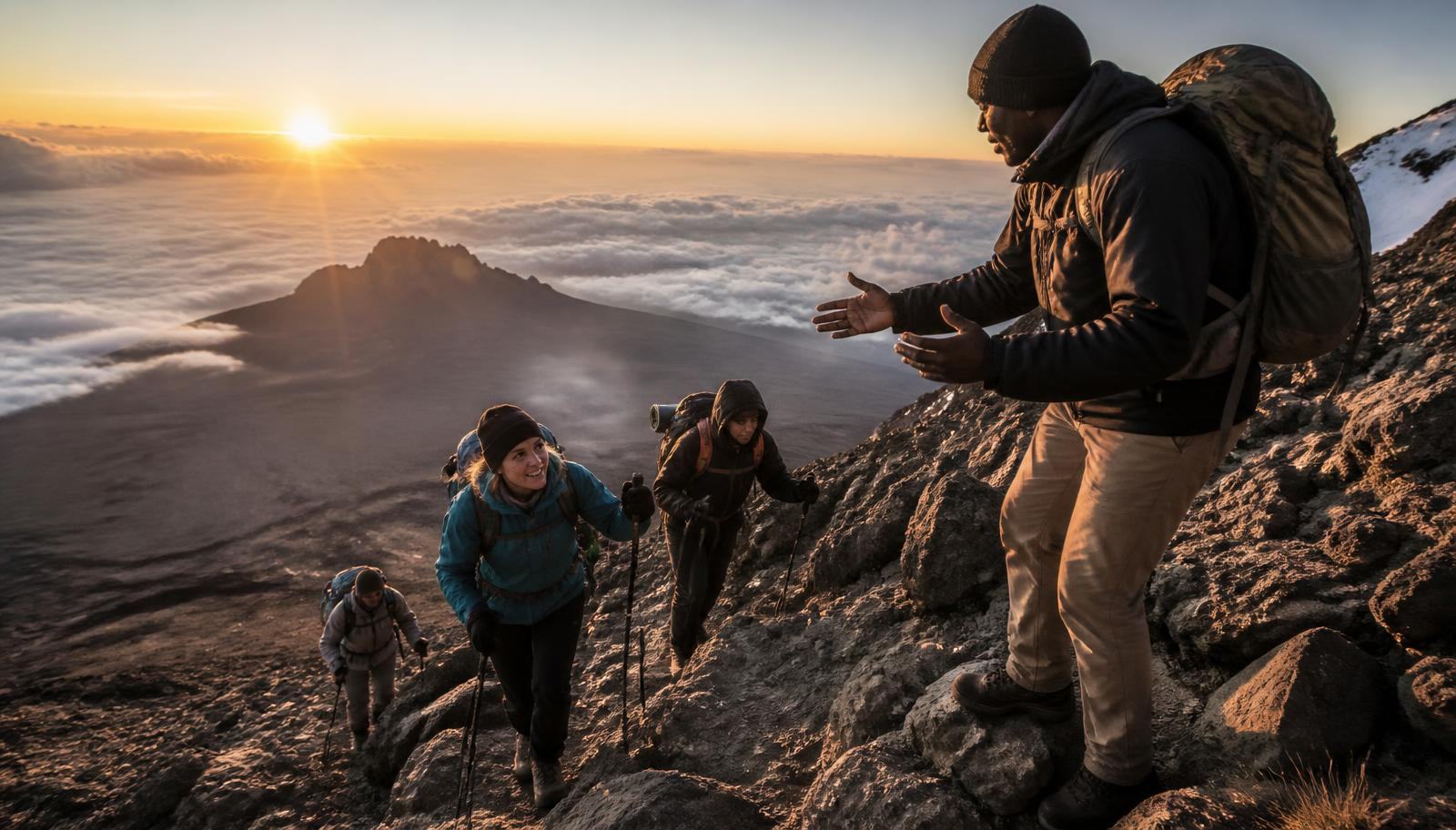
Kilimanjaro Climbing
How Difficult Is Mount Kilimanjaro? Everything First-Time Climbers Should Know
An honest answer from Tanzanian guides who walk this mountain every month — what actually makes it hard, and what makes people succeed.
Introduction
I get asked this question more than any other, usually in the first email someone sends us: how difficult is Mount Kilimanjaro, really? And the honest answer is that it depends almost entirely on things people do not expect. Not on how much you can lift. Not on your 10K time. Not on whether you have climbed anything before.
I have guided marathon runners who turned back at 5,300 metres, sat down on the scree and could not be persuaded to take another step. I have walked to Uhuru Peak with a retired schoolteacher from Ohio in her late sixties who had never slept in a tent in her life, and she summited comfortably, ahead of schedule, eating breakfast the next morning like nothing had happened. That gap between expectation and reality is the whole story of Kilimanjaro difficulty, and it is what this guide exists to explain.
Here is the short version before we go deep. Kilimanjaro is not technically difficult — there is no climbing skill involved, no ropes, no crampons on the normal routes. It is physically demanding in an endurance sense, asking for five to eight hours of walking on consecutive days. And it is genuinely hard in one specific way that catches almost everybody out: at 5,895 metres, the air holds roughly half the oxygen you are used to, and your body's response to that is largely outside your control.
Around 30 to 35 percent of people who attempt Kilimanjaro do not reach the summit. That number sounds alarming until you look at what separates the two groups. It is almost never strength. It is the number of days on the itinerary, the walking pace on days one and two, hydration, food, honest symptom reporting, and the quality of the team walking with you. Every single one of those is a decision you make before you fly.
This guide walks through all of it — fitness benchmarks, the reality of altitude, hour-by-hour on summit night, daily distances, terrain, weather, the mistakes we watch first-timers make every season, and the specific things that raise your odds. It pairs with our Mount Kilimanjaro climbing guide for the full planning picture.
Is Kilimanjaro Difficult?
Yes — but probably not in the way you are imagining. The word "climb" does a lot of damage here. People picture ice walls, ropes and technical mountaineering, and then they arrive in Moshi and discover that Kilimanjaro is a very long, very high walk. On a scale where a weekend hill walk in the Lake District is a 2 and a Himalayan 8,000-metre peak is a 10, Kilimanjaro sits at about a 7.
What that 7 is made of matters more than the number itself. Break the difficulty into components and the picture becomes actionable.
| Difficulty factor | Rating | Why |
|---|---|---|
| Technical climbing skill | 1 / 10 | No ropes, harnesses, crampons or ice axes on any standard route. It is a walk, with one scramble. |
| Terrain and trail quality | 4 / 10 | Well-defined paths, but muddy roots in the rainforest, loose scree above 4,600 m and long rocky descents. |
| Daily hiking distance | 4 / 10 | Typically 5–15 km a day over 4–7 hours. Moderate at sea level; the altitude is what makes it bite. |
| Cardiovascular demand | 6 / 10 | Six consecutive days of walking with a light daypack, plus a 14-hour summit push. |
| Cold and weather exposure | 7 / 10 | 27 °C in the rainforest to -25 °C with wind chill on summit night, sometimes within 72 hours. |
| Altitude stress | 9 / 10 | 5,895 m with only ~49% of sea-level oxygen. The dominant reason climbers turn back. |
| Mental endurance | 8 / 10 | Summit night asks you to keep walking for seven hours in the dark while feeling genuinely terrible. |
| Overall difficulty | 7 / 10 | A serious high-altitude trek that a well-prepared non-climber can absolutely complete. |
Read that table again and notice the shape of it. Everything you can train for sits in the middle of the scale. The two hardest columns — altitude stress and mental endurance — are the ones you cannot fix in the gym. That is the honest core of Kilimanjaro difficulty, and it is why our advice to clients always starts with the itinerary rather than the training plan.
Why Kilimanjaro Is Challenging
Five things stack on top of each other. Individually each is manageable. Together, over six or seven days, they are what makes the mountain a genuine challenge.
1. The altitude gain is unusually fast
You start at around 1,800 metres at the park gate and stand at 5,895 metres a few days later. On most Himalayan treks that kind of gain is spread over two or three weeks, with rest days built in and villages to acclimatize in. On Kilimanjaro, commercial itineraries compress it into six to nine days because that is what the holiday market wants. Your red blood cell count simply cannot adapt that quickly, so you summit partially acclimatized — by design.
2. Consecutive days without recovery
A single six-hour hike is not hard for most reasonably active people. Six of them in a row, sleeping on a mat, eating unfamiliar food, at increasing altitude, with declining sleep quality, is a different proposition. Fatigue accumulates. By day four most climbers are running on less sleep and fewer calories than they realize, which is precisely when the mountain asks for its biggest effort.
3. The temperature range is extreme
You will sweat through a t-shirt in 27 °C rainforest humidity on day one and, seventy- two hours later, walk into -20 °C wind chill on summit night. Five climate zones in one week. Managing that with layering is a skill, and getting it wrong — overheating and sweating on the ascent, then freezing when you stop — is a common cause of misery at altitude, covered in detail in our Kilimanjaro packing list.
4. Summit night is a genuine ordeal
Starting at midnight after two hours of broken sleep, walking for seven hours in the dark and cold, at the highest altitude you have ever experienced, on loose scree that slides half a step back for every step forward. Then descending 2,800 metres the same day. It is the single hardest physical day most of our clients will ever have.
5. You cannot predict how altitude will affect you
This is the part people find hardest to accept. There is no test, no training protocol and no fitness marker that reliably predicts your response to 5,000 metres. Some people feel nothing beyond breathlessness; others get crushing headaches at 4,000 metres despite being in excellent shape. Previous high-altitude experience is the only vaguely useful indicator, and even that is not a guarantee — the same person can respond differently on different trips.
Physical Fitness Requirements
Let us make this concrete, because "be reasonably fit" is useless advice. Here is the benchmark we give clients: you should be able to walk for six hours on hilly terrain, carrying a seven-kilogram daypack, and then get up the next morning and do something similar without feeling destroyed. If you can do that, you have the physical base for Kilimanjaro.
You do not need to run. You do not need a specific body-fat percentage. You do not need to be able to do a pull-up. What you need is aerobic endurance, leg durability (especially for the descent), and the specific conditioning that comes from walking uphill for hours.
A realistic 16-week training approach
Three to four months is the right window. Less than eight weeks and you arrive undertrained; more than six months and most people lose motivation. Structure it in four blocks.
- Weeks 1–4 — build the base. Four sessions a week: three 45-minute cardio sessions at a conversational pace (brisk walking, cycling, swimming, elliptical) and one hike of two to three hours at the weekend. Start walking in your Kilimanjaro boots now.
- Weeks 5–8 — add load and hills. Keep the cardio, extend the weekend hike to four or five hours, and start carrying a five- kilogram pack. Add two strength sessions: squats, lunges, step-ups, calf raises and core work. Stair repeats are the single most Kilimanjaro-specific exercise there is.
- Weeks 9–13 — back-to-back days. This is the block that matters most. Hike five to six hours on Saturday and three to four hours on Sunday, with a seven-kilogram pack, in bad weather if you can. Add deliberate downhill work — the 2,800-metre descent from Uhuru wrecks untrained quadriceps.
- Weeks 14–16 — peak, then taper. One final big weekend, then reduce volume by half in the last ten days. Arrive in Moshi rested, not exhausted from a heroic last-minute training block.
Fitness preparation checklist
- Can walk 6 hours on hilly ground with a 7 kg daypack without significant pain
- Can repeat a long hike on consecutive days
- Completed at least 4 hikes with 800 m+ of ascent
- Trained specific downhill descent to protect knees and quads
- Boots broken in over a minimum of 50 km of walking
- Two strength sessions per week for 8+ weeks (legs and core)
- Practised walking deliberately slowly for extended periods
- Practised a night hike with a headlamp in cold conditions
- Tested your full layering system on a cold, wet training day
- Medical check completed, especially if over 60 or with any heart, lung or blood pressure condition
- Discussed Diamox (acetazolamide) with your doctor
- Travel and medical evacuation insurance confirmed to 6,000 m
Mental Preparation
This section gets skipped in most Kilimanjaro guides, and it should not be. In my experience, mental preparedness is a better predictor of who reaches Uhuru Peak than anything measurable in a gym.
Here is what nobody tells first-timers: on summit night, you will feel awful, and feeling awful is not a signal to stop. There is a real difference between suffering and danger, and one of the reasons you hire an experienced guide is that we can tell the difference when you cannot. Nausea, a headache, heavy legs, breathlessness and a strong desire to lie down are all normal at 5,400 metres. Confusion, stumbling and breathlessness at rest are not.
Four mental skills worth building before you fly
- Patience with the pace. "Pole pole" — slowly, slowly — is not a tourism slogan. Your guide will walk at a speed that feels almost insulting on day one. Fighting it is the number one behavioural cause of failure we see. Practise walking at half your natural speed for an hour and notice how irritating it is; that irritation is the thing to get used to now.
- Comfort with discomfort. Cold hands, wet boots, bad sleep, no shower for a week, and food you did not choose. Train in bad weather on purpose so that being uncomfortable is familiar rather than alarming.
- Chunking. Nobody walks to Uhuru Peak. They walk to the next rest stop, forty minutes away. On summit night I tell clients to look at their boots and count to a hundred, then do it again. Thinking about the remaining six hours at 5,300 metres is how people talk themselves off the mountain.
- Detachment from the outcome. The climbers who struggle most emotionally are the ones who have told everyone at home they are summiting, raised money for a charity, and made the summit the only acceptable result. The mountain does not care about your itinerary. Going up with a plan to enjoy the week and reach the top if conditions and your body allow is both healthier and, counter-intuitively, more likely to succeed.
Altitude Sickness Explained
This is the heart of Kilimanjaro difficulty, so let us be precise about it. At sea level the air is about 21 percent oxygen and the atmospheric pressure pushes it efficiently into your blood. The percentage does not change as you go up, but the pressure drops sharply. At 3,000 metres you get about 68 percent of the sea-level oxygen supply per breath, at 4,600 metres about 55 percent, and at Uhuru Peak roughly 49 percent.
Your body responds by breathing faster, raising your heart rate, and eventually producing more red blood cells — but that last adaptation takes one to three weeks, far longer than any Kilimanjaro itinerary allows. So every climber summits in a state of partial acclimatization. The goal is not to eliminate that stress; it is to keep it below the level where it becomes acute mountain sickness.
Recognizing the spectrum
| Severity | Signs | What happens next |
|---|---|---|
| Mild AMS | Headache, mild nausea, poor sleep, breathlessness on exertion, reduced appetite | Normal above 3,000 m. Hydrate, slow down, rest. Tell your guide anyway. |
| Moderate AMS | Persistent headache unrelieved by paracetamol, vomiting, dizziness, marked fatigue | Stop ascending. Rest a day or descend 300–500 m. Guide reassesses with a pulse oximeter. |
| HAPE (lungs) | Breathlessness at rest, crackling breathing, wet cough, blue lips, chest tightness | Medical emergency. Immediate descent, oxygen, evacuation. |
| HACE (brain) | Confusion, loss of coordination, slurred speech, extreme lethargy, behaviour change | Medical emergency. Immediate descent, oxygen, evacuation. Never wait until morning. |
Roughly three-quarters of climbers experience some mild AMS above 3,500 metres. That is expected and not a reason to panic or to quit. Serious cases — HAPE and HACE — are rare on Kilimanjaro but genuinely life-threatening, and the only real treatment is descent. This is why any operator worth booking carries bottled oxygen, a pulse oximeter and a stretcher, and checks every client's oxygen saturation and resting pulse twice a day.
What actually reduces your risk
- More days. Nothing else comes close. Every additional night above 3,000 metres gives your body time to adapt.
- Climb high, sleep low. Good itineraries deliberately walk you to a high point and bring you back down to sleep — the Lava Tower day on Machame and Lemosho exists for exactly this reason, and it is why the day feels pointless and is anything but.
- Hydration. Three to four litres a day. Dry mountain air, heavy breathing and exertion dehydrate you fast, and dehydration headaches are indistinguishable from AMS headaches.
- Calories. Your appetite will vanish above 4,000 metres while your body burns 4,000 to 6,000 calories a day. Eat anyway, even when the porridge is the last thing you want.
- Diamox. Acetazolamide speeds acclimatization and reduces AMS incidence measurably. Typical dosing is 125 mg twice daily starting a day or two before ascent, but this is a conversation for your doctor, not a blog. Expect tingling fingers and frequent urination.
- No alcohol, and no sleeping pills. Both suppress breathing at night, which is when your oxygen saturation is already at its lowest.
Summit Night: What to Expect
If you remember one section of this guide, make it this one. Summit night is where Kilimanjaro earns its difficulty rating, and knowing what is coming genuinely helps.
Hour by hour
- 17:00 – 19:00. You arrive at Barafu (4,673 m) or Kosovo (4,800 m) in the afternoon. Early dinner, gear laid out, headlamp tested, water bottles filled and insulated. Guides brief the group and check oxygen saturation.
- 19:00 – 23:00. You try to sleep. Almost nobody really does. Lying still with your eyes closed is worth more than you think — do not spend the evening on your phone.
- 23:00 – 00:00. Wake-up, tea and biscuits, final layering. This is the coldest, least pleasant hour of the trip. Your fingers will not work properly on zips; that is normal.
- 00:00 – 03:00. Departure. Endless switchbacks on frozen scree, a chain of head torches above and below you. Progress feels invisible. Your guide sets a pace that seems absurdly slow and is exactly right. Short breaks every 45 to 60 minutes, standing, because sitting gets you cold.
- 03:00 – 05:00. The hardest stretch, between roughly 5,200 and 5,600 metres. Nausea is common. This is the window where most people who turn back, turn back. Guides watch closely here — repeating the same question twice, stumbling or unusual quietness are the things we look for.
- 05:30 – 06:30. Stella Point (5,756 m) or Gilman's Point (5,681 m) on the crater rim. The gradient eases, the sky starts turning orange behind Mawenzi, and morale transforms almost instantly.
- 06:30 – 07:30. The final 45 to 60 minutes along the rim to Uhuru Peak at 5,895 metres, past the glaciers, in sunrise light. Photos at the sign. You will be there fifteen minutes, maybe twenty — it is too cold and too high to linger.
- 07:30 – 14:00. Descent. Scree-sliding back to Barafu in a couple of hours, an hour of rest and food, then a further two to three hours down to Millennium or Mweka camp. Total movement for the day: 12 to 15 hours.
Daily Hiking Distances
People are often surprised by how short the days are on paper. The distances are not the difficulty — the altitude and the accumulation are. Here is what a typical seven-day Machame or eight-day Lemosho itinerary looks like in practice.
| Day | Distance | Hours | Elevation | How it feels |
|---|---|---|---|---|
| Day 1 — Rainforest | 6 – 11 km | 4 – 6 hrs | +800 – 1,200 m | Humid and sweaty, easy gradient, muddy underfoot |
| Day 2 — Moorland | 5 – 9 km | 4 – 6 hrs | +700 – 900 m | Steeper, cooler, first mild headaches appear |
| Day 3 — Acclimatization | 7 – 12 km | 5 – 7 hrs | +900 m, then -650 m | Climb high, sleep low — the day that earns your summit |
| Day 4 — Barranco Wall | 5 – 10 km | 4 – 7 hrs | +250 – 600 m | Scrambling with hands, spectacular, not dangerous |
| Day 5 — Base camp | 4 – 6 km | 3 – 5 hrs | +600 – 700 m | Short and slow, deliberately; you sleep before midnight |
| Summit night | 5 km up, 12 km down | 12 – 15 hrs | +1,250 m, then -2,800 m | The hardest single effort of the climb, by a wide margin |
| Final day — Descent | 10 – 12 km | 3 – 5 hrs | -1,500 m | Knees, not lungs. Poles save you here |
Notice that most days involve less distance than a serious weekend hike at home, but take longer. That is deliberate. A guide walking you at four kilometres an hour would be doing you real harm; walking you at two gives your body the time it needs. Total distance for a seven-day Machame climb is around 62 kilometres; the Northern Circuit runs to about 98 kilometres over nine days, which is why it has the best success rate despite covering more ground.
Terrain Along the Routes
Kilimanjaro takes you through five distinct ecological zones, and each has its own flavour of difficulty.
Rainforest (1,800 – 2,800 m)
Wet, humid, green and beautiful. The trail is a mixture of packed earth, exposed tree roots and, after rain, genuine mud. Colobus monkeys in the canopy. The gradient is gentle, the temperature is warm, and the main challenges are slipping and overheating. Gaiters earn their place here.
Heather and moorland (2,800 – 4,000 m)
Giant heather, lobelias and senecio trees that look prehistoric. The ground turns rocky and the sun becomes fierce, while nights drop close to freezing. Most people notice their breathing here for the first time. This is where mild headaches typically appear.
Alpine desert (4,000 – 5,000 m)
Dust, rock, wind and almost no vegetation. UV radiation is brutal and the temperature swings enormously between sun and shade. The Lava Tower acclimatization detour sits in this zone at 4,600 metres, and it is where a lot of climbers first feel properly affected by altitude.
Arctic zone (5,000 – 5,895 m)
Loose volcanic scree, frozen ground, glaciers and thin air. Nothing grows. This is summit night territory, and the scree is genuinely tiring — it slides underfoot on the way up and makes for fast, jarring descent on the way down.
The Barranco Wall
The section that generates the most anxious emails. The Barranco Wall is a 257-metre rock face on the Machame, Lemosho and Umbwe routes that you ascend in about 60 to 90 minutes, using your hands in places. There are no ropes, no harnesses and no technical moves. The famous "Kissing Rock" requires you to hug the rock face while stepping around a corner. Porters go up it every morning carrying 20 kilograms on their heads. If you can climb a steep staircase and are comfortable using your hands on rock, you will be fine — and most clients name it their favourite part of the climb.
Weather Challenges
When you climb changes the difficulty more than most people expect. The same route in February and in April are genuinely different experiences.
| Period | Conditions | Added difficulty |
|---|---|---|
| January – mid-March | Warm, mostly dry, clear mornings | Low – moderate |
| Late March – May | Long rains, mud, snow near the summit | High |
| June – October | Cold, dry, stable — peak season | Low – moderate |
| November – December | Short rains, then clearing skies | Moderate |
The two dry seasons — January to mid-March and June to October — are dramatically easier. Trails are firm, visibility is good, and summit night, while still bitterly cold, is usually clear. During the long rains from late March through May, the rainforest becomes a mudslide, tents never fully dry, and fresh snow above 5,000 metres can make the final scree slope slow and slippery. It is climbable, and the mountain is wonderfully quiet, but it is a genuinely harder week. Our month-by-month guide to the best time to climb Kilimanjaro breaks the whole calendar down.
Regardless of season, expect wind to be the real enemy on summit night. Air temperatures of -7 °C to -15 °C become -25 °C or colder with wind chill on the exposed crater rim, and full-moon nights, while stunning, are often the coldest and clearest.
Common Mistakes First-Time Climbers Make
After many seasons on this mountain, the same handful of errors account for most turnarounds. None of them are complicated to avoid.
- Booking the shortest itinerary. The five- and six-day climbs are cheaper and they sell well, and they roughly halve your summit odds. If the budget is tight, cut something else — not days on the mountain.
- Walking too fast on days one and two. Fit climbers stride ahead in the rainforest feeling great, and pay for it at 4,000 metres. Your guide's pace is a medical intervention, not a suggestion.
- Under-drinking. It is cold, you do not feel thirsty, and stopping to urinate in a fifteen-person group is inconvenient. Then the headache arrives. Four litres a day, without negotiation.
- Not eating. Appetite disappears above 4,000 metres, but calorie demand does not. Force down what you can and carry snacks you genuinely enjoy — the ones from home, not the ones you thought you should bring.
- Hiding symptoms. People stay quiet about headaches because they are afraid of being sent down. In reality, telling your guide early usually means a small adjustment — slower pace, a rest, extra fluids — while staying silent means the problem is discovered when it is serious.
- New boots. Blisters end climbs on the lower mountain far more often than people admit. Break them in over fifty kilometres minimum.
- Choosing the cheapest operator. A budget that low comes out of somewhere: fewer guides, no oxygen, no oximeter, underpaid porters, and pressure to keep going when you should turn back. Our guide on choosing a Tanzanian operator covers what to ask.
- Arriving jet-lagged. Flying in the day before your climb starts means beginning a week of physical effort already sleep- deprived. Arrive two days early. It is the cheapest performance gain available.
- No summit-night rehearsal. If the first time you have walked in the dark with a headlamp, in full layers, in the cold, is at midnight at 4,700 metres, you are learning three new skills at the worst possible moment.
Tips to Improve Your Success Rate
Summit success on Kilimanjaro is not a lottery. Here is where the odds actually come from.
| Itinerary length | Typical summit rate | Our view |
|---|---|---|
| 5 days (Marangu / Machame short) | ~50% | Too fast. We no longer sell it. |
| 6 days (Machame, Rongai, Marangu) | 60 – 70% | Workable for experienced hikers only |
| 7 days (Machame, Lemosho, Rongai) | 80 – 85% | Our recommended minimum |
| 8 days (Lemosho, Machame) | 90 – 95% | Best value for summit odds |
| 9 days (Northern Circuit) | 95%+ | Highest success rate on the mountain |
Summit success tips
- Book at least 7 days on the mountain — 8 or 9 if the budget allows
- Choose a route with a climb-high-sleep-low profile (Lemosho, Machame, Northern Circuit)
- Arrive in Tanzania 2 days before the climb to shake off jet lag
- Walk 'pole pole' from the first hour, even when it feels ridiculous
- Drink 3–4 litres of water every single day
- Eat at every meal, even without appetite; carry familiar snacks
- Report every symptom to your guide honestly and immediately
- Sleep with your water bottles and batteries inside your sleeping bag
- Use trekking poles on both ascent and descent
- Keep your summit-night layers dry and pre-packed from day one
- Skip alcohol and sleeping tablets for the whole climb
- Confirm your operator carries oxygen, an oximeter and a stretcher
Who Can Climb Kilimanjaro?
A far wider range of people than most first-timers assume. Kilimanjaro National Park sets a minimum age of ten and no upper limit. Our own clients have ranged from twelve- year-olds climbing with their parents to a seventy-eight-year-old who reached Uhuru Peak on the Lemosho route in eight days and, frankly, complained less than anyone else in the group.
Kilimanjaro is realistic for you if
- You can walk for six hours on hilly ground and repeat it the next day.
- You are willing to train consistently for three to four months before departure.
- You can accept a very slow pace and a week without comfort.
- You are honest with yourself and your guides about how you are feeling.
- You can book at least seven days on the mountain.
Get medical clearance first if
- You are over 60, or under 16.
- You have a heart condition, high blood pressure, asthma, COPD or another respiratory illness.
- You are diabetic, pregnant, or recovering from recent surgery.
- You have had altitude sickness, HAPE or HACE on a previous trip above 3,000 metres.
- You take medication that affects breathing, hydration or blood pressure.
None of those are automatic disqualifications. Plenty of people with well-managed chronic conditions summit every year. What they have in common is a doctor who knew the plan, an operator who knew the diagnosis, and a longer itinerary. Do not hide a medical history from your guiding team — we cannot look after what we do not know about.
Two practical items round out the planning. Make sure your travel insurance explicitly covers trekking to 6,000 metres and helicopter evacuation — standard policies almost never do — and check the entry requirements in our Tanzania visa guide well before you book flights. Many climbers pair the mountain with a few days on safari afterwards, in which case our Tanzania safari health guide covers vaccinations and malaria prophylaxis for the lowland parks.
Common Questions
Frequently Asked Questions
Yes, and most people who stand on Uhuru Peak are beginners in the mountaineering sense. Kilimanjaro is a walking mountain: there is no rope work, no ice-axe technique and no exposure that requires climbing skill. What it does require is the ability to walk for six to eight hours a day, on consecutive days, at a slow pace, while sleeping in a tent and eating simple food. If you can comfortably complete a full-day hike of 15 to 20 kilometres with 700 metres of ascent, and repeat it the following day without being wrecked, you have the physical baseline. The bigger variables for beginners are altitude tolerance, which nobody can predict from fitness, and mental patience, because the hardest part of the climb is going far slower than your legs want to for six straight days. Choose a route of seven days or more, train for three to four months, and go with an operator that monitors oxygen saturation twice daily, and a first-time hiker has genuinely good odds.
No. There is no section of any of the standard routes that requires technical climbing. The one part people worry about is the Barranco Wall, a 257-metre rock face on the Machame, Lemosho and Umbwe routes that involves scrambling with your hands on rock — but there are no ropes, no harnesses and no drop-offs that a steady walker cannot handle, and porters carrying 20 kilograms go up it every morning. Crampons and ice axes are not used on the normal routes; snow near the summit is usually a thin crust on scree rather than a glacier crossing. What experience genuinely helps with is comfort: knowing how your body reacts on long hiking days, how to manage layers, how to look after your feet, and how to pace yourself. Those are hiking skills, not climbing skills, and you can build them on weekend trails at home in a few months.
Considerably harder, and this surprises almost every fit client we take up. The walking itself is moderate: gradients are gentle for most of the route, distances are manageable, and porters carry the heavy gear. At sea level, the same trails would be a pleasant week of hill walking. What changes everything is that at Uhuru Peak there is roughly 49 percent of the oxygen available at sea level. Every step on summit night costs you double the effort it would at home, your heart rate sits high at rest, you sleep badly, your appetite disappears and your judgement gets slower. Marathon runners turn back at 5,300 metres while a patient 60-year-old walker reaches the crater rim, because altitude tolerance is largely genetic and completely unrelated to cardiovascular fitness. Fitness makes the hiking comfortable; only acclimatization time, hydration and a slow pace make the altitude survivable.
You need endurance fitness rather than athletic performance. As a practical benchmark, you should be able to walk continuously for six hours on hilly ground carrying a seven-kilogram daypack, and do it again the next day. In gym terms, that is roughly 45 to 60 minutes of steady cardio four or five times a week, plus one long hike on the weekend, sustained for three to four months before departure. Add stair or hill repeats to build the specific muscle pattern of long ascent, some squats and lunges for knee protection on the 4,000-metre descent, and core work for pack stability. What you do not need is speed, running ability, or a low body-fat percentage. The strongest predictor of success we see is not VO2 max — it is whether someone trained consistently for months and can hold a comfortable conversation while walking uphill. If you can chat while climbing stairs, you are training at the right intensity for Kilimanjaro.
In terms of terrain, Marangu is the gentlest underfoot and the only route with hut accommodation instead of tents, which makes it feel easiest on paper. In practice it has one of the lowest summit success rates, because most people book it as a five-day climb and ascend far too quickly to acclimatize. The genuinely easiest route to summit is Lemosho over eight days, or the Northern Circuit over nine: both approach from the west, spend more nights above 3,500 metres, and follow the climb-high-sleep-low profile that your body actually needs. Rongai from the north is the easiest in terms of gradient and is the driest choice in the wet season. Our honest advice is to stop asking which route is easiest and start asking which route gives you the most days, because duration matters more than terrain for almost every climber. We break all six down in detail in our routes comparison guide.
It is the hardest single night of most people's lives, and it is also the reason they go. You are woken at around 11pm at Barafu or Kosovo camp after two or three hours of thin sleep, you force down tea and biscuits, and you start walking into the dark at about midnight in -10 to -20 °C with wind chill. The climb from 4,600 to 5,756 metres at Stella Point takes six to seven hours of switchbacks on loose volcanic scree, in a line of head torches, at a pace so slow it feels absurd. Most people get nauseous, most get a headache, many cry at some point, and nearly everyone considers turning back around 5,400 metres — that is normal, not a sign of failure. You reach Stella Point near dawn, walk the final gentle 45 minutes along the crater rim to Uhuru Peak at 5,895 metres as the sun comes up over Mawenzi, spend perhaps 15 minutes at the top, and then descend more than 2,000 metres the same day. It is roughly 14 hours of movement in total.
Five things move the needle, in order of impact. First, buy more days: seven-, eight- and nine-day itineraries have summit rates in the 85 to 95 percent range, while five-day climbs sit near 50 percent. Second, walk slowly from the very first hour — the single biggest cause of altitude sickness we see is fit climbers overtaking their own acclimatization on days one and two. Third, drink four litres a day and keep eating even when the appetite is gone. Fourth, choose an operator with two-a-day pulse-oximeter checks, a guide-to-client ratio of at least one to three, bottled oxygen and a documented evacuation plan. Fifth, train specifically for months rather than generally for weeks, and break your boots in properly. Diamox, taken from two days before ascent under a doctor's guidance, adds a measurable margin for many climbers. None of these are secrets; they are just the difference between treating Kilimanjaro as a walk-up and treating it as a high-altitude expedition.
Kilimanjaro National Park sets a minimum age of ten years, with no upper limit. In practice we most commonly guide climbers between 25 and 65, and our oldest successful clients have been in their late seventies. Older climbers frequently outperform younger ones because they walk at a sensible pace, listen to their guides and do not treat the mountain as a race. For children under about 14, we recommend a longer route, close family supervision and a frank conversation with a doctor first, because young climbers are less reliable at reporting altitude symptoms. Anyone over 60, or of any age with a heart or lung condition, high blood pressure, diabetes or a history of altitude problems, should get a medical clearance before booking — not because Kilimanjaro is off-limits, but because the mountain is a poor place to discover an undiagnosed issue. Age is far less predictive of success than preparation, pace and the number of days on your itinerary.
Conclusion
So how difficult is Mount Kilimanjaro? Difficult enough that roughly a third of people who attempt it do not reach Uhuru Peak, and easy enough that a determined, well-prepared person with no climbing background and average fitness has excellent odds. The mountain does not test strength; it tests patience, preparation and honesty about how you feel. Give it enough days, walk slower than your ego wants, keep eating and drinking, and pick a team that measures your oxygen rather than pushing your schedule — and Kilimanjaro turns from an intimidating summit into the best week of walking you will ever do.
I have watched hundreds of people stand on that summit sign at sunrise, and almost none of them were athletes. They were teachers, nurses, engineers, retirees and students who trained sensibly, booked enough days, listened to their guides and refused to be in a hurry. If that sounds like something you can do, Kilimanjaro is well within your reach.
Ready to Plan Your Kilimanjaro Climb?
Olympus Adventure is a Tanzanian-owned company based in Arusha. We run Kilimanjaro expeditions on every major route with our own guides, cooks and porters — people we employ directly, pay properly and equip ourselves. Every climb includes twice-daily oxygen saturation checks, bottled emergency oxygen, a documented evacuation plan and a guide-to-client ratio that means somebody is watching how you are doing at 5,400 metres.
Tell us your travel dates, your age, your hiking background and how much time you have, and we will send back an honest route recommendation, a realistic assessment of your summit odds, a training outline tailored to your starting point, and a full quote with nothing hidden. If we think you have booked too few days, we will say so — we would rather talk you into an eight-day climb than take your money for a six-day one you are unlikely to finish.
Keep Reading
More Kilimanjaro Guides
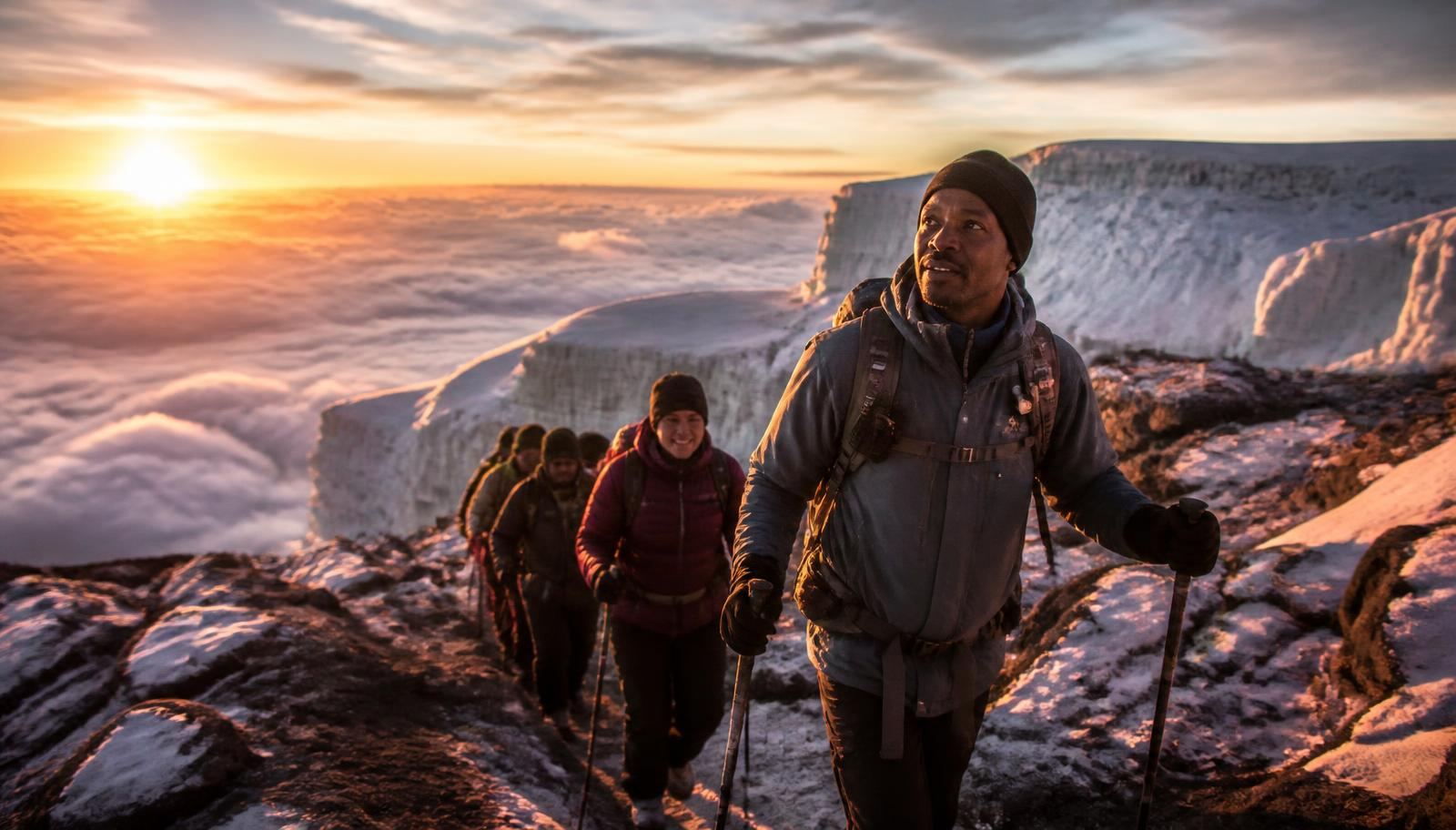
Kilimanjaro
Mount Kilimanjaro Climbing Guide: Everything You Need Before Your Adventure
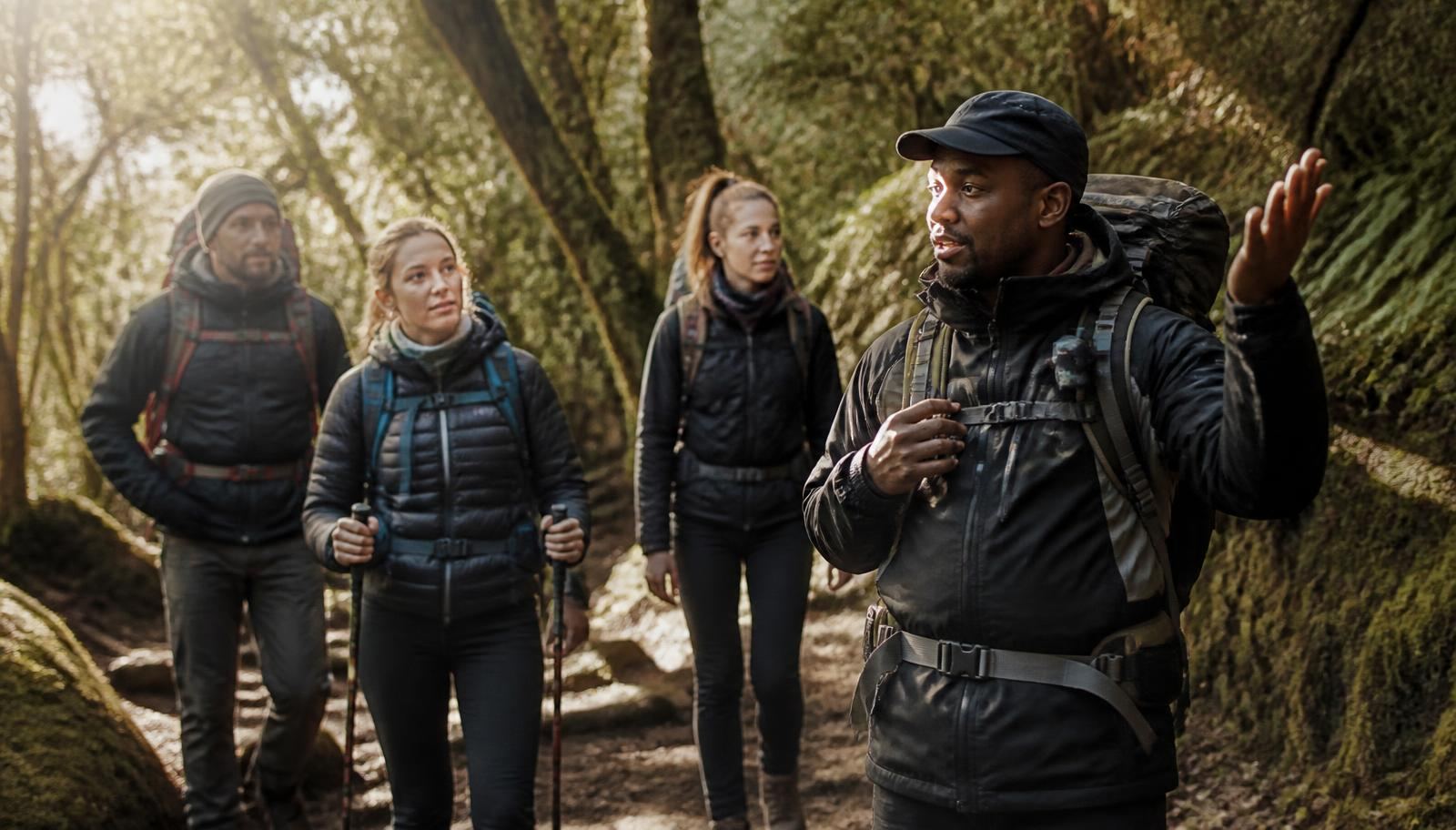
Kilimanjaro
Kilimanjaro Altitude Sickness Guide: Everything Every Climber Should Know
Kilimanjaro
Best Time to Climb Mount Kilimanjaro: Complete Month-by-Month Guide
Kilimanjaro
Kilimanjaro Success Rate by Route: Choosing the Route That Maximizes Your Chances
Plan Your Journey
Ready to explore Tanzania?
Let our Arusha-based safari specialists craft a private, tailor-made itinerary around you — no middlemen, no templates, just your perfect journey.
- TALA Licensed Operator
- 4.9 ★ Guest Rating
- No Booking Fees