
Zanzibar Travel
Zanzibar Food Guide: What to Eat and Where to Find It
Twenty-five dishes worth ordering, where each one is actually good, and how to eat your way through Zanzibar without wasting a single meal.

Introduction
The best meal I've ever eaten in Zanzibar cost about four dollars. It was a plate of octopus in coconut curry at a village restaurant in Jambiani where the menu was a whiteboard, the kitchen was a doorway, and the woman cooking had walked to the fish landing that morning. Two miles up the beach, a resort was serving a "Swahili tasting experience" for sixty dollars a head. The four-dollar plate was better. It usually is.
That gap — between what Zanzibar's food actually is and what visitors are usually served — is the reason this guide exists. Most travelers eat almost entirely inside their hotel, take one guided trip to Forodhani, get overwhelmed by the crowd and the hawking, and fly home thinking Zanzibari food is fine but nothing special. It's a shame, because the island's cooking is one of the most interesting things about it: a thousand years of Indian Ocean trade compressed into a handful of pots.
I've been eating on this island for a long time, in market canteens and beach shacks and a few genuinely excellent restaurants, and I've watched plenty of guests learn the same lesson the hard way. So this is the practical version. What each dish actually is, where it's reliably good, roughly what it should cost, how the night market really works once you get past the hustle, and which restaurants are worth booking at each budget level.
If you're still shaping the wider trip, our complete Zanzibar travel guide covers visas, transfers and logistics, and the Stone Town travel guide maps out the old town you'll be eating in.
Why Zanzibar's Food Is Unique
Zanzibar sits where the monsoon winds made people stop. For centuries, dhows sailed southwest from Oman, Yemen, Gujarat and Persia on the northeast monsoon, waited out the season on the island, and sailed home when the wind reversed. They didn't just trade cloves and ivory. They left recipes, spice preferences, cooking techniques and in many cases families. What grew out of that is Swahili cuisine — coastal East African at its foundation, with layers pressed into it from everywhere the wind came from.
Three things distinguish it from mainland Tanzanian cooking. The first is coconut. On the mainland, a stew is usually built on tomato and onion. Here it's built on tui la nazi — thick coconut milk squeezed by hand from freshly grated flesh, often twice, with the first pressing held back and added at the end so it doesn't split. You taste it in the beans, the greens, the fish, the rice and half the desserts.
The second is spice, which is not the same thing as heat. Zanzibar was the world's largest clove producer for most of the nineteenth century, and cloves, cardamom, cinnamon, black pepper, nutmeg and turmeric are grown here still. Zanzibari food is aromatic rather than fiery. Chili exists but usually arrives on the side, in a small dish of pili pili, so each person adjusts their own plate.
The third is the sea. This is an island where the fish is landed in the morning and cooked the same afternoon, where octopus is a weekday staple rather than a delicacy, and where a family with no money at all still eats protein. Seafood here isn't special-occasion food. It's Tuesday.
The Influence of Swahili, Arab & Indian Cuisine
The Swahili base
Strip away the imports and you're left with the everyday coastal kitchen: rice, ugali, cassava, green bananas, beans, greens, fish and coconut. Dishes like maharage ya nazi (coconut beans), mchicha (amaranth greens in peanut or coconut sauce), supu ya ndizi (green banana soup) and wali wa nazi (coconut rice) are the foundation. This is what most Zanzibaris actually eat most days, and it's the part of the cuisine visitors are least likely to encounter unless they eat in a local canteen or book a home-cooking experience.
The Omani and Persian layer
Pilau is the clearest inheritance. Rice cooked in spiced stock with cinnamon sticks, cumin, cardamom pods and cloves, served with beef or goat and a sharp kachumbari salad — it's Persian in origin, arrived through Oman, and is now the dish Zanzibaris cook for weddings and Eid. Halua, the sticky cardamom-and-saffron sweet sold in blocks around Stone Town, is an almost unchanged import from Muscat. So is the habit of drinking small cups of strong black coffee with something sweet alongside.
The Indian layer
Gujarati and Goan traders settled in Stone Town in large numbers in the nineteenth century, and the food shows it everywhere. Biryani, samosas, bhajia, chutneys, dal, chapati and mandazi are all part of the everyday Zanzibari diet now, not "Indian food" in any separate sense. Urojo — the yellow soup you'll eat at a plastic table for two dollars — is essentially a Zanzibari reinterpretation of an Indian chaat: a tangy base loaded with fried things, pickle and chutney.
The Portuguese and colonial traces
Lighter but present. The Portuguese brought cassava, maize, chili, pineapple and cashew from the Americas in the sixteenth century, and all four became fundamental. Later British influence explains the toast-and-eggs breakfast at older hotels and, indirectly, the island's fondness for chips — which eventually collided with an omelet to produce chips mayai.
25 Must-Try Local Dishes
Here's the full list in table form first, with prices in Tanzanian shillings — figure roughly TZS 2,500 to the dollar. Below the table I go deeper on the ten dishes that matter most.
| Dish | What it is | Where to find it | Typical price |
|---|---|---|---|
| Zanzibar pizza | Thin dough folded around minced beef, egg, onion, cheese and chili, fried on a flat iron plate | Forodhani night market; night stalls in Nungwi, Paje and Kendwa | TZS 5,000–10,000 |
| Urojo (Zanzibar mix) | Tangy turmeric-yellow soup with bhajia, potato, cassava crisps, mango pickle and chutney | Daytime stalls near Darajani; Lukmaan and Mchangani canteens | TZS 2,000–4,000 |
| Pilau | Rice slow-cooked with cinnamon, cumin, cardamom and cloves, usually with beef or goat | Every local canteen at lunchtime; weddings and Friday lunches | TZS 4,000–8,000 |
| Biryani | Layered rice and spiced meat, richer and tomato-heavier than pilau | Lukmaan, Passing Show, Indian-run kitchens in Stone Town | TZS 6,000–12,000 |
| Pweza wa nazi (octopus curry) | Octopus simmered soft in coconut milk with turmeric, garlic and lime | East-coast village restaurants — Jambiani, Paje, Bwejuu, Matemwe | TZS 12,000–25,000 |
| Grilled kingfish / snapper | Whole fish over charcoal with lime, garlic and chili | Beach shacks on every coast; Forodhani; Nungwi fish restaurants | TZS 15,000–35,000 |
| Mishkaki | Marinated beef or goat skewers grilled over charcoal, eaten with chili and lime | Evening roadside grills island-wide; Forodhani | TZS 1,000–2,000 per skewer |
| Chips mayai | French-fry omelet, Tanzania's national comfort food, served with kachumbari | Any roadside grill after dark | TZS 3,000–5,000 |
| Maharage ya nazi | Red beans stewed in coconut milk, eaten with rice or chapati | Local canteens, village kitchens, home-cooking experiences | TZS 2,000–4,000 |
| Tropical fruit | Mango, jackfruit, custard apple, passion fruit, island bananas, coconut | Darajani market, roadside stands, spice farms | TZS 500–3,000 |
| Wali wa nazi | Coconut rice, the default side to almost every fish dish | Everywhere, from village kitchens to resort restaurants | Usually included |
| Mchuzi wa samaki | Fish curry in coconut and tamarind, deeper and sourer than the octopus version | Local restaurants, especially in Stone Town and Kizimkazi | TZS 8,000–15,000 |
| Mchicha | Amaranth greens cooked with peanut or coconut, the everyday green vegetable | Local canteens as a side dish | TZS 1,500–3,000 |
| Chapati | Flaky, layered flatbread cooked on a griddle — the breakfast and mop-up bread | Morning stalls, canteens, breakfast at guesthouses | TZS 500–1,000 |
| Mandazi | Cardamom-scented Swahili doughnut, best warm at breakfast | Morning street vendors, tea shops | TZS 300–500 |
| Vitumbua | Small coconut rice cakes, crisp outside and custardy inside | Early-morning stalls, Darajani, village markets | TZS 300–500 |
| Bhajia | Spiced potato or lentil fritters, an Indian legacy dish eaten as a snack | Street stalls; a core urojo topping | TZS 500–2,000 |
| Samosa (sambusa) | Triangular pastry with beef, lentil or vegetable filling | Tea shops, street vendors, everywhere during Ramadan | TZS 500–1,000 |
| Kachumbari | Tomato, red onion, chili and lime salad — the palate reset for grilled food | Served alongside almost every grill plate | Usually included |
| Supu ya ndizi | Green banana and coconut soup, often with beef, a coastal breakfast staple | Morning canteens, especially inland villages | TZS 3,000–6,000 |
| Kashata | Coconut or peanut brittle sold in squares, sweet and chewy | Baskets around Darajani, kahawa vendors, ferry terminal | TZS 500–1,000 |
| Halua | Dense, sticky Omani-style sweet with cardamom, saffron and ghee | Stone Town sweet shops; always beside the coffee vendors | TZS 1,000–3,000 |
| Kahawa | Strong black spiced coffee poured from a brass pot | Jaws Corner and street corners across Stone Town | TZS 200–500 |
| Sugarcane juice | Cane pressed to order with ginger and lime through a hand-cranked mill | Forodhani, Darajani, roadside carts | TZS 1,000–2,000 |
| Spiced masala ice cream | Coconut, cardamom, clove and cinnamon ice creams made with island spices | Stone Town cafés, upscale resort restaurants | TZS 4,000–10,000 |
1. Zanzibar pizza
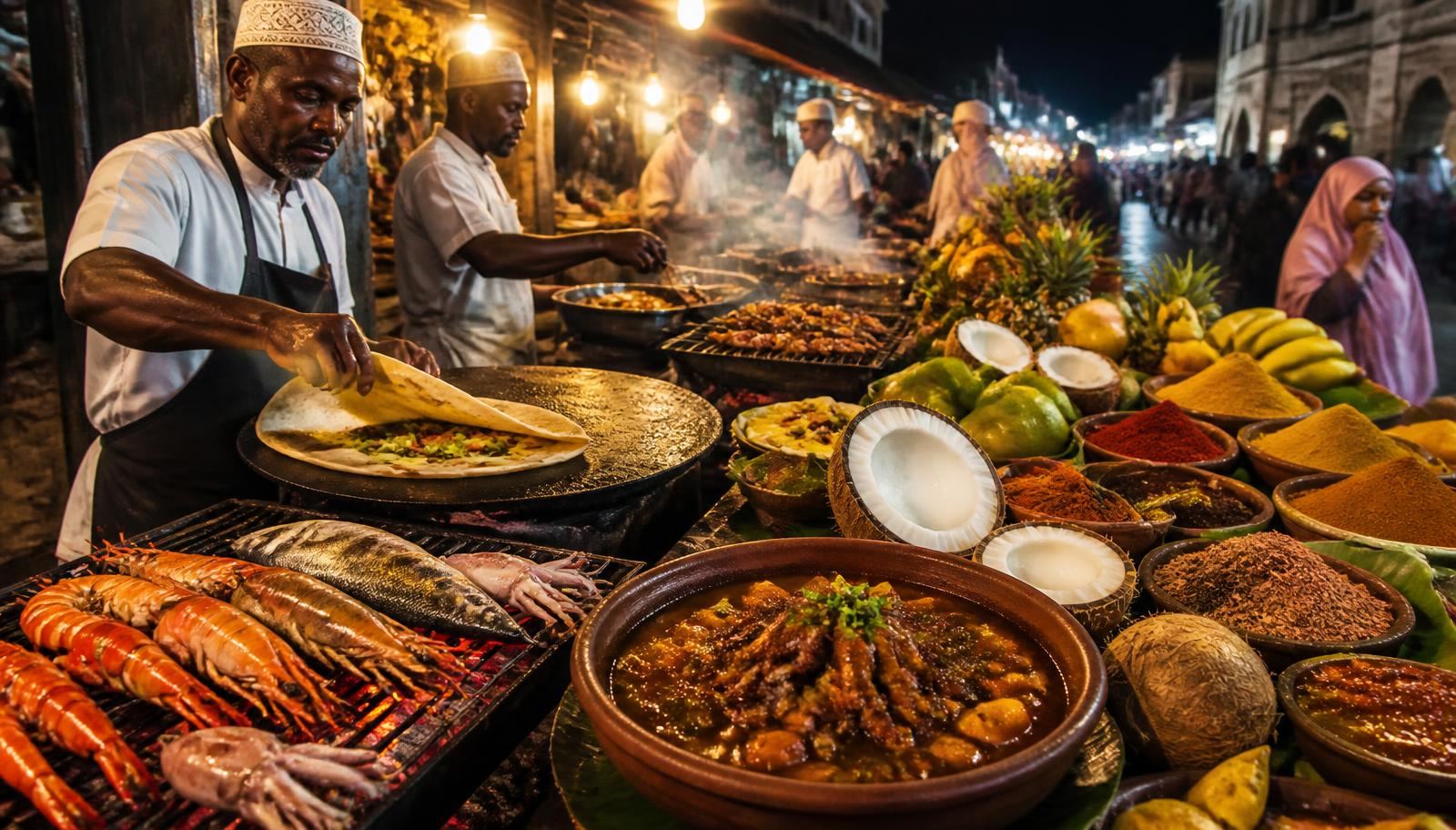
It isn't pizza and nobody here pretends it is. A ball of dough is stretched paper-thin on an oiled iron plate, piled with minced beef, chopped onion, green pepper, an egg, processed cheese and as much chili as you ask for, then folded into a parcel and fried on both sides until crisp. It's invented street food — the Forodhani vendors created it in the 1990s for tourists — but it's been absorbed into local culture completely, and Zanzibari teenagers eat more of it than visitors do.
Order one savory to share and, if you have any appetite left, one Nutella-banana version. Watch the cook: the good ones stretch the dough thin enough to see through and get the fold crisp. The mediocre ones serve you something closer to a greasy pancake. It's a snack. Don't build dinner around it.
2. Urojo (Zanzibar mix)
My personal favorite and the dish I'd point a curious eater toward first. A thin, turmeric-yellow, mango-sour broth thickened slightly with chickpea flour, poured over boiled potato and cassava, then topped with bhajia, crunchy fried bits, a skewer of grilled meat if you want it, coconut chutney and a spoon of fiery pili pili. It shouldn't work. It's fantastic.
Urojo is a daytime dish — most stalls sell out by mid-afternoon. Lukmaan does a reliable version, and the stands around Darajani and Mchangani do better ones. Ask for it "kidogo pilipili" if you want the chili mild.
3. Pilau
The test of a Zanzibari kitchen. Good pilau has separate grains, a deep brown color from the spices rather than from food coloring, and whole cardamom pods and cinnamon bark you push to the side of the plate. It comes with beef or goat, kachumbari, and sometimes a spoonful of coconut chutney. Every canteen serves it at lunch; the best versions appear on Fridays and at weddings.
4. Biryani
Richer than pilau, and the two are often confused. Biryani is layered — rice cooked separately, meat cooked in a tomato, yogurt and spice masala, then the two combined and steamed together. It's a special-occasion dish here, so it's often the best thing on a canteen menu. Lukmaan and Passing Show both do good chicken and beef versions.
5. Pweza wa nazi (octopus in coconut curry)
If you eat one thing on this island, eat this. Octopus, tenderized and simmered slowly in coconut milk with turmeric, garlic, ginger and lime until it gives no resistance at all, served with coconut rice or chapati. When it's done right, the octopus is silky rather than rubbery, and the sauce is thick enough to coat rice.
The best versions are in small village restaurants on the east coast — Jambiani, Bwejuu, Paje — and in Kizimkazi in the south. Resorts serve it too, usually competently, at three times the price. If you're staying on one of Zanzibar's east coast beaches, walk into the village at lunchtime and ask.
6. Grilled seafood
Kingfish (nguru), red snapper (changu), tuna (jodari), calamari and prawns are all local. The standard preparation — split, marinated with lime, garlic and chili, grilled over charcoal, served with coconut rice and kachumbari — is hard to improve on. Ask what came in today rather than reading the menu. If a restaurant can't tell you, that's your answer.
7. Mishkaki
Beef or goat cut small, marinated overnight in papaya, ginger, garlic and spice, then grilled fast over charcoal and dusted with chili salt. Sold from evening roadside grills for about a thousand shillings a skewer. Order four, get a plate of chips or chapati alongside, and you've had a proper dinner for under three dollars. This is the food Zanzibaris eat when they eat out.
8. Chips mayai
An omelet cooked with a handful of french fries folded into it, flipped, cut in wedges, and served with kachumbari and chili sauce. It's Tanzania's late-night food, it costs almost nothing, and it's genuinely good when the fries go in hot and the egg is still slightly soft. Every roadside grill makes it.
9. Maharage ya nazi (coconut beans)
Red beans slow-cooked in coconut milk with a little garlic and cumin until the sauce is creamy. Served with rice or chapati. This is the dish that quietly feeds the island, it's naturally vegan, and a plate costs about a dollar in a local canteen. Ask for it with mchicha on the side and you have a complete meal.
10. Fresh tropical fruit
Don't treat this as an afterthought. Zanzibar's mangoes in season (December through March) are on a different level from anything sold in a Western supermarket. Add jackfruit, custard apple, soursop, passion fruit, papaya with lime, the small intensely sweet island bananas, and coconut drunk straight from the shell with a straw. Buy at Darajani or from a roadside stand — resort fruit plates are fine but you're paying twenty times the price.
The other fifteen
The rest of the list in the table above is worth working through as you go. Wali wa nazi and mchuzi wa samaki are the everyday fish-and-rice combination. Chapati, mandazi, vitumbua and supu ya ndizi cover breakfast. Bhajia, samosas and kachumbari are the snack-and-side layer. Kashata, halua and spiced ice cream cover dessert. Kahawa and sugarcane juice cover drinks. You could eat the whole list in a week without trying very hard.
Best Seafood Experiences
Seafood is the reason a lot of people come, and it's also where visitors are most often shortchanged. Here's how to get it right.
Choose the fish yourself
The best seafood restaurants in Zanzibar don't hand you a menu — they show you a bed of ice with the day's catch on it. You pick a fish, they weigh it, you agree the price per kilo, and it goes on the charcoal. Nungwi has a whole strip of restaurants that work this way, and so do the beach places at Kendwa and the village restaurants on the east coast. Expect roughly TZS 25,000–40,000 per kilo for kingfish or snapper — a whole fish for two people usually lands around $15–25 total.
Eat where the boats land
Kizimkazi in the south and the Nungwi fish market in the north are working landings. Go in the late afternoon when the boats come in, watch the auction, and — at Nungwi especially — buy something and take it to one of the nearby kitchens who will cook it for a small fee. It's the cheapest excellent seafood meal on the island and one of the most memorable.
The sandbank and boat lunches
Almost every boat trip — Mnemba snorkeling, Safari Blue from Fumba, a dhow to a sandbank — includes lunch cooked on board or on the sand. Safari Blue's version is legitimately good: grilled fish, coconut rice, tropical fruit spread out on a bench, followed by a tour of a dozen fruits you've never seen. It's a full-day trip and one of the better food experiences going.
Street Food Markets
Zanzibar's markets are not curated food halls. They're working places where people buy dinner, and that's exactly what makes them good. Here's where to go and when.
| Market | When to go | What it's good for |
|---|---|---|
| Darajani Market | Daily, best 7–10 am | The island's working market — fish hall, spices, fruit, meat, chaos |
| Forodhani Gardens | Nightly from about 6:30 pm | Grilled seafood, Zanzibar pizza, mishkaki, juices, family atmosphere |
| Mwanakwerekwe Market | Daily, biggest on Thursdays | Where locals actually shop — produce, spices, no tourist pricing |
| Kizimkazi & Nungwi fish landings | Early morning and late afternoon | Watch the catch come in and negotiate a fish to be cooked for you |
| Jambiani & Paje village stalls | Daily, evenings for grills | Quiet, friendly, easiest place for a first street-food attempt |
Darajani Market
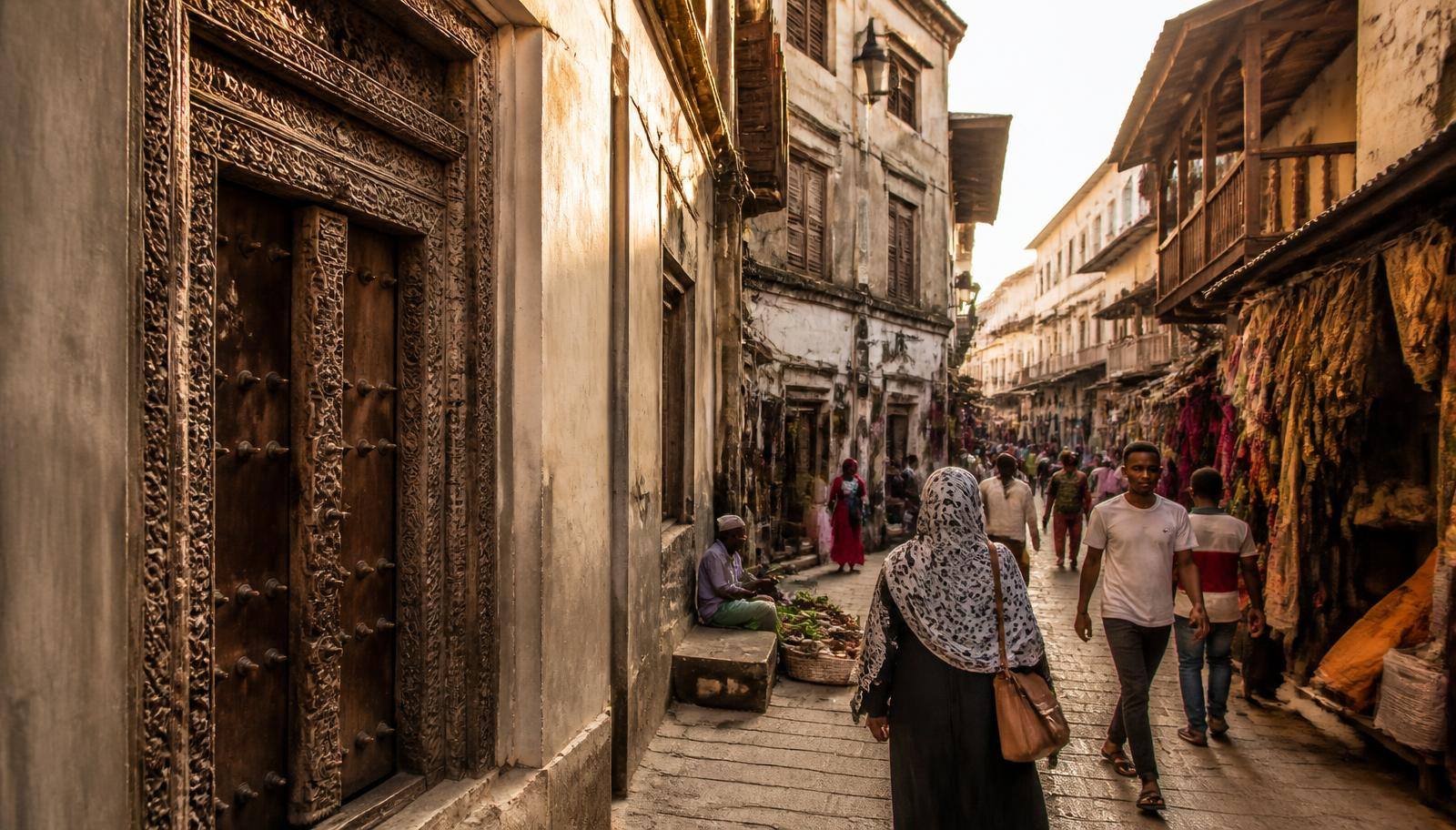
The old market building on Creek Road is where Stone Town shops. Go early — by 7 am the fish hall is full and by 11 it's winding down. It's intense: the smell in the fish section is strong, the meat hall is not for everyone, and you will be jostled. But the spice sellers, the fruit stalls, the women selling vitumbua and kashata from baskets, and the sheer variety of things you don't recognize make it the most educational hour you'll spend on the island.
Buy spices here rather than at a tourist shop — the same cardamom costs a third of the price. Bargain gently and be realistic; you're haggling over a dollar.
Mwanakwerekwe
A few kilometers out of town, this is where locals do their big weekly shop. Thursday is the biggest day. There's essentially no tourist infrastructure, which is precisely the appeal. Take a taxi or dala-dala, bring small notes, and go with a guide the first time if you're nervous.
Forodhani Night Market Guide
Forodhani Gardens sits on the seafront in front of the House of Wonders, and from about 6:30 every evening it fills with food stalls, string lights, smoke and people. It's the most famous food experience in Zanzibar, it's genuinely worth doing, and it's also where most visitors get slightly ripped off. Both things are true.
How it actually works
Vendors set up trestle tables with pre-grilled seafood on display and a live grill or iron plate behind. The displayed food is mostly for show — what you want is what gets cooked after you order. Walk the full length of the row before committing. Look for two things: a queue of local families, and a cook actually cooking rather than standing over a tray of cold skewers.
What to order
- Zanzibar pizza — the reason most people come. One savory, one Nutella-banana, split between two.
- Mishkaki — beef skewers off the charcoal, ordered fresh, not from the display tray.
- Grilled calamari or prawns — good if cooked to order; avoid anything that's been sitting.
- Sugarcane juice — pressed with ginger and lime through a hand-cranked mill. Non-negotiable.
- Urojo — a couple of vendors do an evening version, and it's a good palate reset between grilled things.
The price game
This is the part nobody warns you about. Many vendors quote tourists in US dollars at a rate two or three times the local price. Ask for the price in shillings, confirm it before anything is cooked, and pay after you eat. A full plate should be TZS 5,000–15,000. If someone says "twenty dollars, my friend, very fresh," walk two stalls down. Nobody takes offense; it's an expected part of the exchange.
Timing and practicalities
Arrive around 6:45 for sunset over the water and before the peak crush at 8. Bring small shilling notes. Eat standing or on the sea wall — there's no real seating. Give it about ninety minutes. And if you want a proper sit-down dinner afterwards, Stone Town's restaurants are a five-minute walk inland.
Best Restaurants by Budget
Zanzibar's restaurant scene splits cleanly into three tiers, and the honest truth is that the cheapest tier delivers the most authentic food while the most expensive tier delivers the best setting. Here's how it lays out.
| Restaurant | Area | Tier | Known for | Per person |
|---|---|---|---|---|
| Lukmaan Restaurant | Stone Town | Budget | Canteen-style Swahili buffet — pilau, biryani, octopus, greens, urojo | $3–7 |
| Passing Show Hotel | Stone Town (Malawi Rd) | Budget | Old-school local lunch spot; biryani and fish curry with rice | $3–6 |
| Forodhani Gardens stalls | Stone Town seafront | Budget | Zanzibar pizza, mishkaki, grilled seafood, sugarcane juice | $4–12 |
| Mchangani & Darajani canteens | Stone Town | Budget | Where market traders eat: rice, beans, chapati, fried fish | $2–5 |
| Beach shacks, Jambiani & Bwejuu | East coast | Budget–mid | Octopus in coconut, grilled catch of the day, feet in the sand | $6–15 |
| Zanzibar Coffee House | Stone Town | Mid-range | Tanzanian arabica, breakfast, rooftop with a Stone Town view | $5–12 |
| Lazuli | Stone Town | Mid-range | Smoothie bowls, fresh juices, strong vegetarian and vegan choices | $6–14 |
| Nungwi fish grills | Nungwi | Mid-range | Pick your fish on ice, grilled with coconut rice and kachumbari | $12–25 |
| The Rock Restaurant | Michamvi / Pingwe | Mid–upper | The famous restaurant on a tidal rock; book ahead, come for the setting | $25–50 |
| Emerson Spice Tea House | Stone Town | Upper | Rooftop set menu at sunset with live taarab music; reserve days ahead | $45–65 |
| Tea House / hotel fine dining at Baraza, Xanadu, Zuri | East & north coasts | Luxury | Contemporary Swahili tasting menus, private beach dinners, wine lists | $60–140 |
Budget: $2–10 per person
Lukmaan on New Mkunazini Road is the one to know. It's a canteen — you queue, you point at trays of pilau, biryani, octopus, fish curry, greens, beans and chapati, and you eat at a shared table for a few dollars. It's busy with locals at lunch, which is exactly the point. Passing Show on Malawi Road is the same idea, older and rougher around the edges, with excellent biryani. Beyond those two, any small canteen near Darajani where the food is being served out of large pots will feed you well.
Mid-range: $10–25 per person
This tier is where the fish grills live. In Nungwi, the string of restaurants along the beach will grill your chosen fish with rice and salad for around $15. Zanzibar Coffee House does the best breakfast in Stone Town. Lazuli is the go-to for juices, bowls and vegetarian food. On the east coast, village restaurants in Jambiani and Paje serve octopus curry and grilled catch at village prices with a sea view thrown in.
Upper and luxury: $25–140 per person
The Rock, perched on a tidal outcrop off Michamvi, is the most photographed restaurant in East Africa. The food is good rather than extraordinary and it's expensive for what it is — but the setting is genuinely special and it's a fair choice for one memorable meal. Book well ahead and check the tide, because you either walk or take a boat depending on the hour.
Emerson Spice's rooftop Tea House serves a five-course set menu at sunset with live taarab music and a view over the whole of Stone Town. It's the best fine-dining experience in the old town and needs a reservation days in advance. On the coasts, the kitchens at the better boutique hotels — Baraza, Xanadu, Zuri, Kilindi — do contemporary Swahili cooking at a genuinely high level, and most will arrange a private beach dinner for two, which is a highlight for couples planning a Zanzibar honeymoon.
Coffee, Tea & Fresh Juices
Kahawa — Zanzibari street coffee
A man walks through Stone Town with a tall brass pot over a small charcoal brazier and a stack of tiny porcelain cups. He pours you a shot of strong, bitter, unsweetened coffee, sometimes spiced with ginger or cardamom, for a couple hundred shillings. You drink it standing up, buy a piece of halua or kashata to go with it, and hand the cup back. Jaws Corner, the small square where old men play bao and argue politics, is the classic place to do this. It's one of the genuine pleasures of the island.
Tanzanian coffee, properly brewed
The beans themselves come from the mainland — arabica from the slopes of Kilimanjaro and Mbeya, some of it very good. Zanzibar Coffee House roasts and serves it in Stone Town, and several cafés around the old town do a decent espresso. If you're also planning time on the mainland, our ultimate Tanzania travel guide covers the coffee regions.
Chai and spiced tea
Chai ya tangawizi — black tea boiled with ginger, cardamom and often cinnamon and plenty of sugar — is the everyday drink. Order it at any tea shop with mandazi in the morning. Spice tea infusions made from lemongrass, cloves and cinnamon are common at hotels and on spice farm tours.
Juices and coconut water
Fresh juice is everywhere and it's cheap: passion fruit, tamarind, baobab, sugarcane, watermelon, mango in season. Sugarcane pressed to order with ginger and lime is the one to seek out at Forodhani. Madafu — young green coconut, machete-opened, straw in — costs about a dollar from roadside sellers and is the best rehydration on the island.
Vegetarian & Vegan Options
Zanzibar is one of the easier destinations in Africa for vegetarians, mostly because so much everyday Swahili cooking never had meat in it to begin with. Meat is expensive; beans, greens, coconut and starch are what most households eat most days.
The reliable plant-based dishes:
- Maharage ya nazi — coconut beans, vegan as standard, available at every canteen.
- Mchicha — amaranth greens with peanut or coconut. Ask whether fish stock or dried shrimp went in; sometimes it does.
- Urojo — vegetarian by default if you decline the meat skewer.
- Bhajia, samosas and dal — the Indian layer of the cuisine is a vegetarian's best friend here. Confirm samosa fillings.
- Chapati, wali wa nazi, cassava, plantain — the carbohydrate backbone, all naturally vegan.
- Vegetable curry and coconut spinach — standard at Indian-run restaurants and every hotel kitchen.
In Stone Town, Lazuli and several small vegetarian and Indian restaurants cater specifically to plant-based diets. Beach hotels will always cook vegetarian on request, and most will do a decent vegan version if you give the kitchen a day's notice.
Two things to check as a vegan: ghee, which sometimes goes into rice and chapati, and small amounts of dried shrimp or fish stock, which can find their way into bean and green dishes. Ask plainly — "hakuna nyama, hakuna samaki" (no meat, no fish) is understood everywhere and nobody minds the question.
Food Safety Tips
Most travelers eat street food in Zanzibar with no problems at all. The ones who get sick usually made one of a handful of predictable mistakes.
- Prioritize turnover over appearance. A busy stall with a queue cooks fresh food constantly. A pristine but empty stall may have had that tray sitting out for two hours.
- Insist on cooked to order. Anything off a charcoal grill or an iron plate in front of you is low risk. Anything lukewarm on display is higher risk, especially seafood late in the evening.
- Be careful with pre-cut fruit and raw salad. Whole fruit you peel yourself is always safe. Kachumbari at a busy restaurant is fine; a bowl of chopped fruit sitting in the sun is not.
- Drink bottled or filtered water. Tap water is not safe to drink. Most hotels provide filtered refill stations — bring a reusable bottle. Ice at established restaurants and busy Forodhani stalls is made from purified water and is generally fine.
- Watch the alcohol and the sun. Honestly, more Zanzibar stomach trouble comes from dehydration, heat and a heavy night out than from anything anyone ate.
- Pack the basics. Oral rehydration salts, loperamide and hand sanitizer. Pharmacies in Stone Town are well stocked, but you want these in your bag, not in a shop across town at midnight.
Our Tanzania safari health guide covers vaccinations, malaria prophylaxis and what to carry in a medical kit in more detail.
Cultural Dining Etiquette
Zanzibar is a conservative Muslim society, and a little awareness at the table goes a long way. None of this is complicated.
- Eat with your right hand. If you're eating rice or chapati by hand in a local setting, use the right hand only. The left is considered unclean. Cutlery is always available if you'd rather.
- Wash before and after. Many local restaurants bring a jug and bowl to the table. Use it — it's part of the meal, not a formality.
- Dress modestly away from the beach. Shoulders and knees covered in Stone Town and villages, including in restaurants. Beachwear belongs on the beach.
- Accept hospitality graciously. If someone offers you coffee or a share of their food, taking a little is polite even if you aren't hungry. Refusing outright reads as cold.
- Respect Ramadan. During the fasting month, avoid eating, drinking or smoking in public during daylight. Many local kitchens close in the day and reopen spectacularly after sunset — the evening food scene in Ramadan is the best of the year.
- Ask before photographing people. Especially women and market vendors. A smile and a gesture toward the camera is enough. Some vendors will ask for a small tip; a thousand shillings is fair.
- Tip sensibly. 5–10% at sit-down restaurants if service isn't included. Street stalls don't expect tips. Rounding up is always welcome.
Fitting food into the wider trip
Zanzibar rewards a bit of structure. Give Stone Town two nights so you get one Forodhani evening and one morning at Darajani. Add a spice farm and cooking class. Then move to a beach and let village restaurants do the rest of the work. Our guide to the best things to do in Zanzibar slots the food experiences alongside the boats, forests and reefs, and the best time to visit Zanzibar guide will tell you which months bring mango season, calm seas and the least rain.
Frequently Asked Questions
Common Questions
Frequently Asked Questions
Zanzibar is best known for Swahili coastal cooking built on coconut, spices and the sea. The dishes people travel for are pweza wa nazi (octopus simmered in coconut curry), urojo — the tangy turmeric-yellow 'Zanzibar mix' soup loaded with bhajia, potato and crunchy bits — pilau and biryani that arrived with Omani and Indian traders, mishkaki (marinated beef skewers grilled over charcoal), grilled kingfish and red snapper straight off the boats, and Zanzibar pizza, a folded stuffed pancake invented at the Forodhani night market. On the sweet side, look for kashata (coconut brittle), mandazi, halua and vitumbua. The through-line is spice: cloves, cardamom, cinnamon, black pepper and nutmeg grown on the island itself.
Generally yes, if you use the same judgment you'd use anywhere. Eat at stalls with a queue — turnover matters more than appearance. Choose food cooked to order in front of you rather than anything sitting lukewarm on a tray. Be more careful with raw salads, pre-cut fruit that's been sitting out, and shellfish at the very end of a hot evening. Drink bottled or filtered water and skip ice at the smallest roadside stands, though ice at established restaurants and Forodhani's busier vendors is made from purified water and is fine. In practice, most travelers who get sick in Zanzibar were undone by dehydration, sun and a heavy drinking night rather than by a mishkaki skewer.
Forodhani Gardens in Stone Town is the original home of it, and roughly a dozen vendors set up there from about 6:30 pm. Walk the whole row first and pick the stall where the cook is fastest and the dough looks thin rather than doughy. Outside Stone Town you'll find good versions at the night stalls in Nungwi and Paje, and at Kendwa's beach-road carts. A savory one with beef, egg, onion, cheese and chili costs roughly TZS 5,000–10,000; the Nutella-banana version costs about the same and is genuinely worth trying once.
Yes, and more easily than most people expect. A huge amount of everyday Swahili cooking is naturally plant-based: maharage ya nazi (coconut beans), mchicha (greens in peanut or coconut sauce), chapati, mandazi, bhajia, samosas, coconut rice, lentil dal, cassava and plantain. Urojo is usually vegetarian if you skip the meat skewer. Stone Town has several dedicated vegetarian and Indian restaurants, and every beach hotel will cook vegetarian on request. Vegans should ask specifically about ghee and about the shrimp paste or fish stock some cooks add to bean dishes — the question is understood and nobody will be offended.
At the right places, extremely. Boats land in the early morning and again in the afternoon, and village restaurants on the east and north coasts often buy the day's catch directly. Kingfish, red snapper, tuna, octopus, calamari and prawns are all local and in season most of the year. Be more skeptical of two things: lobster, which is heavily overfished around Zanzibar and is sometimes frozen and imported, and any 'seafood platter' presented pre-plated at a tourist-facing terrace. The reliable test is whether you can see whole fish on ice and choose one. If the answer is yes, order it grilled with lime and coconut rice.
Start with kashata — coconut and peanut brittle sold in squares from baskets around Darajani market. Then vitumbua, small coconut rice cakes eaten warm at breakfast; mandazi, the lightly cardamom-spiced Swahili doughnut; halua, a dense, sticky Omani-derived sweet flavored with cardamom and saffron that Zanzibaris eat with black coffee; and ladu. On the fruit side, don't leave without eating tree-ripened mango in season (December–March), custard apple, jackfruit and the small sweet island bananas. Spiced masala ice cream and coconut-and-cardamom desserts appear on most upscale menus and are usually excellent.
Yes — and you should try kahawa, the small cups of strong, unsweetened black coffee poured from a brass pot by the men who walk the streets of Stone Town with a charcoal brazier. It costs a few hundred shillings, it's traditionally drunk with a piece of halua or kashata alongside, and sitting on a bench at Jaws Corner drinking one is one of the best free things you can do on the island. For espresso-style coffee from mainland Tanzanian beans — Kilimanjaro and Mbeya arabica — Stone Town has several good cafés. Local spiced tea (chai ya tangawizi, with ginger and cardamom) is equally worth ordering.
Darajani Market in Stone Town for daytime and Forodhani Gardens for evening. Darajani is the real working market — fish hall, spice sellers, fruit, cassava, live chickens — and it's chaotic, loud and best visited before 10 am when the fish is still coming in. Forodhani is the night market on the seafront: grilled seafood, mishkaki, Zanzibar pizza, sugarcane juice, and a crowd that's about half local families. Neither is a food court; both reward slow walking and asking questions. For a quieter alternative, the small produce markets in Nungwi and Paje are friendlier for a first visit.
Conclusion
Zanzibar's food is the clearest evidence of what the island actually is: a thousand years of Swahili, Omani, Indian and Portuguese traffic reduced down into a pot of coconut and cloves. You don't need a reservation or a big budget to eat well here. You need a willingness to sit at a plastic table, point at a fish, ask what's in the pot, and eat where the line is longest. Do that for a week and you'll come home with a better sense of Zanzibar than any beach photograph will give you.
If you take three things from this guide, make them these: order pweza wa nazi at least twice, eat one lunch at a canteen where you have to point at the pots, and go to Forodhani knowing the shilling price before you order. Everything else on the island follows from there.
Plan Your Zanzibar Trip With Olympus Adventure
Olympus Adventure is a Tanzanian-owned company based in Arusha. We build private, tailor-made trips that combine the northern safari circuit with time on Zanzibar's coast — and because we're local, the food side of the itinerary isn't an afterthought. We'll book the spice farm and cooking class that's actually good, get you a table at Emerson Spice, and send you to the village restaurant our own guides eat at rather than the one paying commission.
Tell us your dates, how many nights you have and roughly what you'd like to spend. We'll come back with a day-by-day plan and a transparent quote, including honest advice about where a cheaper option would serve you better. If you want a week that starts with elephants in Tarangire and ends with grilled kingfish and a sandbank to yourself, that's exactly the kind of trip we build.
Keep Reading
More Zanzibar Guides

Zanzibar
Zanzibar Travel Guide: Everything You Need Before Visiting the Island


Plan Your Journey
Ready to taste Zanzibar?
Tell us your dates and we'll design a tailor-made Tanzania trip that combines culture, food, beaches and an unforgettable safari.
- TALA Licensed Operator
- 4.9 ★ Guest Rating
- No Booking Fees