
Travel Tips
Tanzania Visa Guide: Everything You Need Before You Travel
eVisa versus visa on arrival, every visa class, real 2026 fees, passport rules, Zanzibar entry, yellow fever, and the small paperwork mistakes that get travelers pulled out of the queue — written from the side of the arrivals hall where we meet clients every week.

Introduction
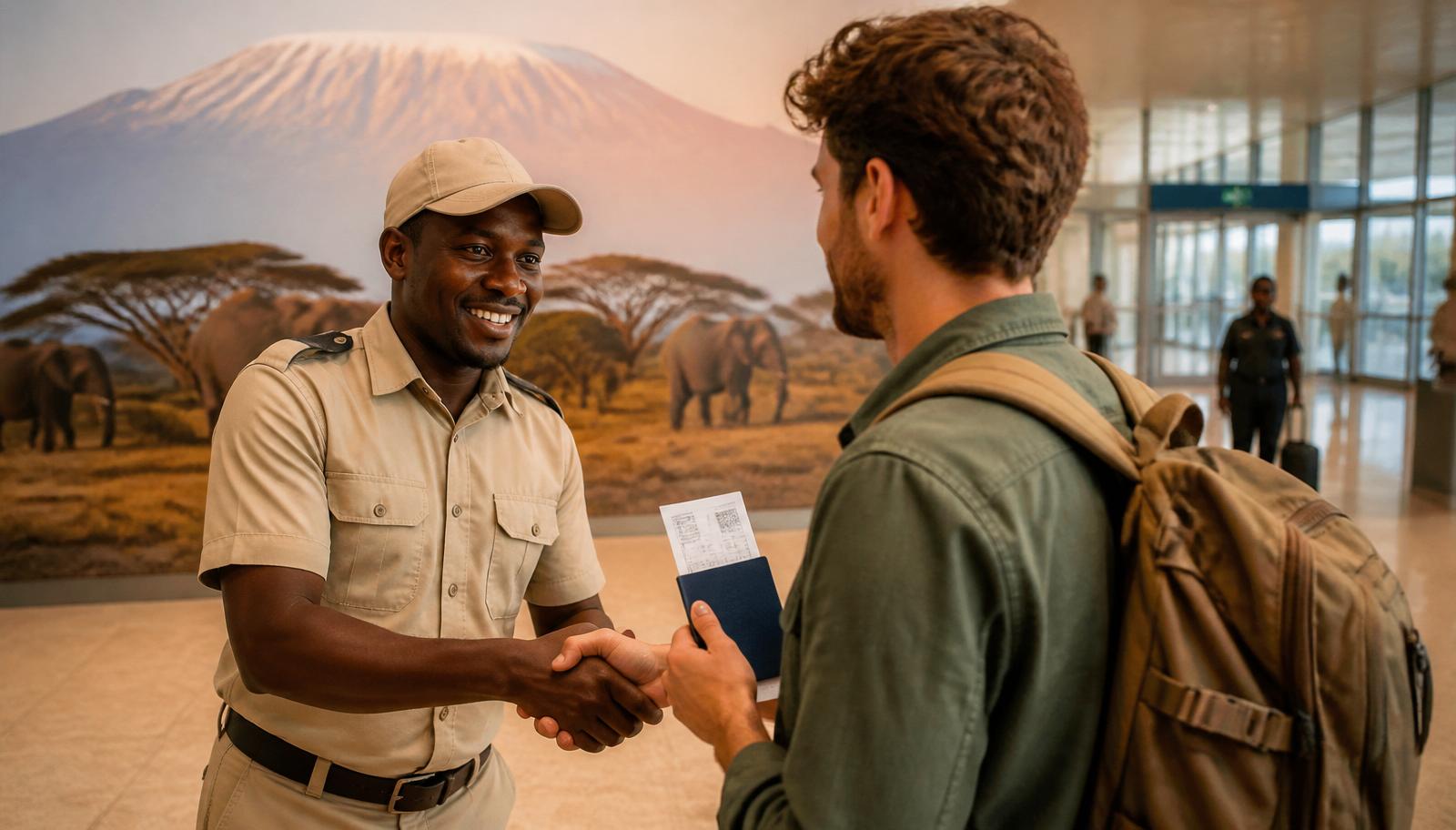
I have stood in the arrivals hall at Kilimanjaro International Airport more times than I can count, holding a sign with somebody's surname on it, watching the doors. Most people come through in twenty minutes. A few take an hour and a half. The difference is almost never bad luck — it is paperwork. A passport with five months of validity left. A visa applied for through a lookalike website that never actually submitted anything to Immigration. A US traveler who bought the $50 tourist visa online when their nationality requires the $250 multiple-entry one. Each of those costs somebody the first afternoon of a trip they saved two years for.
This Tanzania visa guide exists so that does not happen to you. I have written it the way I would explain it on the phone to a client in Denver or Munich three weeks before their flight: what you actually need, what it actually costs, how long it actually takes, and where the traps are. No guesswork, no filler, and no pretending the system is more complicated than it is — because honestly, it is not. Tanzania has one of the more workable visa systems in East Africa. You just have to do it in the right order.
A word on why this matters beyond convenience. Your visa is the first of about six documents that have to line up on arrival day: passport, visa, return ticket, yellow fever certificate if applicable, accommodation proof, and — if Zanzibar is on your itinerary — mandatory travel insurance. Immigration officers are not hostile, but they are thorough, and they check the set as a whole. Travelers who arrive with all six in a plastic folder are through in ten minutes. Travelers who arrive with a phone at 4% battery and a hotel booking somewhere in their email are the ones I end up waiting for.
Do You Need a Visa for Tanzania?
Start here, because the answer determines everything that follows. Tanzania sorts the world into three groups, and your passport decides which one you belong to.
Group 1: Visa-exempt nationalities
A relatively short list of countries can enter Tanzania without a visa for tourism, generally for up to three months. It covers the East African Community partner states — Kenya, Uganda, Rwanda, Burundi, South Sudan — most SADC members such as Zambia, Malawi, Zimbabwe, Botswana, Namibia, Mozambique and Eswatini, plus a scattering of others including Barbados, Jamaica, Malaysia, Singapore (short stays), Hong Kong, Macau and Cyprus. If you hold one of those passports you still pass through immigration and get a stamp; you simply do not pay for a visa.
Group 2: Ordinary visa nationalities
This is where the overwhelming majority of our clients sit. The United Kingdom, Canada, Australia, New Zealand, Japan, South Korea, Brazil, South Africa, and every European Union member state fall here, along with most of the rest of the world. You need an ordinary tourist visa, it costs $50 for a single entry, and you can obtain it either online in advance as an eVisa or on arrival at a designated entry point.
Group 3: Referral visa nationalities
Roughly forty nationalities — including Afghanistan, Bangladesh, Ethiopia, Eritrea, Somalia, Chad, Mali, Lebanon, Syria, Kazakhstan, Azerbaijan and several others — require a referral visa. These applications are forwarded to the Commissioner General of Immigration in Dar es Salaam for clearance and cannot be issued on arrival. Budget a minimum of two to three weeks and often longer, and do not book non-refundable flights before approval lands.
Types of Tanzania Visas
Four categories matter to travelers. Choose the wrong one and the application is refused rather than corrected, so read this section carefully before you open the portal.
Ordinary tourist visa (single entry)
The standard visa for holidays, safaris, Kilimanjaro climbs, Zanzibar beach time and visiting friends or family. $50, single entry, valid for presentation within three months of issue, and permitting a stay of up to 90 days. This is what most travelers need, and it covers the entire United Republic of Tanzania including Zanzibar, Pemba and Mafia.
One caveat worth understanding: single entry means exactly that. If your itinerary includes a hop into Kenya for the Masai Mara, or a Rwanda gorilla add-on, and then a return to Tanzania, a single-entry visa is used up the moment you leave. You would need either two ordinary visas or the multiple-entry class. Better still, if you are combining Kenya, Uganda and Rwanda, ask about the East Africa Tourist Visa — although note Tanzania is not a member of that scheme, so it does not cover Tanzania itself.
Multiple-entry visa
$250, valid up to twelve months, multiple entries with a maximum of 90 days per visit. Mandatory for US citizens. Genuinely useful for anyone doing a multi-country East African circuit that re-enters Tanzania, for frequent business travelers, and for people with family here. Applications from non-US nationals for this class are sometimes scrutinized more closely, so state your reason clearly in the purpose field rather than leaving it vague.
Transit visa
$30, maximum seven days, for travelers passing through Tanzania to a third country. You must show a confirmed onward ticket and, where required, the visa for your final destination. Be careful here: if you plan to do anything touristic during the layover — even a day trip to Arusha National Park — the correct document is a tourist visa, not a transit visa. Immigration treats transit as strictly transit. If you are staying airside on a connection and never clearing immigration, you need nothing at all.
Business visa
From $250 and typically issued for stays of up to 90 days, covering meetings, conferences, trade fairs, short consultancies and site visits. It requires an invitation letter from a Tanzanian entity and often supporting company documents. It does not permit paid employment — that requires a work permit, an entirely separate process through the Ministry of Labour. Film crews and journalists have their own permit category and should start the process at least six weeks out.
| Visa type | Fee (USD) | Entries | Maximum stay | Best for |
|---|---|---|---|---|
| Ordinary tourist visa | $50 | Single | 90 days | Safaris, Kilimanjaro, Zanzibar, family visits |
| Multiple-entry visa | $250 | Multiple, 12 months | 90 days per entry | All US citizens; multi-country circuits |
| Transit visa | $30 | Single | 7 days | Passing through to a third country |
| Business visa | From $250 | Single or multiple | 90 days | Meetings, conferences, short consultancy |
| Referral visa | $50–$250 | Varies | Varies | Around 40 listed nationalities; pre-approval required |
Tanzania eVisa Explained
The eVisa is Tanzania's online visa, introduced in 2018 and now the default route for most arrivals. You complete an application on the Immigration Department's portal, upload your documents, pay by card, and receive a grant notice by email once approved. You print that notice, carry it with your passport, and on arrival you are directed to the eVisa channel where an officer scans it, takes your fingerprints and photograph, and stamps you in.
There is only one official website: visa.immigration.go.tz. Type it directly rather than clicking a search result, because paid ads for unofficial intermediaries routinely sit above the real portal. Those sites are not necessarily fraudulent — many do submit your application — but they charge $40 to $120 for filling in a form you can complete yourself in twenty-five minutes, and when something goes wrong you are dealing with a call center rather than Immigration.
A practical note on validity. Your eVisa is valid for presentation within three months of the date of issue, and the 90-day clock starts on the day you enter, not the day of approval. So applying six weeks early costs you nothing. Applying five months early means the grant expires before you fly.
Visa on Arrival vs eVisa
Both are legal. Both cost the same. They are not equally good ideas, and I want to be specific about why rather than just telling you to apply online.
Visa on arrival is available at Julius Nyerere International Airport in Dar es Salaam, Kilimanjaro International Airport, Abeid Amani Karume International Airport in Zanzibar, and at the main land borders including Namanga, Horohoro, Tunduma, Sirari and Kasumulu. You fill in a form, join the visa queue, pay $50 in cash or by card, and wait. On a quiet afternoon at Kilimanjaro this takes twenty-five minutes. When the KLM flight from Amsterdam, the Qatar flight from Doha and a regional arrival land within the same hour — which happens most evenings — it can take considerably longer.
The bigger issue is discretion. An officer at the desk can decline to issue a visa on arrival if they are not satisfied with your documentation, and there is no appeal at 10pm in an airport. With an approved eVisa, the substantive decision has already been made in Dar es Salaam. That is why every client we brief gets the same instruction: apply online.
| Factor | eVisa (apply online) | Visa on arrival |
|---|---|---|
| Cost | $50 / $250, paid by card | Same fee, cash USD or card |
| Certainty | Decision made before you fly | Officer discretion at the desk |
| Typical airport time | 10–20 minutes at the eVisa channel | 25–90 minutes depending on arrivals |
| Airline check-in | Always accepted | Some carriers now query it |
| Availability | All eligible nationalities | Not for referral-visa nationalities |
| Lead time needed | 3–4 weeks recommended | None |
Step-by-Step eVisa Application Process
Set aside half an hour, have your passport and documents scanned and saved before you start, and use a laptop rather than a phone. The portal is functional but not forgiving — it can time out, and a lost session means starting over.
Step 1 — Prepare your files first
Scan or photograph your passport biodata page in color, straight on, with all four corners visible and no glare. Take a plain passport-style photo against a white wall. Save your flight itinerary as a PDF and your hotel or operator confirmation as another. Keep each file under 300 KB where possible; oversized uploads are the single biggest cause of failed submissions.
Step 2 — Create your account
Go to visa.immigration.go.tz, choose "New Application", and register with an email address you actually check. The system emails you a reference number that you need to resume a saved application or track status. Write it down somewhere that is not just your inbox.
Step 3 — Choose the correct visa type
Ordinary visa for most tourists. Multiple-entry visa if you are American or genuinely re-entering. Transit if you are transiting. This choice cannot be edited after submission — a wrong selection means a rejection and a fresh $50.
Step 4 — Complete the personal details
Enter your name exactly as it appears in the machine-readable zone of your passport. Not your preferred name, not a shortened middle name, not a married name that is not yet in the passport. A mismatch between the eVisa and the passport is treated as a different person by the system.
Step 5 — Fill in the travel information
Arrival date, port of entry (Kilimanjaro for northern-circuit safaris, Dar es Salaam for the southern circuit, Zanzibar for beach-first itineraries), flight number, intended duration, and departure details. If you are traveling with us, our office sends you a document with the exact accommodation names, addresses and phone numbers to enter here.
Step 6 — Upload the documents
Passport biodata page, photograph, and any supporting files requested for your visa class. Check each thumbnail after upload — if you cannot read your own passport number on screen, neither can the officer reviewing it.
Step 7 — Review, then pay
Read the summary page line by line, especially the passport number, date of birth and expiry date. Then pay by Visa or Mastercard. Tell your bank you are making an international payment to Tanzania beforehand; declined cards are common and a declined payment can leave the application in limbo for a day.
Step 8 — Track and print
Log back in every few days using your reference number. When the status reads "Granted", download the PDF grant notice and print two copies — one for your hand luggage, one for your checked bag. Save a copy to your phone and to cloud storage as well. Paper wins arguments at 11pm in an airport.
Required Documents
The list is short, and every item on it has a reason. This is what we ask clients to have ready before they open the portal.
- Passport — valid at least six months beyond your date of arrival, with a minimum of one completely blank page for the entry stamp. Machine-readable or biometric; emergency travel documents are not accepted for eVisa applications.
- Color scan of the biodata page — the page with your photograph and passport number, in JPG or PDF, legible at full size.
- Recent passport-style photograph — plain light background, face clearly visible, no sunglasses or hats, taken within the last six months.
- Return or onward flight itinerary — showing you have booked travel out of Tanzania. A reservation is acceptable; a vague statement of intent is not.
- Accommodation details — hotel booking confirmations or a letter from your licensed tour operator listing the camps and lodges on your itinerary with contact numbers.
- Payment card — Visa or Mastercard in the applicant's name, enabled for international transactions.
- Yellow fever certificate — only if you are arriving from, or have spent more than 12 hours in transit in, a country with yellow fever transmission risk. See the entry requirements section below.
- Invitation letter — business applicants only, on company letterhead from the Tanzanian host.
Passport Validity Rules
This deserves its own section because it is the requirement travelers most often get wrong, and unlike a visa error it cannot be fixed at the airport.
Tanzania requires your passport to be valid for at least six months from the date you arrive — not from the date you booked, and not from the date you leave. If you land on 3 March 2026, your passport must not expire before 3 September 2026. Airlines enforce this at check-in on Tanzania's behalf, which means a short-validity passport usually stops you in your home country rather than in Africa. That is technically better, but it is still a lost trip.
You also need blank pages. One is the official minimum; I tell people to have two, because if your itinerary includes Zanzibar you will collect additional stamps, and a full passport is a genuine reason to be turned around. If your passport is nearly full or expires within a year, renew it before you apply for the visa — not after, because the eVisa is tied to the passport number you submitted. A renewed passport after approval means applying again.
Visa Fees
These are the official Tanzanian government fees as of 2026, paid directly to the Immigration Department. They have been stable for several years, but always confirm on the portal at the moment you apply.
| Item | Official fee | Notes |
|---|---|---|
| Ordinary tourist visa | $50 | Most nationalities; single entry |
| Multiple-entry visa | $250 | Compulsory for US citizens |
| Transit visa | $30 | Maximum 7 days, onward ticket required |
| Business visa | From $250 | Invitation letter required |
| Zanzibar inbound insurance | $44 | Mandatory for all Zanzibar visitors, up to 92 days |
| Visa extension (to 90 days) | Usually free | At an Immigration office, before expiry |
| Overstay penalty | ~$100 per day | Payable on departure; affects future entry |
Two things are worth flagging. First, the fee is non-refundable whether or not your application is approved, which is why choosing the correct visa class matters so much. Second, if a website quotes you $89 or $135 for a "Tanzania tourist visa", the difference between that and $50 is their service charge, not a government cost. Some are legitimate agencies; none of them can make Immigration decide faster.
Processing Times
The published guideline is up to ten working days. Here is what actually happens, based on the applications we help clients track every month.
- Straightforward ordinary visa: three to seven working days is typical. A clean application from a UK, German or Australian passport holder with good scans often clears in 72 hours.
- US multiple-entry visa: five to ten working days. These attract slightly more scrutiny simply because of the class.
- Business visa: seven to fourteen working days, longer if the invitation letter needs verification.
- Referral visa: two to eight weeks. Do not book non-refundable travel until it is granted.
Working days exclude weekends and Tanzanian public holidays, of which there are several clustered around Eid, Christmas, Union Day on 26 April and Independence Day on 9 December. Applications submitted on a Thursday evening effectively start on Monday. Factor that in.
Entry Requirements Beyond the Visa
The visa gets you the right to enter. These are the other things immigration and health officials check on the day.
Yellow fever certificate
Tanzania does not require yellow fever vaccination for travelers arriving directly from countries with no transmission risk — which includes the US, Canada, the UK, Europe and Australia. You do need a valid International Certificate of Vaccination if you are arriving from, or have transited for more than twelve hours in an airport in, a country with yellow fever risk. That catches a lot of people routing through Nairobi, Addis Ababa, Kigali or Entebbe with a long layover. If your ticket includes one of those and the connection is over twelve hours, get vaccinated at least ten days before travel and carry the yellow card.
Health documentation
There is no COVID-19 test or vaccination requirement for entry as of 2026. Malaria prophylaxis is strongly recommended for safari areas but is not checked at the border. Routine vaccinations — hepatitis A, typhoid, tetanus — are sensible; consult a travel clinic six to eight weeks out.
Proof of onward travel and funds
Officers may ask to see your return ticket and evidence that you can support yourself — a credit card and a booked, paid itinerary is normally more than sufficient. In fifteen years I have seen this asked perhaps a dozen times, almost always of solo travelers on one-way tickets.
Biometrics and the arrival card
All arrivals give fingerprints and a facial photograph at the immigration desk. Tanzania has moved to an online arrival declaration in most cases, but paper cards are still handed out on some flights — fill one in on the plane if offered, and write your first night's accommodation, not "safari".
Customs and prohibited items
Single-use plastic bags are banned nationwide and are confiscated at the airport; repack toiletries into a reusable pouch before you fly. Drones require prior authorization from the Tanzania Civil Aviation Authority and TANAPA and are otherwise seized. Amounts of cash over $10,000 must be declared.
Traveling to Zanzibar
Zanzibar confuses more travelers than any other part of Tanzanian entry rules, so let me be precise.
Zanzibar is a semi-autonomous archipelago within the United Republic of Tanzania. Your Tanzania visa is valid there — there is no separate Zanzibar visa and no second fee to Immigration. However, Zanzibar operates its own immigration control, so whether you fly from Kilimanjaro or Dar es Salaam, or take the ferry from Dar, you will present your passport at a desk on arrival and receive a stamp. Have your passport accessible on a domestic flight; people pack it in checked luggage and regret it.
A single-entry Tanzania visa is not consumed by traveling between the mainland and Zanzibar, because you never leave the country. What does consume it is flying to Kenya, Rwanda or anywhere else internationally and coming back. And note that flights between Zanzibar and Nairobi or Mombasa are international departures, so plan the visa class accordingly if that is on your route.
Common Visa Mistakes
These are the ones I see repeatedly, in rough order of how much trouble they cause.
- Using an unofficial website. Travelers pay $130, receive a "confirmation" that is not a government grant notice, and discover at check-in that nothing was submitted. Only visa.immigration.go.tz issues Tanzanian eVisas.
- Americans selecting the ordinary visa. It gets rejected, the $50 is gone, and the clock restarts. US citizens: multiple entry, $250, every time.
- Passport validity under six months. Checked at airline check-in. There is no workaround and no discretion.
- Name mismatches. "Mike" on the application, "Michael" in the passport. Enter exactly what the passport says, including middle names.
- Illegible uploads. A photo of a passport taken at an angle under a lamp is the most common reason an application gets referred and delayed.
- Applying too late. Nine days is not comfortable. Ten working days is the official ceiling, and holidays extend it.
- Applying far too early. The grant is valid for presentation within three months of issue. Applying in October for a March trip means reapplying.
- Not printing the grant notice. Phones die, airport wifi fails, and PDF apps refuse to open offline. Two paper copies.
- Forgetting the Zanzibar insurance. It is separate, it is mandatory, and it is checked on arrival in Zanzibar.
- Assuming a transit visa allows sightseeing. It does not. Seven days, transit only, onward ticket required.
- Renewing the passport after approval. The eVisa is bound to a passport number. New number, new application.
- Overstaying by "just a couple of days". Around $100 per day, payable before you are allowed to board, and it is recorded.
Travel Tips Before Arrival
Everything above gets you legally into the country. This section is about arriving well, which is a different thing.
Choose the right airport
For a northern-circuit safari — Serengeti, Ngorongoro, Tarangire, Lake Manyara — fly into Kilimanjaro International (JRO). It is 45 minutes from Arusha and saves you an internal flight or a very long drive. Dar es Salaam (DAR) is right for the southern circuit, Nyerere and Ruaha, or a Zanzibar-first trip. Zanzibar (ZNZ) works if the beach comes first. Booking into the wrong airport is a $300 mistake that no visa advice can fix.
Bring clean, recent US dollars
If you do end up paying anything in cash — visa on arrival, park fees you are settling yourself, tips — Tanzania accepts US dollar notes printed in 2009 or later. Older notes and torn notes are widely refused. Bring a mix of denominations; small bills are genuinely useful for tipping.
Sort your arrival transfer before you fly
Kilimanjaro airport at 8pm is dark and busy with people offering taxis. If you are traveling with an operator, your driver will be inside the terminal with your name on a board. Confirm the driver's name and phone number by email before departure — we send this to every client 72 hours out.
Get travel insurance with medical evacuation
Not a visa requirement on the mainland, but non-negotiable in practice. Serengeti is a long way from a hospital, and evacuation cover is the difference between a helicopter and a six-hour drive. Buy it the day you pay your safari deposit, not the week you fly.
Keep a document folder
Physical, in your hand luggage: passport, printed eVisa grant, return ticket, yellow fever card if applicable, Zanzibar insurance certificate, insurance policy summary, first night's booking, and a photocopy of your passport biodata page kept separately from the passport itself. Photograph the lot and email it to yourself.
Where This Fits in Your Wider Planning
A visa is one step of maybe eight. If you are early in the process, the sequence that works is: decide roughly when you want to travel using our guide to the best time to visit Tanzania, read the ultimate Tanzania travel guide for the full country picture, then work out budget with our Tanzania safari cost breakdown. If this is your first time in Africa, our guide to Tanzania safaris for first-time visitors answers the questions people are slightly embarrassed to ask, and is Tanzania safe for tourists deals honestly with security, health and driving.
Once you are ready to commit, follow the process in how to book a Tanzania safari — it covers deposits, contracts and payment safety — and use the Tanzania safari packing list in the final month. Apply for your visa somewhere between booking and packing, and nothing in the chain ever becomes urgent.
Common Questions
Frequently Asked Questions
Almost certainly yes. Nationals of most countries — including the United States, Canada, the United Kingdom, Australia, and all EU member states — need a visa to enter Tanzania as a tourist. A limited list of countries, mostly within the East African Community, SADC and a handful of others such as Namibia, Rwanda, Malaysia and Hong Kong, are exempt. Everyone else applies either online for an eVisa before travel or, if eligible, obtains a visa on arrival at Julius Nyerere, Kilimanjaro or Abeid Amani Karume international airports. The eVisa is the option we recommend for every client without exception.
Yes, visa on arrival remains available at the main international airports and major land borders for most nationalities, and it costs the same as the eVisa. But it is a fallback, not a plan. You queue after a long-haul flight, immigration officers can and do refuse entry if documentation is incomplete, and if a flight arrives at the same time as two others the wait can run past an hour. Some airlines have also started asking to see an approved visa at check-in. Apply online and walk straight to the e-gate instead.
The Immigration Department publishes a processing window of up to ten working days. In practice most straightforward tourist applications are approved in three to seven working days, and we have seen a few come back in under 48 hours. Applications that trigger a referral — a US applicant on the multiple-entry route, an unclear passport scan, a name mismatch, or a business visa — can take the full ten days or longer. Apply three to four weeks out and the timing stops being a source of stress.
The ordinary single-entry tourist visa is $50 for most nationalities. US passport holders must take the multiple-entry visa at $250, which is valid for up to twelve months with stays of up to 90 days per entry. The transit visa is $30 and permits a maximum of seven days. Business visas start at $250. These are the official government fees paid directly to the Tanzanian Immigration Department by card during the online application — anyone quoting you more is adding a service fee of their own.
Yes. Zanzibar is part of the United Republic of Tanzania, so your Tanzania visa covers it and there is no second visa to buy. You will still pass through an immigration desk when you fly or ferry from the mainland — they check your passport and stamp it — because Zanzibar maintains its own immigration control. Since October 2024 there is one extra requirement: every visitor to Zanzibar must hold mandatory inbound travel insurance purchased through the Zanzibar Insurance Corporation, currently $44 for up to 92 days.
The ordinary tourist visa permits a stay of up to 90 days, and that is the maximum an immigration officer can grant on entry. Note that the officer decides the actual length written into your stamp — it is common to be given exactly the number of days shown on your return ticket rather than a blanket 90. If you plan to stay longer than your ticket implies, say so at the desk and show proof of funds and onward travel. Total stay is capped at 90 days in any twelve-month period on a tourist visa.
Yes, within limits. If you were granted fewer than 90 days on arrival, you can apply at an Immigration Department office — Dar es Salaam, Arusha, Mwanza or Zanzibar — to extend up to the 90-day ceiling, usually free of charge for the first extension. Go before your current permission expires, take your passport, return ticket, proof of funds and accommodation details, and allow a few hours. Going beyond 90 days requires a different permit class, not an extension. Overstaying carries a fine of roughly $100 per day plus potential entry problems later.
A passport valid for at least six months beyond arrival with one blank page; a clear color scan of the passport biodata page; a recent passport-style photograph on a plain background; your flight itinerary showing arrival and departure; confirmed accommodation details or an invitation letter from your tour operator; and a payment card for the fee. US applicants and some business categories may also be asked for a cover letter or supporting documents. Every file must be legible and under the portal's size limit, which is where most rejected applications actually fail.
Conclusion
Tanzania's visa system has a reputation for being complicated, and I think that comes almost entirely from the noise around it — the intermediary websites, the outdated forum posts, the conflicting numbers. Strip that away and it is four decisions: confirm whether your nationality needs a visa, pick the right class for your passport and route, apply on the official portal three to four weeks out with clean documents, and arrive with the printout in your hand luggage alongside a passport that has six months on it.
Do those four things and immigration at Kilimanjaro takes about twelve minutes. You collect your bag, walk out into that particular warm evening air that everyone remembers, and meet someone holding a board with your name on it. Nobody talks about the visa again for the rest of the trip — which is exactly how it should be.
A Tanzania visa is genuinely straightforward once you know the rules: apply on the official portal three to four weeks out, use the right visa class for your nationality, keep six months of passport validity, and carry printed proof of your grant, return ticket and first night's accommodation. Get that right and the rest of your arrival is a handshake and a drive toward the bush.
Talk to a Local Specialist Before You Apply
We help every one of our travelers through this — the correct visa class for their nationality, the accommodation details the portal asks for, the yellow fever question for their specific routing, and the Zanzibar insurance if the islands are on the itinerary. It is part of the service, and it costs nothing. Send us your dates and rough plan and we will come back with a personalized draft itinerary plus a document checklist tailored to your passport. Start with a free safari consultation, or look through our safari packages if you would rather see some ideas first.
Plan Your Journey
Planning a Tanzania trip? We'll handle the details.
Our Arusha-based specialists design tailor-made safaris and walk you through visas, flights, insurance and health preparation — so everything is settled long before you fly.
- TALA Licensed Operator
- 4.9 ★ Guest Rating
- No Booking Fees
Keep Reading
More Tanzania Travel Tips
Travel Tips
The Ultimate Tanzania Safari Packing List (2026 Expert Guide)
Travel Tips
Tanzania Safari Health Guide: Everything You Need Before You Travel
Travel Tips
Tanzania Safari Travel Insurance Guide: Everything You Need Before You Travel
Safari Guides
The Ultimate Tanzania Travel Guide: Everything You Need to Know Before You Visit

Kilimanjaro