
Culture & People
The Hadzabe Tribe in Tanzania: Culture, Traditions & Responsible Travel
One of the last hunter-gatherer communities on earth lives three hours from the Ngorongoro Crater. Here is who the Hadzabe actually are, what they are up against, and how to visit without making people into a photo stop.

Introduction
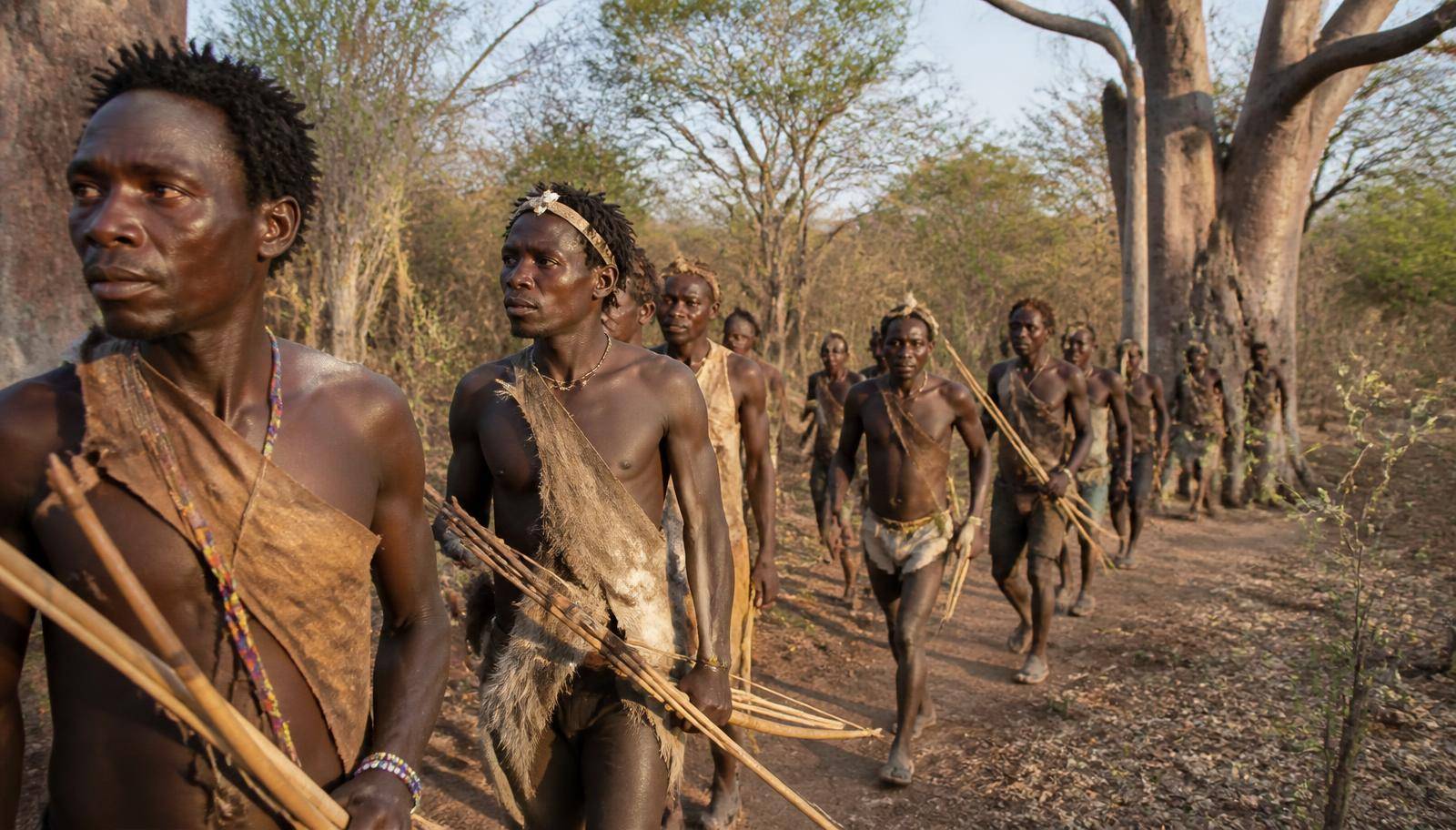
My first morning in a Hadzabe camp, I nearly got left behind in the first ten minutes. We had walked out of the grass huts before six, four of us plus three men with bows, and I was still adjusting my pack when the group simply dissolved into the commiphora scrub. No signal, no discussion. They had heard something. By the time I caught up, one of them was already standing under a tree with an arrow nocked, looking straight up at a hyrax I could not see even after he pointed at it twice.
That is the honest texture of a Hadzabe morning: fast, quiet, unnarrated, and entirely indifferent to whether you are keeping up. It bears almost no resemblance to the way these visits get described in brochures, which tend to run heavy on words like "ancient" and "untouched" and light on the fact that the man beside you is checking a text message when you get back to camp at nine.
The Hadzabe live around Lake Eyasi in north-central Tanzania, a hot, thorny, baobab- studded basin below the western wall of the Ngorongoro highlands. There are perhaps 1,300 of them. A few hundred still get most of their food from the bush, which makes them one of the very last communities on earth doing so. Their language has clicks and no known relatives. Their genetic lineage is among the deepest branches on the human family tree. All of that is genuinely remarkable, and all of it is also the reason so much writing about them slides into a kind of breathless anthropology-tourism that the Hadzabe themselves find fairly ridiculous.
I have been running safaris out of Arusha for close to two decades and taking guests into the Eyasi basin for most of that time. I have watched cultural tourism there work well and I have watched it curdle. What follows is a straight account: who the Hadzabe are, how they live now, what the land conflict around them actually looks like, and how to arrange a visit that leaves a family better off rather than merely photographed. If you are still shaping your wider itinerary, our complete Tanzania travel guide covers how a Lake Eyasi day fits alongside the parks.
Who Are the Hadzabe?
The Hadzabe are an indigenous people of north-central Tanzania whose economy has been built, for as far back as anyone can trace, on hunting wild game and gathering wild plants. You will see the name written several ways — Hadza, Hadzabe, Hadzabe'e, Hadzapi. In Hadzane, Hadza refers to the people and Hadzane to the language; the "-be" ending is a plural marker. Neighboring communities have historically called them Tindiga or Kindiga, terms most Hadzabe dislike, so use Hadzabe or Hadza.
The population sits somewhere around 1,200 to 1,500. Census figures for a mobile population in remote bush are inherently soft, and different researchers land on different numbers, but nobody credible puts it above 2,000. Of that total, the group that still gets the majority of its calories from foraging is much smaller — most estimates fall between 200 and 400 people, concentrated in the drier and more remote camps away from Mang'ola.
What makes them significant to researchers is depth. Genetic studies consistently place the Hadzabe on one of the oldest surviving branches of the human family tree, alongside a handful of other African populations. Their language cannot be linked to any other. Archaeological work in the Eyasi basin shows continuous human occupation stretching back tens of thousands of years, and Olduvai Gorge — the site that rewrote our understanding of human origins — lies less than a hundred miles north.
None of this makes them a window into the past, and this is the part I want to be precise about. The Hadzabe have not been sealed off from history. They have traded with farming and herding neighbors for centuries, adopted metal arrowheads forged by Datooga blacksmiths, absorbed Kiswahili loanwords, and dealt with colonial administrators, missionaries, government resettlement programs and NGOs across the past hundred years. What has persisted is a way of making a living, and the social arrangements that go with it — not an absence of change.
History of the Hadzabe
Reconstructing Hadzabe history is difficult because it was never written down and because foraging leaves a light archaeological footprint. What can be established is that people have been living in the Eyasi basin using stone tools and hunting the same animals for a very long time, and that the Hadzabe's genetic and linguistic isolation suggests a population that separated early and stayed relatively separate.
Before the twentieth century
Hadzabe oral history describes a much larger territory than they hold today, extending well beyond the Eyasi basin into the surrounding highlands and plains. Their own accounts of the deep past divide time into eras populated by earlier beings — the Akakaanebee, then the Xhaaxhanebee, then the Hamakwabee — with the present Hadzabe generation, the Hamayishonebee, arriving with the bow, the fire drill and the obligation to share food.
From roughly the eighteenth century onward, Bantu-speaking farmers and Nilotic and Cushitic herders moved into the region in growing numbers. The Isanzu farmed to the south, the Iraqw farmed the highlands, the Datooga pushed cattle into the valleys, and later the Sukuma arrived with large herds from the west. Relations were mixed rather than uniformly hostile — trade in honey, meat, iron and tobacco went both ways, and intermarriage occurred — but the long-term direction was a steady contraction of the land the Hadzabe could use freely.
The colonial era and after
German and then British administrations took an intermittent interest, mostly in the form of attempts to settle the Hadzabe and turn them into farmers. In 1927 and again in 1939 the British made organized efforts to move Hadzabe groups into fixed settlements and start them growing crops. Both collapsed. People accepted the tools and the food, stayed as long as it suited them, and then walked back into the bush.
Independent Tanzania tried again, more forcefully. Under the villagization policies of the late 1960s and 1970s, government programs at Yaeda Chini, Munguli and elsewhere attempted to concentrate Hadzabe into permanent villages with schools and clinics. The outcomes were grim: crowded settlement brought respiratory disease and measles, farming on marginal land failed, alcohol arrived, and mortality rose. Within a few years most families had returned to the bush. Similar efforts in the 1980s and 1990s, some run by missions rather than the state, followed roughly the same arc.
The lesson those episodes taught Hadzabe communities — and it is worth understanding before you form opinions about their choices — is that outside plans for their improvement have a poor track record. When a family is cautious about a school or a settlement scheme, that caution is grounded in specific memory, not superstition.
The land-rights turning point
The most important recent development is legal. For decades the Hadzabe held no recognized title to any of their territory, which made encroachment effectively costless. That began to change in 2011, when communities in the Yaeda Valley were granted a Certificate of Customary Right of Occupancy covering roughly 20,000 hectares — the first time a hunter-gatherer community in Tanzania had received formal collective tenure. Subsequent agreements, several linked to carbon-financing arrangements that pay the community to keep the land uncleared, have extended protected area and produced some of the more encouraging conservation results in northern Tanzania.
It is a real achievement and an incomplete one. The certificates cover part of the Hadzabe range, not all of it, and enforcement against incoming herds and cultivators still depends on the state's willingness to act. Around Mang'ola, where irrigated onion farming has boomed, the situation on the ground remains difficult.
Where They Live
Hadzabe territory centers on Lake Eyasi, a shallow, seasonal soda lake in the eastern arm of the Great Rift Valley. Administratively, the camps fall within Karatu District in Arusha Region and Mbulu District in Manyara Region, with a smaller presence extending toward Meatu and Singida. The land sits at roughly 3,300 to 4,600 feet, and the vegetation is dry deciduous woodland and thorn scrub — commiphora, acacia, tamarind, and the enormous baobabs that supply fruit, water storage and beehives.
The four main areas
| Area | Character |
|---|---|
| Mang'ola (northeast lakeshore) | The most accessible and by far the most visited. Irrigated onion farming has transformed the area over thirty years, drawing in migrant labor and squeezing Hadzabe land hard. Most tourist visits happen within an hour of here. |
| Yaeda Valley (east) | A broad valley between the Mbulu escarpment and the Dunduiya hills, and the heart of the land-titling work. Drier, emptier, and home to camps living closer to a full foraging economy. |
| Dunduiya and Sipunga hills | Rocky, broken country with caves and overhangs used as wet-season shelter. Hard to reach, rarely visited, and where some of the most traditional camps sit. |
| Western and southern lakeshore | Sparse camps mixing with Sukuma and Isanzu communities; more trade contact, less tourism. |
Camps move. A group of twenty or thirty people will occupy a site for a few weeks to a few months and then shift, following water, game, ripening fruit or a death in the camp — a site where someone has died is usually abandoned. This is why "the Hadzabe village" is a phrase worth being suspicious of. Permanent settlements do exist near Mang'ola and Yaeda Chini, but a camp that stays put year after year in a convenient spot beside a road has usually done so for reasons connected to visitors.
The Lake Eyasi Region
Lake Eyasi itself is a strange, beautiful, slightly desolate place. It is endorheic — no outlet — and shallow enough that in a dry year it retreats to cracked white soda flats you can walk across for a mile before finding water. In a wet year it spreads out across fifty miles, turns pink with flamingos, and floods the tracks. The Eyasi escarpment rises sharply on the northeastern side, and the highlands above it lead up toward Karatu and the Ngorongoro rim.
The heat is the first thing guests notice. Eyasi runs consistently hotter than Karatu or the crater highlands, often ten to fifteen degrees Fahrenheit warmer, and by ten in the morning the day has real weight to it. That single fact drives the entire logistics of a visit, and it is why an early start is not a preference but a requirement.
Who else lives here
- Datooga — Nilotic pastoralists, often identified by the brass and beadwork the women wear and by tattooed circles around the eyes. Their blacksmiths forge the metal arrowheads Hadzabe hunters use, which makes the two communities trading partners and, over grazing, frequent rivals.
- Iraqw (Mbulu) — Cushitic-speaking farmers of the highlands above the basin, historically the region's most successful cultivators and steadily expanding downslope.
- Isanzu and Sukuma — Bantu-speaking farmers to the south and cattle keepers pressing in from the west, the latter in large numbers since the 1990s.
- Migrant farm labor — Thousands of seasonal workers in the Mang'ola onion fields, a genuine boom industry and the sharpest source of land pressure on the northeast side of the lake.
Getting there
Almost everyone arrives from Karatu, the farming town on the road between Lake Manyara and the Ngorongoro Crater. The descent from Karatu to Mang'ola takes about ninety minutes to two hours on a road that has improved considerably but still turns difficult after heavy rain. From Mang'ola to a camp is another thirty to ninety minutes on tracks, sometimes finishing on foot. Yaeda Valley camps are further and can take three to four hours in total.
Traditional Hunter-Gatherer Lifestyle
The Hadzabe economy runs on immediate return. You go out, you find food, you eat it, largely that day. There is no meaningful storage, no herd accumulating in value, no field waiting to be harvested in four months. That single structural fact shapes almost everything else about how camps are organized.
Property is minimal and portable — a bow, arrows, a knife, a cooking pot, a water container, beads, a blanket, increasingly a phone. Shelters are built by women in a couple of hours from bent branches and grass, and abandoned without ceremony when the camp moves. In the wet season, rock overhangs in the Dunduiya hills do the job better than anything constructed.
Labor divides broadly by gender but without much rigidity. Men hunt and pursue honey. Women dig tubers, harvest baobab and berries, and gather most of the reliable calories. Children forage from a young age and are famously competent at it by six or seven. Nobody supervises anybody. What genuinely surprises visitors is how little instruction happens — children learn by tagging along and copying, and adults rarely correct them.
Sharing rules
Food sharing is not generosity in the Hadzabe context, it is obligation, and it is enforced socially rather than by any authority. A man who kills a large animal distributes it according to convention, and the portions are not his to allocate freely. Hoarding is met with mockery, which in a camp of thirty people you cannot leave without consequences is a highly effective sanction. Anthropologists have spent decades studying this system precisely because it produces a functioning egalitarian society with no enforcement mechanism beyond reputation.
A typical day
| Time | Activity | What it looks like |
|---|---|---|
| Before dawn | Camp wakes | Fires are revived, people talk quietly, arrows are checked and re-fletched. Nobody announces a plan; hunting parties form by drift, two or three men deciding to walk together. |
| 6:00–9:30am | Hunt and forage | Men move fast and mostly silently through the scrub after birds, hyrax, dik-dik and baboon. Women leave in a larger group with digging sticks and slings for tubers, berries and baobab. |
| Mid-morning | Honey | Honey is pursued whenever a hive turns up, often guided by the greater honeyguide bird. It is the single most prized food in the diet and the reason a hunt sometimes goes sideways for two hours. |
| Midday | Return and rest | Heat shuts the day down. Food is shared, smaller animals are roasted on the fire immediately, and the camp settles into shade for conversation, tool repair and sleep. |
| Afternoon | Craft and water | Bows are re-strung, arrows straightened over embers, beads worked, water fetched — sometimes a long walk in the dry season. Women's foraging often continues closer to camp. |
| Evening | Sharing and talk | The day's food is distributed by long-standing convention rather than by who killed it. Conversation, dispute-settling, storytelling and occasionally the epeme dance under a new moon. |
Food & Daily Life
The Hadzabe diet has been studied more intensively than almost any other on earth, largely because researchers interested in the human gut microbiome found in it a population eating something radically different from an industrial diet. The headline findings — extremely high fiber intake, seasonal swings in gut bacteria, an unusually diverse microbiome — have made "the Hadza diet" a minor wellness industry abroad, which the Hadzabe find funny when it is explained to them.
What people actually eat depends heavily on season, camp location and how much cash is circulating. In a remote Yaeda camp during a good dry season, the food is nearly all wild. In a camp outside Mang'ola in a bad year, maize bought with craft income may supply most of the calories.
| Food | Mainly obtained by | Season | Notes |
|---|---|---|---|
| Tubers (//ekwa, panjuko, shumuko) | Gathered mainly by women | Year-round; critical in the dry months | Fibrous wild roots dug with a hardened stick, roasted briefly and chewed for the juice. The dietary backbone — reliable when nothing else is. |
| Baobab fruit | Women and children | Peaks May–October | Chalky, tangy pulp pounded with water into a drink or mixed with seed paste. Very high in vitamin C and available in enormous quantities. |
| Berries (kongorobi, undushipi) | Everyone | Wet season and shortly after | Whole camps can live substantially on berries for weeks when a good stand fruits. Eaten on the spot as much as carried home. |
| Wild honey | Men, usually | Strongest June–November | Seven or so bee species are harvested, including stingless bees. Comb, larvae and all are eaten. Ranked above meat by most Hadzabe I have asked. |
| Small game (hyrax, dik-dik, birds) | Men | Year-round | The realistic daily catch. Roasted whole at the kill site or carried back and shared out. |
| Large game (impala, zebra, buffalo, giraffe) | Men, poisoned arrows | Opportunistic, increasingly rare | A significant event that draws in the whole camp and often neighboring camps. Far less common now than in the 1970s as wildlife has declined. |
| Traded maize, rice, ugali | Whole camp | Year-round, growing share | Bought or traded with cash from crafts, tourism and labor. Now a substantial part of many camps' calories, especially near Mang'ola. |
Honey and the honeyguide
The relationship between Hadzabe men and the greater honeyguide bird is one of the very few documented cases of cooperation between wild animals and humans that benefits both parties. A hunter whistles a specific call; the bird answers and flies ahead, waiting, leading him toward a hive that may be a mile off. He opens the hive with fire and an axe, takes the comb, and leaves wax and larvae behind for the bird. Neither side is trained. The behavior is learned on both sides and has probably been going on for thousands of years.
I have watched this maybe a dozen times and it has never stopped being extraordinary. It is also the moment on any walk when things stop feeling like a demonstration, because nobody is performing for you — the men are entirely absorbed in following a bird.
Water, health and daily rhythm
Water is the persistent constraint. In the dry season camps may be an hour's walk from a seasonal waterhole, and fetching it consumes a good part of someone's day. Health indicators are mixed: Hadzabe adults show very low rates of the metabolic diseases common in settled populations, and cardiovascular health is exceptional by any standard. Against that, infant and child mortality remains high, malaria and respiratory infection are common, and access to clinics is limited by distance. Alcohol, which arrived with settlement schemes and the Mang'ola labor economy, has done serious damage in some camps.
Language
Hadzane is the reason many linguists know the Eyasi basin exists. It uses click consonants — dental, alveolar and lateral — woven into ordinary words rather than used for emphasis, and to an English speaker's ear the effect is a language punctuated by small precise sounds that seem to come from outside speech entirely.
For a long time Hadzane was grouped with the Khoisan languages of southern Africa, essentially because both use clicks. That classification has not survived scrutiny. No systematic correspondences in vocabulary or grammar have been demonstrated, and the current consensus treats Hadzane as an isolate — a language with no living relatives anywhere. Given that most language isolates are the last survivors of families that died out, Hadzane is likely the final trace of something very old.
Roughly a thousand people speak it fluently. That is small enough to be classified as endangered, but transmission to children inside the camps remains reasonably intact, which distinguishes it from languages already down to elderly speakers. The pressures are the familiar ones: schooling in Kiswahili, intermarriage, wage labor, and the gravitational pull of a national language.
Family & Community
A Hadzabe camp is typically twenty to thirty people, occasionally more when food is abundant, and the composition changes constantly. Households are nuclear — a couple and their children — but the camp binds together through a loose network of siblings, in-laws and old friendships, and people move between camps freely. There is no rule requiring a couple to live with the husband's family or the wife's; in practice young couples often spend early years near the wife's relatives.
Marriage is informal by the standards of most Tanzanian communities. There is no bridewealth, no elaborate ceremony, and no formal divorce procedure. A couple begins living together and is regarded as married; if it does not work, they separate and both remarry without stigma. Most marriages are monogamous. Serial monogamy over a lifetime is common.
Children are raised loosely and confidently. Toddlers are carried constantly and nursed on demand; older children run in mixed-age groups, forage successfully by around age six, and are given a striking amount of autonomy — including with knives and fire — at ages that alarm most visiting parents. Grandmothers matter enormously. The "grandmother hypothesis," one of the more influential ideas in human evolutionary biology, came substantially out of research among the Hadzabe, where older women provision grandchildren at rates that measurably affect child survival.
Belief and ceremony
Hadzabe cosmology is comparatively spare. The sun, Ishoko, and the moon, Haine, feature prominently, and there is no priesthood, no shamanic role, no organized doctrine and little concern with an afterlife. The central ritual is the epeme dance, performed on moonless nights: men eat epeme meat — specific portions of larger animals reserved for initiated men — and then dance one at a time in the dark, in a bell-and-feather costume, while women sing and respond. It is not a performance for outsiders, and you should not expect or ask to see it.
Traditional Hunting Practices
The bow is made from a single stave, usually of a dense local hardwood, backed and strung with animal sinew. Draw weights are high — commonly sixty to over a hundred pounds — which is why guests who ask to try one usually cannot bring it back more than a few inches. Arrows come in three broad types: plain wooden-tipped shafts for birds and small mammals, metal-tipped arrows traded from Datooga blacksmiths for medium game, and poisoned arrows for anything large.
The poison is made by boiling down sap from the desert rose, Adenium obesum — a cardiac glycoside, applied to the shaft just behind the head so the hunter's hands stay clear of it. A large animal shot with a poisoned arrow is not killed on the spot; it is tracked, sometimes for hours, sometimes into the following day. That tracking is where Hadzabe skill is most visible, and it is genuinely hard to overstate how good it is. I have watched a man follow a blood trail across bare rock by reading disturbed dust.
Realistically, the daily catch is small: guinea fowl, francolin, hyrax, dik-dik, sometimes a baboon. Larger animals — impala, zebra, warthog, occasionally buffalo or giraffe — are rare and were considerably less rare fifty years ago. Wildlife across the Eyasi basin has declined sharply as livestock and cultivation have expanded, and several camps that once hunted big game now essentially do not.
On the legal question: Tanzanian law makes specific provision for Hadzabe subsistence hunting within their traditional areas, distinguishing it from poaching. This is an important distinction and it is frequently muddled in online commentary. The Hadzabe hunt with bows, for food, in numbers that research has repeatedly found to be ecologically negligible.
Relationship With Nature
It would be easy, and slightly dishonest, to describe the Hadzabe as living in mystical harmony with nature. What is accurate is more interesting: their knowledge of the landscape is encyclopedic and entirely practical. A hunter can name several hundred plants and tell you which ones are food, which are medicine, which make a bowstring, which attract bees and which indicate water below ground. Tracking, birdsong, wind direction, the age of dung, the behavior of a baboon troop — all of it is read continuously, without comment.
The ecological outcome of this way of living is well documented. Studies of the Yaeda Valley have repeatedly found land under Hadzabe management in better condition — more tree cover, less erosion, more wildlife — than adjacent farmed or heavily grazed land. Since the 2011 land certificates, carbon-finance programs have paid Hadzabe communities to keep that land intact, and the deforestation rate inside the titled area has been markedly lower than outside it. That is the strongest practical argument for Hadzabe land rights: it works.
There are limits to the romance. Hadzabe hunters kill animals, including species travelers on safari are sentimental about, and they do so without apology. Baboons in particular are a common food. Visitors who have spent three days photographing wildlife in Ngorongoro sometimes find that jarring. It is worth thinking through before you come, because a morning in the bush with people who eat what they find is not a game drive with a cultural theme.
Modern Challenges
Nearly every difficulty the Hadzabe face traces back to land. Their territory has contracted by something on the order of ninety percent over the past century. What remains is fragmented, and the pressures on it come from several directions at once.
- Agricultural expansion. Irrigated onion farming around Mang'ola has been enormously profitable and has drawn in migrants from across Tanzania. Fields have replaced foraging ground, and water extraction has affected the springs the whole area depends on.
- Livestock encroachment. Datooga and Sukuma herds moving into the valleys strip understory vegetation, displace game and foul waterholes. This is the pressure Hadzabe men complain about most consistently.
- Wildlife decline. Fewer animals means fewer successful hunts, which pushes camps toward traded maize, which pushes them toward cash, which pushes them toward tourism and wage labor.
- Conservation boundaries. Protected-area designations have at times excluded Hadzabe from land they historically used, an irony given their ecological record. A widely reported proposal in the 2000s to lease a large block of Hadzabe land to a foreign hunting concession was abandoned only after sustained protest.
- Alcohol and health. Proximity to settlements and to cash income has brought serious alcohol problems to some camps. Combined with limited clinic access, child mortality remains far above the national average.
- Education trade-offs. Schooling requires leaving camp, often boarding, and historically has come with pressure to abandon Hadzane and Hadzabe identity. Families weigh a genuine benefit against a genuine cost, and outsiders should be slow to judge how they land on it.
- Tourism itself. Where it is brokered by outsiders and structured around staged encounters, tourism has created dependency and distorted camp life. Where it is controlled by the households involved, it has become a useful and reasonably dignified income stream.
Responsible Cultural Tourism
Let me be direct, because vagueness here helps nobody. Some Hadzabe tourism is exploitative. There are roadside camps near Mang'ola whose entire purpose is receiving vehicles, where residents wait through the morning to perform an arrow demonstration and a dance for successive groups, where a broker in town collects the fee and passes on a fraction, and where nothing the visitor sees is a real morning in anyone's life.
There is also Hadzabe tourism that works. Arrangements where a specific household agrees to host, sets the price, keeps the money, decides how long the morning runs, and can say no on a given day. Arrangements where the walk starts at six because that is when the hunt starts, not at ten because that is when the tourists arrive. Arrangements where the craft sales go straight to the maker.
The difference is almost entirely structural, and you cannot see it from the outside once you are standing in the camp. You have to ask before you book.
Questions to ask your operator
- Which specific camp or family are we visiting, and how long have you worked with them?
- What is the total fee, and how much of it reaches the household directly?
- What time do we leave, and what time does the walk begin?
- Does our guide speak Hadzane, or are we translating through Kiswahili?
- Is anything scheduled — a dance, a demonstration — or does the morning follow the camp?
- What happens if the family would rather not host visitors that day?
- Can we buy crafts directly from the people who made them?
A good operator answers all seven without hesitation. A vague answer to the second and third is the clearest warning sign there is. Our guide on how to book a Tanzania safari goes deeper into vetting operators generally, and safari etiquette in Tanzania covers the broader conduct questions that apply everywhere on a trip.
Comparing it with a Maasai visit
Travelers often ask how a Hadzabe morning differs from a Maasai village visit. Structurally, quite a lot. Maasai communities are large, politically organized, and have decades of experience negotiating with the tourism industry on reasonably equal terms; many run their own programs. The Hadzabe are a population of about 1,300 with no formal leadership structure, which makes collective bargaining with operators much harder and makes the individual operator's ethics disproportionately important. Both visits can be excellent. The Hadzabe one requires more care in how it is arranged.
Visiting a Hadzabe Community
Practically, most travelers fit Eyasi in as a day from Karatu, either before or after the crater. It works, but the early start is punishing. If your schedule permits an extra night, staying near Mang'ola transforms the day.
| Format | Length | What happens | Best for |
|---|---|---|---|
| Morning hunt walk | 2–4 hours from first light | You leave camp with two or three men before sunrise and follow at their pace, off-path, mostly in silence. Some mornings produce a bird or a hyrax; many produce nothing at all. | Fit adults and older teens who want the real thing and can accept an empty-handed morning |
| Women's foraging walk | 2–3 hours | Digging tubers, harvesting baobab, identifying plants used for food and medicine, with children usually along. Slower, more conversational, and in my view consistently the more interesting half of the day. | Families, photographers, anyone more interested in the daily economy than in the hunt |
| Camp time and craft | 1–2 hours | Sitting with the group, arrow-making, fire-starting by friction, bead and jewelry work, buying directly from the makers. | Everyone; usually the natural second half of a morning visit |
| Full day with Datooga visit | 6–8 hours | Hadzabe morning followed by a Datooga homestead — the blacksmiths who forge Hadzabe arrowheads and the pastoralists whose herds now press hardest on Hadzabe land. | Travelers with a day to spare who want the whole picture rather than one community in isolation |
| Overnight fly-camp near Eyasi | 1–2 nights | Staying in the Eyasi area rather than day-tripping from Karatu, which is the only way to be on a hunt at 6am without a brutal 3am start. | Anyone serious about the experience; strongly recommended if the schedule allows |
When to go
June through October is the reliable window. The bush is dry and open, hunting is at its most active, roads are passable, and animals concentrate near remaining water. January and February are workable between rains, and the berry season means the foraging side of the day is abundant. March through May can be genuinely difficult — tracks turn to mud, camps move into the hills, and access becomes unpredictable. November and December sit in between.
What to bring
- Closed walking shoes with a decent sole. Thorn is everywhere and you will be off-path.
- Long, light trousers and long sleeves in neutral colors. Nothing bright, nothing noisy.
- At least two liters of water per person, carried by you.
- A hat and high-SPF sunscreen; the sun gets brutal after nine.
- Cash in small Tanzanian shilling notes for buying crafts directly.
- A camera you can operate quietly and quickly, with a mid-range zoom.
- Nothing to give away — no sweets, pens, clothes, alcohol or tobacco.
Behavior in camp
- Greet people individually when you arrive, and let your translator introduce you properly.
- Sit when the group sits. Standing over seated people reads exactly the way it looks.
- Stay quiet on the walk and behind the hunters, not alongside them.
- Ask before touching a bow, an arrow or anything else. The poison on hunting arrows is real.
- Direct questions to people through your translator rather than talking about them in English.
- Ask about now — the rains, the honey, the grazing — not only about tradition.
- Accept that if a family says today is not a good day, that is the end of it.
If this is your first trip to Tanzania and you are unsure how a cultural day sits alongside game drives, our guide for first-time safari visitors explains how to pace an itinerary so that a morning like this does not get squeezed into a transfer day.
Photography Etiquette
Photography is the single most fraught part of a Hadzabe visit, because the community has been photographed relentlessly for decades and because the visual imagery — bows, skins, fire — is exactly what gets a picture shared. It is worth deciding in advance what kind of photographer you intend to be that morning.
- Ask, every time, for portraits. Through your translator, and out loud. A raised camera and eyebrows is not consent, it is a shortcut.
- Accept refusal instantly. No negotiating, no waiting until the person turns away, no long lens from thirty feet.
- Do not photograph children without a parent's agreement. This applies here exactly as it would at home.
- Put the camera down for the first thirty minutes. The pictures you take after people have gotten used to you are better anyway, and the difference is visible.
- Do not direct people. Asking someone to re-draw a bow for a better angle turns a morning into a photo shoot, and it is how camps become performances.
- Be careful with a dead animal. If something is killed, ask before photographing it. The image circulates differently than you expect.
- Show people their pictures. Turning the screen around costs nothing and changes the whole dynamic of the exchange.
- Think about captions. "Stone age tribe" and "last of the..." framing does real harm to a community fighting a land-rights case that depends on being seen as contemporary citizens.
Common Misconceptions
| The claim | The reality |
|---|---|
| The Hadzabe are 'stone age people' frozen in time | They are contemporary Tanzanians who have been trading with farming neighbors for centuries, carry national ID cards, vote, use metal arrowheads bought from Datooga blacksmiths, and in many camps own a phone. What is old is the foraging economy, not the people's awareness of the world. |
| They live entirely on wild food | Only a minority now feed themselves primarily from the bush. Most camps mix foraged food with maize and rice obtained through trade, craft sales and tourism income. The share varies enormously by camp and by season. |
| The Hadzabe are related to the San of southern Africa | The click sounds invite that assumption, but linguists have found no demonstrable relationship between Hadzane and the Khoisan languages, and the genetic evidence points to an extremely deep separation. Hadzane is classified as an isolate. |
| They have refused all education and modern services | The picture is far more mixed. There are Hadzabe schoolteachers, guides, students and community leaders. Boarding schools have had a complicated history in Eyasi, and many families weigh the value of education against the cost of separating children from camp life — a calculation, not a refusal. |
| Hadzabe hunting threatens Tanzania's wildlife | Subsistence hunting by a population of roughly 1,300 people using bows has negligible impact compared with habitat loss, livestock encroachment and commercial poaching. Research in the Yaeda Valley has repeatedly found Hadzabe-held land in better ecological condition than the farmland around it. |
| All Hadzabe camps welcome tourists | They do not. Some households host visitors regularly and rely on the income. Others want nothing to do with it and are entitled to that. Any operator promising access to a 'remote untouched camp' should be treated with suspicion. |
Hadzabe Fact Box
| Name | Hadzabe (also Hadza, Hadzabe'e, Hadzapi); Hadza is the people, Hadzane the language |
|---|---|
| Population | Roughly 1,200–1,500 people; around 200–400 living primarily by foraging |
| Language | Hadzane — a click language and a genuine linguistic isolate |
| Homeland | Lake Eyasi basin: Mang'ola, Yaeda Valley, Dunduiya hills, western lakeshore |
| Regions / districts | Karatu and Mbulu districts, Arusha and Manyara regions |
| Economy | Hunting, gathering, wild honey; increasingly craft sales, tourism and traded maize |
| Social structure | Small mobile camps of 20–30 people; no chiefs, no hereditary authority |
| Shelter | Grass-and-branch huts built in a few hours; caves and rock overhangs in the wet season |
| Neighbors | Datooga pastoralists, Iraqw and Isanzu farmers, Sukuma cattle keepers |
| Distance from Karatu | Roughly 2.5–4 hours by road depending on camp and season |
Responsible Visitor Guidelines
If you remember nothing else from this article, remember these eight. They are the difference between a visit a family is glad happened and one they endure.
- Book through an operator who can name the household and explain the payment.
- Arrive at dawn and work on the camp's schedule, not your own.
- Bring no gifts — especially no alcohol, tobacco or sweets.
- Ask permission for every photograph of a person, and accept no.
- Buy crafts directly from their makers and pay the asking price.
- Use a Hadzane-speaking translator and ask real questions.
- Keep the group small — four to six visitors, never a convoy.
- Talk about the community afterward as citizens with a land claim, not as a relic.
Frequently Asked Questions
Common Questions
Frequently Asked Questions
The Hadzabe — also written Hadza, Hadzabe'e, or Hadzapi — are an indigenous people of north-central Tanzania who live around Lake Eyasi, in the rangelands below the Ngorongoro highlands. They number roughly 1,200 to 1,500 people in total, and somewhere between 200 and 400 still live primarily by hunting wild game and gathering tubers, berries and wild honey. Genetic studies place them among the oldest continuously distinct human lineages on the planet, and their language, Hadzane, is a click language that has no proven relationship to any other language on earth. What matters practically is this: they are Tanzanian citizens, not a living exhibit, and their situation today is defined less by ancient tradition than by a very modern fight over land.
Their territory sits in the Lake Eyasi basin, mostly in Karatu and Mbulu districts of Arusha and Manyara regions, with camps scattered across the dry country around Mang'ola, the Yaeda Valley, the Dunduiya hills and the western shore of the lake. The whole area lies between about 3,300 and 4,600 feet in elevation and is hot, thorny, seasonally dry bush — commiphora scrub, acacia, and enormous baobabs that supply fruit, water and beehives. It is roughly three to four hours by road from Karatu, which puts it within reach of a northern-circuit safari but far enough off the main route that it needs a dedicated day rather than a quick detour.
Yes. Visits are legal, organized through licensed operators or the district cultural tourism arrangements, and have been happening around Mang'ola for over two decades. A typical visit costs somewhere between $30 and $80 per person depending on the camp, the format and the season, plus vehicle and guide costs. What varies enormously is quality. A poor visit is a forty-minute stop at a roadside camp where people wait for vehicles, perform an arrow demonstration and a dance, and pose for photographs. A good visit is an early-morning hunt or foraging walk with two or three men or women, on their schedule, with a translator, ending when they decide it ends.
It can be, and there are serious researchers and Hadzabe advocates on both sides of this question. The honest answer is that tourism is now a meaningful part of the Eyasi economy and it is not going away, so the useful question is how you visit rather than whether. The visits I would defend share a few features: the household controls the terms and can say no, payment is agreed in advance and goes to the people you meet, nothing is staged that would not otherwise happen, photography is permission-based, and no alcohol or tobacco enters the camp. The visits I would not defend are the ones where a broker collects the fee, the camp exists mainly to receive vehicles, and people spend their morning waiting to be looked at. Choose an operator who can explain, specifically, which of those two you are buying.
Hadzane, a language built around click consonants and considered a language isolate — decades of comparative work have failed to link it convincingly to Khoisan languages of southern Africa or to anything else. Roughly 1,000 people still speak it fluently, which puts it firmly in the endangered category, though transmission to children within the camps remains fairly strong. Many Hadzabe, particularly younger men and those in contact with tourism or with neighboring Datooga and Iraqw communities, also speak Kiswahili. Very few speak English. Every worthwhile visit therefore runs through a translator, and the difference between a guide who speaks Hadzane and one who works through a Kiswahili intermediary is the difference between a conversation and a viewing.
Yes, though far less than a generation ago and with far less game available. Men hunt with handmade bows drawn at seventy pounds or more, using untipped wooden arrows for birds and small game, metal-tipped arrows for medium animals, and poisoned arrows — the poison comes from the desert rose, Adenium — for larger prey. Baboon, dik-dik, impala, hyrax, guinea fowl and francolin are the realistic daily targets; large antelope and buffalo are rare events. Hunting is legal for the Hadzabe under specific subsistence provisions in their traditional areas, but shrinking territory, livestock encroachment and declining wildlife mean many camps now supplement with maize, and some men hunt only occasionally. If a guide promises you a kill, they are selling you something they cannot deliver.
Move at their pace and keep quiet on the walk — you are with people who are listening for animals. Ask before photographing anybody, and stop when a camera clearly bothers someone. Don't hand out gifts, sweets, money or, above all, alcohol. Don't touch weapons or belongings without being invited. Sit down when the group sits rather than standing over people. Ask your translator to relay questions rather than talking about a person in front of them in English. And take an interest in the present tense: what the rains did this year, where the honey is, what the grazing pressure looks like. People notice the difference between being asked about their lives and being examined.
Yes, and in some ways children travel well here — camps are relaxed, Hadzabe children are around, and there is no formality to breach. The practical limits are physical: a real foraging walk covers two to four miles over rough thorny ground, often at speed, in heat that climbs quickly after 9am. Kids under about eight usually manage the digging-and-berries portion of the morning far better than the hunt. The other consideration is expectation. Animals get shot on these walks, and a small bird or a hyrax may be killed and cooked in front of you. Talk it through with your children beforehand, and tell your operator their ages so the walk can be shaped accordingly.
Conclusion
The Hadzabe do not need visitors to validate their way of life, and they were not waiting around for tourism to discover them. What they are dealing with is land: a territory that has shrunk by something like ninety percent in a century, pressed by farms in Mang'ola, Datooga herds in the valleys and conservation boundaries at the edges. A well-run visit puts money directly into the hands of the households who host you and gives their land-rights case a constituency of people abroad who understand what is at stake. A badly run one turns a morning of somebody's life into a performance and leaves the broker richer than the family. The gap between those two outcomes is almost entirely a matter of how the day is arranged — which is why it is worth asking hard questions before you book.
The morning I described at the start ended with nothing caught. We walked back into camp around nine, empty-handed, and the men sat down by the fire and started straightening arrows and talking about where the honey was. Somebody's phone rang. A woman came back with a sling full of tubers and everyone ate. It was, by any measure, an ordinary morning — and that is exactly why it was worth being there. The Hadzabe are not a spectacle. They are people making a living in a difficult landscape, defending their right to keep doing it, and occasionally willing to let a stranger tag along and watch how it is done.
Plan a Lake Eyasi Visit With Olympus Adventure
Olympus Adventure is a Tanzanian-owned safari company based in Arusha. We have been taking guests into the Eyasi basin for years, and we work with specific households near Mang'ola and toward the Yaeda Valley rather than with whoever a broker puts in front of us that morning. We can tell you which family you will meet, what they are paid, and what happens if they would rather not host that day.
The version of this day we recommend starts the night before. You sleep near Eyasi, walk out with two or three hunters at first light, come back for tubers and baobab with the women's group, spend an hour in camp buying arrows and beadwork straight from the makers, and — if you have time — visit a Datooga homestead in the afternoon to see where the arrowheads come from and why the grazing question matters so much.
It slots naturally into a northern circuit itinerary, usually before or after Ngorongoro and often alongside Lake Manyara. Many guests pair it with a Maasai community visit for a fuller picture of how differently people live within a hundred miles of each other in northern Tanzania.
Send us your dates, your group size and the ages of anyone under twelve, and we will propose a specific format, a specific community and an honest account of where your money goes. If we think the day is not right for your group, we will say so.
Keep Reading
More Tanzania Culture Guides
Culture
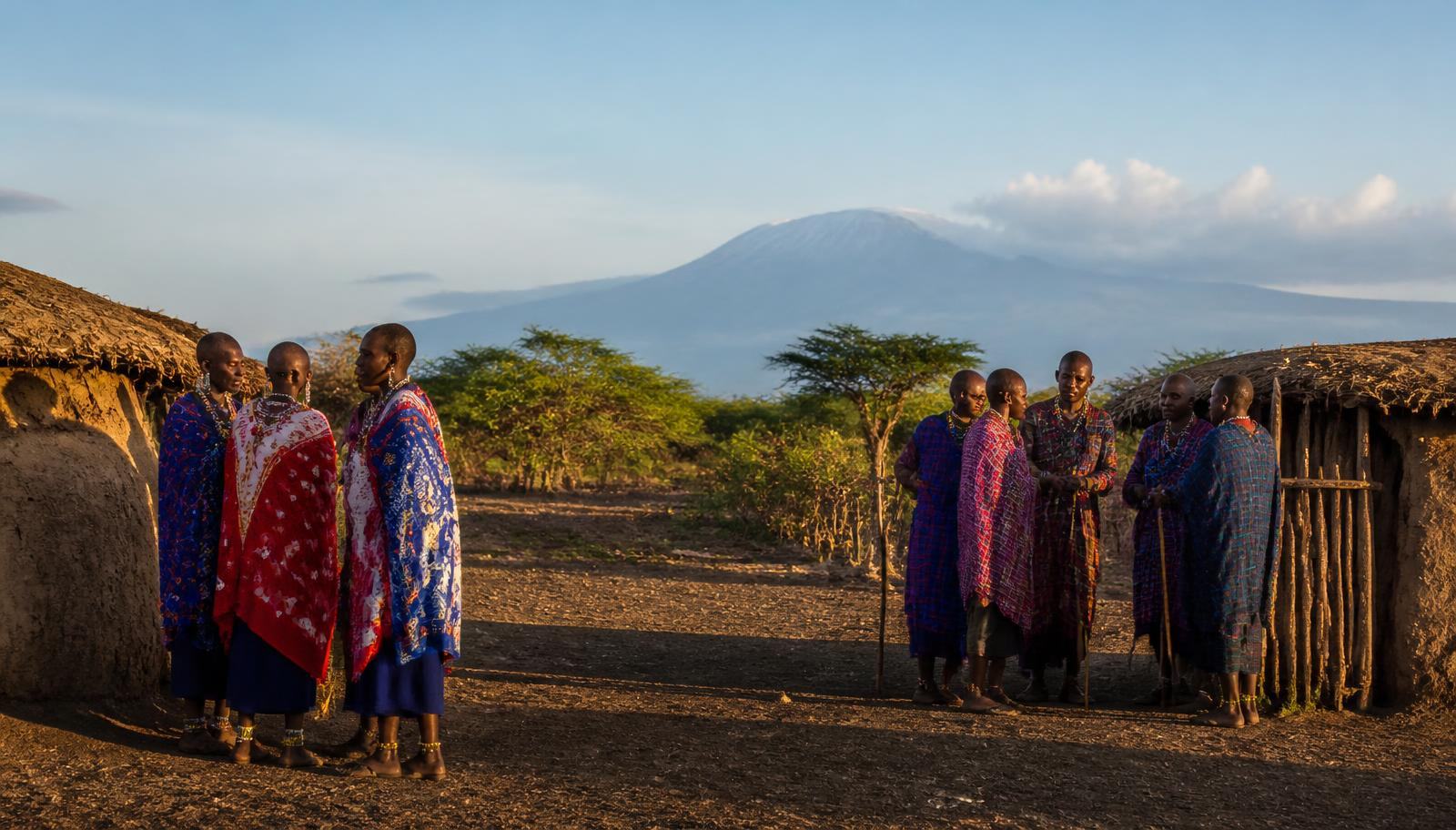
The Maasai Tribe in Tanzania: History, Culture, Traditions & Responsible Tourism
Culture
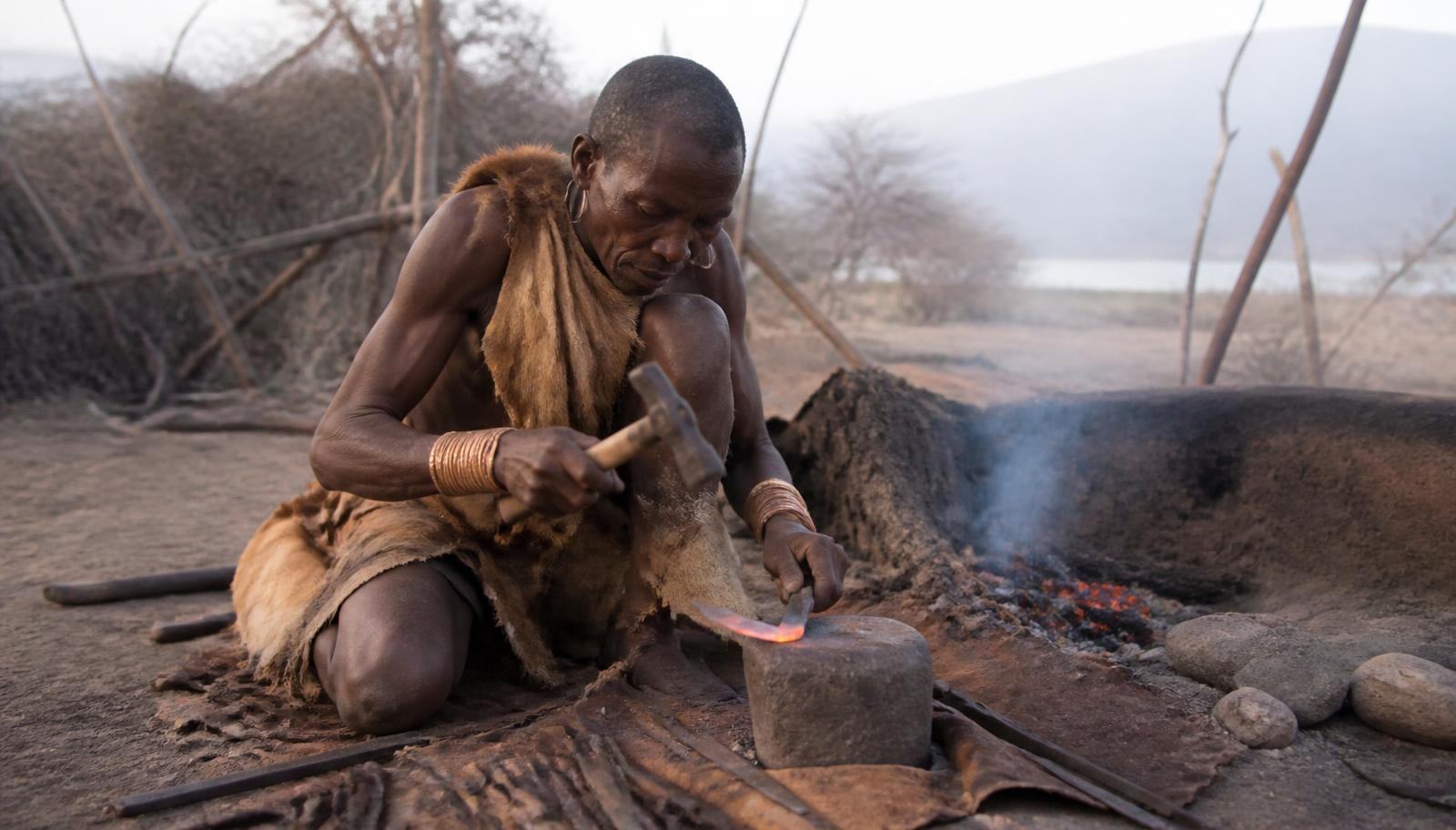
The Datoga Tribe in Tanzania: History, Culture & Responsible Cultural Tourism
Culture
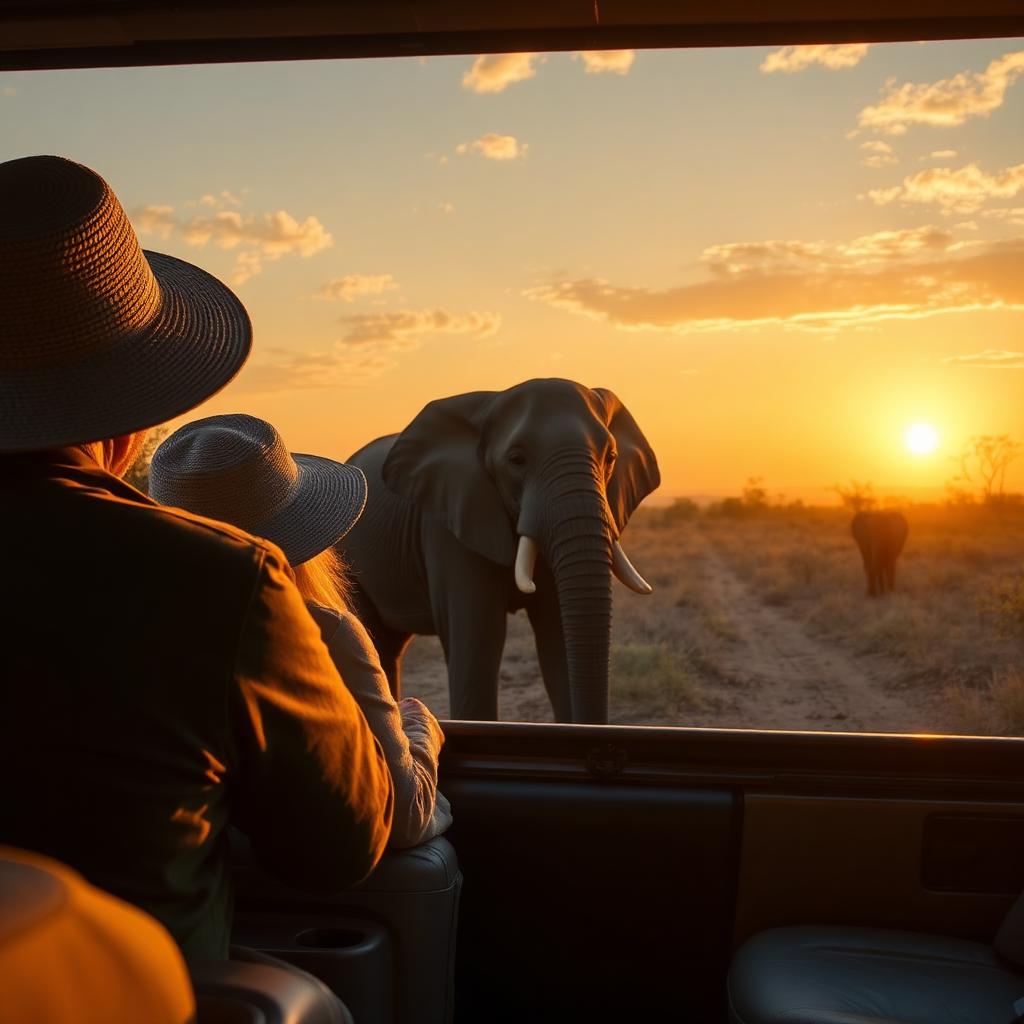
Tanzania Safari Etiquette: Essential Do's and Don'ts for First-Time Visitors
Safari Guides
The Ultimate Tanzania Travel Guide: Everything You Need to Know Before You Visit
Kilimanjaro
Mount Kilimanjaro Climbing Guide: Everything You Need Before Your Adventure
Zanzibar
Zanzibar Travel Guide: Everything You Need Before Visiting the Island
Plan Your Journey
Add a respectful Hadzabe cultural day to your Tanzania safari
We work directly with Hadzabe households near Lake Eyasi — dawn starts, real foraging walks, fees paid to the families who host you. Tell us your dates and we'll build it into your northern circuit itinerary.
- TALA Licensed Operator
- 4.9 ★ Guest Rating
- No Booking Fees