
Tanzania Safari Guide
Lake Manyara National Park Guide: Wildlife, Timing and Whether It Belongs in Your Safari
What the park is actually like, what you can realistically expect to see, how much time to give it, and how it compares with Tarangire and Ngorongoro — from our Arusha-based safari team.

Lake Manyara sits on the road between Arusha and the Ngorongoro highlands, which means almost every northern circuit itinerary passes its gate. Some include it, some drive by. Travelers hear two contradictory things about the park: that it is a compulsory stop for tree-climbing lions, or that it is a half-day filler not worth the fee. Neither is accurate.
This guide answers one question: what is Lake Manyara like, and does it deserve a place in your trip? For the wider planning picture — routing, budget and how the northern parks fit together — see our Tanzania safari itineraries guide.
The Short Answer
Lake Manyara is a small, scenically striking park with an unusual mix of habitats packed into a narrow strip between the Rift Valley escarpment and an alkaline lake. It is strong on forest, elephants, primates and birds, and modest on open-plain predator viewing compared with the larger parks further west.
Most travelers give it a half day on the way to the highlands, which works well. It rewards a full day if you are interested in birds or forest habitat. It is not a park to build a safari around, and there are itineraries where skipping it is the right call. We will say where those are.
Where Is Lake Manyara National Park?
The park lies in northern Tanzania, a few hours by road west of Arusha, at the foot of the western wall of the Great Rift Valley. The main gate sits beside the town of Mto wa Mbu, where the road from Arusha begins its climb towards the Ngorongoro Conservation Area. That position is the reason so many itineraries include it: the park is directly on the route, not a detour.
The park's shape follows its geography. It is long and narrow, running north to south along the shoreline, with the escarpment on one side and the lake on the other. The lake itself occupies a large share of the protected area, so the drivable land is a comparatively thin band. That is worth knowing because it shapes the whole experience: you move along a corridor rather than range across open country.
Driving distances from Arusha are modest by Tanzanian standards, and the road is sealed for most of the way. Most travelers reach the gate in the first half of the morning if they leave Arusha early.
What Makes Lake Manyara Different?
Three things separate Manyara from the other northern parks.
Habitat variety in a small space
Within a short drive you pass from dense groundwater forest into acacia woodland, then onto open floodplain and finally to the lake shore. Few parks in Tanzania change character that quickly, and the transitions are interesting in their own right, independent of what you see.
Water from the escarpment
Springs emerging at the base of the Rift wall feed the forest year-round, which is why tall trees grow here in a region that is otherwise dry. This is groundwater forest rather than rainforest, and it supports species you would not expect this close to the plains.
Scale of the setting
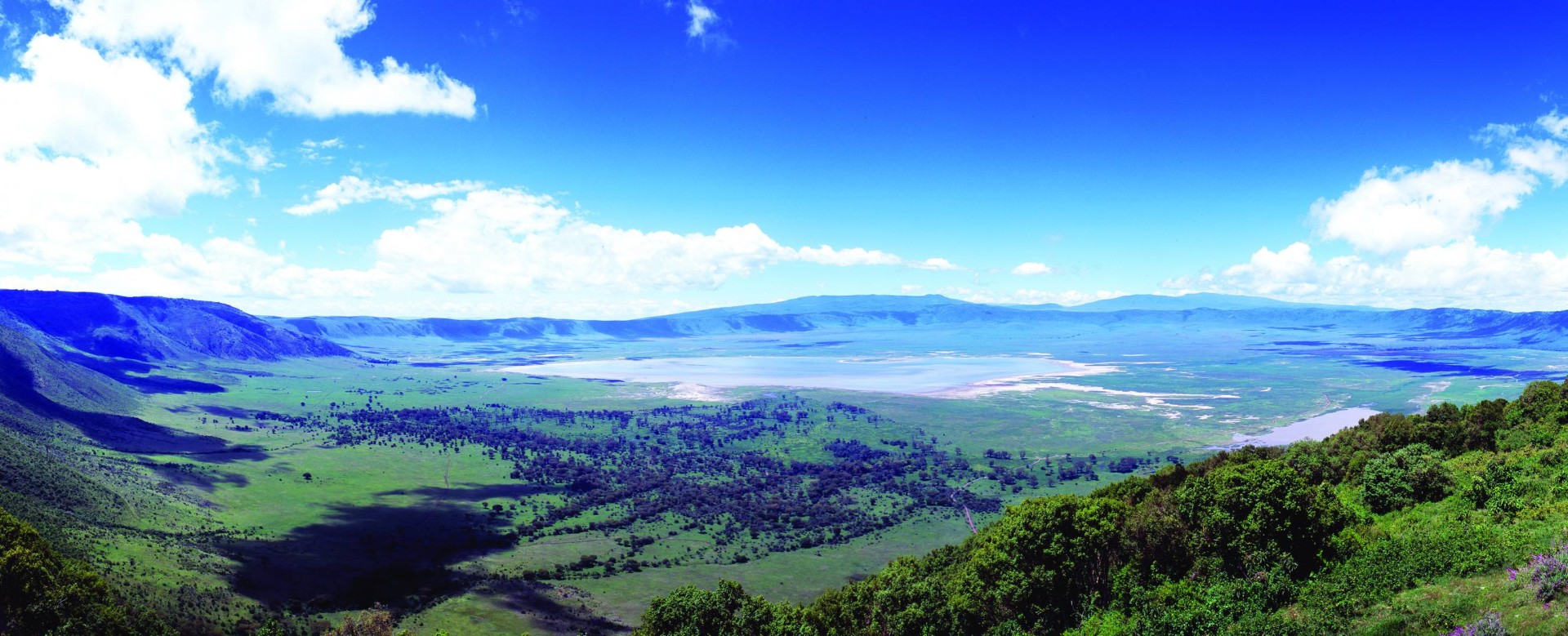
The escarpment rises several hundred meters directly behind the park. It is one of the few places on the circuit where the Rift Valley is visually obvious rather than a fact on a map, and it gives the park a sense of enclosure that the open savannas lack.
Landscape and Ecosystems
The table below sets out the main zones you drive through and what each is good for.
| Zone | Character | What you tend to find |
|---|---|---|
| Groundwater forest | Tall fig and mahogany fed by springs from the escarpment | Baboon, blue monkey, elephant, forest birds; shaded and cool even at midday |
| Acacia woodland | Open canopy between forest and floodplain | Giraffe, impala, elephant; the habitat most associated with lions resting in trees |
| Floodplain grassland | Open ground between woodland and shoreline | Buffalo, zebra, wildebeest, waterbuck, raptors overhead |
| Lake shore and marsh | Alkaline shallows, seasonal reed and mud flats | Waterbirds, flamingo when conditions suit, hippo pools nearby |
| Rift Valley escarpment | The wall rising several hundred meters above the park | Backdrop for photography, klipspringer and raptors on the slopes |
The lake is alkaline and shallow, and its extent changes with rainfall. In wetter periods water pushes towards the floodplain and some tracks close; in drier periods the shoreline retreats and exposes broad mud flats. Neither state is better or worse — they simply produce different days.
Wildlife You Can See
Manyara holds a good spread of species, but it is a habitat park rather than a density park. The table below reflects general likelihood over a half to full day of driving, not a guarantee for any single visit.
| Species | Likelihood on a half to full day | Where to look |
|---|---|---|
| Elephant | Good on most full days | Groundwater forest and the woodland belt, often close to the track in the northern section. |
| Baboon and blue monkey | Very high | Throughout the forest near the entrance gate; baboon troops here are large and easy to watch. |
| Buffalo | Good | Open floodplain and marsh margins between the forest and the lake shore. |
| Giraffe | Good | Acacia woodland and the more open ground south of the forest. |
| Hippo | High at the hippo pool | Permanent pools near the northern floodplain; water levels affect how close you can get. |
| Lion | Possible, not a given | Woodland and floodplain edges; resting in trees at times, but never reliably. |
| Leopard | Uncommon sighting | Dense forest and escarpment woodland; present but rarely seen on a short visit. |
| Zebra, impala, waterbuck, warthog | High | Floodplain grassland between the forest and the shoreline. |
| Flamingo and waterbirds | Varies with water level | Shallow lake margins; numbers change through the year and between years. |
For a fuller treatment of East African species and behaviour, our Serengeti wildlife guide goes into far more depth than is useful to repeat here.
Elephants and Large Mammals
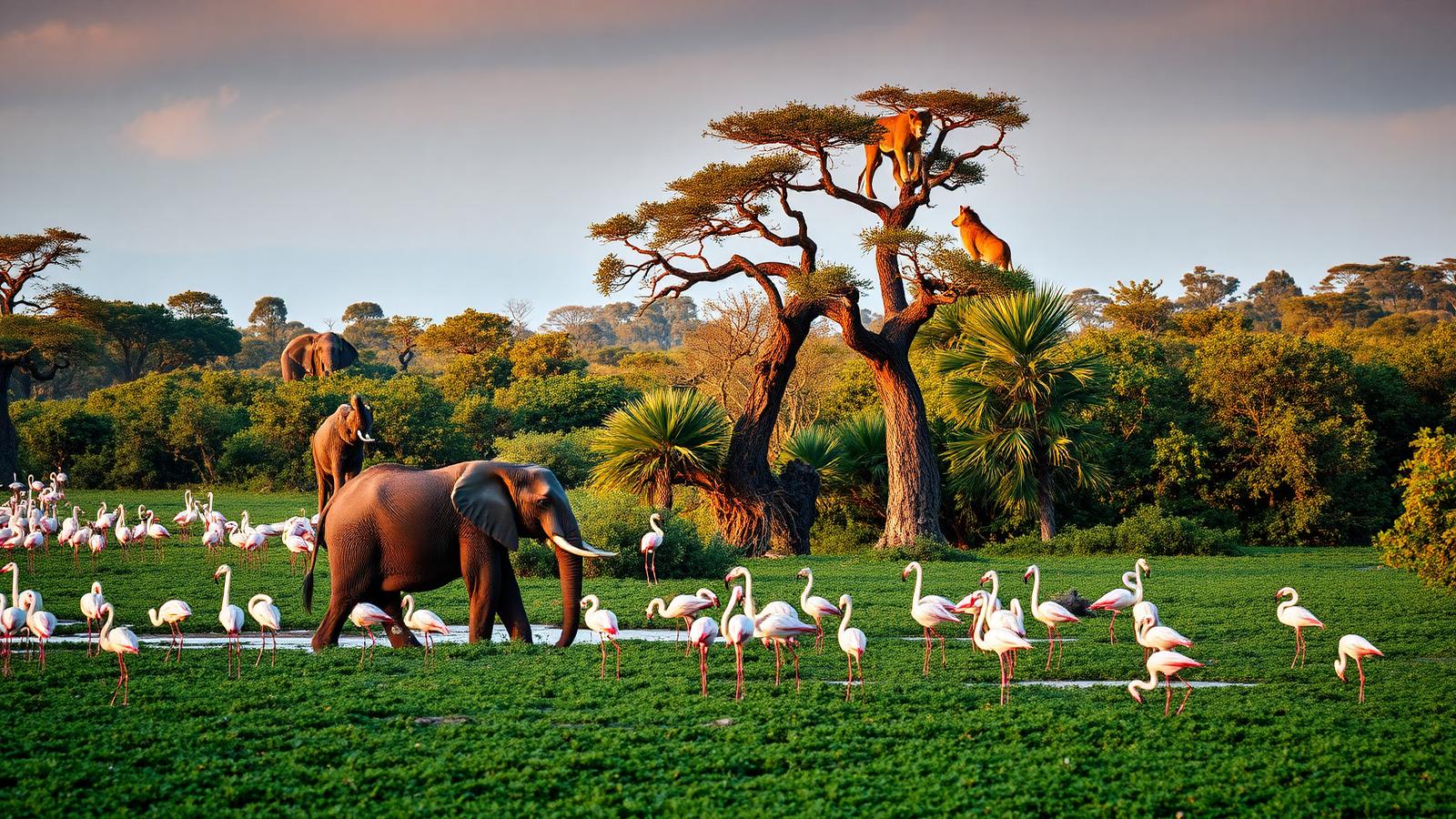
Elephants are the animal most travelers remember from Manyara, largely because of where you see them. In the forest section they appear between tall trees at close range, which feels very different from watching a herd across open grassland. Families move through the understorey, feed on fig and other forest species, and often cross the track without much concern for vehicles.
Buffalo are common on the floodplain, sometimes in large groups, and they are usually more relaxed here than in thicker bush country. Giraffe browse the acacia belt. Zebra, impala, waterbuck and warthog occupy the open ground, and hippo hold the permanent pools near the northern floodplain, where a viewing point lets you get out of the vehicle in a designated area.
If elephants are the main reason for your trip, note that dry-season concentrations along the Tarangire River are on a different scale. Our Tarangire park guide explains how that seasonal pattern works.
Primates
Manyara is one of the easier places in northern Tanzania to watch primates properly. Olive baboon troops in the forest near the gate are large and habituated to vehicles, which makes them straightforward to observe over time — the social behaviour is more interesting than most people expect if you stay a while rather than photographing and moving on.
Blue monkeys occupy the forest canopy and are best found where the trees are tallest and the light filters through. Vervet monkeys are widespread in the more open sections. Bushbabies occur but are nocturnal and unlikely on a day visit.
Birdlife and Flamingos
Birding is one of the strongest reasons to spend real time in Manyara. The combination of forest, woodland, floodplain and shallow lake within a small area produces a species list far broader than the park's size suggests, and you can move between habitats quickly.
The forest holds hornbills, turacos, barbets and a range of forest species that are hard to find on the open circuit. Along the water you may see pelicans, storks, herons, spoonbills, ibis and various waders. Raptors work the floodplain and the escarpment edge — fish eagle near the shore, augur buzzard and other species over the slopes.
What to expect with flamingos
Flamingos are strongly associated with Manyara in photographs, and this needs honest framing. Their numbers depend on water level, salinity and the algae those conditions produce, and all of that shifts through the year and between years. Sometimes there are large gatherings on the shallows; sometimes there are very few, and they may be distant enough to need binoculars or a long lens.
Tree-Climbing Lions: An Honest Answer
Lions do sometimes rest in trees in Lake Manyara, and the behaviour is genuinely associated with this park and a small number of other places in East Africa. Researchers have suggested several explanations — heat, biting insects in the grass, a vantage point over the floodplain — and none is settled.
What matters for planning is simpler. Lions are present in the park but are not seen on every visit, and seeing one in a tree is less likely still. Any itinerary sold on the promise of tree-climbing lions is selling something nobody can deliver. If it happens, it is a memorable piece of luck; if you plan your day around the forest, the elephants and the birds, you will have a good visit regardless.
Travelers whose main interest is big cats should weight their nights towards the Serengeti. Our Central Serengeti guide covers the areas where predator viewing is most consistent, and the northern part of the park is worth reading if your dates fall in the second half of the year.
Best Time to Visit
Manyara is open year-round and works in any season, but the experience changes.
- For mammals: the dry months generally give thinner vegetation and animals concentrated closer to water, which makes viewing easier.
- For birds: the wetter months bring migrants, breeding plumage and full water levels, and the forest is at its best.
- For quiet: the long rains see the fewest vehicles, at the cost of heavier tracks and thicker cover.
Since Manyara is almost always part of a larger trip, the sensible approach is to choose your dates for the trip as a whole and treat Manyara as flexible. Our guide to the best time to visit Tanzania sets out how the seasons affect each region.
Wet Season vs Dry Season
| Period | Typical conditions | Planning note |
|---|---|---|
| January – February | Warm, drier interval between rains, green cover | Comfortable driving and strong birdlife. Good if you are already heading south for the calving season. |
| March – May | Long rains; tracks can be heavy, lush forest | Fewest vehicles and excellent birding, but game viewing is harder in thick vegetation. |
| June – October | Dry season; thinner cover, animals drawn to water | The most reliable window for mammal viewing and the busiest period on the northern circuit. |
| November – December | Short rains; intermittent afternoon storms | Green, quieter, and often good value. Migrant birds arrive during this period. |
Rainfall patterns are general and shift from year to year. Treat the table as a guide to what is typical rather than a forecast.
How Long Should You Stay?
| Time | Verdict | What it gets you |
|---|---|---|
| Half day | The common choice | Enough to cover the forest, hippo pool and part of the floodplain en route between Arusha and the highlands. |
| Full day | Worth it if the park interests you | Lets you drive the length of the park towards the hot springs, where most half-day visitors turn back. |
| 1 night nearby | Good for birders and families | An early gate entry, a relaxed pace, and time for a walkway or village activity in the afternoon. |
| 2+ nights | Rarely necessary | The park is small. Extra nights are usually better spent in Tarangire or the Serengeti. |
The park is small enough that a half day covers the headline habitats. What a full day buys is the southern section, where the crowds thin and the country opens towards the hot springs.
The Game Drive Experience
A Manyara drive feels different from a plains safari. You enter through forest, so the first twenty minutes are shaded and enclosed, often with baboons on the track and the chance of elephants between the trees. Beyond the forest the country opens onto floodplain, and the lake appears with the escarpment behind it.
Because the drivable area is a corridor, routes are relatively fixed and vehicles tend to concentrate in the northern section near the gate. Driving further south is the simplest way to escape that. Off-road driving is not permitted, and roof hatches are used rather than open-sided vehicles.
Early entry matters more here than in bigger parks. Forest activity is highest in the cool of the morning, and the mid-day heat pushes animals into cover.
Activities In and Around the Park
Manyara offers more non-driving activity than most northern parks, which is part of why it suits families and slower itineraries. Availability changes with season, water level and operator, so confirm at the time of booking rather than assuming.
- Canopy walkway. A raised walkway through the forest canopy gives a perspective on the trees and forest birds that you cannot get from a vehicle.
- Night drives. Offered in designated areas and good for nocturnal species that day visitors never see. Subject to park arrangements.
- Canoeing. Possible only when water levels are suitable, and cancelled outright when they are not. Never build an itinerary around it.
- Cycling and village visits at Mto wa Mbu. The town beside the gate has a long-established cultural tourism program covering farms, workshops and local food.
- Hot springs. At the southern end of the park, and a natural turning point for a full-day drive.
Photography Notes
- Forest light is contrasty and dim early on. Be ready to raise ISO well beyond what the open plains require.
- The escarpment makes an unusually good background for wide environmental frames — a herd on the floodplain with the Rift wall behind is a shot you cannot take in Tarangire or the Serengeti.
- Bird photography benefits from a long lens; waterbirds are often further out than they appear.
- Late afternoon light along the shoreline is the best of the day, and the reason a full day beats a morning-only visit for photographers.
Gear and vehicle technique are covered in our safari photography guide.
Accommodation Options
Most travelers do not sleep inside the park. Options cluster in three places, and the choice usually comes down to what the next day's drive looks like.
On the escarpment above the park
Lodges along the rim look down over the lake and the valley. The views are the main draw, and the position works well when you are continuing to Ngorongoro the following morning.
Around Mto wa Mbu and the gate
A range of smaller lodges and tented camps sits near the town, close to the gate for an early entry and convenient for cultural activities. This is generally the better-value area.
Karatu, further along the road
Many itineraries skip a Manyara-area night entirely and sleep in Karatu, closer to the Ngorongoro gate. If you are visiting Manyara as a half-day stop en route, this is often the more efficient plan.
Rates move with season and property, so we quote current figures at the time of planning rather than publishing numbers that date quickly. The Tanzania safari cost guide explains what drives a budget across a whole trip.
How to Get There
- By road from Arusha. The standard approach, on sealed road for most of the way, and the reason Manyara appears on so many itineraries as a first stop.
- From Tarangire. A short transfer, which is why the two parks are often paired on consecutive days.
- By air. There is an airstrip serving the area, used mainly by travelers linking to or from the Serengeti rather than arriving from Arusha.
Road conditions and flight schedules change, so confirm the routing when you book rather than relying on a published plan.
Lake Manyara vs Tarangire
This is the comparison that matters most, because the two parks sit close together and many travelers with limited time choose between them.
| Factor | Lake Manyara | Tarangire |
|---|---|---|
| Size and feel | Small and intimate, driven on a narrow strip | Large, open, room to range |
| Signature draw | Groundwater forest, escarpment, birdlife | Baobabs and dry-season elephant concentrations |
| Elephants | Regular sightings, usually in forest and woodland | Larger dry-season concentrations along the river |
| Birding | Excellent, especially around water and forest | Very good, more dryland species |
| Predators | Present but less consistently seen | Better odds over a full day |
| Typical time given | Half to full day | One to two nights |
| Best for | Birders, families, a scenic first stop | Travelers wanting a fuller safari day before the highlands |
If you can only fit one and you want a fuller safari day, Tarangire is usually the stronger choice. If you want variety, birds, forest and a shorter driving day, Manyara does something Tarangire cannot.
Lake Manyara vs Ngorongoro
These two are not really alternatives. Ngorongoro is an anchor stop on almost every northern itinerary; Manyara is a supporting one.
| Factor | Lake Manyara | Ngorongoro Crater |
|---|---|---|
| Landscape | Forest, floodplain and lake beneath the Rift wall | Enclosed crater floor within highland country |
| Wildlife density | Moderate and habitat-dependent | Consistently high on the crater floor |
| Rhino | Not present | Possible, though never guaranteed |
| Vehicle numbers | Usually modest | Can be heavy at peak times |
| Time needed | Half to full day | One crater descent, usually a half to full day |
| Role in an itinerary | Supporting stop | Anchor stop on almost every northern itinerary |
In practice they sit on the same road and complement each other well: Manyara on the way up, the crater the following day. Our Ngorongoro Crater guide covers descent timing, permits and what the crater floor involves.
How Manyara Fits an Itinerary
- As a first stop. A half day on the way from Arusha eases travelers into safari mode before the bigger parks, which suits first-timers and families.
- Paired with Tarangire. Two contrasting days at the eastern end of the circuit before climbing to Ngorongoro.
- On the way back. Some itineraries return through Manyara from the highlands, which works when the outbound leg was tight on time.
- As a birding day. On longer trips, a full day here is one of the best birding days available on the circuit.
Worked routings and night counts sit in our itineraries guide, and the wider regional overview is in the northern circuit guide.
Who Is Lake Manyara Best For?
- First-time safari travelers. Short drives, close sightings and a gentle introduction before the longer days further west. Our first-timer's guide covers what a game-drive day involves.
- Families. Manageable distances, primates that hold children's attention, and activities outside the vehicle.
- Birders. Habitat variety in a small area is hard to beat on this circuit.
- Photographers after landscape context. The escarpment gives depth to wide frames that flat parks cannot.
When It Makes Sense to Skip It
We would rather say this plainly than sell an extra park day.
- Very short trips. On a four or five-day safari, the day is usually better spent in Tarangire or on an extra Serengeti night.
- Predator-focused travelers. If big cats are the reason for the trip, the Serengeti earns your nights.
- Repeat visitors on a targeted trip. Travelers returning for the migration or for a specific region often pass Manyara without regret.
- Tight budgets. Park fees for a half-day stop are a real line item, and cutting them can fund a better night elsewhere.
What Drives the Cost of a Manyara Day
- Park entry fees, set by the authorities and revised periodically. A half-day and a full-day visit generally attract the same daily fee.
- Vehicle and guide time, charged by the day whether you drive for four hours or nine.
- Accommodation position, with escarpment-view lodges priced above those near the gate.
- Extra activities, such as the canopy walkway or night drives, which are charged separately.
Because the daily fee is the same either way, a full day is usually better value than a half day if your schedule allows it.
Common Planning Mistakes
| Mistake | Better approach |
|---|---|
| Expecting to see lions in trees | Treat it as a bonus. Plan the visit around forest, elephants and birdlife, all of which are far more dependable. |
| Squeezing Manyara and Tarangire into one day | Give each park its own slot. Two rushed half-days usually produce one disappointing day. |
| Turning back at the hippo pool | If you have a full day, continue south towards the hot springs where the country opens up and vehicles thin out. |
| Arriving in the middle of the day | Enter at gate opening. Activity drops sharply once the heat builds, particularly in the woodland. |
| Booking Manyara instead of a Serengeti night | Manyara complements a trip; it does not replace time in the larger ecosystems. |
| Assuming flamingos will be there | Numbers depend on water level and salinity, and both vary. Plan for the forest and treat the lake as changeable. |
Related Guides
- Tarangire National Park guide — the park most often weighed against Manyara.
- Ngorongoro Crater guide — the next stop on the road for most itineraries.
- Serengeti wildlife guide — species detail across the wider ecosystem.
- Northern circuit overview — how the parks link together on the ground.
- Tanzania safari itineraries — worked routings and night counts.
- Safari guide for first-time visitors — what to expect from a game-drive day.
Common Questions
Frequently Asked Questions
For most northern circuit itineraries, yes — as a half or full day rather than a destination in its own right. The groundwater forest, close elephant and primate viewing, strong birdlife and the Rift Valley setting give it a character the larger parks do not have. On very short trips, though, the day is often better spent in Tarangire or on an extra Serengeti night.
Sometimes. Lions in this park do rest in trees, and the behaviour is genuinely associated with the area, but they are not seen on every visit and seeing one in a tree is less likely still. Treat it as a bonus rather than a reason to book, and plan your day around the forest, elephants and birdlife instead.
A half day covers the forest, hippo pool and part of the floodplain, which suits most itineraries passing through on the way to the highlands. A full day is worth it if you are interested in birds, forest habitat or photography, since it lets you reach the quieter southern section towards the hot springs.
Elephants, olive baboons, blue monkeys, buffalo, giraffe, zebra, impala, waterbuck and hippo are the mainstays, along with a wide range of birds. Lions and leopards are present but less consistently seen than in the larger parks, and there are no rhino. Sightings vary with season, water level and luck.
Sometimes, and in variable numbers. Flamingo presence depends on water level and salinity, which change through the year and between years. In some periods there are large gatherings on the shallows; in others there are few, and they may be distant enough to need binoculars or a long lens.
The drier months generally give the best mammal viewing, with thinner vegetation and animals concentrated closer to water. The wetter months are stronger for birds, with migrants present and the forest at its best, and see fewer vehicles. Since Manyara is almost always part of a larger trip, choose dates for the trip overall.
If you can only fit one and want a fuller safari day with better odds on predators and larger dry-season elephant concentrations, Tarangire is usually stronger. If you want habitat variety, forest, birds and a shorter driving day, Manyara offers something Tarangire cannot. Many itineraries include both on consecutive days.
They are not really alternatives. The crater has consistently higher wildlife density and is an anchor stop on almost every northern itinerary, while Manyara is a supporting stop with more varied habitat and usually fewer vehicles. They sit on the same road, so most travelers do Manyara on the way up and the crater the following day.
It suits both well. Driving distances are short, primates and elephants are often close to the track, and there are activities outside the vehicle such as the canopy walkway and cultural tourism at Mto wa Mbu. It works as a gentle introduction before the longer days further west.
Most travelers drive from Arusha on sealed road, reaching the gate at Mto wa Mbu in the first half of the morning. The park is also a short transfer from Tarangire, and an airstrip serves the area, used mainly by travelers linking to or from the Serengeti. Confirm routing at the time of booking.
Night drives are offered in designated areas subject to park arrangements, and canoeing runs only when water levels are suitable — it is cancelled outright when they are not. Both are worth asking about, but neither should be the reason you build the day, since availability changes with season and conditions.
On short safaris of four or five days, for travelers focused on big cats, for repeat visitors on a targeted migration trip, and on tight budgets where the daily park fee could fund a better night elsewhere. It is a good park, but it is not essential to every itinerary and we will say so when it does not fit.
Final Thoughts
Lake Manyara is a good park judged on its own terms: varied habitat, close elephant and primate viewing, strong birding and a setting beneath the Rift wall that none of the other northern parks can match. It is not the place to look for open-plain predator viewing, and it does not need to be.
Include it when it fits your route and your interests, give it a full day if birds or photography matter to you, and skip it without guilt on a short trip where the nights are better spent elsewhere. Planned that way, it adds something the rest of the circuit does not.
Lake Manyara earns its place when it fits your route and your interests: varied habitat, close elephant and primate viewing, strong birding and a setting beneath the Rift wall that the other northern parks cannot match. Give it a full day if birds or photography matter to you, and skip it without regret on a short trip where the nights are better spent elsewhere.
Plan Your Journey
Not sure whether Manyara belongs in your itinerary?
Tell us your dates, pace and what you most want to see, and our Arusha team will map out a northern circuit that makes sense: whether Lake Manyara earns a place on your route, how to combine it with Tarangire and Ngorongoro, how many nights each park deserves, accommodation options at your comfort level, private vehicle and guide arrangements, and sensible driving distances. If we think the day is better spent elsewhere, we will tell you — and wildlife sightings are never something anyone can guarantee.
- TALA Licensed Operator
- 4.9 ★ Guest Rating
- No Booking Fees
Keep Reading
Related Tanzania Safari Guides
Safari Guides
The Ultimate Tanzania Travel Guide: Everything You Need to Know Before You Visit
Safari Guides
The Northern Circuit: Exploring Tanzania's Most Iconic Wildlife Havens
Safari Guides
Best Tanzania Safari Itineraries: How to Choose the Right Route for Your Days
Safari Guides
Tarangire National Park: Everything You Need to Know Before Visiting
Safari Guides