Northern Circuit Guide
Ngorongoro Crater Safari Guide
What a day on the crater floor is really like — timing the descent, the six-hour permit, where the rhino tend to be, and how Ngorongoro fits alongside Tarangire and the Serengeti. Written from our planning desk in Arusha.

Introduction
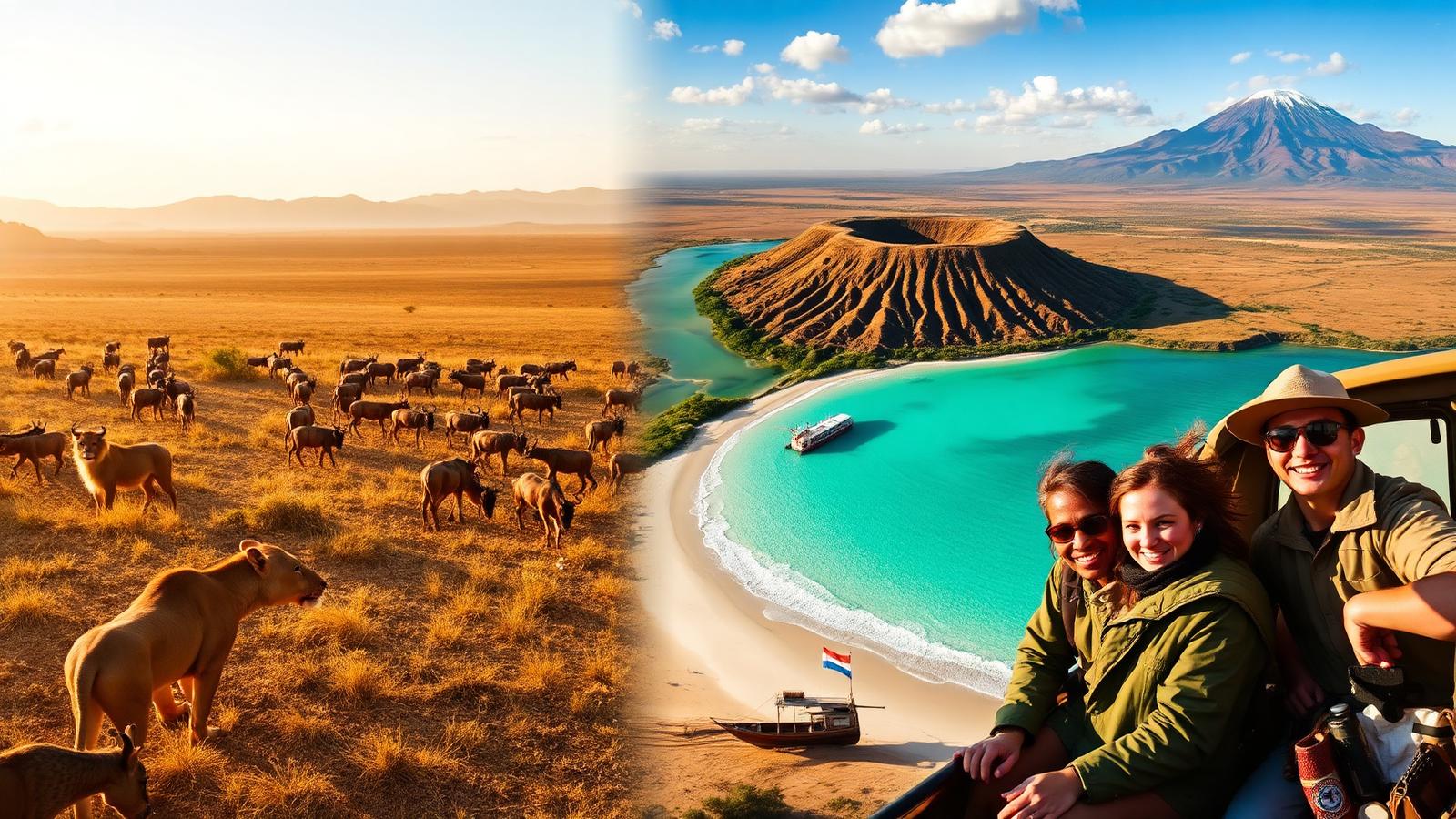
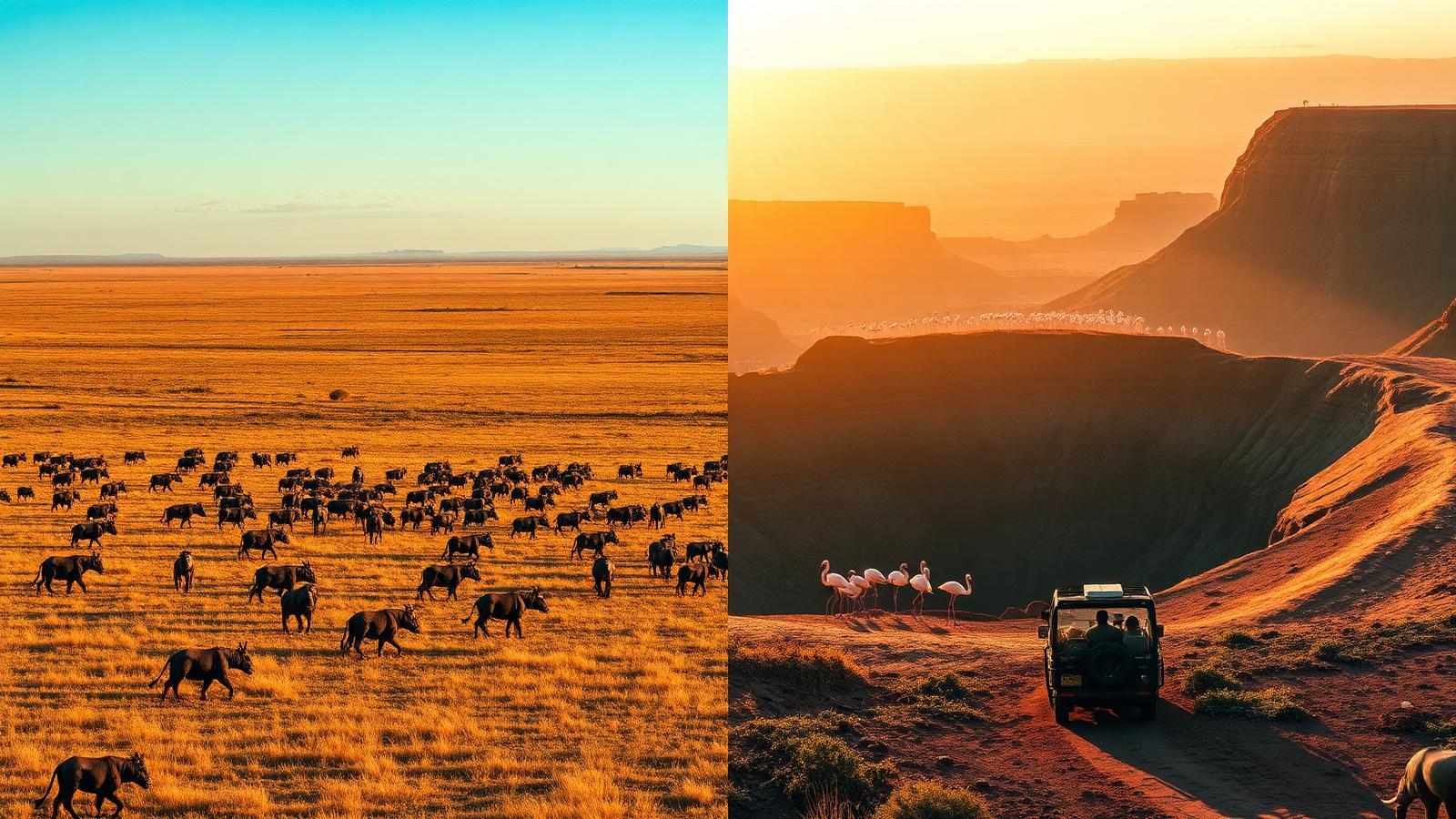
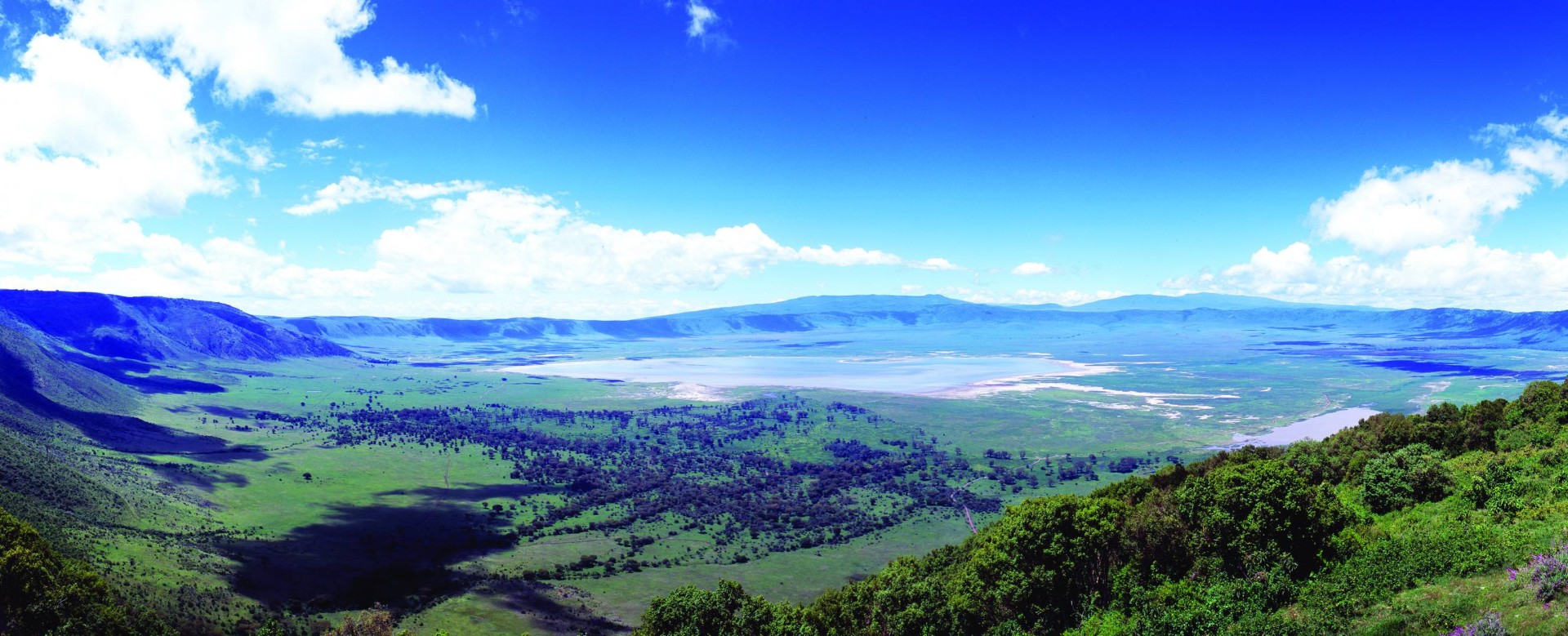
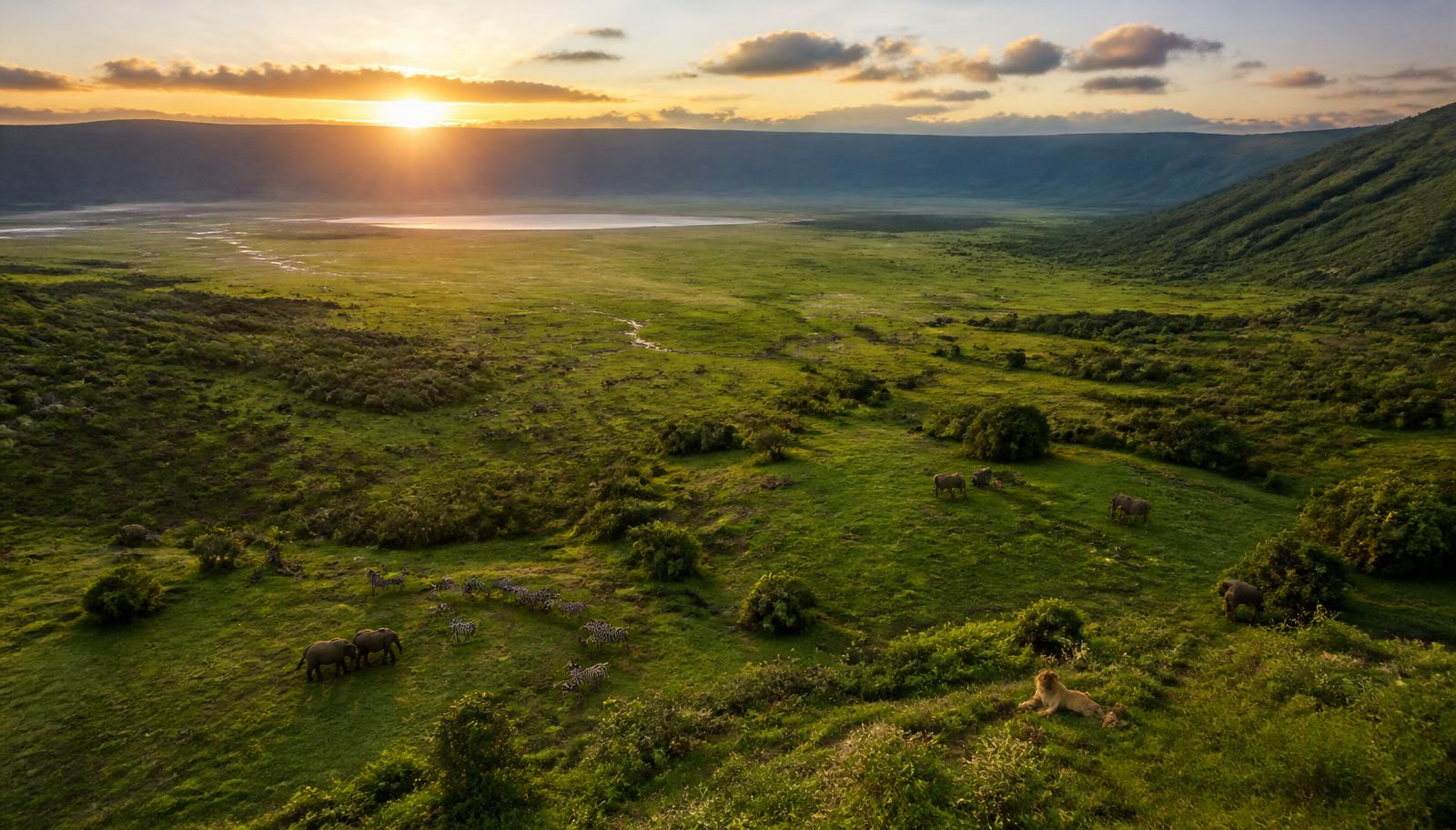
The first thing most guests notice about Ngorongoro is not the wildlife. It is the cold. You leave a lodge on the rim at six in the morning, 2,300 metres up, in fog thick enough that the caldera you paid to see is invisible. Twenty minutes later the vehicle drops below the cloud on the descent road and the whole floor opens up underneath you — buffalo scattered across the short grass, a lake glowing pink at the far end, walls rising 600 metres on every side. That moment is the reason the crater sells itself.
What follows is the practical part, and it is where trips are won or lost. A Ngorongoro Crater safari is governed by a permit clock, a single busy descent road, and a floor small enough that everyone tends to look at the same animals at the same time. Guests who descend at dawn and work the swamp edges first generally have a remarkable day. Guests who leave Karatu at eight, arrive with forty other vehicles and spend their permit in the central grass generally describe it as crowded.
This guide covers both sides honestly: what the crater does better than anywhere else in Tanzania, what it does not do well, what the fees actually buy you, and how to sequence it with the rest of the northern circuit so it feels like a highlight rather than a rushed obligation.
What the crater actually is
Ngorongoro is not a crater in the strict sense. It is a caldera: a volcano that emptied its magma chamber and collapsed inward roughly two to three million years ago. Before the collapse the mountain is thought to have stood as high as Kilimanjaro. What remains is a near-circular basin about 20 km across, with an unbroken rim and an ecosystem that functions largely on its own.
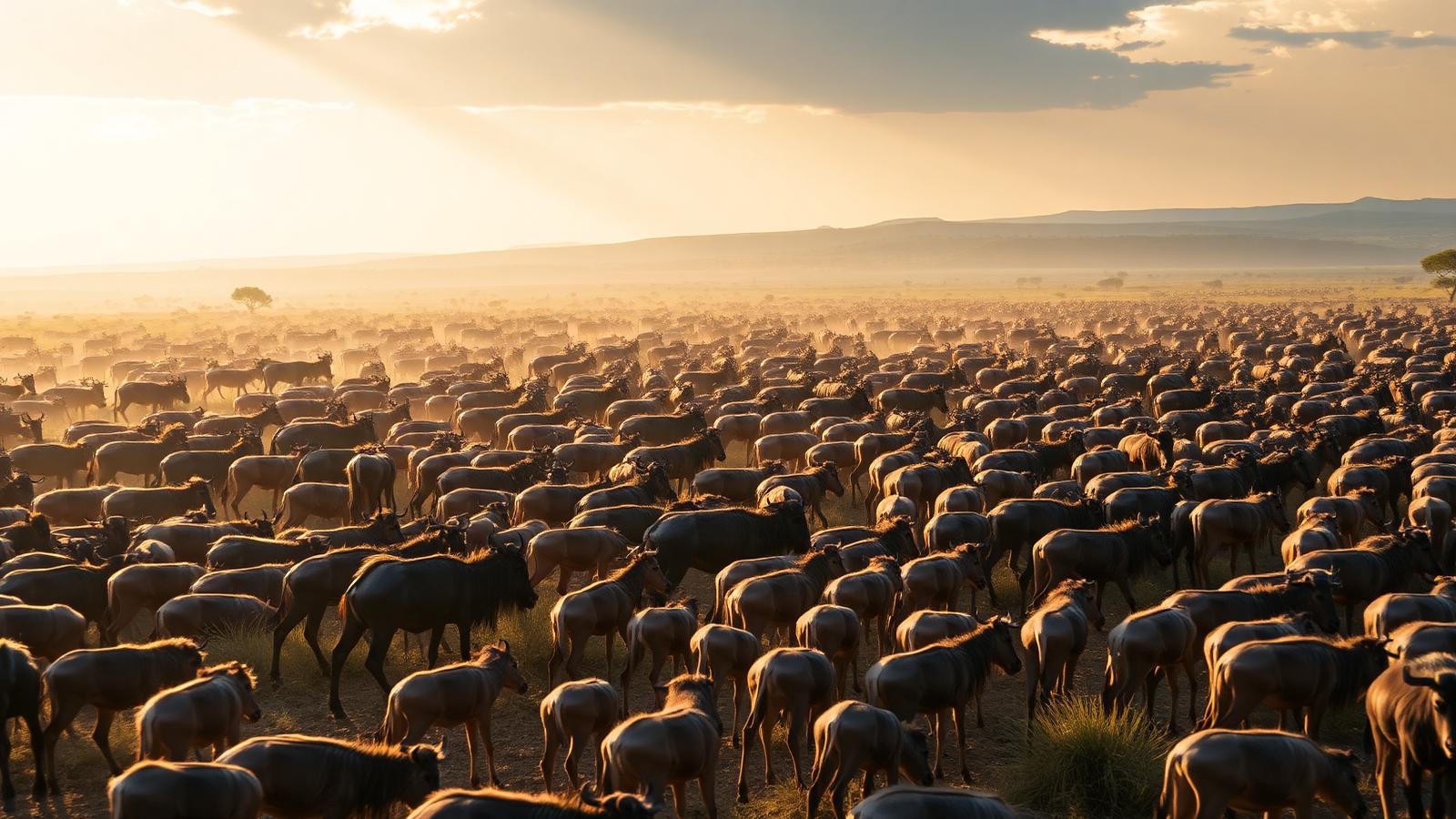
That enclosure explains almost everything else. Water collects on the floor year-round in the Mandusi and Gorigor swamps, the Munge River and the shallow soda lake at Magadi. Grazing stays productive through the dry months. Because the grass and water never fail completely, the wildebeest and zebra here do not migrate, and because the prey stays, so do the predators. A population that would normally spread across thousands of square kilometres sits inside an area you can drive around in a morning.
The floor sits inside the far larger Ngorongoro Conservation Area, about 8,300 km² stretching west to the Serengeti boundary. That wider area includes Olduvai Gorge, the Empakaai and Olmoti craters, the Ndutu short-grass plains and hundreds of Maasai settlements. Understanding the difference matters when you read your itinerary: "two nights in Ngorongoro" usually means two nights on the rim of the conservation area, not two days on the crater floor.
Where it sits and how you get there
The crater lies about 180 km west of Arusha, past Makuyuni and the escarpment town of Karatu. The drive takes three to four hours on tarmac with a graded final stretch, and it passes the turnoffs for Tarangire National Park and Lake Manyara, which is why nearly every itinerary strings the three together rather than treating them as separate trips. If you have a spare morning at the start of a safari, Arusha National Park makes a good warm-up close to town.
There are two roads onto the floor. Seneto, on the western side, is descent only. Lerai, below the southern rim, is ascent only. A third road at Lemala on the northeastern side handles both directions and is the one most rim lodges on that side use. Your guide picks based on where you sleep and where the traffic is.
Altitude is worth taking seriously. The rim is high enough that some guests notice shortness of breath on the first evening, particularly if they flew into Kilimanjaro two days earlier. Nothing dramatic — but drink more water than feels necessary, go easy on alcohol the first night, and expect dawn temperatures around 8 °C even in the middle of the dry season.
Permits, fees and the six-hour rule
Ngorongoro is the most expensive drive in Tanzania, and it helps to know why before the invoice lands. There are two separate charges: a conservation area entry fee per person per 24 hours, and a crater service fee charged per vehicle for a single descent. The service fee has sat above USD 295 per vehicle in recent seasons and is reviewed periodically by the authority, so treat any figure you read online as indicative and confirm current rates when you book.
The rule that shapes the day is the six-hour limit on the floor. The clock starts when your vehicle crosses the descent boundary and ends when you clear the ascent gate. It is enforced, and overstaying carries a penalty. Six hours sounds generous until you subtract a picnic stop and the 40 minutes of driving each way on the descent and ascent roads.
Two consequences follow. First, a half-day crater visit is poor value, because you pay the full service fee regardless. Second, where you sleep the night before directly determines how much of that window you spend on wildlife rather than on the approach road. For how these costs sit inside a full trip budget, see our Tanzania safari cost breakdown.
Ngorongoro wildlife table
Realistic expectations, based on a full-day descent in good conditions. Nothing here is a guarantee — wildlife moves, and some days simply run quiet.
| Species | Likelihood | Where to look | Field note |
|---|---|---|---|
| Lion | Very high | Open floor, Munge River, around the swamp edges | Several resident prides live within a small area, so guides usually know roughly where each one slept. |
| Cape buffalo | Very high | Everywhere, heaviest around Mandusi and Gorigor swamps | The resident herd runs into the thousands. Old bulls sit in the shallows through the middle of the day. |
| African elephant | High | Lerai Forest, descent and ascent roads, swamp margins | Floor residents are mostly big solitary bulls with long tusks. Breeding herds stay in the rim forest. |
| Black rhino | Moderate to good, never certain | Gorigor and Mandusi swamps, short-grass plains at first light | A small population, usually seen at distance. Early morning and late afternoon are the realistic windows. |
| Leopard | Low on the floor | Lerai Forest, descent road, rim woodland | The hardest of the five here. Most guests who see leopard on this trip see it in the Serengeti instead. |
| Spotted hyena | Very high | Open plains, den sites near the tracks | Ngorongoro clans are unusually large and often take kills from lions rather than the reverse. |
| Wildebeest and zebra | Very high | Central short-grass plains | Resident, non-migratory populations. They stay on the floor all year. |
| Golden and black-backed jackal | High | Short grass, around kills | Ngorongoro is one of the easier places in Tanzania to compare both species side by side. |
| Hippo | High | Ngoitokitok Springs, Mandusi Swamp | Ngoitokitok is also the designated picnic site, so most visitors see them over lunch. |
| Serval | Low but regular | Longer grass near the Munge River | Better odds in the green season when the grass is up and rodents are active. |
| Cheetah | Low | Open eastern plains | Present but scarce. Hyena pressure on the floor makes it difficult country for cheetah. |
| Flamingo | Seasonal, often very high | Lake Magadi | Numbers swing with water level and algae. Wet-season peaks can run to tens of thousands. |
Best wildlife to look for
The crater's reputation rests on density rather than variety. There are parks in Tanzania with longer species lists — the Serengeti wildlife guide covers a far broader cast — but few places put this many large animals within sight of one another.
Lions
Ngorongoro holds one of the highest lion densities in Africa, and the prides are well fed and easy to find because they have nowhere else to go. The flip side is genetic isolation: the population has passed through severe bottlenecks, including a disease outbreak in the 1960s, and researchers have monitored it closely ever since. You will often see lions lying within a few metres of the track, entirely indifferent to vehicles.
Black rhino
This is the species most guests come for, and the one that requires the most honesty. The crater population is small and closely protected. Sightings are common enough that a well-timed day gives you a genuine chance, but they are usually distant — a grey shape in the swamp grass at 400 metres, best appreciated through binoculars rather than a phone camera. Mornings before eight and the last hour before the ascent are the productive windows.
Elephant bulls
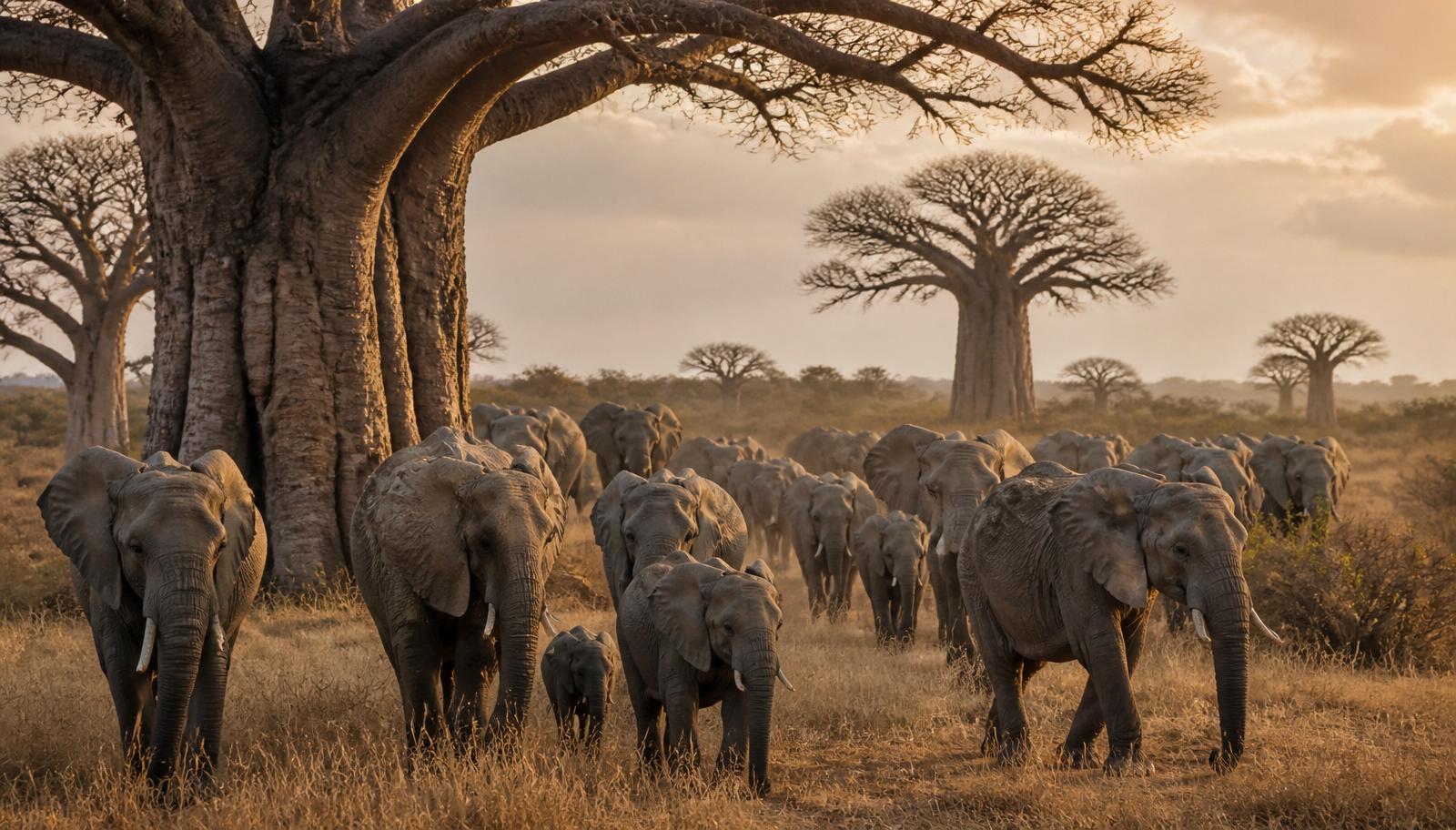
The elephants on the floor are almost all old males, and several carry tusks long enough that photographers travel specifically to find them. Breeding herds with calves prefer the forested rim, so if you want family groups you are better served in Tarangire. Our guide to African elephants in Tanzania explains why the two populations behave so differently.
Hyena and the predator dynamic
Ngorongoro is one of the few places where the standard story about scavenging gets reversed. The clans here are large and confident, and lions frequently lose kills to them. Watching a clan press a pride off a wildebeest carcass at seven in the morning is a better piece of wildlife theatre than most of what is written into brochures.
Birds
Lake Magadi carries flamingos in numbers that swing with rainfall and algae. Beyond them, look for kori bustard, secretarybird, grey crowned crane, augur buzzard on the rim and the rufous-tailed weaver, which is endemic to this part of Tanzania. The rim forest is a different birding environment altogether — turacos, sunbirds and forest hornbills.
The Big Five on the crater floor
Ngorongoro is the one place in Tanzania where seeing all five in a single day is a reasonable hope rather than a fantasy. Lion, buffalo and elephant are close to routine. Rhino is a good chance with early timing. Leopard is the one that usually breaks the set — the floor has limited cover, and most leopard sightings on a northern circuit trip happen later, in the Serengeti.
If completing the five matters to you, plan for it across the whole route rather than in one morning. Our Big Five in Tanzania guide breaks down where each species is most reliable, park by park.
What a typical crater day looks like
Times below assume a rim lodge and the standard six-hour permit. Shift everything 45 minutes earlier if you are staying in Karatu.
| Time | What happens |
|---|---|
| 05:15 | Coffee at the lodge, warm layers on. The rim is cold and often fogged in. |
| 06:00 | Leave for the descent gate. Rim lodges are 15–25 minutes away; Karatu is 60–90. |
| 06:30 | Start down the Seneto descent road. Buffalo and elephant are common on the switchbacks. |
| 07:00 | Reach the floor. Head straight for the swamp margins while rhino are still in the open. |
| 08:00 | Prime lion hours. Prides are usually still active or feeding before the heat builds. |
| 10:00 | Traffic rises. Work the quieter western and northern sectors rather than the central tracks. |
| 12:00 | Picnic at Ngoitokitok Springs. Keep food inside the vehicle — the kites are relentless. |
| 13:00 | Lake Magadi for flamingos, then the Lerai Forest for elephant bulls and a leopard chance. |
| 14:30 | Begin the Lerai ascent road so you clear the boundary before your six hours expire. |
| 15:30 | Back on the rim. Most lodges serve a late lunch; the crater view usually clears by mid-afternoon. |
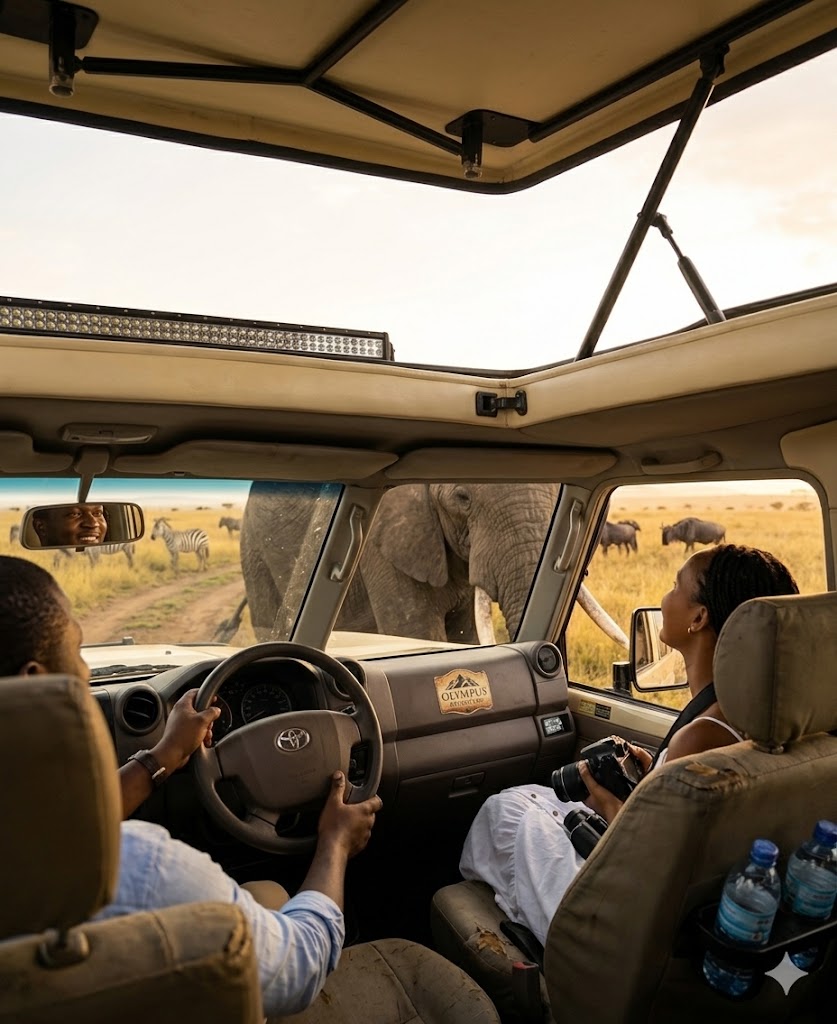
A few practical notes on that day. Lunch is taken at a designated site because you cannot leave the vehicle elsewhere on the floor; black kites at Ngoitokitok have learned to take food from open hands, so eat inside. Toilets exist at the picnic site and the gates and nowhere else. There is no fuel on the floor, and phone signal is patchy at best.
Best time to visit Ngorongoro
Because the wildlife is resident, there is no month when the crater empties out. What changes is grass height, road condition, light and how many vehicles you share the floor with.
| Period | Weather | On the floor | Verdict |
|---|---|---|---|
| January – February | Warm, short dry spell, occasional afternoon storms | Short grass, excellent visibility, moderate vehicle numbers | Outstanding. Also the calving weeks on the Ndutu plains an hour away. |
| March – May | Long rains, heaviest in April | Green and dramatic; some tracks soften, descent road occasionally closed after storms | Lowest rates and fewest vehicles. Accept some weather disruption. |
| June – August | Cool and dry, rim mornings near 8 °C | Short grass, firm roads, easy game viewing | Peak conditions and peak traffic. Book rim lodges months ahead. |
| September – October | Dry, warmer, dusty | Concentrated wildlife around remaining water | The best combination of conditions and predator activity. |
| November – December | Short rains, mostly late-afternoon showers | Green, quiet, good light | Underrated. Good value and few vehicles until the Christmas surge. |
For how these months line up with the rest of the country, including Zanzibar and Kilimanjaro, see the best time to visit Tanzania guide.
Dry season vs green season
The dry months, roughly June through October, give you the postcard version: short grass, firm tracks, animals visible from a long way off and cold, clear mornings. They also give you the most traffic. On a July morning the descent road can carry a queue, and popular sightings gather vehicles quickly.
The green season, November through May, trades some of that visibility for atmosphere and space. Grass grows and small predators become harder to pick out, but the light is better, flamingo numbers on Magadi often rise, migrant birds arrive, and rates drop noticeably. April is genuinely wet and the descent road occasionally closes after heavy storms, which is the one real risk worth planning around.
Our usual advice: a first safari does best in the dry months, when everything is straightforward. A second trip, or one built around photography, is often better in late January and February, when the crater is green and the calving herds are on the Ndutu plains an hour to the west.
How many days you need
- One night on the rim, one descent. Workable and common. You get a full crater day but no margin if the weather closes in.
- Two nights on the rim, one descent. What we recommend. The crater day stays unhurried, and the second morning frees you for Olduvai Gorge, an Empakaai hike or a Maasai visit before driving on to the Serengeti.
- Two descents. Only worth the second service fee for photographers or repeat visitors working a specific species. Most guests are better off spending that money on an extra Serengeti night.
- A day trip from Arusha. Possible, but it means seven hours of driving to spend six on the floor. We do not recommend it.
Beyond the crater: the wider conservation area
Guests who allow a second morning almost always say it was worth it. The options are genuinely different from a game drive:
- Olduvai Gorge. Where the Leakeys uncovered some of the earliest hominin remains. The site museum was rebuilt recently and is far better than most visitors expect. Half an hour off the Serengeti road.
- Empakaai Crater. A steep guided walk down to a soda lake that frequently holds flamingos, with a Maasai ranger. Roughly two hours down and back up, and the ascent is hard work at altitude.
- Olmoti Crater. Gentler than Empakaai, with a waterfall at the head of the Munge River and grazing Maasai cattle on the way.
- Shifting Sands. A crescent dune of black volcanic ash that migrates a few metres a year across the plains near Olduvai. Odd and memorable.
- Rim forest drives. Elephant, buffalo and bushbuck in montane forest, with occasional leopard. A useful contrast to the open floor and it costs no crater fee.
Maasai culture and conservation
Ngorongoro is a multiple-use area, not a national park. Maasai families hold grazing rights inside the boundaries, and driving from the rim toward the Serengeti you pass bomas, cattle and herders sharing ground with zebra and gazelle. There is nowhere else on the northern circuit where that is true at this scale.
It is also contested. Grazing restrictions, population growth, relocation programmes and tourism revenue-sharing have all been the subject of serious dispute in recent years, and visitors sometimes arrive unaware of it. You do not need a position on the politics to travel here, but a little context makes the landscape read differently, and it makes conversations with your guide far more interesting.
Cultural visits are worth doing if they are arranged properly — a booked visit through your lodge or operator, a fair fee that reaches the community, and time to sit rather than a rushed walk through a line of stalls. For deeper background on the people of this region, read our guides to the Maasai, the Hadzabe and the Datoga, the last two of whom live around Lake Eyasi, a short detour south of Karatu.
Accommodation areas: rim, Karatu or farther out
Where you sleep is the highest-leverage decision in a Ngorongoro itinerary, because it decides how much of your permit window is spent driving.
On the rim
Fifteen to twenty-five minutes from a descent gate, with the caldera below your breakfast table. This is what makes a dawn descent easy. Expect concession fees, cold nights and, on some mornings, thick fog until the sun burns through. Lodges range from large classics to small luxury camps and one or two very expensive properties on the rim edge.
Karatu and the Rhotia valley
Forty-five minutes to an hour and a half below the crater, in coffee-farming country. Rates are materially lower, the food is often better, and there are farm walks and cycling for a spare afternoon. The cost is an earlier alarm and more time in the vehicle before the day starts.
Farther afield
Some itineraries sleep near Lake Manyara or on the Mto wa Mbu side and drive up for the descent. It saves money but adds close to two hours each way, and we rarely recommend it for the crater day itself. Our safari accommodation guide compares the categories in more detail.
Ngorongoro vs Serengeti
These two are constantly compared and rarely substitutes. The crater is intensity in a small space; the Serengeti is scale and movement. Almost every itinerary we plan includes both.
| Factor | Ngorongoro | Serengeti |
|---|---|---|
| Size | 260 km² crater floor | 14,750 km² |
| Signature draw | Big Five in one enclosed valley | Great Migration, endless plains |
| Black rhino | The most realistic place in Tanzania | Present but rarely seen |
| Leopard | Difficult on the floor | Reliable in Seronera |
| Time needed | One full day | Three to five days |
| Vehicle traffic | Concentrated midday on the floor | Busy hubs, easy to escape |
| Cost per day | Higher — crater service fee on top of area fees | Lower per day, more days |
If you only have time for one — which usually means a very short trip — the answer depends on what you want. One remarkable day and a rhino chance points to the crater. Several days of driving, big cats and the migration points to the Serengeti. We compare them at length in Serengeti vs Ngorongoro.
Ngorongoro vs Tarangire
A less common comparison, but a useful one, because these two parks are often the first and last stops on a short northern itinerary and they feel nothing alike.
| Factor | Ngorongoro | Tarangire |
|---|---|---|
| Landscape | Enclosed caldera, grassland, swamp, fever-tree forest | Baobab woodland, river valley, swamps |
| Signature draw | Density and rhino | Dry-season elephant concentrations |
| Big Five | All five present | Four — no rhino |
| Seasonality | Resident wildlife year-round | Strongly seasonal, peaks July–October |
| Crowds | Highest of the northern parks midday | Quiet once you drive south |
| Typical stay | One full day, two nights on the rim | One to two nights |
In practice they complement one another neatly: Tarangire for elephants, baobabs and quiet tracks; the crater for density, rhino and the view from the rim.
How Ngorongoro fits into an itinerary
Five days, short northern circuit
Arusha → Tarangire (2 nights) → Ngorongoro rim (1 night, full-day descent) → Lake Manyara (1 night) → Arusha. Tight but coherent, and it covers three genuinely different habitats.
Eight days, the standard first safari
Arusha → Tarangire (2 nights) → Ngorongoro rim (2 nights, one descent) → Serengeti (3 nights) → fly back to Arusha. This is the route we book most often. The longer version, with buffer days and more migration time, is laid out in our 10-day Tanzania safari itinerary.
Nine days, photography and calving season
Arusha → Tarangire (2 nights) → Ndutu (4 nights) → Ngorongoro rim (2 nights, one descent) → Arusha. Best in late January and February. More options across trip lengths are collected in our best Tanzania safari itineraries guide.
Photography tips
- Expect distance. A 100–400 mm is the workhorse here. Rhino and much of the swamp wildlife sit far off the track, and you cannot leave the road.
- Shoot the descent. The switchback road gives you the only elevated wide angles of the day. A 24–70 mm from the roof hatch on the way down is worth the five-minute stop.
- Watch your exposure on the short grass. Bright pale grass and dark animals fool matrix metering. Dial in a stop of negative compensation and check the highlights.
- Dust and condensation. Cold rim to warm floor fogs lenses. Let gear acclimatise in the vehicle rather than pulling it straight out of an air-conditioned room.
- Beanbag over tripod. Tripods are useless in a vehicle. A beanbag on the roof rail is steadier and faster.
- Use the midday lull. When the light goes flat, work landscapes, flamingo abstracts at Magadi and the crater walls rather than chasing animals.
For settings, lens choices and etiquette across the whole trip, see our Tanzania safari photography guide.
Expert planning tips
- Book rim lodges early. July through September rim availability disappears six to nine months out. Everything downstream of that booking depends on it.
- Confirm the descent time in writing. "Early morning" means different things to different operators. Ask for 06:00 at the gate.
- Have breakfast boxed. Waiting for a hot buffet at seven costs you the best hour of the day.
- Bring binoculars. More important here than in almost any other Tanzanian park, because so much is viewed at range. 8x42 is the sweet spot.
- Do not skip the rim forest. It costs nothing extra, holds elephant and buffalo, and gives you a completely different landscape.
- Carry small US dollars and shillings. Community visits, curio stalls and tips are easier with cash, and card acceptance on the rim is patchy.
- Plan the crater day for mid-trip. Guests who arrive on day one are still adjusting to altitude and early starts; by day three they are sharper.
Common visitor mistakes
| Mistake | What it costs you | Better approach |
|---|---|---|
| Descending at 9 or 10 in the morning | You lose the two best wildlife hours and arrive with the traffic. | Be at the gate at first light. Ask your operator to confirm the departure time in writing. |
| Sleeping in Karatu to save money, then rushing the drive | An extra 60–90 minutes each way, eating into the six-hour permit window. | If budget requires Karatu, leave by 05:30 rather than shortening the crater day. |
| Treating the crater as a half-day stop | The fee is charged for the full six-hour window whether you use it or not. | Plan one complete day on the floor and give the rim a second morning. |
| Packing only hot-weather clothing | A genuinely cold, uncomfortable dawn at 2,300 metres. | Fleece, windproof layer and a beanie for the descent; you will shed them by nine. |
| Expecting a guaranteed rhino sighting | Disappointment on an otherwise exceptional day. | Treat rhino as a strong possibility, not a promise, and prioritise the early swamp circuit. |
| Booking the crater in isolation | A long drive for a single day, with no contrast in habitat. | Pair it with Tarangire, Manyara and the Serengeti so the crater is a highlight, not the whole trip. |
Safety and health on the rim
Ngorongoro is a tightly managed area with ranger patrols, licensed operators and a strict stay-in-the-vehicle rule on the floor. The practical risks are mundane rather than dramatic: altitude fatigue on the first night, cold at dawn, and buffalo or elephant wandering through unfenced lodge grounds after dark, which is why staff escort guests to rooms. Follow that instruction even when it feels unnecessary.
The rim sits above the main malaria zone, but you will pass through lower country on the way in and out, so prophylaxis advice still applies for the trip as a whole. Our safari health guide and Tanzania safety guide cover both in detail.
Frequently Asked Questions
Common Questions
Frequently Asked Questions
For almost everyone, yes. It is the largest intact volcanic caldera on earth, holds around 25,000 large mammals in roughly 260 km², and is the most realistic place in Tanzania to see black rhino. The visitors who leave underwhelmed are usually the ones who descended late, shared the central tracks with the crowds and treated it as a half-day stop.
It is realistic, but not promised. Lion, buffalo and elephant are close to routine on the floor, and black rhino is a genuine chance with an early descent. Leopard is the one that usually breaks the set, because the floor has limited cover — most guests see leopard later in the trip, in the Serengeti.
One full day on the crater floor is enough. We recommend two nights on the rim so that day is unhurried and you keep a second morning for Olduvai Gorge, an Empakaai hike or a cultural visit before driving on to the Serengeti.
There are two charges: a conservation area entry fee per person per 24 hours, and a crater service fee charged per vehicle for a single six-hour descent, which has sat above USD 295 in recent seasons. Rates are reviewed periodically, so confirm current figures when you book and ask your operator in writing which fees your quote includes.
Vehicles are permitted six hours below the rim. The clock starts when you cross the descent boundary and ends at the ascent gate, and it is enforced. Since the descent and ascent roads take roughly 40 minutes combined and lunch takes another, a late start costs you real wildlife time.
June through October gives short grass, firm roads and the easiest game viewing, along with the most vehicles. Late January and February are excellent too, with green landscapes and the calving herds on the nearby Ndutu plains. March through May is wettest — lowest rates, fewest vehicles, and an occasional descent-road closure after heavy storms.
No. The crater population is small and closely protected, and sightings are usually at 300 to 800 metres through binoculars. Descending at first light and working the Gorigor and Mandusi swamp margins before the animals move into cover is what puts the odds in your favour — but nobody can guarantee it.
Yes. Driving distances are short, sightings are frequent enough to hold children's attention, and rim and Karatu lodges have family rooms. Bear in mind the cold dawn start and the altitude on the rim; most properties welcome children from about six years old.
They do different things. Ngorongoro is density in a small enclosed space plus a rhino chance; the Serengeti is scale, big-cat viewing and the migration. Most itineraries include both — one day in the crater and three or more in the Serengeti.
The floor gets busy between roughly 10:00 and 14:00 in high season, and popular sightings gather vehicles fast. Descending at first light, working the quieter western and northern sectors and ascending in the early afternoon avoids most of it.
On the rim if the budget allows — you are 15 to 25 minutes from a descent gate, which is what makes a dawn start easy. Karatu is materially cheaper with good food and farm country around it, but it adds up to 90 minutes each way. If you choose Karatu, leave by 05:30 rather than shortening the crater day.
Yes, and it is the standard sequence because of geography. Most guests travel Arusha → Tarangire → Ngorongoro rim → Serengeti over seven to ten days, then fly back to Arusha from a Serengeti airstrip rather than backtracking by road.
In Closing
Final Thoughts
Ngorongoro rewards planning more than patience. The wildlife is already there — resident, dense and unusually easy to find — so the difference between a remarkable day and a crowded one comes down to what time you cross the descent boundary and where you point the vehicle first. Sleep on the rim, be at the gate at six, work the swamp edges before the light hardens, and give yourself a second morning up top for Olduvai or Empakaai. Do that and the crater tends to be the day people describe first when they get home: the fog lifting off a twenty-kilometre bowl, buffalo scattered to the far wall, and a grey shape out in the grass that turns out to be a rhino.