Safari Planning
How Much Does a Tanzania Safari Cost in 2026?
An honest, line-by-line breakdown of the real Tanzania safari cost in 2026 — budget to ultra-luxury, park fees, vehicles, guides and worked sample budgets for solo travellers, couples and families, written by our Arusha planning team.

Introduction
Two travellers write to us in the same week asking for a seven-day safari. One has been quoted USD 1,900 per person. The other, USD 8,400. Both quotes are honest. Neither traveller can tell why the gap exists — and that, more than anything else, is why this page exists.
The Tanzania safari cost is not a mystery once you see the invoice the way an operator sees it. Roughly a third of your money never touches us at all: it goes straight to the government as park fees. Another large slice is the bed you sleep in, and a smaller but decisive slice is the vehicle and the person driving it. Everything else — the marketing, the office, the margin — is the part that varies wildly between companies.
What follows is the same arithmetic we use when we build a quote at our desk in Arusha, with the 2026 numbers, worked examples for a solo traveller, a couple and a family of four, and the awkward parts most brochures leave out. No padding, no "from" prices that nobody actually pays.
The short answer
If you want one number to plan around: budget on USD 500 per person per day for a comfortable, privately guided Tanzania safari in 2026, and USD 3,500–4,500 per person for a well-run seven-day Northern Circuit trip with all park fees included.
Below that, you begin trading privacy and position — a shared vehicle, a lodge an hour outside the gate. Above it, you are buying space, silence and seniority: smaller camps, better ground inside the parks, and a guide who has been reading these plains for fifteen years rather than two. Both ends of that range produce genuinely good safaris. The failures happen in the middle, when someone pays mid-range money for a budget product because the quote was never itemised.
Average Tanzania safari cost by trip length
These are the real ranges we quote in 2026, per person sharing a room, for the classic Northern Circuit. Every figure includes park fees, vehicle, guide, accommodation and full board.
| Trip length | Budget | Mid-range | Luxury | Typical routing |
|---|---|---|---|---|
| 3 days | USD 850 – 1,100 | USD 1,450 – 2,300 | USD 2,900 – 5,200 | Tarangire + Ngorongoro, a taster trip |
| 5 days | USD 1,350 – 1,800 | USD 2,350 – 3,600 | USD 4,700 – 8,500 | Northern Circuit core, central Serengeti |
| 7 days | USD 1,850 – 2,500 | USD 3,200 – 4,400 | USD 6,500 – 12,000 | The most-booked length we sell |
| 10 days | USD 2,600 – 3,500 | USD 4,600 – 6,800 | USD 7,500 – 11,000 | Adds northern Serengeti or a flight leg |
| 12 days + Zanzibar | USD 3,200 – 4,300 | USD 5,800 – 8,200 | USD 9,800 – 14,500 | Safari plus four coastal nights |
Notice how the per-day cost falls slightly as trips get longer. Fixed costs — airport transfers, the drive up from Arusha, the first and last nights — get spread across more days. A three-day safari is always the worst value per day you will ever buy in Tanzania. If you can find five days, find five days. Our best Tanzania safari itineraries guide shows what each length realistically covers.
What actually drives the price
Five variables decide almost everything. Understand them and you can read any quote in the country in about ninety seconds.
- Park-fee days. Every 24 hours inside the Serengeti costs USD 82.60 per adult before anything else happens. Four parks in six days is expensive arithmetic.
- Where you sleep, not how nice it is. A modest camp deep inside the northern Serengeti costs more than a smart lodge near Karatu, because remote logistics — flying in fuel, water, staff, food — are brutal.
- How many people share the vehicle. A Land Cruiser costs the same to run with two guests or six. Two travellers carry the full USD 280–380 a day between them.
- Season. The identical tent can swing 40% between April and August. Nothing about the animals changes; the demand curve does. See best time to visit Tanzania for the month-by-month picture.
- How many hands the booking passes through. An overseas agent selling a Tanzanian operator's product adds 15–35%. That commission buys you convenience, not a better safari.
Budget vs mid-range vs luxury
Most Tanzania safaris fall into one of three tiers, with an ultra-luxury layer above. All prices are per person per day, based on two travellers sharing, and include vehicle, guide, park fees, accommodation and full board.
| Tier | Per person / day | Stay | Ideal for |
|---|---|---|---|
| Budget | USD 250 – 350 | Public campsites, basic lodges & seasonal tented camps | First-time travelers, backpackers, students, small groups |
| Mid-range | USD 450 – 750 | Comfortable lodges & permanent tented camps with en-suite bathrooms | Couples, families, most international travelers |
| Luxury | USD 900 – 1,800 | Five-star tented lodges, boutique camps, private plunge pools | Honeymooners, discerning travelers, milestone trips |
| Ultra-luxury | USD 2,000 – 3,500+ | Exclusive-use mobile camps, private villas, bush airstrip transfers | Families booking exclusive-use, VIP & multi-generational trips |
What a budget safari really buys
A budget Tanzania safari runs USD 250–350 per person per day — roughly USD 1,500–2,200 for six days. You share a 4×4 with up to six other guests, sleep in public campsites or simple lodges, and eat well-cooked, unfussy food. The guides are licensed professionals: the savings come from shared logistics, not from worse wildlife.
Two honest caveats. Everyone in the vehicle has an equal claim on the day, so if the couple beside you want to leave the leopard after ten minutes, you leave. And be sceptical of anything quoted under USD 200 per day — that number cannot cover park fees and a licensed crew.
Mid-range: where most travellers land
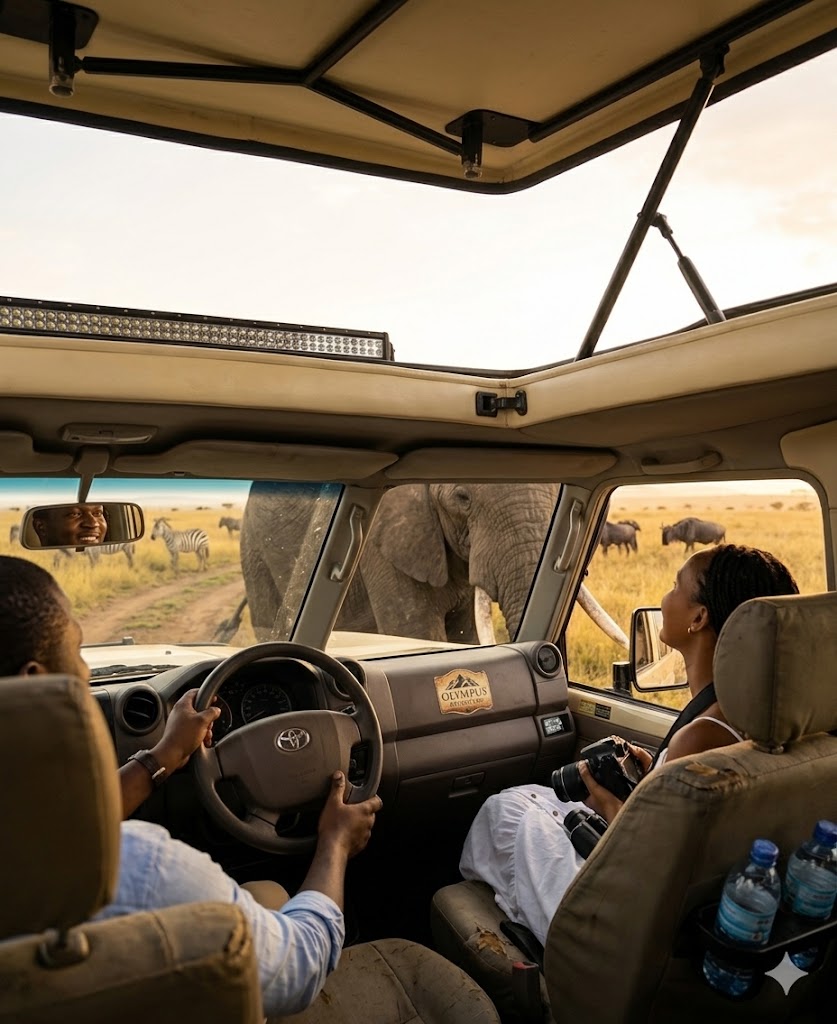
Expect USD 450–750 per person per day. You get a private 4×4, a guide working only for you, permanent tented camps or lodges with en-suite bathrooms, and full board including water, coffee and afternoon tea. A seven-day mid-range Northern Circuit typically comes in at USD 3,200–4,400 per person sharing.
This is the tier we recommend most often, and the point at which a safari starts to feel like your safari — you decide when to leave camp, how long to sit with a sighting, whether to take lunch in the vehicle and keep going.
Luxury and ultra-luxury
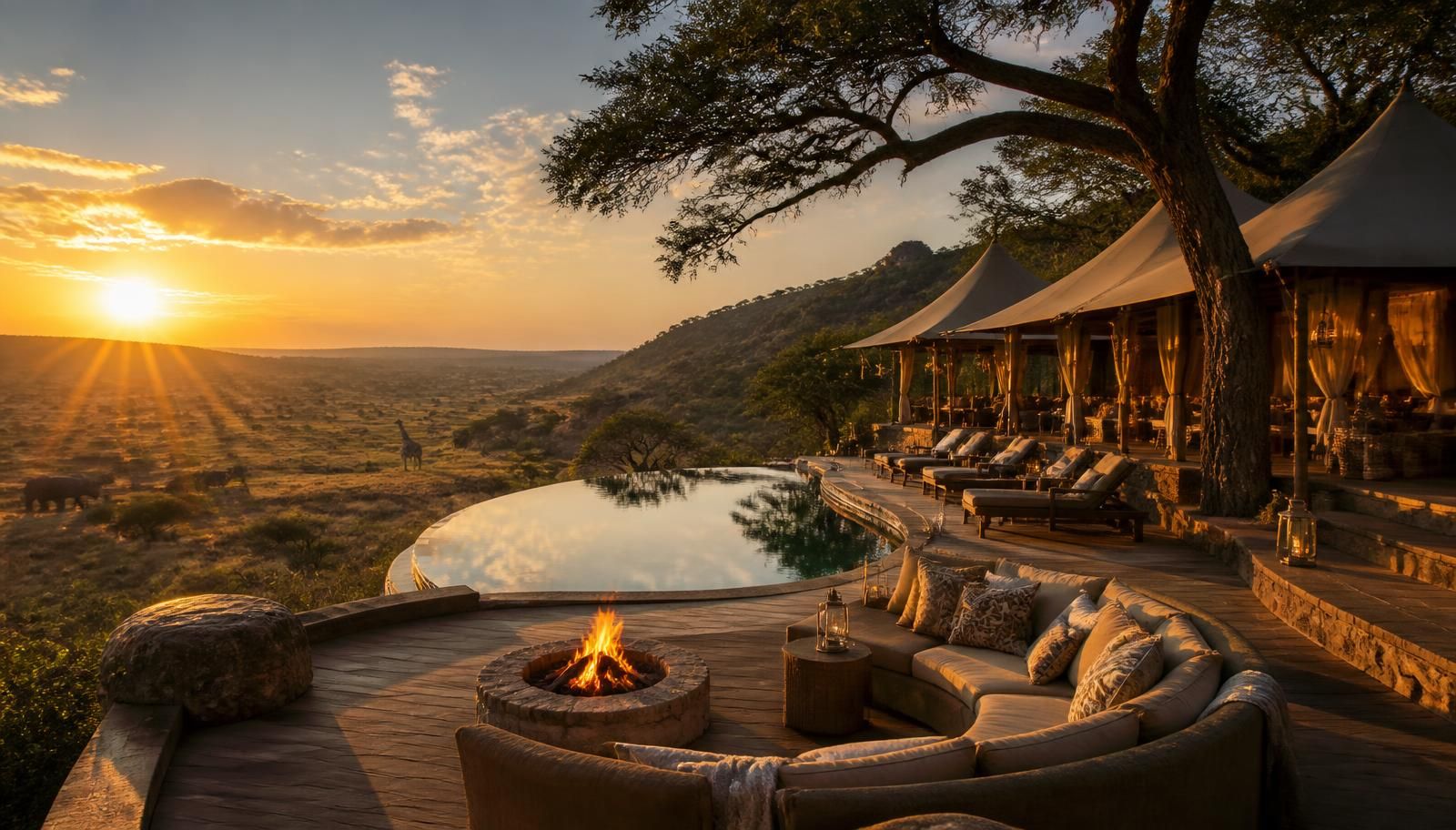
Luxury starts around USD 900 per person per day and climbs past USD 1,800 for the finest camps in the northern Serengeti and on the Ngorongoro rim. You are paying for scarcity: sixteen tents instead of ninety rooms, a senior guide, gourmet bush dining, and often a bush flight that buys back half a day of driving.
Ultra-luxury — private mobile camps, exclusive-use villas, a dedicated chef — runs USD 2,000–3,500+ per person per day and is usually booked as a full buyout for families or milestone trips. Our luxury vs mid-range Tanzania safari comparison walks through exactly what the extra money changes day to day.
What is included vs not included
This is the single most common source of quote confusion. Here is what a properly built Tanzania safari price should contain — and what it will not.
Normally included
- All national park and conservation area entry fees, plus government taxes and 18% VAT
- Ngorongoro Crater descent (service) fee where the crater is on the itinerary
- Private or shared 4×4 Land Cruiser with pop-up roof, fuel and unlimited game-drive mileage
- English-speaking licensed driver-guide, including their accommodation and per-diems
- Accommodation at the tier quoted, on a full-board basis
- Drinking water in the vehicle throughout the safari
- Airport transfers between Kilimanjaro International (JRO) and Arusha
- Flying-doctor emergency evacuation cover on our itineraries
Normally excluded
- International flights to and from Tanzania
- Tanzania e-visa (USD 50, or USD 100 for US passport holders)
- Travel and medical insurance — mandatory on every trip we run
- Tips for your guide and camp staff
- Alcoholic drinks and premium beverages at most mid-range lodges
- Optional extras: hot-air balloon (USD 600 pp), cultural visits, spa treatments
- Laundry at budget properties, personal shopping and curios
- Vaccinations, anti-malarials and pre-trip medical costs
Park fee overview (2026)
Park fees are set by TANAPA and the NCAA, published, and non-negotiable. They fund conservation and community programmes, and typically make up 25–35% of a safari's total cost. Rates below are per adult per 24-hour entry and attract 18% VAT. Children aged 5–15 pay a reduced fee; under-fives enter free.
| Park | Fee (2026) | Planning note |
|---|---|---|
| Serengeti National Park | USD 82.60 per adult / day | Highest-volume fee on almost every itinerary |
| Ngorongoro Conservation Area | USD 82.60 + USD 354 crater service fee / vehicle | The crater fee covers 6 hours of descent, per vehicle |
| Tarangire National Park | USD 59 per adult / day | Excellent value in the dry season |
| Lake Manyara National Park | USD 59 per adult / day | Often used as a half-day on transfer days |
| Arusha National Park | USD 53 per adult / day | Best-value day trip from Arusha town |
| Ruaha / Nyerere (southern circuit) | USD 35 – 82.60 per adult / day | Lower fees, higher flight costs |
| Kilimanjaro (climbing) | USD 70 conservation + USD 20–60 camping / day | Plus rescue and crew fees |
Accommodation costs
After park fees, the bed is the largest line item. Nightly rates per person sharing, full board, look roughly like this in 2026:
- Public campsites: USD 40–80 per night
- Basic lodges: USD 120–220 per night
- Comfortable tented camps: USD 280–480 per night
- Premium lodges: USD 550–950 per night
- Luxury & ultra-luxury camps: USD 1,100–3,000+ per night
Two things move these numbers more than star rating: season, and how far the camp is from a supply road. The same tent in Ndutu can cost USD 380 in May and USD 690 in February, because in February it sits in the middle of the calving herds.
Transport and flight costs
A custom 4×4 Land Cruiser with a pop-up roof — the industry standard — costs roughly USD 280–380 per day including fuel and maintenance. That is normally already inside your quoted daily rate. The add-ons that are not:
- Bush flights (Arusha ↔ Serengeti): USD 260–450 one-way
- Zanzibar connecting flight: USD 220–320 one-way
- Airport transfers (JRO ↔ Arusha): USD 60–90 per vehicle
- Hot-air balloon over the Serengeti: USD 600 per person
If your itinerary continues to the coast, the flight and beach costs are set out in our Zanzibar and safari Tanzania combination guide.
Guides, crew and tipping
Your guide is the most important line item you never see itemised. Senior driver-guides cost operators USD 90–160 per working day in salary, training, licensing and per-diems. That is precisely why the cheapest safaris in Tanzania feel cheap: the number the company squeezed is almost always the crew.
Tipping is customary, expected and separate from the safari price. What we advise our guests:
- Safari guide: USD 20–30 per guest per day
- Camp staff (pooled): USD 10–15 per guest per day
- Kilimanjaro porters: USD 10 per porter per day (crews of 8–14)
Bring these in cash, in USD notes dated 2009 or later — older series are frequently refused by Tanzanian banks. Our Tanzania safari packing list covers the practical money-and-documents kit in detail.
Sample budgets: solo, couple, family
Abstract day rates are hard to plan against, so here are three real seven-day mid-range budgets of the kind we build every week. All figures are 2026 shoulder-season pricing, excluding international flights and insurance.
Solo traveller — 7 days, mid-range
| Line item | Amount |
|---|---|
| Park fees, 7 days | USD 690 |
| Vehicle, guide & fuel (sole use, 7 days) | USD 2,100 |
| Mid-range accommodation, 6 nights (single supplement included) | USD 2,150 |
| Transfers, water, flying-doctor cover | USD 180 |
| Tips (guide + camp staff) | USD 250 |
| Total, 7-day mid-range solo safari | ≈ USD 5,370 |
Solo travel is the most expensive way to safari, because the vehicle and the single supplement land on one set of shoulders. Joining a small-group departure brings the same trip down to roughly USD 2,600–3,200.
Couple — 7 days, mid-range
| Line item | Amount |
|---|---|
| Park fees, 2 adults × 7 days | USD 1,380 |
| Vehicle, guide & fuel (split two ways) | USD 2,100 |
| Mid-range accommodation, 6 nights, double room | USD 2,900 |
| Transfers, water, flying-doctor cover | USD 320 |
| Tips | USD 450 |
| Total for two travellers | ≈ USD 7,150 (≈ USD 3,575 each) |
Family of four — 7 days, mid-range
| Line item | Amount |
|---|---|
| Park fees, 2 adults + 2 children (5–15), 7 days | USD 1,760 |
| Vehicle, guide & fuel (one 7-seat 4×4) | USD 2,100 |
| Mid-range family rooms / triple tents, 6 nights | USD 4,300 |
| Transfers, water, flying-doctor cover | USD 560 |
| Tips | USD 700 |
| Total for a family of four | ≈ USD 9,420 (≈ USD 2,355 each) |
Families get the best per-person economics on safari — four people carry one vehicle, and children's park fees are discounted. This is why we so often tell families that a longer trip costs proportionally less than they fear.
Packaged budgets we sell most often
7-Day Mid-Range Northern Circuit
USD 3,200 – 4,400 ppTarangire · Ngorongoro · Serengeti · lodges & tented camps · private vehicle · guide · all park fees · full board
10-Day Classic Luxury Safari
USD 7,500 – 11,000 ppTarangire · Manyara · Ngorongoro · Central & Northern Serengeti · one internal flight · premium camps
12-Day Luxury Safari + Zanzibar
USD 9,800 – 14,500 ppFull Northern Circuit + 4 nights Zanzibar boutique beach resort + all internal flights
6-Day Budget Group Safari
USD 1,650 – 2,200 ppShared 4×4 · public campsites & basic lodges · Tarangire · Ngorongoro · 2 nights Serengeti · park fees included
Costs by where you travel from
The safari itself costs the same whoever you are, but the trip around it does not. A few observations from fifteen years of quoting in four continents' currencies:
- United States & Canada: return flights USD 1,100–1,900, e-visa USD 100 for US passports (the multiple-entry class), and most travellers add two nights either side for jet lag. Budget an extra USD 1,600–2,400 per person on top of the safari.
- UK & Europe: flights GBP 600–1,000 / EUR 700–1,150, e-visa USD 50, and the shortest routing (overnight via Doha, Amsterdam or Istanbul) means you can safari on a nine-day leave allowance.
- Australia & New Zealand: flights AUD 2,200–3,200 and a long haul, so almost everyone extends to ten days plus Zanzibar. The marginal cost of those extra days is low; the flight is the expensive part.
- India, Gulf & East Africa: short, cheap flights (USD 350–700) make five-day safaris genuinely viable and repeat visits common.
Visa rules, costs and the referral-visa quirk that affects a handful of nationalities are covered in the Tanzania visa guide, and the wider trip logistics in our ultimate Tanzania travel guide.
Money-saving tips that actually work
- Book direct with a Tanzanian operator. You cut 15–35% in overseas agent commission and speak to the people who will actually run your trip.
- Travel in shoulder months. March, early June and November come in 20–40% below high-season lodge rates for the same rooms.
- Fill the vehicle. Four to six guests sharing a private 4×4 roughly halves the per-person vehicle cost. Bring friends.
- Mix your accommodation tiers. A luxury camp for two Serengeti nights and mid-range elsewhere gives you most of the luxury feeling at about 60% of the cost.
- Fly one leg, drive the other. Halves the flight bill and still buys back the worst driving day.
- Go deep, not wide. Four nights across two parks beats eight nights across five. Fewer park-fee days, less driving, better sightings.
- Ask about camps that waive single supplements in green season — several good properties do, and nobody advertises it.
- Pay by bank transfer. Card payments in Tanzania usually carry a 3–5% merchant surcharge that quietly lands on your invoice.
Common budgeting mistakes
| Mistake | What it costs | What to do instead |
|---|---|---|
| Comparing quotes on the headline number alone | USD 700 – 1,400 of surprise extras | Ask every operator for a line-item breakdown. One quote including park fees and one excluding them are not comparable. |
| Budgeting nothing for tips | USD 250 – 700 per trip | Set aside USD 30–45 per guest per day for guide and camp staff before you leave home, in small USD notes. |
| Adding a fifth park to 'get value' | An extra USD 160–300 per person, per day | Fewer parks, more nights. Park-fee days are the most expensive way to add variety to a safari. |
| Booking a cheap safari for peak season | Long transfers from outside the park each morning | In July–September, pay for position inside the park or shift your dates. Cheap peak-season lodging is almost always far from the wildlife. |
| Ignoring the single supplement | 25 – 90% on top of the room rate | Solo travellers should ask about camps that waive it in green season, or join a small-group departure. |
| Paying by card without checking the fee | 3 – 5% of the trip value | Bank transfer for the deposit and balance is standard in Tanzania and avoids the merchant surcharge. |
Expert advice before you book
Three things we tell every traveller who calls us with a budget in mind, whatever the number is.
First, share the real figure. Travellers often hide their budget, expecting to be quoted up to it. In practice the opposite happens: without a number we guess, and the guess is usually wrong in both directions. Tell us USD 4,000 per person and we will tell you honestly what USD 4,000 buys — and whether USD 4,600 would buy something materially better.
Second, check what happens if plans change. Deposits in Tanzania are typically 30% to confirm, with the balance 60 days out. Peak-season camps sometimes want more. Read the cancellation ladder before you transfer anything, and buy insurance the same week you pay the deposit, not the week you fly.
Third, verify the operator, not the website. Ask for the TALA licence number, the TATO membership, and two recent guest contacts from your own country. Anyone genuine hands these over within the hour. Our how to book a Tanzania safari guide sets out the whole vetting and payment sequence.
A final word on what is not in most quotes: international flights, the Tanzania e-visa, travel insurance, personal drinks, tips, and optional extras such as a balloon safari. Ask for a written line-item breakdown before you pay a deposit. Transparency is the fastest way to spot a padded quote — and the clearest signal you are dealing with people who will look after you when something goes wrong at 4pm on a Sunday in the Serengeti.
Frequently Asked Questions
Common Questions
Frequently Asked Questions
Budget safaris start around USD 250–350 per person per day, mid-range from USD 450–750, and luxury from USD 900–1,800+. Ultra-luxury exclusive camps run USD 2,000–3,500 per person per day. Most international travellers land in the mid-range band, which buys a private vehicle and a guide working only for you.
A seven-day mid-range Northern Circuit safari typically costs USD 3,200–4,400 per person sharing, including all park fees, private 4x4, guide, accommodation and full board. The same week costs USD 1,850–2,500 on a budget shared safari, and USD 6,500–12,000 at luxury level.
Join a small-group scheduled safari, travel in the green season (March–May or November), stay in public campsites or basic lodges, and stick to a 4–6 day Northern Circuit route. Be sceptical of anything quoted under USD 200 per day — that figure cannot cover park fees plus a licensed crew.
Reputable operators (including Olympus Adventure) include all park fees, the Ngorongoro crater service fee, government taxes and VAT in the quoted price. Always confirm this in writing — an excluded-fees quote grows by roughly USD 600–900 per person on a week-long trip.
Serengeti and Ngorongoro are USD 82.60 per adult per 24 hours, Tarangire and Lake Manyara USD 59, and Arusha National Park USD 53, all plus 18% VAT. The Ngorongoro Crater also carries a USD 354 service fee per vehicle per descent. Children aged 5–15 pay reduced rates.
USD 20–30 per day for your guide, USD 10–15 per day for camp staff (pooled), and USD 10 per porter per Kilimanjaro day. Tips are paid in cash at the end of the trip, in USD notes dated 2009 or newer.
Serengeti park fees are the highest in the country at USD 82.60 per adult per day, and the best camps in the northern Serengeti and Ndutu are small, remote and seasonal. Flying in fuel, water, food and staff is what pushes those nightly rates up — not the decor.
Yes. A solo traveller carries the full vehicle and guide cost plus a single supplement of 25–90% on rooms, so a seven-day mid-range private safari runs around USD 5,000–5,500. Joining a small-group departure brings the same trip down to roughly USD 2,600–3,200.
Yes. Most Tanzanian operators require a 30% deposit to confirm, with the balance due 60 days before travel. Peak-season camps may require more. Bank transfer avoids the 3–5% card surcharge common in Tanzania.
In Closing
Final Thoughts
A Tanzania safari can be built honestly at almost any budget — the real divide is not luxury versus economy, but whether the price you were quoted tells the truth about what you are getting. Once you can see the park fees, the vehicle, the crew and the beds as separate numbers, choosing between two quotes stops being guesswork. Tell us your budget plainly and we will show you exactly what it buys, where a little more would genuinely change your trip, and where it would only change the bathroom.