
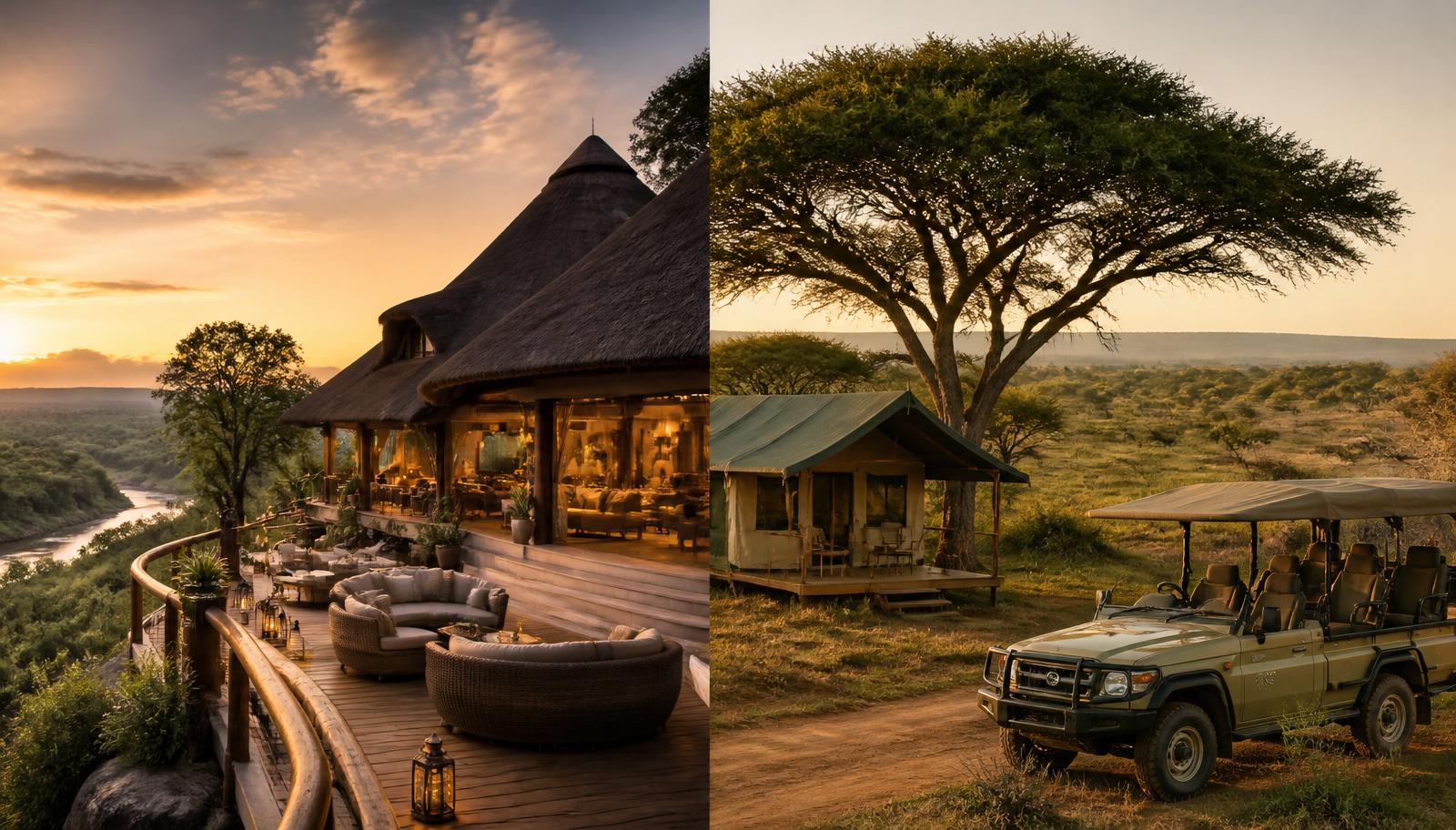
Safari Planning
Luxury vs Mid-Range Tanzania Safari: Which Experience Is Best for You?
A consultant's comparison of what actually changes when you pay more — camps, vehicles, guiding, routing and privacy — and how to decide which level fits your trip.

Where the Decision Really Sits
Most travelers arrive at this question after reading two quotes for what looks like the same trip: the same parks, the same number of nights, and a price difference of several thousand dollars per person. The natural reaction is to assume the expensive one must include something the cheap one is hiding. Sometimes that is true. More often, the difference is concentrated in a small number of things — where you sleep, how far you drive each morning, who is in your vehicle, and how much of the day you control.
We plan trips at both levels from our office in Arusha every week, and the pattern is consistent. People who choose mid-range and get a private vehicle, a strong guide and sensible camp locations almost never feel short-changed. People who spend heavily on rooms while accepting long drives and a shared vehicle often do. The price band is not the variable that decides how a safari feels. The specific choices inside the band are.
This guide is written to help you make one decision: which level makes sense for your trip, your dates and your budget. It is not a description of what a high-end safari looks like — our luxury safari guide covers that in detail — and it is not a full pricing breakdown, which lives in the Tanzania safari cost guide and the itemized cost breakdown. This one is about the trade-off.
Quick Comparison
If you only read one section, read this. Stripped of marketing language, here is what separates the two levels:
- Mid-range gives you comfortable rooms, reliable food, a licensed driver-guide, and full access to every national park. Properties are larger and sometimes further from the core wildlife areas, so more of your day is spent driving.
- Luxury gives you smaller properties in better positions, an exclusive vehicle as standard, stronger guiding, more inclusions, and the option to fly between parks. You spend less time in transit and more time at sightings.
- Both deliver the same animals in the same parks, in the same seasons, under the same park rules.
The practical question is not "which is better" but "which of the differences matter to me for these particular dates". A honeymoon and a first family safari are not solved by the same answer.
Luxury vs Mid-Range: Full Comparison Table
The table below reflects how these categories are used in practice by Tanzanian operators. Individual properties vary, so treat it as a guide to what to verify rather than a rule.
| What changes | Mid-range | Luxury |
|---|---|---|
| Rooms and camp size | Lodges and permanent tented camps, commonly 20–40 rooms. En-suite bathroom, hot water, proper bed, restaurant, bar, often a pool. | Small camps and lodges, commonly 8–20 rooms or tents. Larger private space, better finishes, in-room styling, often a private deck or plunge pool. |
| Where the property sits | Frequently nearer park gates or on the edge of the reserve, sometimes outside the boundary to reduce cost. | More often deep inside the park or on a private concession, which shortens the drive to prime wildlife areas. |
| Vehicle | Closed-body 4x4 Land Cruiser with a pop-up roof. Private use when you book it that way; shared on scheduled group departures. | Exclusive-use vehicle as standard. Camp-based fleets are often open-sided with tiered seating and fewer guests per row. |
| Guiding | Licensed driver-guide who stays with you for the whole trip. Experience ranges widely, so the individual guide matters more than the price band. | Senior or specialist guiding, sometimes a dedicated private guide who travels with you between camps. Naturalist and photographic specialisms are easier to request. |
| Meals | Buffet or set-menu dining, packed or hot lunch in the field, good handling of dietary needs. Soft drinks usually included, alcohol usually extra. | Plated menus, more field dining (bush breakfasts, sundowners, private dinners), and most drinks included at many camps. Always confirm what 'inclusive' covers. |
| Daily flexibility | Good on a private vehicle; limited on shared departures, where the group sets the schedule. | High. Departure times, meal times and full-day drives with a picnic are normally arranged on request. |
| Travel between parks | Mostly driving. Long transfer days are part of the itinerary unless you add flights. | Driving or flying. Light-aircraft hops are commonly built in, which converts transfer hours into wildlife hours. |
| Extra activities | Standard game drives in the national parks. Balloon flights and cultural visits can be added at extra cost. | Same park drives, plus concession-only options at some camps, such as walking safaris and night drives. |
| Wildlife | Same parks, same animals. | Same parks, same animals. What changes is the number of vehicles around a sighting and how long you can stay. |
| Typical all-in day rate | Broadly the mid-hundreds of US dollars per person per day, sharing. | Commonly two to three times the mid-range figure, and higher again at flagship camps in peak season. |
What the Categories Actually Mean
Neither "mid-range" nor "luxury" is a regulated classification in Tanzania. There is no star rating authority that decides which camp gets which label, which is why the same word can describe two very different products. Operators use the terms as shorthand for a price band and a style of service, and the honest way to read a quote is to ignore the label and look at four things: the property names, the number of rooms, where each property sits relative to the park, and whether the vehicle is yours alone.
How the bands are commonly used
- Budget and camping: public or special campsites, shared facilities, group vehicles, simple catering. A real option for young and flexible travelers, and a genuine step down in comfort.
- Mid-range: lodges and permanent tented camps with en-suite bathrooms and full board, private 4x4 game drives when specified, and a driver-guide who stays with you throughout.
- Luxury: smaller properties, stronger positions inside parks or on concessions, exclusive vehicles, wider inclusions, and more service per guest.
- Top-tier and flagship camps: a distinct market of its own, built around very small guest numbers, private concessions, specialist guiding and flying itineraries.
Most travelers choose between the middle two, and the practical gap between an upper mid-range trip and an entry-level luxury trip is far smaller than the gap between entry-level luxury and a flagship camp.
Accommodation Differences
This is the difference travelers see first because it is the one that photographs well, and it is also the one that has the least effect on wildlife viewing. Worth understanding clearly, and worth keeping in proportion.
What mid-range accommodation is really like
A typical mid-range property is either a permanent lodge or a tented camp built on raised platforms. Rooms have en-suite bathrooms with hot running water and a flushing toilet, proper beds with linens, mosquito nets where needed, and lighting that runs on mains power or a generator with fixed hours. There is a restaurant, a bar, usually a pool, and Wi-Fi in the main areas that ranges from decent to occasional. Guests eat at set times, often from a buffet, and the atmosphere is sociable rather than private.
Nothing about that is roughing it. The compromises are more subtle: more guests around you, less individual attention, thinner walls or canvas, and in some cases a location chosen partly because the land is cheaper, which usually means further from the animals.
What luxury accommodation adds
Luxury properties are smaller, and that single fact drives most of what follows. With fewer guests, service becomes personal, meal times become flexible, and the camp can afford to sit in a more expensive location. Rooms are larger and better finished, with proper bathrooms, private verandas, and in some cases plunge pools. Design and materials are a visible step up, and the general standard of upkeep is higher.
The part worth paying attention to is not the tub. It is that a nine-tent camp thirty minutes from a productive area gives you a different day than a forty-room lodge ninety minutes away, regardless of how either room looks.
Vehicles and Guiding
You will spend six to eight hours a day in a vehicle with one person. That makes the vehicle and the guide the most consequential part of the whole arrangement, and the part travelers research least.
Vehicles
Mid-range safaris use closed-body Land Cruisers with a pop-up roof. They are practical, comfortable on rough tracks, and give shelter from dust, sun and rain. Most have charging points and a cool box. On a private booking the vehicle is yours; on a scheduled departure you share it with other guests, and the middle seats are noticeably less comfortable for photography.
Camp-based luxury fleets often use open-sided vehicles with tiered seating and fewer passengers per row, which gives everyone an unobstructed view and a clean line for a camera. They also tend to be newer. Open vehicles are excellent in dry conditions and less pleasant in cold early mornings on the crater rim or in heavy rain, which is worth knowing before you assume open is automatically better.
Guiding
All guides working in Tanzanian national parks are licensed. Beyond that, experience varies widely, and it varies within both price bands. A guide with fifteen years in the Serengeti who knows which valley the pride moved into last week will find more, explain more, and read your interests better than a newer guide in a smarter vehicle.
What luxury reliably adds is the ability to request specialization: a guide with a strong birding background, a photographic guide who understands positioning and light, or a private guide who travels with you across camps so that nothing resets when you move. If none of those apply to you, guiding is not a reason to move up a band — but guide seniority within your chosen band absolutely is.
Food and Service
Both levels feed you well, and hunger is not part of the trade-off. The differences are choice, timing and attention.
Mid-range dining is usually a buffet breakfast, a packed or hot lunch depending on where you are during the day, and a set-menu or buffet dinner. Dietary requirements are handled routinely — vegetarian, vegan, gluten-free and halal are all common requests. Soft drinks are generally included; alcohol is normally charged separately.
Luxury dining is plated, with a short changing menu, and it moves around: breakfast in the bush after an early departure, sundowners set up on a ridge, dinner served privately on your deck if you ask. Most camps include house drinks, and some include everything except premium wines. Service ratios are higher, so requests are absorbed rather than negotiated.
One practical point that matters more than menus: flexible meal times. Being able to leave at first light with a packed breakfast, or stay out through the middle of the day with a picnic, is worth more in wildlife terms than any dish. That flexibility is standard at luxury level and available at mid-range on a private vehicle if you request it in advance.
Location, Routing and Privacy
Location is the least glamorous variable and the one that quietly decides how good your safari is. Two properties can look similar and produce completely different days because one sits inside the park and the other sits outside the gate.
- Inside the park: you can be out at first light, when predators are still active, and back for a rest without losing an hour each way.
- On the boundary or outside: you lose the golden first hour to the drive in, and often the last hour to the drive out, because you must exit before the gate closes.
- On a private concession: vehicle numbers are limited by the concession holder, so sightings are quieter, and activities that are prohibited inside national parks may be permitted.
- Seasonal positioning: mobile camps move with the herds. A well-positioned mobile camp in migration season can beat a permanent luxury lodge in the wrong region.
Privacy follows the same logic. It is not only about having your own space at camp; it is about how many other vehicles are around when something interesting happens. In the busiest parts of the Serengeti in high season, a good sighting attracts a crowd. Further out, it does not. Our Serengeti wildlife guide explains which regions tend to be busiest and when, and the Ngorongoro Crater guide covers why the crater is a special case where everyone shares the same small floor regardless of what they paid.
Private vs Shared Safari
This is the decision that changes a trip most, and it cuts across both price bands. A shared safari places you in a vehicle with other travelers you have not met, on a fixed schedule. The group decides collectively when to leave a sighting, when to stop, and how long lunch takes. It is cheaper, and for sociable solo travelers it can be genuinely enjoyable.
A private safari means the vehicle and guide are yours. You leave when you want, stay as long as you want, turn back when the children have had enough, and tell your guide what you care about most. On a couple's booking the cost difference is real but usually modest relative to the total, and on a family booking it is not optional in practical terms.
- Choose shared if: you are travelling solo on a tight budget, you are relaxed about pace, and meeting other travelers appeals to you.
- Choose private if: you are photographing seriously, travelling with children, on a honeymoon, travelling with anyone who needs flexibility, or simply want to control your own day.
If your budget only stretches to one upgrade, make it this one. It is the recommendation we give most often, and the one travelers most often thank us for afterwards. Couples planning around this trade-off will also find the couples safari guide useful, and parents should read the family safari guide for age-specific advice.
Does Luxury Mean Better Wildlife Viewing?
No. This is the point where a lot of safari marketing quietly misleads people, so it is worth being direct. The animals are wild, unfenced, and distributed across the same parks that every operator uses. Nobody can promise a leopard, and no price band improves the odds of one walking out of a thicket. A mid-range guest and a luxury guest watching the same pride are having the same wildlife experience.
What changes are the conditions around the sighting:
- How many vehicles are present, which affects both the view and the atmosphere.
- How long you can stay, which depends on whether the vehicle is yours.
- How early you can be there, which depends on where you slept.
- Whether walking or night activities are available, which depends on land status rather than price.
- How well your guide reads behavior and anticipates what happens next.
Those conditions are worth money — but notice that three of the five are achievable at mid-range with the right vehicle arrangement and the right camp location. That is the core argument of this article.
What You Actually Pay More For
Here is the honest ranking we use internally when advising travelers where to put extra budget, from highest to lowest practical return.
| Upgrade | What it actually changes | Practical value |
|---|---|---|
| Location inside the park | In-park and concession properties cut 60–120 minutes of driving off many days. | High. This is the upgrade that changes the shape of your day, not just your evening. |
| Exclusive-use vehicle | You control departure time, how long you stay at a sighting and when you head back. | Very high. Available at mid-range too, and the single best value upgrade on most trips. |
| Guide seniority | Years in the parks, tracking ability, bird and behavior knowledge, and how well they read your interests. | Very high, and not strictly tied to price band. Ask for the guide by name and experience. |
| Small camp footprint | Nine tents feels different from thirty-six rooms: quieter meals, faster service, less queuing at breakfast. | High if you value quiet and privacy. Neutral if you enjoy a sociable lodge atmosphere. |
| Room quality and design | Space, finishes, bathrooms, views, private decks, plunge pools. | Moderate. You are in the room mainly to sleep and shower on a game-drive-heavy itinerary. |
| Food and drink inclusions | Plated menus, curated wine lists, most drinks included, field dining. | Moderate. Pleasant every evening, but rarely the reason a trip is remembered. |
| Internal flights | Light aircraft between airstrips instead of long road transfers. | High on trips of seven nights or more, and on any itinerary that includes the far north or the southern parks. |
| Concession-only activities | Walking safaris and night drives, which are not permitted inside the national parks. | High for repeat visitors and anyone who wants more than vehicle-based viewing. |
Read that table twice before you compare quotes. Travelers routinely spend their upgrade budget from the bottom of the list upward, when the return is concentrated at the top.
Who Should Choose Mid-Range
Mid-range is the right answer more often than the industry admits. Consider it your default if any of the following describe you:
- This is your first safari. Nearly everything will be new. The novelty does not depend on the room, and you will learn what you actually want for next time.
- You would rather travel longer than travel richer. Extra nights improve sightings. Extra thread count does not.
- You are combining safari with Kilimanjaro or Zanzibar. Spreading the budget across the whole trip usually produces a better holiday than concentrating it on four safari nights.
- You are travelling with school-age children. A private vehicle, a pool and a relaxed schedule matter more than refinement at dinner.
- You enjoy a sociable atmosphere. Larger camps have more life in the evenings, and some travelers prefer that to a hushed dining room.
- You are watching cost carefully but refuse to compromise on wildlife. You do not have to. The parks are the same.
The one condition: book it well. Mid-range done badly — shared vehicle, gate-side lodges, one-night stays, a rushed itinerary — is where the category's poor reputation comes from. Mid-range done well is an excellent safari. If you are new to this, the first-time visitor guide walks through the sequence of decisions in order.
Who Should Choose Luxury
Luxury is the right call when the reason for the trip demands more than good wildlife viewing, or when your time is worth more than your money.
- Honeymoons and anniversaries. Privacy, atmosphere and being looked after are the actual purpose of the trip, not an add-on to it.
- Short trips. If you only have five or six nights, flying and staying inside the park recovers a meaningful share of your safari time.
- Serious photography. Exclusive vehicles, open sides, specialist guiding and unhurried sightings translate directly into images.
- Multi-generational and mobility-sensitive groups. Space, shorter transfers and flexible timing solve real problems here.
- Repeat visitors. Once you have covered the circuit, concessions, walking and night drives are the natural next step.
- Travelers who genuinely value hospitality. If a beautifully run camp is part of how you enjoy a holiday, that is a legitimate reason on its own.
Our luxury Tanzania safari guide goes into what the top-tier camps offer, how flying itineraries are built, and what "all-inclusive" tends to mean at that level.
When Luxury Is Worth the Extra Cost
A simple test: the premium is worth paying when it removes a constraint that would otherwise shape your trip. Work through these questions honestly.
- Is your trip short? Fewer days makes every hour of driving more expensive in real terms. Flying and in-park camps buy those hours back.
- Are you travelling in peak season? July to October brings crowds to the popular areas. Remote camps and concessions are the practical answer to vehicle congestion.
- Does the occasion matter? For a honeymoon or a milestone, the difference between "very good" and "exceptional" is usually worth the money.
- Do you have a specific goal? Photographing predators, walking in the bush or focusing on birds all justify a specialist setup.
- Is anyone in the group finding long drives hard? Comfort stops being a luxury when it becomes a limiting factor.
If you answered no to all five, mid-range with a private vehicle will very likely give you the trip you are imagining, and leave budget for another one.
How to Get Better Value at Either Level
Value on safari comes from structure, not from haggling. These are the moves that reliably improve the ratio of experience to cost.
| Value move | Why it works |
|---|---|
| Travel in the shoulder or green season | Rates at the same properties drop noticeably outside peak months, and the parks are quieter. |
| Stay longer in fewer parks | Fewer transfer days, fewer one-night stays, lower cost per useful safari day. |
| Split levels across the itinerary | Mid-range for Tarangire and the crater rim, luxury for the Serengeti nights, where you spend the most time on drives. |
| Keep the vehicle private, trade down the room | Protects the part of the day you actually live in, which is the vehicle. |
| Use one flight instead of the longest road transfer | Buys back most of a day without paying for a full flying itinerary. |
| Ask about long-stay and repeat-guest rates | Many camps discount stays of three nights or more, and some operators pass that through. |
One more, harder to quantify: choose an operator who will tell you when a cheaper option is the better one. If every recommendation you receive moves upward in price, you are being sold to rather than advised.
Sample Budget Scenarios
The scenarios below are the shapes of trip we build most often. They deliberately describe structure rather than fixed prices, because safari costs move with season, itinerary, property choice and group size — a July departure and a March departure to the same camps can differ substantially. Use these to identify your shape, then price your actual dates.
| Traveler | Itinerary shape | Level we would recommend | Reasoning |
|---|---|---|---|
| First safari, two people, 7 nights | Tarangire, Ngorongoro, central Serengeti by road, private vehicle throughout | Mid-range, one upgraded Serengeti camp | You see the full northern circuit, keep the guide constant, and put the extra spend where the wildlife density is highest. |
| Honeymoon, 8 nights | Short road day to Tarangire, then fly to Serengeti, finish in Zanzibar | Luxury for the Serengeti nights | Privacy, plated dinners and a small camp matter more on this trip than on almost any other. Flying protects the days you have. |
| Family of four, children 9 and 12, 8 nights | Tarangire base, Ngorongoro, central Serengeti, pool time built in | Mid-range with a private 4x4 | A private vehicle gives you the flexibility children need. Savings fund a longer trip or a beach extension. |
| Multi-generational group, 6 nights | Fewer parks, longer stays, short transfers | Upper mid-range to luxury, family units | Space, step-free access and flexible meal times matter more than adding another park. |
| Photographer, 9 nights | Two long Serengeti stays in different regions, full-day drives | Luxury with an exclusive vehicle and specialist guide | Time at a sighting and clean shooting angles are the product. This is where the premium converts into results. |
| Repeat visitor, 6 nights | One region, concession camp, walking and night drives | Luxury, single camp | You have already done the circuit. Depth in one area beats coverage. |
| Value-focused couple, 6 nights | Green-season travel, mid-range camps, private vehicle | Mid-range | Low-season rates and a strong guide deliver most of the experience at the lowest realistic cost. |
For worked routes at different lengths, see our Tanzania safari itineraries guide, which sets out how the days fit together across five, seven, ten and longer trips.
Common Booking Mistakes
These come up constantly, and every one of them is avoidable at the quoting stage.
| Mistake | What it costs you | How to avoid it |
|---|---|---|
| Comparing quotes on nightly rate alone | The cheaper quote often excludes park fees, concession fees, or uses a lodge outside the park boundary. | Compare the total per-person cost for the same itinerary, and ask for a written list of inclusions and exclusions. |
| Assuming 'luxury' is a regulated term | The same word is used for a four-star lodge and a nine-tent concession camp, at very different prices. | Ask for the exact property names, number of rooms and location relative to the park gate. |
| Booking a shared vehicle to save money, then regretting it | Your day runs on the group's pace: shared stops, shared sighting priorities, shared photo angles. | Price a private vehicle before you cut accommodation. It usually buys more experience per dollar. |
| Choosing a property that looks good in photos but sits far from the wildlife | Two to three hours of daily driving before the day even begins. | Ask how long it takes to reach the main game-viewing area from the property in that season. |
| Ignoring seasonal camp movement | A camp that was perfectly placed in February may be far from the herds in August. | Match camp location to where the wildlife is expected to be during your dates. |
| Spending everything on the room and nothing on time | A beautiful tent and rushed game drives. | Add nights rather than upgrade rooms. Extra days improve sightings more than thread count does. |
| Booking peak-season luxury late | Small camps sell out first, so you end up paying luxury rates for second-choice properties. | Confirm well ahead for July to October, or travel in the shoulder months. |
Whatever level you choose, pack the same way — the parks do not care what you paid. Our safari packing list covers what actually earns its space in the bag, including the luggage weight limits that apply if your itinerary includes light aircraft.
How to Make the Final Call
When a client is genuinely undecided, we work through the same four questions in order:
- 1. What is the trip for? A first look at Africa, a honeymoon, a family holiday and a photographic project have different right answers.
- 2. How many nights do you have? Short trips favor spending on time and position. Longer trips favor spending on more days.
- 3. What would you regret? Some travelers regret crowds. Some regret cutting the trip short. Very few regret the room.
- 4. What is the total you are comfortable with? Once that is fixed, the design problem is simple: build the best possible trip inside it, rather than stretching to a label.
In practice, the most common outcome of that conversation is a split-level itinerary: sensible properties for the first parks, a strong camp where the wildlife time is concentrated, a private vehicle throughout, and a senior guide. It is not the most expensive option and it is rarely the cheapest, but it is usually the one that produces the fewest regrets.
Related Guides
If you are still weighing the decision, these guides cover the adjacent questions in depth:
- Luxury Tanzania Safari — what the top-tier camps, concessions and flying itineraries actually involve.
- Tanzania Safari Cost — how pricing is built, and what moves it up or down.
- Tanzania Safari Cost Breakdown — a line-by-line look at where the money goes.
- Best Tanzania Safari Itineraries — route options by trip length.
- Tanzania Safari for Couples — where the extra spend pays off on a trip for two.
- Family Safari in Tanzania — age-by-age advice on parks, pacing and properties.
- Northern Circuit Safari Guide — how the main parks connect and how long each leg takes.
Common Questions
Frequently Asked Questions
It depends on what the trip is for. Luxury is worth it when it removes a real constraint: a short itinerary where flying and in-park camps buy back time, peak-season travel where remote camps avoid vehicle congestion, a honeymoon or milestone trip where privacy and service are the point, or a photographic trip that needs an exclusive vehicle and specialist guiding. If none of those apply, a well-built mid-range safari with a private vehicle usually delivers the trip most travelers are picturing.
Yes. Mid-range in Tanzania means an en-suite bathroom with hot running water, a proper bed with linens, full-board cooked meals, a restaurant and bar, and usually a pool and Wi-Fi in the main areas. The property may be a permanent lodge or a tented camp on a raised platform. The trade-offs are more guests around you, less individual attention, and sometimes a location further from the core wildlife areas — not a lack of basic comfort.
No. The animals are wild and unfenced, and both levels use the same national parks in the same seasons. What changes are the conditions around a sighting: how many vehicles are present, how long you can stay, how early you can be there, and how well your guide reads behavior. Three of those depend on your vehicle arrangement and camp location rather than the price band, which is why mid-range done well competes closely on wildlife experience.
On a shared safari you travel in a vehicle with other guests on a fixed schedule, so the group decides when to leave a sighting and how the day runs. On a private safari the vehicle and guide are yours, so you set departure times, stay as long as you like at a sighting, and shape the day around your interests. Private is available at both mid-range and luxury level, and it is the upgrade we recommend most often.
There is no single figure. A Tanzania safari is priced from park and conservation fees, accommodation, vehicle and guide, meals, transfers and any internal flights, and all of those move with season, itinerary, property choice and group size. As a rule, luxury commonly runs two to three times a comparable mid-range itinerary, and flagship camps in peak season sit higher again. Price your actual dates before deciding — our cost and cost breakdown guides explain how the numbers are built.
In rough order of practical value: camp location inside the park or on a private concession, an exclusive-use vehicle, guide seniority and specialization, a small camp footprint, room quality, wider food and drink inclusions, internal flights, and concession-only activities such as walking safaris and night drives. The items at the top of that list change your day. The items lower down change your evening.
For school-age children, mid-range with a private 4x4 is usually the better choice: the flexibility to shorten a drive or head back to the pool matters more than refinement at dinner, and the savings can fund a longer trip or a beach extension. Luxury makes more sense for families with very young children or multi-generational groups, where family units, shorter transfers and flexible meal times solve genuine logistical problems.
Yes, and it is often the best-value structure. A common build uses comfortable mid-range properties for the earlier parks and a stronger, better-positioned camp for the nights where game-drive time is concentrated, with a private vehicle and the same guide throughout. You keep the parts of the luxury experience that affect your days and skip the premium on nights where you are mainly sleeping.
Most first-time visitors are best served by a well-planned mid-range safari with a private vehicle, a senior guide and camps chosen for location. Almost everything will be new, the wildlife access is identical, and you will finish the trip knowing what you actually want to spend more on next time. Luxury makes sense on a first trip when the occasion demands it or when the itinerary is short.
Book as early as you reasonably can for July to October, when the parks are busiest. Small camps have the fewest rooms and sell out first, so late bookings in peak season often mean paying premium rates for second-choice properties. Shoulder and green-season travel gives you far more flexibility on both availability and price.
Final Thoughts
If you take one thing from this comparison, make it this: the wildlife is not for sale. Every traveler in every park sees the same animals under the same conditions, and no budget changes that. What money buys is position, exclusivity, time and comfort — and those things are worth different amounts to different people on different trips.
For most first-time visitors, a well-built mid-range safari with a private vehicle, a senior guide and camps chosen for location rather than photographs delivers the trip they were picturing. For honeymoons, milestone trips, short itineraries, photographers and repeat visitors, luxury solves real problems and earns its premium. And for a large group in between, a split-level itinerary is the honest answer.
The wildlife is not for sale — every traveler in every park sees the same animals under the same conditions. What money buys is position, exclusivity, time and comfort, and those are worth different amounts depending on why you are travelling and how long you have. Decide what the trip is for, protect the vehicle and the guide first, choose camps by location before looks, and spend the rest where it changes your days rather than your photographs.
Plan Your Journey
Tell us how you travel, and we'll price both options honestly
Send us your travel dates, group size, destinations, preferred accommodation style, whether you want a private or shared vehicle, and the budget you're comfortable with. Our Arusha-based team will come back with a personalized quotation — and a straight recommendation on where the extra spend is worth it for your trip and where it isn't.
- TALA Licensed Operator
- 4.9 ★ Guest Rating
- No Booking Fees
Keep Reading
More Safari Experience Guides
Safari Experiences
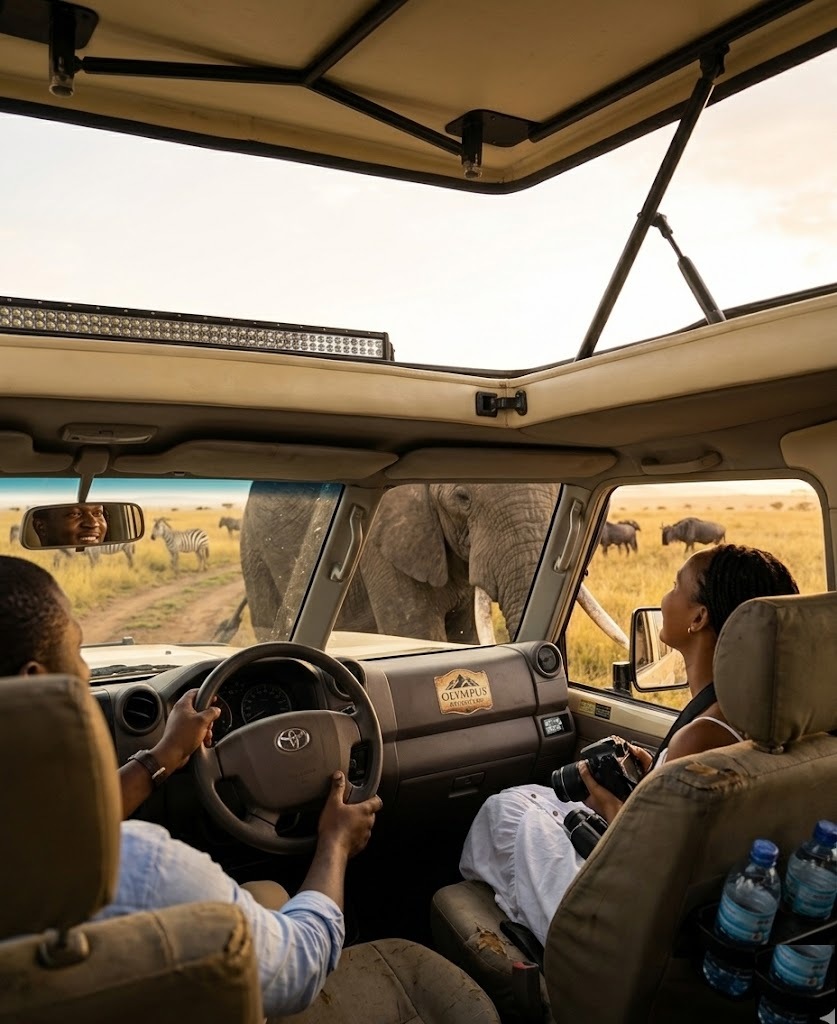
Beyond the Wilderness: What to Expect on a Luxury Tanzanian Safari
Safari Experiences
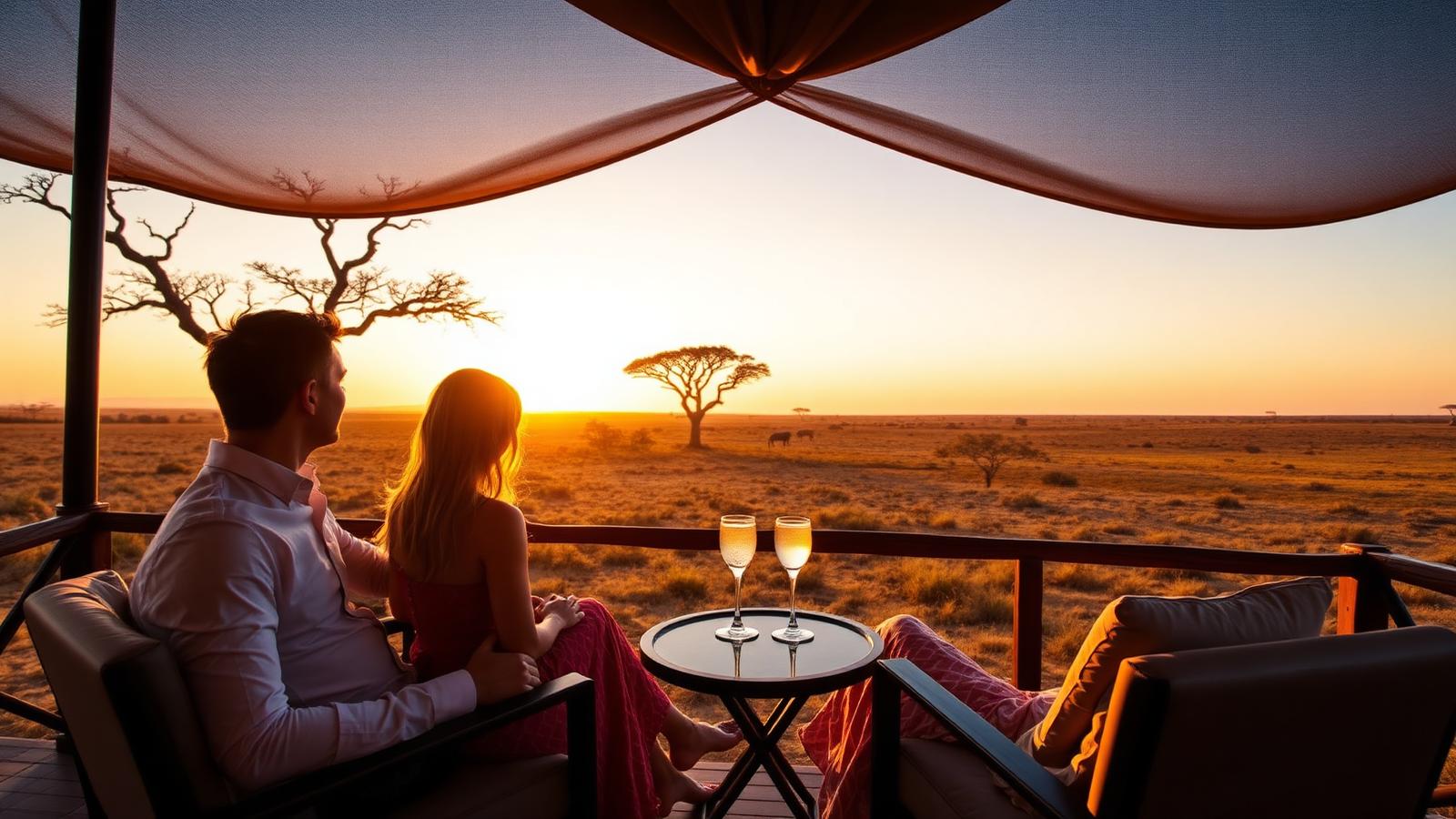
Tanzania Safari for Couples: How to Plan a Comfortable, Well-Paced Trip
Safari Experiences
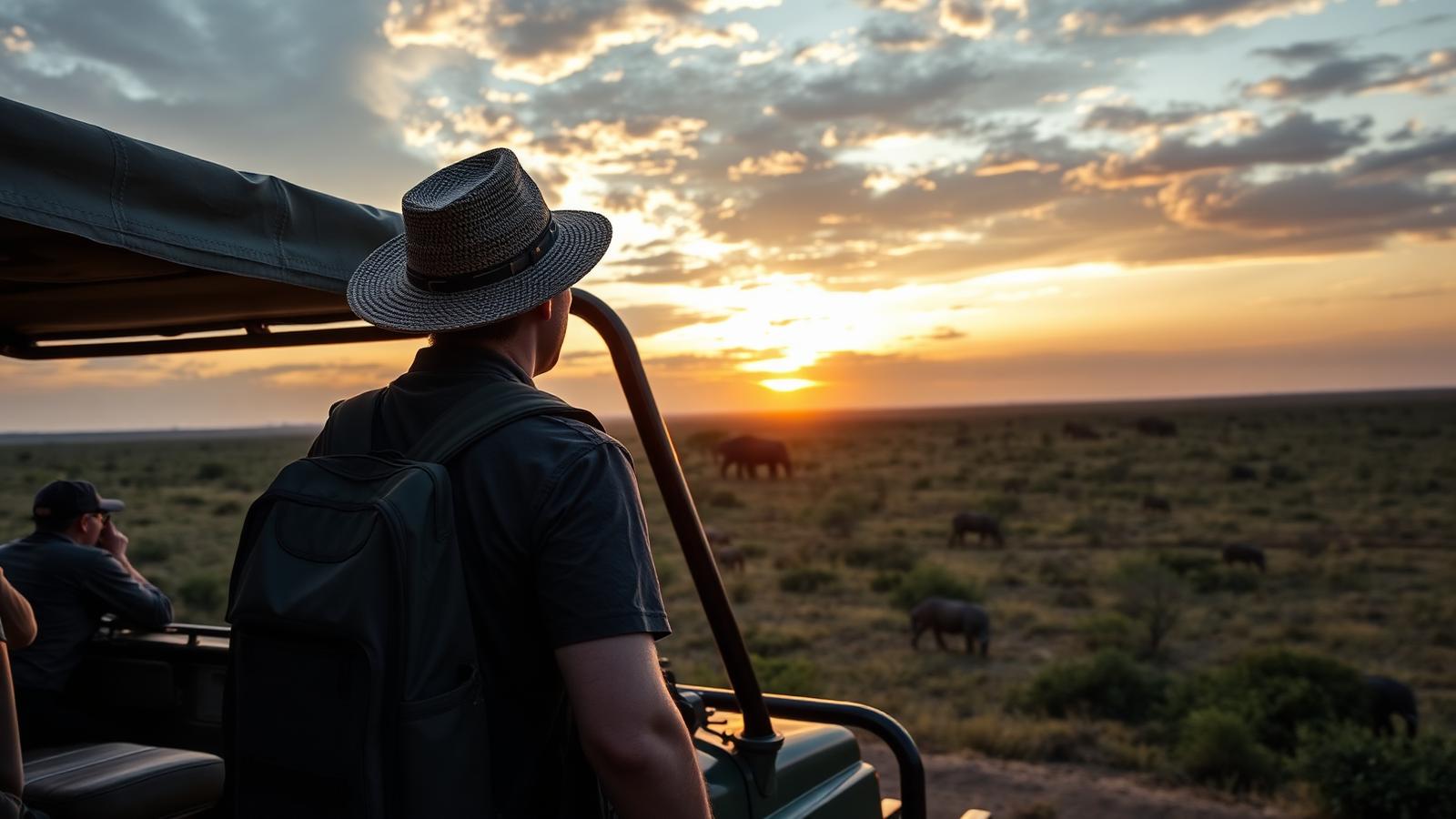
Family Safari in Tanzania: Everything Parents Need to Know
Safari Guides
The Ultimate Tanzania Travel Guide: Everything You Need to Know Before You Visit
Kilimanjaro