
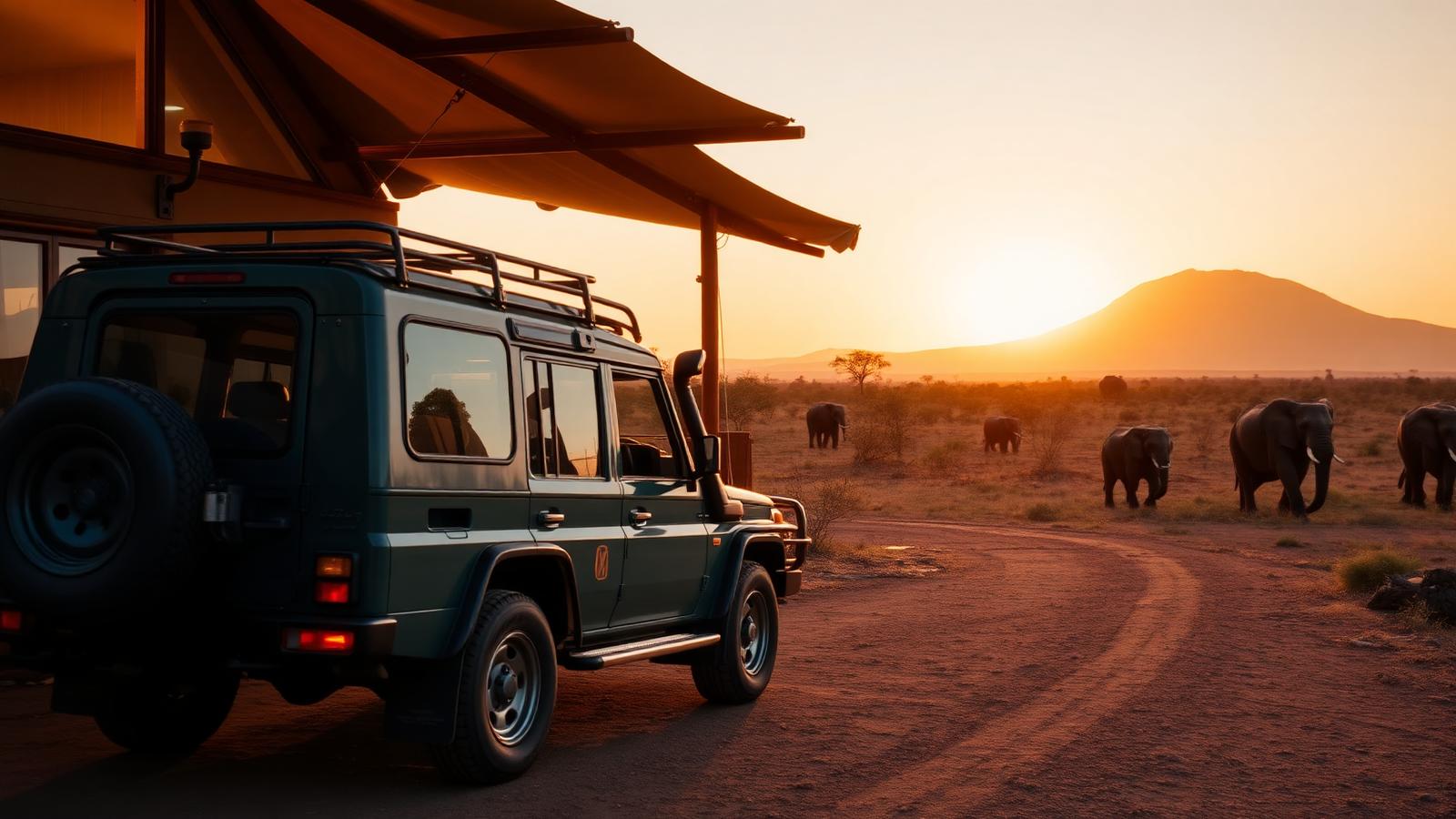
Safari Planning
Tanzania Safari Cost Breakdown: Where Your Money Actually Goes
A line-by-line look at what makes up a Tanzania safari price — park fees, lodges, vehicle days, guiding, flights and the costs travelers forget — written from the planning desk in Arusha.

Most people who write to us about price are not really asking whether a safari is expensive. They already know it is. What they want to know is why one quote says one thing and another says something very different for what looks like the same trip, and whether the gap represents better value or just a bigger margin.
That is a reasonable question, and it deserves a proper answer rather than a price list. This guide takes a Tanzania safari apart component by component and explains what each part is, who charges it, why it costs what it costs, and how much control you actually have over it. If you want the broader overview of pricing tiers and what a trip typically costs end to end, our main pricing guide covers that ground. This article goes underneath it, into the structure of the number.
One thing before we start. Park fees, lodge rates, fuel and flight prices all move, sometimes more than once a year. Nothing here should be read as a live price list. Where figures appear they are described as ranges and estimates to show relative weight — how much of your money goes where — and any real number for your trip has to come from a current quotation built around your dates.
The Short Answer
A Tanzania safari price is built from a small number of components, and they behave differently from one another. Park fees are set by the authorities and are identical for everyone. The vehicle, fuel and guide are priced per day and shared between everyone in the car. Accommodation is priced per person per night and has by far the widest range. Flights are priced per seat per sector. Taxes sit on top of most of it.
Add those together and you get the cost of running your trip. What an operator adds on top is the cost of planning it, staffing it, insuring it, and being reachable when something goes wrong at eleven at night in the middle of the Serengeti. Once you can see those components separately, safari pricing stops looking arbitrary — and comparing two quotes becomes a straightforward exercise rather than a guess.
Quick Cost Overview
Before the detail, it helps to know roughly how the money divides. The proportions below are typical of the northern-circuit trips we plan; they shift with lodge choice, group size and whether you fly. Treat them as a shape, not a formula.
| Component | Rough share of the price | Who sets it |
|---|---|---|
| Accommodation on full board | The largest single share on most itineraries | The lodge or camp |
| Park, conservation and vehicle entry fees | Second largest on park-heavy routes | Government authorities |
| Vehicle, fuel and guide | Significant, and shared across the group | The operator |
| Internal flights and transfers | Modest unless the itinerary is flight-heavy | Airlines and transfer providers |
| Taxes and statutory levies | Applied across most services | Government |
| Operator planning, admin and margin | The smallest share on a well-built quote | The operator |
What Determines Safari Cost
Every quote you receive is the sum of a dozen decisions, some of which you make and some of which the country makes for you. Here is the full list, with an honest note on how much influence you have over each.
| Driver | How it affects the price | Your control |
|---|---|---|
| Park and conservation fees | Charged per adult per 24 hours, plus separate vehicle and crater-service charges | Low — the rate is the same for every operator; only the number of park days changes |
| Accommodation level | The widest swing of any line item; the same park can offer a bed at a modest campsite rate or a rate many times higher | High — this is where most of the difference between two quotes sits |
| Location of the lodge | Camps inside a park cost more than equivalent properties outside it, and buy back game-viewing hours | High — but cutting it costs you time in the field |
| Vehicle and fuel | A safari 4x4 is priced per day, not per person, and fuel varies with how far you drive | Medium — routing and trip length change it |
| Guide | Daily professional fee; senior and specialist guides cost more | Low, and a poor place to economise |
| Group size | Vehicle, guide and fuel are trip costs shared between everyone on board | High — the single fastest way to lower the per-person figure |
| Season | Lodge rates move substantially between peak, shoulder and green season | High, if your dates are flexible |
| Private vs shared | A private vehicle carries the same daily cost whether two or six people are in it | High |
| Itinerary length | Each added day adds a park fee, a night, a vehicle day and fuel | High |
| Destination selection | Serengeti and Ngorongoro carry the highest entry costs on the northern circuit; Tarangire and Manyara are cheaper days | Medium — the parks you drop are also the parks you don't see |
| Internal flights | Priced per seat per sector; they buy time rather than comfort | Medium |
| Meals and drinks policy | Full board is standard; drinks inclusion is not | Medium |
Fixed Costs vs Flexible Costs
The most useful mental model for safari budgeting is to split the price into two halves. One half is effectively fixed the moment you decide which parks to visit and for how long. The other half is where your preferences live.
- Fixed, or close to it. Park and conservation entry fees, the crater-service charge, vehicle entry fees, the daily cost of running a safari 4x4, the guide's professional fee, statutory taxes. Every operator pays these at the same rate. A cheaper quote has not found a discount here.
- Flexible. Which camps you sleep in, whether they sit inside or outside the park, how many nights you stay, whether you fly a leg, whether the vehicle is private, which month you travel, and how many people share the car.
This is why the range of possible safari prices is so wide at the top and so narrow at the bottom. There is a floor beneath which a legitimate trip cannot be run, and there is no real ceiling. When someone quotes below the floor, the money is coming out of something — usually the vehicle, the guide, or the distance between your bed and the wildlife.
Price vs Value: Not the Same Question
Price is what appears on the invoice. Value is what that money buys in hours of good wildlife time, competence when something goes wrong, and the quality of the person sitting in the driver's seat. Two trips at the same price can deliver very different value, and this is where experience matters more than arithmetic.
A worked example. Two seven-day quotes land within a few hundred dollars of each other. The first uses lodges outside the parks and drives every sector. The second uses two in-park camps and flies one leg. On paper they are comparable. In practice the second trip delivers several additional hours of prime early-morning game viewing and one less long transfer day. The price is similar; the value is not.
The reverse also happens. A luxury camp in the wrong region during the wrong month costs a great deal and puts you hours away from the wildlife you came to see. Paying more is not the same as buying more. The questions worth asking are about position, timing and time in the field — not thread counts.
- Good value signals: in-park or gate-adjacent lodging, unlimited game drives, a named guide with real experience, an itinerary built around the season, a clear written inclusions list.
- Poor value signals: long daily drives disguised as scenic transfers, vague accommodation described only as "similar", capped drive hours, a headline price with fees added at the end.
Park Fees and Government Charges
This is the least understood part of safari pricing and the part travelers most often assume is negotiable. It is not. Entry fees are set by the Tanzania National Parks authority and, for the Ngorongoro Conservation Area, by its own authority. They are charged per adult for each 24-hour period inside the park, with lower rates for children in defined age bands. Every operator, from a budget camping outfit to the most expensive camp in the country, pays exactly the same rate for the same guest on the same day.
Several separate charges usually apply on a northern-circuit trip:
- Adult entry fee, per park, per 24 hours. The Serengeti sits at the top of the scale, with Ngorongoro close behind. Tarangire and Lake Manyara are meaningfully cheaper days.
- Vehicle entry fee. A separate daily charge on the car itself, independent of how many passengers it carries.
- Ngorongoro crater-service charge. A substantial fee levied per vehicle for each descent to the crater floor. On a two-person trip this single line is one of the largest costs of the day.
- Concession fees. Camps inside parks and on private concessions pay a per-guest, per-night charge to the authority or landholder, which is built into the nightly rate.
- Value-added tax and statutory levies. Applied across most services, and the reason a fee quoted "before tax" is not the fee you will pay.
The practical consequence is that the parks you choose set a hard floor under your budget before accommodation is even discussed. A trip that spends three days in the Serengeti and descends into the crater carries a very different fee base from one that spends those days in Tarangire and Lake Manyara — even at identical lodges.
Accommodation Costs
Accommodation is the widest-swinging component and the main reason two safaris to the same parks can differ by a factor of five. Within a single park you can find simple campsites and camps where a night costs more than a week elsewhere, and both are legitimate operations serving different travelers.
| Tier | What the night looks like | What you are paying extra for |
|---|---|---|
| Public campsite | Dome tents, shared ablutions, crew-cooked meals | Nothing beyond the basics — this is the floor |
| Mid-range lodge | Ensuite room, pool, buffet dining, often outside the park | Comfort, reliability, hot water, a proper bed |
| Permanent tented camp | Ensuite tent, plated meals, frequently inside the park | Location and atmosphere; less driving to reach wildlife |
| Luxury tented camp | Small guest numbers, high service ratio, prime positions | Position within the ecosystem, privacy, service depth |
| Exclusive-use and private concession | Private guiding, private areas, very low guest density | Exclusivity and access rules other guests do not have |
The most important variable inside this component is not luxury but location. Properties outside a park cost less than equivalent properties inside it, and the difference is real money. What you give back is time: an hour each way to the gate is two hours removed from the best light of the day, plus additional fuel and vehicle wear. On some routes that trade is sensible. On a migration-focused Serengeti trip it rarely is.
For a detailed look at what actually changes between the two most commonly compared tiers, our comparison of luxury and mid-range safaris goes property by property, and the luxury safari guide explains what the top tier includes that others do not.
Vehicle and Fuel Costs
A safari vehicle is not a rental car with a roof cut out. It is a heavily modified 4x4 built to work every day on surfaces that destroy ordinary vehicles: reinforced suspension, long-range fuel capacity, a pop-up roof, radio, cool box, recovery equipment and a maintained first-aid kit. Buying one is a major capital purchase, and keeping one road-legal and reliable in park conditions is a continuous expense.
The daily rate you are charged has to cover several things at once:
- Depreciation and replacement. Park roads age a vehicle quickly; the fleet has to be renewed on a schedule.
- Maintenance. Servicing, tyres, suspension and the workshop capacity to fix problems in the field rather than cancel a day.
- Insurance and compliance. Licensing, passenger cover and tourism-authority requirements.
- Fuel. Genuinely variable. A full Serengeti game day consumes a great deal more than a transfer day, and fuel delivered deep inside a park is not priced like fuel in town.
- Vehicle park entry. The separate daily charge mentioned above.
Critically, all of this is a cost per vehicle per day, not per person. That single fact explains most of what confuses travelers about safari pricing, and it is the mechanism behind everything in the group-size and private-versus-shared sections below.
Guide and Crew Costs
A licensed Tanzanian driver-guide is a trained professional, not a driver who knows some animal names. Qualification takes years, involves formal examination, and continues through ongoing certification in ecology, first aid, vehicle mechanics and guest safety. The good ones read weather, terrain and animal behaviour well enough to put you in the right place before the sighting develops rather than after.
Their daily fee reflects that, and it scales with experience and specialisation. A guide who can work with serious photographers, handle a family with young children, or navigate the northern Serengeti during river season costs more than one starting out. This is the last place on a quote worth economising, because the guide has more influence over what you actually see than any other single decision.
Behind the guide sits an unseen crew. A camp of twenty guests may employ several times that number in kitchen, housekeeping, maintenance, management and security roles, plus the logistics staff who resupply it across long distances. That employment structure is part of your nightly rate, and part of why safari tourism functions as a rural economy rather than just an industry.
Food and Drinks
Full board is the standard on any serious safari: breakfast, a packed or served lunch depending on the day's plan, afternoon tea at most camps, and dinner. The catering standard across Tanzanian camps is genuinely high, which surprises first-time visitors who expect remoteness to mean compromise. Dietary requirements are handled routinely when notified in advance.
Drinks are the part that varies, and the part that quietly appears on final bills:
- Drinks-inclusive properties. House wine, local beer, soft drinks and water are covered; premium wines, champagne and imported spirits are usually extra. Common at the luxury end and at some mid-range camps.
- Drinks-extra properties. Everything beyond drinking water is charged at the bar. Perfectly normal, but on a week-long trip for two it can add a meaningful sum you had not budgeted.
Ask which model applies at each property before you book, not at check-out. It is a one-line question that removes an entire category of unpleasant surprise.
Transfers and Ground Transport
Transfers are small line items that add up. The drive between Kilimanjaro International Airport and Arusha, hotel-to-office collections, and the road sectors between parks all carry a cost, whether shown separately or folded into the vehicle days. On a driving itinerary, transfers are largely absorbed by the safari vehicle you have already paid for. On a fly-in itinerary they appear as discrete charges at each airstrip.
One detail worth knowing: on the northern circuit the distances are long and the surfaces slow. A sector that looks short on a map can consume most of a day. When you compare two itineraries, count the transfer days honestly — a trip with fewer, better-placed movements often costs the same and delivers considerably more time in the field. Our northern circuit guide covers how the route physically connects.
Internal Flights
Light-aircraft flights between Arusha, the Serengeti airstrips and the coast are priced per seat, per sector, and they buy one thing: time. A road sector that consumes most of a day can become a short hop, which converts a travel day back into a game-viewing day. On itineraries of five days or more, at least one flown leg is often the best-value decision on the whole quote.
- Seat pricing. Each traveler pays; unlike the vehicle, there is no sharing benefit.
- Luggage limits. Soft bags only, with a strict weight allowance. Our packing guide explains how to work within it.
- Airstrip transfers. Getting from the strip to camp is a separate short game drive or transfer, sometimes charged separately.
- Schedule realities. Light aircraft run circuits with multiple stops; the flight time on paper is rarely the door-to-door time.
The common structure we recommend is driving in and flying out. You keep the scenic approach through the highlands, see the country between the parks, and avoid spending your final day on a long return transfer before an international departure.
Conservation and Community Levies
A portion of what you pay never touches the commercial side of the industry at all. Conservation levies, community land-lease payments and per-guest contributions collected by camps fund anti-poaching work, ranger employment, school and clinic support, and lease payments to communities who share land with wildlife — particularly around the Ngorongoro highlands and the areas bordering the Serengeti.
These are usually built into nightly rates rather than itemised, so most travelers never see them. They are worth understanding, because they explain something structural: the reason Tanzania's parks still look the way they do is that wildlife pays its own way there. The greatest long-term pressure on these ecosystems is land-use change, and tourism revenue reaching local communities is the direct counterweight to it.
Budget Safaris: What the Money Buys
Budget safaris in Tanzania are almost always camping-based and group-shared. You sleep in dome tents at public campsites, a crew cook prepares meals, and the vehicle carries a full load of travelers who have booked separately. The wildlife you see is the same wildlife — the parks do not have a cheap section.
- Shared vehicle, usually filled to capacity, with a fixed departure date
- Public campsites with shared ablution blocks and basic facilities
- A simpler itinerary, often heavier on driving and lighter on remote regions
- Less flexibility to linger at a sighting because other passengers have their own priorities
What this tier genuinely cannot compress is the fee base. Park fees are identical, so a very low budget price means the savings came almost entirely from accommodation and vehicle sharing. That is legitimate. What is not legitimate is a price so low that the vehicle or the guide has been compromised — and in a place where a breakdown costs you a game day, that shows up quickly.
Mid-Range Safaris: The Default for Most Travelers
Mid-range is where the majority of our clients land, and for good reason. You get a private vehicle for your party, a proper ensuite room or tent, reliable food, and an itinerary shaped around your interests rather than a fixed departure schedule. The wildlife access is identical to the luxury tier; what differs is the finish of the room and, sometimes, how far it sits from the gate.
- Private 4x4 and a dedicated driver-guide for your group
- Ensuite lodges or permanent tented camps, some inside parks and some just outside
- Full board with a drinks policy that varies by property
- Enough flexibility to change the day's plan when a sighting is developing
If you are planning a first trip and unsure where to start, the first-timer's guide works through the decisions in order, and our itinerary comparison shows what different trip lengths realistically cover.
Luxury Safaris: What Actually Costs More
The luxury tier is often misdescribed as paying for thread counts and cocktails. Some of it is. Most of it is not. What genuinely drives cost at the top end is position, density and service ratio.
- Position inside the ecosystem. Camps sited where the wildlife is for that particular month, including mobile camps that move seasonally. This is the single most valuable thing money buys on a safari.
- Low guest density. Fewer tents means fewer guests sharing the same fixed costs of running a remote camp, and it means quiet.
- Private concessions. Land where general park rules on vehicle numbers, night drives and walking do not apply in the same way.
- Service depth. Higher staff-to-guest ratios, private guiding, and logistics that make remoteness feel effortless.
The honest advice is that luxury earns its price most clearly on Serengeti nights during peak migration movement, where being inside the right region removes hours of daily repositioning. Elsewhere the wildlife difference between tiers is much smaller than the price difference. Our tier-by-tier comparison sets out where we think the upgrade pays and where it does not.
Private vs Shared Cost
The mechanics here are simple once you know that the vehicle is a daily cost. A private safari means the vehicle, guide and fuel are carried entirely by your party. A shared safari splits them across strangers who booked the same departure. Nothing about the wildlife changes; the arithmetic does.
| Aspect | Private safari | Shared safari |
|---|---|---|
| Vehicle cost | Carried by your party alone | Divided across all passengers |
| Departure dates | Any date you choose | Fixed dates that need minimum numbers |
| Daily pace | Yours — stay at a sighting as long as you want | Group consensus, and someone always wants lunch |
| Window seats | Everyone has one | Rotated, and the middle row is real |
| Photography | Positioning can be requested and repeated | Constrained by other passengers' interests |
| Best suited to | Couples, families, photographers, anyone with fixed dates | Solo travelers and cost-led trips |
For two travelers, going private is the largest single premium on the quote and often still the best money on it. For a group of four or six, private is barely more expensive than shared, because you have filled the vehicle yourselves.
Per-Person vs Per-Trip Pricing
Almost every safari quote is presented per person, which hides an important distinction. Some costs are genuinely per person and some are per trip, divided by however many people are travelling.
| Cost | Behaves as | Effect of adding a person |
|---|---|---|
| Park and conservation fees | Per person | Rises by one full share |
| Accommodation | Per person sharing | Rises, though sharing a room reduces the per-head rate |
| Vehicle, fuel, guide | Per trip | Unchanged in total, so the per-person share falls |
| Crater-service charge | Per vehicle | Unchanged in total; the per-person share falls |
| Internal flights | Per seat | Rises by one full seat |
| Airport transfers | Per vehicle | Usually unchanged |
A note on the single supplement. Rooms and tents are priced on two people sharing, so a solo traveler pays a supplement for occupying one alone. It is not a penalty; it reflects the property earning one rate instead of two for the same room. Some camps waive or reduce it in low season.
How Group Size Moves the Number
If you take one practical lesson from this article, make it this one. Because the vehicle, the guide, the fuel and the crater-service charge are trip costs, the per-person price of an identical itinerary falls noticeably each time someone joins — until the vehicle is full.
- Two travelers. The trip costs are split two ways. This is the most expensive per-person configuration of a private safari.
- Four travelers. The same vehicle, the same guide, the same crater charge, halved again per head. Usually the sweet spot for comfort and value together.
- Six travelers. The lowest per-person figure on a private basis, at the cost of a fuller vehicle and slightly less room for camera gear.
- Beyond six. A second vehicle is required, and the arithmetic resets. Two vehicles for eight people is usually more comfortable than trying to squeeze.
Families notice this most. A family safari for four in one vehicle, with child rates on park fees, often lands at a per-person figure well below what the same trip costs a couple.
Seasonal Price Differences
Park fees do not change with season, but accommodation very much does, and it is the largest component of your price. Camps publish distinct peak, shoulder and green-season rates, and the gap between them is substantial enough to change which tier you can afford.
| Window | Demand | Pricing pattern | Trade-off |
|---|---|---|---|
| January – March | High around the southern Serengeti calving period and the holiday tail | Peak or near-peak at the camps positioned for calving | Excellent predator activity; book early because the good positions are limited |
| April – mid-May | Lowest of the year | Green-season rates; the largest reductions most properties publish | Heavier rain, softer roads, and some seasonal camps closed |
| Late May – June | Rising | Shoulder rates early in the window, moving toward peak by late June | Often the best value-to-conditions ratio of the year |
| July – October | Highest | Peak season across almost all properties | Dry-season game viewing and the northern Serengeti river season, at the year's highest rates |
| November – early December | Moderate | Shoulder rates before the festive surcharge period begins | Short rains, green landscapes, quieter parks |
| Mid-December – early January | High | Festive surcharges at most camps, often with minimum-stay rules | Good conditions, but the least flexible pricing of the year |
The most underrated dates are the shoulder edges: the weeks either side of the long rains, and the early part of November. Wildlife viewing remains strong, the parks are quieter, and rates sit below peak. Before you fix dates, read our month-by-month guide to travel timing alongside your budget rather than after it.
Trip Length and Destination Choice
Each additional safari day adds a predictable stack of costs: one more set of park fees, one more night, one more vehicle day, more fuel. That makes length one of the cleanest levers available — but also the one most often used badly.
Adding days only creates value if they are spent somewhere that rewards them. Three well-used days in the Serengeti deliver far more than five days spread thinly across five parks with a long drive between each. The same applies in reverse: a two-night Serengeti stay reached by road in both directions spends most of its budget on transit.
Destination choice works the same way. The Ngorongoro Crater is a single, expensive, high-yield day. Tarangire is a cheaper park day with excellent elephant concentrations in the right season. Building a route that matches fee levels to what each park actually gives you in that month is one of the most effective forms of budgeting there is, and it is why we ask about travel dates before quoting anything.
Zanzibar Extension Costs
A beach extension is the most common add-on, and it should be budgeted as its own trip rather than as a rounding error at the end of the safari. The cost structure is completely different from the mainland: no park fees, no vehicle days, no guide — but hotel rates, flights, transfers and an island infrastructure levy instead.
- Flights from the safari circuit or Arusha to Zanzibar, priced per seat
- Airport-to-hotel transfers, which vary considerably with which coast you choose
- Hotel nights, usually bed-and-breakfast or half board rather than full board
- An infrastructure levy charged per person per night by the authorities
- Activities such as diving, snorkelling trips and Stone Town tours, priced individually
Three to five nights is the usual length, and the north and east coasts differ meaningfully in both price and character. Our guide to combining safari and Zanzibar covers how to sequence the two legs without wasting days in transit.
Sample Budget Scenarios
Rather than quoting numbers that will be out of date within months, here is how six common trip shapes differ structurally. Each of these carries a different cost profile for reasons that have nothing to do with luxury.
| Traveler profile | Typical shape | Main cost drivers | Planning note |
|---|---|---|---|
| Two travelers, short first safari | Around five days on the northern circuit, mid-range lodges, one vehicle, driving in and flying one leg out | Park fees for three parks, four nights, five vehicle days, two flight seats | The cheapest realistic version of a proper northern circuit trip for a couple |
| Two travelers, migration-focused | Seven days with two or three nights positioned in the right Serengeti region for the month | More Serengeti nights at in-park rates, a flight to reduce transfer time | Costs more because location, not luxury, is doing the work |
| Family of four | Seven days, family rooms or a shared tent configuration, one vehicle for all four | Child park-fee rates, one vehicle rather than two, family-friendly properties | Per-person cost usually falls well below the two-traveler equivalent |
| Group of six friends | Six to eight days, mid-range lodges, one or two vehicles | Vehicle and guide split across six people; accommodation still per person | The clearest example of fixed costs behaving well at scale |
| Honeymoon or milestone trip | Six to eight safari days at luxury camps, then a beach extension | In-park luxury camps, flights between regions, private guiding | Most of the increase sits in accommodation and exclusivity, not in wildlife access |
| Safari plus Zanzibar | Seven safari days plus four to five beach nights | Extra flights, island transfers, hotel nights and a Zanzibar infrastructure levy | Budget the beach leg as a separate trip rather than as an afterthought |
When we build a quote, we start from one of these shapes and adjust. The fastest way to get a realistic figure for yourself is to tell us which row you resemble, your travel month and your group size — those three facts alone determine most of the price.
What Is Usually Included
Inclusion lists vary between operators, which is exactly why comparing headline prices is unreliable. Here is what an established Tanzanian operator normally covers, and what to confirm in each case.
| Item | Usual position | What to confirm |
|---|---|---|
| Park and conservation fees | Normally included by established operators | Confirm which parks, how many days each, and whether the Ngorongoro crater-service charge is inside the figure |
| Government taxes (VAT and levies) | Normally included | Ask whether tax is inside the quoted rate or added at invoice |
| 4x4 safari vehicle and fuel | Included | Ask whether game drives are unlimited or capped by hours or kilometres |
| Professional driver-guide | Included | Ask about language, experience and whether the guide stays with you the whole trip |
| Accommodation on full board | Included from the first safari night | Confirm room category, and whether arrival and departure nights in Arusha are inside the price |
| Drinking water in the vehicle | Included | Usually a set daily allowance |
| Airport transfers | Often included | Confirm both directions, and which airport |
| Flying-doctor style emergency evacuation cover | Sometimes included | Ask directly; it is inexpensive and worth having either way |
What Is Usually Excluded
| Item | Why it sits outside the safari price |
|---|---|
| International flights | Priced independently and better booked to suit your own route and airline preference |
| Visa and entry requirements | Paid by the traveler; see our visa guide for the current process |
| Travel and medical insurance | A personal purchase, and not something an operator should bundle blindly |
| Tips for guide and camp staff | Customary in Tanzania and left to the traveler's discretion |
| Drinks beyond the camp's policy | Depends entirely on whether the property runs a drinks-inclusive model |
| Optional activities | Balloon flights, walking safaris, cultural visits and spa treatments are usually quoted separately |
| Laundry, curios and personal items | Charged directly at the camp |
| Pre and post-safari hotel nights | Often outside the safari price unless you ask for them to be added |
Costs Travelers Forget
These are the items that turn a well-planned budget into an uncomfortable final week. None of them are large individually. Together they are not trivial.
- Tips. Customary for your guide and for camp staff, and normally paid in cash at the end. Agree a figure before you travel and carry it with you.
- Drinks at drinks-extra properties. Easily overlooked over six or seven nights.
- Optional activities. Balloon flights in particular are a significant separate cost and need booking well ahead.
- Gear. Binoculars, appropriate clothing and a soft bag for light aircraft. The packing list helps you buy once rather than twice.
- Visa and arrival requirements. Small, but a real line in the budget.
- Travel insurance. Non-negotiable on a trip involving remote areas and light aircraft.
- Arrival and departure hotel nights. Frequently outside the safari quote unless requested.
- Card and currency charges. Foreign transaction fees and cash withdrawals add up quietly.
Why Two Quotes for the Same Trip Differ
When clients send us two competing quotes and ask which is better, the answer nearly always comes from the same handful of differences — and almost never from one operator being cheaper at the fee counter.
- Different inclusions. One price contains park fees, flights and transfers; the other adds them at invoice stage.
- Different lodge locations. Same star rating, very different drive to the gate.
- Different vehicle arrangement. One is a private 4x4, the other a seat on a shared departure.
- Different park-day counts. An itinerary that exits a park before the 24-hour mark pays fewer fees and gives you less time.
- Different group-size assumptions. A per-person price based on six travelers is not comparable to one based on two.
- Agent layers. A trip resold through overseas intermediaries carries their margin as well as the ground operator's.
Reducing Cost Without Ruining the Safari
There are good ways and bad ways to spend less. The good ones remove cost without removing time in the field. The bad ones save money on the parts of the trip you will actually remember.
Savings that cost you nothing important
- Move your dates into the shoulder season. Often the single largest reduction available, and the wildlife barely notices.
- Travel with more people. Four or six sharing a vehicle divides the trip costs that two people carry alone.
- Book directly with a licensed Tanzanian operator. You remove intermediary margin, not service.
- Mix accommodation tiers. Save on the nights where location does not matter, spend on the ones where it does.
- Stay outside the park where the gate is close anyway. Karatu below the crater is the classic example.
- Drop the low-yield park day. A park added for the sake of a longer list is a fee you paid for a transit day.
- Fly one leg instead of two. You recover most of the time benefit at part of the cost.
- Choose length over polish. An extra night in the park usually beats an upgraded room.
Savings that quietly ruin the trip
- Cutting the guide's quality to save a daily fee — the guide is the trip
- Accepting an older or uncertified vehicle, which risks losing whole game days
- Sleeping so far from the gate that two hours of every day are spent commuting
- Compressing the Serengeti into a single night because it is the expensive part
- Booking peak dates at the cheapest available property rather than shifting the dates
- Choosing an operator you cannot verify because the price was the lowest you found
Common Budgeting Mistakes
| Mistake | Why it hurts | Better approach |
|---|---|---|
| Comparing quotes by headline number only | One may include park fees, flights and transfers while the other adds them later | Line up the inclusions side by side before you compare totals |
| Assuming the per-person price is fixed | Vehicle, guide and fuel are trip costs; the per-person figure moves with group size | Ask what the same itinerary costs at two, four and six travelers |
| Budgeting only for the safari itself | Flights, visa, insurance, tips, drinks and pre-trip gear add up quietly | Build a total-trip budget, not a safari-only one |
| Choosing lodges purely on nightly rate | A cheaper property far from the gate costs you game-viewing hours and fuel | Judge accommodation on location first, comfort second |
| Stretching the itinerary to feel like better value | Each added day adds fees and a night whether or not it adds good wildlife time | Concentrate days in the parks that justify them |
| Treating a very low quote as a bargain | Fixed costs are the same for everyone, so the discount has to come from somewhere | Ask what vehicle, which guide, which camp and how far from the gate |
| Leaving tips out of the plan | They are customary, usually cash, and easy to be caught short on at the end of a trip | Agree a tipping budget before departure and carry it in cash |
| Booking peak dates without checking shoulder alternatives | A shift of two or three weeks can change lodge rates noticeably | Ask for the same itinerary priced across two or three date windows |
Related Guides
These are the guides that pair most usefully with a cost breakdown, in the order most travelers need them:
- The broader pricing guide — overall trip costs, tiers and what a full safari typically runs.
- Choosing between comfort levels — what genuinely changes as you move up a tier.
- Route lengths compared — what five, seven, ten and fourteen days realistically cover.
- Picking your travel month — the season decision that moves your budget most.
- Planning a first safari — the decisions to make, in order.
- Adding a beach leg — how the Zanzibar extension fits and what it adds.
Common Questions
Frequently Asked Questions
An established operator normally includes park and conservation fees, government taxes, the 4x4 safari vehicle with fuel, a professional driver-guide, accommodation on full board, and drinking water in the vehicle. Airport transfers are often included too. What you should confirm in writing is the room or tent category at each property, whether the Ngorongoro crater-service charge is inside the figure, whether game drives are unlimited, and how many travelers the per-person price assumes.
Rarely because one operator gets cheaper park fees — those rates are identical for everyone. The differences almost always come from inclusions (one quote adds fees, flights or transfers later), lodge location (a property outside the park costs less but adds driving hours), vehicle arrangement (private versus a seat on a shared departure), the number of fee-paying park days, the group size the price assumes, and whether overseas agent margin sits on top of the ground cost.
Park and conservation entry fees, the vehicle entry fee, the crater-service charge, the daily cost of running a safari 4x4, the guide's professional fee and statutory taxes are effectively fixed for every operator. The flexible parts are accommodation level and location, trip length, travel season, whether you fly a sector, whether the vehicle is private, and how many people share it.
For two travelers a private vehicle is the largest premium on the quote, because the vehicle, guide and fuel are carried by your party alone rather than divided across a full car. Most couples still consider it the best money on the trip: you set the pace, stay at a sighting as long as you want, and everyone has a window. For a group of four or six the premium largely disappears, since you have filled the vehicle yourselves.
Because the vehicle, fuel, driver-guide, crater-service charge and airport transfers are trip costs rather than per-person costs. Adding a traveler adds one more set of park fees and one more accommodation share, but the trip costs stay the same and get divided further. That is why the identical itinerary usually prices lower per head at four travelers than at two, and lower again at six.
Park fees do not change with season, but accommodation does — and accommodation is normally the largest component of your price. Camps publish separate peak, shoulder and green-season rates, and the gap is large enough to change which tier of property is realistic on your budget. The weeks either side of the long rains, and early November, tend to combine strong wildlife viewing with rates below peak.
International flights, visa costs, travel and medical insurance, tips for your guide and camp staff, drinks at properties that are not drinks-inclusive, optional activities such as balloon flights or diving, laundry and personal purchases, and sometimes the hotel nights before and after the safari itself. None are large on their own, but together they are worth budgeting for deliberately.
Yes, and the effective levers are date flexibility, group size, booking directly with a licensed Tanzanian operator, mixing accommodation tiers so you only pay for location where location matters, dropping a low-yield park day, and flying one sector instead of two. What we would avoid is economising on the guide, the vehicle, or the distance between your bed and the park gate — those savings show up in lost game-viewing hours.
Treat any published figure, including ranges on this site, as a snapshot rather than a live rate. Entry fees are reviewed periodically, camps reprice seasonally, and fuel and exchange rates move. Published figures are useful for understanding proportions — how much of a price goes to fees versus lodging versus transport — but the number you will actually pay has to come from a current written quotation for your dates.
Send your travel dates, the number of travelers, how many days you have, the parks or wildlife you care most about, the accommodation level you have in mind, and whether you would prefer a private vehicle or a shared departure. Those details determine most of the price. We will come back with a costed itinerary broken out line by line, including where we think you could spend less.
Final Thoughts
A Tanzania safari costs what it costs because most of the price is not discretionary. The parks charge what they charge. The vehicle costs what it costs to keep running on those roads. The guide is a professional whose pay reflects it. What sits on top of that base is a set of choices about comfort, position and timing — and those choices, not the base, are where two travelers on the same route end up with very different invoices.
The single most useful thing you can do when planning is to ask for the breakdown. A quote you can read line by line tells you where your money is going, which parts are fixed, and which parts you can move. An operator who cannot produce that is either not building the trip themselves or would rather you did not look too closely.
Safari pricing stops feeling arbitrary the moment you can see the components separately: fixed fees you cannot change, trip costs that fall as your group grows, and accommodation choices that carry most of the variation. Tell us your dates, your group and what matters most, and we will show you the breakdown for your own trip rather than a generic figure.
Plan Your Journey
Want a current, line-by-line quotation for your dates?
Send us your travel dates, the number of travelers, how long you have, the parks you care about, the accommodation level you have in mind, and whether you would prefer a private vehicle or a shared departure. Our Arusha team will build a costed itinerary and show you exactly what each part of it pays for — including where we think you could spend less. Final pricing always depends on dates, group size, itinerary and availability at the time of booking.
- TALA Licensed Operator
- 4.9 ★ Guest Rating
- No Booking Fees
Keep Reading
Related Tanzania Safari Guides
Safari Guides
The Ultimate Tanzania Travel Guide: Everything You Need to Know Before You Visit
Safari Guides
Tanzania Safari Myths and Facts: Separating Fiction from Reality
Safari Guides
Best Tanzania Safari Itineraries: How to Choose the Right Route for Your Days
Safari Guides