Safari Planning
Tanzania Safari Accommodation Guide: Choosing the Perfect Place to Stay
Lodges, tented camps, mobile camps and private houses — what each one really feels like, what it costs, and how to choose, written from Arusha by the people who inspect them.

Introduction
Most people spend weeks agonizing over which parks to visit and about ten minutes thinking about where they'll sleep. In my experience that's backwards. Where you stay on safari decides how early you can be at a leopard sighting, how far you drive before breakfast, whether your kids have somewhere to burn off energy at noon, whether your partner wakes up delighted or exhausted, and — more than anything else on the invoice — what the trip costs.
I've run safaris out of Arusha for over fifteen years, and part of my job is physically inspecting properties: sitting on the beds, testing the shower pressure, checking whether the "river view" is actually a view of the staff car park. Some of the most expensive places in Tanzania are genuinely worth it. Others charge luxury money for a location that costs you two hours of wildlife time every single morning.
This guide is everything I tell clients when they ask about Tanzania safari accommodation: the six styles you'll be offered, how lodges really differ from tented camps, what to book in each park, what's included, how the food and power and Wi-Fi actually work, and how we choose properties for our own guests. No brochure language, no pretending every camp is magical.
Types of Safari Accommodation in Tanzania
Every property you'll be quoted falls into one of six categories. The labels get abused constantly — I've seen a roadside guesthouse advertise itself as a "luxury safari lodge" — so here's what each one genuinely means on the ground.
| Type | Typical price | What it is | Best for |
|---|---|---|---|
| Luxury Lodge | $450 – $900 pp/night | Permanent stone, timber and thatch buildingsPools, spas, air conditioning in some, restaurant dining, reliable power and Wi-Fi. | Comfort-first travellers, families, first safaris |
| Luxury Tented Camp | $550 – $1,400 pp/night | Canvas suites on raised decks, 8–20 tentsDeep-bush locations, en-suite bathrooms, private verandas, exceptional guiding. | Honeymoons, repeat safari-goers, photographers |
| Mid-Range Lodge | $220 – $400 pp/night | Comfortable rooms in larger properties, 30–80 roomsBuffet dining, pool, solid infrastructure, often just outside park gates. | Value-conscious travellers and multi-generation groups |
| Budget / Basic Camp | $110 – $200 pp/night | Simple tents or bandas, shared or small en-suitesClean and safe but plain. Bucket or timed showers, limited power, set menus. | Backpackers, students, long-trip travellers |
| Mobile / Seasonal Camp | $400 – $850 pp/night | Lightweight camps that relocate with the migration6–12 tents, moved two to four times a year, minimal footprint. | Migration chasers who want herds outside the tent |
| Exclusive Private Camp | $1,200 – $2,800 pp/night | Whole-camp or private-house buyout with dedicated crewYour own guide, chef, vehicle and schedule. No other guests, no fixed timetable. | Families, celebrations, privacy-first travellers |
1. Luxury Lodges
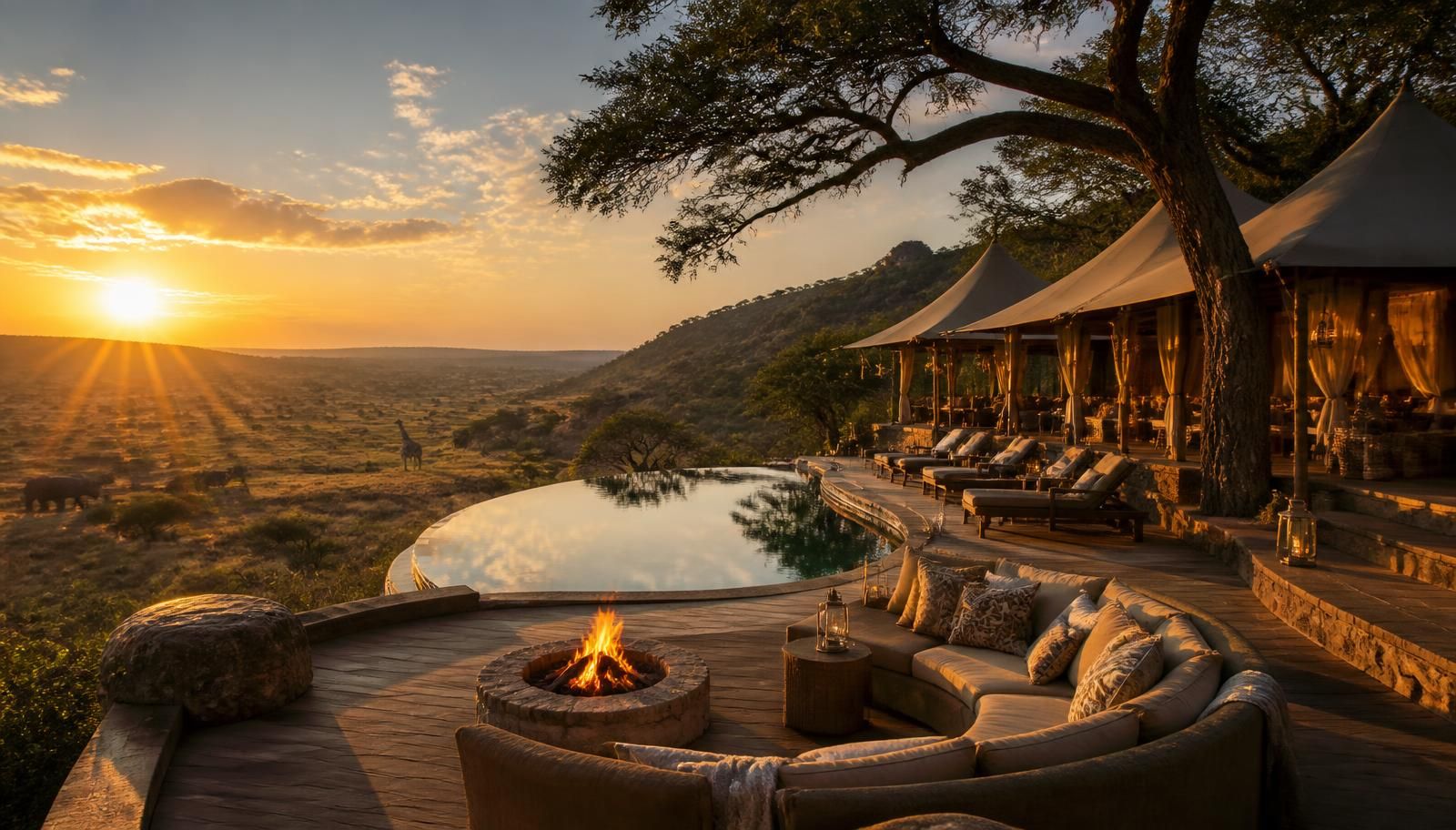
A luxury lodge is a permanent building, usually stone and timber under thatch, built into a hillside, along an escarpment or beside a river. Rooms are proper rooms: solid walls, glass doors, a bathroom with twin basins and a deep shower, air conditioning in the hotter parks, and a private balcony. Around them you'll find a swimming pool, a spa, a library, a bar, sometimes a gym, and a restaurant serving à la carte dinners.
These are the properties that suit travellers who want a safari without giving up hotel comfort. They handle mobility issues well — most have vehicle access to the door, paved paths and some ground-floor rooms. They handle families well. They handle heat well, because the pool is there when the wildlife goes quiet at midday.
The trade-off is atmosphere and, sometimes, position. Big lodges need water, road access and land, which often puts them on park boundaries or in busier central zones. A 90-room lodge also means 25 vehicles rolling out of the same gate at 6:30am. If your priority is quiet, exclusive game viewing, read the tented-camp section below before you commit.
2. Luxury Tented Camps
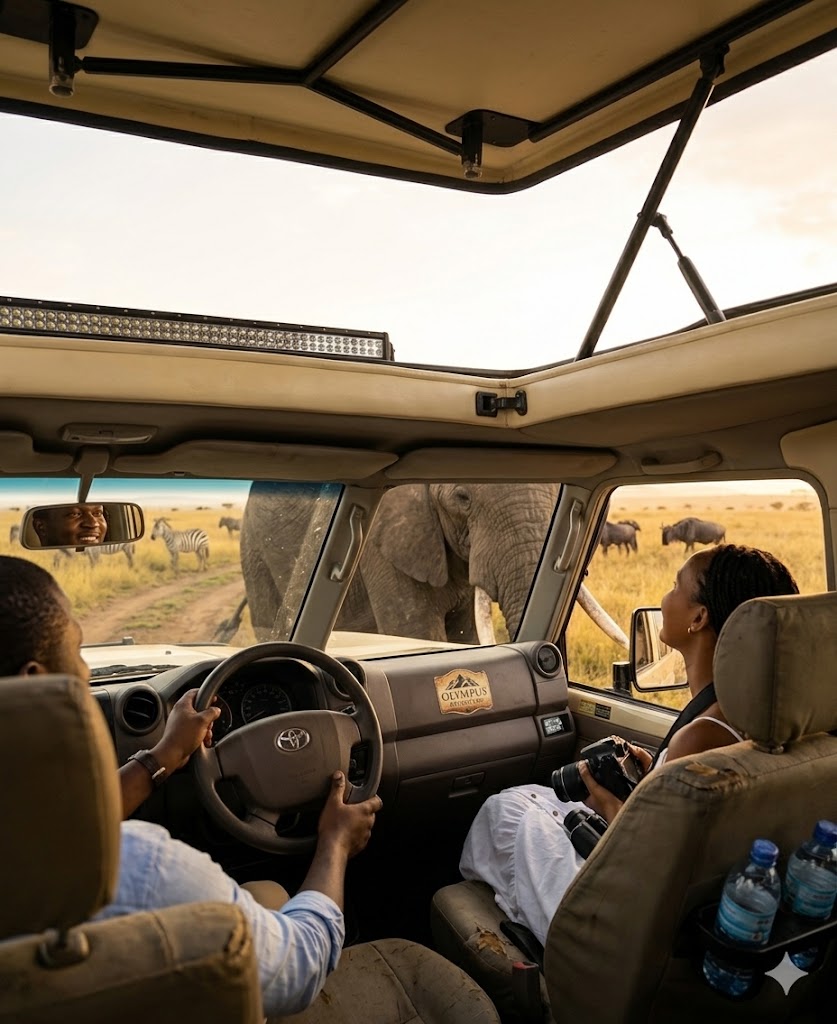
This is the category most people picture when they imagine safari, and it's the one I recommend most often. A luxury tented camp is typically 8 to 20 canvas suites on raised wooden decks, spread far enough apart that you can't see or hear your neighbour. Inside: a king or twin bed with proper linen, rugs on the floor, a writing desk, luggage racks, a lantern, and an en-suite bathroom at the back with a flush toilet, twin basins and a hot shower — either plumbed or a bucket system that staff fill on request.
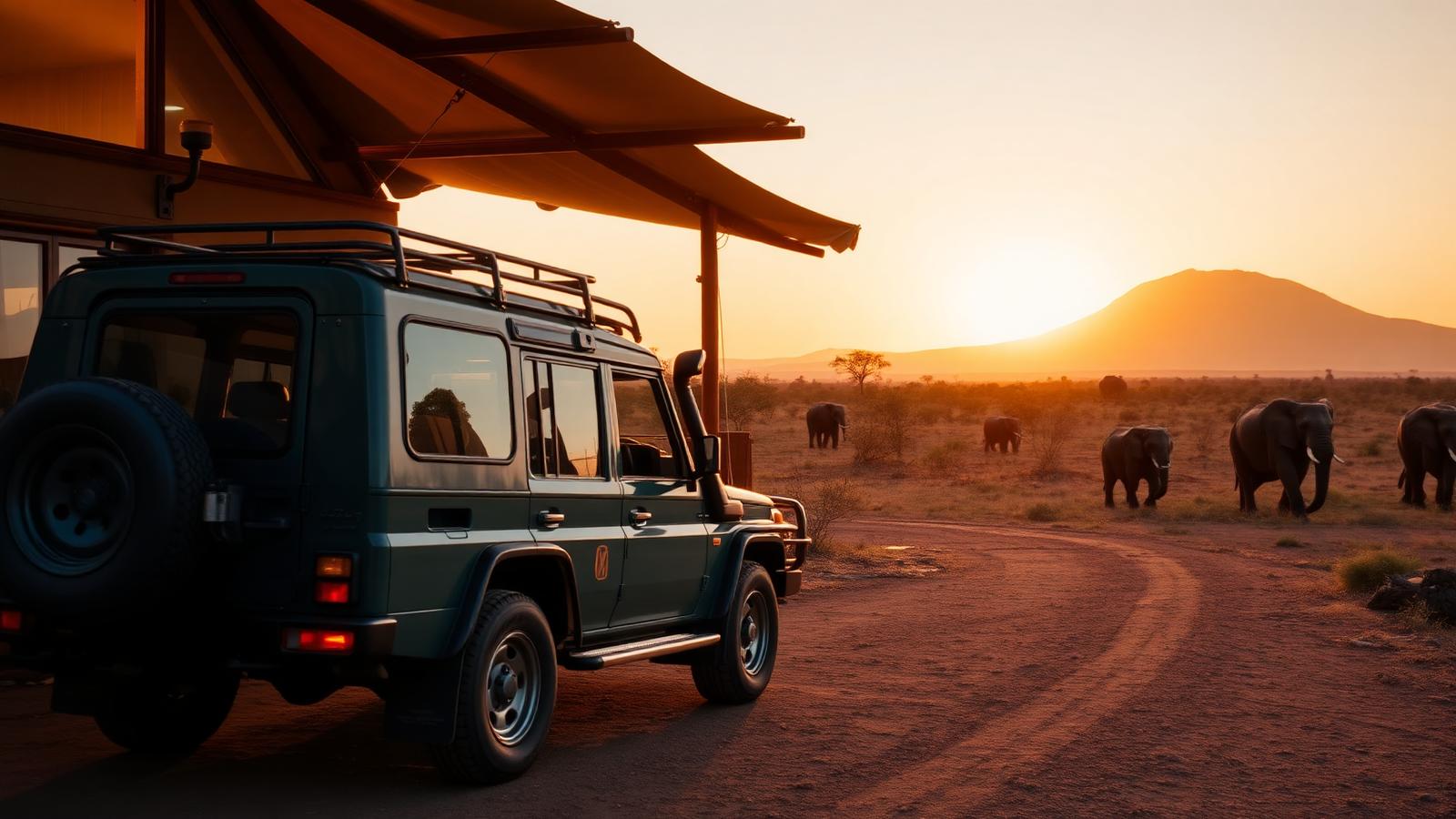
What you're really buying is location and sound. Because these camps have a small footprint and can be dismantled, Tanzanian park authorities allow them in places a lodge would never be permitted. You wake to hippos grunting in the river below. You hear lions calling from three directions at 2am with nothing but canvas between you and the plains. No lodge, however beautiful, reproduces that.
3. Mid-Range Lodges
Mid-range is where the majority of Tanzania's safari travellers actually stay, and there is nothing second-rate about it. These are typically 30 to 80-room properties with clean, comfortable rooms, en-suite bathrooms, hot water, 24-hour power, a swimming pool, a buffet restaurant and a bar. Some are inside the parks; more sit in gateway areas like Karatu near Ngorongoro, or the hills outside Tarangire.
Where mid-range wins is arithmetic. At $250 a night instead of $700, a couple saves roughly $2,700 across a six-night safari — enough to add three more days in the field or a Zanzibar extension. You see exactly the same lions. If you want a fuller comparison of what the extra spend really buys, we broke it down in luxury vs mid-range Tanzania safari.
Where it loses: buffet dining gets repetitive after five nights, larger properties feel busy at breakfast, and some gateway lodges add 45 to 75 minutes of driving to each end of your game-viewing day.
4. Budget Camps and Bandas
Budget accommodation in Tanzania runs from public campsites inside the parks — where your crew pitches dome tents and cooks over gas — to simple permanent camps and bandas (small concrete or brick cabins) with basic en-suites. Expect a firm bed, a mosquito net, a timed or bucket shower, limited charging hours and a set dinner menu.
It's clean, it's safe, and it's honest. For students, backpackers and long-haul overlanders, this tier makes Tanzania possible. Just be realistic: on public campsites you share ablution blocks with other groups, nights are cold in Ngorongoro, and the experience is genuinely camping. Some of my most memorable nights in the bush have been in exactly these places — but they aren't a honeymoon.
5. Mobile and Seasonal Camps
Mobile camps are the smartest idea in Tanzanian safari accommodation. Rather than building a permanent lodge and hoping the wildlife cooperates, these camps pack up and relocate two to four times a year to follow the Great Migration — Ndutu from December to March, the central and western Serengeti through the middle of the year, then Kogatende in the north from July to October.
A good mobile camp has 6 to 12 tents, en-suite bucket showers and eco-toilets, a dining tent, a campfire, and a crew of a dozen or so. The comfort level sits just below a permanent luxury camp; the location advantage is enormous. Instead of driving two hours to reach the herds, you unzip your tent and they're there.
6. Exclusive Private Camps
At the top of the market you can hire the entire camp. Private mobile camps and exclusive-use villas come with your own guide, chef, camp manager, waiting staff and vehicle, pitched in a private wilderness site that no other guests share. You set the schedule — breakfast at 5am if you want to be first out, or a lazy 9am if the kids slept badly.
This tier makes real sense in two situations: multi-generational families of six to twelve who'd otherwise be split across separate rooms and vehicles, and serious photographers who need to sit at a sighting for three hours without a camp curfew. Costed per head across a group, exclusive use is often less extravagant than it sounds.
Lodge vs Tented Camp: The Honest Comparison
This is the single most common question in our inbox, and the answer isn't "camps are better." It's a genuine trade between comfort and immersion. Here's how they line up.
| Factor | Safari Lodge | Tented Camp |
|---|---|---|
| Structure | Permanent walls, glass windows, tiled bathrooms | Canvas on raised platforms, zip doors, mesh windows |
| Location | Often on park edges, escarpments or near gates | Usually deeper inside prime wildlife areas |
| Size | 30–100 rooms typical | 6–20 tents typical |
| Atmosphere | Hotel comfort with a view | Immersive — you hear the bush all night |
| Power | Mains or generator, 24-hour in most | Solar with battery banks, sometimes timed |
| Wi-Fi | Usually in rooms and public areas | Lounge only, or none by design |
| Pool | Common | Rare, occasionally a plunge pool per tent |
| Family suitability | Excellent — family rooms, pools, no age limits | Variable — many have minimum-age rules |
| Game-drive head start | Depends on distance from the gate | Excellent — you're already in the wildlife area |
| Typical price | $220–$900 pp/night | $400–$1,400 pp/night |
My practical rule: choose a lodge for the first and last night of a safari, when you're jet-lagged, dusty and want a pool and a proper bathroom. Choose tented camps for the middle, when you're acclimatized and ready to be woken by lions. A seven-night trip that mixes both almost always beats seven nights of either.
Accommodation by Destination
Every park in Tanzania has its own accommodation logic — where the camps cluster, what they cost, and where the strategic advantage lies.
| Destination | Main accommodation zones | What's available | Our pick |
|---|---|---|---|
| Serengeti | Seronera (central), Ndutu (south), Grumeti (west), Kogatende (north) | Everything from public campsites to $2,000/night private camps | Seasonal mobile camps that follow the herds; Seronera lodges for year-round convenience |
| Ngorongoro | Crater rim, Karatu highlands, Ndutu plains | Historic rim lodges, boutique highland farms, tented camps | One night on the rim for the view, remaining nights in Karatu for warmth and value |
| Tarangire | Northern park, Silale swamp, Randilen and Manyara Ranch | Tree-house lodges, classic tented camps, mid-range hillside lodges | In-park camps near the river for elephants; conservancy camps for night drives |
| Lake Manyara | Escarpment above the lake, Mto wa Mbu village edge | Cliff-edge luxury lodges, small tented camps, budget guesthouses | Escarpment lodges for the Rift Valley view; usually a one-night stop |
| Ruaha | Great Ruaha River corridor, Mwagusi and Mdonya sand rivers | Small owner-run camps, a handful of luxury lodges | River-facing camps — elephants and lions walk the sand river below your tent |
| Nyerere (Selous) | Rufiji River, Lake Manze and Lake Tagalala area | Riverside camps, boat-access lodges, fly-camps | Rufiji-front camps that offer boat safaris and walking safaris alongside game drives |
Serengeti
The Serengeti is roughly the size of Northern Ireland, so "staying in the Serengeti" means very little on its own. What matters is the zone. Seronera in the centre has the densest resident predator population and the widest choice of lodges and camps, but it's also the busiest area in the park. Ndutu, in the south, is where the calving season unfolds from January to March. The western corridor along the Grumeti is quiet and beautiful with strong June crossings. Kogatende in the far north is where the Mara River drama happens between July and October.
The strategic answer for most travellers is a seasonal mobile camp positioned wherever the herds are that month, backed by a night or two in Seronera for reliable big-cat viewing. For what you'll actually see in each of those zones, our Serengeti wildlife guide maps the species by area and season.
Ngorongoro
You have two real options here and they feel completely different. Crater-rim lodges sit at around 2,300 metres directly above the caldera, and the view from bed is one of the great sights in Africa. They're also cold — 6 to 10°C at dawn is normal — expensive, and often shrouded in cloud. The alternative is Karatu, 25 to 40 minutes down the road, where coffee-farm lodges and tented camps offer more space and warmth for meaningfully less money.
My usual recommendation: one night on the rim so you get the view and the early descent, then move down. Read our Ngorongoro Crater guide for descent timings and how the six-hour crater limit affects where you should sleep.
Tarangire
Tarangire's camps cluster in the north near the river, which is where the elephant herds concentrate in the dry season, and around the Silale swamp further south, which is quieter and wilder. There's also a growing set of camps in the neighbouring Randilen and Manyara Ranch conservancies, and those are worth knowing about: because they sit outside the national park, they can offer night drives and walking safaris that park rules prohibit. Full detail in our Tarangire National Park guide.
Lake Manyara
Manyara is usually a half-day or one-night stop rather than a base, so accommodation is concentrated on the escarpment above the lake — spectacular views across the Rift Valley floor — and in the village of Mto wa Mbu at the gate, where budget and mid-range options are plentiful. Unless you're specifically here for the birdlife or the tree-climbing lions, one night is enough.
Ruaha
Ruaha is Tanzania's largest national park and one of its emptiest, with perhaps a dozen camps serving an area bigger than Wales. Almost all sit along the Great Ruaha River or on the sand rivers that feed it, which is exactly right — in the dry season those corridors are where every elephant, lion and greater kudu in the park comes to drink. Camps here tend to be small, owner-run and unpretentious, and guiding standards are among the highest in the country.
Nyerere (Selous)
Nyerere's camps line the Rufiji River and the string of lakes behind it. What makes this accommodation special is what you can do from it: boat safaris at sunset among hippos and crocodiles, walking safaris with an armed ranger, and fly-camping overnight under mosquito nets. Choose a camp with river frontage and confirm that boat activities are included rather than charged as extras.
What Is Included in Safari Accommodation?
This is where quotes get confusing, because "full board" means different things at different properties. Here's what's standard, what varies, and what to check before you sign.
Almost always included
- Three meals a day, plus afternoon tea and snacks
- Unlimited filtered drinking water, tea and coffee
- Accommodation in an en-suite room or tent with daily housekeeping
- Night-time security escort between your tent and the main areas
- Use of the pool, lounges and camp facilities
- Bottled or refillable water for your game-drive vehicle
Often included at the upper tiers
- House wine, local beer, soft drinks and standard spirits
- Same-day laundry (underwear excluded at most camps for cultural reasons)
- Sundowner drinks and bush breakfasts
- Guided nature walks and, in conservancies, night drives
- Airstrip transfers within the concession
Almost never included
- National park entry fees and concession fees (billed separately per person per 24 hours)
- Hot-air balloon safaris — typically $599 per person in the Serengeti
- Premium wines, champagne and imported spirits
- Spa treatments and massages
- Staff gratuities
- Travel insurance and medical evacuation cover
Food and the Dining Experience
Food on a Tanzanian safari surprises almost everyone. Camps that are four hours from the nearest tarmac road, running on solar and supplied by one truck a week, routinely produce three-course dinners that would hold up in a good city restaurant. Chefs here are trained, resourceful and quietly competitive with one another.
A typical day looks like this. Early tea or coffee brought to your tent at 5:45am, often with a biscuit. A light breakfast before the drive or a full one after. Lunch either as a bush picnic under an acacia — the classic safari lunch box has evolved a long way from soggy sandwiches into proper salads, quiches and cold meats — or back at camp as a buffet. Afternoon tea with cake at 3:30pm before the second drive. Sundowners at a viewpoint. Then dinner, usually three courses, served in the mess tent or under the stars.
Ingredients lean heavily on what Tanzania does well: tilapia and Nile perch, beef and goat, avocado the size of your fist, mangoes, passion fruit, pineapple, sweet potato, and vegetables grown in camp gardens. You'll also meet local staples worth trying — ugali, a maize-meal staple; nyama choma, grilled meat; mchuzi wa samaki, a coconut fish curry from the coast; and chapati that people genuinely fight over.
Safety Inside Safari Lodges and Camps
Nearly every camp inside a Tanzanian national park is unfenced, because fencing would obstruct wildlife corridors. That fact worries people, and I understand why. But the safety record is excellent, and it isn't luck — it's a well-drilled system.
- Night escorts. After dark, you never walk alone. An askari with a torch collects you from your tent for dinner and walks you back. Some camps use a whistle or air horn outside each tent so you can call one.
- Zip discipline. Tents are zipped closed at all times, front and back. This is not about big animals — it's about baboons and vervet monkeys, which are opportunistic, clever and will comprehensively ransack a tent for a packet of biscuits.
- No food in rooms. Nothing edible, including fruit, snacks and strongly scented toiletries, stays in your tent overnight.
- Arrival briefings. Every camp briefs you on arrival: where to walk, when to stay put, what to do if an elephant is on the path. Listen to it even on your fourth safari — the local specifics vary.
- Radio and evacuation. Camps maintain radio contact with rangers and their head office, keep first-aid trained staff on site, and have documented medical evacuation procedures via the nearest airstrip.
In practice, the animals that will actually visit your camp are buffalo grazing the lawn, elephants browsing the trees, and hyenas patrolling for scraps. They are indifferent to you as long as you stay inside and stay quiet. The genuine risks on safari remain dehydration, sunburn, tripping on an unlit path and vehicle accidents on the transfer roads — which is why we screen our own driver-guides more carefully than we screen the camps.
Internet and Connectivity
Ten years ago, going on safari meant going offline. That's largely over, for better and worse. Here's the honest picture in 2026:
- Arusha, Karatu and Ngorongoro rim: good fibre or 4G. Video calls generally work.
- Seronera and central Serengeti: reliable 4G in most areas; camp Wi-Fi is workable for messaging and email.
- Northern Serengeti, Ruaha, Nyerere, Katavi: patchy. Many camps run satellite links shared across all guests. Assume messaging only.
- Deliberately offline camps: a small number of high-end properties offer no Wi-Fi at all as a design choice. Confirm before booking if that matters.
My practical advice: buy a local Vodacom or Airtel SIM at Kilimanjaro Airport or in Arusha for around $10 with 20GB of data. Coverage across the northern circuit is genuinely better than most camp Wi-Fi, and it means you're not competing with fifteen other guests for one satellite link. Download offline maps, books and podcasts before you leave the city.
Electricity and Charging Your Devices
Tanzania uses 230V, 50Hz with the Type G (UK three-pin square) plug. Bring a UK adapter, or better, a universal one — a handful of older properties still have Type D sockets.
Lodges usually run on mains or a large generator and give you 24-hour power with normal wall sockets in the room. Tented camps almost always run on solar arrays feeding a battery bank. In practice that means:
- Most camps now have a charging point inside each tent, but it may be 12V or USB rather than a full mains socket
- Some camps still centralize charging in the mess tent, where you hand over batteries at dinner and collect them at breakfast
- Hair dryers, straighteners, kettles and travel irons overwhelm solar systems — many camps prohibit them outright
- Power may be cut between roughly 11pm and 5am to let the batteries recover
- Safari vehicles have 12V and USB charging, which is the most reliable top-up during the day
Family-Friendly Accommodation
Tanzania is a superb family destination, but accommodation choices make or break the trip. What works:
- Family rooms and interconnecting tents. Two-bedroom suites sharing a lounge let parents keep an eye on younger kids without being in the same room all week.
- A pool. Underrated and essential. The midday gap between drives is four hours long and children do not nap through it.
- Flexible dining. Camps that will feed kids at 5:30pm before the adults eat properly at 8pm are worth their weight in gold.
- Junior ranger programs. Several lodges run tracking games, spoor casting and Maasai beadwork sessions that keep 6 to 12-year-olds genuinely engaged.
- Private vehicles. Not accommodation as such, but the single most important family decision — it lets you return to camp when the youngest has had enough.
What to avoid: small remote camps with minimum-age rules of 12 or 16, properties where tents are 300 metres apart along an unlit path, and any itinerary with more than one long transfer day. Our family safari guide covers age-appropriate parks and pacing in more depth.
Honeymoon and Romantic Lodges
Tanzania is one of the great honeymoon destinations, and the accommodation formula that works is fairly consistent: small camps, big views, and staff who read the room.
- Go small. Eight to twelve tents. At that scale the manager knows your names, the chef knows what you liked, and dinner isn't a buffet queue.
- Ask for the view tent. Every camp has one or two standout units — the corner tent on the kopje, the one at the end of the walkway. They're rarely more expensive; they just need to be requested early.
- Prioritize a private plunge pool or outdoor bath. It sounds like an indulgence. On a hot afternoon in Tarangire it is the best money you spent all trip.
- Book the set pieces. A bush breakfast after the morning drive, a private sundowner on a rock outcrop, a candlelit dinner away from the mess. Most camps arrange these for free if asked a day ahead.
- Finish on the coast. Three or four nights in Zanzibar after the safari turns a great trip into a proper honeymoon.
Always declare the honeymoon at booking. Camps regularly respond with a room upgrade, champagne, a decorated bed or a complimentary private dinner — none of which happens if nobody knows. Our Tanzania safari for couples guide sets out full romantic itineraries.
Luxury Experiences Worth Paying For
If you are spending at the top of the market, these are the extras that our clients consistently rate as worth it — and a couple that aren't.
- Hot-air balloon over the Serengeti ($599 pp). Expensive, unforgettable, and better in the calving season or the northern migration months. Book with the camp the night before, or in advance during July to September.
- Private guide and vehicle. The highest-value upgrade on this entire list. You control the day.
- Bush breakfast and star-bed nights. Sleeping on a raised platform under the Milky Way at a handful of camps is genuinely extraordinary and costs less than you'd think.
- Walking safaris and night drives in conservancies. Prohibited in national parks; permitted in adjacent conservancies. If you want them, your accommodation has to be in the right place.
- Light-aircraft transfers. Not a luxury so much as a time purchase. Flying Arusha to Kogatende saves you eight hours of road.
- Skip the spa. Honest opinion — safari spas are pleasant but you can get a better massage anywhere. Spend the money on a longer stay or a private vehicle.
Luxury vs Mid-Range: The Numbers
| Factor | Mid-Range | Luxury |
|---|---|---|
| Nightly rate (pp sharing) | $220 – $400 | $550 – $1,400 |
| Guest numbers | 40 – 160 guests | 16 – 40 guests |
| Dining | Buffet, set menus | À la carte, private and bush dining |
| Guiding | Good — usually your own driver-guide | Excellent — senior guides, often specialists |
| Vehicle | Shared or private 4x4 Land Cruiser | Private 4x4, often camp-based with a spotter |
| Location | Park edge or busier central zones | Prime, quiet, often exclusive concessions |
| Extras included | Meals, water, park transfers | Meals, most drinks, laundry, sundowners, activities |
| Privacy | Shared decks and pools | Private plunge pools, secluded tents |
| Best for | Wildlife-first travellers on a budget | Honeymoons, celebrations, photographers |
How Olympus Adventure Selects Accommodation
We don't work from a booking platform. Every property in our portfolio has been visited by someone on our team, and we re-inspect regularly because standards drift when ownership or management changes. Here's what we check.
- Position first. How many minutes from the nearest productive game-viewing area at 6:15am? That number matters more than any other single factor.
- Guest-to-staff ratio and camp size. Small camps consistently deliver better service. We know which large lodges still manage it.
- Kitchen and water. We look at how food is stored, how water is filtered, and where the supply chain comes from. This is the single biggest determinant of whether our guests get sick.
- Safety systems. Askari staffing levels, first-aid certification, radio coverage, and a documented evacuation plan we've actually read.
- Community and conservation. Does the camp employ locally, source locally, and pay into community or conservation funds? We prioritize the ones that do, and we can tell you which.
- Recent guest feedback. Not the public reviews — our own. Every returning client fills in a property-by-property debrief, and a camp that slips twice comes off the list.
Because we're locally based in Arusha and hold long-standing contracts, we also get allocations at camps that sell out to overseas agents, and we can hold space while you decide. If you want to see how the whole reservation process works, our guide to booking a Tanzania safari walks through it step by step.
Common Questions
Frequently Asked Questions
Yes — genuinely, and not just as a marketing line. Tanzanian safari lodges and camps have an excellent safety record, and the systems behind that are unglamorous but effective. Properties inside national parks are unfenced by law in most cases, so instead of walls they rely on trained Maasai askari (night guards) who escort every guest between tent and mess area after dark, radio contact between all staff posts, lanterns or air horns outside each tent, and strict rules about food storage so animals never associate tents with a meal. Add to that armed park rangers, mandatory operator licensing through TALA, and briefings on arrival that tell you exactly what to do and not do. In fifteen years of operating we have never had a guest injured by wildlife at a lodge or camp. The realistic risks on safari are the boring ones: dehydration, sunburn, a twisted ankle on a dark path, and travelling with an unlicensed operator.
A lodge is a permanent building — stone, timber, thatch or concrete — with solid walls, glass windows, standard plumbing, usually mains or generator power, and often a swimming pool, spa and multiple lounges. A tented camp uses canvas structures on raised platforms or concrete pads, with zip-up doors and mesh windows. Modern luxury tented camps are not camping: expect a king bed, en-suite bathroom with flush toilet and hot shower, hardwood furniture, rugs, a writing desk and a private veranda. The real difference is sensory. In a lodge you are insulated from the bush; in a tent you hear hyena whoop at 2am, lions calling across the valley, and grass moving in the wind a metre from your bed. Lodges are typically better for families, mobility-limited travellers and anyone who wants a pool and reliable Wi-Fi. Tented camps sit deeper in the wilderness, hold fewer guests and deliver the atmosphere most people are actually picturing when they imagine a safari.
Usually, but manage your expectations. Almost every mid-range and luxury property in the northern circuit now offers Wi-Fi, most commonly in the main lounge or restaurant rather than in the rooms. Speeds range from perfectly workable at Ngorongoro-rim and Arusha lodges to slow satellite links in the remote Serengeti and southern parks, where a video call is unlikely and even a large email attachment can struggle. Mobile data via a local Vodacom or Airtel SIM is often faster than lodge Wi-Fi and costs very little — roughly USD 10 for 20GB. A handful of high-end camps deliberately do not offer Wi-Fi at all as part of a digital-detox philosophy; if staying connected matters for work or family reasons, tell us before we book and we will filter accordingly.
In almost all cases, yes. Safari camps and lodges in Tanzania run on full board, which covers breakfast, lunch and dinner, plus tea, coffee and drinking water throughout the day. On game-drive days you will typically get an early breakfast or a packed one, a bush picnic or a return to camp for lunch, afternoon tea, and a three-course dinner. Many higher-end and all-inclusive camps also include house wine, local beer and soft drinks; premium spirits and imported wines are normally charged extra. Lodges on the outskirts of towns — particularly Arusha and Karatu — sometimes quote half board instead, so always check. Every itinerary we build states the meal basis for each night in writing, and dietary requirements including vegetarian, vegan, halal, gluten-free and allergies are handled without fuss when we flag them at booking.
Mid-range and luxury lodges with family rooms are usually the strongest choice, and the reason is practical rather than snobbish. Lodges give you interconnecting rooms or two-bedroom family suites, a swimming pool that saves the middle of the day, solid walls that let kids move around independently, and dining flexibility for early or fussy eaters. Good options include the Karatu-area lodges near Ngorongoro, the larger Serengeti lodges in Seronera, and Tarangire properties with pools and shaded gardens. Some tented camps are excellent for families too, particularly those with dedicated family tents and no minimum age, and a private mobile camp booked on an exclusive-use basis can be superb for multi-generational groups. What to avoid: small, remote camps with a minimum age of 12 or 16, unfenced camps where under-8s cannot walk unaccompanied after dark, and long single-day drives between properties.
Small luxury tented camps with 8 to 12 tents, ideally with a private plunge pool or an outdoor bathtub, are what we recommend nine times out of ten. They give you privacy, atmosphere, a genuinely romantic dinner setting, and staff who know your names by the second evening — which large lodges of 70 rooms simply cannot replicate. The classic combination is two or three nights in the Serengeti at an intimate camp, one or two nights on the Ngorongoro rim, then Zanzibar for the beach finish. Honeymooners should also ask for the small things that make a difference: a bush breakfast, a private sundowner on a kopje, a candlelit dinner set up away from the main mess, and a room with an unobstructed view rather than one behind the kitchen. Tell your operator it is a honeymoon — most camps offer complimentary upgrades, champagne or a decorated room.
It depends entirely on what you value, and I say that as someone who sells both. Where luxury genuinely earns its price: location inside prime wildlife areas so you start game drives before the day visitors arrive, guide quality, low guest numbers meaning no queues at sightings, food and service standards, and the ability to do private activities like bush breakfasts and night drives in conservancies. Where it does not: if your priority is simply seeing animals, a well-run mid-range lodge inside the same park will show you the identical Serengeti at roughly half the cost. My honest advice for most travellers is to spend the money on location and duration first — more nights inside the park, fewer transfer days — and upgrade the accommodation only after that. If you are on a honeymoon, a milestone trip, or you want the experience itself to be memorable rather than just the wildlife, luxury is worth every dollar.
Completely, and that is the entire point of working with a locally based operator rather than a booking site. Every Olympus Adventure itinerary is built property by property, so you can mix a budget camp in Tarangire with a luxury tented camp in the Serengeti, book an exclusive-use mobile camp for a family group, request specific tent numbers, arrange interconnecting rooms, change one night from a lodge to a fly-camp, or hold two properties while you decide. We can also swap accommodation tiers mid-trip so you finish on a high, arrange private dining, and handle dietary, mobility, celebration and photography requirements directly with camp managers we have worked with for years. Send us your travel style and budget and we will come back with two or three accommodation options per night rather than a single take-it-or-leave-it choice.
Conclusion
Choosing where to stay on safari is really a series of small trade-offs: canvas or walls, inside the park or outside the gate, one grand week or two comfortable ones, pool or plunge pool, buffet or bush dinner. There's no universally correct answer, only the answer that fits how you travel.
What I'd hold onto is this. Buy location before you buy luxury. Mix tiers rather than committing to one all week. Ask specific questions about what's included, who's allowed to stay, and how far the tent is from the mess. And book early for July through September, because the good small camps genuinely sell out a year ahead.
The right safari accommodation is not the most expensive one — it is the one that puts you in the right place, at the right hour, with the right people looking after you. Get that combination right and the rest of the trip tends to take care of itself.
Let Us Match You to the Right Camps
Tell us how you travel — comfort level, budget per night, whether you're bringing kids, whether it's a honeymoon, how much you care about being first out of the gate — and we'll come back with two or three genuine accommodation options for every night of your trip, with honest notes on each. Not a single take-it-or-leave-it itinerary, and not a list scraped from a booking site.
Start with a free accommodation consultation, or look through our safari packages to see how we combine lodges and camps across real routes.
Plan Your Journey
The right camp, in the right place, at the right price.
Arusha-based, licensed, and inspecting these properties in person. Send us your travel style and budget and we'll build the accommodation plan around you.
- TALA Licensed Operator
- 4.9 ★ Guest Rating
- No Booking Fees
Keep Reading
Related Tanzania Safari Guides
Safari Guides
The Ultimate Tanzania Travel Guide: Everything You Need to Know Before You Visit
Safari Guides
Best Tanzania Safari Itineraries: How to Choose the Right Route for Your Days