Luxury Travel
Beyond the Wilderness: What to Expect on a Luxury Tanzanian Safari
What a luxury Tanzania safari actually buys you — private guides, camps inside the parks, bush airstrips and time — written by the team in Arusha who plan them.

Introduction
A guest asked me last season what she was really paying for. She had two quotes on her desk for the same ten days in the same three parks, and one of them was three times the other. It's a fair question, and the honest answer surprises most people: on a luxury Tanzania safari you are not buying a nicer bed. You are buying time, space and access.
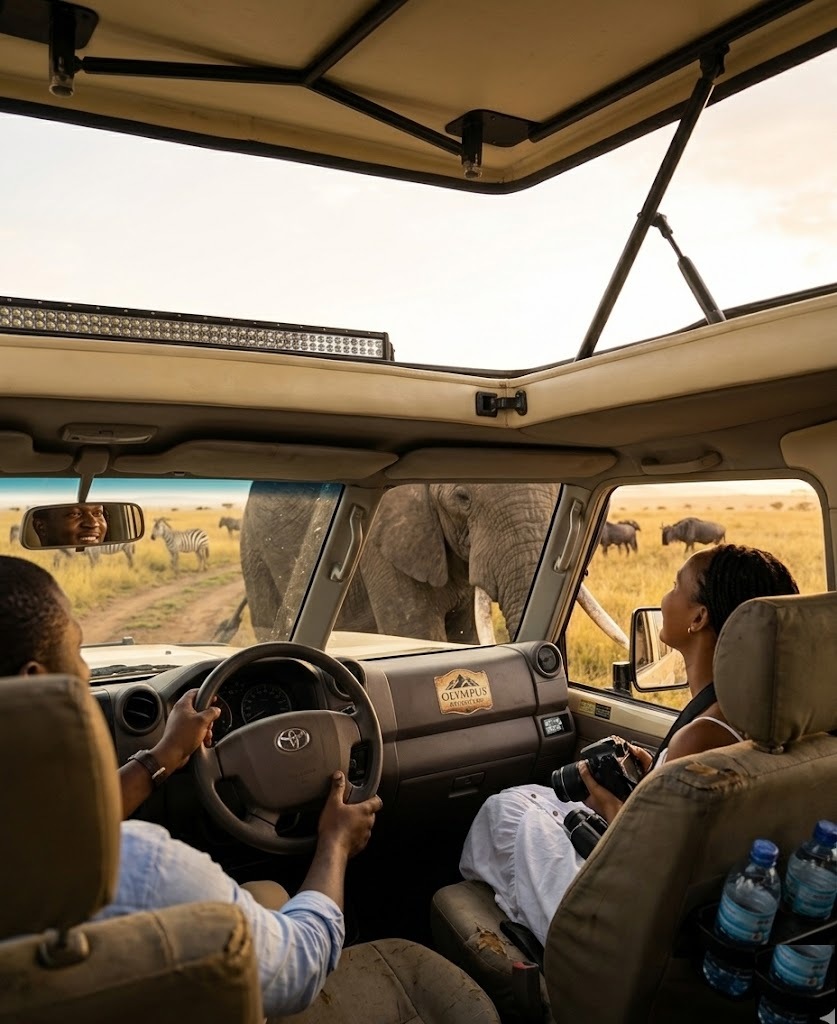
Time, because a camp inside the Serengeti puts you at a leopard sighting at 6:20am instead of 8:15am, after the gate queue. Space, because a private vehicle means nobody else's schedule shapes your morning. Access, because the best guides in Tanzania are a small, known group of people, and they work for the operators who look after them.
The bed is lovely too. But the bed is the least interesting part of the story, and any consultant who leads with thread count is selling you a hotel, not a safari.
What Makes a Luxury Safari Different
Strip away the marketing and a luxury Tanzania safari differs from a standard one in five measurable ways. Everything else — the copper basins, the Persian rugs on the canvas floor, the outdoor shower with a view of the Grumeti — follows from these.
- Where you sleep relative to the wildlife. A camp inside the park means the day starts and ends where the animals are. Guests staying outside Ngorongoro or on the Serengeti's boundary lose roughly two prime hours daily.
- Who drives you. Senior guides in Tanzania hold a Level III certification and typically have well over a decade in the field. They read tracks, they know which lioness has cubs in which drainage, and they know when to switch the engine off and wait.
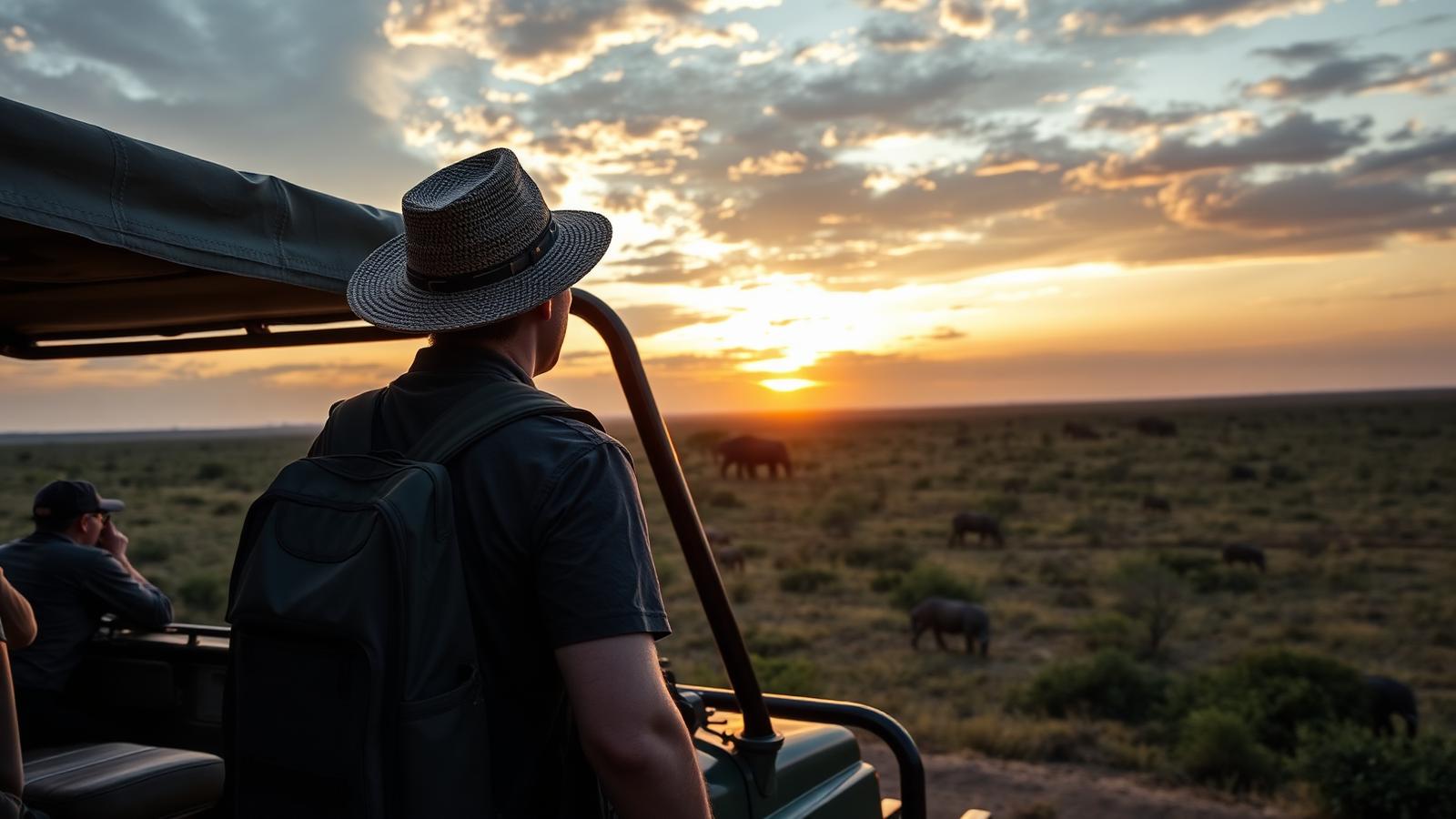
- Whether the vehicle is yours. Six strangers in one Land Cruiser is a compromise on every decision of the day: when to leave, how long to stay, which window is yours.
- How many people share the sighting. Private concessions cap vehicle numbers. In the public Serengeti in August, a leopard can draw fifteen cars. On a concession, it draws yours.
- How you move between parks. Flying rather than driving between the northern parks buys back one to two full days of safari over a ten-day trip.
Luxury vs Mid-Range: The Honest Comparison
Mid-range safaris in Tanzania are genuinely good. Plenty of our happiest guests travel that way, and the wildlife does not know what you paid. But the differences are real and worth seeing side by side before you commit.
| What changes | Mid-range | Luxury |
|---|---|---|
| Nightly rate per person | USD 350–600, sharing a standard vehicle | USD 850–1,400; ultra-luxury and exclusive-use camps run USD 2,000+ |
| Vehicle | Shared 4×4, six or seven guests, everyone negotiating window seats | Private 4×4 for your party alone, charging points, cooler, beanbags, blankets |
| Guide | Competent driver-guide assigned by rotation | Hand-picked senior guide, often 10–20 years in the field, requested by name |
| Camp location | Often outside the park gate, adding 45–90 minutes of driving each way | Inside the park or on a private concession, game-viewing from the deck |
| Guests in camp | 40–90 rooms, buffet dining, set meal times | 8–20 tents or suites, à la carte, eat when you want |
| Transfers between parks | Long road transfers, 4–8 hours on corrugated gravel | Light-aircraft hops of 40–90 minutes to bush airstrips |
| Activities beyond game drives | Rarely included | Walking safaris, night drives on concessions, balloon flights, private bush dinners |
| Flexibility | Fixed daily schedule shared with other guests | Your day, your pace — breakfast at the sighting if that's where you want to be |
Types of Luxury Accommodation
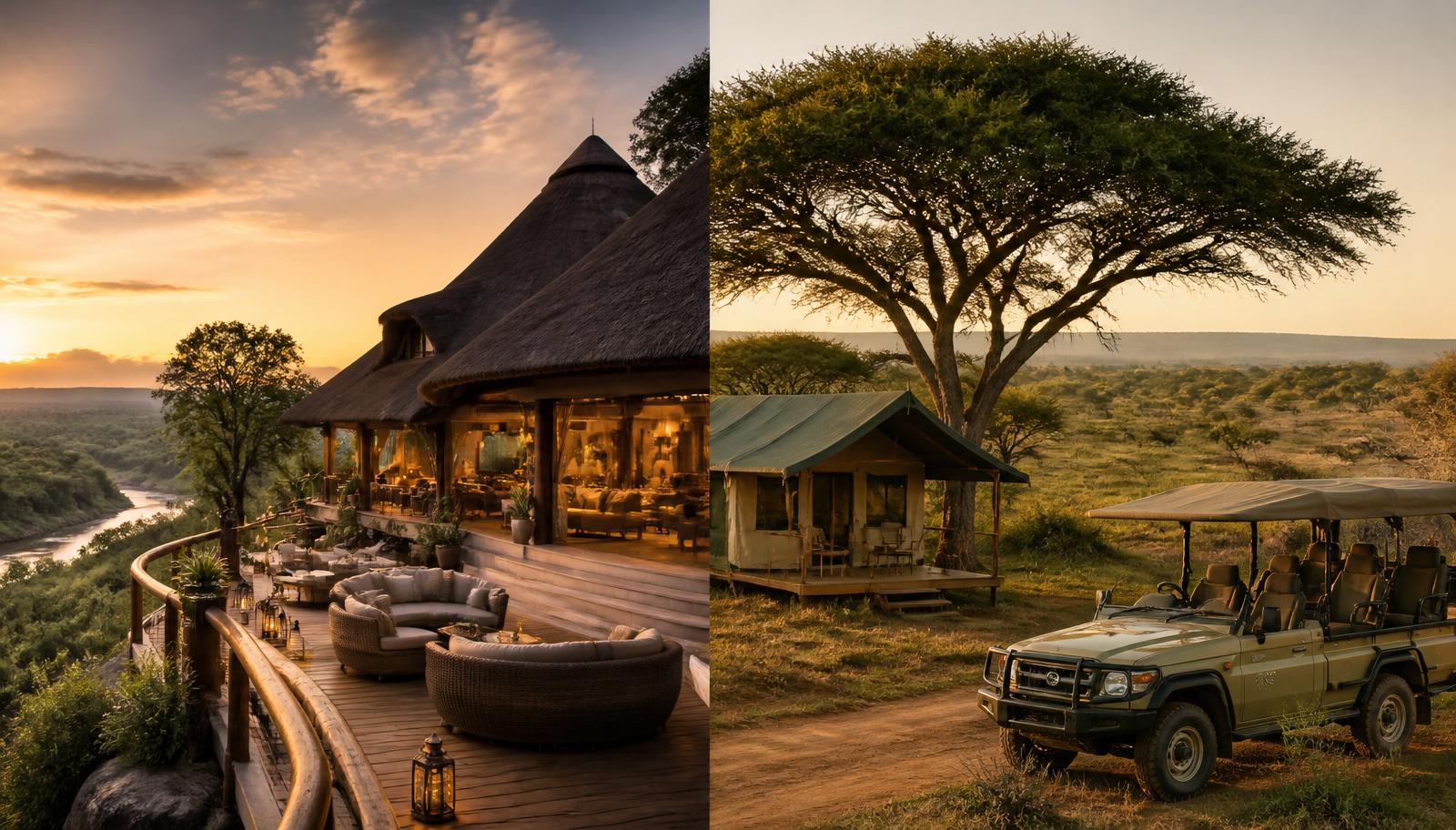
"Luxury camp" covers a wide spread in Tanzania, from a 12-tent mobile camp that follows the wildebeest to a stone-and-glass lodge on the crater rim with underfloor heating. Knowing the categories makes conversations with your consultant far more productive.
| Type | What it feels like | Best for | Where |
|---|---|---|---|
| Permanent luxury lodge | Architectural, solid walls, plunge pools, spa, air conditioning | First-time safari-goers, families, anyone who wants reliable comfort | Ngorongoro rim, central Serengeti, Tarangire, Lake Manyara |
| Classic tented camp | Canvas suites on decks, en-suite bathrooms, hot bucket or plumbed showers | Travellers who want the sound of the bush without giving up comfort | Seronera, Grumeti, Tarangire, Ruaha |
| Mobile / seasonal camp | Small, elegant, moved three or four times a year to follow the herds | Migration-focused trips where location beats permanence | Ndutu (Dec–Mar), Kogatende and Lamai (Jul–Oct) |
| Private concession lodge | Exclusive traversing rights, no other operators' vehicles | Repeat visitors, photographers, guests who dislike crowded sightings | Grumeti Reserves, Singita concessions, Namiri Plains, Randilen |
| Exclusive-use villa or house | Whole property to your group, private chef, private guide and vehicle | Families, multi-generational trips, celebrations | Serengeti, Ngorongoro highlands, Zanzibar |
| Fly-camping / star beds | One or two nights under canvas or open sky, minimal but well-serviced | Adventurous couples adding contrast to a polished itinerary | Selected Serengeti and southern-circuit concessions |
Mix at least two styles
The itineraries our guests remember best are rarely uniform. Two nights on the Ngorongoro rim in a lodge with a fire and a hot bath, then four nights in a mobile camp on the plains where the only light after nine o'clock is a lantern — that contrast is the trip. Consistency is a hotel virtue, not a safari one.
Private Safaris vs Fly-In Safaris
These two terms get muddled constantly, and they describe different things. A private safari means the vehicle and guide are yours alone. A fly-in safari means you move between parks by light aircraft rather than road. You can have one, the other, or — for most of our luxury guests — both.
The private road safari
One guide, one vehicle, one team from the moment you land at Kilimanjaro until you fly home. Your guide learns in the first two days that you care about birds more than lions, or that your daughter wants to see a pangolin more than anything, and the whole trip bends around that. The drives between the northern parks are long but scenic, and the continuity is worth a great deal.
The fly-in safari
Cessna Caravans hop between Arusha, Manyara, Seronera, Kogatende, Grumeti and beyond. Arusha to the northern Serengeti is roughly two hours by air against two full days by road. You are met at the airstrip by a camp vehicle and a resident guide who knows that specific area intimately. The trade-off is a 15kg soft-bag luggage limit and a new guide at each stop.
For a fuller comparison of how routes are put together, our guide to the best Tanzania safari itineraries lays out the standard routings and how long each realistically needs.
The Guide Is the Luxury
This is the part of a luxury safari that no brochure photograph can convey. A senior guide is part tracker, part naturalist, part host, and part reader of people — knowing when you want the Latin name and when you want silence.
Ours are Tanzanian, most of them trained through the national guiding schools and then apprenticed for years in the field. They talk to one another on the radio in Swahili all morning, which is how a cheetah on a termite mound forty minutes away becomes your morning. They also know when not to drive to it — when the better call is to stay with the lionesses who have been watching a warthog burrow for an hour.
- Ask for the guide's name and experience before you pay a deposit, and get it in writing.
- Tell them on day one what you actually care about: photography, birds, big cats, culture, quiet.
- Give them permission to be patient. The best sightings come from waiting, not from covering ground.
- Budget roughly USD 25–35 per guest per day in guide gratuities, and USD 15–20 per day for camp staff.
Dining, Service and the Small Things
Food on a good Tanzanian safari is genuinely accomplished, which still surprises people. Camps fly in produce weekly and bake bread daily in ovens dug into the ground. Expect three courses at dinner, proper coffee, a wine list that leans South African, and kitchens that handle vegetarian, vegan, halal, kosher-style and allergy requirements without drama — provided you tell us at booking, not on arrival.
The details that guests actually mention afterwards tend to be smaller: hot water bottles slipped into the bed during dinner on cold Ngorongoro nights; a bush breakfast laid out under an acacia while you were still watching a hyena den; the camp manager remembering how you take your tea on day one and never asking again. That attentiveness is the product. Everything else is scenery.
Best Parks for a Luxury Safari
Not every Tanzanian park supports a genuine luxury product. These are the ones where the camps, the guiding and the wildlife all reach the same standard.
| Park | Why it works at the top end | Suggested stay |
|---|---|---|
| Serengeti | The greatest concentration of luxury camps in East Africa, plus the migration and world-class big-cat viewing. | 3–5 nights, split across two regions |
| Ngorongoro Crater | Rim lodges with astonishing views and the densest wildlife in Tanzania on the crater floor, including black rhino. | 1–2 nights |
| Tarangire | Giant elephant herds, baobabs and beautiful low-density camps. Quietest of the northern parks. | 2 nights |
| Ruaha | Vast, wild and far from the circuit crowds. Exceptional lion and wild-dog viewing for repeat visitors. | 3 nights, fly-in only |
| Nyerere (Selous) | Boat safaris, walking safaris and river-front camps — the most varied luxury product in the south. | 3 nights |
| Mahale & Katavi | Chimpanzee trekking on the shore of Lake Tanganyika and Tanzania's most remote big-game park. | 3–4 nights each, charter access |
| Zanzibar | The beach half of the classic bush-and-beach honeymoon; boutique hotels and private villas. | 4–5 nights |
Each of these has its own full guide if you want to go deeper: the Serengeti wildlife guide covers where the cats are by season, the Ngorongoro Crater guide explains descent timings and rim lodge choices, and the Tarangire guide is worth reading before anyone tells you to skip it — they are wrong.
Best Time for a Luxury Safari
Luxury travel has a slightly different calendar to standard safari advice, because the constraint is not just wildlife — it is availability of the twelve tents you actually want and of the guide you actually want.
- January–February. Calving on the southern plains. Exceptional predator action, mobile camps at Ndutu, and rates below the July peak. Our quiet favourite.
- March. Green, beautiful, thinning out. Good value and still strong wildlife before the long rains build.
- April–May. Long rains. Several top camps close; those open discount heavily. Landscapes are at their most photogenic and you may have sightings to yourself.
- June. The dry season opens, Grumeti crossings begin, peak pricing hasn't landed yet. Excellent month, under-booked.
- July–August. Mara River crossings and the busiest, priciest weeks of the year. Book 12 months out or don't book at all.
- September–October. Crossings continue, crowds ease after mid-September, and the guiding pool loosens up. Our most-recommended window for luxury first-timers.
- November–December. Short rains, brief and usually afternoon-only. Good value until the Christmas premium arrives around 20 December.
A Day in the Life of a Luxury Safari
Rhythm matters more than schedule. Here is how a good day actually unfolds in a small camp inside the Serengeti — bearing in mind that on a private safari every line of this is negotiable.
| Time | What happens |
|---|---|
| 5:30 | Coffee, a warm cloth and a whispered wake-up at your tent flap. Nobody knocks loudly in a good camp. |
| 6:15 | Out of camp before the gates open — the advantage of sleeping inside the park. |
| 9:30 | Breakfast wherever the morning took you: a folding table, linen, hot eggs, a kopje for a backdrop. |
| 12:30 | Back to camp for lunch, a swim, a siesta through the flat light of midday. |
| 16:00 | Afternoon tea, then out again as the plains cool and the cats begin to move. |
| 18:30 | Sundowners on a rise, gin poured over ice cut in camp, dust hanging gold in the last light. |
| 20:00 | Dinner — three courses, sometimes in the mess tent, sometimes alone under a fig tree lit with lanterns. |
| 21:30 | An askari walks you back to your tent. You lie awake listening to hyena and, if you're lucky, lion. |
Some guests want a full-day drive with a picnic and no return to camp until dark. Others want two hours out, a long lunch and a book. Both are correct. The only wrong version is the one dictated by somebody else's minibus.
What It Actually Costs
Tanzania is not a cheap safari destination and there is a structural reason for it: park fees are among the highest in Africa, and concession fees on private land higher still. Roughly USD 150–250 of every night you pay goes straight to conservation before a single lamp is lit.
| Tier | Rate | Typically includes |
|---|---|---|
| Entry luxury | USD 750–950 pp/night | Small tented camps inside the parks, private vehicle, all meals, park fees, house drinks |
| Classic luxury | USD 1,000–1,500 pp/night | Top-tier camps, senior private guide, internal flights, laundry, most activities |
| Ultra-luxury | USD 1,800–3,500+ pp/night | Private concessions, exclusive-use villas, private chef, helicopter and balloon add-ons |
As a working figure, a well-built ten-night luxury northern-circuit safari lands between USD 11,000 and USD 18,000 per person excluding international flights. Add Zanzibar and budget another USD 600–1,500 per night for the top beach properties. Our Tanzania safari cost breakdown itemises exactly where the money goes, line by line.
Luxury Itineraries That Work
8 nights — the refined classic
Arusha (1) → Tarangire (2) → Ngorongoro rim (2) → central Serengeti (3), flying the last leg. Enough time to settle, no park visited for a single night, and a soft landing at both ends.
10 nights — migration-timed
Arusha (1) → Tarangire (2) → Ngorongoro (2) → northern or southern Serengeti (5) depending on your month, all camps chosen around where the herds should be. This is the itinerary we build most often for guests whose dates are fixed and whose priority is wildlife.
14 nights — bush, wilderness and beach
Northern circuit (7) → Ruaha or Nyerere for genuine wilderness (3) → Zanzibar (4). The fullest expression of what Tanzania can do, and the itinerary repeat guests gravitate towards.
Honeymoons, Families and Private Groups
Luxury safaris flex around who is travelling, and the planning changes materially with each.
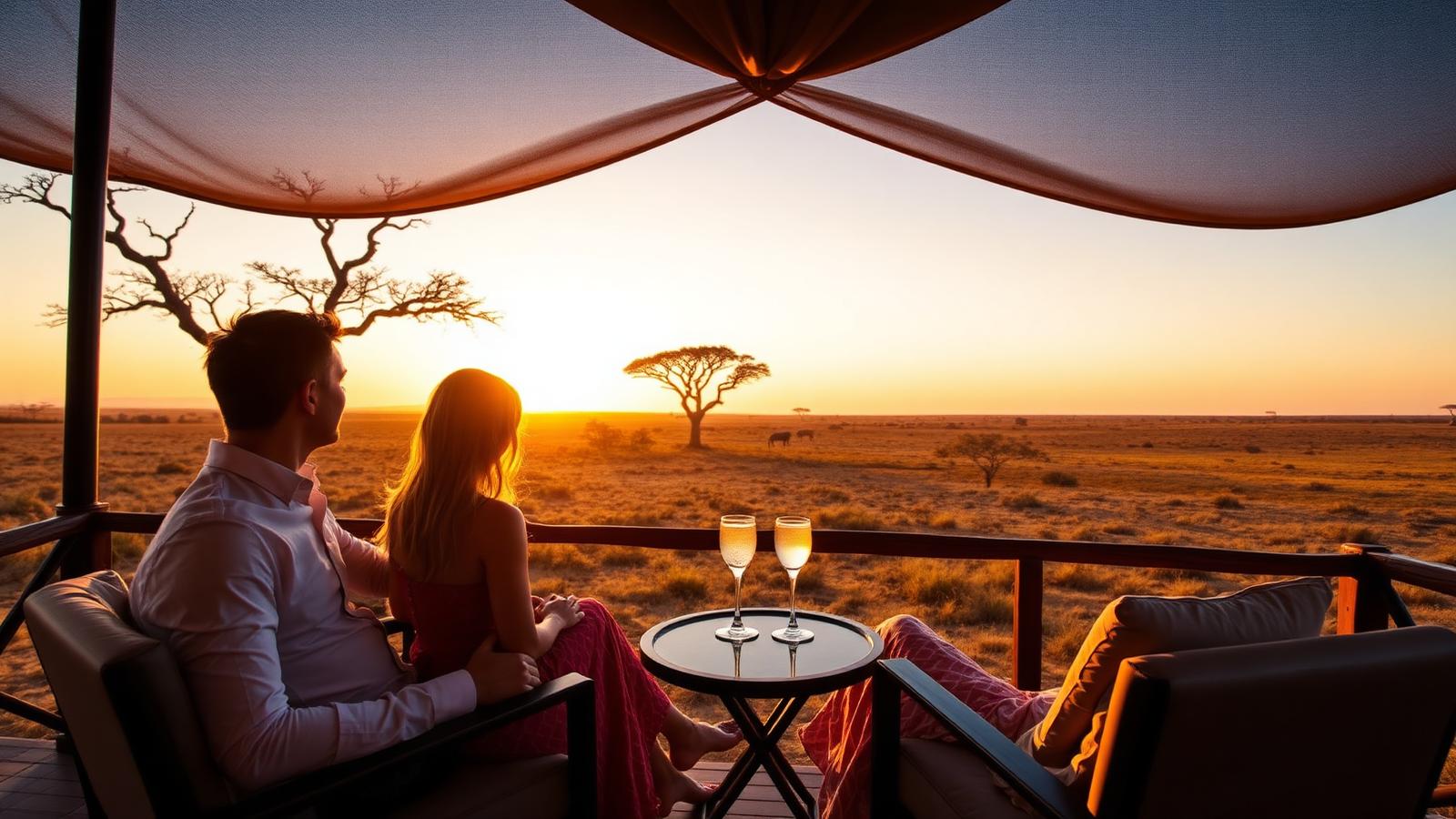
- Honeymooners. Ask for a private deck or plunge-pool tent, one in-tent dinner, and a Zanzibar tail of four nights. Tell us it's a honeymoon — camps routinely upgrade, and none of them will if nobody says so. Our guide to a Tanzania safari for couples covers the romantic add-ons in detail.
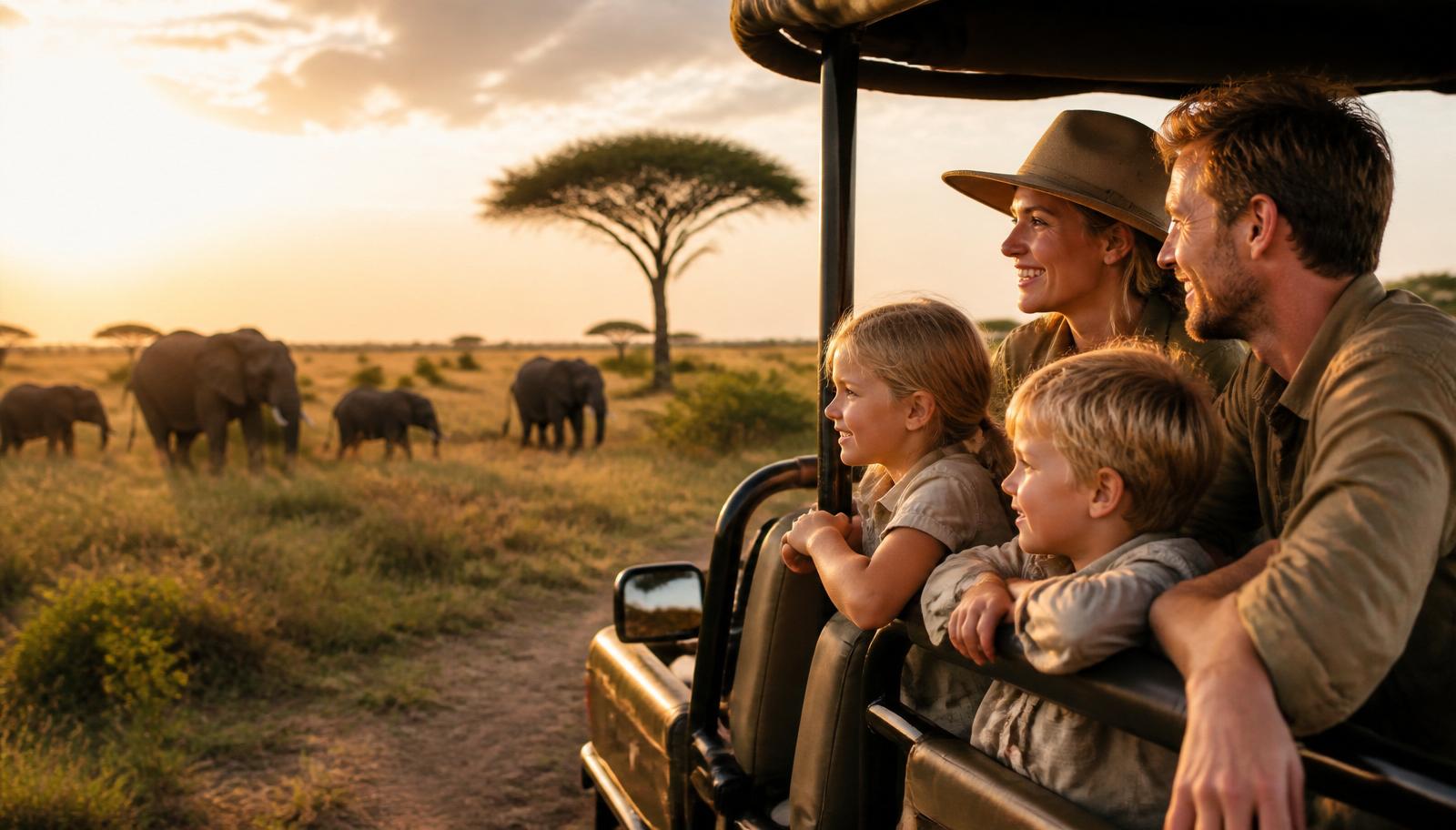
- Families. Most luxury camps take children from six, some from twelve. Family suites, a second vehicle so nobody's day is held hostage, shorter drives and camp-based activities make or break it.
- Private groups. Six or more travelling together should almost always look at exclusive-use villas or whole-camp bookings. Per-person cost often falls below what the same guests would pay individually.
- Photographers. Request a beanbag-fitted vehicle, a guide briefed on light and positioning, and camps on private concessions where you can stay at a sighting past the public park curfew.
Common Booking Mistakes
These come up again and again in the enquiries that reach our desk — often from travellers already holding a confirmed booking that quietly won't deliver what they're expecting.
| Mistake | Why it costs you | What to do instead |
|---|---|---|
| Choosing camps from photographs alone | Interiors photograph beautifully everywhere. What separates camps is location, guiding and how many vehicles share a sighting. | Ask what the camp's traversing area is and how far the first productive game-viewing is from the front deck. |
| Booking a lodge outside the park to save money | You lose two of the best wildlife hours every day driving to and from the gate — the exact hours the cats are active. | Fewer nights inside the park beats more nights outside it. Almost always. |
| Leaving the guide to chance | The guide has more influence on your safari than the thread count. A great one turns an empty plain into a story. | Book a named private guide and confirm it in writing at deposit stage. |
| Cramming five parks into eight days | Every park change costs you half a day, and luxury without time to sit still isn't luxury. | Two or three areas, longer stays, internal flights between them. |
| Booking peak season late | The best 12–20 tents in Kogatende or on the Ngorongoro rim sell out 10–14 months ahead for July–September. | Reserve a year out, or travel in the shoulder months for the same camps at 20–35% less. |
| Assuming 'luxury' means the same thing everywhere | In Tanzania the word is used loosely; some 'luxury' lodges are large, buffet-driven and 90 rooms deep. | Use guest numbers, vehicle policy and location as your filter, not the brochure adjective. |
| Skipping travel insurance and flight buffers | Bush airstrips close in heavy rain and international connections are tight out of Kilimanjaro. | Build one buffer night in Arusha or Zanzibar and insure the whole trip properly. |
Expert Planning Tips
- Give the first and last night to Arusha or Karatu. Arriving at Kilimanjaro at 8pm and driving four hours to a lodge is a poor start to an expensive trip.
- Pack in a soft bag, 15kg. Light aircraft enforce it. Camps launder daily and usually free of charge, so pack for three days, not for ten.
- Dawn on the Ngorongoro rim is genuinely cold. Single digits Celsius in June and July. Bring a proper fleece; nobody expects it and everybody wishes they'd brought one.
- Ask what "all-inclusive" excludes. Balloon flights, premium wines, spa treatments and the Ngorongoro descent fee are common exclusions even at the top end.
- Confirm your camp's vehicle policy in writing. "Shared on a maximum-four basis" is not a private vehicle, however luxurious the tent.
- Carry USD cash in small denominations for tips. Notes must be series 2013 or newer; older bills are widely refused in Tanzania.
- Insure the whole trip, including cancellation. At these values, a medical evacuation policy and cancellation cover are not optional extras.
Frequently Asked Questions
Common Questions
Frequently Asked Questions
Five measurable things: a camp inside the park or on a private concession, a private 4×4, a hand-picked senior guide with a decade or more in the field, small guest numbers (usually 8–20 tents), and light-aircraft transfers between parks. The interiors follow from those; they are not the point. If a quote is vague on vehicle policy and camp location, it is selling you a hotel rather than a safari.
Entry luxury runs USD 750–950 per person per night, classic luxury USD 1,000–1,500, and ultra-luxury private concessions or exclusive-use villas from USD 1,800 to over USD 3,500. A well-built ten-night northern-circuit trip typically lands between USD 11,000 and USD 18,000 per person excluding international flights. Roughly USD 150–250 of every night goes directly to park and concession fees.
A private safari means the vehicle and guide are yours alone; a fly-in safari means you move between parks by light aircraft instead of by road. They are not the same thing and you can have either or both. Our usual recommendation is a hybrid: drive the Arusha–Tarangire–Ngorongoro leg with your own guide, then fly deeper into the Serengeti with that same guide travelling with you.
June, September and October give you dry-season wildlife, river crossings and better availability of the guides and camps you actually want. January and February are our quiet favourite — calving on the southern plains, superb predator action, and rates below the July–August peak. April and May bring heavy discounts and green landscapes if you can accept rain and some camp closures.
The Serengeti and Ngorongoro Crater anchor almost every luxury itinerary, with Tarangire adding elephants and quiet. For repeat visitors, Ruaha and Nyerere in the south offer walking and boat safaris with very few vehicles, while Mahale and Katavi are the most remote luxury addresses in the country. Most guests finish on Zanzibar for four or five beach nights.
It is the trip we plan most often. Ask for a plunge-pool or private-deck tent, one in-tent or bush dinner, and a Zanzibar tail of four nights. Tell your consultant it is a honeymoon at the time of booking — camps routinely arrange upgrades and turn-downs, but only if they know.
Most luxury camps accept children from six, a few from twelve, and several have family suites and dedicated children's guides. For families we usually book a second vehicle so no one's day depends on someone else's attention span, and we keep drive distances short by favouring the central Serengeti, Tarangire and Ngorongoro.
Ten to fourteen months for July through September and the Christmas period. Six to eight months is generally comfortable for the shoulder months, and three months can still work in April, May and November. The constraint is rarely the park — it is the twelve tents in the camp you want and the guide you want with them.
In Closing
Final Thoughts
A luxury Tanzanian safari is not really about gloss. It is about being in the right place at the right hour, with the right person beside you, and having nowhere else to be. The camps are beautiful and the food is excellent, but ask any of our guests six months later what they remember and they will describe a morning: the light, the silence before the lions moved, the guide who switched off the engine and simply waited. That is what the money buys. Our job, from our office in Arusha, is to make sure it happens.