
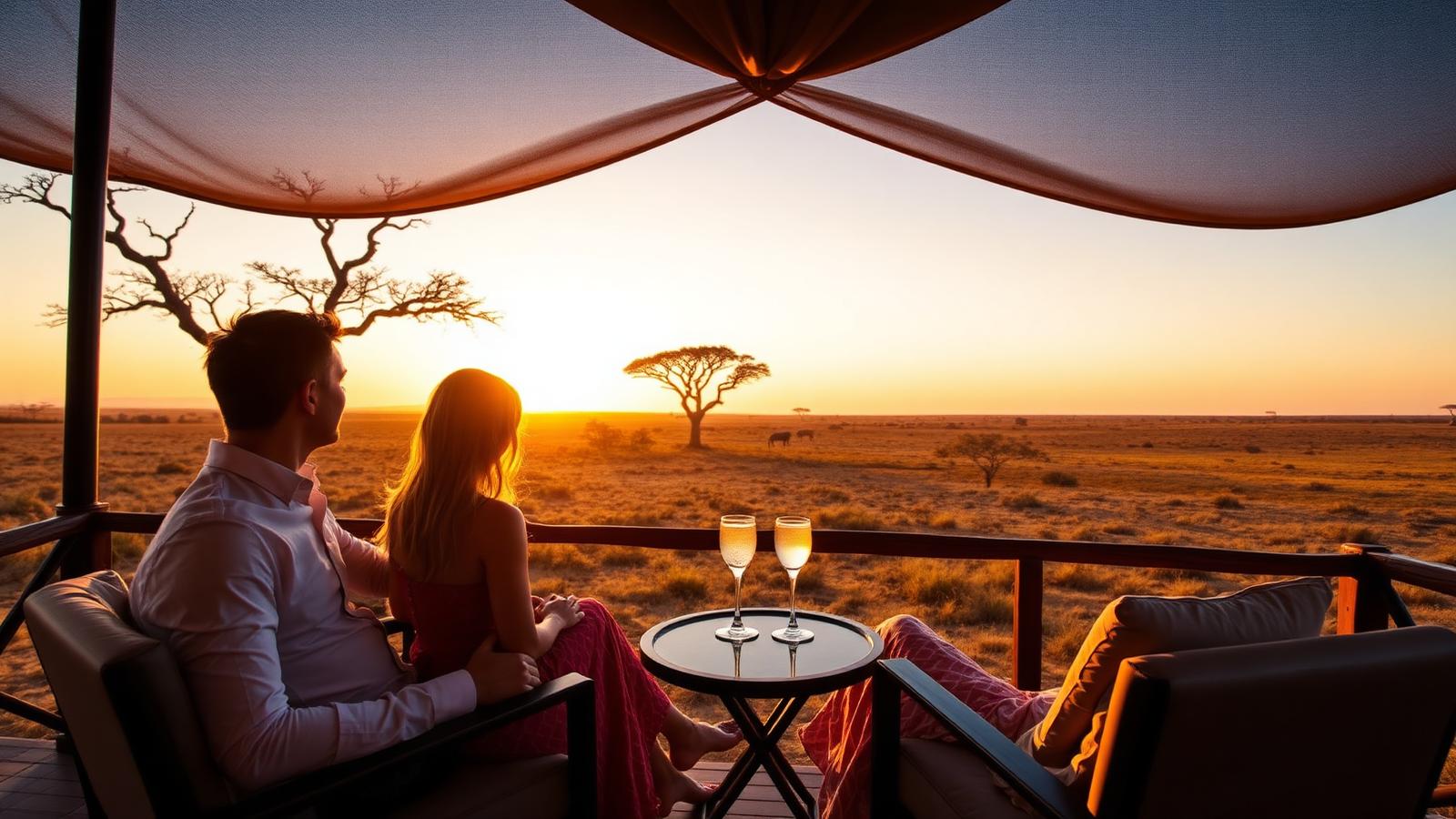
Safari Planning
Tanzania Safari for Couples: How to Plan a Comfortable, Well-Paced Trip
Which parks suit two travelers, how many days you actually need, private versus shared vehicles, where to stay, and how to combine the safari with Zanzibar without exhausting yourselves.

Most couples who write to us are not trying to tick off a list. They want a trip that feels considered: good wildlife, enough comfort to sleep properly, and a schedule that leaves room for a slow breakfast. The planning question is not really which country — it is how to arrange the days so that two people with slightly different tolerances for early mornings both come home happy.
This guide is written for that. It covers the decisions that shape a couples' safari in Tanzania — parks, length, vehicle, accommodation tier, pace, seasonality and cost drivers — and it says plainly where the trade-offs are. Where costs or availability vary, we explain what moves them rather than quoting a number that will be wrong by the time you read it.
Why Tanzania Works Well for Couples
Tanzania's safari industry was built around small vehicles and private guiding rather than large coach tours, so a couple booking a trip here defaults to their own 4x4 and their own guide. That structure is the practical reason the country suits two travelers: the day is yours to shape, and nothing about it has to be negotiated with strangers.
The second reason is variety within short distances. In a single week you can move from baobab woodland in Tarangire, to the cool forested rim above the Ngorongoro Crater, to the open Serengeti plains, and then to the Indian Ocean. Few destinations offer that range without long internal flights between each stage.
The third is scale. The Serengeti ecosystem covers roughly 30,000 square kilometers, and the crater floor sits some 600 meters below its rim. Even in busy months, camps are dispersed and evenings are quiet. What you will not get is a guaranteed sighting of any particular animal; what you will get is a landscape large enough that the trip rarely feels crowded.
The Four Decisions That Shape the Trip
Before comparing camps or quotes, settle four things between you. Almost every other choice follows from them, and couples who skip this stage tend to end up with an itinerary that suits neither person particularly well.
- How many nights you can genuinely be on the ground. Not the length of your leave — the nights left after long-haul flights and a recovery day.
- How early you are both willing to start. If one of you is not a morning person, say so now. It changes camp choice and drive planning far more than most people expect.
- What comfort level you actually need to sleep well. Canvas and bucket showers suit some couples and ruin the trip for others. There is no wrong answer, only a wrong assumption.
- Whether the trip ends with rest or with wildlife. Adding a coastal stage changes the safari budget, so decide before you allocate nights.
If this is your first trip to East Africa, read those four alongside our first-time visitor guide, which covers visas, health, driving distances and what a game drive is really like.
Best Parks for Couples
Parks differ in character more than in quality. For two travelers, the deciding factors are usually vehicle density, how private the camps feel and how much driving sits between one area and the next.
| Park | Character | Suits | Nights |
|---|---|---|---|
| Serengeti | Open plains, wide horizons and strong predator activity. Camps are spread out, so evenings feel private even in busier seasons. | Couples who want the classic safari landscape, balloon flights and the most varied choice of small camps. | 3–4 |
| Ngorongoro Crater | A contained caldera floor with an unusual concentration of large mammals, ringed by a cool, forested rim. | Couples who want one high-density wildlife day and dramatic scenery. Vehicle numbers on the floor are high in peak months. | 1–2 |
| Tarangire | Baobab country along a river system, with strong dry-season elephant and buffalo numbers and comparatively few vehicles. | A calm opening or closing park. Good for couples who value quiet over headline names. | 1–2 |
| Lake Manyara | Groundwater forest, lake shore and birdlife packed into a small park close to the main road. | A half-day stop when the schedule is tight, rather than a destination in its own right. | 0–1 |
| Nyerere (Selous) | Southern wilderness with boat safaris on the Rufiji and walking options that the northern parks rarely match. | Couples on a second visit, or first-timers who prefer seclusion and water-based activity to famous plains. | 2–3 |
| Ruaha | Remote, rugged and lightly visited, with strong predator numbers and long distances between camps. | Couples comfortable with fly-in logistics and a slower, wilder trip. | 2–3 |
For a first Tanzania trip, the northern circuit is the sensible default: the areas connect by road and by short flights, and the wildlife is dependable across the year. Our Serengeti wildlife guide breaks that park down region by region, and the Ngorongoro Crater guide explains how to time a descent so you are not on the floor at the busiest hour. Tarangire is the quiet one, and often the surprise favorite.
Recommended Safari Length
The most common planning error is treating days as interchangeable. A day that includes a four-hour transfer is not a safari day. Count the mornings you will actually spend in a park.
| Length | Realistic shape | How it feels |
|---|---|---|
| 5 days | Tarangire, Ngorongoro Crater and two nights in the central Serengeti. | Workable, but there is little slack. One long transfer day and no room for a slow morning. |
| 7 days | Tarangire, the crater and three Serengeti nights, usually flying one leg. | The shortest length that still feels unhurried. A good choice when leave is limited. |
| 10 days | The same circuit at a slower pace, or safari plus three to four nights on the coast. | The length most couples end up choosing. Room for a rest day and for weather to misbehave. |
| 12–14 days | Northern circuit plus Zanzibar, or two Serengeti regions plus a southern park. | Comfortable. Long-haul travelers get real recovery time at both ends. |
Ten days is where most couples land, and it is the length we recommend when the flights allow it. If you are weighing several routings against each other, our itinerary comparison guide sets out the standard circuits side by side.
Private vs Shared Safari
This is the decision couples ask about most, and the one where the honest answer is not complicated. A shared vehicle saves money. A private vehicle changes the day.
| Factor | Private vehicle | Shared vehicle |
|---|---|---|
| Daily rhythm | You set departure times, break times and how long you stay at a sighting. | The vehicle runs to a fixed schedule agreed by everyone on board. |
| Time at a sighting | You can wait out a sleeping leopard or leave after five minutes. | Time is a compromise between six or seven passengers. |
| Seating and space | Both of you get a window and a hatch position all day. | Seats usually rotate, and the middle row is the least useful for photography. |
| Guiding style | The guide can tune commentary and pace to your interests. | Commentary is pitched at mixed interests and experience levels. |
| Cost | Higher per person, because two people carry the vehicle and guide. | Lower per person, since the vehicle cost is split across more travelers. |
| Best for | Most couples, and anyone who cares about photography or pace. | Budget-led trips where saving money matters more than flexibility. |
The per-person premium for going private is real, and it is larger for two travelers than for four, because the vehicle and guide cost is divided between fewer people. Even so, if the budget has to give somewhere, we suggest moving down one accommodation tier before giving up the private vehicle. A slightly simpler camp still gives you a good night's sleep; a shared schedule affects every hour you are awake.
Guide choice matters alongside the vehicle. Ask your operator to match you with someone used to working with two travelers rather than large groups — the difference shows in pacing, in how much explanation you get, and in whether the guide reads when you would rather sit quietly.
Luxury vs Mid-Range Options
Accommodation tier does not change the wildlife. Two couples in the same park on the same morning see the same animals whether they slept in a 40-room lodge or a six-tent camp. What changes is space, privacy, food, service and — importantly — how far you drive each day.
| Tier | Typical stays | What changes | Trade-off |
|---|---|---|---|
| Mid-range | Comfortable tented camps and lodges, often larger properties with 20–40 rooms. | Solid food, ensuite bathrooms, hot water on request in some camps, shared public areas. | You spend less and still see the same wildlife. Evenings are more sociable and less private. |
| Upper mid-range | Smaller tented camps, often 10–16 tents, with better locations inside the parks. | Shorter drives to the game-viewing areas, quieter dining, more attentive service. | Usually the best value point for couples. Park location matters more here than decor. |
| Luxury | Small camps and lodges with private decks, plunge pools in some rooms and dedicated staff. | Space, privacy, food quality, flexible meal times and often included drinks or laundry. | A real difference in comfort rather than in wildlife. Worth it if the lodge is part of the point. |
Our view for couples: spend at the upper mid-range level for most nights and put the saved money into one or two nights at a camp you have chosen deliberately. That gives you the highlight without carrying a luxury rate across the whole trip. If you want the full comparison, read luxury versus mid-range Tanzania safari and, for what the top end includes, the luxury safari guide.
Best Accommodation Styles
Style matters more than star rating on a couples' trip. These are the four broad categories you will be choosing between, and what each one is genuinely like.
| Style | What it is | Good for | Watch for |
|---|---|---|---|
| Classic tented camp | Canvas rooms on platforms, ensuite bathrooms, a communal dining tent and a campfire. | Couples who want to hear the bush at night without giving up a proper bed and shower. | Sound carries between tents. Bring earplugs if either of you is a light sleeper. |
| Mobile / semi-permanent camp | Camps that relocate seasonally to stay near the migration herds. | Couples traveling in migration months who want short drives to the action. | Simpler infrastructure: bucket showers in some camps, limited power and no pool. |
| Small lodge | Permanent buildings, usually on an escarpment or ridge, with solid walls and full plumbing. | Cooler areas such as the Ngorongoro rim, or anyone who sleeps badly under canvas. | Some sit outside the park boundary, which adds drive time each morning. |
| Large safari hotel | Big properties with buffet dining, pools and 60 rooms or more. | Keeping the budget down, or families traveling together on a later trip. | Buffet queues and coach groups. This is usually where couples feel the trip lose its intimacy. |
Questions worth asking before you confirm a camp
- How long is the drive from camp to the main game-viewing area in our travel month?
- How many rooms or tents, and how far apart are they?
- Are meals served at set times, or can we eat when we come back from a drive?
- Is there power for charging cameras overnight, and is it constant or generator-timed?
- Is the camp open in our dates, and is it permanent or seasonal?
Requests such as a private dinner, a room with a particular view or a quiet corner of camp are usually possible to ask for, but none of them can be promised in advance. Ask early, and treat anything granted as a bonus rather than part of the plan.
How to Keep the Itinerary Relaxed
A tiring safari is almost always a scheduling problem, not a wildlife problem. Five levers control how the week feels.
- Two or three areas, not five. Every additional area costs half a day in transit at minimum.
- Minimum two nights per camp. One-night stops mean packing every morning, which is what people actually find exhausting.
- Fly the longest leg. A light-aircraft hop between the crater area and the Serengeti replaces most of a driving day.
- Schedule one deliberate rest day. One drive instead of two, then the pool, a book and a long lunch.
- Agree in advance that some mornings are optional. With a private vehicle, one of you can go out at six while the other sleeps in.
Travel Time, Roads and Flights
Distances on a Tanzania map are misleading. Park roads are unpaved and corrugated, and average speeds inside the parks are low by design. The drive from Arusha to the central Serengeti is a full day with stops; the same route by light aircraft is a fraction of that, though you trade some of the landscape and the roadside stops that come with driving.
For couples, the practical rule is to drive the short, scenic legs and fly the long ones. Light aircraft carry strict luggage limits, usually soft bags around 15 kg per person, so plan packing around that if any leg is flown. Our safari packing list covers what that means in practice, including the layers you will want for cold crater-rim mornings.
Wildlife Viewing as Two People
Traveling as a pair changes game viewing in small, useful ways. With only two of you in the vehicle, both get a full row and a hatch position, so nobody is shooting past a shoulder. Sightings can be worked properly: your guide can reposition for the light, switch off the engine and wait.
It also means you can be selective. Couples who tell their guide what they care about — big cats, elephants, birds, landscape rather than lists — usually get a better week than those who leave it unsaid. Say it on the first morning, and say it again if the plan drifts.
What no operator can promise is a specific sighting. Predator activity, river crossings and calving all vary with rainfall and grazing, and any planner who guarantees them is selling rather than advising. What a good itinerary does is put you in the right area at the right time of year and give you enough mornings to be lucky.
Dining, Drinks and Evenings
Food on safari is better than most first-time visitors expect. Camps generally serve three meals, cooked to order at smaller properties and buffet-style at larger ones. Dietary requirements are usually handled well when they are given in advance rather than at check-in.
Evenings follow a rhythm: return from the afternoon drive, shower, a drink around the fire, dinner, bed early. Many camps offer a sundowner stop on the way back — drinks set up somewhere with a view — and some can arrange a private table away from the main dining area. Ask when you book; availability depends on staffing and on the night.
Suggested 7-Day Itinerary
A workable week for couples with limited leave. It keeps to three areas and uses one flight to protect the last two days.
| Day | Where | Shape of the day |
|---|---|---|
| 1 | Arrive Kilimanjaro (JRO) | Transfer to a quiet lodge outside Arusha. Sleep, eat, adjust. |
| 2 | Tarangire | Drive after breakfast, afternoon game drive along the river, early night. |
| 3 | Ngorongoro Crater | Descend for a half or full day on the crater floor, overnight on the rim. |
| 4 | Central Serengeti | Drive or fly in, afternoon drive, sundowner near camp. |
| 5 | Serengeti | Full day with a picnic lunch, or a balloon flight at dawn if you have booked one. |
| 6 | Serengeti | A slower morning drive, free afternoon at camp, dinner under the stars. |
| 7 | Fly out | Light aircraft to Arusha or Kilimanjaro for the international connection. |
Suggested 10-Day Itinerary
The version we build most often. Same circuit, slower, with a rest day and a short coastal stage at the end.
| Day | Where | Shape of the day |
|---|---|---|
| 1 | Arrive Kilimanjaro (JRO) | Overnight near Arusha. No activities, deliberately. |
| 2 | Tarangire | Morning drive in, afternoon game drive among the baobabs. |
| 3 | Karatu / Ngorongoro | Transfer via Lake Manyara if the schedule allows, overnight near the rim. |
| 4 | Ngorongoro Crater | Early descent, out by early afternoon, rest at the lodge. |
| 5 | Central Serengeti | Drive through the Naabi gate with stops, arrive for the late-afternoon light. |
| 6 | Serengeti | Full day out with a picnic. This is the day to be ambitious. |
| 7 | Serengeti | Rest day: one drive only, then the pool, a book and an early dinner. |
| 8 | Fly to Zanzibar | Morning flight, afternoon on the coast, dinner by the water. |
| 9 | Zanzibar | Snorkeling, a spice farm, Stone Town or nothing at all. |
| 10 | Fly home | Late-afternoon departures give you a final slow morning. |
Both routings can be reversed, shortened or extended. If you would rather stay on the mainland and skip the island, use the extra nights for a second Serengeti region — the north and the south behave very differently across the year.
Safari and Zanzibar Combination
Adding the coast is the most common extension couples make, and the sequence matters. Safari first, island second: it lets you sleep late at the end of the trip rather than at the start, and it gives you a buffer if a bush flight moves.
Give the island at least three nights. Two nights means one usable day once flights are accounted for. Where you stay changes the experience more than the resort category does — the east coast has strong tides that expose the reef at low water, while the northern tip stays swimmable throughout the day. Full logistics, coastal comparisons and flight advice sit in our safari and Zanzibar combination guide.
Best Time to Travel
Two windows suit couples best, and one stretch is worth avoiding on a short trip.
| Window | Safari conditions | Coast conditions | Planning note |
|---|---|---|---|
| Late June – October | Dry season. Vegetation thins, animals concentrate near water, roads are firm. | Reliably sunny, cooler evenings, breezy in July and August. | Busiest and priciest. Book camps well ahead, especially small ones. |
| Late January – early March | Calving season on the southern plains. Green landscapes and strong predator activity. | Hot and clear between short rain spells. | Excellent value relative to the wildlife on offer. |
| November – December | Short rains: brief afternoon showers that usually clear. | Warm, humid, occasional storms. | Good value in November. Mid-December onward prices climb sharply. |
| Mid-March – May | Long rains. Some roads become difficult and a number of camps close. | Wettest stretch of the year, with several beach lodges shut. | Lowest prices, but the least dependable weather for a short trip. |
June and September are our usual suggestions for couples: strong wildlife viewing without the absolute peak of July and August, and dependable weather on both halves of the trip. For the month-by-month detail, see best time to visit Tanzania.
Budget Considerations
Rather than quote a figure that shifts with season and availability, it is more useful to understand what moves the number. These are the drivers that actually decide what a couples' safari costs.
| Driver | Effect on cost |
|---|---|
| Group size | Two people carry the whole vehicle and guide cost, so per-person rates are higher than for four or six travelers. |
| Season | The same camp can cost substantially more in July or February than in April. Shoulder dates often save meaningful money. |
| Camp location | Camps inside the parks cost more than those outside, but they cut daily driving, which is worth paying for on a short trip. |
| Flights vs driving | Light-aircraft legs cost more than road transfers and buy back hours. On a seven-day trip that trade usually favors flying. |
| Park and conservation fees | Set by the authorities, charged per person per day, and unaffected by how comfortable your camp is. |
| Extras | Balloon flights, private dining, spa treatments, premium drinks and tips sit outside most quoted rates. |
Two things surprise couples at the end of a trip: tips, and the extras that sit outside the quoted rate. Set money aside for both during planning, in small US dollar notes, and confirm with your operator exactly which meals, drinks, park fees and activities are inside the quote. Our Tanzania safari cost guide breaks the line items down in detail.
Anniversaries and Special Occasions
Plenty of couples travel to mark something — an anniversary, a milestone birthday, a delayed celebration. Mention it when you book rather than on arrival. Camps often like to acknowledge the occasion in some small way, but they need notice, and nothing of that kind can be promised in advance.
Larger arrangements, such as a ceremony or a photographer, need considerably more lead time and depend on the camp, the season and local permissions. If either matters to you, raise it at the first planning conversation so the itinerary can be built around what is realistically possible.
Photography for Two
Two people in a private vehicle is a good photographic setup: both get a clear side, and the guide can position the vehicle for the light rather than for the average of six passengers.
- Agree who is shooting what. One long lens and one wider setup covers far more than two identical kits.
- Bring a beanbag rather than a tripod. Tripods are unusable in a vehicle; a beanbag on the roof hatch is not.
- Check charging at each camp. Some run generators on a schedule, so a power bank is worth the weight.
- Put the camera down for one drive. Couples consistently say the drive they watched rather than photographed is the one they remember.
For settings, lens choices and light timing, our safari photography guide goes considerably deeper.
Common Planning Mistakes
| Mistake | Why it hurts | What to do instead |
|---|---|---|
| Booking too many parks in too few days | Transfer days replace game-viewing days and you spend the trip in transit. | Two or three areas for a week. Add nights before you add destinations. |
| Sharing a vehicle to save money, then regretting it | Pace is the thing couples notice most, and it is the first casualty of a shared vehicle. | If the budget is tight, drop an accommodation tier before you drop the private vehicle. |
| Choosing a camp on photographs alone | A beautiful lodge two hours from the wildlife areas means long daily drives. | Ask where the camp sits relative to where the animals are in your travel month. |
| Putting the beach first | Returning from sand to 5:30 a.m. wake-up calls feels like the trip going backwards. | Safari first, coast second. It also gives you a buffer if a safari flight shifts. |
| Ignoring altitude and temperature on the crater rim | The rim sits high and gets genuinely cold at night, which surprises people who packed for the plains. | Pack a warm layer each. Our packing guide covers the rest. |
| Leaving tips and extras out of the budget | They are real money and they arrive at the end of the trip, when cash is hardest to find. | Set aside a tipping and extras allowance during planning, in small US dollar notes. |
Related Guides
These are the guides couples most often read alongside this one, each covering a decision this article deliberately summarizes rather than repeats.
- Luxury vs mid-range Tanzania safari — a full comparison of what each tier includes.
- The luxury Tanzania safari experience — what the top end of the market actually delivers.
- Safari and Zanzibar combinations — routing, flights and how many island nights to plan.
- Best Tanzania safari itineraries — the standard circuits compared by length.
- Tanzania safari cost — a line-by-line look at where the money goes.
- Best time to visit Tanzania — month-by-month conditions across the parks and the coast.
- Family safari in Tanzania — useful if a later trip will include children.
Common Questions
Frequently Asked Questions
Seven days is the shortest length that still feels unhurried: three areas, three or four game-viewing mornings and one flight leg to avoid a long road transfer. Ten days is where most couples land, because it adds a genuine rest day and absorbs the odd weather or flight change without wrecking the plan. Twelve to fourteen days works well if you are adding Zanzibar and want real recovery time at both ends. Count game-viewing mornings rather than calendar days — a day with a four-hour transfer in it is not a safari day.
Private, in most cases. On a private vehicle you set the departure times, decide how long to stay at a sighting, stop where you like and both get a window and a hatch position. A shared departure is cheaper per person because the vehicle and guide cost is split across more travelers, and it is a reasonable choice when the budget is the binding constraint. If money has to come from somewhere, we suggest moving down one accommodation tier before giving up the private vehicle — the vehicle affects every waking hour, while a simpler camp mainly affects the room.
The Serengeti for open landscape, predator activity and the widest choice of small camps; Ngorongoro Crater for one high-density wildlife day inside a dramatic caldera; and Tarangire for baobab country, elephant herds and comparatively few vehicles. Couples who want seclusion over famous names, or who are returning for a second trip, often prefer Nyerere (Selous) for boat safaris or Ruaha for remoteness — both need fly-in logistics and a slower schedule. Vehicle density and how private the camps feel matter more to most couples than the headline reputation of a park.
It depends on what you want from the nights rather than the days. Accommodation tier does not change the wildlife: two couples in the same park on the same morning see the same animals. What the higher tiers buy is space, privacy, better food, flexible meal times and often a location that shortens your daily drive. A common approach that works well is to book upper mid-range camps for most nights and put the saved money into one or two nights at a camp chosen deliberately as the highlight of the trip.
Five things control the pace. Limit yourself to two or three areas. Stay a minimum of two nights per camp so you are not packing every morning. Fly the longest leg instead of driving it. Schedule one deliberate rest day with a single drive. And agree in advance that some mornings are optional — with a private vehicle, one of you can head out at six while the other sleeps in. If your international flight lands late at Kilimanjaro, add a transit night near Arusha rather than starting the safari tired.
It is the most common extension, and the order matters: safari first, island second. Ending on the coast means you sleep late at the end of the trip rather than the start, and it gives you a buffer if a bush flight moves. Plan at least three island nights — with two, flights eat most of one day and you are left with a single usable one. Where you stay changes the experience more than the resort category: parts of the east coast have strong tides that expose the reef at low water, while the northern tip stays swimmable through the day.
Late June through October is the dry season: thinner vegetation, animals concentrating near water, firm roads and reliable coastal sunshine. Late January to early March brings the calving season on the southern plains, green landscapes and strong predator activity, usually at better value. November's short rains are typically brief and clear quickly. Mid-March to May is the long rains, when some roads become difficult and a number of camps close — lowest prices, least dependable weather for a short trip. June and September are our usual suggestions for couples.
Ask about location first: how long is the drive from camp to the main game-viewing area in your travel month. Then style. Classic tented camps put you close to the sounds of the bush with a proper bed and shower; mobile camps follow the migration but have simpler infrastructure; small lodges suit cool areas like the Ngorongoro rim and anyone who sleeps badly under canvas; large safari hotels keep costs down but are usually where couples feel the trip lose its intimacy. Also confirm tent numbers, spacing, meal flexibility and whether power for charging runs constantly or on a generator schedule.
Because the vehicle, the guide and their costs are carried by two people instead of four or six. Park and conservation fees are charged per person per day and do not change, but the fixed costs of private guiding are simply divided differently. This is why traveling with another couple reduces per-person rates noticeably while keeping the vehicle private to your group. Other significant drivers are season, whether camps sit inside or outside the parks, and how many legs you fly rather than drive.
No, and any planner who promises specific sightings is selling rather than advising. Predator activity, river crossings and calving all shift with rainfall and grazing. What a well-built itinerary does is place you in the right area for the right time of year and give you enough mornings for luck to work in your favor. Telling your guide on the first morning what you care about most — big cats, elephants, birds, or landscape over lists — makes a bigger difference to your week than almost anything else.
You can ask, and it is worth asking at booking rather than on arrival. Many camps are glad to acknowledge an occasion or set a table away from the main dining area, but small camps run with limited staff and a night's notice is often not enough. Nothing of this kind can be promised in advance, and larger arrangements such as a ceremony or a photographer need considerably more lead time and depend on the camp, the season and local permissions.
Light aircraft between the parks carry strict limits, generally soft-sided bags of around 15 kg per person including hand luggage, though the exact allowance varies by operator and aircraft. Hard suitcases are usually refused because they do not fit the hold. Most camps offer laundry, so packing for three or four days and washing along the way is the normal approach. Pack a warm layer each regardless of season — the Ngorongoro rim sits high and gets genuinely cold at night.
Final Thoughts
A good couples' safari is mostly a matter of restraint. Fewer parks, more nights, a private vehicle, a camp chosen for where it sits rather than how it photographs, and one day with nothing in it. Those five choices account for almost everything people say afterward about whether the trip felt comfortable or rushed.
The wildlife will take care of itself. Tanzania's parks are large, well managed and reliably rewarding across most of the year. Your job in planning is simply to make sure you are rested enough to enjoy them, and to build a schedule that suits both of you rather than the more enthusiastic one.
Decide your real number of nights, keep to two or three areas, book the vehicle privately and leave one day with nothing in it. Once those four choices are made, a Tanzania safari for two tends to arrange itself around them.
Plan Your Journey
Tell us how you'd like your safari to feel, and we'll build the itinerary around it.
Share your travel dates, the parks you're drawn to, the accommodation style you sleep well in, the pace you want, whether you'd like a private vehicle, and whether you're thinking about adding Zanzibar. Our Arusha-based specialists will put together a tailored plan for the two of you — with the trade-offs explained, not hidden.
- TALA Licensed Operator
- 4.9 ★ Guest Rating
- No Booking Fees
Keep Reading
More Safari Experience Guides
Safari Experiences
Beyond the Wilderness: What to Expect on a Luxury Tanzanian Safari
Safari Experiences
Luxury vs Mid-Range Tanzania Safari: Which Experience Is Best for You?
Safari Experiences
Family Safari in Tanzania: Everything Parents Need to Know
Safari Guides
The Ultimate Tanzania Travel Guide: Everything You Need to Know Before You Visit
Kilimanjaro