Safari Planning Guide
The Perfect 10-Day Tanzania Safari Itinerary
Tarangire, the Ngorongoro Crater and four nights in the Serengeti — the day-by-day route our Arusha planners build most often, with real driving times, honest costs and where to sleep at every budget.

Introduction
Ten days is the length we recommend more than any other, and it is not a marketing number. It is what comes out of the arithmetic once you accept two facts about northern Tanzania: the parks are further apart than the map suggests, and the Serengeti needs at least three nights before it starts to give you its best.
This 10-day Tanzania safari itinerary is the route our office in Arusha builds most weeks of the year for first-time visitors. Tarangire for elephants, Lake Manyara for the forest and the birds, the Ngorongoro Crater for a Big Five morning, then four nights in the Serengeti positioned around wherever the migration actually is, and a flight home from a bush airstrip instead of eight hours on gravel.
I have written it the way I would explain it across the desk: real driving times, what you will realistically see on each day, what it costs at three different comfort levels, and the mistakes I watch travellers make when they plan this trip themselves. Nothing here is aspirational. It is simply how the route works on the ground in 2026.
Why Ten Days Is the Right Length
A seven-day safari works, and we sell plenty of them. But seven days forces a choice: either you skip Tarangire, or you cut the Serengeti to two nights. Both hurt. Ten days removes the compromise. You get a recovery night on arrival, a full crater morning without rushing, and four Serengeti nights — enough that you can afford one quiet day and still leave having seen the plains properly.
There is a second, less obvious argument. Wildlife viewing is cumulative. On day two you photograph every giraffe. By day six you have stopped photographing giraffes and you are watching a lioness decide whether to hunt. That shift takes about five days in the field to happen, and short trips end before it does. If you are weighing alternatives, our roundup of the best Tanzania safari itineraries compares 5-, 7-, 10- and 14-day routes side by side.
The Route at a Glance
There is no clever loop here. The Northern Circuit is a line out and, ideally, a flight back. This is the geography as your driver-guide sees it:
  KILIMANJARO AIRPORT (JRO)
        │  45–60 min
  ARUSHA ●                          Night 1
        │  2 hr tarmac
  TARANGIRE ●                       Night 2
        │  1.5 hr
  LAKE MANYARA ●
        │  1 hr up the Rift escarpment
  KARATU ●                          Nights 3 & 4
        │  30 min to Loduare Gate
  NGORONGORO CRATER ●               Day 4
        │  4.5–5.5 hr via Olduvai + Naabi Hill
  CENTRAL SERENGETI ●               Nights 5–8
        │      ├── Ndutu (Dec–Mar, calving)
        │      └── Kogatende (Jul–Oct, crossings)
        │  1 hr light aircraft
  ARUSHA ●                          Night 9
        │
  DEPART JRO  —or—  FLY TO ZANZIBAR (1.5 hr)
Driving times in normal dry-season conditions. Add 30–45 percent during the long rains in April and May.
Day-by-Day Summary & Driving Time Estimates
Skim this first. Everything below it is detail. Tap any day heading in the table of contents above to jump straight to it.
| Day | Route | Driving time | Overnight | Focus |
|---|---|---|---|---|
| 1 | Kilimanjaro Airport → Arusha | 45–60 min | Arusha | Arrival, briefing, gear check |
| 2 | Arusha → Tarangire | 2 hr + game drive | Tarangire area | Elephants, baobabs, river circuit |
| 3 | Tarangire → Lake Manyara → Karatu | 1.5 hr + 1 hr | Karatu | Forest game, flamingos, escarpment |
| 4 | Ngorongoro Crater → Karatu | 30 min each way | Karatu | Big Five morning on the crater floor |
| 5 | Karatu → Central Serengeti | 4.5–5.5 hr | Seronera | Olduvai, Naabi Hill, first plains |
| 6 | Central Serengeti | 6–7 hr game driving | Seronera | Big cats in the Seronera Valley |
| 7 | Serengeti — migration region | 2–4 hr transfer | Ndutu / Seronera / Kogatende | Herds, crossings or calving |
| 8 | Serengeti at your own pace | Flexible | Same camp | Balloon flight, slow morning, cats |
| 9 | Serengeti → Arusha by air | 1 hr flight | Arusha | Final drive, airstrip, hot shower |
| 10 | Departure or Zanzibar | 45 min or 1.5 hr flight | — | Fly home or extend to the coast |
The Full Day-by-Day Itinerary
Day 1 — Arrive at Kilimanjaro Airport, overnight in Arusha
45–60 minutes from JRO
Almost every good 10-day Tanzania safari itinerary starts the same quiet way: land at Kilimanjaro International (JRO), meet your guide in the arrivals hall, and drive into Arusha with Mount Meru on your left. Nothing dramatic happens today, and that is deliberate.
In the evening your guide runs the trip briefing — the route, the daily rhythm, tipping, water, charging points in the vehicle, and where the cool box lives. We also check gear. Every season someone arrives without binoculars or with a suitcase too rigid for a bush flight, and it is far easier to solve that in Arusha than at Seronera airstrip on day nine.
Day 2 — Arusha to Tarangire National Park
2 hours tarmac, then a full afternoon game drive
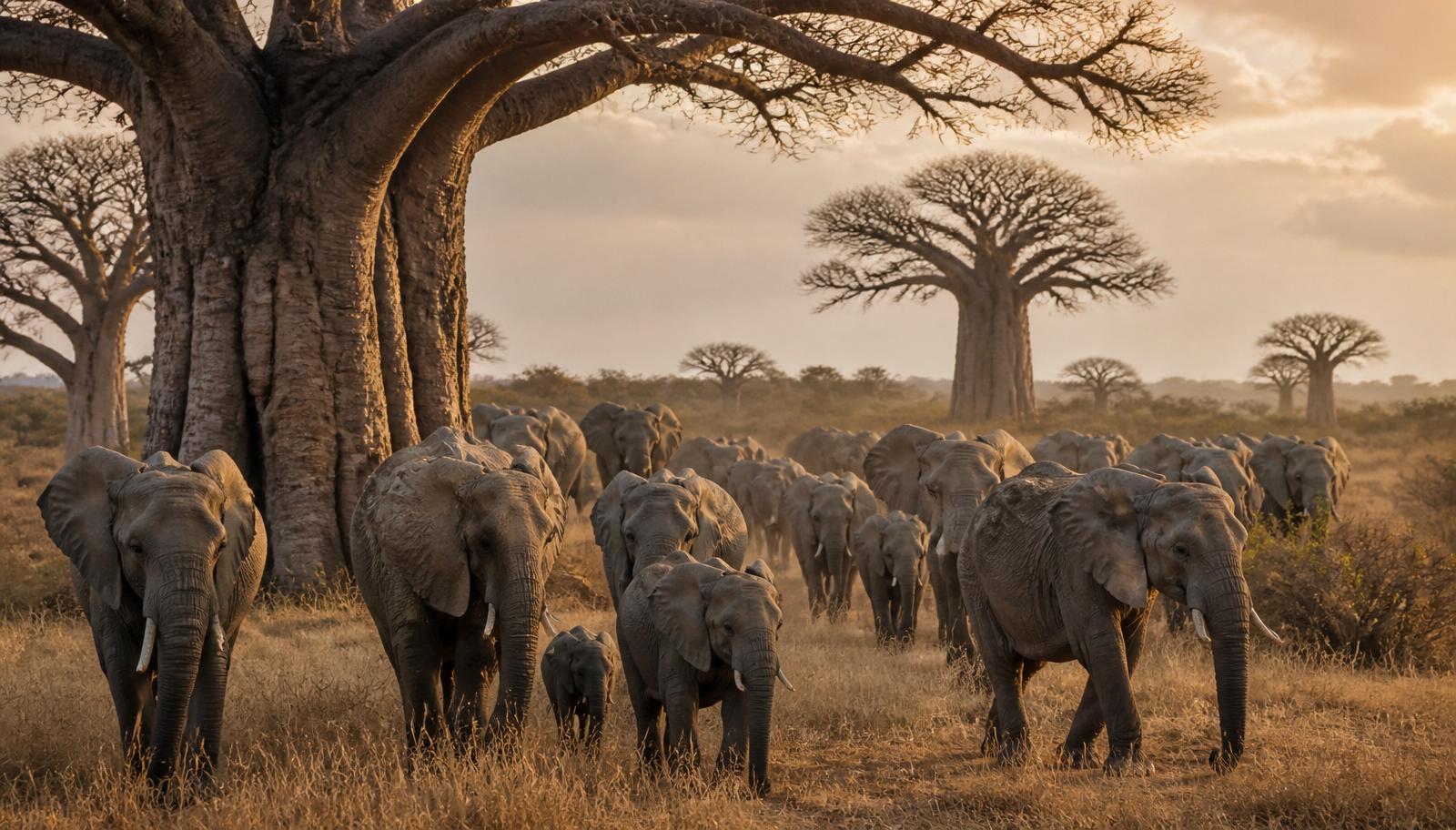
You leave after breakfast, drop down through Maasai grazing land, and reach Tarangire's gate before lunch. From July to October the Tarangire River is one of the only permanent water sources for a very long way, and the elephant concentration is among the highest in Africa. Herds of fifty are ordinary here; herds of two hundred happen.
This is also the park with the strangest, most photogenic trees on the circuit. Baobabs stand alone on the ridges, some of them older than the country, and elephants strip their bark for moisture in the driest weeks. Our full Tarangire National Park guide goes deeper on the seasonal swings — because in April and May the game disperses and one night here is plenty.
Day 3 — Tarangire to Lake Manyara, on to Karatu
1.5 hours to Manyara, 1 hour up the escarpment
A short morning drive in Tarangire's southern swamps, then west to Lake Manyara. You enter through a groundwater forest that feels nothing like the savannah you just left — fig and mahogany, blue monkeys overhead, baboon troops that stop the vehicle for ten minutes at a time. Beyond the forest the floodplain opens onto the soda lake and its flamingos.
Manyara is small and easily covered in half a day, which is why we pair it with the escarpment climb to Karatu. About the famous tree-climbing lions: they exist, and they are not reliable. Any operator who promises them is telling you about themselves, not about the park.Lake Manyara National Park guide has the month-by-month detail. You sleep in Karatu, coffee-farm country, forty minutes from the crater gate.
Day 4 — Ngorongoro Crater, the big one
30 minutes to Loduare Gate, six hours on the crater floor
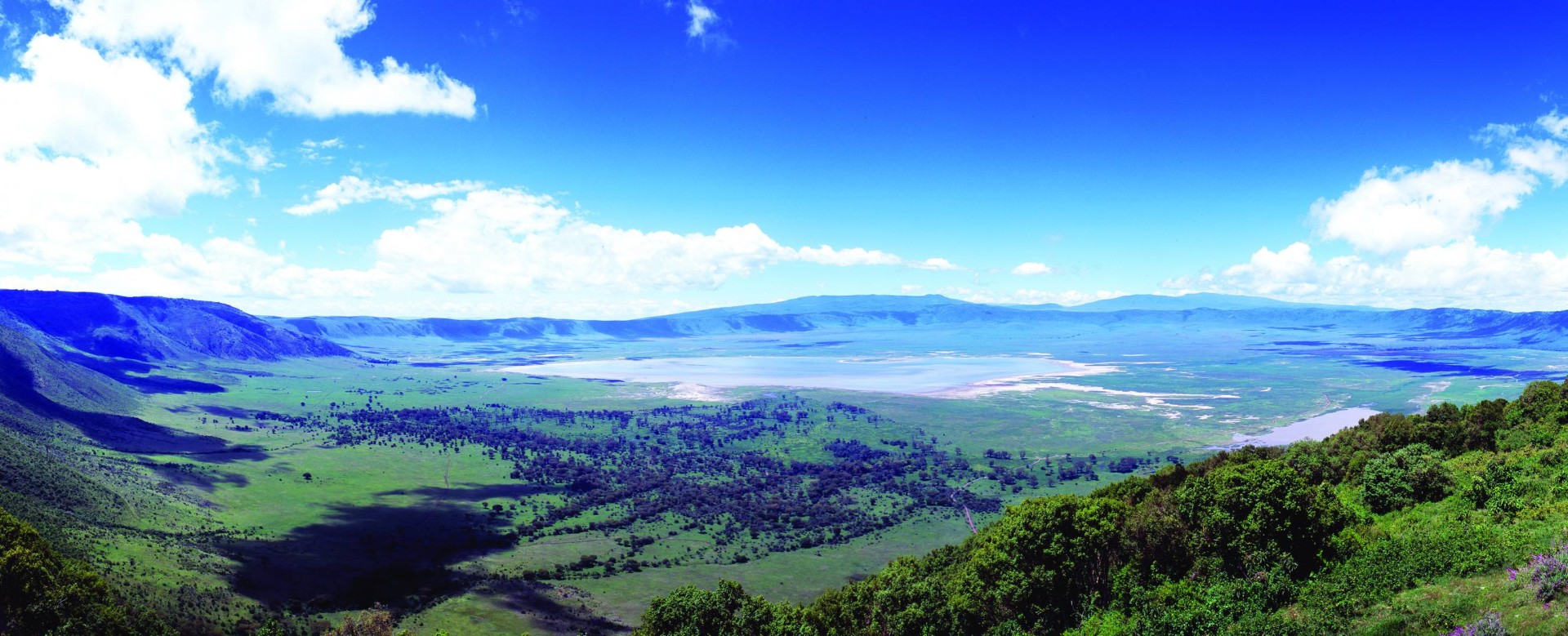
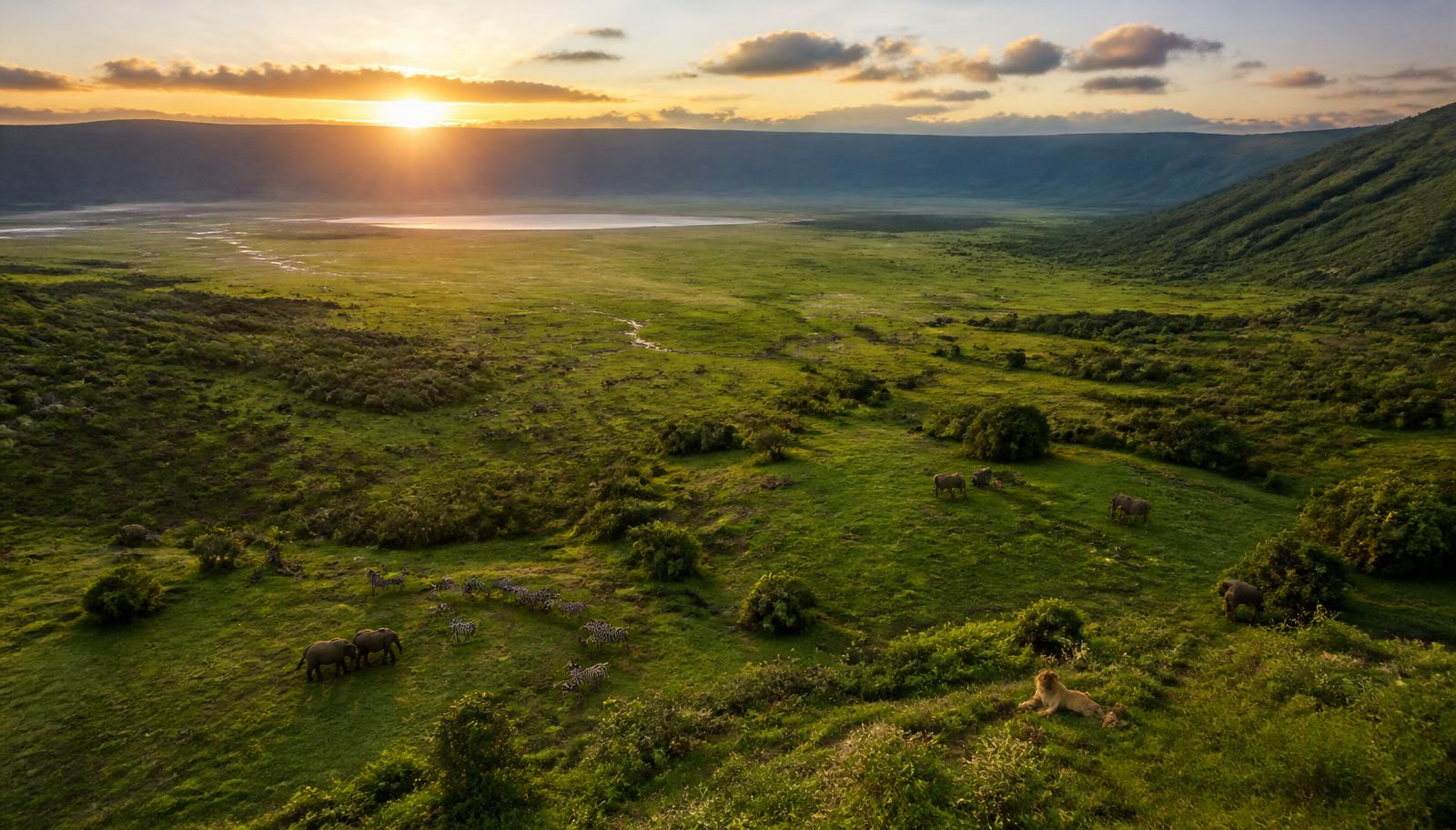
Your alarm goes at 5:30 and you will not resent it. Descending the crater wall at first light, with mist still sitting on the floor two thousand feet below, is the single most cinematic half hour of the trip. Once you are down, six hours are enough to work the Lerai Forest, the Munge River, Lake Magadi and the Gorigor Swamp.
This is where the Big Five actually becomes plausible in one morning: lion prides that barely acknowledge vehicles, big-tusked elephant bulls in the fever trees, buffalo in the thousands, and the crater's small, closely protected population of black rhino, usually distant on the western plain. Lunch is a picnic at Ngoitokitok Springs, watched by kites who have made a career of stealing sandwiches.
By early afternoon you climb back out to Karatu. Some guests add an honestly arranged, fairly paid Maasai boma visit; others sit by the fire with a book. Both are correct.Ngorongoro Crater safari guide explains why the earliest descent matters so much for both wildlife and vehicle numbers.
Day 5 — Karatu to the Central Serengeti
4.5–5.5 hours, but it is a game drive, not a transfer
You cross the Ngorongoro Conservation Area, past Maasai herders on the highland grass, past the Olduvai Gorge turn-off where the Leakeys rewrote human prehistory, and then the land simply drops away into the short-grass plains. Naabi Hill Gate is the formal entry to the Serengeti, and it is worth walking up the kopje behind the gate for the view.
From Naabi onward you are game driving, not travelling. Cheetah favour this open country, and the first lion of the Serengeti usually appears within an hour of the gate. You arrive at your central camp in time for the golden hour.
Day 6 — A full day in the Seronera Valley
6–7 hours of game driving, with a bush breakfast
Seronera holds water year-round, and that single fact makes it the most consistently productive big-cat area in Tanzania. Resident lion prides here are large and habituated to vehicles. Leopards use the sausage trees along the river — in our experience you see one on roughly six mornings out of ten if you are patient and your guide knows the individual trees.
We take breakfast out with us and stay in the field. Coming back to camp at 11am to eat costs you the entire late-morning window when cats move between shade.Serengeti wildlife guide maps the valley's territories and the best hours for each species.
Day 7 — Follow the migration to wherever it actually is
2–4 hours, depending on the season
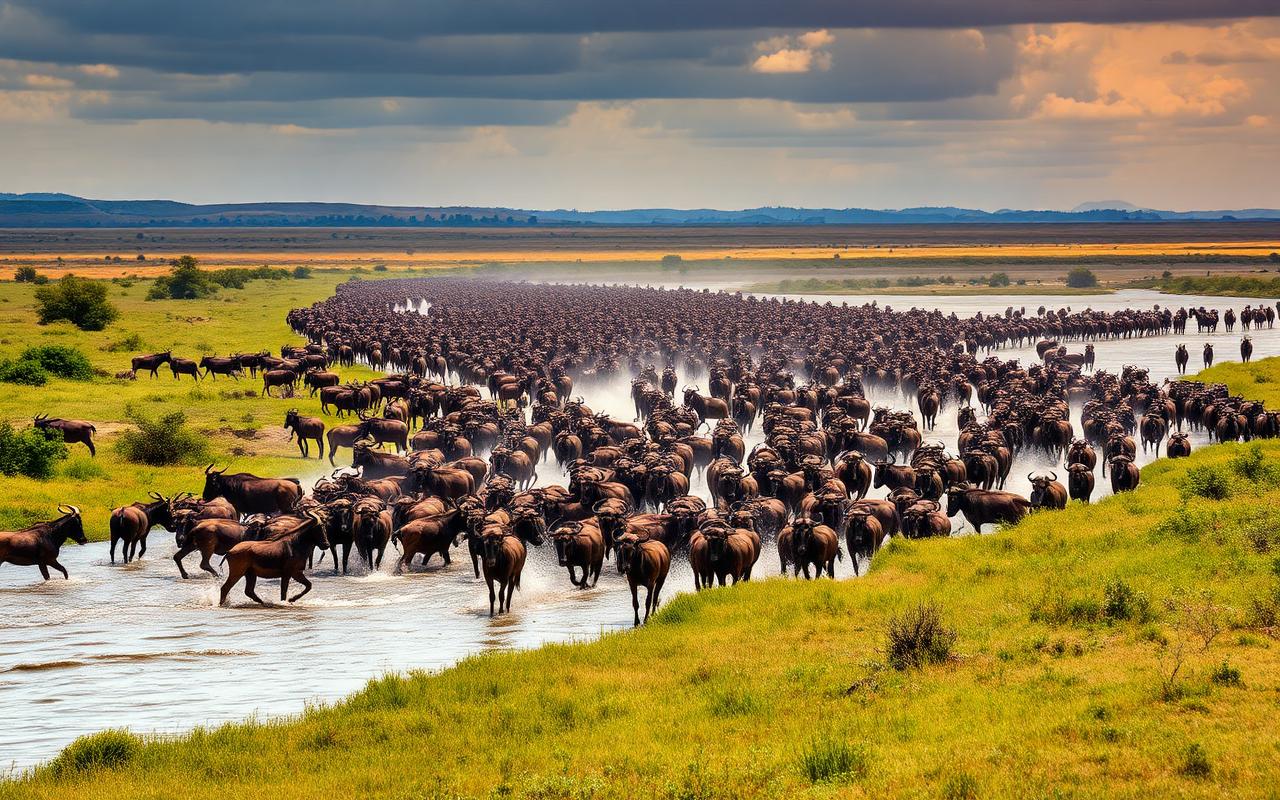
This is the day the itinerary flexes, and it is why we refuse to publish a fixed version of it. From December to March the herds are on the southern short-grass plains around Ndutu, calving — half a million wildebeest born inside about three weeks, with every predator in the ecosystem in attendance. From July to October they are on the Mara River at Kogatende in the far north, and the crossings are the reason people fly up.
In the shoulder months — April to June, and November — the herds are strung out through the western corridor and the central plains, and honestly, resident game plus fewer vehicles is a fine trade. Your planner in Arusha will fix this day about ten days before you fly, using current ranger reports rather than a calendar.
Day 8 — The Serengeti at your own pace
Whatever you choose
By day eight most guests have found their preference. Some want a fourth consecutive dawn start. Some want a hot-air balloon flight — lifting off in the dark, drifting a few metres above the grass as the sun comes up, then a champagne breakfast on the plains. It is expensive (around USD 599 per person in 2026) and almost nobody regrets it.
Others simply want a slow morning, a long lunch and a late afternoon drive. We build the day around what you actually want by then, not what a brochure decided nine months earlier.
Day 9 — Final Serengeti morning, then fly to Arusha
1-hour light aircraft flight instead of 8 hours of gravel
One more drive at first light — often the best one, because the pressure is off and everyone has learned how to look. Back to camp for brunch, then the airstrip. The bush flight from Seronera or Kogatende to Arusha takes about an hour, costs USD 250–350, and buys back an entire safari day.
The 15 kg soft-bag limit applies. This is the moment the duffel-versus-suitcase conversation from day one pays off.
Day 10 — Departure, or straight on to Zanzibar
45 minutes to JRO, or a 1.5-hour flight to ZNZ
Most international flights leave Kilimanjaro in the evening, so you have an unhurried final day — the Cultural Heritage Centre, a coffee-farm lunch, a day room to shower before the flight.
About half our guests do not go home. They fly Arusha to Zanzibar and spend three to five nights on the coast, which is, in our experience, the single best decision you can make after nine days of early alarms.
Wildlife Highlights by Day
Wildlife is never guaranteed, and anyone who guarantees it is selling something. These are the honest expectations we set with guests before they fly.
| Day | Where | What you are looking for | Realistic odds |
|---|---|---|---|
| Day 2 | Tarangire | Elephant (herds of 50–200), giraffe, oryx, lesser kudu, tree lions on rare days | Elephant near-certain Jun–Oct |
| Day 3 | Lake Manyara | Blue monkey, baboon troops, hippo pools, flamingo, 400+ bird species | Best birding day of the trip |
| Day 4 | Ngorongoro Crater | Lion, elephant bulls, buffalo, black rhino, hyena clans, golden jackal | Highest single-day Big Five odds in Tanzania |
| Day 5 | Ngorongoro → Serengeti | Cheetah on the short-grass plains, gazelle, bat-eared fox, ostrich | Great transit-day cheetah country |
| Day 6 | Seronera Valley | Leopard in the sausage trees, resident lion prides, serval, crocodile | Leopard roughly 6 mornings in 10 |
| Day 7 | Migration region | Wildebeest and zebra in numbers, river crossings or newborn calves | Depends entirely on your month |
| Day 8 | Serengeti (flexible) | Whatever you missed — plus balloon-height views of the plains at dawn | Your best photography light |
| Day 9 | Serengeti (final drive) | Hyena dens, hunting cats, early-morning giraffe on the skyline | Often the quietest, best drive |
Where to Stay: Budget, Mid-Range and Luxury
Accommodation is the biggest single lever on the price of a 10-day Tanzania safari itinerary, and the one where advice is worst. The thing worth paying for is position — how close your bed is to the wildlife at 6:15am. Everything else is comfort.
| Tier | Per person / night | What it looks like | Our honest take |
|---|---|---|---|
| Budget / comfortable | USD 150–260 pp | Small lodges in Karatu, permanent tented camps outside park gates, public campsites inside the Serengetie.g. Karatu farm lodges, Serengeti public-campsite tents with a private cook | Perfectly comfortable, but you will drive more and lose golden-hour time at gates |
| Mid-range (our most-booked) | USD 350–550 pp | Well-run lodges and semi-permanent tented camps inside the parks, ensuite bathrooms, hot bucket or plumbed showerse.g. Central Serengeti tented camps, crater-highlands lodges near Karatu | The best value on the circuit — camp position, not thread count, is what you are buying |
| Luxury | USD 900–1,500 pp | Mobile camps that follow the migration, crater-rim lodges, private butler service, private vehicle and senior guidee.g. Seasonal mobile camps at Ndutu and Kogatende, rim lodges above the crater | Worth it for privacy, food and location — not necessarily for better wildlife |
If you are torn between the middle and top tiers, our comparison of luxury vs mid-range Tanzania safaris lays out exactly what the extra spend buys — and, more usefully, what it does not.
Estimated Cost of a 10-Day Tanzania Safari
These are 2026 all-inclusive ranges per person sharing, covering park and conservation fees, accommodation, a 4x4 with a professional guide, all meals on safari, drinking water and airport transfers. Excluded: international flights, visas, travel insurance, tips and drinks.
| Comfort tier | Per person (10 days) | What is included |
|---|---|---|
| Comfortable / entry-level | USD 3,400 – 4,400 | Lodges outside parks, shared 4x4 with pop-top roof, all park fees, full board on safari |
| Mid-range private safari | USD 4,800 – 6,800 | In-park camps, private 4x4 and guide, all fees, one internal flight |
| Premium | USD 7,500 – 10,500 | Best-positioned camps, private guide, flights both legs, balloon flight optional |
| Luxury | USD 12,000 – 20,000+ | Mobile luxury camps, private vehicle throughout, fly-in, balloon and private dining |
Two structural costs surprise people. Park and conservation fees on this route run to roughly USD 900–1,100 per person for ten days before you have slept anywhere — they are government-set and no operator can discount them. And solo travellers pay a single supplement, typically 25–40 percent, because vehicle and room costs do not halve. Our Tanzania safari cost breakdown itemises every line so you can compare quotes properly.
Best Time to Run This Itinerary
This route works in every month of the year. What changes is where you sleep in the Serengeti and how many other vehicles you share a sighting with.
- June to October — the classic dry season. Best game density, thin bush, Tarangire at its peak, Mara River crossings from late July. Also the busiest and most expensive window; camps in the north sell out nine to twelve months ahead.
- January to March — calving season. Our personal favourite. Half a million wildebeest calves born on the Ndutu plains, extraordinary predator action, green landscapes and noticeably fewer vehicles than August.
- June and November — shoulder value. Good game, lower rates, occasional short rains that clear by mid-morning. If your dates are flexible and your budget is not, look here first.
- April and May — the long rains. Genuinely quiet and genuinely beautiful, but roads slow by 30–45 percent, some camps close and Tarangire disperses. We run it happily for repeat visitors and photographers; less so for a once-in-a-lifetime first trip.
How We Adapt the Route
Families with children
We shorten the drive days, add a swimming pool in Karatu, and swap one full Serengeti day for a shorter morning drive plus a camp afternoon. Children from about six travel well on this itinerary; below that, a Tarangire-and-crater trip of five or six days is kinder to everyone.
Couples and honeymooners
A private vehicle throughout, a bush dinner under the stars in the Serengeti, a balloon flight on day eight, and four or five nights in Zanzibar afterwards. This is by far the most common shape of the trip we build for honeymooners.
Photographers
Fewer parks, more Serengeti. We usually cut Lake Manyara, add a fifth Serengeti night, and put you with a guide who understands why you want to sit with one subject for two hours instead of ticking off species. Beanbags in the vehicle, and the roof stays open.
Adding Zanzibar
The cleanest version replaces day 10's departure with a direct Arusha–Zanzibar flight (about 1.5 hours) and adds three to five nights on the coast. It also means you fly home from Zanzibar, which is often cheaper than doubling back to Kilimanjaro.
Packing Tips for a 10-Day Safari
- One soft duffel, 15 kg maximum. The bush flight on day nine enforces it. Hard suitcases are refused.
- Layers, not summer clothes. Crater rim mornings sit near 5°C; the Serengeti at midday hits 30°C. A fleece and a windproof shell earn their space.
- Binoculars, one pair per person. 8×42 is the right spec. Sharing a single pair is the most reliable source of quiet friction in a safari vehicle.
- USD cash in small notes, series 2013 or newer. Older bills are widely refused in Tanzania. Budget USD 10–20 per guest per day for your guide, USD 5–10 for camp staff.
- Neutral colours, not camouflage. Military-pattern clothing is illegal for civilians in Tanzania. Khaki, olive and grey are fine; avoid dark blue and black, which attract tsetse flies.
- Laundry, not luggage. Most camps wash clothes daily for a small fee, so pack four days of clothing, not ten.
The full list, including camera gear, medication and the documents you need at immigration, is in our Tanzania safari packing list.
Common Mistakes Travelers Make
These six come up again and again in the itineraries guests send us to review before booking elsewhere.
| The mistake | Why it costs you | What to do instead |
|---|---|---|
| Splitting 10 days across six parks | You spend four of them in transit | Three main parks, longer stays, one flight home |
| Booking the Serengeti before checking the season | The herds may be 300 km from your camp | Pick the region for your month, then the camp |
| Driving back from the Serengeti on day 9 | Eight hours of gravel to end a safari | Fly Seronera → Arusha, USD 250–350 |
| Arriving and departing on the same day as a park | Jet lag ruins your first game drive | One recovery night in Arusha, always |
| Choosing on price alone | The cut is usually guide quality or camp position | Ask what is excluded before comparing quotes |
| Packing hard suitcases | Bush flights allow 15 kg soft bags only | One soft duffel plus a daypack for cameras |
Expert Planning Advice
- Book Serengeti nights first, then build backwards. The camps in the right region for your month are the scarce resource. Karatu and Tarangire almost always have availability.
- One vehicle, one guide, all ten days. Handovers between parks are a cost-cutting tell. They also mean re-explaining on day five that you would rather sit with a leopard than tick off another impala.
- Ask for the guide by experience, not the lodge by rating. On this route the guide shapes your trip more than the camp does. Ask how many years, ask about their certification level, and ask if they stay with you throughout.
- Leave day eight loose. Nine consecutive dawn starts is a lot of safari. A late breakfast and a 10am drive on one day resets everyone, and often produces a better sighting than the fourth 5:45 alarm.
- Confirm what "full board" excludes. Drinks, laundry, balloon flights, Maasai village visits and crater vehicle fees are the usual omissions. Get them itemised before you compare two quotes.
- Book nine to twelve months ahead for July–September. For calving season, six months is usually enough. For April and May, six weeks will do.
Frequently Asked Questions
Common Questions
Frequently Asked Questions
Ten days is the length we recommend most. It covers Tarangire, Lake Manyara, a full Ngorongoro Crater morning and four Serengeti nights without a single day lost purely to transit. Seven days forces you to drop a park or cut the Serengeti to two nights, and wildlife viewing is cumulative — by day six you have stopped photographing every giraffe and started watching behaviour, which is where the trip really begins.
June to October is the classic dry season: thin bush, peak Tarangire elephant numbers and Mara River crossings from late July. January to March is our personal favourite — half a million wildebeest calves born on the Ndutu plains, exceptional predator action and noticeably fewer vehicles. June and November offer shoulder-season value. April and May are quiet and beautiful, but roads slow by 30–45 percent and some camps close.
In 2026, budget roughly USD 3,400–4,400 per person for a comfortable entry-level trip, USD 4,800–6,800 for a private mid-range safari with in-park camps and one internal flight, USD 7,500–10,500 premium, and USD 12,000 upward for luxury mobile camps. Park and conservation fees alone account for about USD 900–1,100 per person over ten days and are government-set, so no operator can discount them.
Point-to-point transfers total around 13 hours across the ten days, with the longest single leg being Karatu to the central Serengeti at 4.5–5.5 hours — and that leg is a game drive, not a transfer, once you pass Naabi Hill Gate. You will spend roughly 35 hours game driving. Itineraries that squeeze in a fifth or sixth park push transfer time past 25 hours.
Fly. The return drive is about eight hours on corrugated gravel with almost no wildlife value. A light aircraft from Seronera or Kogatende to Arusha takes an hour, costs USD 250–350 and buys you an extra morning in the park. The 15 kg soft-bag luggage limit applies, which is why we ask guests to bring duffels rather than suitcases.
Inside the parks where it matters, outside where it does not. Karatu is a comfortable and sensible base for the Ngorongoro Crater, only 40 minutes from Loduare Gate, and the rate saving against a rim lodge is significant. Sleeping outside the Serengeti, on the other hand, is a false economy — you lose the golden hour at both ends of the day to gate driving. If you upgrade only some nights, upgrade the Serengeti.
Yes on both counts. It is the route we build most often for first-timers, and children from about six travel well on it. For families we shorten the drive days, add a pool in Karatu and swap one full Serengeti day for a morning drive plus a camp afternoon. Below age six, a shorter five- or six-day Tarangire-and-crater trip is kinder to everyone.
It is the most popular extension we book. The cleanest version replaces day ten's departure with a direct Arusha–Zanzibar flight of about 90 minutes and adds three to five nights on the coast. You then fly home from Zanzibar, which is often cheaper than doubling back to Kilimanjaro.
In Closing
Final Thoughts
Ten days is enough to stop being a tourist and start being a traveller. Elephants under the baobabs at Tarangire, the crater floor at first light, and four nights on the Serengeti plains positioned around where the herds actually are — with a flight home instead of eight hours on gravel. The difference between a good version of this trip and a forgettable one costs almost nothing; it is a matter of which nights go where, and it is the conversation our planners in Arusha have every single day. Send us your dates and we will build the route around them.