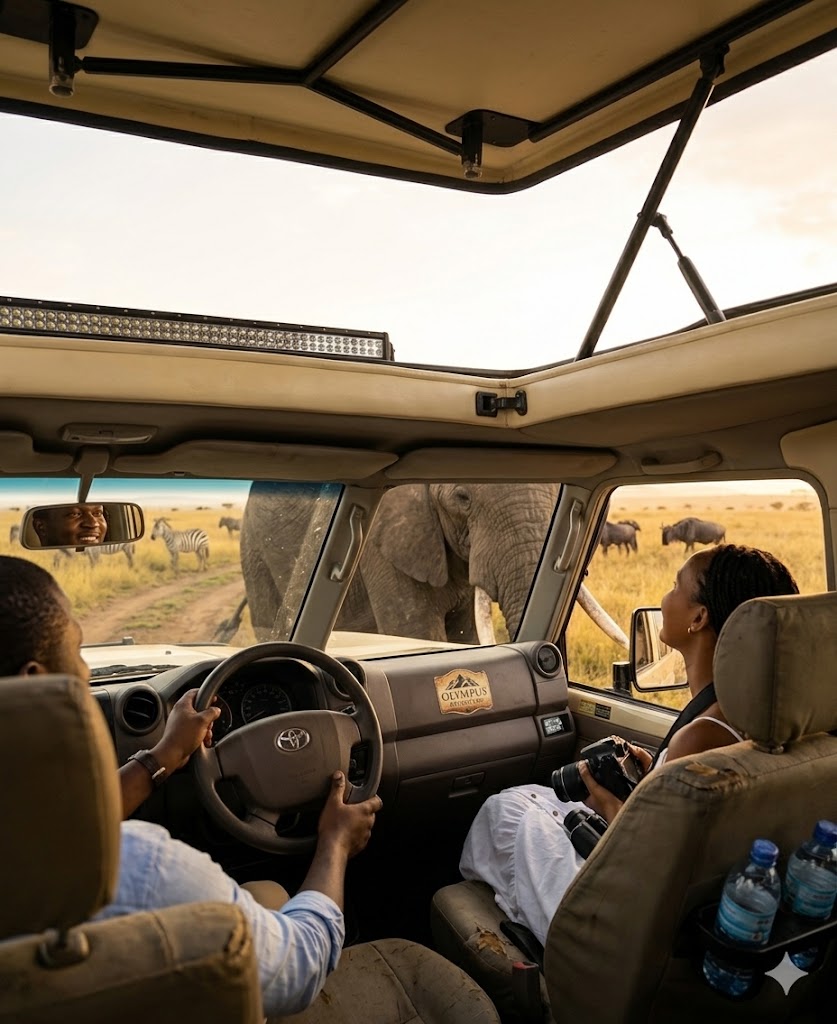
Serengeti & Wildlife
Northern Serengeti Travel Guide: Mara River Country, Timing and How to Plan Your Stay
What the Kogatende and Lamai areas are actually like, what you can realistically expect to see, when the region matters for the migration, how long to stay and how it compares with the rest of the park — from our Arusha-based safari team.

Northern Serengeti is the part of the park most travelers have seen on film and least understand as a planning decision. It is remote, it is seasonal, and in the second half of the year it carries the highest demand of any area in Tanzania. It is also, for several months of the year, one of the quietest corners of the ecosystem.
This guide answers one question: should the north be part of your trip, and if so, how should you plan it? The wider ecosystem and species detail sit in our Serengeti wildlife guide, and the full annual herd cycle is covered in our guide to the wildebeest migration. We will point you to those rather than repeat them here.
The Short Answer
Northern Serengeti is the region associated with the northern phase of the Great Migration and with the Mara River. In a typical year the herds are somewhere in this country between roughly July and October, and river crossings become possible during that window. Crossings are natural events. They cannot be scheduled, predicted precisely or promised by anyone, so the region rewards travelers who can give it several nights and who will still be satisfied if the river stays quiet.
Outside those months the north is a different proposition: fewer animals in total, fewer vehicles, fewer camps open, and good resident wildlife for people who value space over spectacle.
Where Is Northern Serengeti?
The northern third of Serengeti National Park runs from the Lobo hills up to the Sand River, which forms the border with Kenya. Two areas matter most for planning. Kogatende lies on the southern side of the Mara River and holds the airstrip that serves the region along with the majority of the camps. Lamai is the block of country on the northern bank, between the river and the border.
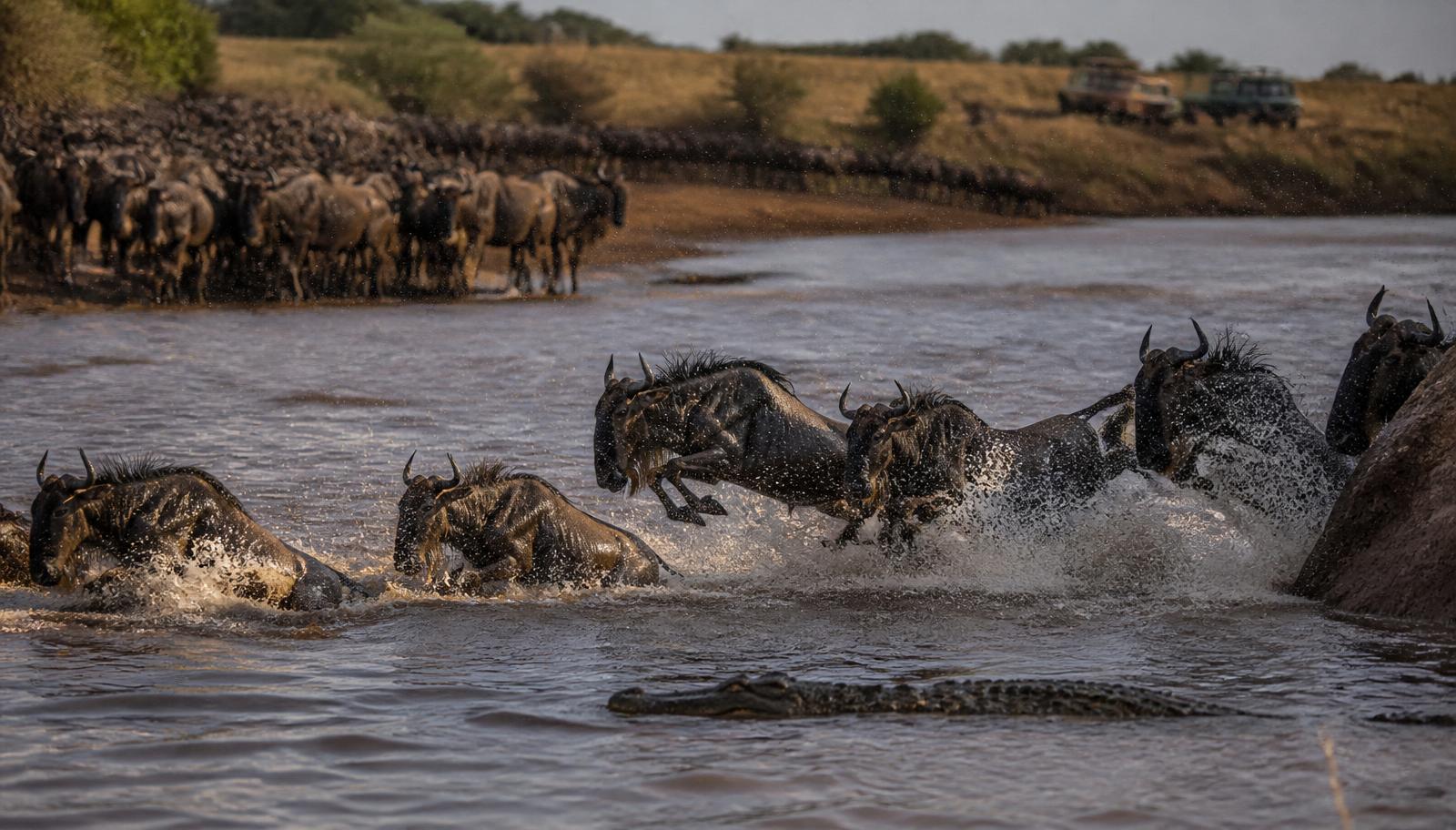
The Mara River enters Tanzania from Kenya and flows west across the top of the park. It is not a wide river by continental standards, but it holds water all year, it runs between steep and often undercut banks, and it carries resident crocodile and hippo populations. That combination is what makes a herd crossing difficult, and what makes the region distinctive.
Distances here are large. Driving between the central part of the park and Kogatende takes most of a day, which is why the majority of itineraries use the short flight instead. If you are weighing the trade-off, our guide to the central Serengeti sets out what a stay in the middle of the park involves before you continue north.
What Makes Northern Serengeti Different?
Three things separate the north from the rest of the park.
- A permanent river with steep banks. Water is not unusual in the Serengeti, but a barrier that large herds must physically cross is. That single feature creates the behaviour the region is known for.
- Seasonality. Central Serengeti holds wildlife in every month. The north swings hard: crowded with animals in some months, notably empty in others.
- Space. Away from active crossing points, vehicle density is low. On a normal morning in the Lamai area you can drive for long stretches without meeting another vehicle, which is increasingly rare in northern Tanzania.
The trade-off is dependability. If your dates are fixed by school terms or work, and you want the strongest chance of good wildlife viewing regardless of season, the central park is the safer base. If your trip is built around the herds and you have flexibility, the north is where that story is most visible.
The Landscape: Hills, Woodland and River
People arriving from the southern plains are often surprised by the terrain. The north is not open grassland. It is rolling hill country broken by rocky outcrops, stands of acacia and combretum woodland, open valleys and thin ribbons of riverine forest along the watercourses. Sightlines are shorter than in the south, which changes how you find animals: more scanning of edges and shade, less spotting across kilometres of open ground.
The riverine forest is worth attention in its own right. It supports different species from the surrounding plains, holds the region’s best chance of leopard, and stays green when the hills have gone gold. The hills themselves matter for viewpoints — many guides work high ground first to locate herd movement before committing to a river position.
Wildlife You Can Expect
The table below reflects patterns our guides work with rather than promises. Wildlife viewing is variable by nature, and the honest answer to “will I see X” is always a probability shaped by season, time of day and how much ground you cover.
| Species | Realistic chance | Where and when |
|---|---|---|
| Lion | High over a full day of driving | Rocky outcrops and ridges in the Lamai area, woodland edges and the ground near the river when herds are present. |
| Leopard | Possible, never a certainty | Riverine forest along the Mara and the spring lines to the east, usually first and last light. |
| Cheetah | Occasional | Open plains on the northern side of the river and the more open country towards the Kenyan border. |
| Spotted hyena | High | Everywhere at dawn and dusk; concentrations rise sharply when herds are in the area. |
| Nile crocodile | High along the river | Deep pools and bends of the Mara River, visible year-round from the banks and bridges. |
| Hippo | High along the river | Permanent pools in the Mara River; audible from several riverside camps at night. |
| Elephant | Good | Woodland and hill country, particularly on the northern bank and towards Lobo. |
| Buffalo | Good | Wallows, valley bottoms and woodland margins. |
| Giraffe, topi, eland, impala | High | Resident throughout the region in every month, independent of the migration. |
| Black rhino | Very unlikely | Not a realistic sighting here. Ngorongoro Crater is the practical option in northern Tanzania. |
For species detail across the whole ecosystem — behaviour, habitat, how populations shift through the year — work from our Serengeti wildlife guide. This section is deliberately limited to what the northern region specifically offers.
Big Cats and Predators
Lion
Prides hold territory in the north year-round, using the rocky outcrops and the woodland edges. When herds arrive, prey pressure changes their behaviour noticeably: kills become more frequent, and prides spend more time near the routes animals use to reach water. When the herds leave, the same prides work resident plains game and the going gets harder for them.
Leopard
The riverine forest is the habitat to focus on. Leopards here generally see fewer vehicles than in the central park, so they tend to be less relaxed and sightings are often at greater distance. Early morning and the last hour of the afternoon are the productive periods.
Cheetah
Cheetah need open ground, and the north has less of it than the southern plains. Sightings happen, mostly on the more open country north of the river, but they are occasional rather than routine. If cheetah are a priority, weight your itinerary towards the south or the central plains.
Hyena and crocodile
Spotted hyena are common and become very visible when herds are present. Nile crocodiles live in the Mara pools all year and are easy to see from the banks even outside migration months. During crossings they are part of what makes the event so difficult for the herds; outside those months they are largely inactive on sandbars.
Resident Wildlife and Birds
The resident population is the part of the north that gets overlooked. Elephant use the woodland and hill country, giraffe are common along the tree lines, and topi, eland, impala, warthog and buffalo are present in every month. Hippo hold the permanent pools. Away from the river you also find species that prefer broken country over open plain, which gives the region a slightly different feel from the south.
Birdlife is strongest from around November into April, when migrant species are present and resident birds are breeding. Raptors are visible year-round, and the river corridor supports kingfishers, herons and other water-dependent species that are scarce elsewhere in the park.
The Great Migration in Northern Serengeti
The migration is a continuous, year-round movement of wildebeest, zebra and other grazers around the greater Serengeti-Mara ecosystem. It is not a single event with a start date. Animals follow grazing and water, and rainfall patterns determine how fast and how far they move.
The north is associated with the phase of that cycle when the herds are in the top of the park and in neighbouring Kenya, generally from around July into October. In some years the leading groups arrive early; in others they are weeks behind the typical pattern. Once in the region, herds may move back and forth across the river repeatedly rather than passing through once.
For the full annual cycle and how the ecosystem fits together, read our wildebeest migration guide. If you are choosing travel dates around herd movement, the practical decision framework is in timing the migration. For the opposite end of the cycle — calving on the southern plains — see the Ndutu guide.
Mara River Crossings: How They Actually Work
A crossing begins with pressure. Animals accumulate on a bank, sometimes over hours, sometimes over days. They approach the water, hesitate, drift along the bank, and often withdraw entirely. Then, without an obvious trigger, one animal commits and the rest follow in a mass. The whole event can be over in fifteen minutes or continue for a couple of hours.
Several things follow from that, and they matter for planning:
- There is no schedule. Crossings are not daily, and there can be long gaps between them even at the height of the season.
- Location varies. Herds use a number of established crossing points along the river, and which one they choose depends on where they are grazing and how the banks are holding up.
- Herds cross in both directions. Animals frequently return across the same river days later. A crossing is not a one-way passage out of the region.
- Waiting is part of it. Guides often position at a likely point and hold. That patience is what produces a sighting, and it also means a morning can pass with nothing happening.
None of this should discourage you. It should shape expectations. Travelers who arrive understanding that the river is a possibility rather than a scheduled feature tend to enjoy the region far more.
What a Crossing Day Looks Like
An early start, usually before sunrise, with a breakfast box rather than a sit-down meal. The first hour is spent locating herds and assessing whether any group is moving towards the water. If the signs are there, your guide will find a position with a clear view and space to leave without disturbing animals, and then you wait.
Waits of two or three hours are normal. Sometimes the herd turns and grazes away. Sometimes it crosses. On a good day you may see more than one event; on many days you see none, and the morning instead delivers predators, elephant or a large concentration of grazers on the move, which is its own kind of viewing.
Most camps offer full-day drives with a packed lunch during this period, and we generally recommend them in the north. Returning to camp in the middle of the day means a long drive back to the river, and the timing of these events is not something you can plan around a lunch table.
Best Time to Visit
For the migration phase associated with this region, the practical window is roughly mid-July through October in a typical year. September is often described as the strongest period, and in many years it is, but the honest framing is that the odds are better in that window, not that the outcome is fixed.
For a quiet safari with resident wildlife and very few vehicles, the shoulder periods either side of the migration months can be excellent, provided your camp is open. For a first Tanzania safari with fixed dates, the central and southern parts of the park usually deliver more for less complication — our first-time safari guide explains why.
Month-by-Month Conditions
Read this as a description of typical patterns. Every column can shift by several weeks depending on rainfall.
| Period | Herds, typically | Conditions | Our view |
|---|---|---|---|
| January – March | Concentrated far to the south around the short-grass plains | Green, quiet, many northern camps closed | Plan Ndutu and the southern Serengeti instead |
| April – May | Southern and central Serengeti, moving with the rains | Wettest stretch of the year; limited camp availability in the north | The weakest window for a northern stay |
| June – early July | Generally central and western; leading groups may reach the north | Drying out, cool mornings, camps reopening | Variable — good value, but herd presence is not dependable |
| Mid-July – August | Herds usually building in the north in most years | Dry, dusty, cool at dawn; demand climbing | The window most crossing-focused trips target |
| September – October | Typically spread across the north and into Kenya, moving both ways | Dry, busiest period at popular river points | Commonly the strongest period, but never a guarantee |
| November – December | Generally shifting south again as the short rains arrive | Green flush, camps closing or scaling down | Quiet and attractive if you are not chasing crossings |
The Region Outside Migration Season
This is the question we are asked least and should be asked most. When the herds are elsewhere, the north does not empty of wildlife — it empties of numbers. Lion prides remain on territory. Elephant, giraffe, buffalo, topi and impala are resident. Hippo and crocodile hold the river. What disappears is the density, the noise and the drama.
What you gain is solitude. Vehicle traffic in the quiet months is very low, the country is green after rain, and photography of landscape and resident species can be excellent. The practical constraint is accommodation: a large share of northern camps are seasonal and close for part of the year, so availability drives what is possible. Always confirm camp operating dates before fixing an off-season plan.
If your dates fall outside the migration window and you still want strong game viewing, we would normally recommend weighting the trip towards the central park and Ngorongoro Crater instead.
Weather, Altitude and What to Wear
The region sits at roughly 1,400 to 1,600 metres. Mornings are cold enough on an open vehicle to want a fleece and a windproof layer, even in the dry months, and afternoons are warm. Dust is significant during the dry season, particularly near the river where many vehicles work the same tracks. During the rains, black-cotton soil in low-lying areas can make some routes difficult.
Neutral colours, layers, a brimmed hat, sunglasses and a buff or scarf for dust cover most of it. Our full Tanzania safari packing list has the detail, including camera protection, which matters more here than in most of the park.
What a Game Drive Day Looks Like
Most days start before first light. Camps in the region are used to early departures and will have coffee ready and a breakfast box packed. Morning drives are the most productive: animals are active, light is good, and herd behaviour at the river is easiest to read.
In migration season, full-day drives are common and generally worthwhile. Outside it, a morning and afternoon drive with a break in camp works well. Off-road driving is not permitted inside the national park, and night drives are not allowed within park boundaries. Your guide will position on established tracks, which is one reason patience beats pursuit at the river.
Kogatende, Lamai and Lobo
| Area | Character | Suits |
|---|---|---|
| Kogatende (south bank) | The main access point for the north, with an airstrip, several river access points and the widest choice of camps. | Most travelers, especially first visits to the region and shorter stays. |
| Lamai (north bank) | The wedge of country between the river and the Kenyan border. Rockier, more broken, generally quieter vehicle traffic. | Repeat visitors, photographers and anyone who values space over convenience. |
| Lobo and the north-east | Hilly woodland well south of the river, with resident wildlife and far fewer vehicles. | Travelers driving up through the park, or shoulder-season stays. |
For a first visit to the region, Kogatende is the practical choice: it has the airstrip, the widest camp selection and direct access to several river points. Lamai suits travelers who have been before, or who would rather have quieter ground than the shortest drive to the water.
Accommodation Options
There are no large hotels in the north. Accommodation falls into three broad types, and the differences matter more here than elsewhere because of how the season works.
- Mobile and seasonal tented camps. Set up for part of the year and moved to follow herd patterns. Comfortable but simple, with bucket or on-demand hot water, and usually the best-value way to be well positioned.
- Semi-permanent tented camps. Larger tents, en-suite bathrooms, proper dining and lounge areas, generally open for the main season and sometimes longer.
- Premium and small luxury camps. Higher service levels, better food, often private vehicle options, more flexibility over departure and return times.
All three see the same wildlife. What you buy at the top end is comfort, food, flexibility and usually a private vehicle. The comparison in our luxury versus mid-range guide applies directly here.
How to Choose Between Camps
- Position over marketing. Ask where the camp actually stands this season, and how long the drive is to the nearest river access. Names change; ground does not.
- Operating dates. Confirm the camp is open for your exact nights. Seasonal camps open and close on their own calendars.
- Full-day drive policy. Some camps include them, some charge, some resist. In the north this affects your experience directly.
- Vehicle arrangement. A shared vehicle means shared decisions about how long to wait at a river position. If that matters to you, price a private vehicle.
- Minimum ages. Policies vary widely for children and should be confirmed at the time of booking rather than assumed.
How to Get There
Most travelers fly into Kogatende on a scheduled light aircraft service from Arusha, Kilimanjaro or one of the airstrips inside the park. Flights are short and remove a long transfer from the itinerary. Baggage on light aircraft is limited and normally restricted to soft bags — check the current allowance with your operator when booking, as it varies by carrier and aircraft.
Driving up is possible and some travelers prefer it, particularly those who want to see the park change as they move north. Be realistic: it is most of a day in each direction. If your total trip is under ten days, that is usually a poor trade. Costs for both options are covered in our safari cost guide.
How Many Nights Should You Stay?
| Length of stay | Our verdict |
|---|---|
| 1 night | Not worth the logistics. Arrival and departure flights eat most of two game-drive periods. |
| 2 nights | Workable if the north is a bonus rather than the point of the trip. Thin margin if you are hoping for a crossing. |
| 3 nights | The sensible floor during the migration months. Gives you three full mornings on the river. |
| 4+ nights | The best odds and the calmest pace. Also lets you spend a day away from the river on resident wildlife. |
If the trip cannot support three nights in the north during migration season, we would usually suggest spending those nights elsewhere and planning the region properly on another trip. A rushed northern stay is the most common source of disappointment we see.
Northern vs Central Serengeti
| Factor | Northern Serengeti | Central Serengeti |
|---|---|---|
| Main draw | Migration herds and river crossings in the second half of the year | Resident predators and dependable year-round game viewing |
| Reliability | Seasonal and variable — depends on where herds are | Consistent in every month |
| Vehicle traffic | Concentrated at river points during crossings; empty elsewhere | Busier overall in the dry season |
| Access | Usually by air; long drive from the central park | Easy by air or road |
| Camp choice | Smaller, mostly tented, many seasonal | Wide range from simple camps to full lodges |
| Cost | Highest in peak migration months | Broader spread of price points |
| Best for | Repeat visitors, photographers, migration-focused trips | First safaris, families, fixed dates |
These two regions complement each other rather than compete. A common shape is two or three nights in the centre followed by three in the north during the migration months, which gives you dependable predator viewing and then the chance of the river. The central Serengeti guide covers that first leg in detail.
Northern vs Southern Serengeti
| Factor | Northern Serengeti | Southern plains / Ndutu |
|---|---|---|
| Peak relevance | Roughly July to October in most years | Roughly December to March, around calving |
| Signature event | River crossings, when they happen | Calving and heavy predator activity on open plains |
| Terrain | Hills, woodland, rocky outcrops, a permanent river | Open short-grass plains with long sightlines |
| Driving | More broken ground, shorter sightlines | Easy, open, good for spotting from a distance |
| Photography | Action and drama at the river; harder light in forest | Clean backgrounds, young animals, predator interaction |
| Access | Kogatende airstrip | Ndutu and Seronera airstrips, or road from Ngorongoro |
In practice the two regions serve opposite halves of the year. If your dates fall in the first quarter, the Ndutu area is the sensible target rather than the north.
Combining the North With Other Parks
Very few itineraries visit the north alone. The usual patterns:
- Crater and Serengeti. Ngorongoro first, then central Serengeti, then fly north. This covers the widest range of habitats and species in one trip — see the comparison of the two areas for how they differ.
- Tarangire, Crater, Serengeti north. A longer northern circuit with elephant country at the start.
- Safari and coast. The north followed by a few nights on the coast, which works well after several early mornings.
Sample routings by trip length are set out in our Tanzania safari itineraries guide.
Who Is Northern Serengeti Best For?
- Travelers whose trip is built around the migration and who can travel in the mid-year window.
- Photographers who want action, dramatic terrain and low vehicle density away from the main river points.
- Repeat visitors who have already done the classic circuit and want somewhere with a different character.
- Travelers who value space and are content with patient game viewing rather than a full checklist.
It is a weaker fit for:
- First-time visitors with tight dates and a short trip.
- Families with young children who struggle with long drives and long waits.
- Travelers whose dates fall in the first half of the year.
- Anyone who needs certainty from a wildlife experience.
What Drives the Cost of a Northern Stay
The north is generally the most expensive part of a Tanzania safari during the migration months. Rates and fees change, so we do not publish figures that will be out of date — but the cost structure is stable and worth understanding:
- Season. Camp rates in the region are strongly seasonal, with the peak aligned to the months when herds are usually present.
- Flights. Most itineraries add at least one light-aircraft leg to reach Kogatende.
- Park and concession fees. Charged per person per day and set by the authorities, revised periodically.
- Vehicle arrangement. A private vehicle costs more and is worth considering here specifically because of the waiting involved.
- Lead time. The best-positioned camps for the peak weeks are booked far in advance, and late bookings usually mean paying more for less suitable ground.
Our cost guide explains how these pieces add up across a full itinerary, and where the sensible trade-offs are.
Photography Notes
- Reach matters. River positions are often well back from the action for safety and legal reasons. A long telephoto earns its weight here more than anywhere else in the park.
- A second body helps. Swapping lenses in dust during a fast event is how sensors get ruined and moments get missed.
- Fast shutter speeds. Crossings produce spray, dust and constant motion. Plan for action settings before you arrive at the bank, not during.
- Plenty of storage. Burst shooting through a single event fills cards quickly.
- Landscape frames. The hills, river bends and woodland here photograph well in their own right. Do not spend the whole stay at 600mm.
Technique, ethics and gear checklists are covered properly in our safari photography guide.
Watching Crossings Responsibly
Crossing points are sensitive. Vehicles positioned badly can turn a herd back from the water, which costs the animals energy and costs everyone present the sighting. Good practice is simple and your guide will follow it: keep back from the bank, approach quietly, stay on established tracks, avoid blocking approach routes, and stay in the vehicle unless your guide says otherwise.
Be patient with your guide if they decline to move closer. That decision is usually the reason the herd crosses at all.
Common Planning Mistakes
| Mistake | Better approach |
|---|---|
| Booking a single night and expecting a crossing | Treat three nights as the floor in migration season. Crossings can be days apart, and no operator can schedule one. |
| Choosing dates from a migration map alone | Maps show typical patterns from past years, not a forecast. Rainfall shifts herd movement earlier or later season to season. |
| Driving up from Seronera to save money | The drive costs a full game-viewing day in each direction. A short flight usually buys back more than it costs. |
| Planning the north in the first quarter of the year | In those months the herds are usually far south. Ndutu and the southern plains make far more sense. |
| Building the whole trip around the river | Split your days. Resident wildlife away from the crossing points is often the best viewing of the stay. |
| Leaving camp late | Herd behavior is most readable in the first hours of light. Ask for an early breakfast box rather than a sit-down meal. |
Related Guides
- The great wildebeest migration — the full annual cycle and what drives herd movement.
- Timing the migration — how to choose dates when herd movement matters to your trip.
- Serengeti wildlife guide — species detail across the whole ecosystem.
- Central Serengeti travel guide — the natural first leg before a northern stay.
- Ndutu and the southern plains — calving season and what a first-quarter trip looks like.
- Serengeti or Ngorongoro — how the two areas compare and why most trips include both.
Common Questions
Frequently Asked Questions
In a typical year the herds are in the northern Serengeti somewhere between around July and October, and crossings become possible during that window. The timing shifts from season to season because rainfall drives herd movement, so the same week can look very different from one year to the next. Treat any month as a probability rather than a schedule, and give yourself several nights rather than betting on a single day.
No. Crossings are natural events with no fixed timing or location. Herds can gather on a bank for days without entering the water, cross several times in one morning, or move along the river and never cross where you are waiting. A good operator will position you well and manage the days sensibly; nobody can promise the event itself.
It is worth adding when your dates fall in the months the herds are usually in the region and you can give it three nights or more. The terrain, the river and the scale of the herds when present are genuinely different from the rest of the park. If your dates fall in the first half of the year, or your trip is short, the central and southern parts of the Serengeti will usually give you more.
Three nights is the sensible floor during the migration months and four gives you a calmer pace and better odds. Two nights can work if the north is a bonus rather than the point of the trip. One night is rarely worth the logistics, because arrival and departure flights take most of two game-drive periods.
Quieter in every sense. Resident lion prides hold territory, elephant, giraffe, buffalo and plains game are present, and hippo and crocodile stay in the river year-round. What changes is density and drama rather than the presence of wildlife. Vehicle traffic is very low, but many camps are seasonal and closed, so availability tends to decide whether an off-season northern stay is practical.
Most travelers fly into the Kogatende airstrip on a scheduled light aircraft service from Arusha, Kilimanjaro or another airstrip inside the park. Driving up from the central Serengeti is possible but takes most of a day each way. Light aircraft have limited baggage allowances and normally require soft bags, so confirm the current allowance with your operator when booking.
Tented camps rather than large lodges. Options range from seasonal mobile camps that move with herd patterns, through semi-permanent camps with en-suite tents, to small premium camps with higher service levels and private vehicle options. All see the same wildlife; what changes is comfort, food, flexibility and the ability to stay out as long as a sighting requires.
Central Serengeti is dependable in every month because permanent water keeps resident wildlife in place, which makes it the safer base for a first safari or fixed dates. The north is seasonal: it is the region associated with the northern phase of the migration and the Mara River, with lower vehicle density away from crossing points but far less consistency. Many itineraries use both, with a few nights in the centre before flying north.
It suits older children who can handle long drives and long waits at a river position better than young families. Camp minimum-age policies vary and should be confirmed at the time of booking. Families with younger children usually have an easier time in Central Serengeti and Ngorongoro, where drives are shorter and sightings less dependent on patience.
Demand concentrates into a short season, camps are small and mostly seasonal, and access normally involves at least one light-aircraft leg. Park and concession fees are set by the authorities and revised periodically, and the best-positioned camps for the peak weeks sell out far in advance. Rates change often, so ask for current figures rather than relying on published examples.
Final Thoughts
Northern Serengeti is worth adding to a trip when your dates line up with the northern phase of the migration and you can give the region enough nights to absorb its unpredictability. It offers terrain, behaviour and space you will not find in the middle or south of the park, and it asks for patience in return.
Plan three nights as a floor in the migration months, fly rather than drive if the itinerary is short, and treat the river as a possibility rather than a fixture. Spend at least one of your days away from the crossing points on resident wildlife. Judged that way — on the country, the predators and the scale of the herds when they are present — the north rarely disappoints.
Northern Serengeti rewards travelers who can give it time and who accept that the river works on its own schedule. Plan the nights properly, fly rather than drive if the trip is short, and let the resident wildlife carry the days when the herds are quiet.
Plan Your Journey
Want a Serengeti itinerary built around your dates?
Tell us when you can travel and what matters most, and our Arusha team will put a plan together: which part of the Serengeti suits your season, how many nights to spend in the north, camp options at your comfort level, private vehicle and guide arrangements, and how to combine Kogatende with Central Serengeti, Ngorongoro, Tarangire or a few days on the coast. Ask us anything, even if you are still deciding.
- TALA Licensed Operator
- 4.9 ★ Guest Rating
- No Booking Fees
Keep Reading
Related Tanzania Safari Guides
Safari Guides
The Ultimate Tanzania Travel Guide: Everything You Need to Know Before You Visit
Safari Guides
Tarangire National Park: Everything You Need to Know Before Visiting
Safari Guides
Ndutu Migration Guide: Calving Season, Wildlife and How to Plan Your Stay