Serengeti & Wildlife
Central Serengeti Travel Guide: Seronera Wildlife, Timing and How to Plan Your Stay
What the Seronera area is actually like, what you can realistically expect to see, when to go, how long to stay and how it compares with the northern and southern Serengeti — from our Arusha-based safari team.

Almost every Serengeti itinerary we plan includes at least two nights in the central part of the park. Not because it is fashionable, and not because it is the only good area — the Serengeti is large enough to hold several very different safaris inside one boundary. Central Serengeti earns its place for a simpler reason: there is permanent water here, so the wildlife does not leave when the season changes.
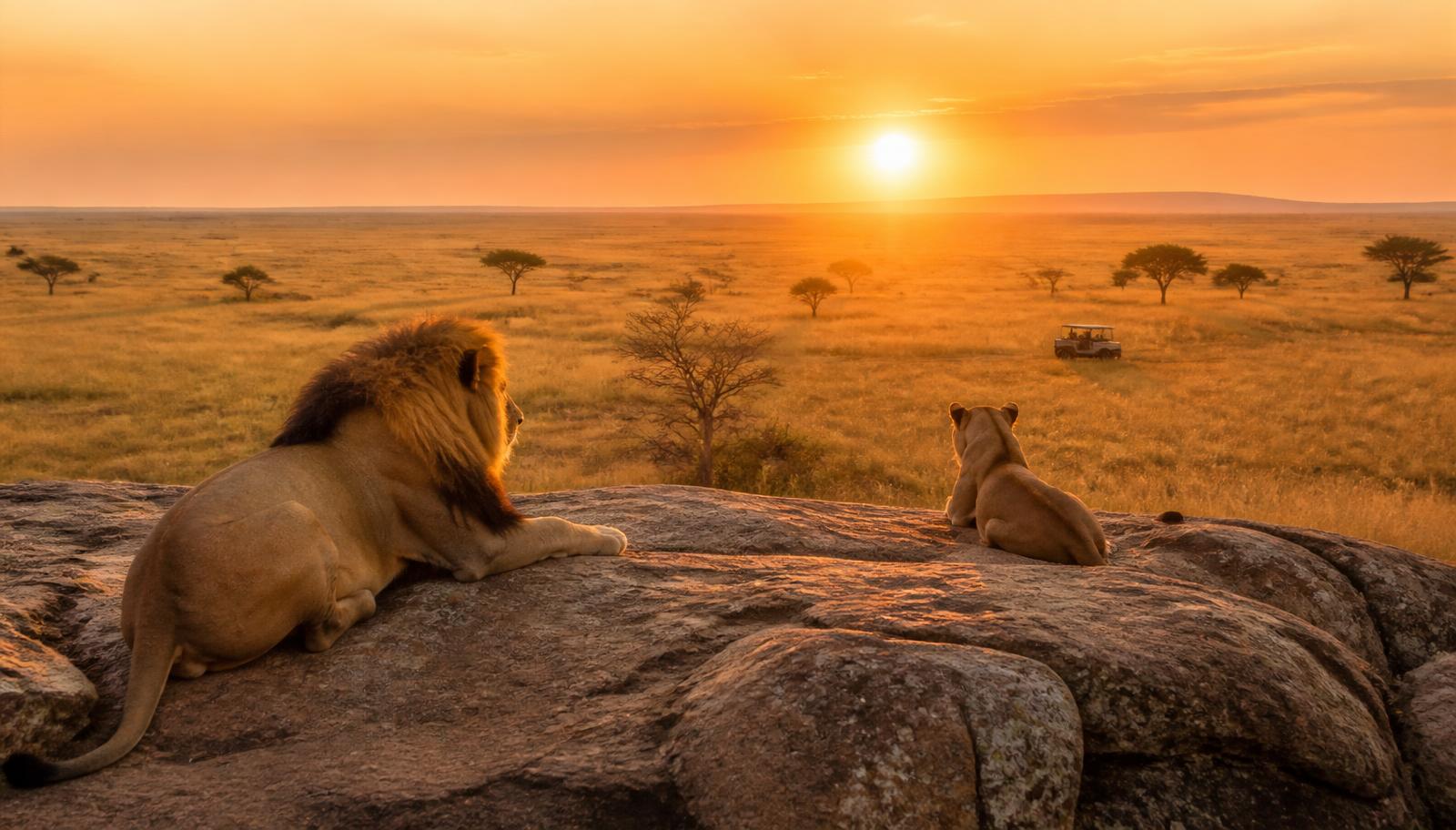
The area is usually called Seronera, after the river and the valley it runs through. If you have seen a photograph of lions on a granite outcrop with grass running to the horizon behind them, there is a good chance it was taken within an hour's drive of here.
This guide is about one question: should Central Serengeti be part of your trip, and if so, how should you plan it? For the wider ecosystem and species detail we have a separate Serengeti wildlife guide, and the herd movements are covered in our guide to the wildebeest migration. We will point you to those rather than repeat them.
The Short Answer
Central Serengeti is the most dependable part of the park for wildlife in any month of the year. It suits first-time visitors, families, travelers with limited days, and anyone who cannot schedule a trip around a single seasonal event. In exchange, it is also the busiest area in the park during the dry season, and it is not the place to base yourself if river crossings or calving are the whole point of your trip.
Where Is Central Serengeti?
Serengeti National Park covers roughly 14,750 square kilometres in northern Tanzania, running from the Ngorongoro highlands in the south-east to the Kenyan border in the north. Central Serengeti sits in the middle of that spread, between the short-grass plains of the south and the hillier, wooded country that leads north toward the Mara River.
The area takes its identity from the Seronera river system. Together with the Orangi and several smaller drainages, it holds water through the dry months, in a park where most watercourses do not. Around that water sits a mix of habitats — riverine forest, acacia woodland, swampy margins and open grass — packed close enough together that a single morning drive can move through all of them.
Practically, Seronera is also the park's service hub. The main visitor centre, the ranger headquarters and the busiest airstrip are here, and the road network radiating out from the valley is denser and better maintained than anywhere else inside the boundary. That has consequences for both your game viewing and your traffic, and we will come back to both.
What Makes Central Serengeti Different?
The distinguishing feature is not scenery and not exclusivity. It is continuity. Because the water does not disappear, the prey does not disappear, and because the prey stays, the predators hold territories here rather than following the herds. That single fact shapes almost everything about the way the area is used.
Wildlife that does not depend on timing
In much of the ecosystem, the quality of a visit depends heavily on where the herds happen to be. In the central area it depends far less. Prides work the same kopjes across seasons, leopards use the same stretch of river trees, and the plains game that supports them is present in some quantity every month. If your dates are fixed by school terms or work, this matters more than any other factor.
Habitat variety in a small radius
Within a short drive you move from open grassland to river forest to swamp edge to rocky outcrop. Different habitats hold different species, so short drives here produce a broader list than the same distance covered on uniform plains.
Infrastructure and response time
More roads and more vehicles means guides hear about sightings sooner and can reach them before an animal moves on. This is a genuine advantage, and it is also the reason the valley feels crowded in July and August. Both things are true.
Range of places to stay
No other part of the park carries as wide a spread of accommodation. That flexibility is what allows a family on a moderate budget and a couple on a special-occasion trip to use the same area without either compromising.
The Landscape: Kopjes, River and Plain
Three landscape features define the area and each one changes how you watch wildlife.
- Kopjes. Granite outcrops standing above the grass. They hold shade, catch rainwater in hollows and give animals height. Lions use them to rest and to watch; smaller residents such as hyrax, agama lizards and klipspringers live on them permanently. They also give a photograph a foreground, which flat plains rarely do.
- The river corridor. A ribbon of tall trees and thicker cover following the watercourse. This is the leopard habitat, the hippo habitat and the shade line that most animals use during the middle of the day.
- Open grassland. The country between and beyond the two, which carries plains game and gives cheetah the clear ground they need. Grass height changes dramatically between the wet and dry months, and with it how much you can see.
Understanding those three zones is the most useful thing a first-time visitor can do before arriving. It turns a drive from a random search into a sequence with a logic you can follow.
Wildlife You Can Expect
No responsible operator can promise a species. What we can do is describe the pattern we see across many trips. The table below is written that way — likelihood over a stay of two nights with proper early starts, not a guarantee.
| Species | Realistic chance | Where and when |
|---|---|---|
| Lion | Very high on a full day of driving | Kopje clusters and the shade lines along the Seronera and Orangi rivers, mostly early and late. |
| Leopard | Realistic on a two-night stay, never a certainty | Riverine sausage trees and large acacias, usually first light and the last hour of the afternoon. |
| Cheetah | Reasonable, better on open ground | Short-grass country east and south-east of Seronera, often mid-morning. |
| Elephant | High | Riverine woodland and swamp edges; groups move through the valley through the dry months. |
| Buffalo | High | Wet ground, swamp fringes and thicker bush near water. |
| Hippo | Very high | The permanent pools on the Seronera and Retina area, best in the middle of the day. |
| Spotted hyena | High | Anywhere near a carcass, plus den sites along drainage lines at dawn and dusk. |
| Giraffe, zebra, topi, impala, warthog | Daily | Across the valley and surrounding plains throughout the day. |
| Serval, caracal, aardwolf, honey badger | Uncommon to rare | Longer grass, swamp margins, and the first and last light of the day. Treat as a bonus. |
| Black rhino | Very unlikely here | Not a Seronera species in practice. Plan Ngorongoro Crater if rhino matters to you. |
For the ecosystem-wide picture — species accounts, behaviour and where else in the park each animal is found — read the Serengeti wildlife guide. If completing the Big Five is a priority, note that rhino are not a realistic Seronera sighting; our Big Five overview explains why most itineraries pair the Serengeti with a crater day.
Big Cats and Predators
Predators are the reason most travelers come to this part of the park, and the reason guides who work elsewhere still enjoy driving it.
Lion
Several prides hold overlapping territory around the valley and the nearby outcrops. Because prey is present year-round, these groups are comparatively settled, and guides who work the area regularly recognise individuals and know where a pride tends to lie up in given conditions. Cubs appear at various times rather than in a single season. Early morning and the last hour before dusk are when you are most likely to see movement rather than sleeping cats.
Leopard
The river corridor is one of the better places in East Africa to look for leopard, because the tall trees along the water give them exactly the elevated daytime rest sites they prefer. That said, leopards are leopards. Some mornings produce a relaxed animal in full view; others produce a tail hanging out of a tree and nothing more. Two nights improves the odds considerably over one, which is a practical argument for the extra night rather than a sales one.
Cheetah
Cheetah prefer open ground with clear sightlines, so they are usually found east and south of the valley rather than in the wooded core. They hunt in daylight, often later in the morning than the other cats, which makes them one of the few predators you have a fair chance of watching actually working. Grass height matters: after heavy rain the same plains become much harder to scan.
Hyena, jackal and the smaller predators
Spotted hyena are common and far more interesting than their reputation suggests — worth stopping for at a den rather than driving past. Black-backed jackal are regular. Serval turn up in longer grass and near swamp margins with some regularity; caracal, aardwolf and honey badger are genuine luck. Note that night drives are not permitted inside the national park, so the strictly nocturnal species are largely out of reach unless you add a stay in a bordering concession.
Resident Wildlife Beyond the Cats
A trip built only around predators misses most of what the area does well. The permanent water supports a standing population of herbivores that never fully leaves.
- Elephant work the riverine woodland and swamp edges, with larger numbers visible as the dry season tightens and other water sources fail.
- Hippo hold the permanent pools in numbers, and the pools make a natural stop when the light is too harsh for photography.
- Buffalo favour wetter ground and thicker cover; old bulls are often alone near water.
- Giraffe browse the acacia stands, and the woodland-plain mosaic here gives some of the better giraffe photography in the park.
- Zebra, topi, hartebeest, impala, warthog and gazelle are the daily background, and they are worth attention: watching what they are looking at is how guides find cats.
- Crocodile occupy the deeper permanent pools, generally unremarkable in behaviour but reliable to see.
Birdlife Through the Year
Birding is an underrated part of a central Serengeti stay, partly because the habitat mix delivers such different families within a short drive. The river forest holds hornbills, barbets and turacos; the open plains hold bustards, coursers and larks; the swamp margins bring herons, crakes and storks; the kopjes have their own specialists. Raptors are conspicuous throughout, and vulture activity is one of the practical tools guides use to locate kills.
The wet months from November through April bring migrants from Europe and Asia, and resident species are more likely to be in breeding plumage and calling. If birds matter to you, that is a strong argument for traveling in the green season rather than the peak dry months.
What a Game Drive Day Looks Like
The shape of the day is fairly consistent, and knowing it helps you set expectations before you arrive.
- Before dawn. Coffee at camp, on the road as the gate hours allow. The first ninety minutes are usually the most productive of the day for predator activity.
- Mid-morning. Light hardens, cats settle into shade, and plains species spread out. A good window for cheetah on open ground, and for covering distance.
- Middle of the day. Either back to camp for lunch and a rest, or a picnic in the field if you are covering a longer route. Both are valid; the first is kinder on most travelers, the second buys you range.
- Late afternoon. Out again as the temperature drops. Animals become active in the last two hours, and the light returns.
- Sunset. Park rules require vehicles to be back at camp or out of the park by a set time, so evening drives end earlier than many travelers expect.
Two shorter drives with a break generally beat one long push, particularly for families and for anyone who has just come off a long-haul flight.
Best Areas for Game Drives
"Central Serengeti" covers a large piece of ground, and the sub-areas within it behave differently. A good guide will vary them across your stay rather than repeating the same loop.
| Area | Character | Suits |
|---|---|---|
| Seronera River loop | The core drive. Permanent water, big shade trees and thick game traffic in a compact area. Also the busiest. | First mornings, leopard and lion time, short stays where you cannot afford long transfers. |
| Kopje country (Simba, Maasai and nearby outcrops) | Granite outcrops scattered across open grass. Cats use them for shade, height and safety, and the light on them is superb. | Photographers, anyone who wants classic Serengeti scenery with their wildlife. |
| Eastern short-grass plains | Wide, open and comparatively empty of vehicles. Good visibility over long distances. | Cheetah, plains species, travelers who want quieter drives. |
| Retina and the hippo pools | Permanent water with resident hippo and crocodile, and a natural midday stop. | Families, midday hours when cats are flat under a bush. |
| Moru Kopjes (south-west edge) | Rockier, more broken country with Maasai rock paintings and a different feel from the valley. A long half day from most camps. | Three nights or more, travelers who want to escape the core traffic. |
| Toward Lobo and the north-east | Hilly woodland on the way north; drier and much less trafficked. | Longer stays or travelers continuing to the northern Serengeti by road. |
Activities Beyond the Game Drive
- Full-day drive with a picnic. The way to reach Moru or the western side without losing the middle of the day to transfers.
- Guided walks. Offered by a limited number of properties with an armed ranger, generally in the areas where the licence allows it. Slow, close-focus, and a good change of pace after several driving days.
- Balloon flights. Run at first light over the valley. See the section below.
- Rock art at Moru. Maasai paintings on a sheltered rock face, along with the gong rock. Worth combining with a full-day drive rather than as a trip on its own.
- Cultural visits. Arranged outside the park boundary, usually on the way in or out. Choose community-run options and ask your operator how the fee is shared.
- Night drives. Not permitted within the national park. They are possible in some bordering concessions if that experience matters to you.
Balloon Flights Over Seronera
The central valley is the most established balloon area in the park. Flights lift at first light, drift with whatever wind exists that morning, and finish with a bush breakfast. What you get is a perspective on the landscape — the shape of the river, the pattern of the kopjes, herds seen as a whole rather than as individuals — rather than close wildlife viewing, which is still better from a vehicle.
Two pieces of practical advice. Book it for your first full morning rather than your last, because weather cancellations do happen and an earlier slot leaves room to try again. And be honest about the wake-up: a pre-dawn pickup after a long travel day is a real cost for some travelers. Rates change and operators vary, so confirm the current price and cancellation terms at the time of booking rather than relying on figures published online.
Best Time to Visit
There is no closed season here. The honest answer is that the dry months make game viewing easiest, and the green months make it cheaper, quieter and better looking. Which trade you prefer depends on you.
- For the simplest wildlife viewing: June to October. Short grass, hard tracks, animals tied to water.
- For value and space: November, and again March to May. Fewer vehicles and softer rates, with rain to plan around.
- For photography: the green months, when skies are dramatic and the light is less flat.
- For families with fixed school holidays: the area works in any window, which is precisely why we recommend it to them.
For a country-wide view across parks and months, see when to visit Tanzania, and if your trip is built around the herds, read timing the great migration before you fix dates.
Month-by-Month Conditions
| Window | Conditions | What to weigh |
|---|---|---|
| June to October | Dry, cool mornings, dust on the tracks, thinning grass and hard ground. | The most straightforward game viewing of the year in the valley. Also the busiest and the most expensive, and camps book out early. |
| November to mid-December | Short rains. Brief, heavy afternoon storms and grass greening up quickly. | Herds often move back down through the central plains during this period. Quieter roads and softer rates in many camps. |
| Late December to February | Warm, green and photogenic, with storms that usually pass. | Calving happens on the southern plains and Ndutu, not in Seronera, but the central area stays productive for resident game. |
| March | Hot and lush, with grass growing tall. | Fewer vehicles. Longer grass makes small predators harder to spot but the skies are dramatic. |
| April and May | The long rains. The wettest, greenest months, with some black-cotton tracks difficult after storms. | Lowest rates and lowest vehicle numbers of the year. A trade of comfort and certainty for space and value. |
Rainfall patterns vary from year to year, sometimes considerably. Treat these as general patterns rather than a schedule, and build a day of flexibility into any trip planned around weather-dependent movement.
Weather, Altitude and What to Wear
The valley sits at around 1,500 metres, high enough that the climate is milder than most people expect from equatorial East Africa. Mornings in the dry season are cold in an open vehicle at speed, middays are warm to hot, and evenings cool quickly once the sun goes. Humidity rises in the wet months without the temperature climbing much.
In practice that means layers: a fleece or light jacket for the first hour, something for your neck, and lighter clothing underneath for the rest of the day. Dust is a constant in the dry season and mud is the issue in the wet. Our safari packing list covers the full kit, including the small items that make dawn drives comfortable.
Central Serengeti During the Great Migration
The herds move through the central area rather than living in it. In broad terms, animals tend to pass south through the central plains in the late part of the year as the short rains begin, and back north through the same country in the months that follow calving. In those windows the central plains can carry very large numbers, along with the predator activity that follows them.
Outside those windows, the area does not empty. Resident zebra, gazelle, topi and a substantial standing population of other plains game remain, which is why the predator viewing holds up when the herds are elsewhere. This is the key difference between planning Seronera and planning a migration-driven trip.
If crossings on the Mara are your objective, plan the second half of the year and read the northern Serengeti guide. If calving is the objective, plan the first quarter around Ndutu and the southern plains. The background to both is in our wildebeest migration guide.
Accommodation Options
The central area carries more properties than any other part of the park, in three broad styles.
Seasonal and mobile tented camps
Canvas rooms, bucket or simple plumbed showers, solar power, and communal dining. Some move with the seasons to stay near wildlife concentrations. These are the closest thing to a traditional safari experience, they are usually the most affordable option inside the park, and the sound of the plains at night is part of what you are paying for. The trade-offs are simpler facilities and limited electricity.
Permanent tented camps
Fixed sites with larger tents, proper bathrooms, and often a lounge and a small pool. This is where most of our clients land, because the comfort is genuine without the price of a full lodge.
Lodges
Built structures with full plumbing, air conditioning in some cases, restaurants, pools and family rooms. Larger properties handle groups and children easily; the smaller high-end ones offer private guiding and far more space per guest.
The gap between tiers shows up in room comfort, food, service ratios and how private your vehicle is — not in the wildlife, which is the same for everyone driving the same tracks. That point is worth reading in full in our comparison of luxury and mid-range safaris.
How to Choose Between Camps
- Check the location, not the label. An extra 45 minutes each way to the productive areas costs you an hour and a half of game viewing every day.
- Ask about the first departure time. Camps that hold guests for a sit-down breakfast are a poor fit for anyone serious about predators.
- Confirm the vehicle arrangement. Whether the vehicle is private to your party matters more to the quality of your day than the thread count.
- Think about children. Minimum ages, family tents and pools vary widely; a few properties do not take young children at all.
- Match the season. Seasonal camps close or move; make sure the property you are quoted will be standing where you expect on your dates.
How to Get There
There are two normal routes in, and they suit different trips.
By road from Arusha
The classic approach runs from Arusha through Lake Manyara and the Ngorongoro highlands, entering the park from the south-east and continuing to the central valley. It is a long day, but it is also the way you see the country change — farmland, forest, crater rim, then plains — and it lets you fold Tarangire, Manyara and the crater into the same trip without extra flights.
By air
Scheduled light aircraft connect Arusha and Kilimanjaro with the central airstrips daily. Flying saves the better part of a day in each direction and is the sensible choice on short trips or when a road day would fall on your only free morning. Baggage is limited by weight and bag shape, and schedules can shift with weather and other stops, so keep connections generous.
Fly In or Drive In?
The decision usually comes down to how many days you have and how you feel about long vehicle days. Driving makes sense on a trip of a week or more that visits several parks, because the road is also the itinerary. Flying makes sense on shorter trips, on trips that finish at the coast, and for travelers who would rather spend the extra money than the extra hours.
A common middle option is to drive in through the crater and fly out from the central airstrip. You keep the scenery on the way in, avoid repeating the same road, and gain most of a day at the end of the trip. Our itinerary comparisons show how these choices play out over different trip lengths.
How Many Nights Should You Stay?
This is the question we answer most often, and the one where travelers most often under-plan. Arrival and departure days are partly transfer days no matter how you travel.
| Nights | Actual game-viewing time | What that realistically gives you | Our view |
|---|---|---|---|
| 1 night | Roughly half a day of real game viewing | Whatever you happen to pass on the way in and the way out. | Almost always a mistake. Transfers eat the stay. |
| 2 nights | One full day plus two partial days | A fair look at the valley, the kopjes and the main resident species. | The workable minimum for a first visit. |
| 3 nights | Two full days plus two partial days | Time to return to a good sighting, add a longer drive, and absorb a slow morning. | The best balance for most travelers. |
| 4 nights or more | Three or more full days | Repeat visits to specific territories, a Moru day, and patience for behaviour rather than ticks. | Worth it for photographers and returning visitors. |
If your total trip is short, we would rather see three nights in one area than one night in three. Moving camp costs half a day every time you do it, and the cost is invisible until you are living it.
Central vs Northern Serengeti
These two areas are not competing versions of the same safari. They answer different questions.
| Factor | Central Serengeti | Northern Serengeti |
|---|---|---|
| Main draw | Resident wildlife density, especially cats, available in every month. | The Mara River and the crossing season, when the herds are in the area. |
| Reliable window | Year-round. | Roughly July to October in most years, with variation. |
| Vehicle numbers | Highest in the park, concentrated on the river loop in peak months. | Lower overall, but heavily concentrated at active crossing points. |
| Access | Easy by road or short flight; the most connected part of the park. | Long drive or a flight; most travelers fly at least one leg. |
| Cost | Broadest range of price points in the park. | Skewed higher, particularly in the crossing season. |
| Best for | First safaris, shorter trips, families, mixed-interest groups. | Travelers whose main goal is the migration in the second half of the year. |
On a trip of six days or more in the second half of the year, combining both works well: two or three nights in the centre for cats and variety, then two or three in the north while the herds are in that country. The northern Serengeti guide covers what to expect up there in detail.
Central vs Southern Serengeti
| Factor | Central Serengeti | Southern Serengeti and Ndutu |
|---|---|---|
| Main draw | Permanent water and a settled resident population of predators and plains game. | Open short-grass plains and the calving season concentration around Ndutu. |
| Reliable window | Year-round. | Strongest from roughly late December to March; much quieter after the herds leave. |
| Landscape | River corridor, woodland pockets and scattered kopjes. | Enormous open grass, very few trees, long horizons. |
| Predator viewing | Consistent through the year across several species. | Exceptional during calving, thinner outside it. |
| Off-road driving | Not permitted inside the national park. | Parts of the Ndutu area fall under conservation area rules where more flexibility exists. |
| Best for | Anyone who cannot time their trip to a specific event. | Travelers who can travel in the first quarter and want calving and predator activity. |
In the first quarter of the year the two pair naturally, since the drive between them is short and the habitats are so different. Outside that window, most travelers get more from the centre. The Ndutu guide explains what the southern plains offer in their season.
Combining Central Serengeti With Other Parks
- Ngorongoro Crater. The standard pairing, and the practical answer to rhino. It sits on the road between Arusha and the park, so it costs no extra travel. See the Ngorongoro Crater guide and our comparison of the two.
- Tarangire. Elephants and baobabs, strongest in the dry season, and an easy first or last stop from Arusha.
- Lake Manyara. A short stop with a very different habitat; good for birds and for breaking the drive.
- Zanzibar. A common ending, reached by direct flight from the central airstrips on many days, which avoids backtracking to Arusha.
Who Is Central Serengeti Best For?
- First-time visitors. The variety, the density and the forgiving logistics make it the safest single choice for a first Serengeti stay. Pair it with our first-timer's planning guide.
- Families. Shorter distances between sightings, more properties with family rooms and pools, and the option of a midday break at camp.
- Travelers with fixed dates. If you cannot move your trip to suit the herds, choose the area that does not depend on them.
- Photographers. Kopjes, river light and predictable animal rhythms give you compositions the open plains do not.
- Short trips. When you have three or four days of safari, concentrating them here beats spreading them thin.
It is a weaker choice if:
- Your whole reason for coming is river crossings, or calving.
- Solitude matters more to you than sightings, particularly in July and August.
- You have already spent several days here on a previous trip and want new country.
What Drives the Cost of a Seronera Stay
Rates move with season and with property, so we will not quote figures that will be out of date within months. What is stable is the structure of the cost, and understanding it is what lets you compare two quotes honestly.
- Season. The same room can differ substantially between the peak dry months and the long rains.
- Accommodation style. The single largest variable, and the one most within your control.
- Park and conservation fees. Charged per person per period and set by the authorities; they apply whatever you spend on your room. Confirm current rates when booking.
- Vehicle arrangement. A private vehicle and guide is a real cost and, for many travelers, the best value upgrade available.
- Flights versus road. Light aircraft buy you time and cost money; road transfers do the reverse.
- Group size. Fixed costs spread across more travelers, which is why two people pay more per head than four.
Our guide to safari costs and the more detailed cost breakdown walk through what a quote should include and what it usually does not.
Photography Notes
- Bring reach. Animals on kopjes and cats in river trees are frequently well off the track, and off-road driving is not permitted inside the park.
- Carry a wider lens too. The landscape here — rocks, single trees, storm light — is worth photographing in its own right, and it is what most people forget to shoot.
- Two bodies beat lens changes. Dust in the dry season is relentless and a sensor clean is not available in the field.
- Shoot the first and last hour hard, and use the flat middle of the day for hippo pools, birds and rest.
- A beanbag is more useful than a tripod in a vehicle, and a dust cover for the camera is worth its space.
Settings, ethics and cultural photography are covered in the safari photography guide.
Watching Wildlife Responsibly
Vehicle pressure is a genuine issue in the busiest months, and how your guide behaves affects both the animals and the quality of your own sighting. A few things we hold our teams to, and that you can ask about before you book:
- Stay on the tracks. Off-road driving inside the park is prohibited and damages the grassland.
- Keep distance from cats with cubs and from any animal that is hunting, and never position the vehicle between a predator and its prey.
- Limit time at a crowded sighting. Leaving after a reasonable period gives other vehicles room and reduces pressure on the animal.
- Keep voices down and engines off where it is safe to do so.
- No feeding, no calling to animals, and no drone use — drones are not permitted in the park.
Common Planning Mistakes
| Mistake | Why it hurts | Do this instead |
|---|---|---|
| Booking a single night in Seronera | Arrival and departure days are largely transfer days, so one night leaves almost no real game-viewing time. | Treat two nights as the floor and three as the target if the trip length allows. |
| Assuming the migration is always here | The herds pass through the central area on their way south and north; they are not resident. | Plan Central Serengeti for resident wildlife and add a region that matches the season you can travel in. |
| Driving only the river loop | It is the most productive short drive and also where every other vehicle goes in peak season. | Alternate: river loop at first light, then the kopjes or eastern plains once the sun is up. |
| Leaving camp after breakfast | Predator activity drops sharply once the ground heats. The best hour is often before 7am. | Ask for an early start with coffee to go, and take a proper break in the middle of the day. |
| Booking late for the dry season | The better-run camps in the valley fill many months ahead for June to October. | Fix dates and secure camps early, or plan for the shoulder months instead. |
| Packing for heat only | The area sits high enough that dawn drives can be genuinely cold before the sun clears the horizon. | Bring a fleece, a windproof layer and something for your neck. See the packing guide below. |
| Chasing a checklist instead of watching behaviour | Hurrying between sightings usually produces worse photographs and shallower memories. | Stay with an active sighting. A lion pride waking up is worth more than three distant ticks. |
Related Guides
- Serengeti wildlife guide — species, behaviour and where each animal is found across the wider park.
- Northern Serengeti travel guide — the Mara River country and how the crossing season works.
- Ndutu and the southern plains — calving season, open grassland and what a first-quarter trip looks like.
- The great wildebeest migration — the full annual cycle and what drives it.
- Timing the migration — how to choose dates when herd movement matters to your trip.
- Serengeti or Ngorongoro — how the two compare and why most itineraries include both.
Common Questions
Frequently Asked Questions
Central Serengeti — the Seronera valley — is known for resident predators and for wildlife that stays put through the year. Permanent water in the Seronera and Orangi river systems holds prey species in place, so lion prides keep territories around the granite kopjes, leopards use the tall trees along the river corridor, and cheetah work the open ground to the east. It is also the part of the park with the densest road network and the widest choice of places to stay.
For most travelers, yes. It is the most dependable part of the park in any month, which matters if your dates are fixed. You can expect a broad range of species across a couple of full days, the logistics are straightforward, and the accommodation choice spans simple tented camps through to full lodges. It is a weaker choice if your whole reason for coming is river crossings or the calving season, or if quiet, low-vehicle drives matter more to you than variety.
There is no closed season. June to October is the driest window and generally the easiest game viewing — short grass, hard tracks and animals tied to water — but it is also the busiest and most expensive. November, and again March to May, bring rain, greener country, fewer vehicles and softer rates. The green months are usually better for photography and for birds. Rainfall varies year to year, so treat any seasonal pattern as general rather than fixed.
Four of the five are realistic here — lion, leopard, elephant and buffalo are all present, though nothing is guaranteed on any given drive. Rhino are not a practical Seronera sighting. Travelers who want the full set usually add a day in Ngorongoro Crater, which sits on the road between Arusha and the park and costs no extra travel.
Two nights is the workable minimum and three is the better target. One night is largely consumed by arriving and leaving. Two gives you one full day plus two partial days; three adds the flexibility to return to a good sighting, take a longer drive out toward Moru, or fit in a balloon flight without rushing. Four or more suits photographers and returning visitors who want to watch behaviour rather than collect species.
Three broad styles. Seasonal and mobile tented camps offer canvas rooms, simple showers and solar power, and are usually the most affordable option inside the park. Permanent tented camps add larger tents, proper bathrooms and often a lounge or small pool. Lodges are built structures with full plumbing, restaurants, pools and family rooms, ranging from large properties that handle groups easily to small high-end camps with private guiding. The wildlife is the same for everyone driving the same tracks; what changes with price is comfort, food, service ratios and how private your vehicle is.
The herds move through the central area rather than living in it. In broad terms they tend to pass south through the central plains later in the year as the short rains begin, and back north through the same country in the months after calving. Outside those windows the area does not empty out, because resident zebra, gazelle, topi and other plains game remain. If crossings on the Mara are your objective, plan the second half of the year in the northern Serengeti; if calving is, plan the first quarter around Ndutu and the southern plains.
They answer different questions. The centre is about resident wildlife and works in every month, with easy access and the broadest range of prices — but it carries the most vehicles in peak season. The north is about the Mara River and the crossing season, roughly July to October in most years, with fewer vehicles overall but heavy concentration at active crossings, longer travel and higher costs. On a trip of six days or more in the second half of the year, two or three nights in each works well.
The south is enormous open short grass with very few trees, and its strongest period runs from roughly late December to March when the herds are calving around Ndutu. Predator activity in that window is exceptional, and parts of the Ndutu area fall under conservation area rules that allow more driving flexibility. The centre has permanent water, more varied habitat and a settled predator population, so it holds up through the whole year. In the first quarter the two pair naturally; outside it, most travelers get more from the centre.
Two normal routes. By road from Arusha via Lake Manyara and the Ngorongoro highlands, entering from the south-east — a long day, but it lets you fold Tarangire, Manyara and the crater into the same trip. Or by scheduled light aircraft from Arusha or Kilimanjaro to one of the central airstrips, which saves the better part of a day each way. Baggage on bush flights is limited by weight and bag shape, and schedules can shift, so keep connections generous. A common compromise is to drive in through the crater and fly out.
It is our usual first recommendation. The variety of habitat within a short radius, the density of resident wildlife, the maintained road network and the range of camps make it the most forgiving place to spend a first Serengeti stay. Two or three nights here combined with Ngorongoro Crater and Tarangire makes a complete northern circuit trip without depending on any single seasonal event.
Night drives are not permitted inside Serengeti National Park; they are possible in some bordering concessions if that experience matters to you. Guided walks with an armed ranger are offered by a limited number of properties where the licence allows, and make a good change of pace after several driving days. Off-road driving is prohibited inside the park, and drones are not permitted.
Final Thoughts
Central Serengeti is not the most exclusive part of the park, and in the peak dry months it is not the quietest. What it offers is reliability. The water stays, the prey stays, the predators hold territory, and the road network gets you to them. For a first Serengeti visit, for a family, or for anyone whose dates are decided by something other than wildebeest, that is the most useful quality an area can have.
Plan two nights as a floor and three if the trip allows. Choose a camp by where it actually stands rather than what it calls itself. Start early, take the middle of the day off, and let your guide vary the ground you cover. Then judge the sightings for what they are — patterns, not promises.
Central Serengeti earns its place in most itineraries on reliability rather than novelty. The water stays, the prey stays, the predators hold territory, and the roads get you to them in any month of the year. Give it two nights at a minimum, three if the trip allows, and judge what you see for what it is — patterns worth watching, not promises.
Plan Your Journey
Want a Serengeti itinerary built around your dates?
Tell us when you can travel and what matters most to you, and our Arusha team will put together a plan: which part of the Serengeti fits your season, how many nights to spend where, camp options at your comfort level, private vehicle and guide arrangements, and how to combine Central Serengeti with Ngorongoro, Tarangire or a few days on the coast. Ask us anything, even if you're still deciding.
- TALA Licensed Operator
- 4.9 ★ Guest Rating
- No Booking Fees
Keep Reading
Related Tanzania Safari Guides
Safari Guides
The Ultimate Tanzania Travel Guide: Everything You Need to Know Before You Visit
Safari Guides
Best Tanzania Safari Itineraries: How to Choose the Right Route for Your Days
Safari Guides
The Northern Circuit: Exploring Tanzania's Most Iconic Wildlife Havens