Serengeti & Wildlife
The Great Wildebeest Migration in the Serengeti: Complete 2026 Guide
Where the herds are each month, when the Mara and Grumeti crossings happen, what a migration safari really costs, and how our Arusha-based guides time a trip around two million moving animals.

Introduction
The first thing that surprises people about the Great Migration is the sound. You hear it long before the herds appear over a rise — a low, rolling grunt from tens of thousands of throats at once, punctuated by hooves on hard ground. I've guided this circuit for years, and it still stops conversation in the vehicle every single time.
The second surprise is less romantic: the migration is not an event with a date. It is a continuous, year-round loop of roughly 1.3 million wildebeest, 300,000 zebra and several hundred thousand gazelle moving in a rough clockwise circle through the Serengeti and into Kenya's Masai Mara. Nobody controls it. Rain moves it. And that single fact is what separates a trip that works from a trip that quietly misses the herds by 200 kilometres.
This guide is written for travellers who want the practical version: where the animals actually are in each month, which camps put you inside the action, what it costs, and the planning mistakes we spend most of our time correcting for first-time visitors.
What the Great Migration Actually Is
Strip away the documentary narration and the migration is a grazing strategy. Wildebeest are specialists in short, mineral-rich grass, and the Serengeti ecosystem produces that grass in different places at different times of year, depending on rainfall and on volcanic soils blown in from the Ngorongoro Highlands. The herds follow the nutrition. Zebra travel with them and typically graze the taller, coarser grass first, which suits the wildebeest coming behind them.
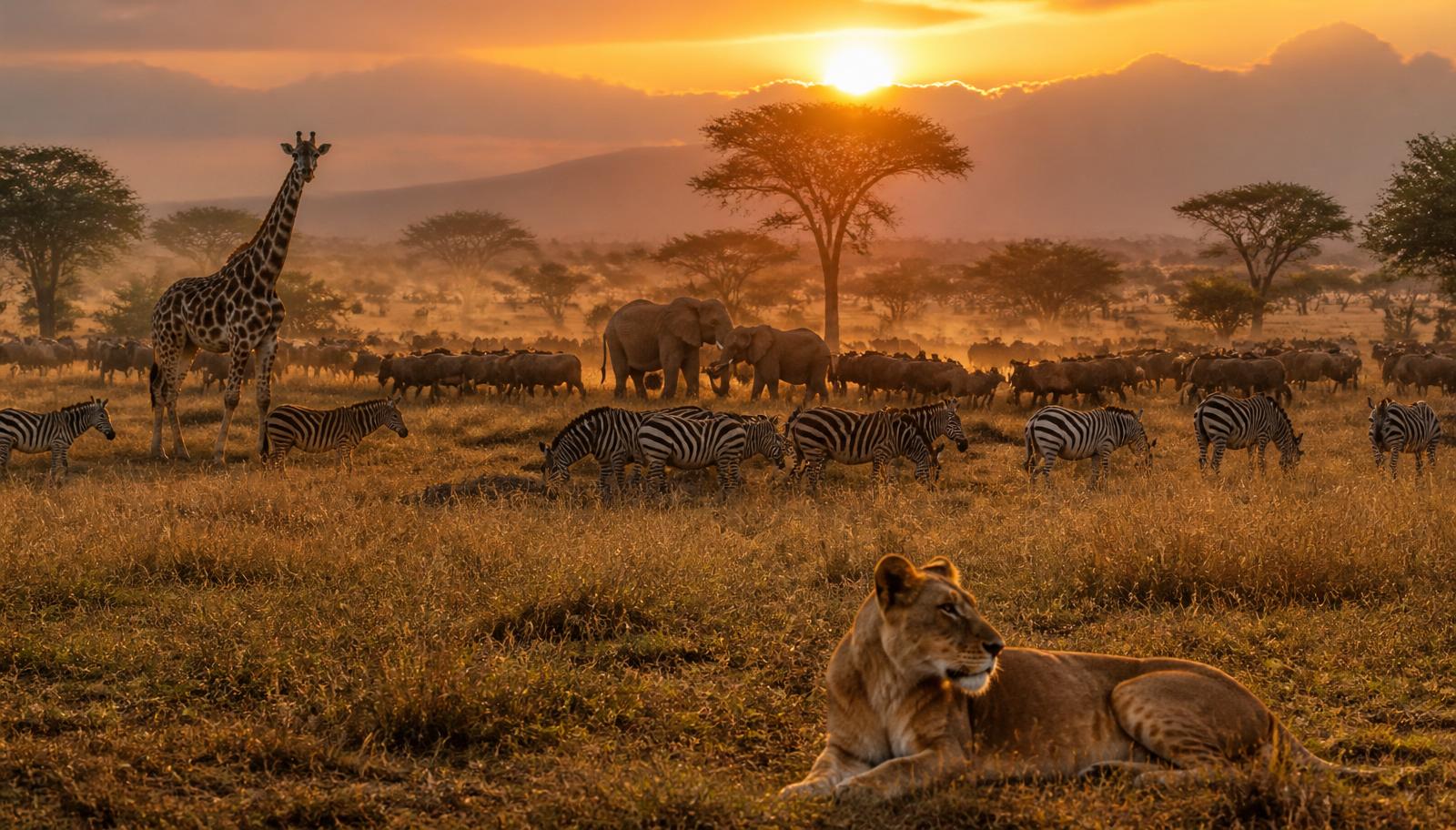
What makes it spectacular for visitors is density. When a million animals compress onto the short-grass plains in February, you can stand in one place and see wildebeest to the horizon in three directions. When they funnel toward a river bank in August, the pressure of animals behind eventually pushes the front rank into the water, and everything that hunts them — Nile crocodile, lion, spotted hyena — is waiting.
The Annual Loop, Explained
Think of the Serengeti as a clock face with the herds moving clockwise. They calve at the bottom, in the southern short-grass plains around Ndutu. They swing west and north through the Western Corridor across the Grumeti. They reach the top — the northern Serengeti and the Mara River — in the middle of the year. Then the short rains draw them back down the eastern side to start again.
The loop is consistent in shape but not in timing. In a year with early short rains, the herds can be back on the southern plains by early December. In a dry year, we've had wildebeest still hanging around the Mara River in the last week of October. This is why any guide who promises you a river crossing on a specific date is selling you something they cannot deliver.
Migration Timeline Table
Use this as your planning skeleton. The periods overlap deliberately — the herds are a 40-kilometre-long smear of animals, not a single tidy block.
| Period | Where the herds are | Main event | Viewing odds |
|---|---|---|---|
| Late Dec – March | Ndutu, Kusini and the southern Serengeti short-grass plains | Calving season — roughly 400,000 calves born, most within a three-week peak in February | Very high concentration; predator action daily |
| April – May | Moru Kopjes, Seronera, Dutwa plains | Herds string north-west in long columns as the long rains soften the ground | Unpredictable movement, lowest prices, green landscapes |
| June | Western Corridor, Grumeti River | Grumeti crossings — smaller, less predictable, enormous crocodiles | Good, and far quieter than the Mara crossings |
| July – August | Northern Serengeti, Kogatende, Lamai Wedge | First and heaviest Mara River crossings | Peak season; book 10–12 months ahead |
| September – mid-October | Lamai, Kogatende, Mara Triangle border zone | Herds cross back and forth repeatedly; crossings continue in both directions | Excellent, with slightly thinner crowds than August |
| Late Oct – November | Lobo, Namiri, eastern and central Serengeti | The short rains pull the herds south again in scattered fronts | Quiet, good value, movement hard to pin down |
Month-by-Month Summary
| Month | Herd location | What to expect |
|---|---|---|
| January | Southern plains, Ndutu | Early births begin; grass short and green after the first storms. |
| February | Ndutu / Kusini | Peak calving. The single most reliable month of the entire year for finding the herds. |
| March | Ndutu and Moru | Calves are strong, herds start drifting west. Rain builds late in the month. |
| April | Central and western Serengeti | Long rains. Fewest vehicles, lowest rates, some tracks get sticky. |
| May | Western Corridor approaches | Rutting season — bulls fighting, deep bellowing columns kilometres long. |
| June | Grumeti River | Dry season starts. Grumeti crossings, often with only two or three vehicles present. |
| July | Northern Serengeti | First Mara crossings. Camps in Kogatende fill up a year ahead. |
| August | Kogatende and Lamai | Busiest and most dramatic month. Crossings can happen several times a week. |
| September | Lamai Wedge | Our favourite compromise: strong crossing odds, slightly calmer river crossing points. |
| October | Northern and north-eastern Serengeti | Crossings taper. Herds begin the long journey south mid-month. |
| November | Lobo, Seronera, eastern plains | Short rains. Herds move fast and split. Excellent value for flexible travellers. |
| December | Southern Serengeti | Herds settle back on the short-grass plains by late December, ready to calve. |
River Crossings: Grumeti and Mara
The Grumeti River (roughly June)
The Grumeti sits in the Western Corridor and gets a fraction of the attention the Mara does. Crossings here are smaller and scrappier, spread over many points along a narrower channel, and the resident crocodiles are genuinely enormous — some of the largest in East Africa. The trade-off is unpredictability: you might sit at a bank for a morning and see nothing.
What you gain is space. It is entirely normal to watch a Grumeti crossing with two other vehicles in sight, which is a very different experience from a busy August morning at the Mara.
The Mara River (July to mid-October)
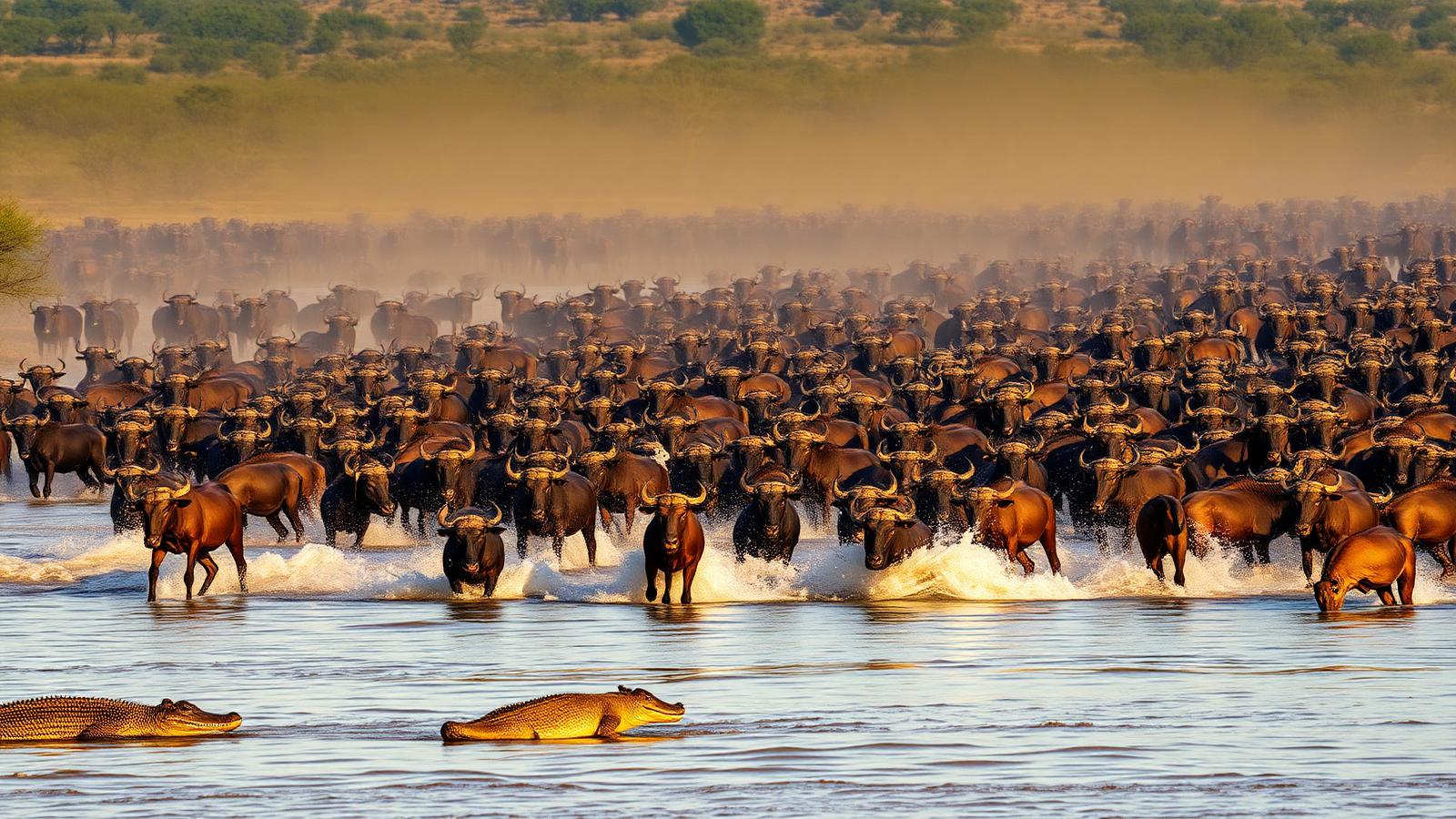
This is the sequence people picture. Herds mass on the southern bank, sometimes for hours, sometimes for two days. There is no leader. Eventually one animal commits, and within seconds thousands follow down a near-vertical bank into fast water. Crossings last anywhere from four minutes to over an hour.
Crossing points are numbered by guides and monitored by radio. A good guide will read the direction of herd drift at dawn, choose a bank, and then wait — often for hours. Patience is the whole skill here. The vehicles that leave at 11am for lunch are the ones that miss it.
Calving Season in the Southern Serengeti
February on the Ndutu plains is, in my opinion, the most underrated wildlife experience in Tanzania. Around 8,000 calves are born per day at the peak. The grass is short and green, visibility runs for kilometres, and predators are concentrated and constantly hunting. Cheetah in particular do well here — the open plains suit their hunting style, and this is where you'll get your best chance of a daylight chase.
It's also the most predictable time of year for finding the herds. The short-grass plains are the only place with the calcium and phosphorus levels that lactating females need, which means they have nowhere else to go.
Where to Stay by Season
| Travel month | Base yourself in | Camp style we recommend |
|---|---|---|
| Dec – March | Ndutu, Kusini | Seasonal mobile camps that relocate with the herds |
| April – May | Seronera, Moru | Permanent lodges with solid all-weather access |
| June | Western Corridor, Grumeti | Tented camps near the river, small vehicle numbers |
| July – Oct | Kogatende, Lamai Wedge | Mobile or semi-permanent camps within 30 min of the river |
| Nov | Lobo, central and eastern Serengeti | Flexible lodges — herd position varies week to week |
A quick word on mobile camps, because they confuse people: these are full tented camps with proper beds, en-suite bucket showers and a dining tent, which get dismantled and rebuilt a few times a year to stay near the herds. They are the single best value in migration travel, and the reason we recommend them over a big permanent lodge in Seronera during peak months. Our Tanzania safari accommodation guide breaks down the differences in detail.
Wildlife Viewing Tips
- Leave camp at first light. Predator activity, crossing build-up and the best light all happen before 9am. Ask for a packed breakfast so you never have to come back for it.
- Take a full-day game drive at least once. The middle of the day is precisely when herds commit to a river. Vehicles that return for lunch miss crossings.
- Watch the zebra. Zebra are more alert and often move first. A line of zebra walking with purpose is worth following.
- Ask your guide to switch off the engine. The sound of a herd at close range is half the experience, and quiet vehicles keep animals relaxed.
- Don't only look at wildebeest. The migration inflates predator numbers across the whole ecosystem — this is peak time for lion prides of 20-plus and for hyena clan activity.
- Sit with a sighting. Twenty patient minutes at one river bank beats four hours of driving between them.
Photography on the Migration
You want reach and you want dust protection. A 100–400mm or 200–500mm zoom covers almost everything; a second body with a wide lens saves you swapping in dust. Shoot crossings at 1/1600s or faster with continuous autofocus, and expect to burn several hundred frames in five minutes.
Bring more memory and battery than you think — camps often only run generator power for a few hours a day. A beanbag beats a tripod in a vehicle. And if you're serious about images, February at Ndutu will out-deliver August at the Mara on almost every metric except drama, because the light is cleaner and the backgrounds are uncluttered. Our Tanzania safari photography guide covers gear and settings in full.
What a Migration Safari Costs
| Style | Per person / night | What that includes |
|---|---|---|
| Mid-range | $450 – $650 | Comfortable tented camps, shared 4x4 with pop-top roof, park fees, full board |
| Premium | $650 – $900 | Well-placed mobile camps, private vehicle and guide, internal flights |
| Luxury | $900 – $1,500+ | Top-tier camps at the crossing points, private guiding, balloon safari options |
Park fees alone are a significant slice of that — Serengeti entry plus concession fees typically run $80–$130 per person per day before a single night of accommodation. For a full breakdown of where the money goes, read our Tanzania safari cost breakdown.
Itineraries That Work
7 days — crossings focus (July to October)
Arusha → fly to Kogatende (3 nights, northern Serengeti) → fly to Seronera (2 nights, central Serengeti for big cats) → Ngorongoro Crater (1 night) → Arusha. This front-loads the crossings while your energy is high, and the crater guarantees rhino and big-tusker elephant regardless of migration position.
8 days — calving focus (late January to March)
Arusha → Tarangire (1 night) → Ngorongoro Crater (1 night) → Ndutu (3 nights) → Central Serengeti (2 nights) → fly back to Arusha. Ndutu in February needs three nights minimum to do the predator action justice.
10 days — migration plus Zanzibar
Six nights on the migration circuit, then a direct flight from the Serengeti to Zanzibar for four nights on the coast. It's the most common shape we book for honeymooners. See our safari and Zanzibar combination guide for routing details.
Common Mistakes Travelers Make
| Mistake | Why it hurts | Do this instead |
|---|---|---|
| Booking 'the Serengeti' instead of a region | The park is roughly the size of Northern Ireland. A lodge in Seronera in August is a five-hour drive from the Mara River. | Pick your camp by the month your herds will be in that region, not by lodge photos. |
| Allowing only two nights in the migration area | Crossings are not scheduled. Herds can gather at the bank for two days and never enter the water. | Budget a minimum of three nights, four if a crossing is your priority. |
| Chasing August because it's famous | August is peak price and peak vehicle density at the main crossing points. | Late June, September or February deliver comparable action for meaningfully less money. |
| Driving in from Arusha to the north | It's two long days each way on corrugated road, and it eats your safari time. | Fly Arusha–Kogatende (about 2 hours with one hop) and use the saved days on game drives. |
| Ignoring the calving season | Most first-timers only hear about river crossings. | February gives you predictable herd location, newborn calves and the best cheetah viewing of the year. |
| Underestimating the cold and the dust | Dawn game drives in July run at 8–10°C in an open vehicle at 1,500m. | Pack a fleece, a windproof layer, a buff and a dust-sealed camera bag. |
Expert Tips From Our Guides
- Ask your operator, in writing, which camp you'll be in and which airstrip it uses. "Serengeti" on an invoice tells you nothing about how far you are from the herds.
- Build one flexible day into the itinerary. If a crossing is building, you want the option to stay put rather than transfer.
- Private vehicle is the single best upgrade on a migration trip — it buys you the right to wait at a river bank for six hours without a group vote.
- Confirm your internal flight luggage limit early. Most bush flights cap you at 15kg in a soft bag, and camera gear eats that fast.
- If a balloon safari is on your list, book it at the time of the safari booking, not on arrival — the July to September slots go first.
- Travel insurance with medical evacuation is non-negotiable in the northern Serengeti. See our travel insurance guide.
For everything outside the migration itself — visas, vaccinations, packing, money and connectivity — our ultimate Tanzania travel guide is the companion piece to this article, and how to book a Tanzania safari walks through the order to do things in.
Frequently Asked Questions
Common Questions
Frequently Asked Questions
There are two peak windows. July to mid-October puts you in the northern Serengeti for the Mara River crossings, which is the most dramatic viewing of the year. Late January to March is calving season on the southern short-grass plains around Ndutu, when roughly 400,000 calves are born and predator activity is constant. June is a quieter alternative for Grumeti River crossings in the Western Corridor.
The Grumeti River in the Western Corridor sees smaller, less predictable crossings around June. The Mara River in the northern Serengeti carries the famous crossings from July to mid-October. Camps at Kogatende and in the Lamai Wedge sit closest to the main crossing points — usually within a 20 to 40 minute drive of the river.
Plan a minimum of three nights in the migration region and six to eight nights in Tanzania overall. Crossings are not scheduled: herds can gather at the bank for two days before entering the water. In our own trip records, three nights in Kogatende during peak season gives roughly a 70–80% chance of seeing at least one crossing, while two nights drops that sharply.
No, and no honest operator will guarantee one. August is the highest-probability month, but the herds respond to rainfall and grazing, not schedules. The best insurance is time on the ground, a camp close to the river, a private vehicle so you can wait, and a guide who tracks herd movement daily by radio.
Expect roughly $450–$650 per person per night for mid-range tented camps, $650–$900 for premium mobile camps with a private vehicle and internal flights, and $900–$1,500+ for luxury camps at the crossing points. Serengeti park and concession fees alone typically run $80–$130 per person per day.
For predictability and photography, often yes. In February the herds have nowhere else to go — only the southern short-grass plains carry the minerals lactating females need — so finding them is close to certain. The light is cleaner, backgrounds are uncluttered, and cheetah hunting on open plains is at its best. River crossings win on pure drama.
The herds spend around nine months of the year inside Tanzania's Serengeti and only a few in Kenya's Masai Mara. If your dates fall between July and October either works; outside that window, Tanzania is the only realistic choice. The Serengeti is also far larger, which spreads vehicles out at sightings.
Yes. All Olympus vehicles are led by certified professional guides, and most camps welcome children aged six and above, with several offering dedicated family tents and shorter game-drive options. For younger children we usually recommend the central Serengeti and Ngorongoro, where drive distances are shorter.
In Closing
Final Thoughts
The travellers who come home raving about the migration are rarely the ones who spent the most money. They are the ones who picked the right region for their month, gave themselves enough nights to be patient, and had a guide willing to sit at a river bank all morning. Get those three things right and the Serengeti does the rest — and whether you end up watching a Mara crossing in September or a newborn calf find its legs at Ndutu in February, it will be the part of the trip you describe first for the rest of your life.