Wildlife Guide
The Big Five in Tanzania: Where, When and How to See Them
A working guide from our Arusha desk — the parks, hours and habits that decide whether you see lion, leopard, elephant, buffalo and black rhino, and the honest odds on each.

Introduction
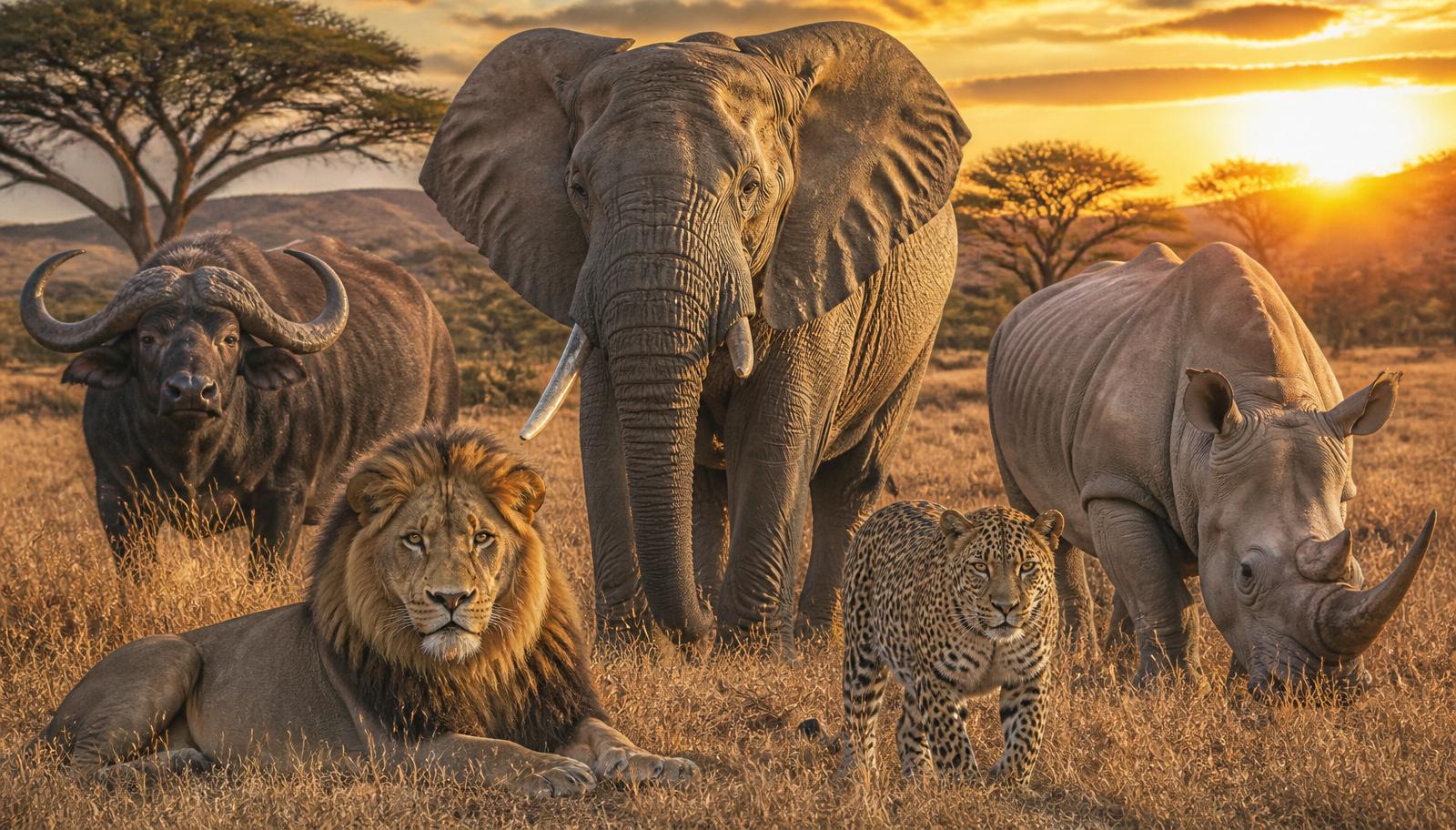
The first four usually arrive without much effort. Lion on day one, buffalo before lunch, elephant by the second afternoon, and a leopard folded into a sausage tree somewhere along the Seronera River. Then the trip narrows to a single question, asked quietly at dinner: are we going to find a rhino?
That is the real shape of a Big Five in Tanzania safari, and it is worth understanding before you book. The five animals are not equally difficult, they are not evenly distributed, and the parks that suit one of them badly suit another perfectly. A guest who spends six days in Tarangire will see extraordinary elephants and never come close to a rhino. A guest who does one rushed crater day may see all five and remember none of them.
What follows is the reasoning our guides use in the field — where each species actually lives, the hours it is findable, what the odds honestly are, and how to build a route that gives every animal a fair chance instead of hoping for a lucky week. We do not guarantee sightings, and neither should anyone else. What we can do is put you in the right place at the right hour with someone who knows what to look for.
Big Five overview table
Read this as a planning grid rather than a scorecard. "Difficulty" reflects what we see across a full season of departures, not a single lucky trip.
| Animal | Difficulty | Strongest locations | Best timing | Field note |
|---|---|---|---|---|
| Lion | Easy | Serengeti (Seronera, Moru), Ngorongoro Crater | Year-round; peak drama Jan–Mar (calving) and Jul–Oct | Tanzania holds roughly a third of Africa's remaining wild lions. |
| Leopard | Moderate | Seronera Valley, Lake Manyara, Ruaha | Jun–Oct, first and last light | Sightings are about reading trees, not scanning grass. |
| Elephant | Easy | Tarangire, Serengeti, Ruaha, Nyerere | Aug–Oct for the biggest Tarangire concentrations | Tarangire in late dry season is arguably East Africa's best elephant viewing. |
| Cape buffalo | Easy | Ngorongoro Crater, Serengeti, Manyara, Katavi | Year-round; huge herds Jun–Oct | Old solitary bulls are the ones guides treat with the most caution. |
| Black rhino | Difficult | Ngorongoro Crater, Moru Kopjes (Serengeti) | Jun–Oct, early morning on the crater floor | The species that decides whether a trip 'completes' the set. |
Why Tanzania is the strongest Big Five country
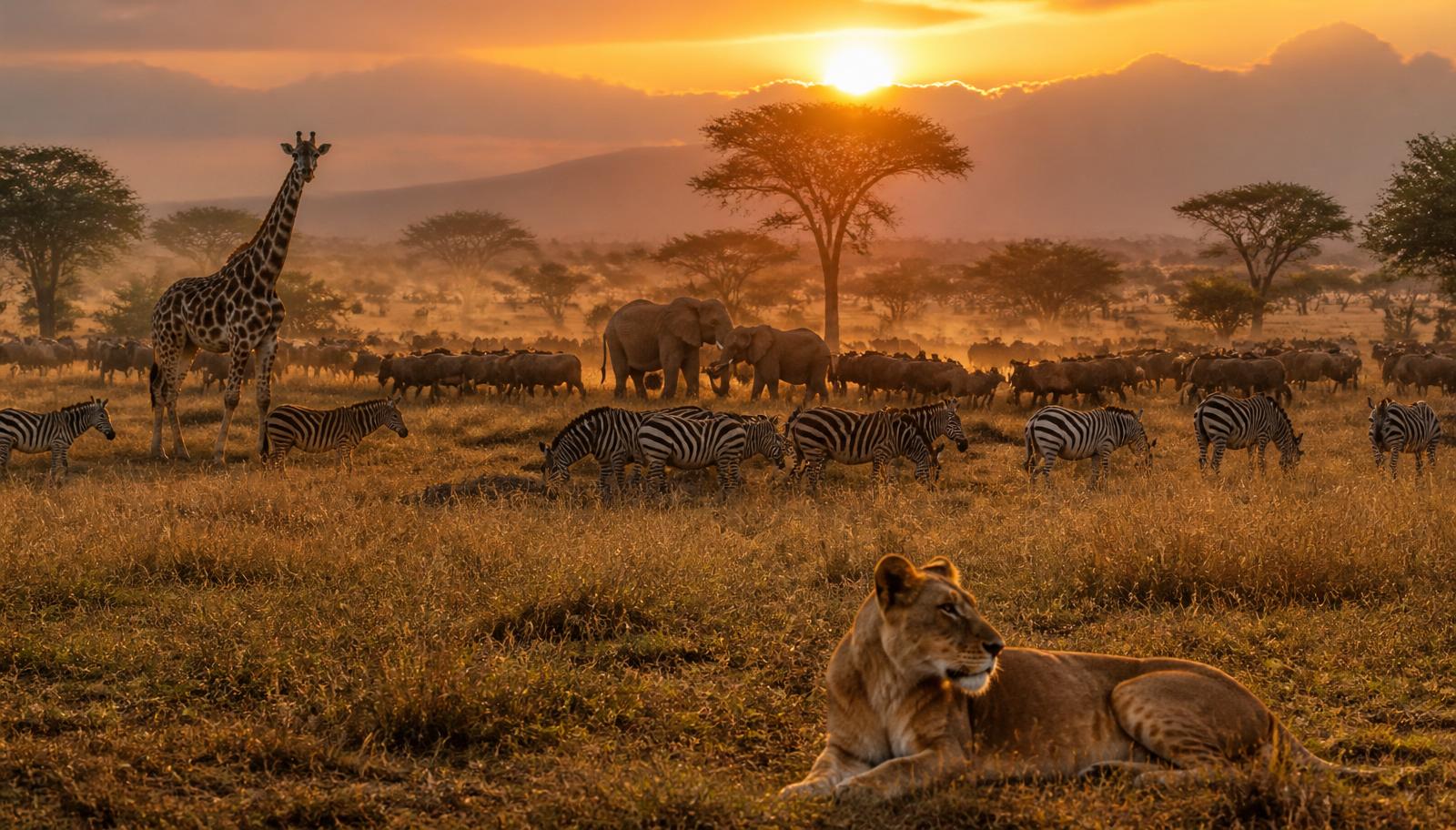
Three things separate Tanzania from the alternatives. The first is scale: the Serengeti ecosystem alone runs to some 30,000 km², which supports predator numbers that smaller reserves simply cannot. The second is the Ngorongoro Crater — an enclosed, permanently watered caldera where all five species live within a 260 km² floor, the only place in East Africa where a clean sweep in one day is a genuine possibility rather than a fantasy.
The third is variety of habitat. Acacia woodland in Tarangire, groundwater forest at Lake Manyara, open short-grass plains in the southern Serengeti, and the baobab-and-sand-river country of Ruaha. Each habitat favours a different member of the five, which is precisely why a well-routed itinerary outperforms a longer stay in one place.
Lion — the one you will see, and the one worth waiting at
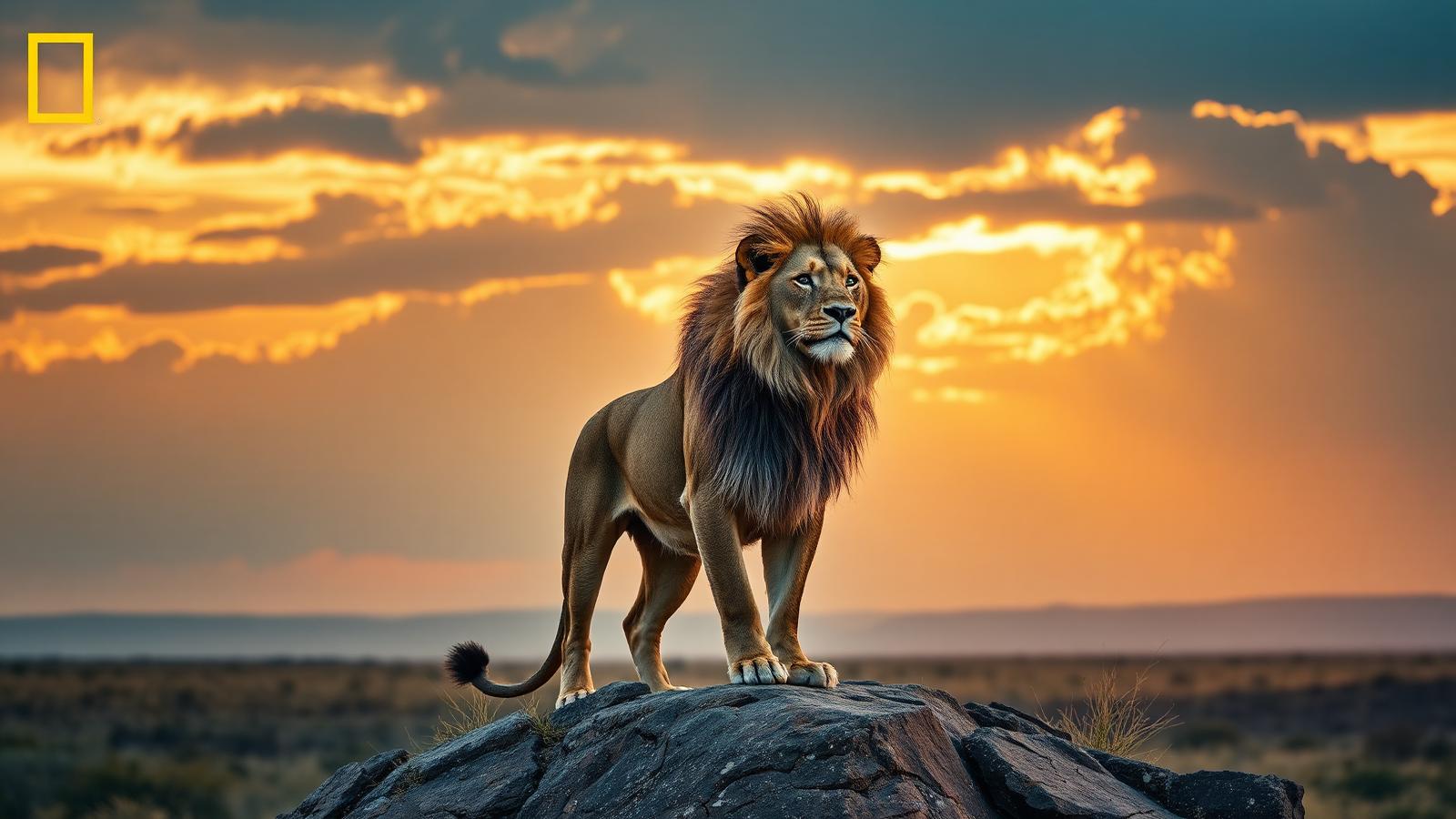
Tanzania holds an estimated one-third of the world's remaining wild lions, and the Serengeti's prides are among the most studied populations on earth. Practically, this means a well-planned week almost always produces multiple lion sightings. The question is not whether you will see lions but whether you will see them doing anything.
Sleeping lions are the default. Adult males rest for up to twenty hours a day, and by 10:00 a pride is usually a set of tawny lumps under a commiphora. The difference between a photograph of a lion and a memory of one is timing: be out of camp before the gate opens where park rules allow it, and stay out through the last hour of light.
Where to look
- Seronera Valley, central Serengeti — permanent water and high prey density; the most consistent lion viewing in the country.
- Moru Kopjes — granite outcrops used as lookouts and denning sites. Scan the flat rock tops, not the ground.
- Ngorongoro Crater floor — a dense, well-habituated population, including the heavy-maned males the crater is known for.
- Ndutu, late January to March — calving season brings the highest concentration of predator activity in the safari calendar.
- Ruaha — the southern circuit's speciality: prides of twenty-plus that hunt buffalo and, occasionally, giraffe.
Leopard — a lesson in looking up
Leopards defeat most first-time visitors because people scan for an animal walking. Leopards are rarely walking. They are draped along a horizontal limb six metres up, with a hind leg hanging, in the dappled part of the tree where your eye reads shadow.
The Seronera River circuit is the classic ground because it combines mature sausage trees and riverine figs with reliable impala. Lake Manyara's forest edge produces surprisingly regular sightings, and Ruaha's sand rivers are excellent for those willing to travel further south. In practice, an unhurried guide with a good pair of eyes matters more here than the park you happen to be in.
Reading the signs
- A carcass wedged in a fork means the cat is close, usually within 50 m, and will return.
- Alarm-calling baboons or a barking bushbuck are worth stopping for, every time.
- Impala facing one direction in unison are telling you where to point your binoculars.
- Fresh drag marks across a sandy track are the single most useful clue in Ruaha.
Elephant — the species where the park choice is everything
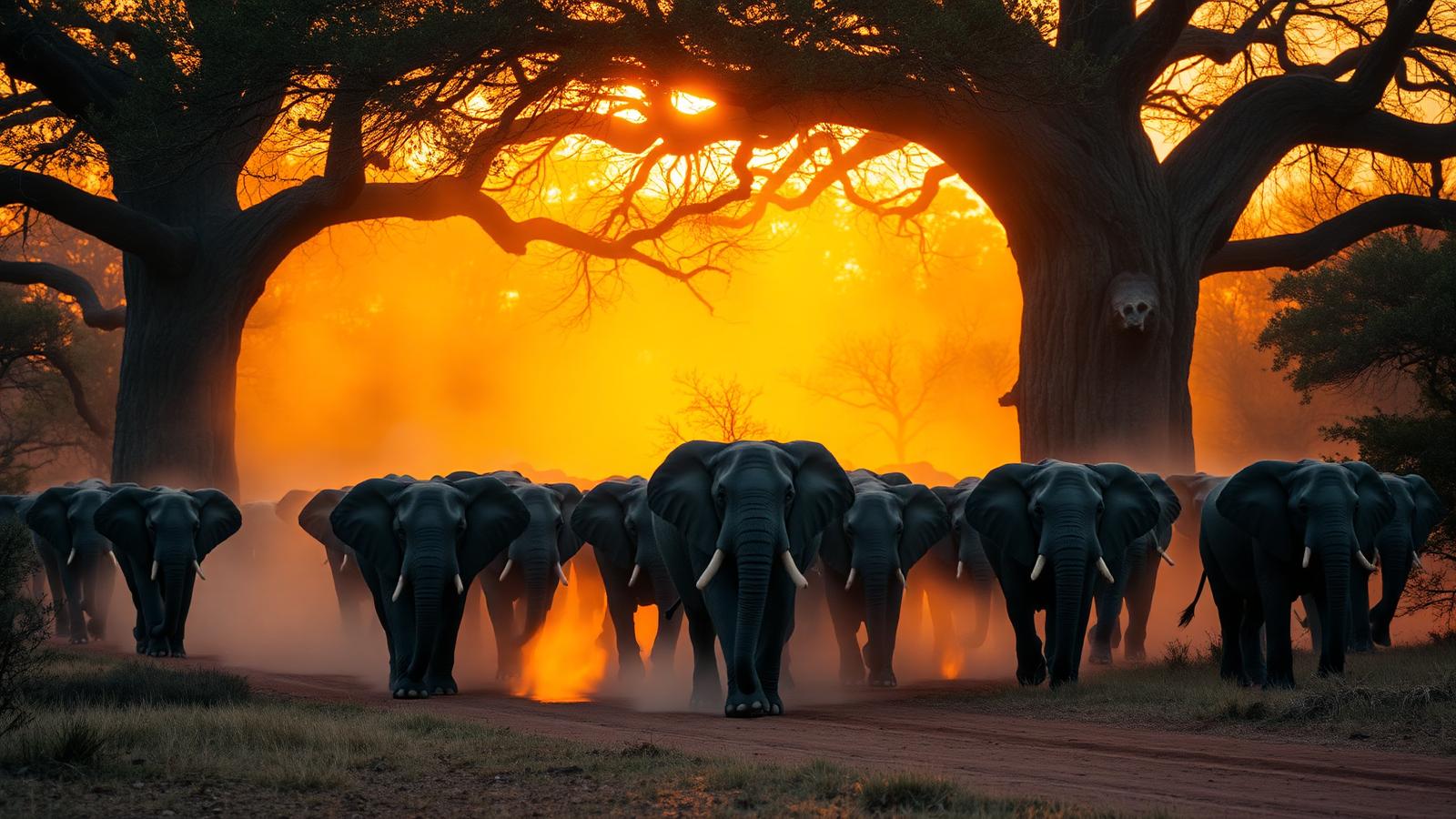
You will see elephants almost anywhere in Tanzania. Whether you see the elephant experience — three hundred animals strung along a river, several family groups merging, bulls in musth working the edges — depends entirely on being in Tarangire between August and October.
As the surrounding ecosystem dries, the Tarangire River becomes the only permanent water for a vast area, and the herds concentrate. The same park in April reads completely differently: green, beautiful, and largely empty of the big aggregations. Our Tarangire National Park guide covers how to plan for either version, and the best time to visit Tanzania guide sets that timing in the wider seasonal context.
Behaviour worth understanding
Elephant sightings improve dramatically once you can read the animals rather than simply photograph them. A matriarch turning to face the vehicle with ears spread wide and head high is assessing you, not charging. Ears clamped back, trunk tucked and a fast, silent approach is a different matter, and your guide will already be reversing.
- Give crossing herds the full width of the track and switch the engine off — noise, not proximity alone, is what unsettles them.
- Never position the vehicle between a calf and the rest of the family. It is the most common mistake we see from other vehicles.
- Musth bulls — temporal gland streaming, urine dribbling — get a wide berth from any competent guide. There is no photograph worth crowding one.
Cape buffalo — underrated, and the reason walking safaris have rules
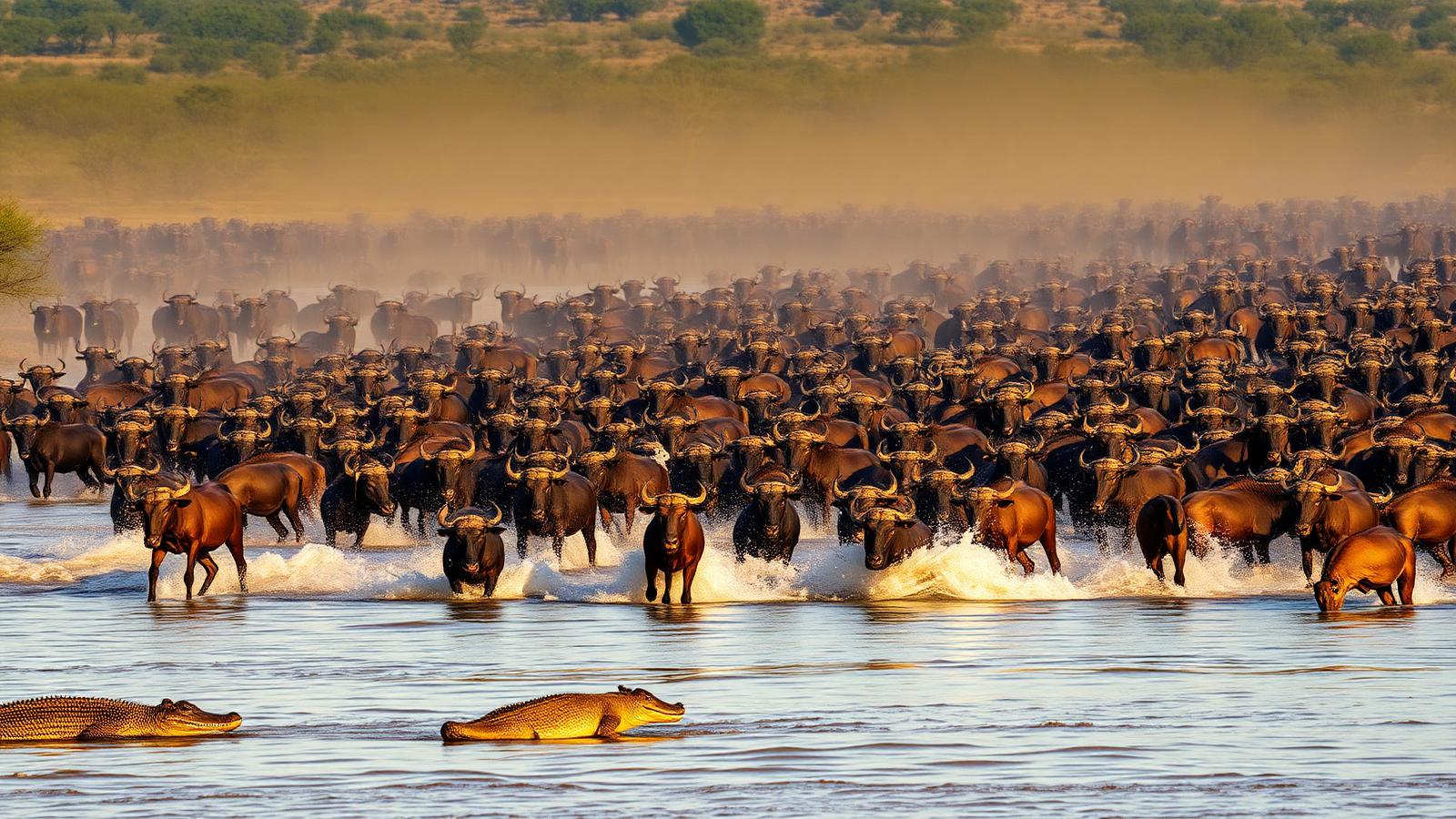
Buffalo are the animal guests photograph on day one and stop noticing by day three, which is a shame. A herd of eight hundred moving across the crater floor in dust and low light is one of the great sights of East Africa, and the social dynamics — the way herds vote on direction by body orientation before moving — are genuinely fascinating once pointed out.
They are also the species that most demands respect. Old bulls pushed out of the herd, the so-called dagga boys caked in dried mud, are unpredictable and account for a disproportionate share of dangerous incidents on foot. This is why walking safaris in Nyerere and Ruaha run with an armed ranger and a strict single-file rule.
Black rhino — the animal that decides your trip
Tanzania's black rhino population is small and heavily protected: fewer than 200 animals nationally, with the strongest viewing concentration on the Ngorongoro Crater floor and a smaller, rarely seen group around the Serengeti's Moru Kopjes. Poaching reduced the crater population to a handful of individuals in the 1990s; the recovery since has been slow, closely monitored and, by African standards, a real success story.
What that means in the field is specific. Crater rhino tend to feed in the open near the Lerai Forest and the Gorigor Swamp in the cool early hours, then move into cover as the day heats up. A descent that starts at 06:15 is a different proposition from one that starts at 09:00. Distances are often long — 400 m to a kilometre is normal — so binoculars matter more than a camera here.
Honest odds
- A full early crater day: most of our groups see at least one black rhino, usually at distance. Some see none. That is the nature of it.
- A half-day crater visit slotted into a transfer: markedly worse odds, and the most common reason guests leave without a rhino.
- Serengeti Moru: possible but genuinely rare. Treat any sighting there as a bonus, never as a plan.
Best parks for each animal
This is the table we mentally run through when someone tells us which animal matters most to them. Ratings reflect typical dry-season performance.
| Park | Lion | Leopard | Elephant | Buffalo | Rhino | Verdict |
|---|---|---|---|---|---|---|
| Ngorongoro Crater | Excellent | Fair | Good (big bulls) | Excellent | Best in Tanzania | The only place where all five are plausible in a single day. |
| Serengeti (central) | Best in Tanzania | Excellent | Good | Very good | Rare (Moru) | Highest big-cat density; where most leopard sightings happen. |
| Tarangire | Good | Fair | Best in Tanzania | Very good | None | Elephant-first park with tree-climbing lions and baobab scenery. |
| Lake Manyara | Fair (tree-climbing) | Good | Very good | Good | None | Short, dense, birds-and-forest park; a strong half-day opener. |
| Ruaha | Exceptional (big prides) | Very good | Excellent | Excellent | None | Southern circuit wilderness with very few vehicles. |
| Nyerere (Selous) | Excellent | Good | Excellent | Excellent | Very rare | Boat safaris and walking add angles the north cannot offer. |
For park-level detail, our Ngorongoro Crater safari guide covers descent timing and permits, while the Serengeti wildlife guide breaks the park down by region and season.
Best time to see each animal
| Animal | Peak window | Why then | What works against you |
|---|---|---|---|
| Lion | January – March, July – October | Calving season concentrates prides near Ndutu; the dry season pins them to rivers and waterholes. | Long grass in April–May hides cubs and kills sightlines. |
| Leopard | July – October | Thin bush and bare sausage trees make draped leopards visible from 200 m. | Midday in any month — they are down and hidden by 09:30. |
| Elephant | August – October (Tarangire), year-round elsewhere | Receding water forces herds onto the Tarangire River in the hundreds. | Green season disperses herds across the wider ecosystem. |
| Buffalo | June – October | Dry-season herds mass in the crater and along permanent water. | Nothing serious — buffalo are the most dependable of the five. |
| Black rhino | June – October, 06:30 – 09:00 | Crater rhino feed in the open on Lerai and Gorigor edges before the heat pushes them into cover. | Afternoon descents — visibility and distance both work against you. |
The pattern is consistent: dry months thin the bush and concentrate animals around water, which is why June to October is the default recommendation. The green season is not a write-off — it is quieter, greener and cheaper, with newborn prey everywhere — but it asks more of both your patience and your guide.
Itineraries that actually work
Five days — the realistic minimum
Tarangire (1 night), Ngorongoro with a full crater day (1–2 nights), central Serengeti (2 nights). This covers elephant concentration, the rhino window and Seronera's cats. It is tight, and it depends on the crater day being a real day rather than a morning wedged between transfers.
Seven days — the version we recommend
Add a second Serengeti night and either Lake Manyara at the start or a Ndutu leg in calving season. The extra time is not padding; it is the buffer that absorbs a bad-weather morning or a rhino that stays in the Lerai Forest all day.
Ten days — north plus south
The northern circuit for rhino and crater density, then a flight to Ruaha or Nyerere for big prides, boat safaris and near-empty tracks. You trade a little rhino certainty for a much wilder second half.
Wildlife viewing etiquette
Etiquette is not politeness for its own sake — it directly affects what you get to see. Vehicles that behave badly shorten sightings for everyone, and habituated animals that are pressured stop using the areas where they are visible.
- Keep voices low and phones silent. A leopard will tolerate a diesel engine and leave at the sound of a raised human voice.
- Never ask a guide to leave the track. It is illegal in national parks, it scars the plains and it is the fastest way to lose a licence.
- Give cats a clear escape route. Never box in a hunting animal or a mother with cubs.
- Limit crowded sightings to fifteen or twenty minutes when other vehicles are waiting, then rotate out. Good guides do this without being asked.
- No feeding, no calling, no whistling to make an animal look up. If your guide is willing to do this, you have the wrong guide.
- Stay seated, and keep arms and lenses inside the vehicle profile — the animals read the vehicle as a single shape, and a protruding human breaks that.
Photography tips for the Big Five
Big Five photography is mostly a light-and-distance problem. The animals are often further away than expected, and the good light lasts about ninety minutes at each end of the day.
- Lens range: 100–400 mm covers most situations. A 600 mm helps only with rhino at crater distances and is heavy to hand-hold from a bean bag.
- Shoot low: ask your guide to reposition so you are shooting at eye level rather than down from a roof hatch. It transforms lion portraits.
- Shutter discipline: 1/1000 s minimum for anything moving; push ISO before you drop shutter speed.
- Support: a bean bag on the window frame beats a tripod in every vehicle we run.
- Dust: change lenses inside a bag, not in the open, between August and October.
- Include habitat: a buffalo herd in crater dust or an elephant under a baobab tells more of a story than a tight head shot.
Our Tanzania safari photography guide goes further into gear, settings and how to brief a guide as a photographer, and the safari packing list covers bush-flight luggage limits that catch camera-heavy travellers out.
Common Big Five misconceptions
| What people believe | What we see in the field |
|---|---|
| The Big Five are the five biggest animals | The term comes from colonial-era hunting and describes the five species considered most dangerous to approach on foot. Hippo, giraffe and crocodile are all bigger or deadlier by the numbers. |
| You can tick all five in three days | You can get lucky. Planning for luck is not planning. Five to seven days with a full crater day is what turns a possible clean sweep into a probable one. |
| Rhino sightings are just a matter of paying more | No amount of budget changes where fewer than 200 black rhino happen to be standing. Time on the crater floor at the right hour is what moves the odds. |
| Leopards are nocturnal, so daytime is pointless | They are crepuscular and rest in trees through the day. Most of our leopard sightings happen between 06:15 and 08:30, in daylight. |
| The Big Five are the point of a safari | Guests who fixate on the checklist often drive past the best morning of their trip. The five are a useful frame, not a scorecard. |
Expert safari tips
- Book a private vehicle. The single biggest difference-maker. It decides whether you can wait forty minutes at a stalking lioness or have to leave because five other guests want lunch.
- Sleep inside the park. Gate-to-gate driving from outside costs you the two hours that matter most.
- Take binoculars per person. Sharing one pair is the most common regret we hear on a rhino day. 8×42 is the right compromise.
- Tell your guide your priority on day one. "Leopard matters most to us" genuinely changes the routing.
- Take the crater day early in the trip. If the rhino does not appear, you may still have flexibility to try again.
- Stop chasing the list. The best mornings usually come from staying with one sighting, not from driving between five.
Conservation and responsible viewing
Park fees are not an administrative annoyance — they fund the ranger patrols that keep the crater rhino alive and the anti-poaching units working across Ruaha and Nyerere. Tanzania's protected areas cover close to a third of the country, and tourism revenue is the practical mechanism that keeps that land wild rather than converted.
A few choices matter more than they look. Travelling with a licensed operator that employs local guides and pays park fees properly. Staying in camps with genuine community agreements. Keeping rhino sighting locations off public social media, which is standard practice among guides and worth adopting as a guest. None of this changes your trip; all of it changes what the trip supports.
Southern-circuit travellers can see this most clearly in Nyerere National Park and Ruaha, where visitor numbers are low and tourism income is the main counterweight to pressure on the land.
Frequently Asked Questions
Common Questions
Frequently Asked Questions
Yes — Tanzania is one of the few countries on earth where you can realistically see all five (lion, elephant, leopard, black rhino and buffalo) on a single safari. The classic Serengeti + Ngorongoro Crater combination gives most guests the full set within 5–7 days.
The Ngorongoro Crater is the single best all-in-one location — its 260 km² floor holds all five species year-round, including the largest concentration of black rhino in northern Tanzania. Serengeti National Park is a close second and better for lion and leopard densities.
A minimum of 5 days is realistic; 7 days is the comfortable sweet spot. Rhino is the wildcard — the extra days dramatically raise your success rate.
For sheer scale and rhino sightings, yes. Tanzania has larger, less crowded parks and the Ngorongoro Crater — the world's most reliable Big Five ecosystem. Kenya offers excellent Big Five viewing too, especially in the Masai Mara, but at a smaller scale and with more vehicle traffic.
June to October — the dry season — is best. Vegetation thins out, water sources shrink and animals gather predictably. Late January to March is also excellent for lion and leopard on the southern Serengeti plains during the calving season.
Absolutely. Most Big Five safaris are ideal for children aged 6+ — game drives are conducted from vehicles, guides handle all wildlife proximity, and many camps have family suites, junior-ranger programs and shorter drive schedules.
Yes. A private guide and 4×4 lets you react instantly to radio calls, linger at a leopard sighting for an hour instead of ten minutes, and structure the day around wildlife behavior rather than a group timetable.
The black rhino, by a wide margin. Fewer than 200 individuals remain across the country, concentrated in the Ngorongoro Crater and Serengeti's Moru Kopjes. Leopards are close second — solitary and camouflaged, but usually visible with a patient guide.
Yes — most families with children aged 6 and up have an excellent time. Northern Circuit lodges have family suites, junior-ranger programs and pool time built into the day, and driving distances are shorter than in the south. See our Family Safari in Tanzania guide for age-by-age recommendations.
Yes, and it's our most popular pairing. A 6–8 day Big Five northern circuit flows naturally into a 4–5 night Zanzibar beach stay via a short domestic flight from Arusha or the Serengeti to Zanzibar. See our Zanzibar and Safari Tanzania guide for the ideal beach-side timings.
No. We do not guarantee wildlife sightings and we would be wary of any operator that does. What we can control is timing, pace and expertise: an early crater descent, a full day rather than a rushed one, a guide working the radio network and the patience to wait at a promising sighting. On a seven-day northern-circuit trip built that way, most of our guests see all five — with black rhino always the wildcard.
Black rhino, because crater sightings are usually 400 m to a kilometre away and heat haze builds quickly after 09:00. Leopard is the hardest to photograph well, since most sightings are in dappled shade high in a tree. A 100–400 mm lens on a bean bag handles the other three comfortably.
The term comes from nineteenth-century hunting and refers to the five species considered most dangerous to pursue on foot, not the largest animals. Hippos and crocodiles cause more human deaths in Africa each year than any of the five.
In Closing
Final Thoughts
Tanzania gives each of the five animals a place where it is at its best — Seronera for cats, Tarangire's river for elephant herds, the crater floor for buffalo and the country's most viewable black rhino, Ruaha and Nyerere for the wild, uncrowded version of all of it. Build a route that respects those differences, start early, stay out late, and let one good sighting run rather than chasing the next. Do that and the five stop being a checklist and become the reason people come back.