
Serengeti & Wildlife
Best Time to See the Great Migration in Tanzania
A month-by-month look at where the herds usually are, what each season actually offers, and how to choose travel dates when the migration follows rainfall rather than a calendar.

Almost every migration enquiry we receive contains the same sentence in some form: when is the best time to see the Great Migration? It is a fair question, but the honest answer starts with a correction. The migration is not an event with a date. It is a continuous, year-round movement of wildebeest, zebra and gazelle around the Serengeti ecosystem, and the herds are somewhere in that ecosystem every single day of the year.
So the useful version of the question is different: which part of the migration do you want to see, and where do you need to be standing to have a realistic chance of seeing it? Answer that, and the months take care of themselves. This guide walks through the year as we plan it with travellers, including the parts that marketing pages tend to leave out — why timing shifts, why crossings cannot be promised, and why several of the quieter months are better value than the famous ones.
The Short Answer
If you want to watch herds attempt the Mara River, travel between late July and early October and stay in the far northern Serengeti. If you want newborn calves and heavy predator activity on open plains, travel between late January and mid-March and stay near Ndutu. If you want enormous massed herds without dry-season crowds or dry-season pricing, look at June in the Western Corridor or November as the herds move south.
Every one of those windows is a pattern rather than a promise. The herds respond to grazing conditions, and grazing responds to rain. A season that starts early or late shifts everything with it, which is why we plan around regions and allow room to adapt rather than pinning a trip to a single expected day.
Why Migration Timing Moves
The herds are not navigating to landmarks. They are following food. Wildebeest graze short, fast-growing grass, and that grass appears where rain has recently fallen. When the southern plains green up, the herds concentrate there. When those plains dry out, the animals move toward country that still holds grazing and water, which over the course of a year traces a broad loop through the Serengeti and, for part of the year, across the border.
Because rainfall is variable, the loop is elastic. In one year the herds may reach the northern river country in early July; in another, the same movement happens weeks later. The direction and sequence stay remarkably consistent. The dates do not. That distinction is the single most useful thing to understand before you choose travel dates, and it is why our overview of how the migration works spends more time on drivers than on dates.
There is a second, quieter reason timing varies: the herds are not a single block. The migration is better pictured as a long, loose front spread over tens of kilometres, with leading groups, a dense middle and stragglers. Two camps in the same region can have very different weeks depending on which part of that front is nearby. Good guiding is largely about reading where the mass currently sits and moving accordingly.
How Rainfall Drives the Herds
Two rain periods shape the year. The short rains usually arrive around November and are intermittent. The long rains run roughly March to May and are heavier, with April typically the wettest month. Between and after them come drier stretches that gradually shrink grazing and surface water, which is what pushes the herds toward the permanent rivers in the north and west.
| Period | Typical rainfall | Usual effect on the herds |
|---|---|---|
| November to December | Short rains, usually intermittent | Fresh growth on the southern and eastern plains draws the herds back south |
| January to early February | Often a drier break between rain periods | Herds concentrate where grazing holds; a dry break can scatter them across a wider area |
| March to May | Long rains, heaviest around April | Grazing is widely available, so the herds spread out and move less predictably |
| June to October | Mostly dry | Grass and surface water shrink, pushing herds north and west toward permanent rivers |
The practical consequence is counter-intuitive. Wet months are not bad months for finding animals; they are months when animals have more choice, so they spread out. Dry months concentrate wildlife around what water remains, which is why general game viewing across Tanzania is easiest between roughly June and October. If your interest goes beyond the migration itself, our guide to the best time to visit Tanzania covers how those same seasons affect other parks.
Month-by-Month Migration Calendar
Read the table below as a set of seasonal probabilities. The regions are reliable; the exact weeks are not. We update our own planning notes each season based on what guides are reporting on the ground, and in most years at least one window arrives earlier or later than the long-term average.
| Month | Where the herds usually are | What tends to happen | Suits travellers who want |
|---|---|---|---|
| January | Southern Serengeti and Ndutu, spilling into the Ngorongoro Conservation Area plains | Herds settle on short-grass plains as the grazing improves; the first calves usually appear late in the month | Green landscapes, early calving, quieter plains before the February peak |
| February | Ndutu and the southern plains | The main calving weeks in most years, with newborns and predators concentrated in open country | Predator activity, photography, travellers who prefer open sightlines |
| March | Southern plains, drifting north and west late in the month | Calving tails off; herds begin to string out as the long rains approach | Late calving, big herd columns, softer pricing than the dry season |
| April | Central and south-western Serengeti | Long rains; herds move through wooded and transitional country rather than staying in one place | Low crowds, low rates, travellers comfortable with wet-weather driving |
| May | Western and central Serengeti | Herds gather and push west; the rut often begins as the rains ease | Large massed herds, dramatic skies, value pricing |
| June | Western Corridor toward the Grumeti River | Drying plains push the herds west; Grumeti crossings are possible but smaller and less predictable than the Mara | Big herds without dry-season crowds, good value in the shoulder |
| July | Northern Serengeti building; herds still spread through the west and centre | The front of the migration reaches the Mara River area; early crossings can begin, often mid to late month | Early crossing attempts with slightly lower prices than August |
| August | Northern Serengeti, Kogatende and the Lamai Wedge | The most consistent crossing period in most years, with herds moving back and forth across the river | Crossing-focused trips, classic dry-season game viewing |
| September | Northern Serengeti and the Kenyan border area | Crossings continue; herds shuttle between banks depending on grazing and pressure from behind | Crossing odds, dry-season visibility, strong all-round wildlife |
| October | Northern Serengeti, with movement south later in the month | Late crossings are still possible; the southward drift starts once the short rains arrive | Thinner crowds late in the month, dry-season predators |
| November | Northern, eastern and central Serengeti | Short rains green the plains and pull the herds south in long columns | Herds in motion, quieter parks, better rates |
| December | Central and southern Serengeti, reaching Ndutu | Herds spread back onto the calving plains ahead of the next birthing season | Green season, festive travel, early access to the southern plains |
January to March
This is the southern chapter of the year. The herds gather on the short-grass plains that run from the southern Serengeti into the western side of the Ngorongoro Conservation Area, and it is here that the calving season plays out. January often opens with the plains filling and the first births appearing late in the month. February usually holds the densest calving. By March the newborns are already running with the herd and the animals begin to string out as the long rains approach.
What travellers notice first is the openness. There are few trees, the grass is short, and you can see a very long way, which changes the character of a game drive completely. Instead of searching thick cover, you are watching behaviour unfold across an open stage. Our Ndutu area guide goes deeper into the practicalities of basing yourself there.
The trade-off is that this is not the season of river crossings. If your mental image of the migration is animals plunging into water, the southern months will not deliver it. What they deliver instead is volume, vulnerability and predators working in the open — a very different kind of intensity.
April and May
These are the long-rain months, and they are the most misunderstood part of the calendar. Herds do not vanish. They move through central and south-western country where grazing is widely available, which means they are less concentrated and harder to pin to a single area. Afternoon storms are common, some tracks become slow or impassable, and a number of seasonal camps close for the period.
In exchange you get quiet parks and the lowest rates of the year. For travellers who care more about being alone with wildlife than about ticking a specific event, this can be an excellent time to travel. The landscape is green, skies are dramatic, and vehicle numbers at a sighting are a fraction of what they are in August.
Our advice for these months is straightforward: use permanent lodges rather than mobile camps, keep the itinerary simple, avoid tight connections, and accept that some hours will be spent under rain. If reliable dry weather is essential to your trip, choose a different window rather than hoping April behaves.
June
June is the month experienced travellers keep quiet about. The plains have dried enough to push the herds west and north, and large concentrations often build in the Western Corridor toward the Grumeti River. Grumeti activity can be dramatic, though it is smaller in scale and less predictable than what happens later in the north.
The appeal of June is the combination: very large herds, drying weather, and noticeably fewer vehicles than the July to September peak. Rates sit below high season in many camps, and availability is easier. For travellers who want scale rather than a specific event, June regularly outperforms its reputation.
July
July is a transition month, and how it feels depends heavily on when the rains ended. In many years the leading edge of the migration reaches the northern Serengeti during July, and the first crossing attempts at the Mara River happen from mid-month onward. In other years the front arrives later and July is still largely a western and central month.
If you are travelling in July with crossings in mind, base yourself in the far north and be realistic: you may be watching the first groups arrive rather than a continuous procession. The upside is that late July often carries slightly lower rates and lighter vehicle traffic than August while still offering a genuine chance at the river.
August
August is the month most people picture. In a typical year, large numbers of animals are in the northern Serengeti around Kogatende and the Lamai Wedge, moving between grazing areas on both sides of the Mara River. Because the herds cross in both directions and repeatedly, this is the period with the most consistent crossing activity.
It is also the busiest and most expensive time to be in that specific corner of the park. Camps are limited in number, demand is concentrated, and popular crossing points attract vehicles. None of that ruins the experience, but it is worth knowing before you arrive expecting solitude. A private vehicle makes a real difference here, because waiting patiently at a bank for several hours only works if everyone in the car has agreed to it.
September
September usually continues what August started, with herds shuttling between banks as grazing is used up on one side and regrows on the other. Conditions are dry, dust is part of the picture, and visibility through thinned vegetation is excellent for general wildlife as well as for the herds themselves.
Many repeat visitors prefer September to August. Crossing potential is comparable in most years, light can be beautiful, and traffic eases slightly as the peak family-holiday period passes. Northern camps still book out well in advance, so treat availability rather than probability as the limiting factor.
October
October is the hinge. Early in the month, crossings can still occur and the northern Serengeti remains productive. Once the short rains begin, grazing improves to the south and east and the herds start drifting back that way, sometimes quickly. Late October trips can find the north quieter than expected or catch the beginning of the southward movement.
For travellers who value fewer vehicles, October has real appeal. Prices ease at many camps, and the balance between dry-season visibility and thinning crowds is attractive. The risk is simply that the herds move earlier than expected, which is another reason to keep the itinerary adaptable rather than locked to one riverbank.
November and December
The short rains reset the system. Fresh growth on the southern and eastern plains draws the herds back down through the Serengeti, often in long ribbon-like columns that are spectacular in their own right. November is a genuinely underrated month: herds in motion, low vehicle numbers and softer pricing.
By December the front of the migration is generally spreading across the central and southern plains, with animals reaching the Ndutu area as the month goes on. Late December combines festive-period travel with green landscapes and the early stages of the next calving build-up, though holiday dates carry premium pricing at many camps.
Calving Season Explained
Calving is a different proposition from the northern river months, and it deserves to be judged on its own terms rather than as a consolation prize. Over a compressed period on the southern plains, an enormous number of wildebeest give birth within a few weeks of each other. The synchrony is a survival strategy: predators can only take so many newborns at once, so arriving together improves the odds for the group even though individual calves are extremely vulnerable.
For visitors, that concentration means constant activity. Calves stand within minutes of birth. Lions, cheetahs, hyenas and jackals all work the plains, and because the country is open you often watch a hunt develop from a long way off rather than stumbling on the aftermath. It is the most behaviour-rich window of the migration year.
The caveat is the same as everywhere else in this guide: the peak weeks shift. A late start to the short rains can delay the herds arriving south, and an unusually dry January can leave the plains patchier than normal, spreading animals over a wider area. Late February is the most common centre of the season, but it is a centre, not a fixture.
The Western Corridor
The Western Corridor stretches from the central Serengeti toward Lake Victoria and carries the herds through the middle part of the year. It is greener and more wooded than the southern plains, with river systems that create natural bottlenecks. Grumeti River activity is the headline, but the corridor also offers big massed herds moving through attractive country with far fewer vehicles than the north sees in August.
Set expectations sensibly. Grumeti crossings are typically shorter, smaller and more scattered than Mara crossings, and many visitors see herds and river banks without seeing a crossing at all. Travel here for the scale of the herds and the quiet, and treat any river action as a bonus.
Northern Serengeti
The far north is a different landscape from the southern plains: rolling hills, denser bush in places, and the permanent water of the Mara River running through it. This is where the migration spends the driest part of the year, and it is the only part of the Tanzanian ecosystem where river crossings on the famous scale occur.
It is also further from Arusha than most travellers expect, which is why flights matter here. Driving the length of the Serengeti to reach Kogatende burns most of a day in each direction. Our northern Serengeti guide covers access, camp positioning and what the area offers outside the crossing season, while the central Serengeti guide explains why the Seronera area works well as a year-round base.
Mara River Crossings
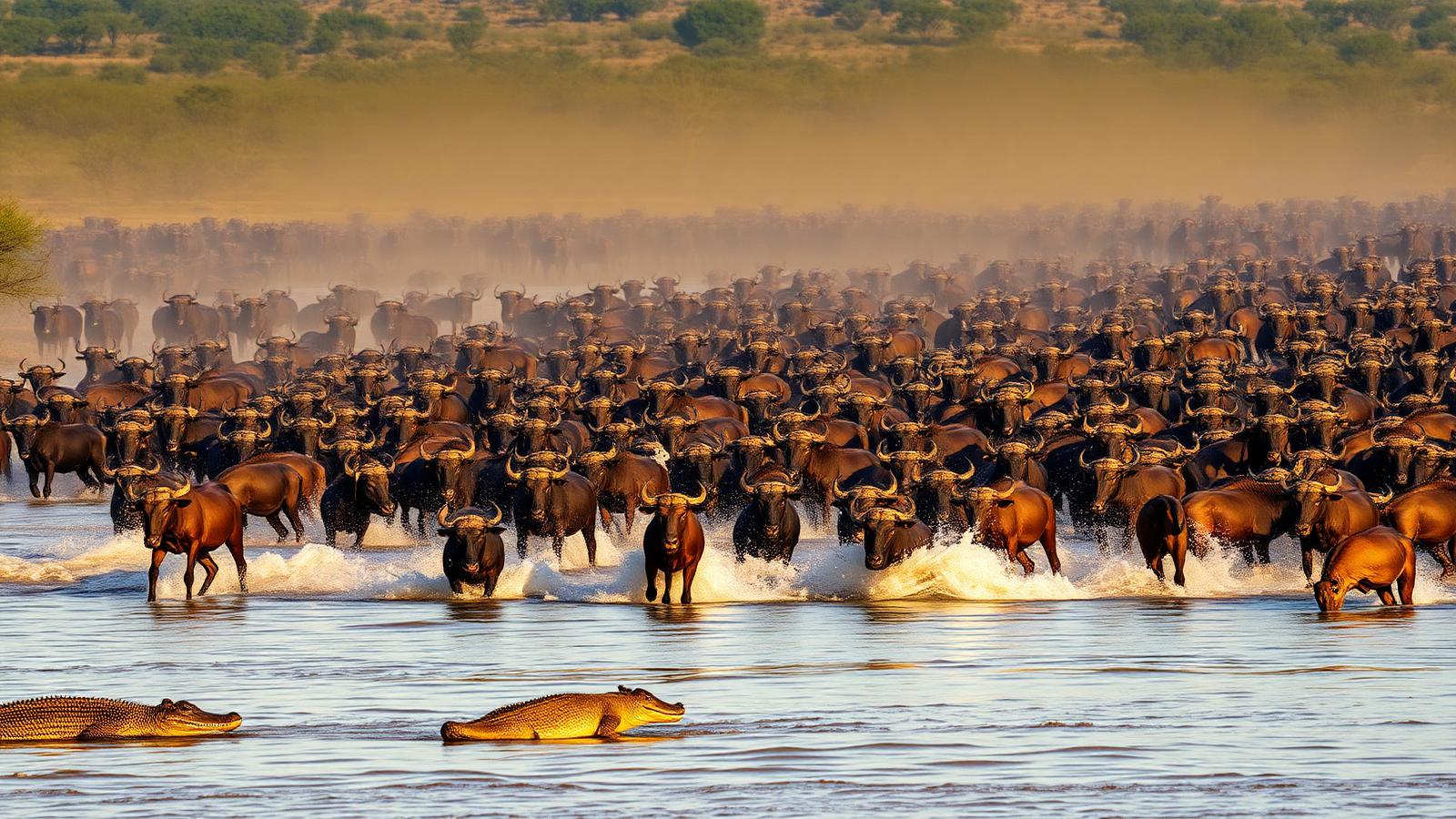
A crossing is not a scheduled performance. Herds gather at the bank, sometimes for hours, sometimes for a full day. They test the water, retreat, mill about, and then either commit or wander off to graze. The trigger is a combination of pressure from behind, the pull of grazing on the far side and something close to collective nerve. Crocodiles are present, and the crossings themselves can be difficult to watch.
What improves your chances is not luck management but time and position. Three or more nights in the northern Serengeti during the crossing window, a guide who knows the approach routes, and the patience to sit at a promising bank rather than chasing radio traffic across the park. Travellers who allow a single night and expect the river to perform on schedule are usually the ones who leave disappointed.
When to Visit for Predators
Predators follow the same logic as the herds: they concentrate where prey concentrates. Two windows stand out. The calving season delivers the highest density of vulnerable prey in the most open country of the year, which suits cheetahs in particular and makes hunts easier to see from a distance. The dry months from July to October concentrate animals around water, which supports consistent lion activity across the Serengeti and elsewhere.
Outside those windows, predator viewing remains good because the big cats are territorial residents, not migrants. Lion prides hold ground year-round, and leopards along the river courses in the central Serengeti are found in every season. For species-by-species detail, our Serengeti wildlife guide breaks down where and when each is most often seen.
When to Visit for Photography
Photographers usually want one of two things, and they point to different months. If you want action frames — dust, water, movement, tension — the northern crossing window from late July into early October is the obvious target, with the caveat that a lot of the time you are photographing anticipation rather than action.
If you want landscape, light and behaviour, the calving months are hard to beat. Green plains, clean backgrounds, low horizons and constant predator activity produce a broader portfolio than the crossing season does. Green-season storms also produce the most dramatic skies of the year, which is why some photographers deliberately choose the shoulder of the long rains.
- Private vehicle. Photography needs the freedom to stay put, reposition for light, and start before dawn. Shared departures rarely allow all three.
- Low angles. Open plains reward shooting from as low in the vehicle as you can manage, which is another argument for the calving season.
- Time over distance. Long transfers cost you the good light at both ends of the day. Fewer, longer stays beat a tour of the whole park.
- Dust management. Dry-season driving is hard on gear; sealed bags and a blower belong in the vehicle, not the duffel. Our safari photography guide covers kit and settings in detail.
Best Time for First-Time Visitors
First-time visitors usually want two things at once: the migration and a strong general safari. That points toward two windows. The dry months from late June through October give you the herds in the west or north plus straightforward game viewing across the whole northern circuit, including Tarangire and Ngorongoro. February gives you the calving plains, green landscapes and easy sightlines, with fewer vehicles and lower rates.
Between the two, the choice comes down to temperament. If the river crossing is the picture in your head and you would regret not trying for it, take the dry season and give the north enough nights. If you care more about wildlife behaviour, comfort and value than a specific event, February is the easier trip. Our first-timer's planning guide covers the wider decisions that sit alongside timing.
Best Time for Lower Crowds
Crowding in the Serengeti is regional and seasonal rather than uniform. The northern river area in August and September is the busiest place at the busiest time. Almost everywhere else, at almost every other time, vehicle numbers are modest by international park standards.
| If your priority is | General window | Where to base | Worth knowing |
|---|---|---|---|
| Calving and newborn herds | Late January to mid-March | Ndutu and the southern short-grass plains | Peak weeks vary year to year with rainfall; late February is the most common centre point |
| Mara River crossing attempts | Late July to early October | Northern Serengeti, Kogatende and Lamai | Crossings are unscheduled events; odds improve with more nights in the area |
| Grumeti River activity | Roughly late May to early July | Western Corridor | Smaller and far less predictable than Mara crossings, but the herds themselves are enormous |
| Massed herds without heavy crowds | February, June, November | Ndutu, Western Corridor, central and eastern Serengeti | The herds are present in all three windows; vehicle numbers are lower than August and September |
| Dry-season game viewing overall | July to October | Serengeti as a whole, plus Tarangire and Ngorongoro | Thin vegetation and concentrated water make general wildlife easier to find |
| Lowest prices | April, May, early November | Central and western Serengeti | Rain affects driving conditions and some seasonal camps close |
If quiet matters more than crossings, June, early November and the green-season months are the honest answer. You still get the herds. You simply see them without a line of vehicles at the same sighting, and usually at a lower nightly rate. Costs by season are covered in our guide to what a Tanzania safari costs.
Why Resident Wildlife Still Matters
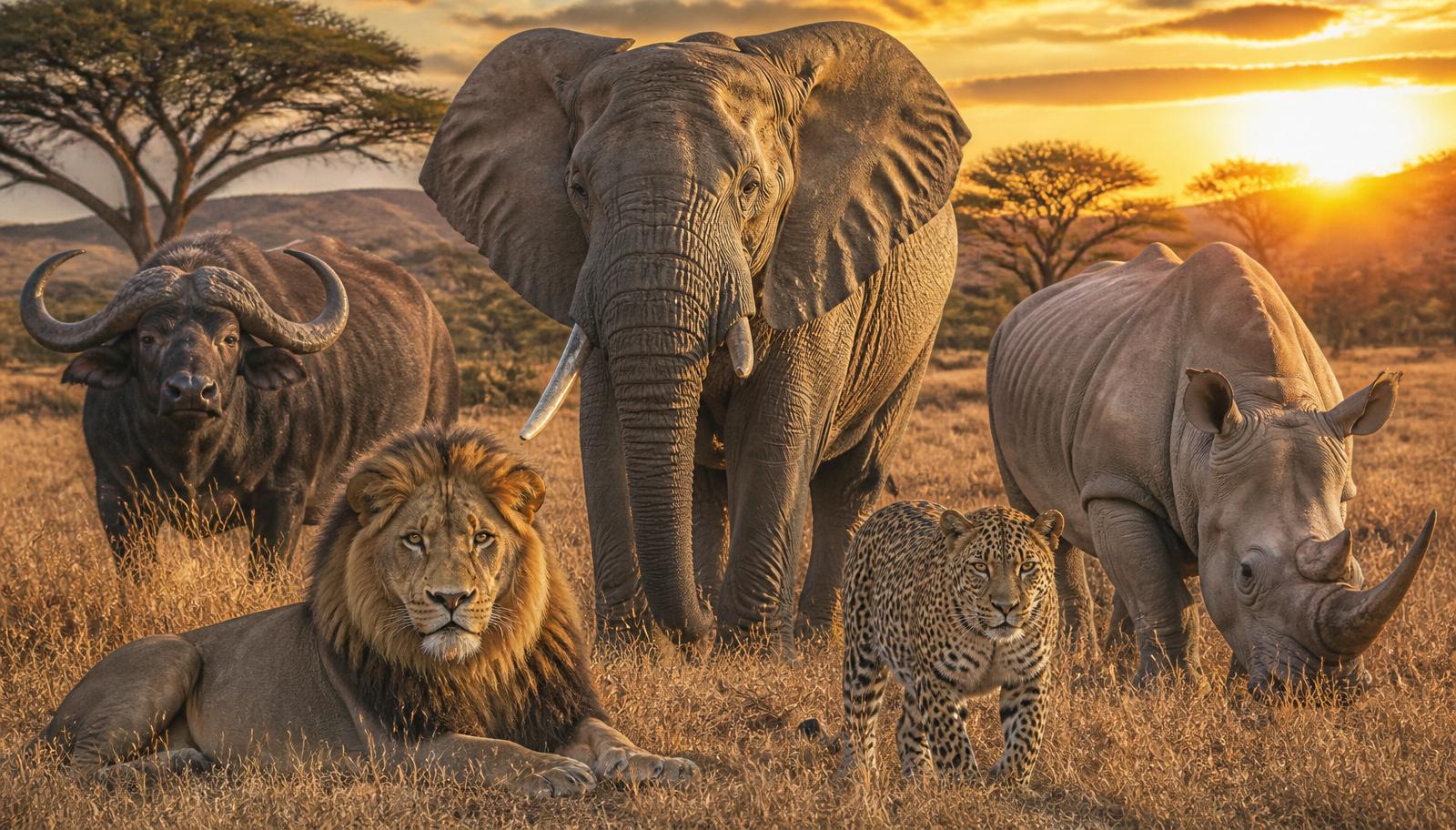
It is easy to plan a migration trip as though the herds are the only wildlife in Tanzania. They are not, and the resident populations are one of the reasons a Serengeti safari holds up even when the migration is elsewhere. Lions, leopards, elephants, giraffe, buffalo, hippo and a very long list of plains game live in the ecosystem year-round and do not move with the wildebeest.
This matters practically. If the herds shift earlier than expected and your camp is suddenly on the wrong side of the movement, a well-planned itinerary still delivers excellent wildlife viewing. It also means that combining regions is rarely wasted time. The central Serengeti in particular holds strong resident populations in every month, which is why it so often forms the stable half of a migration itinerary.
How Many Days to Allow
Time is the variable that most reliably improves a migration trip, and it is the one travellers cut first. Herd movement, weather and simple chance all even out with more days. The table below reflects what we see in practice rather than an ideal.
| Time allowed | What that realistically gives you | Best suited to |
|---|---|---|
| 2 nights in the migration area | You will very likely find herds if you are in the right region, but a single specific event is a coin toss | Short trips where the migration is one part of a wider itinerary |
| 3 nights | The practical minimum for a crossing-focused trip; three full days near the river gives the animals time to act | Travellers whose priority is the northern Serengeti in the dry season |
| 4 to 5 nights | Comfortable margin for weather, vehicle logistics and herd movement; room for a second region | Most migration-led safaris |
| 6 to 8 nights in the Serengeti | Two regions covered properly, with time to follow herds if they shift | Photographers, repeat visitors, anyone who wants depth rather than coverage |
A typical migration-led trip runs seven to ten days door to door: a night near Arusha, three to five nights in the Serengeti split across one or two regions, and one or two nights around Ngorongoro or Tarangire. Sample structures at different lengths are laid out in our itinerary comparison.
Planning Region First, Month Second
The most common planning error is choosing dates and then hoping the itinerary works around them. It is usually better to work in the opposite order where you can: decide which stage of the migration you most want, identify the region that stage occurs in, then check whether your available dates fit that window. If they do not, choose a different stage rather than a different corner of the same month.
When dates are genuinely fixed — school holidays, work leave, an anniversary — the same logic still helps. Fixed August dates should push you north. Fixed February dates should push you south. Fixed April dates should push you toward permanent lodges in the centre and a slower, weather-tolerant plan. The month decides the region, and the region decides the camp.
How Planners Adapt to Conditions
Behind every well-run migration safari is a certain amount of quiet adjustment. Camps report what they are seeing, guides share movement daily, and itineraries get nudged in response. Some of that happens months ahead when a season is clearly running early or late; some happens the night before a game drive.
- Camp selection with movement in mind. Mobile camps reposition seasonally, which is often a better fit for migration-led trips than a fixed lodge in the wrong part of the park.
- Flexible internal flights. Light aircraft between airstrips make it possible to change regions without losing a full day to driving.
- Buffer nights. An extra night in the priority region is the cheapest insurance in a migration itinerary.
- Two-region splits. Pairing a migration region with a strong resident-wildlife region protects the trip if the herds move unexpectedly.
- Daily guide briefings. Where a vehicle goes in the morning should reflect last night's reports, not a printed schedule.
Realistic Booking Lead Times
Availability, not probability, is what usually decides whether a migration trip happens on the dates you want. The northern Serengeti has a limited number of beds close to the river, and they are in demand during the same short window every year. The southern plains have more capacity but the well-placed seasonal camps still fill early.
As a general rule, aim to confirm dry-season northern camps around a year ahead, calving-season camps six to twelve months ahead, and shoulder or green-season trips three to six months ahead. Those are planning guidelines rather than rules; late availability does appear, particularly outside peak weeks.
Common Planning Mistakes
These are the patterns we see most often in enquiries, along with what tends to work better.
| Mistake | Why it causes problems | Do this instead |
|---|---|---|
| Booking a month without booking a region | A July trip based in the central Serengeti can be hours from the northern river country | Decide which stage of the migration matters most, then place your camp in that region |
| Treating the calendar as a schedule | Herd movement follows rainfall and grazing, and both vary from one year to the next | Plan around seasonal patterns and keep a night or two of flexibility where you can |
| Allowing a single night for river crossings | Crossings are unscheduled; herds can gather at the bank for a full day and never enter the water | Give the northern Serengeti at least three nights if crossings are the priority |
| Assuming April and May are wasted months | The herds do not disappear in the rains; they simply spread through transitional country | Use permanent lodges, expect wet tracks, and enjoy far quieter parks at lower rates |
| Ignoring the calving season because it is not the postcard image | Calving concentrates enormous numbers of animals and predators on open plains | Consider late January to mid-March if predator behaviour and open sightlines appeal |
| Booking peak dates too late | Well-placed northern camps in August and September have limited beds and fill early | Confirm dry-season northern camps roughly a year ahead where possible |
| Building an itinerary with long road transfers on key days | A full day driving between regions is a day not spent with the herds | Use light aircraft between distant regions and keep game-viewing days intact |
| Expecting guarantees | No operator controls where wild animals stand on a given morning | Judge a plan by how well it stacks the odds, not by the promises attached to it |
Choosing Your Window
If you strip the year down to decisions, there are really only four:
- You want river crossings. Late July to early October, northern Serengeti, three nights minimum, book early, accept that the river owes you nothing.
- You want calving and predators. Late January to mid-March, Ndutu and the southern plains, open country and constant behaviour.
- You want herds without the crowd. June in the Western Corridor or November as the herds move south.
- You want value and solitude. April, May or early November, permanent lodges, a flexible plan and a rain jacket.
Whichever you choose, hold the plan loosely. The travellers who come home happiest are almost always the ones who arrived interested in what the ecosystem was actually doing that week, rather than checking it against an expectation formed on a website.
Related Guides
- How the Great Migration works — the full cycle, the species involved and the ecology behind the movement.
- Northern Serengeti in detail — access, camp positioning and what the region offers outside the crossing months.
- The Ndutu area and calving plains — where to stay and how the southern season works on the ground.
- Serengeti wildlife species by species — what lives there year-round, and where each species is most often found.
- Choosing a month for Tanzania overall — how seasons affect the wider northern circuit, Kilimanjaro and the coast.
- Photographing the Serengeti — equipment, light, vehicle setup and working with a guide.
Common Questions
Frequently Asked Questions
There is no single best month, because the migration runs all year. Choose by what you want to see. For Mara River crossing attempts, late July to early October in the northern Serengeti is the window. For calving and heavy predator activity on open plains, late January to mid-March around Ndutu is the answer. For very large herds with fewer vehicles, June in the Western Corridor and November as the herds move south are both strong. All of these are seasonal patterns rather than fixed dates.
It depends on the season and on the year. In broad terms the herds are on the southern short-grass plains from around December to March, moving west and north through April to June, in the northern Serengeti from roughly July to October, and returning south from late October into December. Because movement follows rainfall and grazing, the same week can look different from one year to the next, which is why we check current guide reports before finalising a route.
Crossing attempts are most common between late July and early October in the far northern Serengeti around Kogatende and the Lamai Wedge. They are not scheduled events. Herds gather at the bank, sometimes for hours, and may cross, wait or move away entirely. More nights in the region and a guide who knows the approach lines improve your chances, but nobody can promise a crossing.
No. Any operator promising a crossing is overselling. What can be planned is your position: the right region, during the right seasonal window, with enough nights to allow for natural behaviour. Finding large herds in the right region during the right months is highly likely; watching a full crossing is a realistic possibility rather than a certainty.
For many travellers, yes. Calving concentrates an enormous number of wildebeest and their newborns on open plains, and predators follow. The country is short-grass and treeless, so you often watch behaviour unfold across a long distance rather than finding it by chance. It is the most behaviour-rich window of the migration year, and it usually comes with lower rates and fewer vehicles than the northern crossing months.
Allow at least three nights in the region where the herds are your priority, with four to five giving a comfortable margin for weather and movement. Most migration-led trips run seven to ten days door to door: a night near Arusha, three to five nights in the Serengeti split across one or two regions, and one or two nights around Ngorongoro or Tarangire.
They can be, with the right expectations. The long rains fall in this period and the herds spread out through central and south-western country rather than concentrating. Some seasonal camps close and tracks can be slow. In return you get the quietest parks and the lowest rates of the year. Use permanent lodges, keep the plan simple and pack for rain.
Crowding is regional. The northern river area in August and September is the busiest place at the busiest time; almost everywhere else is modest by international standards. June, early November and the green-season months give you the herds with noticeably fewer vehicles and generally lower nightly rates.
It happens, and it is why itineraries are built with flexibility. Camps and guides share movement reports daily, mobile camps reposition seasonally, and light aircraft make it possible to change region without losing a day. It also helps that the Serengeti holds strong resident wildlife populations year-round, so a well-planned trip still delivers excellent viewing if the herds shift.
Both main windows are, in different ways. The northern crossing months suit action and tension, though much of the time you are photographing anticipation. The calving months suit landscape, light and behaviour, with green plains, low horizons and constant predator activity. A private vehicle matters more than any lens choice, because it lets you stay put and work the light.
As a planning guideline, confirm dry-season northern Serengeti camps around a year ahead, calving-season camps six to twelve months ahead, and shoulder or green-season trips three to six months ahead. Late availability does appear, particularly outside peak weeks, so it is always worth asking.
Two windows work well. The dry months from late June through October combine the herds with straightforward general game viewing across the northern circuit. February offers the calving plains, green landscapes, easy sightlines, fewer vehicles and lower rates. Choose the dry season if a crossing attempt is the picture in your head, and February if wildlife behaviour and value matter more than one specific event.
Final Thoughts
The best time to see the Great Migration is the time that matches what you actually want from it. There is a version of this trip in almost every month of the year, and the difference between a good one and a frustrating one usually has nothing to do with luck. It comes down to being in the right region, staying long enough for the animals to do something, and understanding that the calendar in this guide describes patterns rather than appointments.
Plan around the season you can travel in, not the photograph you have seen. Give the priority region three nights or more. Keep a little flexibility for the year the rains arrive early. Do that, and the Serengeti tends to look after the rest.
The migration is a movement, not a date, and the best time to see it is the window that matches what you actually want from the trip. Send us your travel dates and your priorities, and we will tell you honestly what that season can and cannot offer before we build the route.
Plan Your Journey
Tell us your travel dates and we'll plan the safari around where the herds should be
Send us your dates, how many days you have, which part of the migration matters most, your preferred Serengeti region, the level of accommodation you have in mind and whether you'd like a private vehicle. Our Arusha team will build a migration-focused itinerary and explain the reasoning behind the route. Sightings depend on natural conditions and can never be guaranteed — we will always tell you honestly what a given window can and cannot offer.
- TALA Licensed Operator
- 4.9 ★ Guest Rating
- No Booking Fees
Keep Reading
More Tanzania Wildlife Guides
Wildlife
The Great Wildebeest Migration in the Serengeti: Complete 2026 Guide
Safari Guides