
Serengeti & Wildlife
Ndutu Migration Guide: Calving Season, Wildlife and How to Plan Your Stay
Where Ndutu sits, why the area matters during the calving phase of the migration, what travelers can realistically expect, how long to stay and how it compares with the rest of the Serengeti — from our Arusha-based safari team.

Ndutu is the part of the Serengeti ecosystem most often left out of a first itinerary and most often added to a second one. It is not a national park with a gate and a name on the map that travelers recognize. It is an area — a group of shallow lakes, acacia woodland and open short-grass plains at the southern end of the ecosystem — that becomes one of the most productive places in Tanzania during a specific part of the year.
This guide answers a narrow question: why does Ndutu matter in the migration cycle, and how should you plan a visit? The full annual herd cycle sits in our guide to the wildebeest migration, and species detail across the wider ecosystem is covered in the Serengeti wildlife guide. We will point you to those rather than repeat them.
The Short Answer
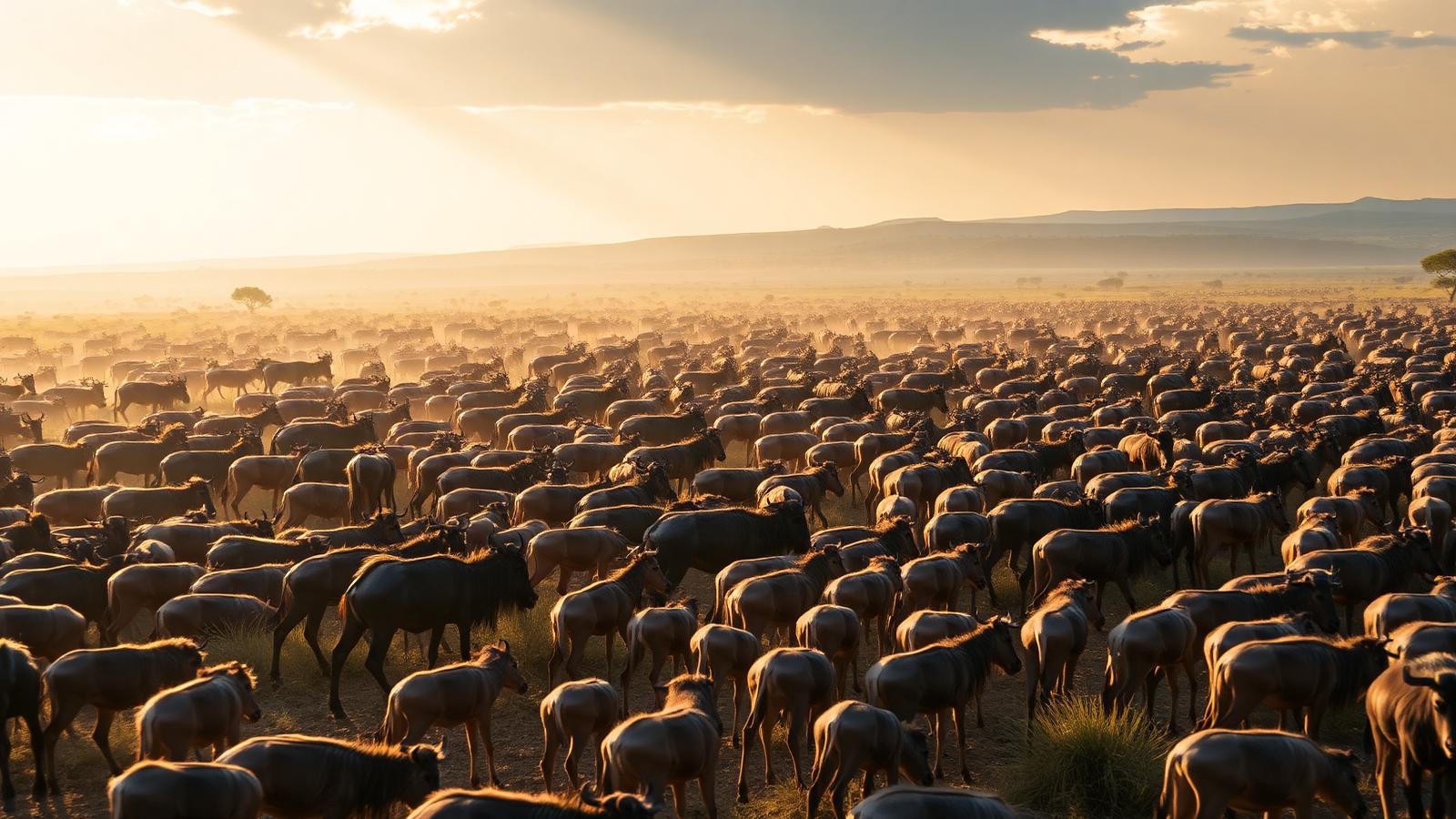
Ndutu is the southern gathering ground of the migration. In a typical year, the herds spend the first months of the year on the short-grass plains around Ndutu and the wider southern Serengeti, and it is here that the great bulk of wildebeest calving takes place. Concentrated prey draws concentrated predators, which is why the area develops a reputation out of proportion to its size.
Two things need to be said clearly. First, the herds are following grazing and rainfall, not a calendar — their exact position shifts from week to week and year to year. Second, nothing about wildlife viewing can be guaranteed. What a well-planned Ndutu stay buys you is good odds and good country, not a promised scene.
Where Is Ndutu?
Ndutu lies at the southern end of the Serengeti ecosystem, roughly between Naabi Hill in the north and the Ngorongoro highlands to the east. The area takes its name from Lake Ndutu, a shallow seasonal soda lake, and it is usually spoken of together with its neighbour, Lake Masek. Around the lakes sit belts of yellow-fever acacia woodland; beyond them, the short-grass plains open up and run for many kilometers with almost no relief.
The important planning detail is administrative. An invisible boundary runs through the area: part of Ndutu falls inside Serengeti National Park, and part falls inside the Ngorongoro Conservation Area. Different rules apply on either side, most notably around off-road driving, and the two authorities charge separately. A single game drive can cross between them more than once, which is why the choice of camp and the experience of your guide matter here.
The relationship with Ngorongoro is geographic as well as bureaucratic. The highlands sit immediately to the east, and the crater is a straightforward addition to a Ndutu itinerary. If you are weighing the two areas against each other rather than combining them, our comparison of the Serengeti and Ngorongoro sets out the trade-offs.
What Makes Ndutu Special?
Three characteristics separate Ndutu from the rest of the ecosystem, and they compound one another.
Open ground
The southern plains are genuinely open. Grass is short for much of the season the herds are there, and sightlines run for kilometers. Animals are easier to find, easier to follow and easier to photograph than in woodland country. Cheetah in particular are far more visible on this kind of terrain than in the mixed habitats further north.
Seasonal concentration
When conditions are right, an enormous number of grazing animals occupy a relatively small area at the same time. Density, not just quantity, is what produces the interactions people travel for. Predators do not need to search; they need to select.
Access rules
In the conservation-area portion, guided off-road driving is permitted at the guide's discretion and within the rules in force at the time. That single difference changes how close you can get to behaviour, how you can position for light, and what a serious photographer can achieve in a morning.
Landscape and Vegetation
The short-grass plains are the defining habitat. They exist because of volcanic ash deposited across the southern ecosystem over long geological timescales, which produced shallow, mineral-rich soils with a hard layer beneath. Deep-rooted trees struggle in that ground, which is why the plains stay treeless, and the grasses that do grow there are short and nutritious rather than tall and coarse.
Around the lakes, the picture changes. Yellow-fever acacias form open woodland with dappled shade, and this is where leopard sightings are most likely and where lion often rest through the middle of the day. Marsh areas hold water and green feed later into the season than the surrounding plains, and they concentrate animals when the open ground dries.
Some low-lying sections carry black-cotton soil, which becomes heavy going after rain. During the wetter months this shapes where vehicles can realistically drive, and it is one reason routes vary day to day.
| Area | Character | Best suited to |
|---|---|---|
| Ndutu and Masek lake shores | Yellow-fever acacia woodland, marsh edges, shaded tracks | Leopard, lion in shade, birdlife, mid-day driving when the plains are hot |
| Short-grass plains east of Ndutu | Open, treeless, huge horizons | Herd concentrations in the calving months, cheetah, long-lens work |
| Marshes (Big and Small) | Reed and damp grass, reliable water | Lion, buffalo, elephant at times, good late-afternoon light |
| Kusini and the western approach | Kopjes, scattered woodland, quieter tracks | Travelers wanting fewer vehicles, secondary herd concentrations |
| Gol and Naabi side | Long open plains towards the Gol Kopjes | Scale, big skies, transfers to and from Central Serengeti |
The Great Migration in Ndutu
The migration is a continuous, year-round movement of wildebeest, zebra and gazelle around the Serengeti ecosystem. It has no start and no finish. What it does have is a broad seasonal rhythm, and Ndutu sits at the southern end of it.
In general terms: the short rains draw the herds south onto the nutrient-rich plains towards the end of the year, they spend the first months of the following year spread across the southern Serengeti and Ndutu, and as the long rains build they drift west and then north. The details vary. In a dry year the herds may arrive late or scatter; in a wet year they may spread over a wider area and be harder to pin down.
This is why we plan Ndutu trips around a window rather than a date, and why we do not publish fixed arrival or departure timings for the herds. If timing is the main driver of your trip, our guide to choosing dates around the migration explains how to weigh the seasonal phases against each other.
Calving Season: How It Actually Works
Wildebeest calving is highly synchronized. Rather than spreading births across the year, the great majority of females give birth within a comparatively short window, and that window falls while the herds are on the southern plains. Biologists generally read this as a predator-swamping strategy: when so many calves arrive at once, predators can only take a fraction of them, and the survival odds for any individual calf improve.
The other half of the explanation is nutrition. The short grasses of the southern plains are unusually rich in the minerals a lactating female needs, and calves need to be strong enough to travel within their first weeks. Calving where the feeding is best is not sentiment; it is the reason the pattern holds.
What you may see
- Newborn calves on unsteady legs, standing and moving within a strikingly short time after birth.
- Females separating slightly from the herd before giving birth, then rejoining it quickly.
- Nursery groups of calves and mothers moving together, with a constant background of calling.
- Predators working the edges of the herds, and scavengers — hyena, jackal, vultures, marabou — following.
- Failed pursuits far more often than successful ones. Most hunts do not end in a kill.
Calving is emotionally heavier than most people expect. Alongside the births there is loss, and a great deal of it happens in plain view. Travelers who prefer their wildlife viewing gentle should know that in advance. Families travelling with younger children should read our first-timer's safari guide for a broader view of what to expect on a game drive before committing to this season.
Wildebeest and Zebra
Wildebeest dominate the numbers, but zebra are a constant presence and worth watching in their own right. The two species graze at different heights and, in effect, prepare the ground for one another: zebra take the coarser top growth, wildebeest follow onto the shorter regrowth. They also share vigilance, and mixed herds are common.
Zebra do not calve in the same synchronized way. Their foals appear across a longer spread of the year, which means you may see young zebra in Ndutu outside the wildebeest calving window as well.
Thomson's gazelle are the third member of the grazing group on these plains, present in large numbers and a key prey species for cheetah in particular.
Predators in Ndutu
Predator activity here is a function of prey. When the herds are concentrated on the plains, the carnivore viewing is among the best in Tanzania. When the herds move on, the picture normalizes.
Lion
Prides in the Ndutu area use the marsh edges and woodland for shade and cover and work the open ground when prey is close. During the calving months lions are often visible with kills in the early morning, and interactions with hyena clans over carcasses are common.
Cheetah
The short-grass plains are close to ideal cheetah habitat: open ground, clear sightlines and abundant small to mid-sized prey. Cheetah hunt in daylight, which makes them the predator visitors are most likely to see actively hunting rather than resting. Sightings still depend on luck and on covering ground.
Spotted hyena
Hyena are abundant and, contrary to their reputation, hunt actively as well as scavenge. Watching a clan work a herd edge at first light is one of the more instructive sightings on these plains.
Leopard and smaller cats
Leopard occur in the acacia woodland around the lakes but are never a certainty anywhere. Serval are regularly seen in longer grass near the marshes, and caracal and African wildcat occur but are rarely recorded on a short stay.
Other Wildlife and Birds
Beyond the migratory species and the predators, Ndutu carries a good spread of resident plains and woodland wildlife: giraffe along the acacia belts, eland, hartebeest, buffalo around the marshes, warthog, and occasional elephant in the wooded sections. Ndutu is not a strong destination for rhino or for large elephant herds; those interests are better served elsewhere on the circuit.
Birdlife in the green months is excellent. The lakes hold flamingo when water levels suit, the plains carry large numbers of raptors following the herds, and migrant species are present through the first quarter. Ostrich, secretary bird, kori bustard and several eagle species are regularly recorded.
What You Can Realistically Expect to See
The table below sets out general likelihoods over a multi-day stay in the calving months. Read it as probability across several drives, not as a checklist for a single morning.
| Species | Likelihood over a multi-day stay | Where to look |
|---|---|---|
| Wildebeest | Very high in the calving months | Short-grass plains east and south of Lake Ndutu, and around Kusini and the Gol area when grazing is good there. |
| Plains zebra | Very high in the calving months | Mixed in with wildebeest herds and along the woodland edges; often the first animals to move when rain falls elsewhere. |
| Cheetah | Good by Tanzanian standards, never certain | Open short-grass plains, low ridges and termite mounds used as lookouts, usually early morning. |
| Lion | High over a full day of driving | Marsh edges, acacia woodland near Lake Masek, and close to wherever the herds are concentrated. |
| Spotted hyena | High | Across the plains at dawn and dusk; numbers rise sharply while calves are on the ground. |
| Leopard | Possible, never a certainty | Yellow-fever acacia woodland around Lake Ndutu and Lake Masek, usually first and last light. |
| Serval and jackal | Good | Marsh margins and longer grass; servals hunt rodents where the grass has some height. |
| Giraffe, eland, gazelle | High | Woodland and plain margins; Thomson's and Grant's gazelle are present across the open ground all year. |
| Elephant | Variable | Woodland areas and the Kusini side; Ndutu is not primarily an elephant destination. |
Best Time to Visit
For migration-focused travel, the first quarter of the year is the window that matters. That is when the herds are generally on the southern plains and when calving activity is concentrated. Within that window, the middle weeks tend to be the most reliable for herd density, but exactly where the animals stand depends on where rain has fallen in the preceding weeks.
If your dates are fixed and fall outside that window, Ndutu is usually not the right choice, and Central or Northern Serengeti will serve you better. If your dates are flexible and the migration is the reason for the trip, plan the Ndutu leg first and build the rest of the itinerary around it.
Month-by-Month Conditions
The table describes typical conditions. Rainfall varies year to year, and so does herd position.
| Period | Typical conditions | Planning note |
|---|---|---|
| December | Short-grass plains greening after early rains; herds often arriving from the north | A transitional month. Herds may already be spread across the southern plains, or still working their way down. |
| January | Green plains, warm days, scattered afternoon storms | Calving activity typically begins to build. Herd position depends heavily on where rain has fallen. |
| February | Green short grass, dramatic skies, mostly drivable tracks | The month most associated with concentrated calving and high predator activity in the Ndutu area. |
| March | Wetter, heavier cloud, some black-cotton sections soften | Calving usually tails off through the month and herds begin drifting west and north as rains intensify. |
| April – May | Long rains; tracks difficult, several camps closed | Green and quiet, with few vehicles. Not a reliable window for migration-focused travel. |
| June – October | Dry season; short grass sparse, herds generally north | Resident wildlife only. Most migration-focused trips look to Central or Northern Serengeti instead. |
| November | Short rains begin; plains start to recover | Herd movement south begins in many years, but arrival timing varies considerably. |
Ndutu Outside Peak Calving Season
When the herds move on, Ndutu becomes a quiet area with modest resident game. Several camps are seasonal and close entirely; those that remain see few vehicles. Lion and cheetah are still present, but they range more widely and are harder to find without the prey concentration to anchor them.
There are travelers this suits — people who value solitude, birders in the green months, and photographers after landscape rather than action. For most first-time visitors, though, an off-season Ndutu night is better spent in the central part of the park, which holds strong resident wildlife all year.
The Game Drive Experience
A typical day here has a clear shape. You leave camp before or around first light, when predators are still active and the temperature is low. Guides use the radio network heavily; herd position changes and the morning's plan is often made on the move. Distances are not extreme, but you cover ground: it is normal to drive well out onto the plains and back.
Mid-day is usually spent either back at camp or under the acacias with a picnic lunch, since the open plains are hot and activity drops. The afternoon drive runs from mid-afternoon until the light goes, and this is often the better time for cheetah and for photography as the light softens.
Full-day drives with a packed lunch are worth requesting if the herds are far out. They let you stay with an animal or a herd instead of turning back for a fixed lunch time.
Off-Road Driving and Why It Matters
Inside Serengeti National Park, vehicles must stay on the track network. In the Ngorongoro Conservation Area portion of the Ndutu region, guided off-road driving has traditionally been permitted, subject to guide judgement and the rules in force at the time. Rules can and do change, and responsible operators follow the current position rather than an old habit.
When it is allowed, the difference is real: you can approach behaviour at a considered angle, hold position for a developing hunt and place the sun behind you rather than beside you. It is also easily abused. Ask your operator how their guides handle off-road approach and what distance they keep from cheetah with cubs or a female that is about to give birth.
Photography Notes
- Backgrounds are clean here. A low camera angle on open short grass produces separation you cannot get in woodland, so ask for a vehicle with a drop-down window or work from a bean bag on the sill.
- A long lens plus a mid-range zoom covers most situations: the long end for cats and birds, the mid range for herd scale, storms and vehicles-in-landscape frames.
- Green-season light is variable and often dramatic. Storm light in the late afternoon is the single best photographic asset of the season.
- Dust is less of a problem than in the dry season, but damp and condensation are. Carry sealed bags for gear during storms.
- A private vehicle is worth the cost if photography is the point of the trip. Shared vehicles compromise on timing and position by nature.
Our safari photography guide covers gear, settings and vehicle technique in more depth.
Accommodation Options
Accommodation in the Ndutu area falls into three broad groups.
Mobile tented camps
Seasonal camps that move with the herds and operate only during the months the migration is in the south. They tend to sit closest to the action and offer the most authentic camp experience, with simpler infrastructure — bucket showers in some cases, generator power, no permanent structures.
Permanent and semi-permanent camps and lodges
A small number of properties operate through most of the year around the lakes. They offer more comfort and consistency but are fixed in position, which can mean longer drives if the herds are far out.
Staying outside the area
Some itineraries base in the Ngorongoro highlands and drive in for the day. It saves on the cost of a specialist camp, but it costs hours of driving in each direction and removes you from the best light at both ends of the day. We generally advise against it during the calving months.
How to Get There
There are two practical routes into Ndutu.
- By air. Light aircraft serve the Ndutu airstrip from Arusha and Kilimanjaro, usually with one or more stops en route. Flying preserves game-viewing hours and is the standard choice on shorter itineraries.
- By road. Most overland itineraries reach Ndutu from the Ngorongoro highlands, descending onto the plains. It is a scenic drive and it works well when Ndutu follows a crater night. Driving directly from Arusha in a single day is possible but consumes the day.
Schedules, aircraft and road conditions change, so treat routing as something to confirm at the time of booking rather than a fixed plan.
How Many Nights Should You Stay?
| Nights | Verdict | What it gets you |
|---|---|---|
| 1 night | Too short | You lose most of a day to arrival and departure and are relying on luck for the one full drive you get. |
| 2 nights | Workable minimum | One full day plus two partial days. Enough for a first look at the plains if the herds are close. |
| 3 nights | Recommended in calving months | Two full days lets you cover both the plains and the woodland, and gives predator sightings time to develop. |
| 4–5 nights | Best for photographers | You can return to the same animals across days, wait out weather, and follow behaviour rather than chase it. |
The reasoning is simple: predator behaviour and calving activity are not evenly distributed across days. Three nights gives you two full days of driving, which is usually enough to find the herds, understand where the predators are working and return to a promising sighting the following morning.
Ndutu vs Central Serengeti
This is the comparison most travelers actually need to make, because both areas can sit in the same trip.
| Factor | Ndutu | Central Serengeti |
|---|---|---|
| Main season | Roughly December to March | Productive all year |
| Landscape | Short-grass plains, soda lakes, acacia woodland | Riverine woodland, kopjes, mixed grassland |
| Migration role | Calving and southern concentration phase | Corridor and mid-year herd movement |
| Off-road driving | Permitted in the conservation-area portion, under guide discretion | Not permitted inside the national park |
| Resident predators | Strong seasonally, tied to prey concentration | Consistently strong year-round |
| Camps | Mostly seasonal mobile and tented camps | Widest range, including permanent lodges |
| Best for | Calving season, cheetah and open-plain photography | First-time visitors and any-month reliability |
In the first quarter, a combination of both is the strongest shape for a Serengeti trip: the southern plains for the herds and the open-country predators, the centre for reliable resident wildlife and easier logistics. Full detail on the middle of the park sits in our Central Serengeti travel guide.
Ndutu vs Northern Serengeti
These two areas rarely compete inside one itinerary because they belong to different halves of the year. The choice is usually made at the point of picking travel dates.
| Factor | Ndutu | Northern Serengeti |
|---|---|---|
| Migration phase | Calving and southern gathering, first quarter | River country, generally mid-year into October |
| Signature event | Newborn calves and intense predator pressure | Mara River crossings |
| Terrain | Flat, open, very wide views | Hills, woodland, riverine forest |
| Photography | Clean backgrounds, off-road positioning | Dramatic events, fixed vantage points on the river |
| Predictability | Seasonal pattern is fairly consistent, exact herd position is not | Crossings cannot be scheduled at all |
| Access | Ndutu airstrip, or drive from Ngorongoro | Kogatende airstrip; long drive from the central park |
If you have the freedom to choose, the calving phase generally offers steadier day-to-day wildlife viewing, while the river country offers a rarer and less predictable event. Our Northern Serengeti guide covers that side of the decision in full.
Combining Ndutu With Other Parks
Ndutu fits neatly into the northern circuit. Common shapes we build include:
- Tarangire, Ngorongoro, Ndutu. A compact first-quarter trip covering woodland, crater and southern plains, mostly by road.
- Ndutu and Central Serengeti. The strongest pure-Serengeti combination in the calving months, usually with a short flight or a plains drive between the two.
- Ngorongoro, Ndutu, Central Serengeti, Zanzibar. The longer shape for travelers with two weeks who want the coast at the end.
Worked routings and night counts are set out in our guide to the best Tanzania safari itineraries.
Who Is Ndutu Best For?
- Photographers. Open ground, clean backgrounds, off-road positioning in the conservation-area portion and dense predator activity.
- Travelers with first-quarter dates. If you can only travel in the first months of the year, this is where the migration story is.
- Big-cat interest. Cheetah in particular are more visible here than in most of the ecosystem.
- Repeat visitors. People who have already done the classic circuit and want a different phase of the ecosystem.
Less suited to:
- Travelers with mid-year dates, who should look north instead.
- Anyone who wants a guaranteed Big Five tick-list in three days; rhino are not part of the picture here.
- Visitors uncomfortable with predation and mortality in plain view, which is a routine part of the calving season.
What Drives the Cost of a Ndutu Stay
We do not publish rates here because they move. What is useful is understanding the levers.
- Season. The calving months are peak demand across a small bed base, and pricing reflects it.
- Camp type and position. Well-placed mobile camps in the plains command a premium over fixed properties further out.
- Authority fees. Park and conservation-area fees are set by the authorities and revised periodically; crossing between the two adds cost.
- Private vehicle. A dedicated vehicle and guide is the single biggest quality-of-experience upgrade and a meaningful line item.
- Flights versus driving. Light-aircraft legs buy back game-viewing time at a price.
How these components fit into a whole trip budget is broken down in our Tanzania safari cost guide.
Watching Calving and Kills Responsibly
Ndutu in the calving months puts vehicles close to animals at their most vulnerable. A few standards matter, and a good operator will hold them without being asked.
- Keep distance from a female that is separating from the herd to give birth, and do not encircle her.
- Never position a vehicle between a predator and its intended prey, or between a mother and her calf.
- Limit time at a sensitive sighting when several vehicles are present, and take turns rather than crowd.
- Accept that a hunt may fail or a calf may die. Neither is something to intervene in or to stage.
- Follow the current off-road rules for the area you are in, not the rules of a previous season.
What to Bring
The calving window falls in a green period, which catches out travelers who packed for a dry-season safari. Mornings are cool and often damp, afternoons are warm, and rain arrives quickly and leaves just as fast.
- A warm layer and a windproof shell for early drives on open ground.
- A light rain jacket rather than an umbrella, which is useless in a moving vehicle.
- Neutral colours, long sleeves and trousers for sun and insects.
- Binoculars per person — on open plains they matter more here than almost anywhere.
- Dust and moisture protection for camera gear, plus more storage than you think you need.
The full list, including luggage weight limits for light aircraft, is in our Tanzania safari packing list.
Common Planning Mistakes
| Mistake | Better approach |
|---|---|
| Booking a single night and expecting calving | Give the area three nights in the calving months so the plains have time to deliver something. |
| Treating published migration dates as fixed | Plan around a seasonal pattern, then let your guide track where the herds actually are that week. |
| Driving up from Arusha in one push | Break the drive with Tarangire or Ngorongoro, or fly in and keep your game-viewing hours. |
| Choosing a camp purely on price | Position matters more here than in most areas. Ask how far the camp sits from the current herd concentration. |
| Packing for dry-season Serengeti | The calving months are green months. Expect afternoon storms, damp mornings and cool early drives. |
| Only shooting newborns | The wider story — predators, vultures, storms, herd movement — makes a far stronger set of images. |
| Skipping Ngorongoro because it is close | The crater is a different habitat entirely and pairs naturally with a southern-plains stay. |
Related Guides
- The wildebeest migration explained — the full annual cycle and what drives herd movement.
- Timing the migration — how to choose dates when herd movement matters to your trip.
- Serengeti wildlife guide — species detail across the whole ecosystem.
- Central Serengeti travel guide — the natural companion leg to a southern-plains stay.
- Northern Serengeti travel guide — the other half of the migration year, and the river country.
- Safari photography guide — gear and vehicle technique for open-plain work.
Common Questions
Frequently Asked Questions
Ndutu lies at the southern end of the Serengeti ecosystem, around the shallow soda lakes of Ndutu and Masek. The area straddles the boundary between Serengeti National Park and the Ngorongoro Conservation Area, which is why different rules — including those covering off-road driving — can apply within a single game drive.
Wildebeest calving is strongly associated with the southern short-grass plains during the first months of the year. The seasonal pattern is consistent enough to plan around, but the exact timing and the precise position of the herds vary from year to year because they respond to rainfall and grazing conditions. No operator can promise a fixed date.
Possibly, but it cannot be guaranteed. During the calving weeks many travelers see newborn calves, and some see births. Wildlife behaviour is not scheduled, and what any given day delivers depends on where the herds are, the weather and a degree of luck. Planning three or more nights improves your odds considerably.
Lion, spotted hyena, cheetah, leopard, serval and jackal all occur in the area. Predator viewing is strongest when prey is concentrated on the plains during the calving phase. The open short-grass terrain suits cheetah in particular, since they hunt in daylight and are easier to spot than in woodland country.
Three nights is our usual recommendation in the calving months, which gives two full days of game driving. Two nights works as a minimum if the herds are close. Photographers and travelers focused on predator behaviour generally get more from four or five nights, since it allows you to return to the same animals across days.
They serve different purposes. Ndutu is seasonal and comes into its own during the calving phase, with open plains and permitted off-road driving in the conservation-area portion. Central Serengeti is productive all year with strong resident wildlife and easier logistics. In the first quarter, a combination of the two is usually the strongest Serengeti itinerary.
Quiet. When the herds move on, the area holds modest resident wildlife, several seasonal camps close, and vehicles are few. It can suit birders, photographers after landscape work and travelers who value solitude, but most visitors travelling outside the first quarter are better served by Central or Northern Serengeti.
Light aircraft serve the Ndutu airstrip from Arusha and Kilimanjaro, usually with stops en route, and flying preserves game-viewing hours on shorter trips. Overland, most itineraries descend from the Ngorongoro highlands onto the plains. Schedules and road conditions change, so confirm routing at the time of booking.
Guided off-road driving has traditionally been permitted in the Ngorongoro Conservation Area portion of the region, subject to guide judgement and the rules in force at the time, while vehicles must remain on tracks inside Serengeti National Park. Rules can change, and responsible operators follow the current position rather than past practice.
It can be, but the calving season involves predation and mortality in plain view, and drives are long over open country. Families with younger children should discuss age limits with the camp and consider pairing Ndutu with gentler areas. Our guide for first-time visitors sets out what a typical game-drive day involves.
The calving window falls in a green period, so pack a warm layer and windproof shell for early drives, a light rain jacket, neutral long-sleeved clothing, binoculars for each traveler and moisture protection for camera gear. Light-aircraft legs carry luggage weight limits, so check those before you pack.
Yes, and it is one of the most natural pairings on the northern circuit. The highlands sit immediately east of the plains, so a crater night before or after Ndutu adds a completely different habitat without significant extra travel. Many first-quarter itineraries add Tarangire or Central Serengeti around that core.
Final Thoughts
Ndutu earns its place in an itinerary when your dates line up with the southern phase of the migration and you can give the area enough nights to work. It offers open country, seasonal density and a kind of predator viewing that is hard to match elsewhere in Tanzania, and it asks in return that you accept a natural system operating on its own schedule.
Plan three nights as a floor in the calving months, pick a camp on position rather than brochure appeal, and treat births and hunts as possibilities rather than deliverables. Judged that way — on the country, the density and the quality of the days — Ndutu rarely disappoints.
Ndutu rewards travelers who match their dates to the southern phase of the migration and give the plains enough nights to work. Plan around the season rather than a date, base yourself where the herds are, and treat births and hunts as possibilities rather than promises.
Plan Your Journey
Planning a migration safari around Ndutu?
Tell us when you can travel and what matters most, and our Arusha team will put a plan together: how your dates sit against the calving phase, which Ndutu camps make sense for your comfort level and budget, how many nights to spend on the southern plains, private vehicle and guide options, and how to combine Ndutu with Central Serengeti, Ngorongoro or Tarangire. We will be straight with you about what the season can and cannot promise — wildlife movement and sightings are never guaranteed.
- TALA Licensed Operator
- 4.9 ★ Guest Rating
- No Booking Fees
Keep Reading
Related Tanzania Safari Guides
Safari Guides
The Ultimate Tanzania Travel Guide: Everything You Need to Know Before You Visit
Safari Guides
Tarangire National Park: Everything You Need to Know Before Visiting
Safari Guides
Ngorongoro Crater Safari Guide: What a Day on the Floor Is Really Like
Safari Guides