Tanzania Safari Guide
Gombe Stream National Park Guide: Chimpanzee Trekking, Lake Tanganyika and Whether It Is Worth the Trip
A practical look at Tanzania's smallest national park — what chimpanzee trekking actually involves, when to go, how many nights to give it, and who should plan something else instead.

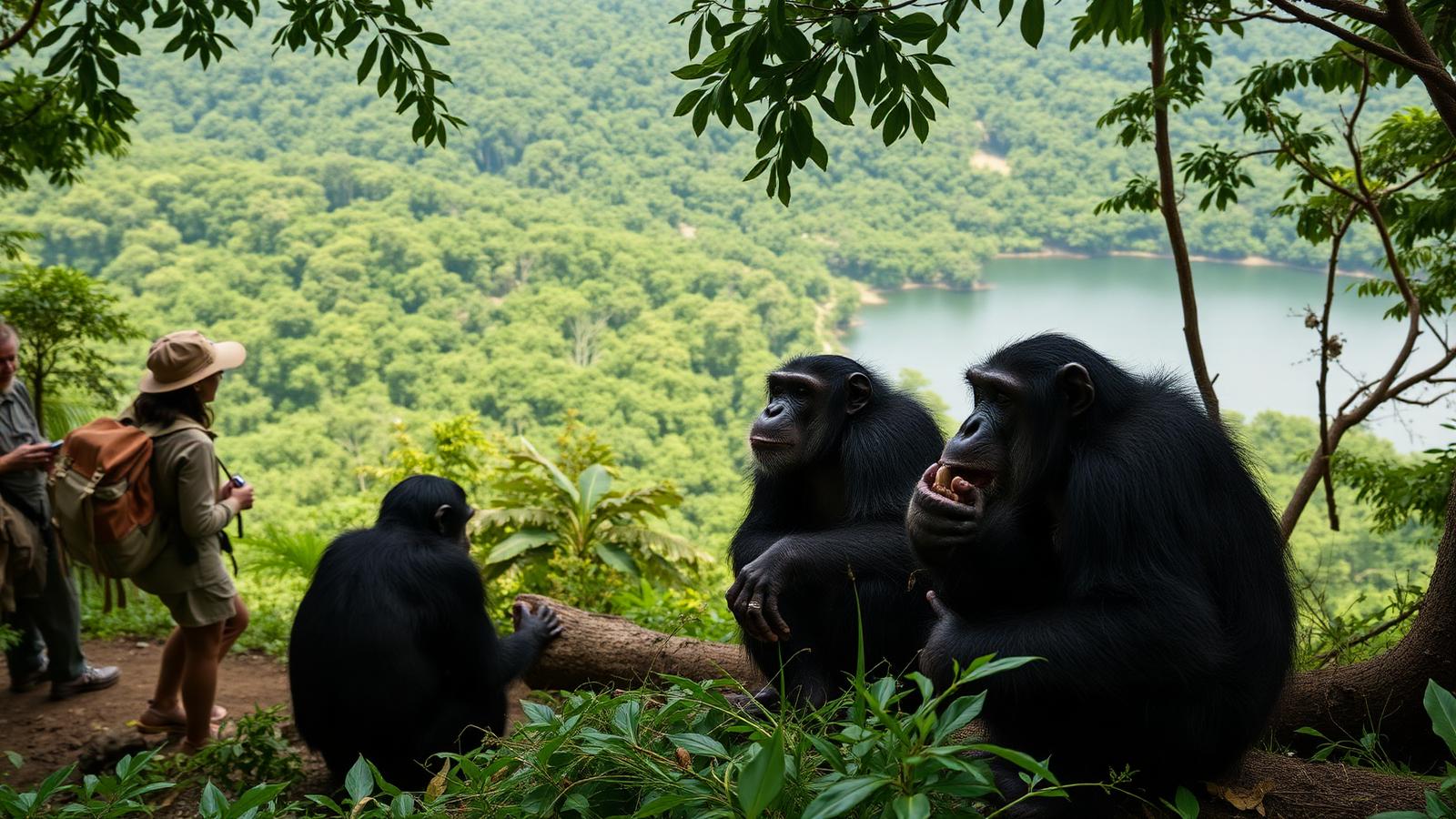
Gombe Stream National Park is a narrow strip of steep, forested valleys on the eastern shore of Lake Tanganyika in far western Tanzania. There is no road into it. Visitors arrive by boat, walk uphill into humid forest with park trackers, and hope to spend part of a morning near a community of wild chimpanzees that has been studied here for decades.
This guide covers what a visit is genuinely like: how trekking works and what it asks of you, what else there is to do on the lake and in the hills, how the seasons change the experience, what the logistics involve, and how Gombe compares with Mahale and Katavi. For the wider planning picture, our worked itineraries and the complete Tanzania travel guide show how a western leg fits into a full trip.
The Short Answer
Gombe suits travelers who care specifically about primates and about the place where long-term chimpanzee research began. It is small, quiet and rarely crowded, and the walking is usually shorter than at Mahale. It is also remote, weather-dependent, and offers none of the plains game most first-time visitors picture when they think about a Tanzanian safari.
If you have the days, the flights and realistic expectations about wild animals in dense forest, it is one of the more distinctive things you can do in Tanzania. If your trip is short, or you want lions and elephants, a northern or southern circuit park will give you far more for far less effort.
Where Is Gombe Stream National Park?
The park lies in the far northwest of Tanzania, on the eastern shore of Lake Tanganyika, a short distance north of the lake town of Kigoma. It is long and thin: a series of valleys running down from the rift escarpment to the water, each with its own stream, separated by steep ridges.
That geography explains almost everything about visiting. There is no road in, so boats do the work of vehicles. The park is small enough to walk across, but the ground is vertical enough that distances on a map mean little. And because the forest sits between the lake and the dry escarpment, the animals move up and down the valleys with the seasons and the fruiting trees, which is why some mornings involve a short walk and others involve a long climb.
Kigoma is the practical gateway. Most travelers fly in, spend a night, take a boat to the park, and reverse the process on the way out. It is a working lake town rather than a resort, and that is part of the character of a trip out here.
What Makes Gombe Different?
Tanzania has several places where you can look for chimpanzees, but Gombe stands apart for a few concrete reasons rather than atmosphere alone.
- The research history. Field research on the chimpanzees here has run for a very long time, and the study of this forest changed how scientists understood tool use and social behavior in wild apes. Walking those valleys with that context is a large part of the appeal.
- The compact scale. Because the park is small and the habituated community ranges within a limited area, walks are often shorter than at Mahale. That makes Gombe more approachable for travelers who are fit enough for a steep hour or two but not for a long mountain climb.
- The lake. Lake Tanganyika is right there. You finish a hot forest morning and come back down to clear water and shade. Few forest destinations anywhere give you that kind of contrast in the same day.
- The lack of crowds. Visitor numbers out here are a fraction of what the northern parks see. On many days you will not share the forest with another group.
- The forest itself. This is a walking destination. No vehicles, no game drives, no radio calls between cars — just guides, trackers, footpaths and the sounds of the valley.
Research and Conservation Significance
The reason Gombe matters far beyond its size is the continuity of work done here. Generations of the same chimpanzee families have been observed by researchers, which produces the kind of long-term behavioral record that short studies cannot. Visitors benefit indirectly: the animals are used to being watched quietly on foot, and guides know the individuals and their histories.
That research presence also shapes the visitor rules. Habituated chimpanzees are vulnerable to human respiratory illness, which is why health screening, minimum distances and face coverings feature in park regulations. These rules are not theater. Follow them exactly, and expect your guide to enforce them.
Conservation pressure at Gombe comes mainly from the surrounding landscape rather than from inside the park. The forest strip is bounded by farmland and settlement, so community projects, reforestation and land-use planning in the hills around the park have as much to do with the chimpanzees' long-term future as anything inside the boundary. Park fees and permits are part of how that work is funded.
Chimpanzee Trekking at Gombe
Trekking is a guided walk, not a drive to a viewpoint. Park staff and trackers work out where the habituated community has moved, and you walk in to meet them. Depending on the day, that might be a short climb from the shore or a long haul up a valley.
Everything about the experience is governed by park regulations: how many people go in a group, how close you may approach, how long you may stay once the animals are found, and what health checks apply. These rules change from time to time, and the park applies them at its own discretion. Your operator should confirm the current requirements close to your travel dates rather than quoting numbers from an old brochure.
What a Typical Trek Is Like
Days start early. You get a briefing at the park headquarters covering rules, distance, behavior around the animals and what to do if the group moves. Trackers are usually already out. Once there is news, you set off with a guide.
The walking is on footpaths through valley forest, with sections of genuine climbing when the animals are higher. It is humid, and the ground is a mix of roots, leaf litter, loose soil and stream crossings. Groups move at the pace of the slowest walker, with pauses to listen — often the first sign of chimpanzees is sound rather than movement.
When you reach them, the experience depends entirely on what the animals are doing. They may be feeding high in a fig tree, grooming on the ground, resting, or moving steadily through the understory, in which case you follow as best you can. You stay quiet, keep the required distance, follow the guide's instructions and use your allotted time. Then you walk back down, usually reaching the shore before the heat peaks.
Other days in the park are slower: a valley walk, a waterfall, time on the beach, birding along the forest edge. If you have only booked one night, you will not get those days at all.
Park Rules and Trekking Etiquette
- Group sizes, distance rules and the maximum time with the animals are set by the park and enforced by guides.
- Face coverings and health screening apply where the park requires them. If you are unwell, say so before the walk rather than after.
- Minimum age rules apply to chimpanzee trekking. Confirm the current limit before booking a family trip.
- No flash photography, no food where the animals can see it, and no attempt to move closer for a better frame.
- Keep your voice low, stay grouped, and do not block a route the animals are using.
- Take everything out with you, including fruit peel, which can carry disease risk.
Fitness, Terrain and Footing
You do not need to be an athlete, but you do need to be comfortable walking uphill on uneven ground in heat and humidity, sometimes for a couple of hours in each direction. The paths are not technical, but they are steep, and wet leaves and clay are slippery.
Practical advice from our guides: break in proper walking shoes with grip before the trip, use a walking pole if you normally would on hills, carry more water than you think you need, and tell your guide honestly what pace suits you. Nobody benefits from a party that splits on a steep slope.
Other Primates and Wildlife
Gombe's wildlife list is short compared with a savanna park, and that is worth understanding before you book. What it does have is a strong primate community and forest species you will not see on the northern circuit. For plains game, see our Serengeti wildlife guide.
| Species | Realistic chance | Notes |
|---|---|---|
| Chimpanzee | Good in the drier months, less predictable in heavy rain | Habituated animals are tracked daily, but they are wild and mobile. Trackers usually work from the previous evening's nesting site. Some mornings give a long, close encounter, others give a distant glimpse or nothing at all |
| Olive baboon | Very good | Troops along the beach and lower valleys. Long studied here alongside the chimpanzees. Keep bags closed and never feed them |
| Red colobus | Good | Canopy troops in the valley forest, and a prey species for chimpanzees, so behavior around them can be tense |
| Red-tailed and blue monkey | Good | Common along stream lines and forest edges, often seen on the walk in rather than at the chimpanzee sighting |
| Vervet monkey | Good near the shore | Forest-edge and beach areas, usually in small mobile groups |
| Bushbuck, bushpig, duiker | Uncertain | Present but shy in thick cover. Usually a moment of movement rather than a sustained sighting |
| Leopard | Very unlikely to be seen | Occurs in the wider area but is essentially never part of a visitor's experience. Do not plan around it |
| Elephant, buffalo, lion | Not part of the Gombe experience | This is a small forest park, not a big-game destination. If large mammals matter to you, plan a separate leg on the northern or southern circuit |
| Cichlid fish | High where snorkeling is possible | Lake Tanganyika's rocky shallows hold an unusual diversity of small, brightly marked fish |
Birdlife
Gombe is a rewarding place for birders precisely because it mixes habitats in a small area: lakeshore, gallery forest along the streams, closed canopy on the slopes, and open grassland on the ridges. Fish eagles and palm-nut vultures work the shoreline, turacos and forest species call from the canopy, and the ridge walks turn up a different set again.
Birding here is done on foot and by ear, which suits patient travelers. If birds are a priority, say so when booking so your guide plans slower walks on your non-trekking mornings rather than pushing for distance.
Forest and Mountain Landscape
The park is best understood as a set of bands, each with a different character and a different reason to walk in it.
| Zone | Character | What you do there |
|---|---|---|
| Lake shore and beaches | A thin band of sand, pebble and rock where the forest meets Lake Tanganyika. Boats arrive here and most walking starts here | Arrivals and departures, swimming where staff say it is fine, sundowners, easy shoreline birding |
| Valley and gallery forest | Humid forest along the permanent streams that run down each valley toward the lake, thick with figs and tangled understory | The usual starting ground for chimpanzee treks in the drier months, plus monkeys and forest birds |
| Steep mid-slope forest | Sharply rising ground between the valley floors and the ridgelines, with loose footing and few flat sections | Where treks lead when the chimpanzees have moved up. Hard, hot walking with limited views |
| Ridge grassland and woodland | Open grass and scattered woodland along the tops of the ridges above the forested valleys | Long views over the lake toward the Congo shore on clear days, reached on longer guided walks |
| Escarpment edge | The dry upper rim of the rift wall that forms the park's inland boundary | A different, drier set of species and a sense of how small the protected forest strip really is |
Lake Tanganyika
Lake Tanganyika is not scenery in the background — it is the transport network, the climate moderator and the reason a hot trekking day ends comfortably. It is one of the world's great freshwater lakes, extremely deep, and home to a remarkable variety of small endemic fish in its rocky shallows.
For visitors, the lake means three practical things. Boats are how you arrive and leave, so wind and water conditions affect your schedule. Afternoons on the shore are the natural counterweight to steep morning walks. And snorkeling or swimming, where your lodge and guides say conditions allow, is a genuine part of the experience rather than an afterthought.
Follow local guidance on where and when to enter the water. Conditions and advice vary along the shore, and the people who live and work there know the current situation better than any guidebook.
Hiking and Other Activities
Availability changes with staffing, weather, water levels and park regulations, so treat the list below as what is typically possible rather than a fixed menu. Confirm with your operator for your dates.
| Activity | What it involves | Availability |
|---|---|---|
| Chimpanzee trekking | A guided forest walk with park staff and trackers to locate a habituated community | The core activity and normally offered daily, but subject to park rules, group size limits, ranger availability, health screening and conditions on the day |
| Waterfall and valley walks | Shorter guided walks in the valleys behind the shore, including the well-known waterfall walk | Commonly available and a good use of a non-trekking morning. Routes depend on guide availability and stream levels |
| Ridge and viewpoint hikes | Longer climbs to the grassland ridges above the forest, with views over the lake | Arranged with the park case by case. Needs reasonable fitness, time and settled weather |
| Research station visit | A short walk to the long-running research base near the shore | Depends entirely on what staff can accommodate. Treat it as a possible bonus, not a booked inclusion |
| Swimming and shoreline time | Time on the beach and in the lake near the park headquarters or your lodge | At your guide's or lodge's discretion, based on conditions and current local advice |
| Snorkeling | Shallow snorkeling over rocky shoreline for endemic cichlids | Possible in calm conditions where your lodge supports it. Bring your own mask and snorkel rather than assuming gear is on site |
| Boat time on the lake | Short shoreline cruises, often at the end of the day | Usually arranged through your lodge or boat operator. Afternoon wind and lake conditions change plans regularly |
Photography in Forest Light
Forest photography is a different discipline from savanna photography, and gear chosen for the Serengeti often disappoints here. Light under the canopy is low and contrasty, encounters are close, and you rarely have room to back up.
- Fast, moderate focal lengths generally beat long telephotos. Distances are short and the trees are in the way.
- Accept high ISO. A slightly noisy sharp frame is worth more than a clean blurred one.
- Protect your gear from humidity and boat spray with a dry bag and a rain cover.
- No flash, ever, around the animals.
- Give yourself permission to put the camera down. The behavior is the point.
Our safari photography guide covers settings, packing and workflow in more depth.
Best Time to Visit
Western Tanzania is wetter than the northern circuit, and rain drives everything here: how slick the trails are, how far the animals range, and how reliable your boat transfer is.
| Period | Conditions | What the visit feels like |
|---|---|---|
| Late May – June | Rain easing, forest still green, humidity starting to drop | Quiet and attractive. Trails are firming up, the valleys are lush, and there are usually very few other visitors |
| July – October | The main dry stretch. Warm days, firmer footing, generally settled lake | The most popular window. Chimpanzees often range lower in the valleys, so walks tend to be shorter, and boat transfers are more reliable |
| November – December | Short rains in bursts, usually afternoon storms rather than all-day rain | Green forest, dramatic light and few visitors. Walking is muddier and the day needs more flexibility |
| January – February | Warm, humid, intermittent rain | Variable. Fruiting patterns shift where the chimpanzees feed, and treks can be longer and steeper than in the dry months |
| March – April / early May | The heaviest rain of the year in western Tanzania | Steep trails become slick and unpleasant, lake transfers are less predictable, and some operators avoid the region. Confirm what is actually running before committing to these months |
If you are building the rest of the trip around this leg, our month-by-month look at Tanzania's seasons explains how the west lines up with the northern and southern parks.
Wet Season vs Dry Season
The dry months are the safer choice for a first visit. Trails are firmer, walks tend to be shorter, boat transfers are more predictable and the whole trip has fewer moving parts. The trade-off is that this is also when the small amount of accommodation fills up.
The green months have real appeal: the forest looks its best, the light after a storm is superb, and you may have the park almost to yourself. But treks can be longer and steeper, mud is a constant, and you need genuine flexibility in your schedule. The heaviest rains are best avoided unless you are experienced, patient and traveling with an operator who will tell you honestly what is running.
How Long Should You Stay?
| Length of stay | Verdict | What it gives you |
|---|---|---|
| 1 night | Rarely worth it | One trekking attempt with no margin, after two long travel days. A poor return on the effort of getting there |
| 2 nights | Workable minimum | Two mornings in the forest, so a slow first day does not decide the whole visit |
| 3 nights | The comfortable choice | Room for two or three trekking attempts, a waterfall or ridge walk, and time on the lake without rushing |
| 4+ nights | For photographers and primate-focused travelers | Time to work the same forest in different light and treat the lake as part of the trip rather than filler |
Add a buffer night in Kigoma on arrival, and ideally another before any onward international flight. Those nights are cheap insurance against a delayed small aircraft or a windy lake.
Accommodation Options
Choice is limited by design. The park is small and development inside it is tightly controlled, so you are choosing between a handful of options rather than browsing a long list.
Park accommodation near the shore
Simple rooms run by the park authority close to the research area. Basic, functional and well placed for an early start, with shared facilities and straightforward meals. It suits travelers who care much more about the forest than the room, and it is usually the least expensive way to stay inside the park.
Lodge accommodation on the lake shore
A small forest lodge option gives you comfortable rooms, a beach and full-board service, with boat transfers to the trekking start. It is the choice for travelers who want the remote experience without roughing it. Capacity is small, so it books out well ahead in the dry season.
Hotels in Kigoma
Kigoma has several comfortable lakeside hotels and guesthouses that work well as arrival and departure bases. Almost every well-planned Gombe trip includes at least one night here. Rates and standards vary widely, so ask your operator to match the property to the rest of your trip. Our accommodation guide explains how camp and lodge categories are defined in Tanzania.
How to Get There
- Fly to Kigoma. Scheduled and charter flights connect Kigoma with Dar es Salaam and, on some routings, the northern circuit. Schedules are limited and change seasonally, so book flights before locking in park nights.
- Transfer to the lake. A short road transfer takes you from the airport to the shore, where your boat is arranged.
- Boat to the park. A private boat charter is faster and far more predictable. Public lake taxis are slower and much cheaper, and they are a genuine local experience if your schedule can absorb the timing.
- Overland. Driving from the northern or southern circuits takes days on rough roads and rarely makes sense for a normal holiday.
Because so much of the cost sits in getting there, it is worth reading our breakdown of what a Tanzania safari costs before deciding how many parks to combine.
What the Remote Location Means for Travelers
- Flight schedules are thin. A missed connection can cost you a day, not an hour.
- Weather and lake conditions can move a boat transfer. Build slack into the plan.
- Connectivity is patchy, and power in simple accommodation may be limited to set hours.
- Medical facilities are basic and far away. Travel insurance that includes evacuation is not optional out here.
- Bring cash for incidentals, and anything specific you rely on, from medication to camera batteries.
- Plans change. The travelers who cope best are the ones who treat flexibility as part of the trip.
First-time visitors to Tanzania sometimes underestimate this. Our guide for first-time safari travelers is a good sanity check before adding a remote western leg.
How Costs Are Built
We are not going to quote prices that will be wrong by the time you read this. What is stable is the structure of a Gombe quote, and knowing it helps you compare proposals honestly.
| Cost element | What drives it |
|---|---|
| Flights to the west | Scheduled seats to Kigoma are limited and the routing is long. This is often the single largest line in a Gombe quote |
| Boat transfers | Every visit involves a boat leg along the lake. Private charters cost more than shared or public options but are far more predictable |
| Park fees and guiding | Park entry, chimpanzee permits and mandatory guiding are charged per person per day and change from time to time. Always price them on your travel dates |
| Accommodation | The range at Gombe is narrow, so your choice of lodge or park accommodation moves the total sharply |
| Nights in Kigoma | Buffer nights on either side protect the trip from flight delays and are worth budgeting for rather than trimming |
| Combining parks | Adding Mahale or Katavi means more flights or long boat legs. Each additional park adds cost faster in the west than it does on the northern circuit |
What to Bring
- Walking shoes with real grip, already broken in. This is the single most important item.
- Lightweight long sleeves and trousers for forest walking, plus a rain layer in any season.
- A dry bag for camera gear and documents on boat transfers.
- Insect repellent, sun protection and more water capacity than you would carry on a game drive.
- Your own mask and snorkel if lake time matters to you.
- A headlamp, spare batteries and a power bank for simple accommodation.
Our full Tanzania packing list covers the rest, including luggage weight limits on light aircraft.
Health and Responsible Visiting
The health rules around chimpanzee trekking exist because these animals catch human illnesses. If you have a cough, a cold or a stomach bug, disclose it. You may be asked to sit the trek out, and that is the right outcome, not bad luck.
Beyond that: keep your distance even when the animals close it themselves, never feed anything, keep food packed away from baboons, and stay on the paths your guide uses. Our health guide covers vaccinations, malaria precautions and general preparation for remote travel in Tanzania.
Gombe vs Mahale
This is the question we are asked most about western Tanzania, and the honest answer is that they are different trips that happen to share a species and a lake.
| Factor | Gombe Stream | Mahale Mountains |
|---|---|---|
| Scale and feel | A small, narrow strip of forested valleys. Compact, walkable, close to a working town | A far larger mountain park with a strong sense of isolation and no nearby town |
| Main draw | Chimpanzee trekking with an unusually long research history attached to the same forest | Chimpanzee trekking in dramatic mountain rainforest dropping straight into the lake |
| Typical walking | Steep but generally shorter valley climbs from the shore | Often longer and higher, with more sustained ascent in humid forest |
| Access | Flight to Kigoma, then a boat transfer along the lake shore | Light aircraft to a remote airstrip, then a longer boat leg, on a thinner flight schedule |
| Accommodation range | A small number of options, from very simple park accommodation to one forest lodge | A handful of remote camps, mostly at the higher end of the market |
| Cost and logistics | Generally the easier and less expensive of the two to reach and stay in | More expensive overall, with tighter flight windows and less flexibility |
| Best for | Travelers drawn to chimpanzee research history, shorter treks and a lighter logistical load | Travelers who want deep wilderness, a longer forest immersion and are willing to pay for it |
Choose Gombe if you want the research history, a lighter logistical load and generally shorter walks. Choose Mahale if you want a bigger, wilder mountain park and are prepared for the cost and the flights. If you have enough days and budget for both, doing them in sequence is the strongest chimpanzee-focused itinerary in Tanzania — and they feel genuinely different, not repetitive.
Gombe vs Katavi
These two are often combined precisely because they have nothing in common beyond remoteness.
| Factor | Gombe Stream | Katavi |
|---|---|---|
| Main draw | Wild chimpanzees in lakeside forest | Floodplains, drying river pools and heavy concentrations of hippo and buffalo late in the dry season |
| How you experience it | On foot in forest, with boat transfers along the shore | Mostly from a vehicle, with walking where arrangements allow |
| Big game | Not part of the picture | Elephant, buffalo, hippo, crocodile and lion are the mainstays |
| Physical demand | Moderate to hard on trekking days, easy the rest of the time | Low, but long, hot and dusty drives |
| Downtime | The lake gives genuine rest between activities | Camp-based rest between drives, with fewer alternatives |
| Combining them | Works as one leg of a longer western trip | Pairs naturally with Mahale or Gombe when you have the days and the budget for the flights |
If you want forest walking and big-game viewing in the same trip without crossing the country twice, a western combination with Katavi is the neatest way to do it. If you would rather keep the game-viewing leg simpler, the southern parks — Ruaha and Nyerere — are usually easier to reach.
How Gombe Fits an Itinerary
A focused chimpanzee trip
Kigoma buffer night, two or three nights at Gombe, then back out through Kigoma. Short, purposeful, and the most efficient way to see the park if your leave is limited but you specifically want chimpanzees.
Gombe and Mahale together
Two or three nights at Gombe followed by three or four at Mahale, linked by flights and boats. This is the trip for people whose main interest is primates. It needs careful flight sequencing, so build it with an operator who works the western routes regularly.
A wider western circuit
Gombe, Mahale and Katavi in one loop gives you forest, lake and floodplain. It is a long, expensive and very rewarding trip, and not one to attempt on a tight schedule.
Classic circuit plus a western extension
Some travelers add Gombe after a northern circuit safari, which balances big-game viewing with a forest finale. This depends on seasonal flight routings, so confirm connections before committing. Our itinerary collection shows how these blocks fit together across different trip lengths.
Who Is Gombe Best For?
- Travelers with a genuine interest in primates, animal behavior or conservation history.
- Repeat visitors to Tanzania who have already done the northern circuit and want something different.
- Walkers who prefer being on foot in forest to sitting in a vehicle.
- People who want a chimpanzee experience with somewhat shorter walks and lighter logistics than Mahale.
- Photographers and birders willing to work slowly in difficult light.
- Travelers who value quiet and solitude over comfort and choice.
When Another Destination Makes More Sense
We will say this plainly, because it saves people money: Gombe is not right for every trip.
- If your whole holiday is under about a week, the travel time swallows too much of it.
- If you want lions, elephants and big herds, the northern or southern circuits deliver far more.
- If steep, humid uphill walking is not realistic for you, the main activity will be out of reach.
- If you are traveling with younger children, minimum-age rules for trekking may rule the park out.
- If the flights alone would consume a large share of the budget, a stronger trip is usually available elsewhere.
Common Planning Mistakes
| Mistake | Why it hurts | Better approach |
|---|---|---|
| Booking one night and one trek | Chimpanzees move. One morning is a single roll of the dice after two days of travel | Plan at least two full mornings in the forest, three if the trip is built around chimpanzees |
| Treating Gombe as a stopover | It is not on the way to anywhere. Every visit is a deliberate detour with its own flights and boats | Build the western leg as its own block of the itinerary, with buffer nights in Kigoma |
| Expecting big game | Gombe is a small forest park with no classic plains wildlife | Pair it with a northern or southern circuit leg if you also want elephant, lion and open-country game viewing |
| Assuming Gombe and Mahale are interchangeable | They differ in scale, walking, cost and atmosphere, even though both protect chimpanzees | Read both guides and choose on effort, budget and the kind of forest experience you want |
| Underestimating the terrain | The valleys are steep and humid, and the footing is uneven even on established paths | Train a little before you travel, and bring shoes with real grip rather than street sneakers |
| Booking tight connections out of Kigoma | Lake conditions and small-aircraft schedules both shift | Leave a night of slack before any international flight |
| Packing for a savanna safari | Forest walking, rain, humidity and boat spray are the conditions that matter here | Pack for wet forest and lake travel, and keep camera gear in a dry bag |
Related Guides
- Mahale Mountains National Park Guide — the other western chimpanzee park, and the natural comparison.
- Katavi National Park Guide — the big-game half of a western circuit.
- Ruaha National Park Guide — a southern alternative if the west is too much travel.
- Nyerere National Park Guide — river-based safari that pairs easily with Zanzibar.
- Best Tanzania Safari Itineraries — how many nights to give each region.
- Tanzania Safari Photography Guide — gear and technique, including low-light forest work.
Frequently Asked Questions
Common Questions
Frequently Asked Questions
It is worth it for travelers who specifically want to walk in forest and look for wild chimpanzees, and who are interested in the long research history attached to this particular forest. It is quiet, rarely crowded and unlike anywhere on the northern circuit. It is not worth it if your trip is short, if you want big game, or if the flights would take a disproportionate share of your budget.
No. The community visited by tourists is habituated and tracked daily, which improves your chances considerably, but these are wild animals moving through steep, dense forest. Some mornings give a long close encounter, others give a brief or distant one, and occasionally the group moves faster or higher than a walking party can follow. Planning more than one trekking morning is the single best way to protect the experience.
Moderate to hard, depending on where the animals are. Walks are generally shorter than at Mahale because the park is small, but the valleys are steep, humid and slippery, and the footing is uneven. If you can manage a couple of hours of uphill walking on rough ground in heat, you will be fine. Tell your guide honestly what pace suits you.
Roughly July to October is the most reliable window: firmer trails, generally shorter walks and more predictable boat transfers. Late May and June are quiet and attractive as the rains ease. November to February is green and uncrowded but muddier, with longer treks. The heaviest rains, around March and April, make the steep trails unpleasant and access less predictable, so confirm what is actually operating before booking those months.
Two nights is a workable minimum because it gives you two mornings in the forest. Three is more comfortable, leaving room for a waterfall or ridge walk and time on the lake. One night rarely justifies the travel involved. Add a buffer night in Kigoma on either side.
Fly to Kigoma, transfer by road to the lake shore, then continue by boat — there is no road into the park. A private boat charter is faster and more predictable; public lake taxis are much cheaper and slower. Overland travel from the northern or southern circuits takes days on rough roads and rarely suits a normal holiday schedule.
Both protect wild chimpanzees on Lake Tanganyika, but they are different trips. Gombe is small and compact, close to the town of Kigoma, with generally shorter walks, fewer accommodation options and a lighter logistical load. Mahale is a much larger mountain park with a stronger sense of isolation, often longer and higher treks, remote camps at the upper end of the market and tighter flight schedules. Travelers with enough time and budget often do both in sequence.
No. Gombe is a small forest park focused on primates and birds. Elephant, lion and large plains herds are not part of the experience. If you want both forest walking and classic game viewing, pair Gombe with Katavi in the west, or add a northern or southern circuit leg to the trip.
Olive baboons, red colobus, red-tailed monkeys, blue monkeys and vervets are all present, along with shy forest species such as bushbuck and bushpig that are seen far less often. Birding is strong because the park mixes lakeshore, gallery forest, closed canopy and ridge grassland in a small area. Lake Tanganyika's rocky shallows also hold an unusual diversity of small endemic fish.
Minimum age rules apply to chimpanzee trekking to protect the animals, and the steep terrain is demanding. Families with older teenagers who are comfortable walking uphill often do well here; younger children generally cannot join the trek. Confirm the current minimum age before planning a family trip around the park.
Time on the lake is a normal part of a stay, and snorkeling over rocky shoreline can be excellent in calm conditions. Whether it happens on your visit depends on the lodge, the weather and local advice on the day, so follow your guide's instructions rather than assuming access.
If your holiday is under about a week, if you want big cats and large herds, if steep humid walking is not realistic for you, or if the flights would dominate the budget, a northern or southern circuit park will give you a stronger trip for less effort. Gombe earns its place when chimpanzees and forest are the point rather than an add-on.
Final Thoughts
Gombe rewards travelers who plan for it honestly: enough nights to absorb a quiet morning in the forest, flights and boats booked with slack in them, and realistic expectations about wild animals in steep, dense cover. On those terms it is one of the most distinctive experiences in Tanzania — a small forest with an outsized place in what we know about chimpanzees, set against one of the great lakes of the world. On any other terms, another park will give you more for less effort, and we would rather tell you that before you book.
Plan Your Journey
Ready to explore Tanzania?
Let our Arusha-based safari specialists craft a private, tailor-made itinerary around you — no middlemen, no templates, just your perfect journey.
- TALA Licensed Operator
- 4.9 ★ Guest Rating
- No Booking Fees
Keep Reading
Related Tanzania Safari Guides
Safari Guides
The Ultimate Tanzania Travel Guide: Everything You Need to Know Before You Visit
Safari Guides
Mahale Mountains National Park Travel Guide: Everything You Need to Know