
Tanzania Safari Guide
Arusha National Park Guide: Mount Meru, Momella Lakes and Where It Fits Your Trip
The closest park to Arusha town, explained honestly: what you can realistically see, which activities may be available, how long to give it, and how it compares with Tarangire, Lake Manyara and Ngorongoro.

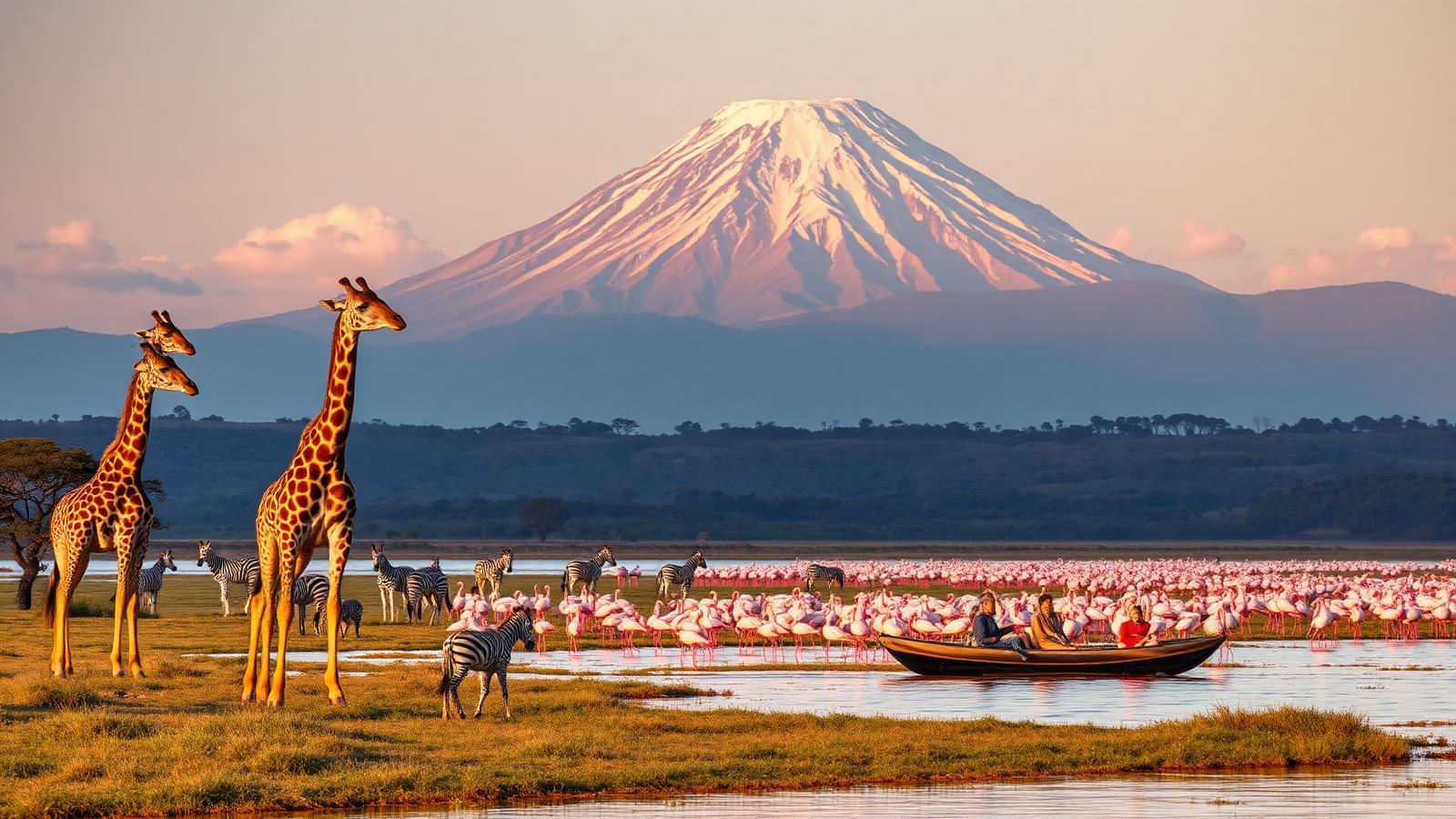
Arusha National Park is the park most travelers drive past. It sits close to town and close to the airport, and because the famous names are further west, it usually loses the day it deserves. That is a shame, because it does something none of the other northern parks do: it puts montane forest, a crater rim, a chain of alkaline lakes and a 4,500-metre volcano inside one short drive circuit.
This guide explains what the park is actually like, which activities may be available and on what terms, how much time it warrants, and when your days would be better spent elsewhere. For the wider route picture, see our northern circuit overview and the worked itineraries.
The Short Answer
Include Arusha National Park if you have an arrival or departure day to use, if forest wildlife and birds interest you, or if you want a gentle first day before longer drives. It offers giraffe, buffalo, zebra, colobus monkeys, hippos and a strong bird list in a compact area, with walking and canoeing sometimes available on top of game drives.
Do not include it if your days are tight and you want big cats. Lions are not part of this park's picture, and the wildlife density is modest next to Tarangire or the Ngorongoro Crater. It is a good half or full day, not a substitute for a safari leg.
Where Is Arusha National Park?
The park lies northeast of Arusha town, between the town and Kilimanjaro International Airport, on the slopes and lower ground around Mount Meru. Access from Arusha is by sealed road for most of the way, and the drive is short by Tanzanian safari standards — closer to a commute than a transfer.
That location is the whole argument for visiting. Everywhere else on the northern circuit costs you half a day of driving before the safari starts. Here you can be in forest within an hour of leaving your hotel and back in town by evening, which is why it works so well on days that would otherwise be wasted.
What Makes the Park Different?
Altitude and forest, not savanna
Most northern-circuit parks are open country. This one climbs from forest to mountain, and the wildlife reflects that: primates in the canopy, forest antelope in the undergrowth, and a bird list closer to a highland forest than a plains reserve.
Water in a different form
The Momella Lakes are shallow and alkaline, each with slightly different color and chemistry, and they draw waterbirds rather than the big herds you associate with rivers elsewhere. Buffalo and waterbuck along the shore give you the classic safari image with a volcano behind it.
The chance to leave the vehicle
Because dangerous game is thinner on the ground here, this is one of the northern parks where activities on foot or on water can be permitted. That flexibility is a real differentiator — with the important caveat that availability is never automatic.
Landscapes and Zones
| Zone | Character | What you tend to find |
|---|---|---|
| Montane forest | Tall, damp forest on the lower slopes, often misty in the early morning | Black-and-white colobus, blue monkey, bushbuck, forest birds, occasional elephant sign |
| Momella Lakes | A cluster of shallow alkaline lakes with different colors and mineral content | Flamingos and waterbirds, hippo, waterbuck and buffalo along the shorelines |
| Ngurdoto Crater | A forested caldera with a swampy floor, viewed from rim points | Buffalo and warthog on the crater floor, seen from above rather than driven into |
| Open glades and grassland | Clearings between forest blocks, sometimes called the little Serengeti | Giraffe, zebra, warthog, reedbuck and the park's best open-country views |
| Mount Meru slopes | Rising ground from forest into heath and, higher up, bare volcanic terrain | Trekking country rather than drive country; wildlife thins with altitude |
Mount Meru
Mount Meru is a volcano inside the park and the dominant feature of every view. For most visitors it is scenery: a backdrop to the lakes and glades, cloud-covered by late morning and often clearest at dawn. On clear days you can also see Kilimanjaro to the east, which is one reason early starts pay here.
For trekkers it is a serious multi-day climb with a demanding summit section, handled with guides and a park ranger under arrangements set by the park authorities. Requirements and route details change over time, so we confirm current conditions when planning rather than working from an old briefing. See the Kilimanjaro climbing guide if the bigger mountain is your main objective — many climbers consider Meru first for altitude exposure, but it should be planned as its own climb, not as a warm-up walk.
Momella Lakes
The lakes are the visual heart of the park: shallow, alkaline and sitting in open ground with Meru behind them. Their colors differ because of variations in mineral content and algae, which is why photographs from different viewpoints look so unalike.
Flamingos use the lakes, though numbers vary considerably through the year with water levels and conditions — a visit can coincide with large gatherings or with almost none. Hippos are usually present, and buffalo and waterbuck work the shorelines. This is also where canoeing takes place, when it is running.
Ngurdoto Crater
Ngurdoto is a forested caldera with a swampy floor, and vehicles use viewpoints along the rim rather than descending into it. Buffalo, warthog and sometimes other game are visible below, though at distance — binoculars matter more than a long lens here.
The rim drive is short, shaded and often misty in the morning, and the forest itself is as much of the attraction as what you spot on the floor. It is the part of the park that feels least like a safari and most like a highland forest walk from the vehicle.
Wildlife You Can See
The table below reflects general likelihood on a half or full-day visit. It is a planning guide rather than a forecast; animals move and conditions vary.
| Species | Likelihood on a day visit | Where to look |
|---|---|---|
| Masai giraffe | Very high | Open glades and woodland edges throughout the drive circuit |
| Cape buffalo | Very high | Lake margins, glades and the Ngurdoto Crater floor |
| Common zebra | High | Open grassland between the forest blocks |
| Warthog | High | Glades, roadsides and lake edges |
| Waterbuck and bushbuck | High | Lakeshores and forest edge respectively |
| Hippo | High | Momella Lakes, usually visible from the shore or from a canoe |
| Black-and-white colobus | High in the forest sections | Canopy along the forest road; look up rather than out |
| Blue monkey and olive baboon | High | Forest and roadside; baboons are widespread |
| Flamingo | Variable by season and water chemistry | The alkaline lakes; numbers rise and fall through the year |
| Elephant | Uncommon and unpredictable | Forest and higher ground; sign is more common than sightings |
| Leopard and smaller carnivores | Rarely seen | Forest and thicket; largely nocturnal here |
| Forest and water birds | Very high | Everywhere — this is one of the park's real strengths |
Primates and Forest Wildlife
The black-and-white colobus is the species most people remember. They move through the canopy along the forest road in groups, and because they are arboreal you spot them by watching branches rather than scanning the ground. Blue monkeys share the same forest, and olive baboons are common throughout.
Forest antelope such as bushbuck and duiker appear briefly at the edges and disappear just as quickly. This is slower, more patient viewing than open-country game driving, and it rewards travelers who are happy to stop, listen and look up.
Giraffe, Buffalo and Plains Wildlife
The open glades hold giraffe in good numbers, and they are generally relaxed around vehicles. Buffalo are widespread — on the crater floor, along the lakes and in the clearings — and zebra, warthog, waterbuck and reedbuck fill out the picture.
Elephants occur but are neither common nor predictable here, and sign is more frequent than sightings. If elephants are a priority for your trip, Tarangire is the northern park to build that around.
What You Will Not See Here
Lions are not part of this park's wildlife picture, and rhino are absent. Leopard and smaller carnivores exist in the forest but are rarely seen by day visitors. Being clear about this matters, because travelers who arrive expecting the Big Five leave disappointed by a park that was never offering them.
The absence has an upside: it is a large part of why activities on foot and on the water can be permitted here when they are not in busier big-game parks.
Birdlife
Birding is one of the strongest reasons to spend a day here. The combination of montane forest, alkaline lakes, swamp and open glade puts very different bird communities within a few kilometres of each other: turacos and forest species in the canopy, waterbirds and waders on the lakes, raptors overhead.
The green months from November through April are the stronger period as migrants arrive. Bring binoculars for every traveler — in forest, sharing a pair means most people see nothing.
Activities Compared
What is available to you depends on park arrangements, ranger availability, conditions and your operator. Treat the table as a description of the options rather than a promise about your day.
| Activity | What it feels like | Practical notes |
|---|---|---|
| Game drive | Short distances, frequent stops, forest and lakes in the same loop | The core activity and available year-round. Half a day covers the main circuit; a full day allows a slower pace. |
| Walking safari | Guided on foot with an armed ranger; detail-focused rather than big-game focused | Depends on ranger availability, park arrangements, minimum-age rules and conditions. Arrange in advance rather than at the gate. |
| Canoeing on Momella | Quiet paddling on a shallow lake with Meru behind you | Offered by licensed operators when conditions and park arrangements allow. Availability, minimum ages and water levels all vary — confirm before you plan a day around it. |
| Mount Meru trek | A multi-day mountain climb, not a safari activity | Guided, with a park ranger accompanying groups. Route, huts, and requirements are set by park authorities and change over time. |
Game Drives
The drive circuit is compact and links the forest, the crater rim viewpoints and the lakes. Distances are short, so you stop often, and a half day genuinely covers the main loop. A full day lets you sit longer at the lakes and work the forest at a slower pace.
Roof-hatch vehicles are the norm, and in forest sections you spend more time looking up than out. If this is your first safari, our first-timer's guide explains how a drive day is structured elsewhere on the circuit.
Walking Safari
Where it runs, a walk here is guided and accompanied by an armed ranger, and it focuses on forest detail: tracks, plants, birds, insects and the smaller things you drive past. Routes are usually short, and the terrain can be steep and damp in places.
- Closed shoes with grip and neutral clothing are expected.
- Minimum age rules apply and vary; check before promising it to children.
- Rangers set the pace and the rules. Follow the briefing exactly.
- Wet conditions can cancel a walk on the day.
Canoeing on the Momella Lakes
Canoeing, when it is operating, is done on one of the Momella Lakes with a licensed guide in stable boats. It is a calm, low-effort activity: you paddle a short distance, look at waterbirds, watch the shoreline for buffalo and waterbuck, and see Meru from the water.
This is the activity most likely to be affected by conditions and current arrangements, so build your day so it works without it. Where it does run, book ahead — capacity is limited by the number of boats and guides available.
Trekking Mount Meru
A Meru trek is a separate undertaking from a park visit. It runs over several days with overnight accommodation on the mountain, guides, and a ranger accompanying the group, all under park arrangements that change from time to time. The summit section is long and starts in the dark.
Fitness matters more than technical skill, and the altitude is high enough to be a genuine factor. If you are considering it before a Kilimanjaro climb, plan proper rest between the two rather than stacking them back to back — our training guide and altitude guide apply here too.
Best Time to Visit
The park is workable year-round, and because it is close to town it can absorb a poor-weather day better than a remote destination can. Rainfall varies year to year, so treat the boundaries as approximate. The country-wide picture is in our month-by-month timing guide.
| Period | Typical conditions | What it means for your visit |
|---|---|---|
| January – February | Warm and mostly dry between the rains | Good visibility, comfortable walking, often clear mountain views early in the day. |
| March – May | Long rains; the forest is wet and tracks are slippery | Green and quiet, but cloud frequently hides Meru and Kilimanjaro. Trekking is harder underfoot. |
| June – August | Dry and cool, especially in the forest and at altitude | The most reliable window for clear views and dependable ground conditions. |
| September – October | Dry and warmer, dusty in places | Strong for drives and trekking; the busiest stretch across the northern circuit generally. |
| November – December | Short rains; showers rather than continuous rain | Dramatic light, fewer vehicles, excellent birding as migrants arrive. |
Whatever the season, mornings are better than afternoons. Cloud builds on Meru through the day, primates are more active early, and the light on the lakes is at its best before mid-morning.
How Long Should You Stay?
| Length of visit | Verdict | What it gets you |
|---|---|---|
| Half day | Workable on an arrival or departure day | A forest loop, the lakes and a viewpoint. Enough to see the character of the park. |
| Full day | The most common and most satisfying visit | Drive circuit plus one added activity where available, at an unhurried pace. |
| 1 night nearby | Good before a long transfer west | Lets you start early, avoid arrival-day fatigue and split the drive to Tarangire or Manyara. |
| 3–4 days | Only for a Mount Meru trek | The mountain, not the game drive circuit, is what justifies this length of stay. |
How a Day Trip Usually Runs
- Early start from Arusha to reach the gate while the mountain is still clear.
- Forest section first, watching the canopy for colobus and blue monkeys.
- Crater rim viewpoints, using binoculars for buffalo on the floor below.
- Open glades for giraffe and zebra, then the lakes for waterbirds and hippo.
- Picnic lunch at a designated site, with an added activity in the afternoon where available.
- Back in town by late afternoon, which is what makes this work on a travel day.
Photography Notes
Forest is the challenge: low light under canopy, high contrast where sun breaks through, and subjects overhead against a bright sky. Expect to push your ISO higher than you would on open plains and to meter for the animal rather than the background.
The lakes are the opposite — open, bright and best early. Wide shots with Meru behind the water are the signature image here. Our safari photography guide covers settings and lens choices in more depth.
How to Get There
Almost everyone arrives by road from Arusha town, and the route is short and mostly sealed. Travelers flying into Kilimanjaro International Airport can also reach the park directly, which makes it a practical first stop before continuing to a lodge.
A guided vehicle is the standard arrangement, since a driver-guide handles the gate formalities and knows the forest sections where sightings are easy to miss. Park fees and gate procedures are set by the park authority and change periodically; we confirm current arrangements at the time of booking.
Accommodation Options
Most visitors do not sleep at the park, and that is usually the right call.
Staying in Arusha town
The common choice. Hotels and lodges of every standard, easy airport access, and a short drive to the gate. Best if the park is one item on a wider itinerary.
Lodges near the park boundary
Properties on the road between town and the park, often in coffee farms or on forest edges. These suit travelers who want an early start, a quieter setting, or a gentler first night after a long flight.
Inside the park
Options exist, including simpler accommodation and campsites, and mountain huts for Meru trekkers. Standards and availability vary, so we check current status rather than assuming a property is operating.
Arusha National Park vs Tarangire
| Factor | Arusha NP | Tarangire |
|---|---|---|
| Distance from Arusha town | Short drive on sealed road | Roughly a two-hour-plus drive |
| Landscape | Forest, crater rim, alkaline lakes, mountain | Baobabs, river valley, open woodland |
| Wildlife emphasis | Giraffe, buffalo, primates, waterbirds | Elephants in numbers, plus classic plains game |
| Predators | Rarely seen; lions are not part of the picture | Lions regularly, other predators possible |
| Activities | Drives plus walking and canoeing where available | Drives, with walking at some properties |
| Best use | Arrival day, day trip, or a Meru trek | A full safari leg of two nights or more |
These are not alternatives. If you have safari days to spend, spend them in Tarangire; if you have a spare morning near town, spend it here.
Arusha National Park vs Lake Manyara
| Factor | Arusha NP | Lake Manyara |
|---|---|---|
| Setting | Volcanic forest and lakes under Mount Meru | Rift Valley wall above a soda lake |
| Signature sight | Colobus monkeys and Momella flamingos | Groundwater forest, baboons, sometimes tree-climbing lions |
| On-foot options | Walking and canoeing where arrangements allow | Walking, cycling and night drives at some operators |
| Typical visit | Half or full day | Half day, usually en route to Ngorongoro |
| Position in a route | Start of the trip, near town and the airport | On the way west toward the crater and Serengeti |
The two are more alike than either is to the plains parks — forest, water and a compact circuit. The deciding factor is usually geography: Manyara sits on the road west, so it costs you no extra travel; Arusha NP suits days anchored near town.
Arusha National Park vs Ngorongoro
| Factor | Arusha NP | Ngorongoro |
|---|---|---|
| Scale of wildlife | Modest, forest-weighted | Dense and concentrated on the crater floor |
| Big cats and rhino | Not a realistic expectation | Lions commonly, black rhino possible |
| Crowds | Usually very quiet | Busy, especially mid-morning on the floor |
| Cost per day | Among the lowest on the circuit | Among the highest, driven by fees |
| Role in a trip | Warm-up or add-on | A headline destination in its own right |
No one should choose between these. The Ngorongoro Crater is a headline destination; Arusha National Park is a good use of a day that would otherwise be spent at a hotel pool.
How It Fits an Itinerary
- Arrival day warm-up — a half day after a night's sleep, before heading west the following morning.
- Departure day filler — a morning visit for travelers on an evening flight, since the park sits near the airport road.
- Standalone day trip — for people in Arusha on business or between other plans.
- Meru trek leg — several days on the mountain, usually before or well apart from a Kilimanjaro climb.
- Family soft start — short drives and varied scenery while children adjust to the time change.
Who Is It Best For?
- Travelers with an arrival or departure day to use near Arusha.
- Birders and anyone interested in forest species rather than only big game.
- Families wanting short drives and varied scenery on a first day.
- Photographers drawn to mountain and lake landscapes.
- Repeat visitors who have already done the main circuit.
- Trekkers planning Mount Meru.
When Another Park Makes More Sense
- Short trips built around the Big Five. Every day counts, and this park will not deliver cats.
- Migration-focused trips. Put the time into the Serengeti instead.
- Travelers arriving exhausted. Rest is worth more than a rushed half day.
- Anyone who dislikes cool, damp mornings. The forest is exactly that for much of the year.
What Drives the Cost
We do not publish figures here, because park fees, vehicle rates and activity charges change by season and year. The structure is stable enough to plan around.
- Park entry fees, charged per person for the period of your visit.
- Vehicle and driver-guide costs, usually quoted for a half or full day.
- Additional activity fees where walking, canoeing or ranger services apply.
- Whether the day is private or shared, which changes both cost and flexibility.
- Meru treks, which are priced separately and involve guides, rangers and mountain accommodation.
Our safari cost guide explains how these pieces combine across a full trip.
Common Planning Mistakes
| Mistake | Better approach |
|---|---|
| Expecting a Serengeti-style big-cat day | Come for forest, lakes, giraffe and primates. Judge it on variety in a small area, not on predator counts. |
| Assuming canoeing or walking is always on offer | Both depend on park arrangements, ranger availability, conditions and your operator. Confirm before building a day around them. |
| Squeezing it in after a late international arrival | Sleep first. A half day the next morning is far better than a rushed afternoon on no rest. |
| Treating a Mount Meru trek as a light warm-up walk | It is a serious multi-day climb with a demanding summit night. Plan and train for it accordingly. |
| Skipping layers because it is 'the dry season' | The forest and higher ground are cool and damp in the mornings year-round. |
| Planning around guaranteed flamingos | Numbers shift with water levels and lake chemistry. Some visits are spectacular, others quiet. |
Pack for cool mornings and bright afternoons; our packing list covers layers, footwear and what actually earns its place in a day bag.
Related Guides
- Tarangire National Park guide — the northern park to visit for elephants.
- Lake Manyara National Park guide — the closest park in character, on the road west.
- Ngorongoro Crater guide — the circuit's headline destination.
- Northern circuit overview — how the parks link together.
- Tanzania safari itineraries — worked routings and night counts.
- Safari guide for first-time visitors — what to expect on your first days.
Common Questions
Frequently Asked Questions
It is worth a half or full day if you have travel days to use near Arusha, or if forest wildlife, birds and mountain scenery interest you. Few places put montane forest, a crater rim, alkaline lakes and a volcano in one short circuit. It is not a substitute for a safari leg in Tarangire, Ngorongoro or the Serengeti, and on a short trip built around big cats it is the first thing we would cut.
Yes, and that is how most travelers see it. The park is a short road transfer from Arusha town on a mostly sealed route, and it also sits conveniently for anyone flying in or out of Kilimanjaro International Airport. A morning start covers the forest section, the crater rim viewpoints and the Momella Lakes, with time for lunch and an added activity where one is available.
Masai giraffe, Cape buffalo, zebra, warthog, waterbuck and bushbuck are commonly seen, along with black-and-white colobus and blue monkeys in the forest and hippo at the Momella Lakes. Birdlife is a real strength across forest, swamp and lakeshore. Elephants occur but are unpredictable, leopard is rarely seen by day visitors, and no sighting can be guaranteed.
Lions are not part of this park's wildlife picture, and rhino are absent. That is worth knowing before you book, because it shapes what a day here feels like. It is also part of the reason activities on foot or on the water can be permitted here when they are not in busier big-game parks.
It is offered by licensed operators when conditions and current park arrangements allow, using stable boats with a guide. Availability depends on water levels, weather, boat and guide capacity and minimum-age rules, so it is not something to assume. If canoeing is the reason you want to visit, ask for confirmation at the time of booking and build the day so it still works without it.
Where it runs, a walk is guided and accompanied by an armed ranger, and it focuses on forest detail rather than approaching big animals. Availability depends on ranger availability, park arrangements, minimum-age policies and conditions, and wet weather can cancel a walk on the day. Arrange it in advance rather than at the gate, and expect closed shoes and neutral clothing to be required.
Mount Meru sits inside the park and is climbed over several days with guides and a park ranger accompanying the group, staying in mountain accommodation along the route. It is a serious trek with a long summit section, not a warm-up walk. Requirements and route arrangements are set by the park authorities and change over time, so current details should be confirmed when planning rather than taken from older sources.
June through October is the most reliable stretch for clear mountain views and dependable ground conditions, and January to February is also good. The long rains from roughly March to May bring slippery tracks and frequent cloud over Meru, though the forest is at its greenest. November and December short rains bring dramatic light, fewer vehicles and strong birding. Whatever the month, mornings beat afternoons here.
Half a day covers the main circuit and suits an arrival or departure day. A full day is more satisfying and allows an added activity at an unhurried pace. Longer stays only make sense for a Mount Meru trek, which is planned as a separate multi-day undertaking.
They serve different purposes. Tarangire is a full safari leg with elephants in numbers, lions and classic dry-country landscapes, and it deserves two nights or more. Arusha National Park is a short, close-to-town visit built around forest, primates, lakes and mountain views. If you have safari days to spend, spend them in Tarangire; if you have a spare morning near Arusha, spend it here.
It suits families well on a first or last day: drives are short, the scenery changes quickly, and there is no need for the long transfers the rest of the circuit involves. Minimum-age rules apply to walking and canoeing and vary, so check them before promising either to children rather than raising it on the day.
It is a short road transfer northeast of Arusha town, mostly on sealed road, and also close to the route from Kilimanjaro International Airport. That proximity is the park's main practical advantage over every other park on the northern circuit, where half a day of driving usually comes before the safari starts.
Final Thoughts
Arusha National Park earns its place through convenience and contrast rather than through wildlife numbers. Forest, a crater rim, alkaline lakes and a volcano in one short circuit is a combination the rest of the northern circuit does not offer, and the possibility of leaving the vehicle adds something most parks cannot.
Go in with the right expectations — giraffe, buffalo, primates, birds and scenery rather than lions — give it a morning or a full day, confirm which activities can actually run, and it is one of the better uses of a travel day in northern Tanzania.
Used well, Arusha National Park turns a travel day into a real morning in the field — forest, lakes and Meru rising behind the shoreline, with the option of leaving the vehicle where arrangements allow. Set expectations around scenery, primates and birds rather than big cats, and it is one of the more rewarding short visits in northern Tanzania.
Plan Your Journey
Planning a northern Tanzania itinerary?
Send us your dates, arrival and departure times and the pace you want, and our team will map the route: whether a half or full day at Arusha National Park fits your travel days, how it sits alongside Tarangire, Lake Manyara, Ngorongoro and the Serengeti, Mount Meru planning if the mountain interests you, accommodation near town or the park, private vehicle options and realistic driving times. If the day is better spent resting or elsewhere, we will tell you — and no one can guarantee wildlife sightings.
- TALA Licensed Operator
- 4.9 ★ Guest Rating
- No Booking Fees
Keep Reading
Related Tanzania Safari Guides
Safari Guides
The Ultimate Tanzania Travel Guide: Everything You Need to Know Before You Visit
Safari Guides
Nyerere National Park Travel Guide: Everything You Need to Know
Safari Guides
Best Tanzania Safari Itineraries: How to Choose the Right Route for Your Days
Safari Guides
The Northern Circuit: Exploring Tanzania's Most Iconic Wildlife Havens
Safari Guides